

A prospective, double-blind, pilot, randomized, controlled trial of an “embodied” virtual reality intervention for adults with low back pain
Open accessThe DOI matches its Crossref record; 63 of the 64 references it cites were found in a registry or an index.
Abstract
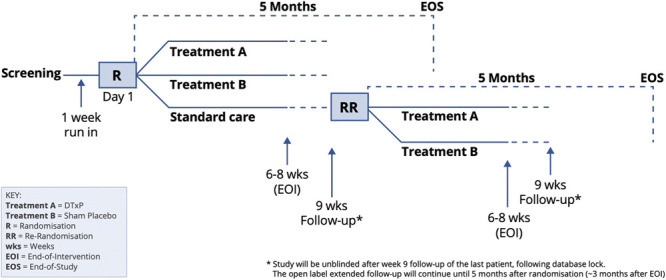
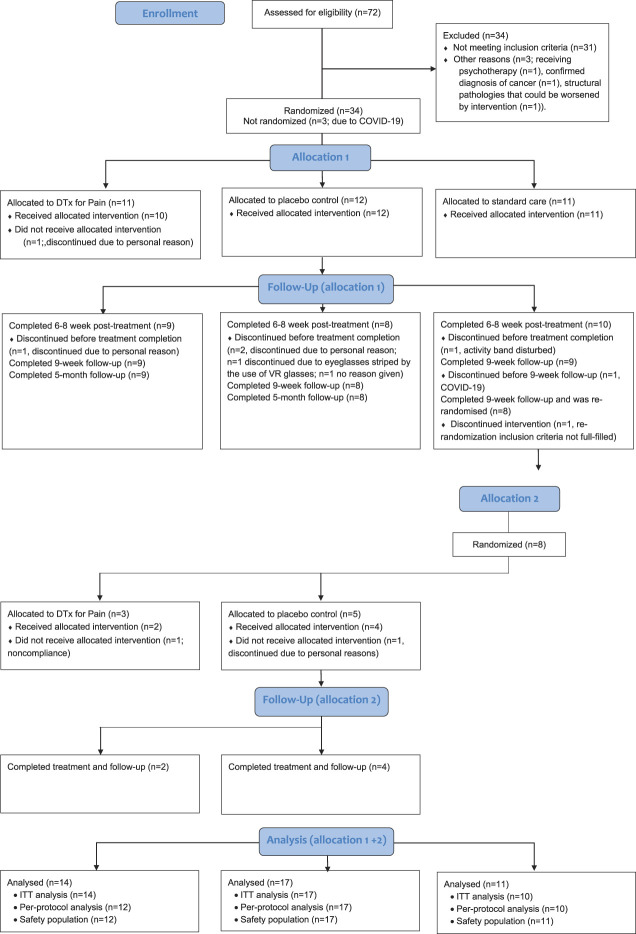
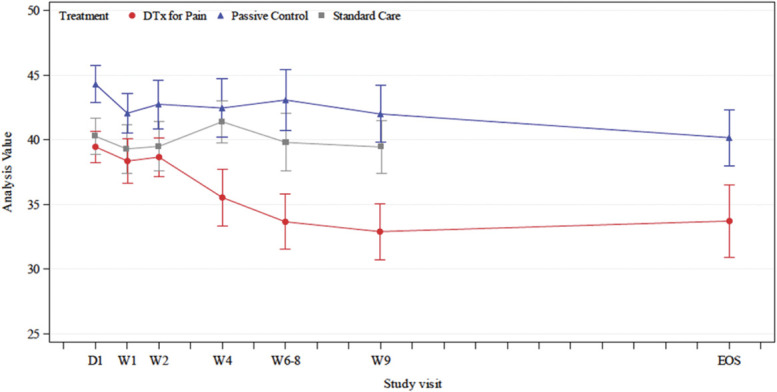
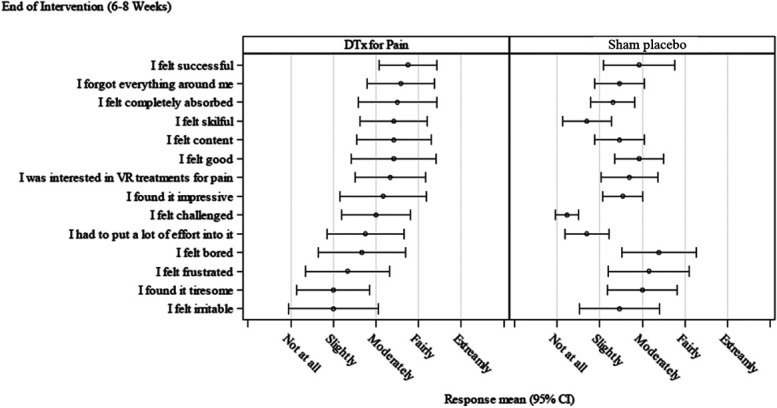
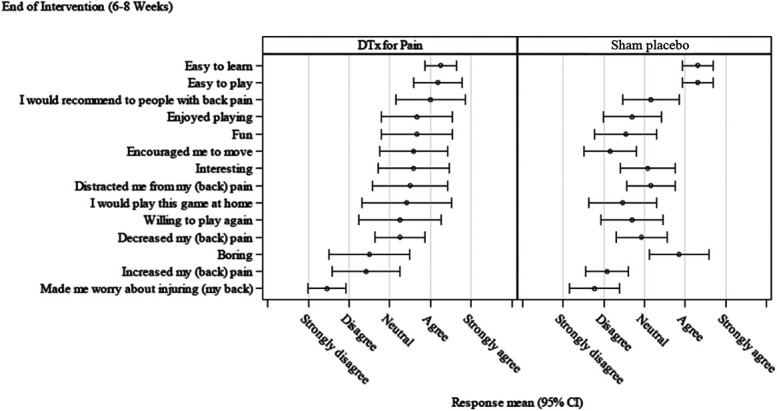
Adults with chronic low back pain, disability, moderate-to-severe pain, and high fear of movement and reinjury were recruited into a trial of a novel, automated, digital therapeutics, virtual reality, psychological intervention for pain (DTxP). We conducted a 3-arm, prospective, double-blind, pilot, randomized, controlled trial comparing DTxP with a sham placebo comparator and an open-label standard care. Participants were enrolled for 6 to 8 weeks, after which, the standard care control arm were rerandomized to receive either the DTxP or sham placebo. Forty-two participants completed assessments at baseline, immediately posttreatment (6-8 weeks), 9-week, and 5-month follow-up. We found that participants in the DTxP group reported greater reductions in fear of movement and better global impression of change when compared with sham placebo and standard care post treatment. No other group differences were noted at posttreatment or follow-up. When compared with baseline, participants in the DTxP group reported lower disability at 5-month follow-up, lower pain interference and fear of movement post treatment and follow-up, and lower pain intensity at posttreatment. The sham placebo group also reported lower disability and fear of movement at 5-month follow-up compared with baseline. Standard care did not report any significant changes. There were a number of adverse events, with one participant reporting a serious adverse event in the sham placebo, which was not related to treatment. No substantial changes in medications were noted, and participants in the DTxP group reported positive gaming experiences.
Overview
The claims and statistics of this paper haven’t been checked yet.
Free: it reads the open-access text and checks the first 5 claims that cite a source we can check. Create a free account to check every claim.
Integrity signals
Registry
Cites
Statistics
Figures
Verification
Claims the paper makes
The claims and statistics of this paper haven’t been checked yet.
Free: it reads the open-access text and checks the first 5 claims that cite a source we can check. Create a free account to check every claim.
Self-check
Percentages, sums and reported differences re-computed from the paper’s own numbers.
The self-check needs the paper’s full text.
Citations
Cites
Hao (2015) · doi:10.1002/14651858 · Cited by 11,321
Hoffmann, T. C., Glasziou, P. P., Boutron, I., Milne, R., Perera, R., Moher, D., Altman, D. G., Barbour, V., Macdonald, H., Johnston, M., et al. (2014) · BMJ · doi:10.1136/bmj.g1687 · Cited by 10,548
Development and preliminary testing of the new five-level version of EQ-5D (EQ-5D-5L)
Herdman, M., Gudex, C., Lloyd, A., Janssen, M., Kind, P., Parkin, D., Bonsel, G., & Badia, X. (2011) · Quality of Life Research · doi:10.1007/s11136-011-9903-x · Cited by 9,795
Fairbank, J. C. T., & Pynsent, P. B. (2000) · Spine · doi:10.1097/00007632-200011150-00017 · Cited by 5,851
Skivington, K., Matthews, L., Simpson, S. A., Craig, P., Baird, J., Blazeby, J. M., Boyd, K. A., Craig, N., French, D. P., McIntosh, E., et al. (2021) · BMJ · doi:10.1136/bmj.n2061 · Cited by 5,808 · cited 1×
“The inclusion criteria were (1) adults $18 years of age; (2) reported low back pain for at least 3 months, with average pain intensity of $4/10 over the past week on a 0 to 10 numeric rating scale, Oswestry Disability Index (ODI) of $26%, and medium (34-41) or high (42-68) TampaScale of Kinesiophobia (TSK) score; (3)…”
BackgroundPsychological therapies for the management of chronic pain (excluding headache) in adults
Williams, A. C. D. C., Eccleston, C., & Morley, S. (2012) · Cochrane Database of Systematic Reviews · doi:10.1002/14651858.cd007407.pub3 · Cited by 1,634 · cited 1×
“The inclusion criteria were (1) adults $18 years of age; (2) reported low back pain for at least 3 months, with average pain intensity of $4/10 over the past week on a 0 to 10 numeric rating scale, Oswestry Disability Index (ODI) of $26%, and medium (34-41) or high (42-68) TampaScale of Kinesiophobia (TSK) score; (3)…”
BackgroundSelf-citationJanssen, M. F., Pickard, A. S., Golicki, D., Gudex, C., Niewada, M., Scalone, L., Swinburn, P., & Busschbach, J. (2013) · Quality of Life Research · doi:10.1007/s11136-012-0322-4 · Cited by 1,582
Development of a PROMIS item bank to measure pain interference
Amtmann, D., Cook, K. F., Jensen, M. P., Chen, W.-H., Choi, S., Revicki, D., Cella, D., Rothrock, N., Keefe, F., Callahan, L., et al. (2010) · Pain · doi:10.1016/j.pain.2010.04.025 · Cited by 1,199 · cited 6×
“(1) Adverse events were defined as any untoward medical occurrence, unintended disease or injury, or any untoward clinical signs, whether or not related to the investigational medical device.”
BackgroundMethodInfluentialFear-Avoidance Model of Chronic Pain: The Next Generation
Crombez, G., Eccleston, C., Van Damme, S., Vlaeyen, J. W. S., & Karoly, P. (2012) · The Clinical Journal of Pain · doi:10.1097/ajp.0b013e3182385392 · Cited by 960
Self-citationPsychometric properties of the TSK-11: A shortened version of the Tampa Scale for Kinesiophobia
Woby, S. R., Roach, N. K., Urmston, M., & Watson, P. J. (2005) · Pain · doi:10.1016/j.pain.2005.05.029 · Cited by 923 · cited 1×
“The inclusion criteria were (1) adults $18 years of age; (2) reported low back pain for at least 3 months, with average pain intensity of $4/10 over the past week on a 0 to 10 numeric rating scale, Oswestry Disability Index (ODI) of $26%, and medium (34-41) or high (42-68) TampaScale of Kinesiophobia (TSK) score; (3)…”
Background
Research works printed but not linked: 4
- 2. Baker DP, Fairbank J. The oswestry disability index revisited. In: Roland M, Jenner J, eds. Back pain: New Approaches to Rehabilitation and Education. Manchester: Manchester University Press, 1989; 174–86.
- 7. Chen WH, Revicki DA, Amtmann D, Jensen MP, Keefe FJ, Cella D. Development and analysis of PROMIS pain intensity scale. Qual Life Res 2012;20:18. Proceedings of the 18th Annual Conference of the International Society for Quality of Life Research.
- 10. Cristea IA, Sucala M, David D. Can you tell the difference? Comparing face-toface versus computer-based interventions. The “Eliza” effect in psychotherapy. J Cogn Behav Psychotherapies 2013;13:291–9.
- 13. Eccleston C. Embodied: The Psychology of Physical Sensation. Oxford: Oxford University Press, 2016.
Cited by
An update on non-pharmacological interventions for pain relief
Wang, Y., Aaron, R. V., Attal, N., & Colloca, L. (2025) · Cell Reports Medicine · doi:10.1016/j.xcrm.2025.101940 · Cited by 132
“Evidence suggests that XR treatment modalities can decrease pain-related symptoms with small to medium effect size (SMD = 0.45 138 ).”
InfluentialVirtual Reality in Acute and Chronic Pain Medicine: An Updated Review
Moreau, S., Thérond, A., Cerda, I. H., Studer, K., Pan, A., Tharpe, J., Crowther, J. E., Abd-Elsayed, A. A., Gilligan, C. J., Tolba, R., et al. (2024) · Current Pain and Headache Reports · doi:10.1007/s11916-024-01246-2 · Cited by 56
“These limitations have largely impeded a robust evaluation of the long-term effectiveness of VR in treating chronic pain specifically [83].”
Li, R., Li, Y., Kong, Y., Li, H., Hu, D., Fu, C., & Wei, Q. (2024) · Journal of Medical Internet Research · doi:10.2196/45406 · Cited by 48
“All studies had an RCT design: 7 used a 3-arm parallel-group design [21,50-55], and 1 used a 4-arm parallel-group design [56].”
InfluentialVase, L., Wager, T. D., & Eccleston, C. (2025) · The Lancet · doi:10.1016/s0140-6736(25)00404-0 · Cited by 48
Self-citationThe Management of Chronic Pain: Re-Centring Person-Centred Care
Themelis, K., & Tang, N. K. Y. (2023) · Journal of Clinical Medicine · doi:10.3390/jcm12226957 · Cited by 41
“Another trend is the use of autonomous interventions, including virtual reality or telephone voice-automated interventions [122].”
BackgroundPedersen, J. R., Strijkers, R., Gerger, H., Koes, B. W., & Chiarotto, A. (2024) · Pain · doi:10.1097/j.pain.0000000000003151 · Cited by 31
Maddox, T., Sparks, C. Y., Oldstone, L., Maddox, R., Ffrench, K., Garcia, H., Krishnamurthy, P., Okhotin, D., García, L. M., Birckhead, B. J., et al. (2023) · Pain Medicine · doi:10.1093/pm/pnad070 · Cited by 30
“Previous work examining VR pain treatment durability is mixed.(7)”
BackgroundZhou, S., Gromala, D., & Wang, L. (2023) · Journal of Medical Internet Research · doi:10.2196/49237 · Cited by 29
Weatherly, S., McKenna, T., Wahba, S., Friedman, A., Goltry, W. N., Wahid, T., Abourahma, H., Lee, K. S., Rehman, A., Odeh, A., et al. (2024) · Cureus · doi:10.7759/cureus.72562 · Cited by 25
Zhang, T., Li, X., Zhou, X., Zhan, L., Wu, F., Huang, Z., Sun, Y., Feng, Y., & Du, Q. (2024) · JMIR Serious Games · doi:10.2196/50089 · Cited by 26
“The primary result suggested that VR reduces self-reported pain intensity, which might be explained by several implicating mechanisms [52,53].”
BackgroundMedina, S., Clarke, S., & Hughes, S. (2024) · British Journal of Anaesthesia · doi:10.1016/j.bja.2024.06.005 · Cited by 22
Tesarz, J., Herpel, C., Meischner, M., Drusko, A., Friederich, H.-C., Flor, H., & Reichert, J. (2024) · Pain · doi:10.1097/j.pain.0000000000003083 · Cited by 21
“22 However, although VR is already being used in pain management, 11,26,31,37,48 knowledge of its specific impact on pain perception is largely unknown.”
BackgroundHenríquez-Jurado, J. M., Osuna‐Pérez, M. C., García‐López, H., Lomas‐Vega, R., López‐Ruiz, M. D. C., Obrero‐Gaitán, E., & Cortés‐Pérez, I. (2024) · EFORT Open Reviews · doi:10.1530/eor-23-0197 · Cited by 23
“Two studies presented high methodological quality and very low risk of bias (63 , 64), 14 good quality and low (61 , 62 , 65 , 68 , 69 , 70 , 71, 72, 73 , 75 , 76 , 80 , 82 , 83), and 9 moderate quality and medium risk of bias (59 , 60 , 66 , 68 , 74 , 77, 78 , 79 , 81).”
InfluentialPublicVR: a virtual reality exposure therapy intervention for adults with speech anxiety
Spyridonis, F., Daylamani-Zad, D., & Nightingale, J. (2024) · Virtual Reality · doi:10.1007/s10055-024-00998-x · Cited by 26
“…training (Manolakis and Papagiannakis 2022), treating eating and body image disorders (Cuzzolaro and Fassino 2018), post-traumatic stress and obsessive-compulsive disorders (van Loenen et al. 2022), pain assessment (Spyridonis et al. 2014; Eccleston et al. 2022), and phobias (Albakri et al. 2022).”
Zitti, M., Regazzetti, M., Federico, S., Cieślik, B., Cacciante, L., Maselli, F., Storari, L., Ricci, A., Pregnolato, G., & Kiper, P. (2025) · Musculoskeletal Care · doi:10.1002/msc.70041 · Cited by 22
Kumar, V., Vatkar, A. J., Kataria, M., Dhatt, S. S., & Baburaj, V. (2023) · European Spine Journal · doi:10.1007/s00586-023-08040-5 · Cited by 21
Slatman, S., Ostelo, R., van Goor, H., Staal, J. B., & Knoop, J. (2023) · BMC Musculoskeletal Disorders · doi:10.1186/s12891-023-06232-0 · Cited by 21
Extended Reality (XR) in Pediatric Acute and Chronic Pain: Systematic Review and Evidence Gap Map
Hess, C. W., Rosenbloom, B. N., Mesaroli, G., Lopez, C., Ngo, N. H., Cohen, E., Ouellette, C., Gold, J. I., Logan, D. E., Simons, L. E., et al. (2025) · JMIR Pediatrics and Parenting · doi:10.2196/63854 · Cited by 19
“In the adult literature, XR has been successfully implemented into community care for chronic pain management [120,121]; however, this is unstudied in pediatric populations.”
Liikkanen, S., Mäkinen, M., Huttunen, T., Sarapohja, T., Stenfors, C., & Eccleston, C. (2022) · Frontiers in Pain Research · doi:10.3389/fpain.2022.1085791 · Cited by 17
Self-citationOpara, M., & Šarabon, N. (2025) · Applied Sciences · doi:10.3390/app15052564 · Cited by 17
Eccleston, C., Fisher, E., Keefe, F. J., Palermo, T. M., & Toelle, T. R. (2024) · Pain · doi:10.1097/j.pain.0000000000003348 · Cited by 12
Self-citationSakuma, S., Kimpara, K., Kawai, Y., Yanagita, Y., Tanaka, N., Tawara, Y., Matsui, G., Terada, K., & Arizono, S. (2025) · Cureus · doi:10.7759/cureus.79551 · Cited by 16
“Recent studies have shown that VR intervention involving movement or game-like elements can improve pain and reduce pain-related fear of movement [8].”
Jehl, N. M., Hess, C. W., Choate, E., Nguyen, H. T., Yang, Y., & Simons, L. E. (2024) · Journal of Pediatric Psychology · doi:10.1093/jpepsy/jsae056 · Cited by 11
Opara, M., Kozinc, Ž., & Manojlović, D. (2024) · Physiotherapy Practice and Research · doi:10.3233/ppr-230835 · Cited by 11
Hoffman, H. G., Seibel, C. C., Coron, L., Simons, L. E., Drever, S. A., May, S. L., Mason, K. P., & Flor, H. (2024) · Frontiers in Virtual Reality · doi:10.3389/frvir.2024.1452486 · Cited by 11
Skidmore, N., Ryan, C. G., Mankelow, J., Bradford, C., Graham, A. P., & Martin, D. (2024) · Musculoskeletal Science and Practice · doi:10.1016/j.msksp.2024.102962 · Cited by 12
Slatman, S., Groenveld, T. D., Ostelo, R., van Goor, H., Staal, J. B., & Knoop, J. (2024) · Journal of Medical Extended Reality · doi:10.1089/jmxr.2023.0002 · Cited by 10
Guerra-Armas, J., Flores-Cortés, M., Ceniza-Bordallo, G., & Matamala-Gomez, M. (2024) · Multimodal Technologies and Interaction · doi:10.3390/mti8080066 · Cited by 8
Tsigarides, J., Grove, V., Chipping, J. R., Dainty, J. R., Miles, S., Shenker, N., Sami, S. A. K., & MacGregor, A. J. (2025) · British Journal of Pain · doi:10.1177/20494637241310696 · Cited by 8
“19,20 The recent longitudinal randomised controlled trials investigating VR interventions in low back pain demonstrate the ef fi cacy and utility of VR as a home-based non-pharmacological treatment, leading to one application (RelieVRx) gaining approval from the Food and Drug Administration (FDA).”
Mace, R. A., Brewer, J. R., Cohen, J. E., Ly, T. V., Weaver, M. J., & Borsook, D. (2024) · Clinical Journal of Pain · doi:10.1097/ajp.0000000000001231 · Cited by 7
“17,18 19 – 21 RelieVRx is a promising therapeutic VR because it incorporates both distraction-based (eg, games) and skills-based (eg, mindfulness training and deep breathing) pathways for pain management.”
Exploring the use of immersive virtual reality in adults with chronic primary pain: A scoping review
Astek, A., Sparkes, V., & Sheeran, L. (2024) · Digital Health · doi:10.1177/20552076241254456 · Cited by 7
Alotibi, F. S., Mohammed, W., Hendrick, P., & Moffatt, F. (2025) · Health Science Reports · doi:10.1002/hsr2.71163 · Cited by 4
“For instance, the latest identified version of immersive VR from Meta was Quest [63], while the available on ‐ the ‐ market version is Quest 3S.”
Quantifying Movement Behavior of Chronic Low Back Pain Patients in Virtual Reality
Gröhn, T., Liikkanen, S., Huttunen, T., Mäkinen, M., Liljeberg, P., & Marttinen, P. (2023) · ACM Transactions on Computing for Healthcare · doi:10.1145/3582487 · Cited by 6
Self-citationThe Interplay Between Health Disparities and Acceptability of Virtual Reality: A Survey Study
Raghuraman, N., Bedford, T., Tran, N., Haycock, N. R., Wang, Y., & Colloca, L. (2024) · Cyberpsychology Behavior and Social Networking · doi:10.1089/cyber.2023.0694 · Cited by 5
Saueressig, T., Owen, P. J., Pedder, H., Kaczorowski, S., Miller, C. T., Donath, L., & Belavý, D. L. (2024) · Journal of Pain · doi:10.1016/j.jpain.2024.104745 · Cited by 4
Bartlett, J. W., Fisher, E., Liikkanen, S., Turunen, J., Skog, M., & Eccleston, C. (2022) · Frontiers in Virtual Reality · doi:10.3389/frvir.2022.882980 · Cited by 4
Self-citationBuztepe, S., & Çapık, C. (2025) · BMC Musculoskeletal Disorders · doi:10.1186/s12891-025-09130-9 · Cited by 7
“In a double-blind randomized study, Ecclestona et al. [52] had patients with LDH exercise with a game loaded into virtual reality goggles and evaluated the limitation effect on activities of daily living.”
Therapeutic effects of virtual reality technology on chronic low back pain
Huang, G., & Chen, W. (2025) · Medicine · doi:10.1097/md.0000000000045867 · Cited by 3
“E cc l e s t o n [ 10 ] T : 14 C : 11 Equ i p m e n t : O c u l u s Q u e s t V R h ea d s e t a nd h a ndh e l d c o n t r o ll e r s .”
Wu, L., Liu, X., Yin, Q. R., Yao, T., & Li, Y. (2026) · Journal of Medical Internet Research · doi:10.2196/90289 · Cited by 3
Liikkanen, S., Jalkanen, T., Mäkinen, M., Huttunen, T., Kilpeläinen, R., Reijula, J., Heimonen, J., Mäkiniemi, A., Gentile, G., & Eccleston, C. (2025) · Frontiers in Virtual Reality · doi:10.3389/frvir.2025.1601823 · Cited by 1
Self-citationSadali, M. A., Ishak, W. S., Ahmad, M., & Hoare, D. J. (2025) · PLoS ONE · doi:10.1371/journal.pone.0328348 · Cited by 1
“As participants are also blinded to the type of treatments they are receiving, the randomized controlled trial process is considered double-blinded [35].”
Hodges, S., Li, Y., Wu, J., Ma, L., Liu, Y., Reddy, S., Saccà, V., Walker, K. L., Chen, L. L., Camprodon, J. A., et al. (2025) · EClinicalMedicine · doi:10.1016/j.eclinm.2025.103538 · Cited by 1
“…the importance of accessible remote treatments and driven the development of diverse digital interventions for chronic conditions such as cLBP. 17 20 Notably, investments in digital health technology research by the National Institutes of Health (NIH) have steadily increased since 2015,…”
The use of quantitative sensory testing for personalized pain medicine in the age of AI
Petersen, K. K., Hughes, S., & Vollert, J. (2025) · Pain · doi:10.1097/j.pain.0000000000003680 · Cited by 3
Physikalische, physiotherapeutische und komplementäre Therapieansätze bei Rückenschmerzen
Lemhöfer, C., Loudovici-Krug, D., Gassen, A., & Blumensaat, H. P. (2025) · Die Orthopädie · doi:10.1007/s00132-025-04743-3 · Cited by 1
Fontenot, M. R., Curatolo, M., Stacey, B. R., Flor, H., & Hoffman, H. G. (2025) · Frontiers in Neurology · doi:10.3389/fneur.2025.1622897 · Cited by 1
Chen, Y., Xie, M., Xia, R., Xiao, J., Zhang, J., Wang, R., & Weng, X. (2025) · Asian Nursing Research · doi:10.1016/j.anr.2025.11.003 · Cited by 1
Harnessing Virtual Reality for Pain Management: A Comprehensive Systematic Review and Meta-Analysis
Tharani, T., Shruthi, R., Shaik, F. J. F. M., Prasanna, K., & Dhivya, K. (2026) · Journal of Drug Delivery and Therapeutics · doi:10.22270/jddt.v16i2.7572 · Cited by 1
Mace, R. A., Wu, Z., Sieberg, C. B., Karunakaran, K. D., Peng, K., & Borsook, D. (2026) · JMIR Serious Games · doi:10.2196/77713 · Cited by 1
“VR relaxation mindfulness studies report demonstrated high adherence and reductions in pain and pain catastrophizing in chronic pain populations [19-21] and feasibility in subacute orthopedic pain [22].”
Jahromi, M. M. N., Gao, H., & Sharma, N. K. (2026) · Physiotherapy · doi:10.1016/j.physio.2026.102338 · Cited by 1
Window, P., McGrath, M., Harvie, D. S., Smits, E. J., Johnston, V., Murdoch, M., & Russell, T. G. (2024) · Clinical Journal of Pain · doi:10.1097/ajp.0000000000001221 · Cited by 2
Kim, R. W., Chitneni, A., Rubin, J. E., White, R. S., & Jotwani, R. (2024) · Topics in Pain Management · doi:10.1097/01.tpm.0001094508.95912.86
“The studies by both Fowler et al 12 and Eccleston et al 15 or without graded motor imagery or embodiment incorporated, were categorized as addressing kinesiophobia (Table 3).”
InfluentialHimmelseher, S., & Maani, C. V. (2025) · Neuromethods · doi:10.1007/978-1-0716-4599-4_25
Мидхатович, З. А., Yusupova, A. R., Khalfieva, D. M., Khuzina, V. R., Kalmurzina, D. F., Shavalieva, Z. I., Gascarova, E. R., Galiullina, G. S., Saphina, R. M., Tutaeva, A. A., et al. (2025) · Medical and Social Expert Evaluation and Rehabilitation · doi:10.17816/mser690503
Revista de acadêmicos e egressos da Medicina - RAMED - Número especial
Anais, C. (2023) · LA Referencia (Red Federada de Repositorios Institucionales de Publicaciones Científicas)
Astek, A. (2023) · ORCA Online Research @Cardiff (Cardiff University) · Cited by 1
Exploration of digital biomarkers in chronic low back pain and Parkinson’s disease
Liikkanen, S. (2023) · UTUPub (University of Turku) · Cited by 1
Self-citationTherapeutic Virtual Reality in Rheumatology: A Narrative Review
Tsigarides, J., Sabu, B. K., Al-Amri, M., Hughes, S., & Fuggle, N. (2026) · touchREVIEWS in RMD · doi:10.17925/rmd.2026.5.1.2
Alotibi, F. S. M. (2025) · Nottingham ePrints (University of Nottingham) · Cited by 1
Tse, M. Y. M., He, J., Kwok, T. T. O., & Ho, S. (2026) · JMIR Research Protocols · doi:10.2196/80542
Tsigarides, J., Bowler, J. O., Dainty, J. R., Bagnall, A. J., & MacGregor, A. J. (2026) · Scientific Reports · doi:10.1038/s41598-026-74975-6
Denouël, L., Ménard, M., Olivier, A., & Bilhaut, A. (2026) · Journal of Bodywork and Movement Therapies · doi:10.1016/j.jbmt.2026.03.009
Ahmed, E., Atteya, M. R., Hussein, H. M., Youssef, R., Ismail, R., Alrawaili, S. M., Abutaleb, E. E. M., & Eldesoky, M. (2026) · Healthcare · doi:10.3390/healthcare14091207
“Therefore, the study’s findings on the TBed system’s ability to enhance both satisfaction and adherence offer a vital new perspective on how VR gamification can be leveraged to improve rehabilitation engagement and effectiveness [16,17].”
InfluentialDefining chronic low back pain: Should we include the number of pain days?
Matheve, T., Baets, L. D., Janssens, L., & Danneels, L. A. (2026) · Journal of Pain · doi:10.1016/j.jpain.2026.106366
Mesaroli, G., Xi, R., Tiessen, P. H., Kurup, U., Nishat, F., Killackey, T., Sucha, E., Simons, L. E., Stephens, S., Campbell, F. A., et al. (2026) · Canadian Journal of Pain · doi:10.1080/24740527.2026.2683648
“9 37–40 This contrasts with the present study where some important feasibility challenges were identified.”
Wang, P., Yuan, J., Gu, Q., Dai, G., Zhu, X., Liu, Z., Yu, Y., & Jin, X. (2026) · Frontiers in Digital Health · doi:10.3389/fdgth.2026.1902063
Digital gamification in chronic pain management in adulthood: a systematic review
He, J., Kwok, T. T. O., Tse, M. M. Y., Ho, S., Hu, W., & Chen, Z. (2026) · Family Practice · doi:10.1093/fampra/cmag069
Ramonaitė, G., & Jasmontė, G. (2026) · Sveikatos mokslai · doi:10.35988/sm-hs.2026.273
Wang, X., Jing, W., Li, Y., Li, H., Li, J., Liu, Y., & Yuan, S. (2026) · Journal of Medical Internet Research · doi:10.2196/95903
Tan, Y., 郑晓晖, li, H., Liu, T., Zhou, Y., Xin, J., Luo, J., Zhou, Y., Gao, P., Ge, M., et al. (2026) · doi:10.2196/preprints.114217
Hwang, I., Huh, K. Y., Yu, K.-S., & Lee, S. W. (2026) · Healthcare · doi:10.3390/healthcare14213604
Metadata
- Authors
- Eccleston, C., Fisher, E., Liikkanen, S., Sarapohja, T., Stenfors, C., Jääskeläinen, S. K., Rice, A. S. C., Mattila, L., Blom, T., & Bratty, J. R.
- Affiliations
- Ghent University (BE)
- University of Oxford (GB)
- Orion Corporation (Finland) (FI)
- University of Turku (FI)
- Imperial College London (GB)
- Corresponding author
- Eccleston, Christopher
- ORCID
- Venue
- Pain
- Published
- 2022-03-25
- Volume
- 163
- Issue
- 9
- Pages
- 1700-1715
- ISSN
- 0304-3959 (ISSN-L)
- 1872-6623
- PMC
- PMC9393796
- OpenAlex
- W4221063753
- Semantic Scholar
- dbb502a67d67e3cef75e0e0153fb2581358c082e
- Cited by
- 64
- References
- 64
- Citations by year
- 2026: 15 · 2025: 19 · 2024: 21 · 2023: 7 · 2022: 2
- FWCI
- 7.33
- Type
- journal article
- Language
- en
- Open access
- hybrid
- doi.org
- Licence
- Locations
- Pain (publishedVersion, cc-by-nc-nd)
- PubMed Central (publishedVersion, cc-by-nc-nd)
- PubMed (publishedVersion)
- UTUPub (University of Turku) (submittedVersion, cc-by-nc-nd)
- Pure (University of Bath) (submittedVersion, cc-by-nc)
- Funders
- Imperial College London
- Turun Yliopisto
- Business Finland
- Topics
- Health Sciences › Health Professions › Physical Therapy, Sports Therapy and Rehabilitation › Musculoskeletal pain and rehabilitation
- Physical Sciences › Computer Science › Human-Computer Interaction › Virtual Reality Applications and Impacts
- Health Sciences › Medicine › Anesthesiology and Pain Medicine › Pain Management and Treatment
- Keywords
- chronic low back pain, virtual reality, digital therapeutics, kinesiophobia, fear of reinjury, pain-related disability, pain interference, pain management
- MeSH terms
- Virtual Reality, Adult, Humans, Pain Measurement, Prospective Studies, Low Back Pain, Virtual Reality Exposure Therapy
About these checks
Registry, retraction, Cites and statistics results are computed, not judged, with one exception: a printed reference that no index lists is read once by a model before it counts as a citation error. Claims are extracted by a model and kept only when their quote appears verbatim in the text; each cited source is then checked, with a model’s help, for whether it says what the claim relies on. Those verdicts can be wrong — read the claim’s quote and the cited source before relying on one.
Statistics and arithmetic are recomputed, not judged.
Confidence bands are shown only for fields calibrated on our annotated test set. None is calibrated yet, so no band is shown.
What counts as a claim ›How we measure confidence ›How we check this ›
Are you an author, or do you see a problem with this page? Request a review
Data sources
Bibliographic data: Semantic Scholar, OpenAlex, Crossref.
Contains information from the Semantic Scholar Academic Graph Datasets, made available under the ODC Attribution License (ODC-BY 1.0).
Semantic Scholar’s data is described in: Kinney, R., et al. (2023). The Semantic Scholar Open Data Platform. arXiv:2301.10140.
