

The DOI matches its Crossref record; 75 of the 76 references it cites were found in a registry or an index.
Recommendations for terminology and the identification of neuropathic pain in people with spine-related leg pain. Outcomes from the NeuPSIG working group
Open accessAbstract
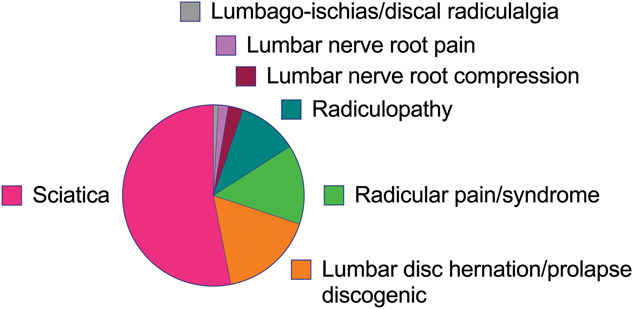
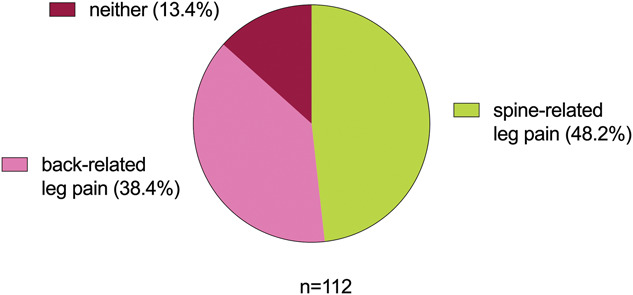
Pain radiating from the spine into the leg is commonly referred to as “sciatica,” “Sciatica” may include various conditions such as radicular pain or painful radiculopathy. It may be associated with significant consequences for the person living with the condition, imposing a reduced quality of life and substantial direct and indirect costs. The main challenges associated with a diagnosis of “sciatica” include those related to the inconsistent use of terminology for the diagnostic labels and the identification of neuropathic pain. These challenges hinder collective clinical and scientific understanding regarding these conditions. In this position paper, we describe the outcome of a working group commissioned by the Neuropathic Pain Special Interest Group (NeuPSIG) of the International Association for the Study of Pain (IASP) which was tasked with the following objectives: (1) to revise the use of terminology for classifying spine-related leg pain and (2) to propose a way forward on the identification of neuropathic pain in the context of spine-related leg pain. The panel recommended discouraging the term “sciatica” for use in clinical practice and research without further specification of what it entails. The term “spine-related leg pain” is proposed as an umbrella term to include the case definitions of somatic referred pain and radicular pain with and without radiculopathy. The panel proposed an adaptation of the neuropathic pain grading system in the context of spine-related leg pain to facilitate the identification of neuropathic pain and initiation of specific management in this patient population.
Overview
The claims and statistics of this paper haven’t been checked yet.
Run the check — free, no account needed. It reads the open-access text and checks the sources it cites.
Integrity signals
Registry
Cites
Statistics
Figures
Verification
Claims the paper makes
The claims and statistics of this paper haven’t been checked yet.
Run the check — free, no account needed. It reads the open-access text and checks the sources it cites.
Claims other papers make about this one
Each is checked against this paper’s own text: does it say what the citing paper says it does?
The source backs part of the claim, not all of it — or backs it for a different population, condition or comparison.
In the citing paper
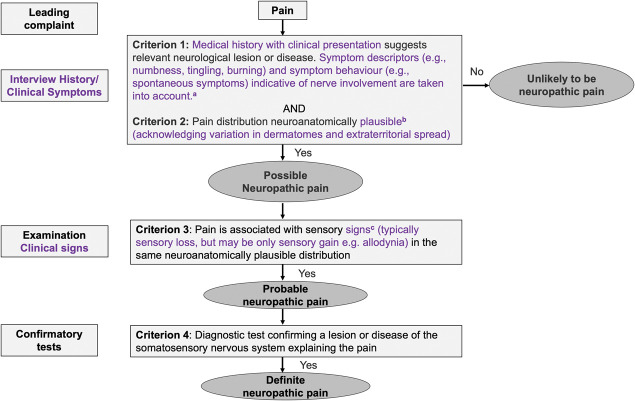
“To indicate probable neuropathic pain, pain must also be associated with sensory abnormalities (i.e., clinical signs such as allodynia and/or hyperalgesia) in the same neuroanatomical plausible distribution (Finnerup et al. 2016; Schmid et al. 2023).”
From The Prevalence of Neuropathic Pain in Multiple Sclerosis—A Systematic Review and Meta‐Analysis Using the NeuPSIG Algorithm (2026) · cites this paper as Schmid et al. 2023
Experimental — accuracy not yet measuredThe cited source says what the claim attributes to it.
In the citing paper
“the Neuropathic Pain Special Interest Group (NeuPSIG) has developed a grading system for the identification of neuropathic pain (Finnerup et al. 2016; Schmid et al. 2023)”
From The Prevalence of Neuropathic Pain in Multiple Sclerosis—A Systematic Review and Meta‐Analysis Using the NeuPSIG Algorithm (2026) · cites this paper as Schmid et al. 2023
The cited source says what the claim attributes to it.
In the citing paper
“To indicate possible neuropathic pain, patients must meet two criteria. First, the medical history should prompt a possible explanation for neuropathic pain, and patients should present with clinical symptoms. Second, the experienced pain distribution must be neuroanatomically plausible (i.e., the experienced pain is likely to correspond to the patient's neurological damage) (Finnerup et al. 2016;”
From The Prevalence of Neuropathic Pain in Multiple Sclerosis—A Systematic Review and Meta‐Analysis Using the NeuPSIG Algorithm (2026) · cites this paper as Schmid et al. 2023
The cited source says what the claim attributes to it.
In the citing paper
“Lastly, to establish definite neuropathic pain, additional objective confirmation of a lesion or disease in the somatosensory nervous system that may explain the pain is required (Finnerup et al. 2016; Schmid et al. 2023).”
From The Prevalence of Neuropathic Pain in Multiple Sclerosis—A Systematic Review and Meta‐Analysis Using the NeuPSIG Algorithm (2026) · cites this paper as Schmid et al. 2023
Self-check
Percentages, sums and reported differences re-computed from the paper’s own numbers.
The self-check needs the paper’s full text.
Citations
Cites
Rupture of the Intervertebral Disc with Involvement of the Spinal Canal
Mixter, W. J., & Barr, J. S. (1934) · New England Journal of Medicine · doi:10.1056/nejm193408022110506 · Cited by 1,895
Neuropathic pain: an updated grading system for research and clinical practice
Finnerup, N. B., Haroutounian, S., Kamerman, P., Baron, R., Bennett, D. L. H., Bouhassira, D., Cruccu, G., Freeman, R., Hansson, P., Nurmikko, T., et al. (2016) · Pain · doi:10.1097/j.pain.0000000000000492 · Cited by 1,332
Self-citationThe IASP classification of chronic pain for ICD-11: chronic neuropathic pain
Scholz, J., Finnerup, N. B., Attal, N., Aziz, Q., Baron, R., Bennett, M. I., Benoliel, R., Cohen, M., Cruccu, G., Davis, K. D., et al. (2019) · Pain · doi:10.1097/j.pain.0000000000001365 · Cited by 1,171
Self-citationDionne, C. E., Dunn, K. M., Croft, P. R., NACHEMSON, A. L., Buchbinder, R., Walker, B. F., Wyatt, M., Cassidy, J. D., Rossignol, M., Leboeuf‐Yde, C., et al. (2008) · Spine · doi:10.1097/brs.0b013e31815e7f94 · Cited by 769
Kreiner, D. S., Hwang, S. W.-H., Easa, J. E., Resnick, D. K., Baisden, J. L., Bess, S. R., Cho, C. H., DePalma, M. J., Dougherty, P. E., Fernand, R., et al. (2013) · The Spine Journal · doi:10.1016/j.spinee.2013.08.003 · Cited by 729
Peripheral neuropathic pain: a mechanism-related organizing principle based on sensory profiles
Baron, R., Maier, C., Attal, N., Binder, A., Bouhassira, D., Cruccu, G., Finnerup, N. B., Haanpää, M. L., Hansson, P. T., Hüllemann, P., et al. (2016) · Pain · doi:10.1097/j.pain.0000000000000753 · Cited by 612
Self-citationUsing screening tools to identify neuropathic pain
Bennett, M., Attal, N., Bačkonja, M., Baron, R., Bouhassira, D., Freynhagen, R., Scholz, J., Tölle, T. R., Wïttchen, H., & Jensen, T. S. (2006) · Pain · doi:10.1016/j.pain.2006.10.034 · Cited by 586
Self-citationKonstantinou, K., & Dunn, K. M. (2008) · Spine · doi:10.1097/brs.0b013e318183a4a2 · Cited by 549
Self-citationPain sensitization in people with knee osteoarthritis: a systematic review and meta-analysis
Fingleton, C., Smart, K. M., Moloney, N. A., Fullen, B. M., & Doody, C. (2015) · Osteoarthritis and Cartilage · doi:10.1016/j.joca.2015.02.163 · Cited by 446
ON DISTURBANCES OF SENSATION WITH ESPECIAL REFERENCE TO THE PAIN OF VISCERAL DISEASE
Head, H. H. (1893) · Brain · doi:10.1093/brain/16.1-2.1 · Cited by 395
Research works printed but not linked: 1
- Lasegue, 1864, Considerations sur la sciatique, Arch Gen Med, 558
Cited by
Sorted by citations
Cashin, A. G., Furlong, B., Kamper, S. J., Carvalho, D. E. D., Machado, L. A. C., Davidson, S. R. E., Bursey, K., Shaheed, C. A., & Hall, A. M. (2025) · BMJ Evidence-Based Medicine · doi:10.1136/bmjebm-2024-112974 · Cited by 43
de Zoete, R. M. J. (2023) · Journal of Clinical Medicine · doi:10.3390/jcm12227108 · Cited by 29
Analgesia for non-specific low back pain
Jones, C. M. P., Underwood, M., Chou, R., Schoene, M., Sabzwari, S., Cavanagh, J., & Lin, C.-W. C. (2024) · BMJ · doi:10.1136/bmj-2024-080064 · Cited by 21
Self-citationLiu, T., & Zhang, L. (2025) · Journal of Neuroimmune Pharmacology · doi:10.1007/s11481-025-10172-y · Cited by 12
Neurological examination for cervical radiculopathy: a scoping review
Yousif, M. S., Occhipinti, G., Bianchini, F., Feller, D., Schmid, A. B., & Mourad, F. (2025) · BMC Musculoskeletal Disorders · doi:10.1186/s12891-025-08560-9 · Cited by 12
Self-citationLascurain‐Aguirrebeña, I., Dominguez, L., Villanueva-Ruiz, I., Ballesteros, J., Rueda-Etxebarria, M., Rueda, J.-R., Casado-Zumeta, X., Araolaza-Arrieta, M., Etxarri, A. A., & Tampin, B. (2023) · Pain · doi:10.1097/j.pain.0000000000003071 · Cited by 11
Self-citationBittencourt, J. V., Corrêa, L. A., Pagnez, M. A. M., do Rio, J. P. M., Telles, G. F., Mathieson, S., & Nogueira, L. A. C. (2024) · PLoS ONE · doi:10.1371/journal.pone.0313025 · Cited by 11
Antidepressants for low back pain and spine-related leg pain
Ferraro, M. C., Urquhart, D. M., Ferreira, G. E., Wewege, M. A., Shaheed, C. A., Traeger, A. C., Hoving, J. L., Visser, E., McAuley, J. H., & Cashin, A. G. (2025) · Cochrane Database of Systematic Reviews · doi:10.1002/14651858.cd001703.pub4 · Cited by 10
Grøvle, L., Hasvik, E., Holst, R., Sætre, A., Brox, J. I., Mathiassen, S., Myhre, K., Holmgard, T. E., & Haugen, A. J. (2024) · Pain · doi:10.1097/j.pain.0000000000003280 · Cited by 9
Harrisson, S. A., Ogollah, R. O., Dunn, K. M., Foster, N. E., & Konstantinou, K. (2023) · Journal of Pain · doi:10.1016/j.jpain.2023.09.016 · Cited by 8
Self-citationPain Science in Practice (Part 8): Nociceptive, Neuropathic, and Nociplastic Pain
Hoegh, M., & Hodges, P. (2025) · Journal of Orthopaedic & Sports Physical Therapy · doi:10.2519/jospt.2025.13335 · Cited by 7
Ward, J., Grinstead, A., Kemp, A., Kersten, P., Schmid, A. B., & Ridehalgh, C. (2024) · Drugs · doi:10.1007/s40265-024-02085-6 · Cited by 7
Self-citationKapitza, C., Ballenberger, N., Luedtke, K., Schmid, A. B., & Tampin, B. (2025) · Pain · doi:10.1097/j.pain.0000000000003516 · Cited by 7
Self-citationWang, Z., Wang, Y., Ji, Y., Yang, Z., Pei, Y., Dai, J., Zhang, Y., & Zhou, F. (2023) · Journal of Pain Research · doi:10.2147/jpr.s425874 · Cited by 7
Role of Exercise on Neuropathic Pain in Preclinical Models: Perspectives for Neuroglia
Zhu, C., Zheng, Y.-L., Gong, C., Chen, B., & Guo, J. (2024) · Molecular Neurobiology · doi:10.1007/s12035-024-04511-y · Cited by 5
Zhu, Z., Schouten, T., Strijkers, R., Koes, B. W., Gerger, H., & Chiarotto, A. (2025) · Journal of Pain · doi:10.1016/j.jpain.2025.105431 · Cited by 4
Neuropathic pain – A clinical primer
Rösner, J., Shirvalkar, P. R., & de Andrade, D. C. (2024) · International review of neurobiology · doi:10.1016/bs.irn.2024.10.014 · Cited by 4
The influence of spinal pathology on extremity pain: a clinical framework
Schumacher, M. R., & Shepherd, M. (2026) · Journal of Manual & Manipulative Therapy · doi:10.1080/10669817.2026.2650499 · Cited by 3
Esposto, M., Cioeta, M., Giovannico, G., Barbari, V., & Arca, A. (2025) · Archives of Physiotherapy · doi:10.33393/aop.2025.3360 · Cited by 3
Zhu, Z., Schouten, T., Strijkers, R., Koes, B. W., Chiarotto, A., & Gerger, H. (2025) · Journal of Orthopaedic and Sports Physical Therapy · doi:10.2519/jospt.2025.13068 · Cited by 2
Protocol for a Prospective Cohort Study on Determinants of Outcomes in Lumbar Radiculopathy Surgery
Aceituno-Rodríguez, A., Bustamante, C. G. A., Rodríguez‐Rivera, C., Álvarez, M. M., Moro, C. R., Cañas, R. G., Goicoechea, C., & Matesanz-García, L. (2025) · Healthcare · doi:10.3390/healthcare13192444 · Cited by 2
Stop guessing: A clinician's guide to demystifying spine-related arm pain in primary care
Hage, R., Denis, C., Fourré, A., Finucane, L., Rynkowski, M., Pitance, L., Hoegh, M., & Dierick, F. (2026) · Musculoskeletal Science and Practice · doi:10.1016/j.msksp.2026.103549 · Cited by 2
Ischiofemoral impingement: Clinical perspectives for enhancing diagnosis, and rehabilitation
Grimaldi, A. M., Ganderton, C. L., & Nasser, A. M. (2026) · Musculoskeletal Science and Practice · doi:10.1016/j.msksp.2026.103592 · Cited by 2
Defining Spine Cancer Pain Syndromes: A Systematic Review and Proposed Terminology
Pahuta, M. A., Laufer, I., Lo, S.-F. L., Boriani, S., Fisher, C., Dea, N., Weber, M. H., Chou, D., Sahgal, A., Rhines, L. D., et al. (2025) · Global Spine Journal · doi:10.1177/21925682241259686 · Cited by 2
Jungersen, R. C., Baccaro, V. K., Hvid, L. G., Dalgas, U., & Hoegh, M. (2026) · European Journal of Pain · doi:10.1002/ejp.70375 · Cited by 1
Ridehalgh, C., Murtagh, S., Konstantinou, K., & Dilley, A. (2024) · European Spine Journal · doi:10.1007/s00586-024-08477-2 · Cited by 1
Self-citationSleijser‐Koehorst, M. L. S., Coppieters, M. W., Epping, R., Rooker, S., Verhagen, A. P., Heymans, M. W., & Scholten-Peeters, G. G. M. (2024) · JOSPT open. · doi:10.2519/josptopen.2024.0082 · Cited by 1
Self-management interventions for adults with chronic lumbar radicular pain: A scoping review
Goldsmith, R., Rudd, S., & Harding, S. A. (2025) · Musculoskeletal Science and Practice · doi:10.1016/j.msksp.2025.103364 · Cited by 1
Wexler, R. S., Balsamo, W., Fox, D. J., ZuZero, D., Parikshak, A., Kwin, S., Ramirez, J., Thompson, A. R., Carlson, H. L., Kern, T., et al. (2026) · Mindfulness · doi:10.1007/s12671-026-02782-1 · Cited by 1
Stynes, S. M., Foster, N. E., Dowd, J. O., Ostelo, R., & Konstantinou, K. (2024) · European Spine Journal · doi:10.1007/s00586-024-08342-2 · Cited by 1
Self-citationGlucocorticoid facet joint injection for chronic back or neck pain
Farrell, S. F., Smith, A. D., Schneider, B. J., Schneider, G. M., Grondin, D. E., Gelley, G. M., Bobos, P., Maher, C. G., & Gross, A. (2024) · Cochrane Database of Systematic Reviews · doi:10.1002/14651858.cd015354 · Cited by 1
Villanueva-Ruiz, I., Falla, D., Sáez, M., Araolaza-Arrieta, M., Azkue, J. J., Etxarri, A. A., Lersundi, A., & Lascurain‐Aguirrebeña, I. (2025) · Musculoskeletal Science and Practice · doi:10.1016/j.msksp.2025.103393 · Cited by 1
Wexler, R. S., Balsamo, W., Lendof, V., Shane, D., Fox, M., Heron, R. L., Berg, M., Hansen, T., Vaughn, A. W., Walton, T., et al. (2026) · Research Square · doi:10.21203/rs.3.rs-8682836/v1 · Cited by 1
Akhaddar, A. (2023) · Springer eBooks · doi:10.1007/978-3-031-44984-0_1
La lombosciatique par hernie discale, focus sur le déficit moteur
Avenel, G., Griffoul, I., Bailly, F., & Foltz, V. (2024) · Revue du Rhumatisme · doi:10.1016/j.rhum.2024.09.003
Pagnez, M. A. M., Moreira, R. D. V., do Rio, J. P. M., Corrêa, L. A., Mathieson, S., Bittencourt, J. V., & Nogueira, L. A. C. (2025) · Musculoskeletal Science and Practice · doi:10.1016/j.msksp.2025.103272
Fernandez, M., Lees, D., de Luca, K. E., Dane, D., Stilwell, P., McKenna, L., Tampin, B., Bulsara, C., Pincus, T., & Kendell, M. (2025) · Health Expectations · doi:10.1111/hex.70301
Self-citationSchmerzmechanismen in der Physiotherapie
Weidinger, D. (2025) · Schmerz Nachrichten · doi:10.1007/s44180-025-00254-x
Schmerz ist nicht gleich Schmerz – Schmerzmechanismen im Clinical Reasoning identifizieren
Thies, P., Kapitza, C., & Schwarz, A. (2025) · physiopraxis · doi:10.1055/a-2618-4219
Der Maitland Slump-Test: Entwicklung, Evidenz und klinische Anwendung
von Piekartz, H., Jones, M. A., & Moll, F. (2025) · MSK – Muskuloskelettale Physiotherapie · doi:10.1055/a-2595-4190
Syndrome-based classifications: the case for paradigm shifts in the assessment of people with pain
de Andrade, D. C., & Petersen, K. K. (2025) · Pain · doi:10.1097/j.pain.0000000000003812
Esposto, M., Arca, A., & Schmid, A. B. (2025) · JOSPT Cases · doi:10.2519/josptcases.2025.0171
Self-citationTerapeutisk träning som intervention för ischiassymtom : en systematisk litteraturstudie
Leinonen, L. (2025) · Theseus (Ammattikorkeakoulujen)
Ferreira, A. M. D. S., Silva, C. A. M., Freitas, R. P. D. A., Macedo, L. D. B., & de Souza, C. G. (2026) · Trials · doi:10.1186/s13063-025-09417-1
Shahidullah, M., Parvin, L., Ahsan, M. K., Yousuf, A. M., Siddiki, A. M. U., Hasan, M. R., Haider, M. A., & Munir, G. A. U. (2025) · Kushtia Medical College Journal · doi:10.70945/kumc.v09.i02.022
Paul, B., Paul, M., Paul, B., Das, E., Rahaman, M. A., Saha, P. K., Jalil, R., Islam, M. J., & Islam, M. R. (2025) · Kushtia Medical College Journal · doi:10.70945/kumc.v09.i02.018
Demartini, L., Mazzoleni, S., Thomson, S., Conversa, G., Bettaglio, R., Malovini, A. L., & Bonezzi, C. (2026) · Neuromodulation Technology at the Neural Interface · doi:10.1016/j.neurom.2026.02.007
Riera, M. H. (2026) · Tesis Doctorals en Xarxa (Consorci de Serveis Universitaris de Catalunya)
Chen, J., Farrell, S. F., & Sterling, M. M. (2026) · Musculoskeletal Science and Practice · doi:10.1016/j.msksp.2026.103615
Pesesse, P., Colman, D., Grosdent, S., Vanderthommen, M., Scholtes, F., & Demoulin, C. (2026) · Musculoskeletal Science and Practice · doi:10.1016/j.msksp.2026.103622
Spine-related leg pain: Definitions, etiology, clinical presentation, and management
Ballay, C. M., Mansfield, C. J., Cook, C. E., Erickson, M. M., McCormick, Z. L., & Remis, A. (2026) · Musculoskeletal Science and Practice · doi:10.1016/j.msksp.2026.103623
Emde, J., Hansen, T., Kolodziej, M. A., Schänzer, A., Birklein, F., Geber, C., & Krämer, H. H. (2026) · Acta Neurologica Scandinavica · doi:10.1155/ane/7872571
L’esprit critique en santé ::antidote à l’ère de l’hyperinformation
Stitelmann, A., & Nicolo, P. (2026) · ArODES (HES-SO (https://www.hes-so.ch/)) · doi:10.55498/mainslibres.2026.02.2.087
Meske, D. S., Dworkin, R. H., Gudin, J., Jaros, M., Vought, K., Horine, S., Lissin, D., & Vaughn, B. (2026) · Contemporary Clinical Trials · doi:10.1016/j.cct.2026.108452
Improving Clinical Trial Design in Low Back Pain: Insights from Studies of Gabapentinoids
Baron, R., Freynhagen, R., Morlion, B. J., Truini, A., Walker, C., Er, Ş., & Lyndon, G. J. (2026) · Pain and Therapy · doi:10.1007/s40122-026-00886-z
Self-citationZhao, R. (2026) · Perioperative Precision Medicine · doi:10.61189/986324cwpmgi
Nee, R., Boyd, B. S., Sierra‐Silvestre, E., & Coppieters, M. W. (2026) · Musculoskeletal Science and Practice · doi:10.1016/j.msksp.2026.103666
Under pressure: lessons from and beyond entrapment neuropathies
Schmid, A. B., Chang, P.-S., Camerone, E. M., & Sierra‐Silvestre, E. (2026) · Pain · doi:10.1097/j.pain.0000000000004012
Self-citation
Metadata
- Authors
- Schmid, A. B., Tampin, B., Baron, R., Finnerup, N. B., Hansson, P., Hietaharju, A., Konstantinou, K., Lin, C.-W. C., Markman, J., Price, C., Smith, B. H., & Slater, H.
- Affiliations
- University of Oxford (GB)
- Curtin University (AU)
- University Hospital Schleswig-Holstein (DE)
- Aarhus University (DK)
- Oslo University Hospital (NO)
- Tampere University (FI)
- Midlands Partnership NHS Foundation Trust (GB)
- The University of Sydney (AU)
- University of Rochester Medicine (US)
- University of Dundee (GB)
- Corresponding author
- Schmid, Annina B.
- ORCID
- Venue
- Pain
- Published
- 2023-05-25
- Volume
- 164
- Issue
- 8
- Pages
- 1693-1704
- ISSN
- 0304-3959 (ISSN-L)
- 1872-6623
- PMC
- PMC10348639
- OpenAlex
- W4378373890
- Cited by
- 51
- References
- 76
- Citations by year
- 2026: 15 · 2025: 20 · 2024: 11 · 2023: 5
- FWCI
- 9.06
- Type
- journal article
- Language
- en
- Open access
- hybrid
- doi.org
- Locations
- Pain (publishedVersion, cc-by)
- PubMed Central (publishedVersion, cc-by)
- PubMed (publishedVersion)
- Discovery Research Portal (University of Dundee) (submittedVersion, cc-by)
- Library Osnabrück University (Hochschule Osnabrück) (submittedVersion, cc-by)
- Tampere University Institutional Repository (Tampere University) (submittedVersion, cc-by)
- Funders
- International Association for the Study of Pain
- Wellcome Trust (222101, 222101/Z/20/Z)
- National Institute for Health and Care Research
- Lundbeckfonden (R359-2020 2620)
- H. Lundbeck A/S
- Medical Research Council
- National Health and Medical Research Council
- Topics
- Health Sciences › Medicine › Physiology (medical) › Pain Mechanisms and Treatments
- Health Sciences › Health Professions › Physical Therapy, Sports Therapy and Rehabilitation › Musculoskeletal pain and rehabilitation
- Health Sciences › Medicine › Anesthesiology and Pain Medicine › Pain Management and Treatment
- Keywords
- sciatica, neuropathic pain, radicular pain, radiculopathy, pain terminology, diagnostic classification
- MeSH terms
- Humans, Leg, Neuralgia, Quality of Life, Radiculopathy, Sciatica
About these checks
Registry, retraction, Cites and statistics results are computed, not judged, with one exception: a printed reference that no index lists is read once by a model before it counts as a citation error. Claims are extracted by a model and kept only when their quote appears verbatim in the text; each cited source is then checked, with a model’s help, for whether it says what the claim relies on. Those verdicts can be wrong — read the claim’s quote and the cited source before relying on one.
Statistics and arithmetic are recomputed, not judged.
Confidence bands are shown only for fields calibrated on our annotated test set. None is calibrated yet, so no band is shown.
What counts as a claim ›How we measure confidence ›How we check this ›
Are you an author, or do you see a problem with this page? Request a review
