

A rational-emotive stress management intervention for reducing job burnout and dysfunctional distress among special education teachers: An effect study
Open accessThe DOI matches its Crossref record; 55 of the 57 references it cites were found in a registry or an index.
Abstract
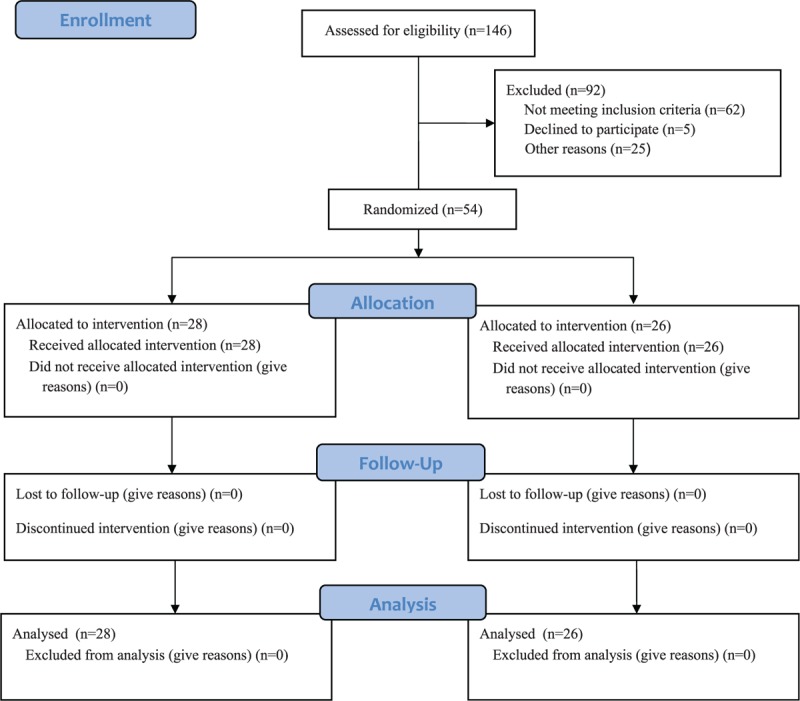
BACKGROUND: Job-related burnout and distress are adverse stress responses which affect individuals in their occupational environment. This study aimed at investigating the effect of a rational-emotive stress management program on job burnout and dysfunctional distress among special education teachers in Nigeria. METHODS: A pretest-posttest randomized control group design was used. The participants in the study were 54 special education teachers. Data were collected using self-report questionnaires. Participants were allocated to either the treatment group (n = 28 [59.1%]) or the waitlist control group (n = 26 [48.1%]), respectively. A rational-emotive stress management manual was used to deliver the intervention. We statistically analyzed the data collected at three-time points with repeated-measures analysis of variance. RESULTS: At baseline, the job-related burnout symptoms and distress scores of participants were high. However, an intention-to-treat analysis showed that the rational-emotive stress management intervention program was efficacious in reducing the levels of job-related burnout symptoms and dysfunctional distress among participants assigned to the treatment group, compared to a waitlisted group at post-treatment and follow-up meetings. CONCLUSION: Our study demonstrates the effectiveness of a rational-emotive stress management intervention in reducing the level of job-related burnout and distress in a sample of special education teachers in Nigeria. Occupational health counsellors and other clinicians with sufficient knowledge of rational-emotive behavior therapy framework are urged to employ this approach in assisting other employees in managing job burnout symptoms, and distress.
Overview
The claims and statistics of this paper haven’t been checked yet.
Free: it reads the open-access text and checks the first 5 claims that cite a source we can check. Create a free account to check every claim.
Integrity signals
Registry
Cites
Statistics
Figures
Verification
Claims the paper makes
The claims and statistics of this paper haven’t been checked yet.
Free: it reads the open-access text and checks the first 5 claims that cite a source we can check. Create a free account to check every claim.
Claims other papers make about this one
Each is checked against this paper’s own text: does it say what the citing paper says it does?
The source backs part of the claim, not all of it — or backs it for a different population, condition or comparison.
In the citing paper
“Nonetheless, even with considerably adequate environmental mediation, distress and burnout tend to persist in clinical cases, needing psychotherapeutic interventions[12].”
From Clinical benefits of rational-emotive stress management therapy for job burnout and dysfunctional distress of special education teachers (2020) · cites this paper as [12]
Experimental — accuracy not yet measuredThe source backs part of the claim, not all of it — or backs it for a different population, condition or comparison.
In the citing paper
“Ugwoke et al[12]’s rational-emotive stress management intervention was a clinical trial, and so participants who met the criteria for job burnout and dysfunctional distress at the pre-treatment evaluation were randomized into either intervention group (n = 28; 59.1%) and waitlist control group (n = 26; 41.9%).”
From Clinical benefits of rational-emotive stress management therapy for job burnout and dysfunctional distress of special education teachers (2020) · cites this paper as [12]
Experimental — accuracy not yet measuredThe source backs part of the claim, not all of it — or backs it for a different population, condition or comparison.
In the citing paper
“Studies indicate that workers’ irrational beliefs about work and work experiences correlate with burnout among teachers, especially when it is linked to dysfunctional distress[12,14,15].”
From Clinical benefits of rational-emotive stress management therapy for job burnout and dysfunctional distress of special education teachers (2020) · cites this paper as [12]
Experimental — accuracy not yet measuredThe source backs part of the claim, not all of it — or backs it for a different population, condition or comparison.
In the citing paper
“Ugwoke et al[12] demonstrated that RESMT is an effective intervention for clinical cases of emotional exhaustion, burnout, and dysfunctional distress.”
From Clinical benefits of rational-emotive stress management therapy for job burnout and dysfunctional distress of special education teachers (2020) · cites this paper as [12]
Experimental — accuracy not yet measuredThe source backs part of the claim, not all of it — or backs it for a different population, condition or comparison.
In the citing paper
“Being based on ABCDEF model, rational-emotive stress management therapy by Ugwoke et al[12] is beneficial to both therapists/clinicians and their clients”
From Clinical benefits of rational-emotive stress management therapy for job burnout and dysfunctional distress of special education teachers (2020) · cites this paper as [12]
Experimental — accuracy not yet measured
9 more claims about this paper
Create a free account to see every claim other papers make about this one.
Self-check
Percentages, sums and reported differences re-computed from the paper’s own numbers.
The self-check needs the paper’s full text.
Citations
Cites
Bonanno, G. A. (2004) · American Psychologist · doi:10.1037/0003-066x.59.1.20 · Cited by 6,851
Burnout and Engagement in University Students: A Cross-National Study
Schaufeli, W. B., Martínez, I. M., Pinto, A. M., Salanova, M., & Bakker, A. B. (2002) · Journal of Cross-Cultural Psychology · doi:10.1177/0022022102033005003 · Cited by 3,418
Effects of occupational stress management intervention programs: A meta-analysis.
Richardson, K. M., & Rothstein, H. R. (2008) · Journal of Occupational Health Psychology · doi:10.1037/1076-8998.13.1.69 · Cited by 1,374 · cited 1×
“Also, evidence suggests that in about 80% of all work-related injuries and 40% of workplace turnover, work-related distress is a major contributory factor.([31]) Elsewhere, work-related distress affects up to 28% of workers.”
BackgroundA comparison of the construct validity of two burnout measures in two groups of professionals.
Shirom, A., & Melamed, S. (2006) · International Journal of Stress Management · doi:10.1037/1072-5245.13.2.176 · Cited by 763
Dahlin, M. E., & Runeson, B. (2007) · BMC Medical Education · doi:10.1186/1472-6920-7-6 · Cited by 459
Commitment to Philosophy, Teacher Efficacy, and Burnout Among Teachers of Children with Autism
Jennett, H. K., Harris, S. L., & Mesibov, G. B. (2003) · Journal of Autism and Developmental Disorders · doi:10.1023/b:jadd.0000005996.19417.57 · Cited by 361
Lee, R. T., & Ashforth, B. E. (1993) · Organizational Behavior and Human Decision Processes · doi:10.1006/obhd.1993.1016 · Cited by 334
Rational Psychotherapy and Individual Psychology
Ellis, A. (2011) · Cited by 255
Yin, H., Huang, S., & Wang, W. (2016) · International Journal of Environmental Research and Public Health · doi:10.3390/ijerph13090907 · Cited by 214 · cited 1×
“Burnout is detrimental to teacher well being.([11]) Job burnout among teachers is also related to reduced quality of teaching,([12]) diminished tolerance for misbehavior([13]) and more use of cruel disciplinary measures.”
BackgroundTurner, M. J. (2016) · Frontiers in Psychology · doi:10.3389/fpsyg.2016.01423 · Cited by 214
Research works printed but not linked: 16
- 6. Oboegbulem A, Ogbonnaya NO. Management of administrative-related stress of academic heads of departments in federal and state universities in South-East Nigeria. JONAED 2008;4:1.
- 9. Maslach C, Jackson SE, Schwab RL. Maslach C, Jackson SE, Leiter MP. Maslach Burnout Inventory-Educators Survey (MBI-ES). MBI Manual Consulting Psychologists Press, 3rd edMountain View, CA:1996.
- 18. Meehan KE. Examining the Relationship Between Irrational Beliefs, Rational Emotive Coping Strategies, and Teacher Burnout. 2011;New York: St John's University, Doctoral dissertation.
- 20. DiLorenzo T, David D, Montgomery GH. The impact of general and specific rational and irrational beliefs on exam distress; a further investigation of the binary model of distress as an emotional regulation model. J Cogn Behav Psychother 2011;11:121–42.
- 25. Ellis A. Reason and Emotion in Psychotherapy (Rev. Ed.). Secaucus, NJ: Birsch Lane; 1994.
- 30. David AR, Szamoskozi S. A meta-analytical study on the effects of cognitive behavioral techniques for reducing distress in organizations. J Cogn Behav Psychother 2011;11:221–36.
- 33. Beriman J. Can coaching combat distress at work? Occup Health 2007;59:27–30.
- 38. Sporrle M, Welpe IM. Zerbe WJ, Ashkanasy N, Hartel CEJ. How to feel rationally: linking rational emotive behaviour therapy with components of emotional intelligence. Individual and Organizational perspectives on Emotion Management and Display Research on Emotion in Organizations. Amsterdam: Elsevier; 2006. 291–322.
- 39. Adomeh OCI. Fostering emotional adjustment among Nigerian adolescents with REBT. Educ Res Q 2006;29:21–9.
- 43. Kushnir T, Malkinson R, Ribak J. Rational thinking and distress management in health workers: a psycho-educational program. Int J Distress Manag 1998;5:169–78. · doi:10.1023/a:1022941031900
- 47. Agbo I. Assessment of Stress of Teachers of Primary School Pupils in Enugu State. 2012;Awka, Nigeria: Nnamdi Azikiwe University, Master's Thesis.
- 48. Eze PO. Effect of Rational Emotive Behavior Therapy on Work Stress of Special Educators in Enugu State. 2017;Nsukka, Nigeria: University of Nigeria, Postgraduate Diploma Thesis.
- 61. Opris D, Macavei B. The profile of emotional distress. J Cogn Behav Psychother 2007;7:139–59.
- 68. Ellis A, Dryden W. The Practice of Rational-Emotive Behavior Therapy. New York, NY: Springer; 1997.
- 69. Ellis A, Gordon J, Neenan M, et al. Stress Counseling: A Rational Emotive Behavior Approach. New York: Springer Publishing Company; 1997.
- 76. Macavei B. The role of irrational beliefs in the rational emotive behavioral theory of depression. J Cogn Behav Psychother 2005;5:73–81.
Cited by
Interventions to Reduce Stress and Burnout among Teachers: A Scoping Review
Agyapong, B., Brett-MacLean, P., Burback, L., Agyapong, V. I. O., & Wei, Y. (2023) · International Journal of Environmental Research and Public Health · doi:10.3390/ijerph20095625 · Cited by 286
van Ginneken, N., Chin, W. Y., Lim, Y. C., Ussif, A., Singh, R., Shahmalak, U., Purgato, M., Rojas-García, A., Uphoff, E., McMullen, S., et al. (2021) · Cochrane Database of Systematic Reviews · doi:10.1002/14651858.cd009149.pub3 · Cited by 188
Factors influencing teacher wellbeing and burnout in schools: A scoping review1
Sohail, M. M., Baghdady, A., Choi, J., Huynh, H. V., Whetten, K., & Proeschold‐Bell, R. J. (2023) · Work · doi:10.3233/wor-220234 · Cited by 131
Beames, J. R., Spanos, S., Roberts, A., McGillivray, L., Li, S., Newby, J. M., O’Dea, B., & Werner-Seidler, A. (2023) · Educational Psychology Review · doi:10.1007/s10648-023-09720-w · Cited by 109
Ede, M. O., Anyanwu, J. I., Onuigbo, L. N., Ifelunni, C. O., Albi-Oparaocha, F. C., Okenyi, E. C., Agu, M. A., Ugwuanyi, L. T., Ugwuanyi, C. S., Eseadi, C., et al. (2020) · Journal of Rational-Emotive & Cognitive-Behavior Therapy · doi:10.1007/s10942-020-00342-7 · Cited by 89
Self-citation
Metadata
- Authors
- Ugwoke, S. C., Eseadi, C., Onuigbo, L. N., Aye, E. N., Akaneme, I. N., Oboegbulem, A. I., Ezenwaji, I. O., Nwobi, A. U., Nwaubani, O. O., Ezegbe, B. N., Ede, M. O., Orji, C. T., Onuoha, J. C., Onu, E. A., Okeke, F., Agu, P., Omeje, J. C., Omeke, F., Ugwu, R., Arumede, F., & Eneh, A.
- Affiliations
- University of Nigeria (NG)
- Corresponding author
- Onuigbo, Liziana N.
- ORCID
- Venue
- Medicine
- Published
- 2018-04
- Volume
- 97
- Issue
- 17
- Pages
- e0475
- ISSN
- 0025-7974 (ISSN-L)
- PMC
- PMC5944538
- OpenAlex
- W2800925677
- Semantic Scholar
- a96db2db9305ad833cddc250612705fd6d6180e8
- Cited by
- 73
- References
- 57
- Citations by year
- 2026: 5 · 2025: 5 · 2024: 6 · 2023: 12 · 2022: 12 · 2021: 11 · 2020: 10 · 2019: 9 · 2018: 3
- FWCI
- 11.19
- Type
- journal article
- Language
- en
- Open access
- gold
- doi.org
- Licence
- cc-by-nc-sa
- Locations
- Medicine (publishedVersion, cc-by-nc-sa)
- Europe PMC (PubMed Central) (publishedVersion, cc-by-nc-sa)
- PubMed Central (publishedVersion, cc-by-nc-sa)
- PubMed (publishedVersion)
- Topics
- Social Sciences › Psychology › Social Psychology › Stress and Burnout Research
- Social Sciences › Psychology › Clinical Psychology › Psychological Treatments and Assessments
- Health Sciences › Medicine › Public Health, Environmental and Occupational Health › Occupational Health and Burnout
- Keywords
- burnout, special education teachers, occupational stress, stress management interventions, rational emotive behavior therapy
- MeSH terms
- School Teachers, Adult, Behavior Therapy, Burnout, Professional, Education, Special, Female, Humans, Male, Nigeria, Stress, Psychological, Occupational Health, Workplace
About these checks
Registry, retraction, Cites and statistics results are computed, not judged, with one exception: a printed reference that no index lists is read once by a model before it counts as a citation error. Claims are extracted by a model and kept only when their quote appears verbatim in the text; each cited source is then checked, with a model’s help, for whether it says what the claim relies on. Those verdicts can be wrong — read the claim’s quote and the cited source before relying on one.
Statistics and arithmetic are recomputed, not judged.
Confidence bands are shown only for fields calibrated on our annotated test set. None is calibrated yet, so no band is shown.
What counts as a claim ›How we measure confidence ›How we check this ›
Are you an author, or do you see a problem with this page? Request a review
Data sources
Bibliographic data: Semantic Scholar, OpenAlex, Crossref.
Contains information from the Semantic Scholar Academic Graph Datasets, made available under the ODC Attribution License (ODC-BY 1.0).
Semantic Scholar’s data is described in: Kinney, R., et al. (2023). The Semantic Scholar Open Data Platform. arXiv:2301.10140.
