

Association of metformin intake with bladder cancer risk and oncologic outcomes in type 2 diabetes mellitus patients: A systematic review and meta-analysis
Open accessThe DOI matches its Crossref record; 48 of the 49 references it cites were found in a registry or an index.
Abstract
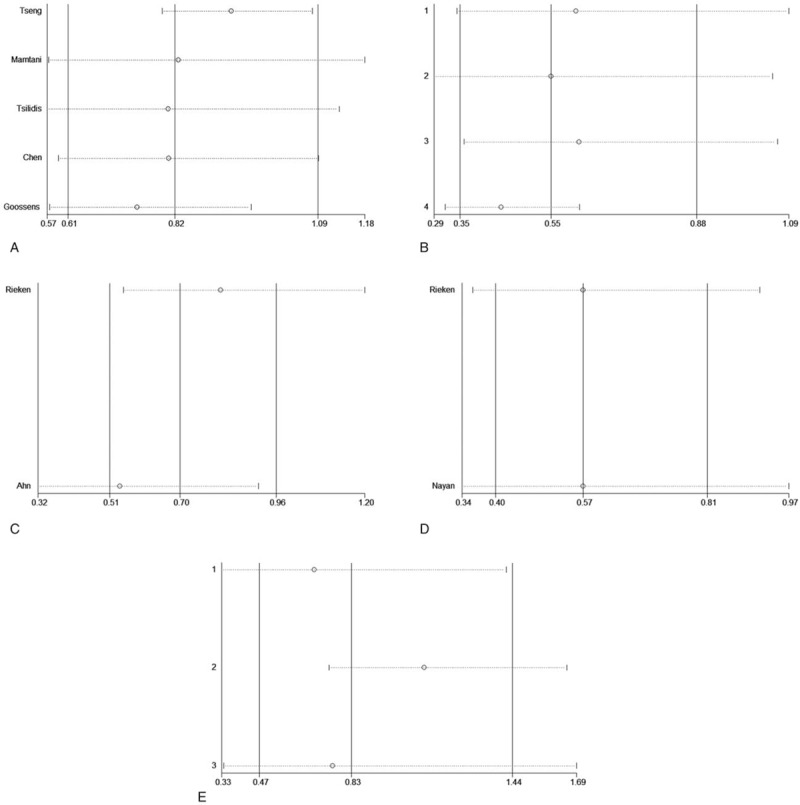
BACKGROUND: Recent clinical trials indicated that metformin intake might play a protective role in the incidence and oncologic outcomes of various cancers. However, its protective effect on bladder cancer remains uncertain. METHODS: We performed a meta-analysis to investigate the association between metformin intake and bladder cancer risk as well as oncologic outcomes in diabetes mellitus (DM) patients. A comprehensive literature search was performed using PubMed, Embase, and the Cochrane Central Search Library in December 2017. Hazard ratio (HR) with 95% confidence interval (CI) was pooled. RESULTS: A total of 9 retrospective cohort studies with 1,270,179 patients were included. A meta-analysis revealed that metformin intake was associated with an increased recurrence-free survival (HR = 0.55, 95% confidence interval [CI] = 0.35-0.88; P = .01; I = 64%), improved progression-free survival (HR = 0.70, 95% CI = 0.51-0.96; P = .03; I = 33%), and prolonged cancer-specific survival (HR = 0.57, 95% CI = 0.40-0.81; P = .002; I = 0%). However, results demonstrated that metformin intake was not associated with a decreased incidence of bladder cancer (HR = 0.82, 95% CI = 0.61-1.09; P = .17; I = 85%) or an increased overall survival in bladder cancer patients (HR = 0.83, 95% CI = 0.47-1.44; P = .50; I = 64%). CONCLUSION: The present meta-analysis indicated that metformin intake could improve the prognosis of bladder cancer patients. Further prospective cohort studies and mechanistic studies are still required to determine the precise role of metformin in the initiation and progression of bladder cancer.
Overview
The claims and statistics of this paper haven’t been checked yet.
Free: it reads the open-access text and checks the first 5 claims that cite a source we can check. Create a free account to check every claim.
Integrity signals
Registry
Cites
Statistics
Figures
Verification
Claims the paper makes
The claims and statistics of this paper haven’t been checked yet.
Free: it reads the open-access text and checks the first 5 claims that cite a source we can check. Create a free account to check every claim.
Claims other papers make about this one
Each is checked against this paper’s own text: does it say what the citing paper says it does?
The check wasn’t confident either way, so it gives no verdict — never disputed.
In the citing paper
“A decreased risk of colorectal adenomas and colorectal carcinoma is a consistent finding with a potential for a survival benefit for colorectal carcinoma.1784–1790”
From American Association of Clinical Endocrinology Clinical Practice Guideline: Developing a Diabetes Mellitus Comprehensive Care Plan-2022 Update. (2022) · cites this paper as [1784]
Experimental — accuracy not yet measured
Self-check
Percentages, sums and reported differences re-computed from the paper’s own numbers.
The self-check needs the paper’s full text.
Citations
Cites
Measuring inconsistency in meta-analyses
Higgins, J. P. T., Thompson, S. G., Deeks, J. J., & Altman, D. G. (2003) · BMJ · doi:10.1136/bmj.327.7414.557 · Cited by 63,139
Bias in meta-analysis detected by a simple, graphical test
Egger, M., Smith, G. D., Schneider, M., & Minder, C. (1997) · BMJ · doi:10.1136/bmj.315.7109.629 · Cited by 56,722 · cited 1×
“Although we could not evaluate publication bias by Begg funnel plot or Egger test([18,19]) because of the small number of included studies, we conducted a sensitivity analysis by the leave-one-out cross validation to assess the stability of the presentmeta-analysis results.”
MethodPreferred reporting items for systematic reviews and meta-analyses: The PRISMA statement
Moher, D., Liberati, A., Tetzlaff, J., Altman, D. G., & the PRISMA Group* (2009) · Annals of Internal Medicine · doi:10.7326/0003-4819-151-4-200908180-00135 · Cited by 37,554
Operating characteristics of a rank correlation test for publication bias
Begg, C. B., & Mazumdar, M. (1994) · Biometrics · doi:10.2307/2533446 · Cited by 16,955 · cited 1×
“Although we could not evaluate publication bias by Begg funnel plot or Egger test([18,19]) because of the small number of included studies, we conducted a sensitivity analysis by the leave-one-out cross validation to assess the stability of the presentmeta-analysis results.”
MethodPractical methods for incorporating summary time-to-event data into meta-analysis.
Tierney, J. F., Stewart, L. A., Ghersi, D., Burdett, S., & Sydes, M. R. (2007) · Trials · doi:10.1186/1745-6215-8-16 · Cited by 6,208 · cited 4×
“If not available, HRs and their 95% CIs were calculated based on methods by Tierney et al.([15]) The quality of studies was evaluated using the Newcastle-Ottawa Scale (NOS) by 2 reviewers independently.”
MethodInfluentialInzucchi, S. E., Bergenstal, R. M., Buse, J. B., Diamant, M., Ferrannini, E., Nauck, M., Peters, A. L., Tsapas, A., Wender, R., & Matthews, D. R. (2012) · Diabetologia · doi:10.1007/s00125-012-2534-0 · Cited by 3,919
Sylvester, R. J., van der Meijden, A. P. M., Oosterlinck, W., Witjes, J. A., Bouffioux, C., Denis, L., Newling, D. W. W., & Kurth, K. (2006) · European Urology · doi:10.1016/j.eururo.2005.12.031 · Cited by 3,013 · cited 1×
“Although neoadjuvant chemotherapy, surgery, and postoperative chemotherapy constitute a comprehensive treatment regimen that can improve survival and quality of life, most patients experience recurrence and metastasis.([2]) Moreover, owing to the lifetime need for monitoring tumor recurrence, patients with bladder can…”
BackgroundCritical nodes in signalling pathways: insights into insulin action
Taniguchi, C. M., Emanuelli, B., & Kahn, C. R. (2006) · Nature Reviews Molecular Cell Biology · doi:10.1038/nrm1837 · Cited by 2,760 · cited 1×
“6 Substrate-1 (IRS-1), which results in inactivation of downstream insulin-associated signaling pathways like PI3K-AKT/Protein Kinase B (PKB) and Ras-MAPK to inhibit tumor growth.([32,33]) In line with this mechanism, Wang et al([34]) demonstrated that human bladder cancer cells transfected with hsa-miR-96 inhibitor s…”
BackgroundBladder Cancer Incidence and Mortality: A Global Overview and Recent Trends
Antoni, S., Ferlay, J., Soerjomataram, I., Znaor, A., Jemal, A., & Bray, F. (2017) · European Urology · doi:10.1016/j.eururo.2016.06.010 · Cited by 2,514
Metformin and reduced risk of cancer in diabetic patients
Evans, J. M. M., Donnelly, L. A., Emslie-Smith, A. M., Alessi, D. R., & Morris, A. D. (2005) · BMJ · doi:10.1136/bmj.38415.708634.f7 · Cited by 2,388
Ben Sahra, I., Laurent, K., Giuliano, S., Larbret, F., Ponzio, G., Gounon, P., Le Marchand-Brustel, Y., Giorgetti-Peraldi, S., Cormont, M., Bertolotto, C., et al. (2010) · Cancer Research · doi:10.1158/0008-5472.can-09-2782 · Cited by 536
Economic aspects of bladder cancer: what are the benefits and costs?
Sievert, K. D., Amend, B., Nagele, U., Schilling, D., Bedke, J., Horstmann, M., Hennenlotter, J., Kruck, S., & Stenzl, A. (2009) · World Journal of Urology · doi:10.1007/s00345-009-0395-z · Cited by 484 · cited 1×
“Moreover, owing to the lifetime need for monitoring tumor recurrence, patients with bladder cancer usually have poor quality of life and the typical cost of the disease from diagnosis to death is one of the highest among all cancers.([3]) Diabetes mellitus (DM), a metabolic disease that affects patients worldwide, is…”
BackgroundCumberbatch, M. G., Rota, M., Catto, J. W. F., & La Vecchia, C. (2016) · European Urology · doi:10.1016/j.eururo.2015.06.042 · Cited by 451
Iliopoulos, D., Hirsch, H. A., & Struhl, K. (2011) · Cancer Research · doi:10.1158/0008-5472.can-10-3471 · Cited by 450
Rattan, R., Graham, R. P., Maguire, J. L., Giri, S., & Shridhar, V. (2011) · Neoplasia · doi:10.1593/neo.11148 · Cited by 316
Metformin: A review of its metabolic effects
Cusi, K. J., & DeFronzo, R. A. (1998) · Diabetes reviews · Cited by 310
Pierotti, M. A., Berrino, F., Gariboldi, M., Melani, C., Mogavero, A., Negri, T., Pasanisi, P., & Pilotti, S. (2013) · Oncogene · doi:10.1038/onc.2012.181 · Cited by 250 · cited 1×
“6 Substrate-1 (IRS-1), which results in inactivation of downstream insulin-associated signaling pathways like PI3K-AKT/Protein Kinase B (PKB) and Ras-MAPK to inhibit tumor growth.([32,33]) In line with this mechanism, Wang et al([34]) demonstrated that human bladder cancer cells transfected with hsa-miR-96 inhibitor s…”
BackgroundMetformin attenuates ovarian cancer cell growth in an AMP‐kinase dispensable manner
Rattan, R., Giri, S., Hartmann, L. C., & Shridhar, V. (2011) · Journal of Cellular and Molecular Medicine · doi:10.1111/j.1582-4934.2009.00954.x · Cited by 223 · cited 1×
“Meanwhile the activation of AMPK also downregulates the mammalian target of rapamycin (mTOR), which eventually induces growth inhibition of cancer cells and protein synthesis arrest.([30]) A study by Zhang et al([31]) showed that metformin inhibits the growth of bladder cancer cells via indirect activation of AMPK, wh…”
BackgroundTransurethral Resection of Muscle-Invasive Bladder Cancer: 10-Year Outcome
Herr, H. W. (2001) · Journal of Clinical Oncology · doi:10.1200/jco.2001.19.1.89 · Cited by 215 · cited 2×
“Introduction Bladder cancer occurs frequently and is a common and aggressive malignancy of the urinary system, which is clinically characterized by its progression, recurrence, metastasis, and drug resistance.([1]) Although neoadjuvant chemotherapy, surgery, and postoperative chemotherapy constitute a comprehensive tr…”
BackgroundMethodTsilidis, K. K., Capothanassi, D., Allen, N. E., Rizos, E. C., Lopez, D. S., van Veldhoven, K., Sacerdote, C., Ashby, D., Vineis, P., Tzoulaki, I., et al. (2014) · Diabetes Care · doi:10.2337/dc14-0584 · Cited by 190
Yasmeen, A., Beauchamp, M.-C., Piura, E., Segal, E., Pollak, M., & Gotlieb, W. H. (2011) · Gynecologic Oncology · doi:10.1016/j.ygyno.2011.02.021 · Cited by 145
Janssen, F., & Kunst, A. E. (2004) · Europe PMC (PubMed Central) · Cited by 138
Takahashi, A., Kimura, F., Yamanaka, A., Takebayashi, A., Kita, N., Takahashi, K., & Murakami, T. (2014) · Cancer Cell International · doi:10.1186/1475-2867-14-53 · Cited by 135
The Potential Effect of Metformin on Cancer: An Umbrella Review
Yu, H., Zhong, X., Gao, P., Shi, J., Wu, Z., Guo, Z., Wang, Z., & Song, Y. (2019) · Frontiers in Endocrinology · doi:10.3389/fendo.2019.00617 · Cited by 135
Combination of metformin with chemotherapeutic drugs via different molecular mechanisms
Peng, M., Darko, K. O., Tao, T., Huang, Y., Su, Q., He, C., Yin, T., Liu, Z., & Yang, X. (2017) · Cancer Treatment Reviews · doi:10.1016/j.ctrv.2017.01.005 · Cited by 118
Luengo, A., Sullivan, L. B., & Heiden, M. G. V. (2014) · BMC Biology · doi:10.1186/s12915-014-0082-4 · Cited by 108 · cited 1×
“First, it activates AMP-activated protein kinase (AMPK) to lower the blood glucose level, which can indirectly inhibit the growth of tumor cells.([29])Meanwhile the activation of AMPK also downregulates the mammalian target of rapamycin (mTOR), which eventually induces growth inhibition of cancer cells and protein syn…”
BackgroundMeta-analysis of studies using metformin as a reducer for liver cancer risk in diabetic patients
Ma, S., Zheng, Y., Xiao, Y., Zhou, P., & Tan, H. (2017) · Medicine · doi:10.1097/md.0000000000006888 · Cited by 89
Rieken, M., Xylinas, E. N., Kluth, L. A., Crivelli, J. J., Chrystal, J., Faison, T., Lotan, Y., Karakiewicz, P. I., Fajković, H., Babjuk, M., et al. (2013) · British Journal of Urology · doi:10.1111/bju.12448 · Cited by 79
Diabetes mellitus and the risk of bladder cancer: A PRISMA-compliant meta-analysis of cohort studies
Xu, Y., Huo, R., Chen, X., & Yu, X. (2017) · Medicine · doi:10.1097/md.0000000000008588 · Cited by 76
Incidence of Bladder Cancer in Patients With Type 2 Diabetes Treated With Metformin or Sulfonylureas
Mamtani, R., Pfanzelter, N., Haynes, K., Finkelman, B. S., Wang, X., Keefe, S. M., Haas, N. B., Vaughn, D. J., & Lewis, J. D. (2014) · Diabetes Care · doi:10.2337/dc13-1489 · Cited by 71 · cited 1×
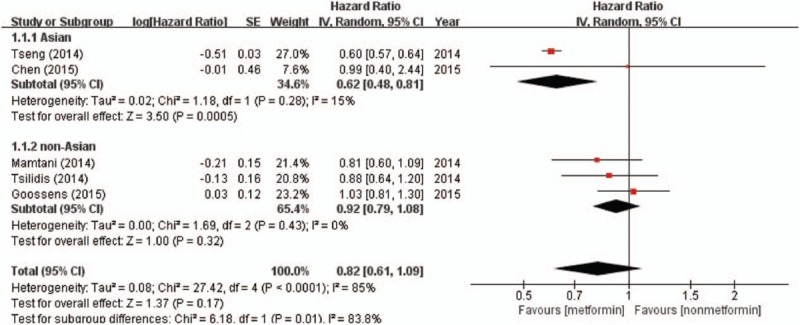
“Studies by Tsilidis et al,([28])Mamtani et al,([23]) Goossens et al,([22]) and Chen et al([21]) demonstrated that metformin use was not associated with a decreased incidence of bladder cancer.”
Ma, S., Zheng, Y., Zhou, P., Xiao, Y., & Tan, H. (2016) · Oncotarget · doi:10.18632/oncotarget.11033 · Cited by 70
Zhang, F., Yang, Y., Skrip, L., Hu, D., Wang, Y., Wong, C., Qiu, J., & Lei, H. (2012) · Acta Diabetologica · doi:10.1007/s00592-012-0439-5 · Cited by 57
Metformin may reduce bladder cancer risk in Taiwanese patients with type 2 diabetes
Tseng, C. (2014) · Acta Diabetologica · doi:10.1007/s00592-014-0562-6 · Cited by 57 · cited 6×
“Fourth, the antitumor effect of metformin was dose-dependent and treatment time-dependent, which was shown by Tseng.([27]) However, studies included in our meta-”
MethodResultInfluentialYang, L. (2011) · Molecular Medicine Reports · doi:10.3892/mmr.2011.621 · Cited by 56 · cited 2×
“[32,33] In line with this mechanism, Wang et al[34] demonstrated that human bladder cancer cells transfected with hsa-miR-96 inhibitor significantly reduced the growth of bladder cancer cells through reduction of mRNA and protein levels of IRS-1.”
MethodSurvivin: Role in Diagnosis, Prognosis, and Treatment of Bladder Cancer
Akhtar, M., Gallagher, L., & Rohan, S. M. (2006) · Advances in Anatomic Pathology · doi:10.1097/00125480-200605000-00003 · Cited by 55
Rieken, M., Xylinas, E. N., Kluth, L. A., Crivelli, J. J., Chrystal, J., Faison, T., Lotan, Y., Karakiewicz, P. I., Sun, M., Fajković, H., et al. (2013) · Urologic Oncology Seminars and Original Investigations · doi:10.1016/j.urolonc.2013.07.006 · Cited by 55 · cited 2×
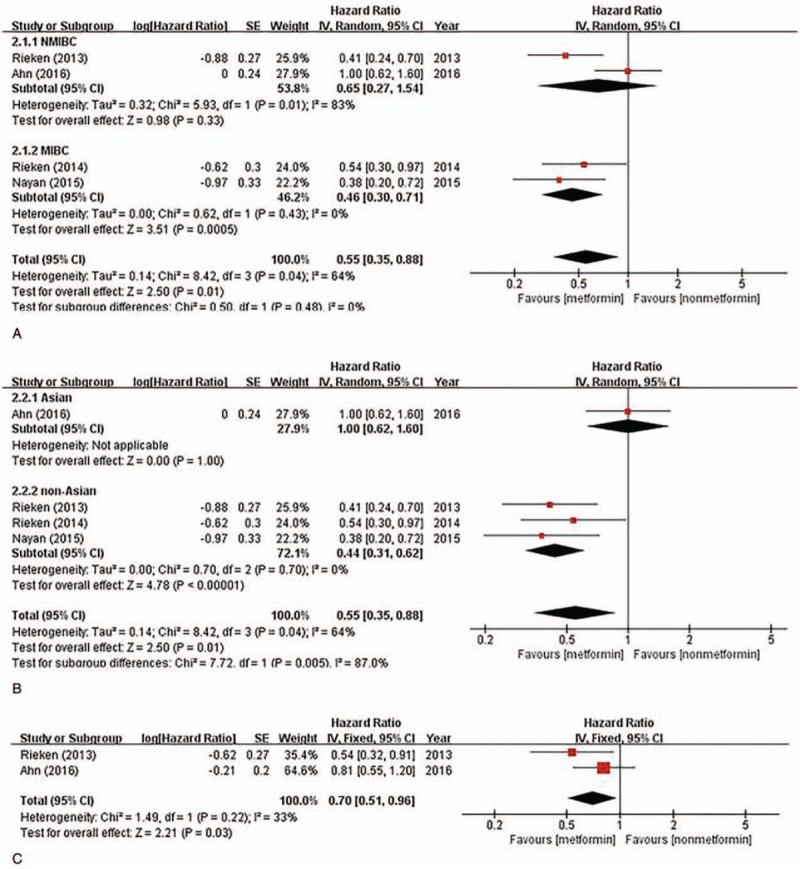
“Studies by Nayan et al([24]) and Rieken et al([25]) indicated that metformin use could prolong RFS and PFS in patients with bladder cancer; however, such protective effects were not reported in a study by Ahn et al.”
Tai, Y., Chen, C., Huang, C., Tai, H., Wang, S., & Pu, Y. (2014) · Diabetes/Metabolism Research and Reviews · doi:10.1002/dmrr.2614 · Cited by 50
Zhao, L., Tian, X., Duan, X., Ye, Y., Sun, M., & Huang, J. (2017) · Oncotarget · doi:10.18632/oncotarget.16722 · Cited by 46
Nayan, M., Bhindi, B., Yu, J. L., Hermanns, T., Mohammed, A. A., Hamilton, R. J., Finelli, A., Jewett, M. A. S., Zlotta, A. R., Fleshner, N. E., et al. (2015) · Urologic Oncology Seminars and Original Investigations · doi:10.1016/j.urolonc.2015.05.024 · Cited by 40 · cited 2×
“Studies by Nayan et al([24]) and Rieken et al([25]) indicated that metformin use could prolong RFS and PFS in patients with bladder cancer; however, such protective effects were not reported in a study by Ahn et al.”
Chen, M., Zhang, J., Hu, F., Liu, S., & Zhou, Z. (2015) · Diabetes/Metabolism Research and Reviews · doi:10.1002/dmrr.2761 · Cited by 40
Zhang, T., Wang, X., He, D., Jin, X., & Guo, P. (2014) · Anti-Cancer Drugs · doi:10.1097/cad.0000000000000116 · Cited by 39 · cited 2×
“A study by Zhang et al([31]) showed that metformin inhibits the growth of bladder cancer cells via indirect activation of AMPK, which in turn suppresses the mTOR/p70 S6 kinase-1 (S6K1) pathway in 253J and RT4 bladder cancer cell lines.”
BackgroundHigh efficacy of intravesical treatment of metformin on bladder cancer in preclinical model
Peng, M., Su, Q., Zeng, Q., Li, L., Liu, Z., Xue, L., Cheng, Y., Huang, Y., Tao, T., Lv, H., et al. (2016) · Oncotarget · doi:10.18632/oncotarget.6933 · Cited by 34
Kok, V., Chen, Y.-C., Chien, C.-H., Horng, J.-T., & Tsai, J. (2015) · Therapeutics and Clinical Risk Management · doi:10.2147/tcrm.s91513 · Cited by 32 · cited 2×
“Studies by Tsilidis et al,([28])Mamtani et al,([23]) Goossens et al,([22]) and Chen et al([21]) demonstrated that metformin use was not associated with a decreased incidence of bladder cancer.”
Ahn, J. H., Jung, S. I., Yim, S. U., Kim, S. W., Hwang, E. C., & Kwon, D. D. (2016) · Journal of Korean Medical Science · doi:10.3346/jkms.2016.31.9.1464 · Cited by 30 · cited 4×
“Studies by Nayan et al([24]) and Rieken et al([25]) indicated that metformin use could prolong RFS and PFS in patients with bladder cancer; however, such protective effects were not reported in a study by Ahn et al.([20]) The present meta-analysis suggested that metformin intake could improve RFS and PFS of bladder ca…”
BackgroundResultInfluentialPrognostic significance of anti-diabetic medications in pancreatic cancer: A meta-analysis
Zhou, D.-C., Gong, H., Tan, C., & Luo, J. (2017) · Oncotarget · doi:10.18632/oncotarget.17728 · Cited by 28
Wang, Y., Maurer, M. J., Larson, M. C., Allmer, C., Feldman, A. L., Bennani, N. N., Thompson, C. A., Porrata, L. F., Habermann, T. M., Witzig, T. E., et al. (2019) · British Journal of Haematology · doi:10.1111/bjh.15997 · Cited by 26
Influence of metformin intake on the risk of bladder cancer in type 2 diabetes patients
Goossens, M. E., Buntinx, F., Zeegers, M. P., Driessen, J. H. M., De Bruin, M. L., & De Vries, F. (2015) · British Journal of Clinical Pharmacology · doi:10.1111/bcp.12740 · Cited by 22
Diabetes is an Important Risk Factor for Metastasis in Non-Muscle-Invasive Bladder Cancer
Özer, K., Horsanalı, M. O., Görgel, S. N., & Özbek, E. (2016) · Asian Pacific Journal of Cancer Prevention · doi:10.7314/apjcp.2016.17.1.105 · Cited by 10
Cited by
Breast Cancer, Version 3.2020, NCCN Clinical Practice Guidelines in Oncology
Gradishar, W. J., Anderson, B. O., Abraham, J., Aft, R., Agnese, D., Allison, K. H., Blair, S. L., Burstein, H. J., Dang, C., Elias, A. D., et al. (2020) · Journal of the National Comprehensive Cancer Network · doi:10.6004/jnccn.2020.0016 · Cited by 1,584
Epidemiology of Bladder Cancer in 2023: A Systematic Review of Risk Factors
Jubber, I., Ong, S., Bukavina, L., Black, P. C., Compérat, E., Kamat, A. M., Kiemeney, L., Lawrentschuk, N., Lerner, S. P., Meeks, J. J., et al. (2023) · European Urology · doi:10.1016/j.eururo.2023.03.029 · Cited by 521
Blonde, L., Umpierrez, G. E., Reddy, S. S., McGill, J. B., Berga, S. L., Bush, M., Chandrasekaran, S., DeFronzo, R. A., Einhorn, D., Galindo, R. J., et al. (2022) · Endocrine Practice · doi:10.1016/j.eprac.2022.08.002 · Cited by 507
Insulin Resistance and Cancer: In Search for a Causal Link
Chiefari, E., Mirabelli, M., La Vignera, S., Tanyolaç, S., Foti, D. P., Aversa, A., & Brunetti, A. (2021) · International Journal of Molecular Sciences · doi:10.3390/ijms222011137 · Cited by 170
“Besides breast cancer, the beneficial effects of metformin on the urothelial carcinoma of the bladder, one of the deadliest neoplastic diseases worldwide [299], have also been documented.”
BackgroundWoolbright, B. L., Rajendran, G., Harris, R. A., & Taylor, J. A. (2019) · Molecular Cancer Therapeutics · doi:10.1158/1535-7163.mct-19-0079 · Cited by 162
Metadata
- Authors
- Hu, J., Chen, J.-B., Cui, Y., Zhu, Y.-W., Ren, W.-B., Zhou, X., Liu, L.-F., Chen, H.-Q., & Zu, X.-B.
- Affiliations
- Central South University (CN)
- Venue
- Medicine
- Published
- 2018-07
- Volume
- 97
- Issue
- 30
- Pages
- e11596
- ISSN
- 0025-7974 (ISSN-L)
- PMC
- PMC6078654
- OpenAlex
- W2884549606
- Semantic Scholar
- 8ad33e3311cd1ffcb15c23405e51c0620040416f
- Cited by
- 56
- References
- 49
- Citations by year
- 2026: 6 · 2025: 3 · 2024: 4 · 2023: 11 · 2022: 9 · 2021: 10 · 2020: 7 · 2019: 6
- FWCI
- 0.56
- Type
- journal article
- Language
- en
- Open access
- gold
- doi.org
- Licence
- cc-by
- Locations
- Medicine (publishedVersion, cc-by)
- Europe PMC (PubMed Central) (publishedVersion, cc-by)
- PubMed Central (publishedVersion, cc-by)
- PubMed (publishedVersion)
- Topics
- Life Sciences › Biochemistry, Genetics and Molecular Biology › Molecular Biology › Metabolism, Diabetes, and Cancer
- Health Sciences › Medicine › Surgery › Bladder and Urothelial Cancer Treatments
- Life Sciences › Biochemistry, Genetics and Molecular Biology › Cancer Research › Cancer, Hypoxia, and Metabolism
- Keywords
- metformin, bladder cancer, type 2 diabetes, cancer risk, oncological outcomes, recurrence-free survival, progression-free survival, cancer-specific survival, overall survival, drug repurposing
- MeSH terms
- Aged, Urinary Bladder Neoplasms, Diabetes Mellitus, Type 2, Female, Humans, Hypoglycemic Agents, Male, Metformin, Middle Aged, Prognosis, Retrospective Studies, Risk Factors, Proportional Hazards Models, Disease Progression, Disease-Free Survival
About these checks
Registry, retraction, Cites and statistics results are computed, not judged, with one exception: a printed reference that no index lists is read once by a model before it counts as a citation error. Claims are extracted by a model and kept only when their quote appears verbatim in the text; each cited source is then checked, with a model’s help, for whether it says what the claim relies on. Those verdicts can be wrong — read the claim’s quote and the cited source before relying on one.
Statistics and arithmetic are recomputed, not judged.
Confidence bands are shown only for fields calibrated on our annotated test set. None is calibrated yet, so no band is shown.
What counts as a claim ›How we measure confidence ›How we check this ›
Are you an author, or do you see a problem with this page? Request a review
Data sources
Bibliographic data: Semantic Scholar, OpenAlex, Crossref.
Contains information from the Semantic Scholar Academic Graph Datasets, made available under the ODC Attribution License (ODC-BY 1.0).
Semantic Scholar’s data is described in: Kinney, R., et al. (2023). The Semantic Scholar Open Data Platform. arXiv:2301.10140.
