

The DOI matches its Crossref record; 50 of the 50 references it cites were found in a registry or an index.
Interventions to reduce burnout of physicians and nurses: An overview of systematic reviews and meta-analyses
Open accessAbstract
Objective: Numerous systematic reviews and meta-analyses on the interventions to reduce burnout of physicians and nurses have been published nowadays. This study aimed to summarize the evidence and clarify a bundled strategy to reduce burnout of physicians and nurses. Methods: Researches have been conducted within Cochrane Library, PubMed, Ovid, Scopus, EBSCO, and CINAHL published from inception to 2019. In addition, a manual search for relevant articles was also conducted using Google Scholar and ancestral searches through the reference lists from articles included in the final review. Two reviewers independently selected and assessed, and any disagreements were resolved through a larger team discussion. A data extraction spreadsheet was developed and initially piloted in 3 randomly selected studies. Data from each study were extracted independently using a pre-standardized data abstraction form. The the Risk of Bias in Systematic reviews and assessment of multiple systematic reviews (AMSTAR) 2 tool were used to evaluate risk of bias and quality of included articles. Results: A total of 22 studies published from 2014 to 2019 were eligible for analysis. Previous studies have examined burnout among physicians (n = 9), nurses (n = 6) and healthcare providers (n = 7). The MBI was used by majority of studies to assess burnout. The included studies evaluated a wide range of interventions, individual-focused (emotion regulation, self-care workshop, yoga, massage, mindfulness, meditation, stress management skills and communication skills training), structural or organizational (workload or schedule-rotation, stress management training program, group face-to-face delivery, teamwork/transitions, Balint training, debriefing sessions and a focus group) and combine interventions (snoezelen, stress management and resiliency training, stress management workshop and improving interaction with colleagues through personal training). Based on the Risk of Bias in Systematic reviews and AMSTAR 2 criteria, the risk of bias and methodological quality included studies was from moderate to high. Conclusions: Burnout is a complicated problem and should be dealt with by using bundled strategy. The existing overview clarified evidence to reduce burnout of physicians and nurses, which provided a basis for health policy makers or clinical managers to design simple and feasible strategies to reduce the burnout of physicians and nurses, and to ensure clinical safety.
Overview
The claims and statistics of this paper haven’t been checked yet.
Run the check — free, no account needed. It reads the open-access text and checks the sources it cites.
Integrity signals
Registry
Cites
Statistics
Figures
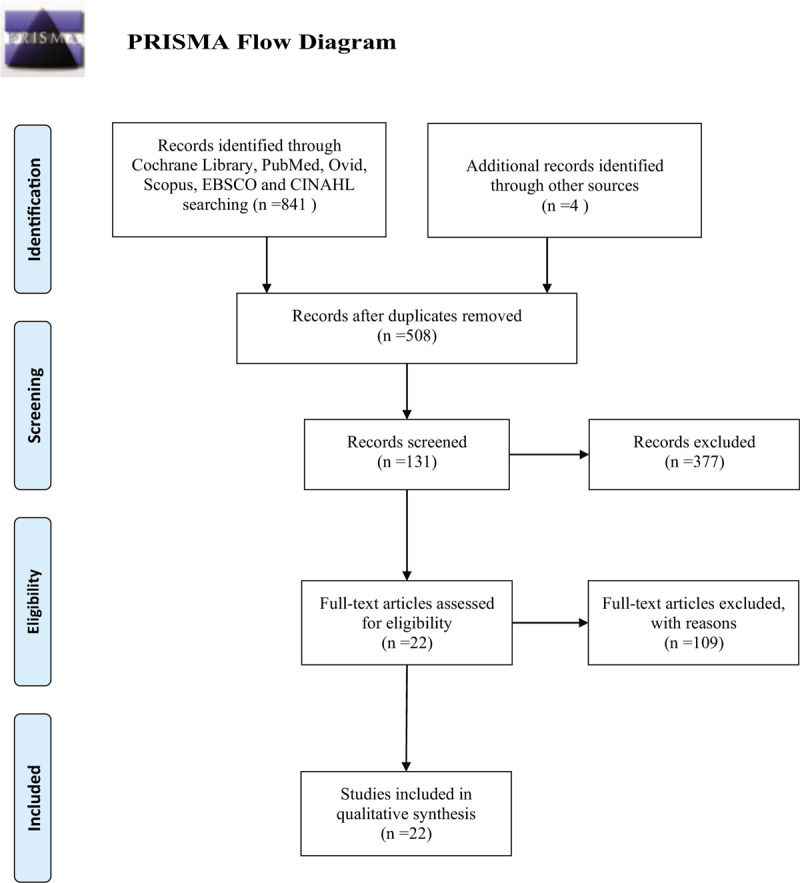
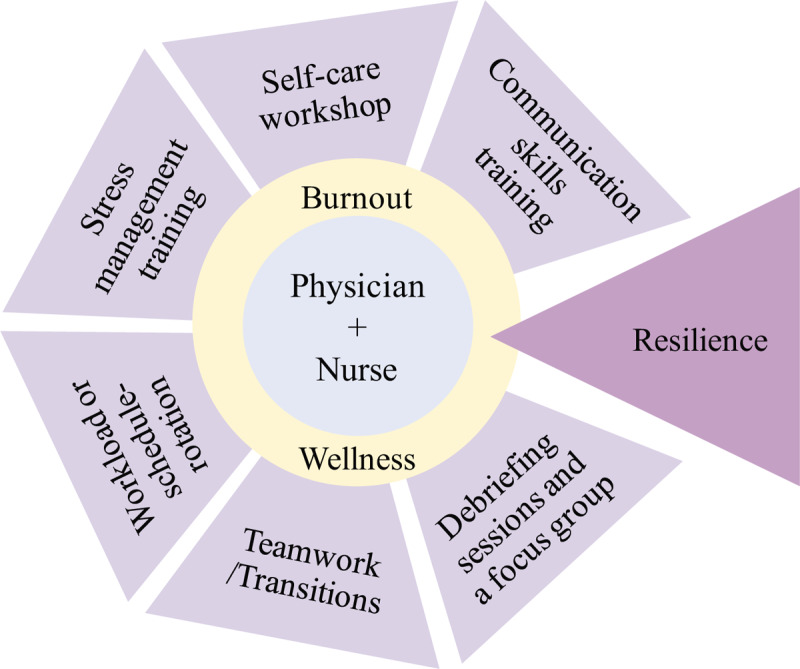
Verification
Claims the paper makes
The claims and statistics of this paper haven’t been checked yet.
Run the check — free, no account needed. It reads the open-access text and checks the sources it cites.
Claims other papers make about this one
Each is checked against this paper’s own text: does it say what the citing paper says it does?
The source backs part of the claim, not all of it — or backs it for a different population, condition or comparison.
In the citing paper
“Limited intervention comparability further contributed to heterogeneity [24–27, 78].”
From Individual and organizational interventions to reduce burnout in resident physicians: a systematic review and meta-analysis (2024) · cites this paper as [24]
Experimental — accuracy not yet measuredThe source backs part of the claim, not all of it — or backs it for a different population, condition or comparison.
In the citing paper
“High heterogeneity in outcome domains, often observed in other meta-analyses [18, 24, 26, 78, 98], suggests a mix of healthcare professionals in the studies [24], complicating the interpretation.”
From Individual and organizational interventions to reduce burnout in resident physicians: a systematic review and meta-analysis (2024) · cites this paper as [24]
Experimental — accuracy not yet measured
Self-check
Percentages, sums and reported differences re-computed from the paper’s own numbers.
The self-check needs the paper’s full text.
Citations
Cites
1 retracted
Panagioti, M., Geraghty, K., Johnson, J., Zhou, A. Y., Panagopoulou, E. P., Chew-Graham, C. A., Peters, D. H., Hodkinson, A., Riley, R. A., & Esmail, A. (2018) · JAMA Internal Medicine · doi:10.1001/jamainternmed.2018.3713 · Cited by 1,059
RetractedMaslach, C., Schaufeli, W. B., & Leiter, M. P. (2001) · Annual Review of Psychology · doi:10.1146/annurev.psych.52.1.397 · Cited by 12,852 · cited 1×
“0000000000020992 1 plishment.([1]) Burnout prevalence data were extracted from 182 studies involving 109628 physicians in 45 countries, where overall prevalence ranged from 0% to 80.”
Shea, B. J., Reeves, B. C., Wells, G., Thuku, M., Hamel, C., Moran, J., Moher, D., Tugwell, P., Welch, V., Kristjansson, E., et al. (2017) · BMJ · doi:10.1136/bmj.j4008 · Cited by 10,636
Timely mental health care for the 2019 novel coronavirus outbreak is urgently needed
Xiang, Y.-T., Yang, Y., Li, W., Zhang, L., Zhang, Q., Cheung, T., & Ng, C. H. (2020) · The Lancet Psychiatry · doi:10.1016/s2215-0366(20)30046-8 · Cited by 3,598
Shanafelt, T. D., Hasan, O., Dyrbye, L. N., Sinsky, C., Satele, D., Sloan, J., & West, C. P. (2015) · Mayo Clinic Proceedings · doi:10.1016/j.mayocp.2015.08.023 · Cited by 2,885
Personal control and stress and coping processes: A theoretical analysis.
Folkman, S. (1984) · Journal of Personality and Social Psychology · doi:10.1037//0022-3514.46.4.839 · Cited by 2,807
Interventions to prevent and reduce physician burnout: a systematic review and meta-analysis
West, C. P., Dyrbye, L. N., Erwin, P. J., & Shanafelt, T. D. (2016) · The Lancet · doi:10.1016/s0140-6736(16)31279-x · Cited by 2,362
ROBIS: A new tool to assess risk of bias in systematic reviews was developed
Whiting, P., Savović, J., Higgins, J. P. T., Caldwell, D. M., Reeves, B. C., Shea, B., Davies, P., Kleijnen, J., & Churchill, R. (2016) · Journal of Clinical Epidemiology · doi:10.1016/j.jclinepi.2015.06.005 · Cited by 2,272
Mental health care for medical staff in China during the COVID-19 outbreak
Chen, Q., Liang, M., Li, Y., Guo, J., Fei, D., Wang, L., He, L., Sheng, C., Cai, Y., Li, X., et al. (2020) · The Lancet Psychiatry · doi:10.1016/s2215-0366(20)30078-x · Cited by 2,233
Burnout and self-reported patient care in an internal medicine residency program
Shanafelt, T. D., Bradley, K. A., Wipf, J. E., & Back, A. L. (2002) · Annals of Internal Medicine · doi:10.7326/0003-4819-136-5-200203050-00008 · Cited by 2,165
Cited by
Sorted by citations
Burnout phenomenon: neurophysiological factors, clinical features, and aspects of management
Khammissa, R. A. G., Nemutandani, S. M., Feller, G., Lemmer, J., & Feller, L. (2022) · Journal of International Medical Research · doi:10.1177/03000605221106428 · Cited by 182
Radiomics Beyond the Hype: A Critical Evaluation Toward Oncologic Clinical Use
Horvat, N. D. S. M. R., Papanikolaou, N. K., & Koh, D. (2024) · Radiology Artificial Intelligence · doi:10.1148/ryai.230437 · Cited by 113
Individual-level interventions for reducing occupational stress in healthcare workers
Tamminga, S. J., Emal, L. M., Boschman, J. S., Levasseur, A., Thota, A. B., Ruotsalainen, J. H., Schelvis, R. M. C., Nieuwenhuijsen, K., & van der Molen, H. F. (2023) · Cochrane Database of Systematic Reviews · doi:10.1002/14651858.cd002892.pub6 · Cited by 148
New graduate nurse wellbeing, work wellbeing and mental health: A quantitative systematic review
Jarden, R., Jarden, A., Weiland, T. J., Taylor, G., Bujalka, H., Brockenshire, N., & Gerdtz, M. F. (2021) · International Journal of Nursing Studies · doi:10.1016/j.ijnurstu.2021.103997 · Cited by 97
Interventions to reduce burnout among clinical nurses: systematic review and meta-analysis
Lee, M., & Cha, C. (2023) · Scientific Reports · doi:10.1038/s41598-023-38169-8 · Cited by 84
Metadata
- Authors
- Zhang, X.-J., Song, Y., Jiang, T., Ding, N., & Shi, T.-Y.
- Affiliations
- Department of Nursing, The First affiliated Hospital of Dalian Medical University, Dalian, China
- First Affiliated Hospital of Dalian Medical University (CN)
- Chiba University (JP)
- Venue
- Medicine
- Published
- 2020-06-26
- Volume
- 99
- Issue
- 26
- Pages
- e20992
- ISSN
- 0025-7974 (ISSN-L)
- 1536-5964
- PMC
- PMC7328917
- OpenAlex
- W3037962547
- Cited by
- 233
- References
- 50
- Citations by year
- 2026: 22 · 2025: 34 · 2024: 59 · 2023: 52 · 2022: 36 · 2021: 24 · 2020: 6
- FWCI
- 5.62
- Type
- journal article
- Language
- en
- Open access
- gold
- doi.org
- Licence
- Locations
- Medicine (publishedVersion, cc-by-nc)
- PubMed Central (publishedVersion, cc-by-nc)
- PubMed (publishedVersion)
- Funders
- Basic Research Project of Higher Learning Institution in Liaoning Province (LQ2017014)
- Topics
- Health Sciences › Health Professions › General Health Professions › Healthcare professionals’ stress and burnout
- Social Sciences › Psychology › Social Psychology › Stress and Burnout Research
- Health Sciences › Medicine › Public Health, Environmental and Occupational Health › Occupational Health and Burnout
- Keywords
- burnout, physicians, nurses, healthcare workers, burnout intervention, stress management training, mindfulness, yoga, self-care, workload, Balint groups, debriefing, teamwork, organizational interventions, bundled interventions
- MeSH terms
- Burnout, Professional, Humans, Nurses, Physicians, Workload
About these checks
Registry, retraction, Cites and statistics results are computed, not judged, with one exception: a printed reference that no index lists is read once by a model before it counts as a citation error. Claims are extracted by a model and kept only when their quote appears verbatim in the text; each cited source is then checked, with a model’s help, for whether it says what the claim relies on. Those verdicts can be wrong — read the claim’s quote and the cited source before relying on one.
Statistics and arithmetic are recomputed, not judged.
Confidence bands are shown only for fields calibrated on our annotated test set. None is calibrated yet, so no band is shown.
What counts as a claim ›How we measure confidence ›How we check this ›
Are you an author, or do you see a problem with this page? Request a review
