

Fecal microbiota transplantation therapy for Parkinson's disease: A preliminary study
Open accessThe DOI matches its Crossref record; 28 of the 28 references it cites were found in a registry or an index.
Abstract
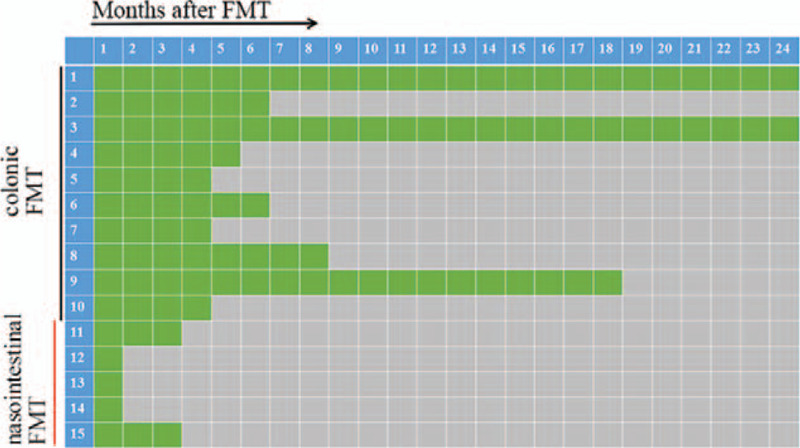
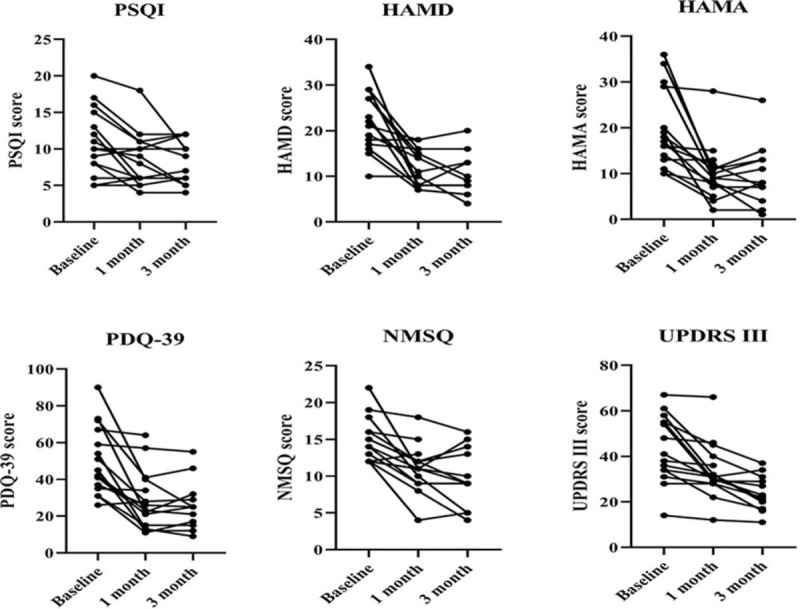
Imbalances in the gut microbiota mediate the progression of neurodegenerative diseases such as Parkinson's disease (PD). Fecal microbiota transplantation (FMT) is currently being explored as a potential therapy for PD. The objective of this study was to assess the efficacy and safety of FMT on PD. Fifteen PD patients were included, 10 of them received FMT via colonoscopy (colonic FMT group) and 5 received FMT via nasal-jejunal tube (nasointestinal FMT group). The score of PSQI, HAMD, HAMA, PDQ-39, NMSQ and UPDRS-III significantly decreased after FMT treatment (all P < .05). Colonic FMT group showed significant improvement and longer maintenance of efficacy compared with nasointestinal FMT (P = .002). Two patients achieved self-satisfying outcomes that last for more than 24 months. However, nasointestinal FMT group had no significant therapeutic effect, although UPDRS-III score slightly reduced. There were no patients were satisfied with nasointestinal FMT for more than 3 months. Among 15 PD patients, there were 5 cases had adverse events (AEs), including diarrhea (2 cases), abdominal pain (2 cases) and flatulence (1 case). These AEs were mild and self-limiting. We conclude that FMT can relieve the motor and non-motor symptoms with acceptable safety in PD. Compared with nasointestinal FMT, colonic FMT seems better and preferable.
Overview
The claims and statistics of this paper haven’t been checked yet.
Free: it reads the open-access text and checks the first 5 claims that cite a source we can check. Create a free account to check every claim.
Integrity signals
Registry
Cites
Statistics
Figures
Verification
Claims the paper makes
The claims and statistics of this paper haven’t been checked yet.
Free: it reads the open-access text and checks the first 5 claims that cite a source we can check. Create a free account to check every claim.
Claims other papers make about this one
Each is checked against this paper’s own text: does it say what the citing paper says it does?
The source backs part of the claim, not all of it — or backs it for a different population, condition or comparison.
In the citing paper
“Three subsequent studies involving 6, 11 and 15 PD patients, respectively, confirmed the reduction in constipation, as well as in motor and non-motor symptoms following FMT, as indicated by the decreased scores registered in various PD assessment tests [475,476,477].”
From The Interplay between Gut Microbiota and Parkinson’s Disease: Implications on Diagnosis and Treatment (2022) · cites this paper as [476]
Experimental — accuracy not yet measuredIn the citing paper
“Concerning PD, consistent preclinical studies and a handful of human case reports have shown that FMT might be exploited to reduce motor and non-motor symptoms, as well as constipation, at least in the short term [40,465,469,470,471,472,473,474,475,476,477] (Table 4).”
From The Interplay between Gut Microbiota and Parkinson’s Disease: Implications on Diagnosis and Treatment (2022) · cites this paper as [476]
In the citing paper
“On the whole, from a clinical point of view, better and longer-term outcomes were obtained using colonoscopy compared to nasointestinal delivery [476].”
From The Interplay between Gut Microbiota and Parkinson’s Disease: Implications on Diagnosis and Treatment (2022) · cites this paper as [476]
In the citing paper
“Within this context, 6 cases of adverse events occurred in human studies: flatulence (1), diarrhea (2), hospitalization under observation (1) and GI pain (2) [476,477].”
From The Interplay between Gut Microbiota and Parkinson’s Disease: Implications on Diagnosis and Treatment (2022) · cites this paper as [476]
Self-check
Percentages, sums and reported differences re-computed from the paper’s own numbers.
The self-check needs the paper’s full text.
Citations
Cites
Diagnosis and Treatment of Parkinson Disease: A Review
Armstrong, M. J., & Okun, M. S. (2020) · JAMA · doi:10.1001/jama.2019.22360 · Cited by 2,924 · cited 1×
“The PD patients often suffer from motor symptoms including rigidity, bradykinesia, tremor, impaired balance, and also nonmotor symptoms such as sleep disturbance, anxiety, depression, cognitive deficits.([4]) These symptomsworsen over time, becoming severe enough to interfere with daily common activities, thus necessi…”
BackgroundDorsey, E. R., Elbaz, A., Nichols, E., Abbasi, N., Abd-Allah, F., Abdelalim, A., Adsuar, J. C., Ansha, M. G., Brayne, C., Choi, J.-Y. J., et al. (2018) · The Lancet Neurology · doi:10.1016/s1474-4422(18)30295-3 · Cited by 2,816
The gut-brain axis: interactions between enteric microbiota, central and enteric nervous systems.
(2015) · PubMed Central · Cited by 2,540
Kim, S., Kwon, S.-H., Kam, T.-I., Panicker, N., Karuppagounder, S. S., Lee, S., Lee, J. H., Kim, W. R., Kook, M., Foss, C. A., et al. (2019) · Neuron · doi:10.1016/j.neuron.2019.05.035 · Cited by 1,397 · cited 1×
“spread to brain along the vagus nerve.([10]) The findings of these studies provide a basis for the treatment of PD by targeting the gut.”
BackgroundThe gut microbiome in neurological disorders
Cryan, J. F., O'Riordan, K. J., Sandhu, K., Peterson, V., & Dinan, T. G. (2020) · The Lancet Neurology · doi:10.1016/s1474-4422(19)30356-4 · Cited by 1,336 · cited 1×
“Imbalances in the gut microbiota promote altered host-microbial interactions that mediate the progression of many neurological diseases, including depression, autism, PD, etc.([6]) It has been reported that the gut microbiota in PD patients significantly differ from that of healthy individuals.”
BackgroundPrevalence of Parkinson’s disease across North America
Marras, C., Beck, J. C., Bower, J. H., Roberts, E., Ritz, B., Ross, G. W., Abbott, R. D., Savica, R., Van Den Eeden, S. K., Willis, A. W., et al. (2018) · npj Parkinson's Disease · doi:10.1038/s41531-018-0058-0 · Cited by 968 · cited 1×
“Approximately 930,000 people will be living with a PD diagnosis in the United States in 2020.([2]) In China, PD constitutes a serious public health burden, affecting approximately 1.”
BackgroundDiscovery and inhibition of an interspecies gut bacterial pathway for Levodopa metabolism
Maini Rekdal, V., Bess, E. N., Bisanz, J. E., Turnbaugh, P. J., & Balskus, E. P. (2019) · Science · doi:10.1126/science.aau6323 · Cited by 753 · cited 12×
“In fact, it is unclear which kind of microbiota can improve the symptoms of PD.”
BackgroundInfluentialSun, M.-F., Zhu, Y.-L., Zhou, Z.-L., Jia, X.-B., Xu, Y.-D., Yang, Q., Cui, C., & Shen, Y.-Q. (2018) · Brain, Behavior, and Immunity · doi:10.1016/j.bbi.2018.02.005 · Cited by 736 · cited 12×
“In fact, it is unclear which kind of microbiota can improve the symptoms of PD.”
BackgroundInfluentialKao, D., Roach, B., Silva, M., Beck, P., Rioux, K., Kaplan, G. G., Chang, H.-J., Coward, S., Goodman, K. J., Xu, H., et al. (2017) · JAMA · doi:10.1001/jama.2017.17077 · Cited by 615 · cited 1×
“Regardless of the microbiota transplantation route, there is a satisfactory cure rate.([26]) But in IBD, the microbiota transplantation route may affect the efficacy of FMT.”
BackgroundAnxiety, depression, and the microbiome: A role for gut peptides
Lach, G., Schellekens, H., Dinan, T. G., & Cryan, J. F. (2018) · Neurotherapeutics · doi:10.1007/s13311-017-0585-0 · Cited by 573 · cited 1×
“Gut microbiota and its metabolites may regulate neuroinflammation.([21,22]) A speculation worth noting is that FMT changes the gut microbiota and its metabolites by optimizing the structure of gut microbiota, and then improves the non-motor symptoms of PD.”
Background
Cited by
Items 101–187 of 187
Paulina Núñez, F., Quera, R., Constanza Bay, M., & Thomson, P. (2021) · Gastroenterología y Hepatología · doi:10.1016/j.gastrohep.2021.05.009 · Cited by 15
Sadowski, K. A., Zając, W., Milanowski, Ł., Koziorowski, D., & Figura, M. (2024) · International Journal of Molecular Sciences · doi:10.3390/ijms25147741 · Cited by 24
“Similarly, Xue et al. observed improved scores on the Pittsburgh Sleep Quality Index, Hamilton Depression Rating Scale, Hamilton Anxiety Rating Scale, Parkinson Disease Questionnaire, Non–motor symptoms questionnaire, and UPDRS part III in 15 patients after FMT [120].”
MethodGut bacteria: an etiological agent in human pathological conditions
Islam, M. M., Mahbub, N. U., Hong, S., & Chung, H. (2024) · Frontiers in Cellular and Infection Microbiology · doi:10.3389/fcimb.2024.1291148 · Cited by 18
“Over a 12-week treatment period, FMT was associated with increased gut microbiome diversity, reduced constipation, and reported subjective improvements in both motor and non-motor symptoms (Xue et al., 2020; Kuai et al., 2021; Segal et al., 2021; Dupont et al., 2023).”
BackgroundGut Microbes and Neuropathology: Is There a Causal Nexus?
Dinan, K., & Dinan, T. G. (2022) · Pathogens · doi:10.3390/pathogens11070796 · Cited by 17
Guo, M., Gao, H., Wang, Y., & Xiang, Y. (2025) · Frontiers in Neuroscience · doi:10.3389/fnins.2025.1574512 · Cited by 19
Gernone, F., Uva, A., Silvestrino, M., Cavalera, M. A., & Zatelli, A. (2022) · Biology · doi:10.3390/biology11091290 · Cited by 17
Feng, M., Zou, Z., Shou, P., Peng, W., Liu, M., & Li, X. (2024) · Frontiers in Aging Neuroscience · doi:10.3389/fnagi.2024.1479343 · Cited by 20
Ai, P., Xu, S., Yuan, Y., Xu, Z., He, X., Mo, C., Zhang, Y., Yang, X., & Xiao, Q. (2025) · International Journal of Molecular Sciences · doi:10.3390/ijms26115282 · Cited by 17
Gut–brain axis in health and brain disease
Olasunkanmi, O. I., Zheng, L., & Zheng, P. (2026) · Chinese Medical Journal · doi:10.1097/cm9.0000000000003920 · Cited by 14
“[275] Other studies revealed that FMT provides significant relief from constipation and other gastrointestinal symptoms commonly experienced by individuals with neurodegenerative conditions.”
Vongsavath, T., Laeeq, T., Tun, K. M., & Hong, A. S. (2023) · Applied Microbiology · doi:10.3390/applmicrobiol3030067 · Cited by 12
“In Xue’s [18] case series, neuromotor symptoms refractory to other medical treatments showed a significant improvement overall, while GI symptoms were not investigated (Table 3).”
BackgroundMethodInfluentialMoreno, L. O., Bagüés, A., Martínez, V., & Abalo, R. (2023) · Nutrients · doi:10.3390/nu15122775 · Cited by 11
Overview of the Gut Microbiome
Blackmer‐Raynolds, L., & Sampson, T. R. (2023) · Seminars in Neurology · doi:10.1055/s-0043-1771463 · Cited by 12
Gut-directed therapy in Parkinson’s disease
Benvenuti, L., Salvo, C. D., Bellini, G., Seguella, L., Rettura, F., Esposito, G., Antonioli, L., Ceravolo, R., Bernardini, N., Pellegrini, C., et al. (2024) · Frontiers in Pharmacology · doi:10.3389/fphar.2024.1407925 · Cited by 13
“The adverse effects observed in the previous studies were minor to mild and of short duration (Huang et al., 2019; Xue et al., 2020; Kuai et al., 2021; Segal et al., 2021).”
BackgroundResultAnalyzing the Role of Gut Microbiota on the Onset of Autoimmune Diseases Using TNFΔARE Murine Model
Edwards, V., Smith, D., Meylan, F., Tiffany, L. J., Poncet, S., Wu, W. W., Phue, J., Santana-Quintero, L. V., Clouse, K. A., & Gabay, O. (2021) · Microorganisms · doi:10.3390/microorganisms10010073 · Cited by 14
Gut-oriented disease modifying therapy for Parkinson's disease
Lin, C., Lai, H., & Wu, M. (2022) · Journal of the Formosan Medical Association · doi:10.1016/j.jfma.2022.09.010 · Cited by 12
Liang, S., Wang, L., Wu, X., Hu, X., Wang, T., & Jin, F. (2023) · Frontiers in Nutrition · doi:10.3389/fnut.2022.957688 · Cited by 14
Fecal microbiota transplantation for Parkinson's disease: A systematic review of clinical evidence
Shekar, S., Venkatachalapathy, R., Jayaraman, A., & Siddhu, N. S. S. (2025) · Medicine in Microecology · doi:10.1016/j.medmic.2025.100128 · Cited by 11
The importance of the intestinal microbiota in humans and dogs in the neonatal period
Beretta, S., Apparício, M., Toniollo, G. H., & Cardozo, M. V. (2023) · Animal Reproduction · doi:10.1590/1984-3143-ar2023-0082 · Cited by 13
Ahmadi, S., Hasani, A., Khabbaz, A., Poortahmasebi, V., Hosseini, S., Yasdchi, M., Mehdizadehfar, E., Mousavi, Z. B., Hasani, R., Nabizadeh, E., et al. (2024) · Biogerontology · doi:10.1007/s10522-024-10136-4 · Cited by 13
“Another research found that after a month of follow-up, 15 patients had decreased motor symptoms, anxiety, and sadness, as well as better sleep and quality of life (Xue et al. 2020).”
Faecal microbiota transplant for Parkinson’s disease: promises and future directions
Tan, E. K., Wang, J. D. J., Pettersson, S., Wang, Q., Takahashi, R., Poewe, W. H., Jankovic, J. J., & Rascol, O. (2025) · Brain · doi:10.1093/brain/awaf419 · Cited by 12
Gut microbiota: the indispensable player in neurodegenerative diseases
Li, S., Cai, Y., Wang, S., Luo, L., Zhang, Y., Huang, K., & Guan, X. (2024) · Journal of the Science of Food and Agriculture · doi:10.1002/jsfa.13509 · Cited by 11
Sai, Y., Ge, W., Li, Z., Zhang, Q., Xiao, J., Shan, Y., Ye, W., Liu, H., Liu, S., Ye, F., et al. (2024) · Current Research in Toxicology · doi:10.1016/j.crtox.2024.100212 · Cited by 10
Immune-microbiome interplay and its implications in neurodegenerative disorders
Uniyal, A., Tiwari, V., Rani, M., & Tiwari, V. (2021) · Metabolic Brain Disease · doi:10.1007/s11011-021-00807-3 · Cited by 9
The effects of microbiota abundance on symptom severity in Parkinson’s disease: A systematic review
Papić, E., Rački, V., Hero, M., Tomić, Z., Čizmarević, N. S., Kovanda, A., Kapović, M., Hauser, G., Peterlin, B., & Vuletić, V. (2022) · Frontiers in Aging Neuroscience · doi:10.3389/fnagi.2022.1020172 · Cited by 10
“In one study, colonic FMT has been shown to decrease UPDRS III, NMSQ, PDQ-39, HAMD, and Hamilton Anxiety Scale (HAM-A) scores in a small group of 10 PD patients with only a minor number of mild self-limiting side effects, mostly pertaining to the GI tract (Xue et al., 2020).”
BackgroundInfluentialThe second brain in Parkinson’s disease: fact or fantasy?
Yemula, N., Njoku, P., & Takyi, J. (2021) · Neural Regeneration Research · doi:10.4103/1673-5374.332144 · Cited by 8
Catalano, M., Landini, L., Nozzoli, F., Nassini, R., Roviello, G., & Logu, F. D. (2025) · Current Research in Biotechnology · doi:10.1016/j.crbiot.2025.100305 · Cited by 9
The role of gut-derived short-chain fatty acids in Parkinson's disease
Saadh, M. J., Mustafa, A. N., Mustafa, M. A., Renuka Jyothi, S., Dabis, H. K., Prasad, G. V. S., Mohammad, I. J., Adnan, A., & Idan, A. H. (2024) · Neurogenetics · doi:10.1007/s10048-024-00779-3 · Cited by 9
Contarino, M. F., van Hilten, J. J., & Kuijper, E. J. (2022) · Movement Disorders Clinical Practice · doi:10.1002/mdc3.13621 · Cited by 13
Haindl, R., Totzauer, L., & Kulozik, U. (2022) · Microbial Biotechnology · doi:10.1111/1751-7915.14007 · Cited by 8
Zhang, W., Jiao, Y., Wen, H., Bin, X., Xuefei, W., Lan, J., & Liuyin, Z. (2024) · Frontiers in Neurology · doi:10.3389/fneur.2024.1407241 · Cited by 6
“FMT can ameliorate motor symptoms (e.g., tremors and bradykinesia) and non-motor symptoms (such as constipation, anxiety, depression, and sleep disorders) of patients with PD to a certain extent (98, 99).”
BackgroundDisease modifying therapies for Parkinson's disease: Novel targets
Vijiaratnam, N., & Foltynie, T. (2021) · Neuropharmacology · doi:10.1016/j.neuropharm.2021.108839 · Cited by 7
Uses of Fecal Microbiota Transplantation in Neurodegenerative Disease: A Scoping Review
Sanzone, J., Life, M., Reiss, D., May, D. S., Hartley, B., Spiddle, P., Al-Kirwi, J., Grigoryan, T., & Costin, J. M. (2024) · Cureus · doi:10.7759/cureus.62265 · Cited by 11
“All three studies showed continued improvement in some or all symptom categories between early and final assessments post-baseline [29-31].”
BackgroundResultInfluentialChen, Y., Wang, D., Liao, Y., Zuo, G., & Lu, X. (2024) · Discover Medicine · doi:10.1007/s44337-024-00135-2 · Cited by 6
Mohammad, S. I., Hammood, Y. M., Vasudevan, A., Uthirapathy, S., Ballal, S., Sabarivani, A., Mishra, S., Nathiya, D., Al‐qaim, Z. H., & KADHIM, A. J. (2025) · Molecular Neurobiology · doi:10.1007/s12035-025-05447-7 · Cited by 7
Alterations of the gut virome in patients with Parkinson’s disease
Chen, W., Guo, R., Zhang, W., Yan, Q., Wang, X., Chen, R., Hu, X., Liang, J., Xing, G., Xu, D., et al. (2026) · The Journals of Gerontology Series A · doi:10.1093/gerona/glag001 · Cited by 11
Microbial therapeutic tools for human brain disorders: A current overview
Borrego-Ruiz, A., & Borrego, J. J. (2025) · Brain Disorders · doi:10.1016/j.dscb.2025.100262 · Cited by 8
Litvinenko, I., & Lobzin, V. Y. (2022) · Advances in Gerontology · doi:10.1134/s2079057022040117 · Cited by 5
Vendrik, K. E. W., Chernova, V. O., Kuijper, E. J., Terveer, E. M., van Hilten, J. J., & Contarino, M. F. (2022) · medRxiv · doi:10.1101/2022.05.23.22274942 · Cited by 5
Gut microbiota: an important player in diabetic kidney disease
Shi, P., & Chen, L. (2025) · Diabetology & Metabolic Syndrome · doi:10.1186/s13098-025-02037-4 · Cited by 8
Li, X., Zhou, W., Yang, S., Huang, X., & Zheng, K. (2026) · Frontiers in Neuroscience · doi:10.3389/fnins.2026.1806532 · Cited by 4
“…microbial restoration—has recently been explored in PD. Preliminary studies suggest that FMT may ameliorate both gastro-intestinal and motor symptoms in PD patients, although robust randomized controlled trials remain limited and patient responses are highly variable (Xue et al., 2020).”
Habtemariam, S. (2026) · BioTech · doi:10.3390/biotech15020043 · Cited by 7
“A small-scale trials and case series have reported that FMT can alter gut microbial composition and may improve gastrointestinal and, in some cases, neurological symptoms in PD (e.g., [53,54]).”
Parkinson’s disease beyond the brain: implications for treatments
Naeini, S. M., Lopez, M. D., Fraser, P. E., & Tandon, A. (2025) · Frontiers in Aging Neuroscience · doi:10.3389/fnagi.2025.1600782 · Cited by 4
“Lastly, two case studies that tested the gut reset in PD patients also found beneficial effects on motor symptoms, bowel movements, mood, and sleep (Huang et al., 2019; Xue et al., 2020).”
El‐Mansoury, B., Smimih, K., Khiat, A. E., Fatimi, H. E., Aimrane, A., Baz, S. E., Elmourid, A., Saad, F. E.-Z., Ghachi, H. E., Khanouchi, M., et al. (2023) · Advances in medical diagnosis, treatment, and care (AMDTC) book series · doi:10.4018/978-1-6684-5156-4.ch017 · Cited by 4
Chi, F., Chen, K., Yin, Y., Hakovirta, J. R., & Saris, P. E. J. (2026) · Sustainable Microbiology · doi:10.1093/sumbio/qvag002 · Cited by 7
Role of the microbiome in the development of Parkinson's disease (Review)
Gushi, S., & Derdas, S. (2025) · World Academy of Sciences Journal · doi:10.3892/wasj.2025.374 · Cited by 4
Validation of Polish version of Gastrointestinal Dysfunction Scale for Parkinson’s Disease
Nowak, J. M., Antoniak, A., Kopczyński, M. H., Zając, W., Sadowski, K. A., Milanowski, Ł., Koziorowski, D., & Figura, M. (2024) · Neurologia i Neurochirurgia Polska · doi:10.5603/pjnns.98275 · Cited by 6
Bhardwaj, K., Singh, A. A., & Kumar, H. (2024) · ACS Chemical Neuroscience · doi:10.1021/acschemneuro.4c00293 · Cited by 4
Takeshige‐Amano, H., Igami, E., Okuzumi, A., Kamo, R., Iseki, M., Tsuyama, K., Wakamori, R., Okada, H., Taniguchi, D., Ueno, S., et al. (2025) · BMJ Open · doi:10.1136/bmjopen-2025-102851 · Cited by 2
Zhang, Y., Chen, L., Jin, J., Xin, Y., Wang, J., & Zhang, A. (2025) · Experimental Neurology · doi:10.1016/j.expneurol.2025.115631 · Cited by 5
Joshi, R., Gupta, N., Gupta, A., Khanna, P., Verma, N., & Kaur, S. (2026) · World Journal of Gastrointestinal Pharmacology and Therapeutics · doi:10.4292/wjgpt.v17.i1.112754 · Cited by 2
Chai, J.-Y., Zhang, Y. P., Zhang, Z., Ma, D., Cao, Y.-H., Shi-rui, Z. H. U., Yun-zhi, M., Luo, L.-L., Zhan, Y.-L., Fan, Z.-Y., et al. (2026) · Reviews in the Neurosciences · doi:10.1515/revneuro-2026-0041 · Cited by 3
Rationale and current status of fecal microbiota transplantations for Parkinson's disease
Bruggeman, A., Vandenbroucke, R. E., & Santens, P. (2026) · Journal of Parkinson s Disease · doi:10.1177/1877718x261455608 · Cited by 2
The Role of Milk Nutrition and Ketogenic Diet in Epileptic Disorders
Ciliberti, M. G., Santillo, A., Polito, R., Messina, G., & Albenzio, M. (2022) · Epilepsy · doi:10.36255/exon-publications-epilepsy-ketogenic-diet · Cited by 3
Neurodegenerative Diseases and the Gut Microbiota
Cabré, S., O’Riordan, K. J., & Cryan, J. F. (2022) · Progress in inflammation research · doi:10.1007/978-3-030-91051-8_11 · Cited by 2
Ткач, С. М., Dorofeyev, A., Kuzenko, I., Boyko, N., Falalyeyeva, T. M., & Kobyliak, N. M. (2023) · Advances in predictive, preventive and personalised medicine · doi:10.1007/978-3-031-19564-8_10 · Cited by 3
Microbiome-based biomarkers to guide personalized microbiome-based therapies for Parkinson’s diseasePreprint
Payami, H., Sampson, T. R., Murchison, C., & Wallen, Z. D. (2024) · medRxiv · doi:10.1101/2024.04.03.24305273 · Cited by 3
Alterations of the gut virome in patients with Parkinson's diseasePreprint
zhang, W., Wang, X., Guo, R., Xing, G., Xu, D., Ma, X., Chen, Q., Li, S., Qin, Y., Liu, J., et al. (2024) · Research Square · doi:10.21203/rs.3.rs-4823775/v1 · Cited by 5
Parkinson’s Disease and the faecal microbiota transplantation. Review of current knowledge
Dudek, M., Silldorff, J., Zajac, M., Fura, T., Felińska, Z., Anczyk, S., Iszczuk, O., Gajkiewicz, M., & Zaucha, R. (2024) · Quality in Sport · doi:10.12775/qs.2024.21.54082 · Cited by 2
“Results between those 2 groups were significantly better in colonoscopy group than in the naso-jejunal group [33].”
BackgroundAssociations between gut microbiota and multiple system atrophy: a Mendelian randomization study
Wang, D., Zhao, Y.-Y., & Huang, Y. M. (2025) · Journal of Neurology · doi:10.1007/s00415-025-13491-5 · Cited by 1
Fecal Microbiota Transplantation in Healthy Aging: Challenges and Prospects in Personalized Medicine
Borrego-Ruiz, A., & Borrego, J. J. (2025) · Journal of Molecular and Clinical Medicine · doi:10.31083/jmcm40022 · Cited by 2
Silent Intruders: The Gut Virome in Brain Aging and Cognitive Decline
Silvestro, S., Midiri, A., Biondo, C., Casilli, S., Borrello, L., Zummo, S., & Mancuso, G. (2026) · Pathogens · doi:10.3390/pathogens15020180 · Cited by 2
“…trials using fecal microbiota transplantation from healthy donors to patients with PD have shown that it is possible to reduce motor symptoms and improve non-motor symptoms, such as sleep quality and quality of life, and alleviate anxiety, depression, and constipation in patients with PD [94].”
Wang, Z., Lu, L., Dong, Y., & Zhang, Y. (2026) · Frontiers in Microbiology · doi:10.3389/fmicb.2026.1820111 · Cited by 7
“Xue et al. (2020) Frontiers in Microbiology 09 frontiersin.org”
Pereira, M. A. O. M., Tudella, G. C. N., Klostermann, A. U., Ohannesian, V. A., Gonçalves, O. R., da Silva, R. O., Fernandes, J. V. A., Ahmed, A., Alencar, A. B., de Morais, S. T. A., et al. (2026) · Neurology · doi:10.1212/wnl.0000000000218175 · Cited by 2
Role of Gastrointestinal Dysbiosis and Fecal Transplantation in Parkinson’s Disease
Jena, R., Jain, R., Muralidharan, S., Yanamala, V. L., Zubair, Z., Kantamaneni, K., Jalla, K., Renzu, M., & Alfonso, M. (2021) · Cureus · doi:10.7759/cureus.19035 · Cited by 2
“It was concluded that colonoscopic FMT is probably more efficacious, particularly due to its direct effect on the colonic microbiota [37].”
BackgroundSpreading of alpha-synuclein pathology from the gut to the brain in Parkinson's disease
Jevans, B., & Monte, D. A. D. (2021) · International review of movement disorders · doi:10.1016/bs.irmvd.2021.08.004 · Cited by 1
Paulina Núñez, F., Quera, R., Constanza Bay, M., & Thomson, P. (2022) · Gastroenterología y Hepatología (English Edition) · doi:10.1016/j.gastre.2021.05.005 · Cited by 2
Cellular Adaptations to Intermittent Fasting with Emphasis on the Brain
Mattson, M. P. (2024) · Springer eBooks · doi:10.1007/978-3-031-49622-6_7 · Cited by 2
Neuman, H., Turjeman, S., & Koren, O. (2022) · Elsevier eBooks · doi:10.1016/b978-0-12-821618-7.00040-7 · Cited by 1
Fu, P., & Yung, K. K. L. (2021) · ACS Chemical Neuroscience · doi:10.1021/acschemneuro.0c00718
Do food and sleep quality interfere with Parkinson’s disease?
Pereira, N. R. M., Naufel, M. F., Tufik, S., & Hachul, H. (2023) · Irish Journal of Medical Science (1971 -) · doi:10.1007/s11845-023-03292-y
Research Progress of Gut Microbiota on Parkinson’s Disease
袁, 薇. (2024) · Advances in Clinical Medicine · doi:10.12677/acm.2024.141154
Chaki, T., Horiguchi, Y., Tachibana, S., Sato, S., Hirahata, T., Nishihara, N., Kii, N., Yoshikawa, Y., Hayamizu, K., & Yamakage, M. (2024) · Research Square · doi:10.21203/rs.3.rs-3910445/v1
(2024) · Elsevier eBooks · doi:10.1016/b978-0-443-23565-8.09996-8
Inflammatory Roads to Parkinson’s Disease
Anisman, H., Hayley, S. P., & Kusnecov, A. (2024) · Elsevier eBooks · doi:10.1016/b978-0-443-23565-8.00015-6
Depression in Parkinson’s Disease: A Trajectory Linking Gut Microbiota and Neuroinflammation
Kujur, P. P., Sahu, M. R., & Mondal, A. C. (2024) · Integrated science · doi:10.1007/978-3-031-72079-6_13 · Cited by 1
Neurological Disorders and the Gut-Brain Axis
Chattopadhyay, M., Laskar, A., Rahaman, S. S., & Chanda, A. (2025) · BENTHAM SCIENCE PUBLISHERS eBooks · doi:10.2174/9789815324549125010010
Gut microbiome related therapeutics and dietary supplements
Dhapola, R., Kumari, S., Sharma, P., Vellingiri, B., & HariKrishnaReddy, D. (2025) · Elsevier eBooks · doi:10.1016/b978-0-443-29932-2.00008-6
Attenuating Neurotoxicity Through Fecal Microbiota Transplant: Mechanisms and Therapeutic Potential
Younis, N. K., Alfarttoosi, K. H., Sanghvi, G. V., Roopashree, R., Kashyap, A., Krithiga, T., Taher, W. M., Alwan, M., Jawad, M. J., & Al-Nuaimi, A. M. A. (2025) · Molecular Neurobiology · doi:10.1007/s12035-025-05415-1
The application of fecal microbiota transplantation in Parkinson’s disease
Wang, B., Ma, D., Li, N., & Luo, T. (2025) · Frontiers in Aging Neuroscience · doi:10.3389/fnagi.2025.1713899 · Cited by 1
“A 2020 domestic clinical study (Xue et al., 2020) conducted a self-controlled trial involving 15 PD patients receiving FMT, with 10 patients administered FMT via the colonic route and 5 via the nasoduodenal route.”
Parkinson’s Disease and Diet: Nutritional Interventions for Motor and Cognitive Functions
Manhas, M. W., Javid, S., Bushra, Choudhary, D., & Rahman, A. (2026) · Springer eBooks · doi:10.1007/978-981-95-4169-0_9
Peltz, Z., Wiblin, R., Kattunga, V. M., Pai, C., Andersen, J. K., & Chinta, S. J. (2026) · Metabolic Brain Disease · doi:10.1007/s11011-026-01801-3
Kumari, N., Pal, G., Chawak, K., Arbi, S. H., & Anand, S. K. (2026) · Antonie van Leeuwenhoek · doi:10.1007/s10482-026-02281-2
Therapeutic Interventions: Modulating the Microbiome to Combat Neurodegeneration
Anandan, A., Unais, A. M., Prabhu, A. V., Saju, M. K., Sonaimuthu, K., Murugesan, H., Danielraj, F., Marimuthu, D., Shibu, M. A., & Viswanadha, V. P. (2026) · Springer eBooks · doi:10.1007/978-981-95-7494-0_8
Kafshdooz, L., & Safaralizadeh, R. (2026) · Artificial Cells Nanomedicine and Biotechnology · doi:10.1080/21691401.2026.2694921
Fecal microbiota transplantation in Parkinson’s disease: a systematic review
Eissazade, N., Mosavari, H., Eghdami, S., Rohani, M., Fereshtehnejad, S., & Khoeini, T. (2026) · Neurodegenerative Disease Management · doi:10.1080/17582024.2026.2715585 · Cited by 1
Porwal, M., Malviya, R., Chandra, P., Sridhar, S. B., Shareef, J., Wadhwa, T., Tripathy, D. B., & Arockiam, D. (2026) · Journal of Neuroimmunology · doi:10.1016/j.jneuroim.2026.579099
Lin, W., Shu, Z., Liu, G., Fang, J., & Ding, S. (2026) · Probiotics and Antimicrobial Proteins · doi:10.1007/s12602-026-11246-w
Metadata
- Authors
- Xue, L.-J., Yang, X.-Z., Tong, Q., Shen, P., Ma, S.-J., Wu, S.-N., Zheng, J.-L., & Wang, H.-G.
- Affiliations
- Department of Neurology, The Affiliated Huaian No. 1 People's Hospital of Nanjing Medical University
- Department of Gastroenterology, The Affiliated Huaian No. 1 People's Hospital of Nanjing Medical University, Huaian, Jiangsu Province, China.
- Huaian First People’s Hospital (CN)
- Venue
- Medicine
- Published
- 2020-08-28
- Volume
- 99
- Issue
- 35
- Pages
- e22035
- ISSN
- 0025-7974 (ISSN-L)
- 1536-5964
- PMC
- PMC7458210
- OpenAlex
- W3081450923
- Semantic Scholar
- ca8a7cfb844ee5b31d8ee24c834fb5c86d773d37
- Cited by
- 186
- References
- 28
- Citations by year
- 2026: 19 · 2025: 26 · 2024: 39 · 2023: 33 · 2022: 36 · 2021: 31 · 2020: 2
- FWCI
- 11.04
- Type
- journal article
- Language
- en
- Open access
- gold
- doi.org
- Licence
- Locations
- Medicine (publishedVersion, cc-by-nc)
- PubMed Central (publishedVersion, cc-by-nc)
- PubMed (publishedVersion)
- Topics
- Health Sciences › Medicine › Clinical Neurology › Parkinson's Disease Mechanisms and Treatments
- Life Sciences › Biochemistry, Genetics and Molecular Biology › Molecular Biology › Gut microbiota and health
- Health Sciences › Medicine › Clinical Neurology › Deep Brain Stimulation and Movement Disorders
- Keywords
- fecal microbiota transplantation, Parkinson's disease, gut microbiota, motor symptoms, non-motor symptoms, treatment efficacy, treatment safety, adverse events, UPDRS-III, PDQ-39
- MeSH terms
- Fecal Microbiota Transplantation, Aged, Colonoscopy, Female, Humans, Intubation, Gastrointestinal, Male, Middle Aged, Parkinson Disease, Pilot Projects, Patient Satisfaction, Young Adult
About these checks
Registry, retraction, Cites and statistics results are computed, not judged, with one exception: a printed reference that no index lists is read once by a model before it counts as a citation error. Claims are extracted by a model and kept only when their quote appears verbatim in the text; each cited source is then checked, with a model’s help, for whether it says what the claim relies on. Those verdicts can be wrong — read the claim’s quote and the cited source before relying on one.
Statistics and arithmetic are recomputed, not judged.
Confidence bands are shown only for fields calibrated on our annotated test set. None is calibrated yet, so no band is shown.
What counts as a claim ›How we measure confidence ›How we check this ›
Are you an author, or do you see a problem with this page? Request a review
Data sources
Bibliographic data: Semantic Scholar, OpenAlex, Crossref.
Contains information from the Semantic Scholar Academic Graph Datasets, made available under the ODC Attribution License (ODC-BY 1.0).
Semantic Scholar’s data is described in: Kinney, R., et al. (2023). The Semantic Scholar Open Data Platform. arXiv:2301.10140.
