

Fecal microbiota transplantation therapy for Parkinson's disease: A preliminary study
Open accessThe DOI matches its Crossref record; 28 of the 28 references it cites were found in a registry or an index.
Abstract
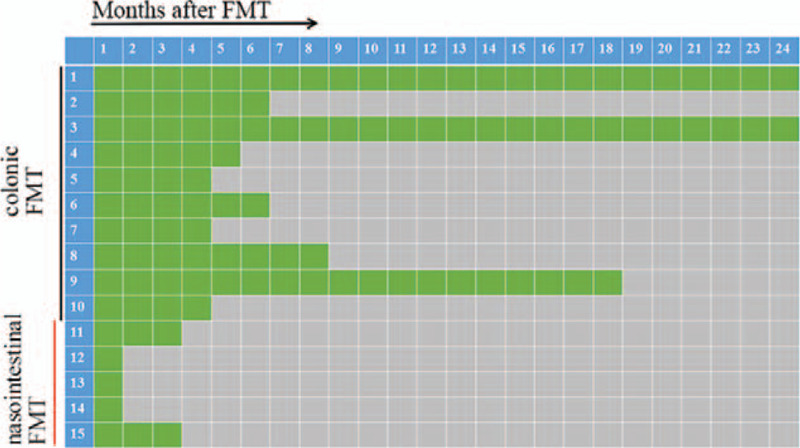
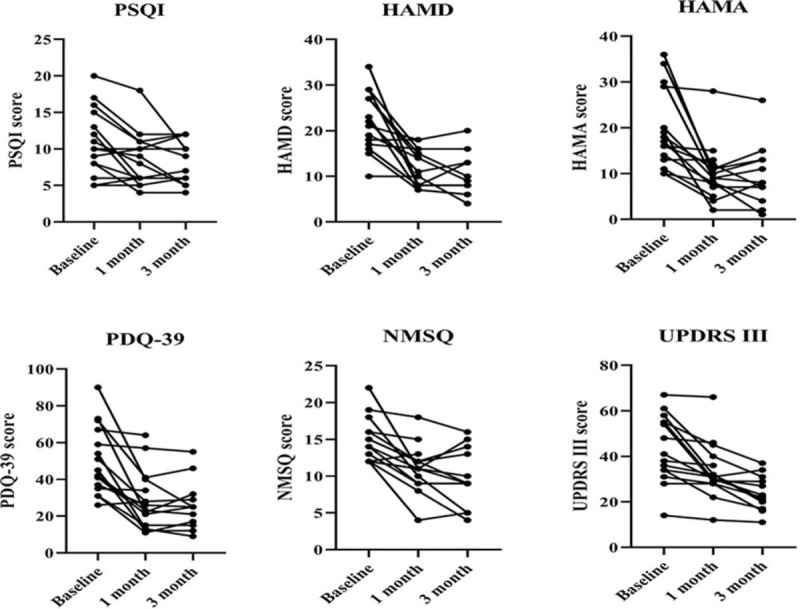
Imbalances in the gut microbiota mediate the progression of neurodegenerative diseases such as Parkinson's disease (PD). Fecal microbiota transplantation (FMT) is currently being explored as a potential therapy for PD. The objective of this study was to assess the efficacy and safety of FMT on PD. Fifteen PD patients were included, 10 of them received FMT via colonoscopy (colonic FMT group) and 5 received FMT via nasal-jejunal tube (nasointestinal FMT group). The score of PSQI, HAMD, HAMA, PDQ-39, NMSQ and UPDRS-III significantly decreased after FMT treatment (all P < .05). Colonic FMT group showed significant improvement and longer maintenance of efficacy compared with nasointestinal FMT (P = .002). Two patients achieved self-satisfying outcomes that last for more than 24 months. However, nasointestinal FMT group had no significant therapeutic effect, although UPDRS-III score slightly reduced. There were no patients were satisfied with nasointestinal FMT for more than 3 months. Among 15 PD patients, there were 5 cases had adverse events (AEs), including diarrhea (2 cases), abdominal pain (2 cases) and flatulence (1 case). These AEs were mild and self-limiting. We conclude that FMT can relieve the motor and non-motor symptoms with acceptable safety in PD. Compared with nasointestinal FMT, colonic FMT seems better and preferable.
Overview
The claims and statistics of this paper haven’t been checked yet.
Free: it reads the open-access text and checks the first 5 claims that cite a source we can check. Create a free account to check every claim.
Integrity signals
Registry
Cites
Statistics
Figures
Verification
Claims the paper makes
The claims and statistics of this paper haven’t been checked yet.
Free: it reads the open-access text and checks the first 5 claims that cite a source we can check. Create a free account to check every claim.
Claims other papers make about this one
Each is checked against this paper’s own text: does it say what the citing paper says it does?
The source backs part of the claim, not all of it — or backs it for a different population, condition or comparison.
In the citing paper
“Three subsequent studies involving 6, 11 and 15 PD patients, respectively, confirmed the reduction in constipation, as well as in motor and non-motor symptoms following FMT, as indicated by the decreased scores registered in various PD assessment tests [475,476,477].”
From The Interplay between Gut Microbiota and Parkinson’s Disease: Implications on Diagnosis and Treatment (2022) · cites this paper as [476]
Experimental — accuracy not yet measuredIn the citing paper
“Concerning PD, consistent preclinical studies and a handful of human case reports have shown that FMT might be exploited to reduce motor and non-motor symptoms, as well as constipation, at least in the short term [40,465,469,470,471,472,473,474,475,476,477] (Table 4).”
From The Interplay between Gut Microbiota and Parkinson’s Disease: Implications on Diagnosis and Treatment (2022) · cites this paper as [476]
In the citing paper
“On the whole, from a clinical point of view, better and longer-term outcomes were obtained using colonoscopy compared to nasointestinal delivery [476].”
From The Interplay between Gut Microbiota and Parkinson’s Disease: Implications on Diagnosis and Treatment (2022) · cites this paper as [476]
In the citing paper
“Within this context, 6 cases of adverse events occurred in human studies: flatulence (1), diarrhea (2), hospitalization under observation (1) and GI pain (2) [476,477].”
From The Interplay between Gut Microbiota and Parkinson’s Disease: Implications on Diagnosis and Treatment (2022) · cites this paper as [476]
Self-check
Percentages, sums and reported differences re-computed from the paper’s own numbers.
The self-check needs the paper’s full text.
Citations
Cites
Diagnosis and Treatment of Parkinson Disease: A Review
Armstrong, M. J., & Okun, M. S. (2020) · JAMA · doi:10.1001/jama.2019.22360 · Cited by 2,924 · cited 1×
“The PD patients often suffer from motor symptoms including rigidity, bradykinesia, tremor, impaired balance, and also nonmotor symptoms such as sleep disturbance, anxiety, depression, cognitive deficits.([4]) These symptomsworsen over time, becoming severe enough to interfere with daily common activities, thus necessi…”
BackgroundDorsey, E. R., Elbaz, A., Nichols, E., Abbasi, N., Abd-Allah, F., Abdelalim, A., Adsuar, J. C., Ansha, M. G., Brayne, C., Choi, J.-Y. J., et al. (2018) · The Lancet Neurology · doi:10.1016/s1474-4422(18)30295-3 · Cited by 2,816
The gut-brain axis: interactions between enteric microbiota, central and enteric nervous systems.
(2015) · PubMed Central · Cited by 2,540
Kim, S., Kwon, S.-H., Kam, T.-I., Panicker, N., Karuppagounder, S. S., Lee, S., Lee, J. H., Kim, W. R., Kook, M., Foss, C. A., et al. (2019) · Neuron · doi:10.1016/j.neuron.2019.05.035 · Cited by 1,397 · cited 1×
“spread to brain along the vagus nerve.([10]) The findings of these studies provide a basis for the treatment of PD by targeting the gut.”
BackgroundThe gut microbiome in neurological disorders
Cryan, J. F., O'Riordan, K. J., Sandhu, K., Peterson, V., & Dinan, T. G. (2020) · The Lancet Neurology · doi:10.1016/s1474-4422(19)30356-4 · Cited by 1,336 · cited 1×
“Imbalances in the gut microbiota promote altered host-microbial interactions that mediate the progression of many neurological diseases, including depression, autism, PD, etc.([6]) It has been reported that the gut microbiota in PD patients significantly differ from that of healthy individuals.”
BackgroundPrevalence of Parkinson’s disease across North America
Marras, C., Beck, J. C., Bower, J. H., Roberts, E., Ritz, B., Ross, G. W., Abbott, R. D., Savica, R., Van Den Eeden, S. K., Willis, A. W., et al. (2018) · npj Parkinson's Disease · doi:10.1038/s41531-018-0058-0 · Cited by 968 · cited 1×
“Approximately 930,000 people will be living with a PD diagnosis in the United States in 2020.([2]) In China, PD constitutes a serious public health burden, affecting approximately 1.”
BackgroundDiscovery and inhibition of an interspecies gut bacterial pathway for Levodopa metabolism
Maini Rekdal, V., Bess, E. N., Bisanz, J. E., Turnbaugh, P. J., & Balskus, E. P. (2019) · Science · doi:10.1126/science.aau6323 · Cited by 753 · cited 12×
“In fact, it is unclear which kind of microbiota can improve the symptoms of PD.”
BackgroundInfluentialSun, M.-F., Zhu, Y.-L., Zhou, Z.-L., Jia, X.-B., Xu, Y.-D., Yang, Q., Cui, C., & Shen, Y.-Q. (2018) · Brain, Behavior, and Immunity · doi:10.1016/j.bbi.2018.02.005 · Cited by 736 · cited 12×
“In fact, it is unclear which kind of microbiota can improve the symptoms of PD.”
BackgroundInfluentialKao, D., Roach, B., Silva, M., Beck, P., Rioux, K., Kaplan, G. G., Chang, H.-J., Coward, S., Goodman, K. J., Xu, H., et al. (2017) · JAMA · doi:10.1001/jama.2017.17077 · Cited by 615 · cited 1×
“Regardless of the microbiota transplantation route, there is a satisfactory cure rate.([26]) But in IBD, the microbiota transplantation route may affect the efficacy of FMT.”
BackgroundAnxiety, depression, and the microbiome: A role for gut peptides
Lach, G., Schellekens, H., Dinan, T. G., & Cryan, J. F. (2018) · Neurotherapeutics · doi:10.1007/s13311-017-0585-0 · Cited by 573 · cited 1×
“Gut microbiota and its metabolites may regulate neuroinflammation.([21,22]) A speculation worth noting is that FMT changes the gut microbiota and its metabolites by optimizing the structure of gut microbiota, and then improves the non-motor symptoms of PD.”
Background
Cited by
Chen, Y., Xu, J., & Chen, Y. (2021) · Nutrients · doi:10.3390/nu13062099 · Cited by 917
Gut Microbiota Dysbiosis: Triggers, Consequences, Diagnostic and Therapeutic Options
Hrncir, T. (2022) · Microorganisms · doi:10.3390/microorganisms10030578 · Cited by 433
Parkinson’s disease and gut microbiota: from clinical to mechanistic and therapeutic studies
Zhang, X., Tang, B., & Guo, J. (2023) · Translational Neurodegeneration · doi:10.1186/s40035-023-00392-8 · Cited by 187
Gut Microbiota: A Novel Therapeutic Target for Parkinson’s Disease
Zhu, M., Liu, X., Ye, Y., Yan, X., Cheng, Y., Zhao, L., Chen, F., & Ling, Z. (2022) · Frontiers in Immunology · doi:10.3389/fimmu.2022.937555 · Cited by 177
MacMahon Copas, A. N., McComish, S. F., Fletcher, J. M., & Caldwell, M. A. (2021) · Frontiers in Neurology · doi:10.3389/fneur.2021.666737 · Cited by 173
Fermented foods: An update on evidence-based health benefits and future perspectives
Diez-Ozaeta, I., & Astiazaran, O. J. (2022) · Food Research International · doi:10.1016/j.foodres.2022.111133 · Cited by 162
Cheng, Y., Tan, G., Zhu, Q., Wang, C., Ruan, G., Ying, S., Qie, J., Hu, X., Xiao, Z., Xu, F., et al. (2023) · Gut Microbes · doi:10.1080/19490976.2023.2284247 · Cited by 147
Bruggeman, A., Vandendriessche, C., Hamerlinck, H., De Looze, D., Tate, D. J., Vuylsteke, M., De Commer, L., Devolder, L., Raes, J., Verhasselt, B., et al. (2024) · eClinicalMedicine · doi:10.1016/j.eclinm.2024.102563 · Cited by 139
Fecal Microbiota Transplantation for Treatment of Parkinson Disease: A Randomized Clinical Trial
Scheperjans, F., Levo, R., Bosch, B., Lääperi, M., Pereira, P. A. B., Smolander, O.-P., Aho, V. T. E., Vetkas, N., Toivio, L., Kainulainen, V., et al. (2024) · JAMA Neurology · doi:10.1001/jamaneurol.2024.2305 · Cited by 128
Wang, H., Yang, F., Zhang, S., Xin, R., & Sun, Y. (2021) · npj Parkinson's Disease · doi:10.1038/s41531-021-00213-7 · Cited by 126
Bicknell, B. T., Liebert, A. D., Borody, T. J., Herkes, G., McLachlan, C. S., & Kiat, H. (2023) · International Journal of Molecular Sciences · doi:10.3390/ijms24119577 · Cited by 148
“A case series of 15 patients receiving FMT showed significant improvements in sleep quality and motor and non-motor symptoms when given colonic FMT, but not nasogastric FMT [344].”
Fecal microbiota transplant as a potential treatment for Parkinson's disease – A case series
Segal, A., Zlotnik, Y., Moyal-Atias, K., Abuhasira, R., & Ifergane, G. (2021) · Clinical Neurology and Neurosurgery · doi:10.1016/j.clineuro.2021.106791 · Cited by 124
Gut microbiome and Parkinson's disease: Perspective on pathogenesis and treatment
Salim, S., Ahmad, F. A., Banu, A., & Mohammad, F. (2022) · Journal of Advanced Research · doi:10.1016/j.jare.2022.10.013 · Cited by 134
Current Treatments and New, Tentative Therapies for Parkinson’s Disease
Pardo-Moreno, T., García‐Morales, V., Suleiman‐Martos, N., Rivas-Domínguez, A., Mohamed-Mohamed, H., Ramos‐Rodríguez, J. J., Melguizo‐Rodríguez, L., & González‐Acedo, A. (2023) · Pharmaceutics · doi:10.3390/pharmaceutics15030770 · Cited by 132
Gut Microbiota Interaction with the Central Nervous System throughout Life
Ojeda, J., Ávila, A., & Vidal, P. M. (2021) · Journal of Clinical Medicine · doi:10.3390/jcm10061299 · Cited by 103
Potential roles of gut microbiota and microbial metabolites in Parkinson’s disease
Zheng, S.-Y., Li, H.-X., Xu, R.-C., Miao, W.-T., Dai, M.-Y., Ding, S.-T., & Liu, H.-D. (2021) · Ageing Research Reviews · doi:10.1016/j.arr.2021.101347 · Cited by 101
Enteric nervous system and intestinal epithelial regulation of the gut-brain axis
Dowling, L. R. C., Strazzari, M. R., Keely, S., & Kaiko, G. E. (2022) · Journal of Allergy and Clinical Immunology · doi:10.1016/j.jaci.2022.07.015 · Cited by 135
Brain modulation by the gut microbiota: From disease to therapy
Mitra, S., Dash, R., Nishan, A. A., Habiba, S. U., & Moon, I. S. (2023) · Journal of Advanced Research · doi:10.1016/j.jare.2022.12.001 · Cited by 91
“In this study, FMT improved both motor and non-motor symptoms in patients with PD [257].”
ResultVaresi, A., Campagnoli, L. I. M., Fahmideh, F., Pierella, E., Romeo, M., Ricevuti, G., Nicoletta, M., Chirumbolo, S., & Pascale, A. (2022) · International Journal of Molecular Sciences · doi:10.3390/ijms232012289 · Cited by 88
Matheson, J.-A. T., & Holsinger, R. M. D. (2023) · International Journal of Molecular Sciences · doi:10.3390/ijms24021001 · Cited by 104
Therapeutics for neurodegenerative diseases by targeting the gut microbiome: from bench to bedside
Ma, Y., Li, X., Yu, J., & Wang, Y. (2024) · Translational Neurodegeneration · doi:10.1186/s40035-024-00404-1 · Cited by 105
“FMT relieved the motor deficits, improved the quality of life and sleep, and relieved anxiety and depression at 1 and 3 months post-FMT, although 5 of these 15 patients reported adverse events including diarrhoea, flatulence and abdominal pain [187].”
BackgroundMethodInfluentialFecal Microbiota Transplantation: The Evolving Risk Landscape
Gupta, S., Mullish, B. H., & Allegretti, J. R. (2021) · The American Journal of Gastroenterology · doi:10.14309/ajg.0000000000001075 · Cited by 84
Washed Microbiota Transplantation Lowers Blood Pressure in Patients With Hypertension
Zhong, H., Zeng, H.-L., Cai, Y.-L., Zhuang, Y.-P., Liou, Y., Wu, Q., & He, X. (2021) · Frontiers in Cellular and Infection Microbiology · doi:10.3389/fcimb.2021.679624 · Cited by 81
“Because of the fluctuation in blood pressure, the mean blood pressure before WMT (based on ≥2 days of measurements between hospital admission and FMT) and after WMT (based on ≥2 days of measurements between FMT and hospital discharge) were also collected.”
BackgroundInfluentialSoraci, L., Gambuzza, M. E., Biscetti, L., Laganà, P., Russo, C. L., Buda, A., Barresi, G., Corsonello, A., Lattanzio, F., Lorello, G., et al. (2022) · Journal of Neurology · doi:10.1007/s00415-022-11491-3 · Cited by 78
Lorente-Picón, M., & Laguna, A. (2021) · Biomolecules · doi:10.3390/biom11030433 · Cited by 69
Bile acid receptors and signaling crosstalk in the liver, gut and brain
Ferrell, J. M., & Chiang, J. Y. L. (2021) · Liver Research · doi:10.1016/j.livres.2021.07.002 · Cited by 77
Cheng, W., Ho, J. Y. S., & Chang, R. C. (2022) · Ageing Research Reviews · doi:10.1016/j.arr.2022.101620 · Cited by 75
Encapsulated Fecal Microbiota Transplantation: Development, Efficacy, and Clinical Application
Halaweish, H., Boatman, S. M., & Staley, C. M. (2022) · Frontiers in Cellular and Infection Microbiology · doi:10.3389/fcimb.2022.826114 · Cited by 78
The Gut Microbiome–Brain Crosstalk in Neurodegenerative Diseases
Ghezzi, L., Cantoni, C., Rotondo, E., & Galimberti, D. (2022) · Biomedicines · doi:10.3390/biomedicines10071486 · Cited by 57
The gut microbiota is an emerging target for improving brain health during ageing
Boehme, M., Guzzetta, K. E., Wasén, C., & Cox, L. M. (2022) · Gut Microbiome · doi:10.1017/gmb.2022.11 · Cited by 62
The Involvement of Neuroinflammation in the Onset and Progression of Parkinson’s Disease
Jurcău, A., Andronie-Cioară, F. L., Nistor-Cseppento, C. D., Pașcalău, N., Rus, M., Vasca, E., & Jurcău, M. C. (2023) · International Journal of Molecular Sciences · doi:10.3390/ijms241914582 · Cited by 64
“…transplant as a treatment strategy in PD is still in initial phases and used mainly for improving gastrointestinal symptoms like constipation or bloating, but reports on small studies highlight improvements also in the quality of sleep, anxiety, depression, as well as motor symptoms [340].”
Hediyal, T. A., Vichitra, C., Anand, N., Bhaskaran, M., Essa, S. M., Kumar, P., Qoronfleh, M. W., Akbar, M. D., Kaul-Ghanekar, R., Mahalakshmi, A. M., et al. (2024) · Frontiers in Immunology · doi:10.3389/fimmu.2024.1324018 · Cited by 59
An update on fecal microbiota transplantation for the treatment of gastrointestinal diseases
Waller, K. M. J., Leong, R. W. L., & Paramsothy, S. (2021) · Journal of Gastroenterology and Hepatology · doi:10.1111/jgh.15731 · Cited by 56
The brain-gut-microbiota axis in the treatment of neurologic and psychiatric disorders
Naufel, M. F., Truzzi, G., Ferreira, C. M., & Coelho, F. M. S. (2023) · Arquivos de Neuro-Psiquiatria · doi:10.1055/s-0043-1767818 · Cited by 88
Menozzi, E., & Schapira, A. H. V. (2024) · CNS Drugs · doi:10.1007/s40263-024-01073-4 · Cited by 52
Association of Parkinson’s Disease With Microbes and Microbiological Therapy
Chen, Z.-J., Liang, C.-Y., Yang, L.-Q., Ren, S.-M., Xia, Y.-M., Cui, L., Li, X.-F., & Gao, B.-L. (2021) · Frontiers in Cellular and Infection Microbiology · doi:10.3389/fcimb.2021.619354 · Cited by 45
Overlapping Neuroimmune Mechanisms and Therapeutic Targets in Neurodegenerative Disorders
Marchi, F. D., Munitić, I., Vidatic, L., Papić, E., Rački, V., Nimac, J., Jurak, I., Novotni, G., Rogelj, B., Vuletić, V., et al. (2023) · Biomedicines · doi:10.3390/biomedicines11102793 · Cited by 54
Hang, Z., Lei, T., Zeng, Z., Cai, S., Bi, W., & Du, H. (2021) · Biomedicine & Pharmacotherapy · doi:10.1016/j.biopha.2021.112343 · Cited by 47
Targeting gut microbiota: new therapeutic opportunities in multiple sclerosis
Kujawa, D., Łaczmański, Ł., Budrewicz, S. P., Pokryszko‐Dragan, A., & Podbielska, M. (2023) · Gut Microbes · doi:10.1080/19490976.2023.2274126 · Cited by 47
Microbiome-based therapies for Parkinson’s disease
Alam, M., Abbas, K., Mustafa, M., Usmani, N., & Habib, S. (2024) · Frontiers in Nutrition · doi:10.3389/fnut.2024.1496616 · Cited by 50
Influence of human gut microbiome on the healthy and the neurodegenerative aging
Borrego-Ruiz, A., & Borrego, J. J. (2024) · Experimental Gerontology · doi:10.1016/j.exger.2024.112497 · Cited by 48
Neurodegenerative Microbially-Shaped Diseases: Oxidative Stress Meets Neuroinflammation
Silva, D. F., Empadinhas, N., Cardoso, S. M., & Esteves, A. R. (2022) · Antioxidants · doi:10.3390/antiox11112141 · Cited by 47
Ghassab, F. T., Mahmoudi, F. S., Tinjani, R. T., Meibodi, A. E., Zali, M. R., & Yadegar, A. (2024) · Life Sciences · doi:10.1016/j.lfs.2024.122748 · Cited by 41
Current Status and Future Therapeutic Options for Fecal Microbiota Transplantation
Ткач, С. М., Dorofeyev, A., Kuzenko, I., Boyko, N., Falalyeyeva, T. M., Boccuto, L., Scarpellini, E., Kobyliak, N. M., & Abenavoli, L. (2022) · Medicina · doi:10.3390/medicina58010084 · Cited by 41
The Gut‐Brain Axis in Parkinson disease: Emerging Concepts and Therapeutic Implications
Menozzi, E., Schapira, A. H. V., & Borghammer, P. (2025) · Movement Disorders Clinical Practice · doi:10.1002/mdc3.70029 · Cited by 48
Oral and intestinal dysbiosis in Parkinson's disease
Berthouzoz, E., Lazarević, V., Zekeridou, A., Jiménez, M. C., Debove, I., Aybek, S., Schrenzel, J., Burkhard, P. R., & Fleury, V. (2023) · Revue Neurologique · doi:10.1016/j.neurol.2022.12.010 · Cited by 40
Zhang, T., Wang, T., Chen, X., Zhao, Z., & Chen, Z. (2021) · Experimental and Therapeutic Medicine · doi:10.3892/etm.2021.10974 · Cited by 34
Gastrointestinal Dysfunction in Parkinson’s Disease
Safarpour, D., Sharzehi, K., & Pfeiffer, R. F. (2022) · Drugs · doi:10.1007/s40265-021-01664-1 · Cited by 41
Gut microbiota manipulation as an epilepsy treatment
Iannone, L. F., Gómez-Eguílaz, M., & Caro, C. D. (2022) · Neurobiology of Disease · doi:10.1016/j.nbd.2022.105897 · Cited by 40
“, 2019), Parkinson’s (Xue et al., 2020) and epilepsy (De Caro et al.”
InfluentialCracking Brain Diseases from Gut Microbes-Mediated Metabolites for Precise Treatment
Gong, Y., Chen, A., Zhang, G., Shen, Q., Zou, L., Li, J., Miao, Y., & Liu, W. (2023) · International Journal of Biological Sciences · doi:10.7150/ijbs.85259 · Cited by 35
Uceda, S., Echeverry‐Alzate, V., Reiriz, M., Miguel, E. M., Pérez-Curiel, A., Gómez-Senent, S., & Beltrán-Velasco, A. I. (2023) · International Journal of Molecular Sciences · doi:10.3390/ijms241713294 · Cited by 39
Iwaniak, P., Owe-Larsson, M., & Urbańska, E. M. (2024) · International Journal of Molecular Sciences · doi:10.3390/ijms25052915 · Cited by 34
“A preliminary study performed in a group of 15 PD patients revealed that FMT via colonoscopy (N = 10), in contrast to nasal–jejunal transplant (N = 5), alleviated the symptoms of the disease 1 month after the procedure [190].”
ResultSaha, B., Rithi, A. T., Adhikary, S., Banerjee, A., Radhakrishnan, A., Duttaroy, A. K., & Pathak, S. (2024) · Nutrition and Cancer · doi:10.1080/01635581.2024.2367266 · Cited by 41
Brain-gut-microbiota axis in Parkinson’s disease: A historical review and future perspective
Dong, S., Sun, M., He, C. H., & Cheng, H. (2022) · Brain Research Bulletin · doi:10.1016/j.brainresbull.2022.02.015 · Cited by 34
Liebert, A. D., Bicknell, B. T., Laakso, E., Jalilitabaei, P., Tilley, S., Kiat, H., & Mitrofanis, J. (2021) · Photobiomodulation Photomedicine and Laser Surgery · doi:10.1089/photob.2021.0056 · Cited by 38
A review of studies on gut microbiota and levodopa metabolism
Zhong, Z., Ye, M., & Yan, F. (2023) · Frontiers in Neurology · doi:10.3389/fneur.2023.1046910 · Cited by 31
Yu, J., Meng, J., Qin, Z., Yuan, Y., Liang, Y., Wang, Y., & Min, D. (2023) · Journal of Neuroinflammation · doi:10.1186/s12974-023-02782-1 · Cited by 40
Gut-microbiota-directed strategies to treat epilepsy: clinical and experimental evidence
Granados, D. M. M., Villasana‐Salazar, B., Lozano‐García, L., Cavalheiro, É. A., & Striano, P. (2021) · Seizure · doi:10.1016/j.seizure.2021.03.009 · Cited by 35
Microbiome-based therapeutics for Parkinson's disease
Hamilton, A. M., Krout, I. N., White, A. C., & Sampson, T. R. (2024) · Neurotherapeutics · doi:10.1016/j.neurot.2024.e00462 · Cited by 33
Interactions between gut microbiota and parkinson’s disease: the role of tryptophan metabolism
Fan, X., Xiao, Z., Chen, Y., Yang, H., Diao, M., Hu, W., & Wang, S. (2025) · Cell Communication and Signaling · doi:10.1186/s12964-025-02393-8 · Cited by 39
Parkinson's Disease and the Gut: Models of an Emerging Relationship
Bindas, A. J., Kulkarni, S., Koppes, R. A., & Koppes, A. N. (2020) · Acta Biomaterialia · doi:10.1016/j.actbio.2021.03.071 · Cited by 28
Gut microbiota, pathogenic proteins and neurodegenerative diseases
Wei, W., Wang, S., Xu, C., Zhou, X., Lian, X., He, L., & Li, K. (2022) · Frontiers in Microbiology · doi:10.3389/fmicb.2022.959856 · Cited by 33
Lipták, R., Gromová, B., & Gardlík, R. (2021) · Frontiers in Medicine · doi:10.3389/fmed.2021.665520 · Cited by 30
The relationship between Parkinson’s disease and gastrointestinal diseases
Zeng, J., Wang, X., Pan, F., & Mao, Z. (2022) · Frontiers in Aging Neuroscience · doi:10.3389/fnagi.2022.955919 · Cited by 29
“A preliminary study (Xue et al., 2020) including 15 PD patients reported relieved motor and non-motor symptoms after fecal microbiota transplantation (FMT), and compared with nasointestinal FMT, colonic FMT appears to be more effective.”
Therapies for Parkinson’s disease and the gut microbiome: evidence for bidirectional connection
Hey, G. E., Nair, N., Klann, E. M., Gurrala, A., Safarpour, D., Mai, V., Ramirez‐Zamora, A., & Vedam‐Mai, V. (2023) · Frontiers in Aging Neuroscience · doi:10.3389/fnagi.2023.1151850 · Cited by 28
Zhong, H., Xie, X., Chen, W.-J., Zhuang, Y.-P., Hu, X., Cai, Y.-L., Zeng, H.-L., Xiao, C., Li, Y., Ding, Y., et al. (2023) · Journal of Translational Medicine · doi:10.1186/s12967-023-04570-0 · Cited by 29
Chan, D. G., Ventura, K., Villeneuve, A., Du Bois, P., & Holahan, M. R. (2022) · Journal of Parkinson's Disease · doi:10.3233/jpd-223461 · Cited by 24
“Fecal microbial transplantation (FMT) refers to the transfer of healthy gut microbiota from a healthy donor in a fecal suspension into the recipient’s gut to re-establish a healthy gut microbial community [115].”
BackgroundResultSchmidt, E. K. A., Raposo, P. J. F., Madsen, K. L., Fenrich, K. K., Kabarchuk, G., & Fouad, K. (2021) · Biology · doi:10.3390/biology10040254 · Cited by 28
Wang, J., Xue, L., Zhang, M., Shen, P., Zhao, W., Tong, Q., Wu, S.-N., Dai, W., Yang, X., & Wang, H. (2025) · Brain Behavior and Immunity · doi:10.1016/j.bbi.2025.106086 · Cited by 32
“Xue et al. reported that colonoscopic FMT, rather than nasojejunal FMT, effectively alleviates non-motor symptoms of PD (Xue et al., 2020).”
Modulation of the Microbiome in Parkinson's Disease: Diet, Drug, Stool Transplant, and Beyond
Brown, E. G., & Goldman, S. M. (2020) · Neurotherapeutics · doi:10.1007/s13311-020-00942-2 · Cited by 28
Transfer of Tumor-Bearing Mice Intestinal Flora Can Ameliorate Cognition in Alzheimer’s Disease Mice
Hang, Z., Cai, S., Lei, T., Zhang, X., Xiao, Z., Wang, D., Li, Y., Bi, W., Yang, Y., Deng, S., et al. (2022) · Journal of Alzheimer s Disease · doi:10.3233/jad-215495 · Cited by 24
Exploring the multifactorial aspects of Gut Microbiome in Parkinson’s Disease
Pavan, S., Prabhu, A., Gorthi, S. P., Das, B., Mutreja, A., Shetty, V., Ramamurthy, T., & Ballal, M. (2022) · Folia Microbiologica · doi:10.1007/s12223-022-00977-2 · Cited by 25
Gut-Brain Axis Deregulation and Its Possible Contribution to Neurodegenerative Disorders
Villavicencio-Tejo, F., Olesen, M. A., Navarro, L., Calisto, N., Iribarren, C., GARCÍA, K. P., Corsini, G., & Quintanilla, R. A. (2023) · Neurotoxicity Research · doi:10.1007/s12640-023-00681-0 · Cited by 25
Jia, X., Chen, Q., Zhang, Y., & Asakawa, T. (2023) · Frontiers in Cellular and Infection Microbiology · doi:10.3389/fcimb.2023.1296713 · Cited by 22
“The objective of FMT is to restore the healthy diversity of gut microbiota and provide successful therapy for certain diseases both within and outside the intestinal tract.”
BackgroundInfluentialFaecal microbiota transplant in Parkinson’s disease: pilot study to establish safety & tolerability
Sciscio, M. D., Bryant, R. V., Haylock‐Jacobs, S., Day, A. S., Pitchers, W., Iansek, R., Costello, S. P., & Kimber, T. E. (2025) · npj Parkinson s Disease · doi:10.1038/s41531-025-01061-5 · Cited by 31
Balakrishnan, R., Kang, S.-I., Lee, J. Y., Rho, Y., Kim, B.-K., & Choi, D. (2024) · Aging and Disease · doi:10.14336/ad.2024.1362 · Cited by 39
Kumar, D., Bishnoi, M., Kondepudi, K. K., & Sharma, S. S. (2025) · Probiotics and Antimicrobial Proteins · doi:10.1007/s12602-024-10433-x · Cited by 31
The holobiont mind: A bridge between 4E cognition and the microbiome
Palacios-García, I., & Parada, F. J. (2021) · Adaptive Behavior · doi:10.1177/10597123211053071 · Cited by 25
Hamamah, S., Hajnal, A. S., & Covașă, M. (2022) · International Journal of Molecular Sciences · doi:10.3390/ijms23147503 · Cited by 25
Parkinson's disease: Are gut microbes involved?
Omotosho, A. O., Tajudeen, Y. A., Oladipo, H. J., Yusuff, S. I., Abdulkadir, M., Muili, A. O., Egbewande, O. M., Yusuf, R. O., Faniran, Z. O., Afolabi, A. O., et al. (2023) · Brain and Behavior · doi:10.1002/brb3.3130 · Cited by 24
The holobiont mind: A bridge between 4E-cognition and the microbiome
Palacios-Garcia, I., & Parada, F. J. (2021) · doi:10.31234/osf.io/thuvc · Cited by 21
The Microbiota–Human Health Axis
John, H. T., Thomas, T. C., Chukwuebuka, E. C., Ali, A. B., Anass, R., Tefera, Y. Y., Babu, B., Negruţ, N., Ferician, A. C., & Marian, P. (2025) · Microorganisms · doi:10.3390/microorganisms13040948 · Cited by 30
“The bacterial community of the stomach produces butyrate, which helps reduce inflammation by modulating immunity and supporting regulatory T cells [105].”
Hill, A. E., Wade‐Martins, R., & Burnet, P. W. J. (2021) · Frontiers in Neuroscience · doi:10.3389/fnins.2021.708587 · Cited by 20
Neuro-Immunity and Gut Dysbiosis Drive Parkinson’s Disease-Induced Pain
Roversi, K., Callai-Silva, N., Roversi, K., Griffith, M., Boutopoulos, C., Prediger, R. D., & Talbot, S. (2021) · Frontiers in Immunology · doi:10.3389/fimmu.2021.759679 · Cited by 20
Shi, J., Wang, Y., Chen, D., Xu, X., Li, W., Li, K., He, J., Su, W., & Luo, Q. (2023) · Applied Microbiology and Biotechnology · doi:10.1007/s00253-023-12410-w · Cited by 23
Washed microbiota transplantation improves haemoglobin levels in anaemia of chronic disease
Zhong, H., Chen, W., Lu, X., Hu, D.-X., Lin, D., Liu, T., Wu, L., Wu, L., & He, X. (2023) · European Journal of Clinical Investigation · doi:10.1111/eci.14072 · Cited by 27
Vendrik, K. E. W., Chernova, V. O., Kuijper, E. J., Terveer, E. M., van Hilten, J. J., & Contarino, M. F. (2023) · BMJ Open · doi:10.1136/bmjopen-2023-071766 · Cited by 29
Panaitescu, P.-Ș., Răzniceanu, V., Mocrei-Rebrean, Ș.-M., Neculicioiu, V. S., Dragoș, H.-M., Costache, C. A., & Filip, G. A. (2024) · Current Issues in Molecular Biology · doi:10.3390/cimb46050244 · Cited by 21
“In comparison, FMT studies are more heterogeneous methodologically despite the limited data available on PD models [44]; some short-term studies attest to its effectiveness in treating gastrointestinal dysfunction and improving motor symptoms [45,46,67,68].”
ResultKerstens, R., & Joyce, P. M. (2024) · Biomedicines · doi:10.3390/biomedicines12081738 · Cited by 20
“…barrier homeostasis, their over-abundance leads to degradation of the intestinal mucous barrier and contributes to increased intestinal permeability [8], which may expose the intestinal neural plexus directly to oxidative stress or toxins, such as lipopolysaccharide (LPS) and pesticides [20,36].”
BackgroundThe gut, vaginal, and urine microbiome in overactive bladder: a systematic review
Sze, C., Pressler, M., Lee, J. R., & Chughtai, B. I. (2022) · International Urogynecology Journal · doi:10.1007/s00192-022-05127-3 · Cited by 20
More than just a number: the gut microbiota and brain function across the extremes of life
Nuzum, N. D., Deady, C., Kittel‐Schneider, S., Cryan, J. F., O’Mahony, S. M., & Clarke, G. A. (2024) · Gut Microbes · doi:10.1080/19490976.2024.2418988 · Cited by 25
“Preliminary FMT studies in people with PD have been conducted, - 258,259 with research indicating that FMT is well-tolerated, with some mild-to-moderate adverse events reported (E.g., GI disturbances).”
A Review of the Consequences of Gut Microbiota in Neurodegenerative Disorders and Aging
Menezes, A. A., & Shah, Z. A. (2024) · Brain Sciences · doi:10.3390/brainsci14121224 · Cited by 24
Nutrition and Cancer Risk from the Viewpoint of the Intestinal Microbiome
Tanaka, Y., Shimizu, S., Shirotani, M., Yorozu, K., Kitamura, K., Oehorumu, M., Kawai, Y., & Fukuzawa, Y. (2021) · Nutrients · doi:10.3390/nu13103326 · Cited by 23
Nabil, Y., Helal, M. M., Qutob, I. A., Dawoud, A. L. A., Allam, S., Haddad, R., Manasrah, G. M., AlEdani, E. M., Sleibi, W., faris, A., et al. (2025) · BMC Neurology · doi:10.1186/s12883-025-04105-8 · Cited by 21
The Role of The Gut Microbiome in Parkinson’s Disease
Gallop, A., Weagley, J. S., Paracha, S.-U.-R., & Grossberg, G. T. (2021) · Journal of Geriatric Psychiatry and Neurology · doi:10.1177/08919887211018268 · Cited by 20
Gut microbiota of Parkinson’s disease in an appendectomy cohort: a preliminary study
Nakahara, K., Nakane, S., Ishii, K., Ikeda, T., & Ando, Y. (2023) · Scientific Reports · doi:10.1038/s41598-023-29219-2 · Cited by 21
The Role of an Altered Gut Microbiome in Parkinson’s Disease: A Narrative Review
Hashish, S. A., & Salama, M. (2023) · Applied Microbiology · doi:10.3390/applmicrobiol3020030 · Cited by 18
“[94] PD patients (n = 15) 5 healthy donors PD patients PSQI HAMA PDQ-39 HAMD UPDRS-III NMSS”
BackgroundRojo, N. D., Blanco-Benítez, M., Cava, R., Fuentes, J. M., Canales-Cortés, S., & González‐Polo, R. A. (2024) · International Journal of Molecular Sciences · doi:10.3390/ijms252111629 · Cited by 18
Metabolic modeling links gut microbiota to metabolic markers of Parkinson’s disease
Hensen, T., & Thiele, I. (2025) · Gut Microbes · doi:10.1080/19490976.2025.2554195 · Cited by 19
Peter, I., & Strober, W. (2023) · Journal of Parkinson s Disease · doi:10.3233/jpd-230021 · Cited by 15
“In aggregate, these studies profiling the gut microbiome in Lrrk2-mutant mice and in response to LRRK2 inhibition therapy could help better understand the interplay between LRRK2 activity and the gut microbiome, thereby leading to the development of novel sensitive markers and/or treatment targets for PD, especially a…”
Background
Metadata
- Authors
- Xue, L.-J., Yang, X.-Z., Tong, Q., Shen, P., Ma, S.-J., Wu, S.-N., Zheng, J.-L., & Wang, H.-G.
- Affiliations
- Department of Neurology, The Affiliated Huaian No. 1 People's Hospital of Nanjing Medical University
- Department of Gastroenterology, The Affiliated Huaian No. 1 People's Hospital of Nanjing Medical University, Huaian, Jiangsu Province, China.
- Huaian First People’s Hospital (CN)
- Venue
- Medicine
- Published
- 2020-08-28
- Volume
- 99
- Issue
- 35
- Pages
- e22035
- ISSN
- 0025-7974 (ISSN-L)
- 1536-5964
- PMC
- PMC7458210
- OpenAlex
- W3081450923
- Semantic Scholar
- ca8a7cfb844ee5b31d8ee24c834fb5c86d773d37
- Cited by
- 186
- References
- 28
- Citations by year
- 2026: 19 · 2025: 26 · 2024: 39 · 2023: 33 · 2022: 36 · 2021: 31 · 2020: 2
- FWCI
- 11.04
- Type
- journal article
- Language
- en
- Open access
- gold
- doi.org
- Licence
- Locations
- Medicine (publishedVersion, cc-by-nc)
- PubMed Central (publishedVersion, cc-by-nc)
- PubMed (publishedVersion)
- Topics
- Health Sciences › Medicine › Clinical Neurology › Parkinson's Disease Mechanisms and Treatments
- Life Sciences › Biochemistry, Genetics and Molecular Biology › Molecular Biology › Gut microbiota and health
- Health Sciences › Medicine › Clinical Neurology › Deep Brain Stimulation and Movement Disorders
- Keywords
- fecal microbiota transplantation, Parkinson's disease, gut microbiota, motor symptoms, non-motor symptoms, treatment efficacy, treatment safety, adverse events, UPDRS-III, PDQ-39
- MeSH terms
- Fecal Microbiota Transplantation, Aged, Colonoscopy, Female, Humans, Intubation, Gastrointestinal, Male, Middle Aged, Parkinson Disease, Pilot Projects, Patient Satisfaction, Young Adult
About these checks
Registry, retraction, Cites and statistics results are computed, not judged, with one exception: a printed reference that no index lists is read once by a model before it counts as a citation error. Claims are extracted by a model and kept only when their quote appears verbatim in the text; each cited source is then checked, with a model’s help, for whether it says what the claim relies on. Those verdicts can be wrong — read the claim’s quote and the cited source before relying on one.
Statistics and arithmetic are recomputed, not judged.
Confidence bands are shown only for fields calibrated on our annotated test set. None is calibrated yet, so no band is shown.
What counts as a claim ›How we measure confidence ›How we check this ›
Are you an author, or do you see a problem with this page? Request a review
Data sources
Bibliographic data: Semantic Scholar, OpenAlex, Crossref.
Contains information from the Semantic Scholar Academic Graph Datasets, made available under the ODC Attribution License (ODC-BY 1.0).
Semantic Scholar’s data is described in: Kinney, R., et al. (2023). The Semantic Scholar Open Data Platform. arXiv:2301.10140.
