

The DOI matches its Crossref record; 1 of the 1 references it cites were found in a registry or an index.
ReLo is a simple and quick colocalization assay to identify and characterize direct protein-protein interactions
Open accessPreprint — published as 10.1038/s41467-024-47233-4 · Paper page
Abstract
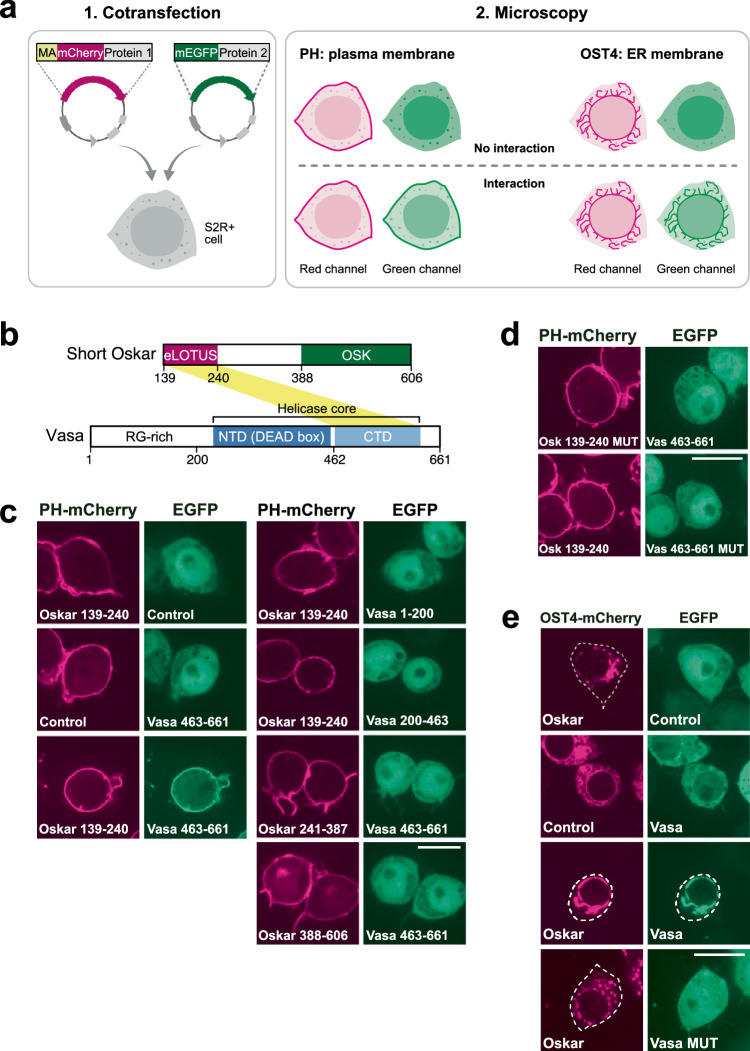
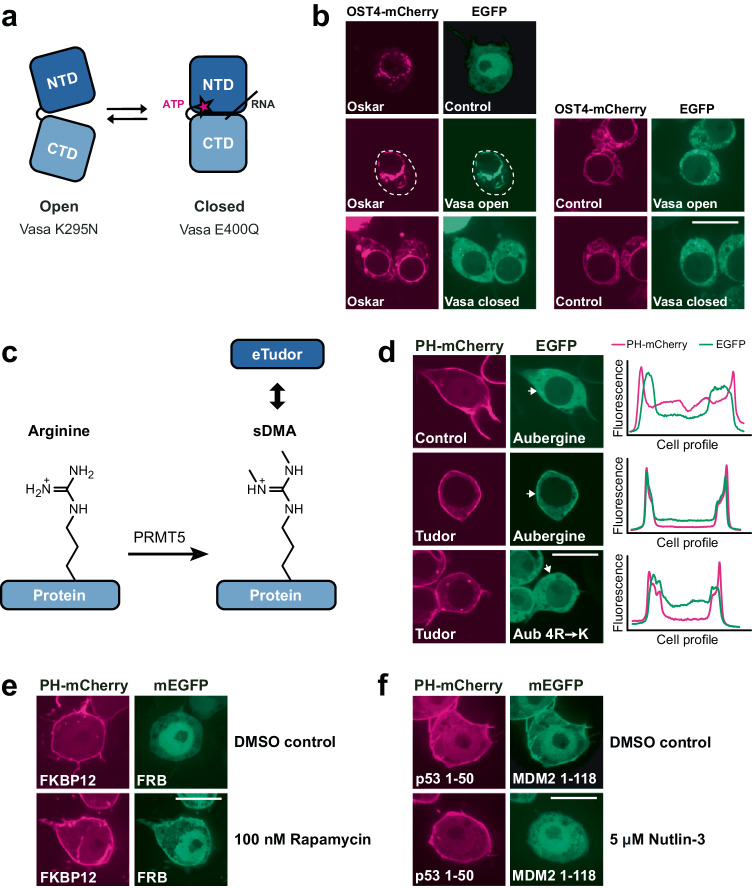
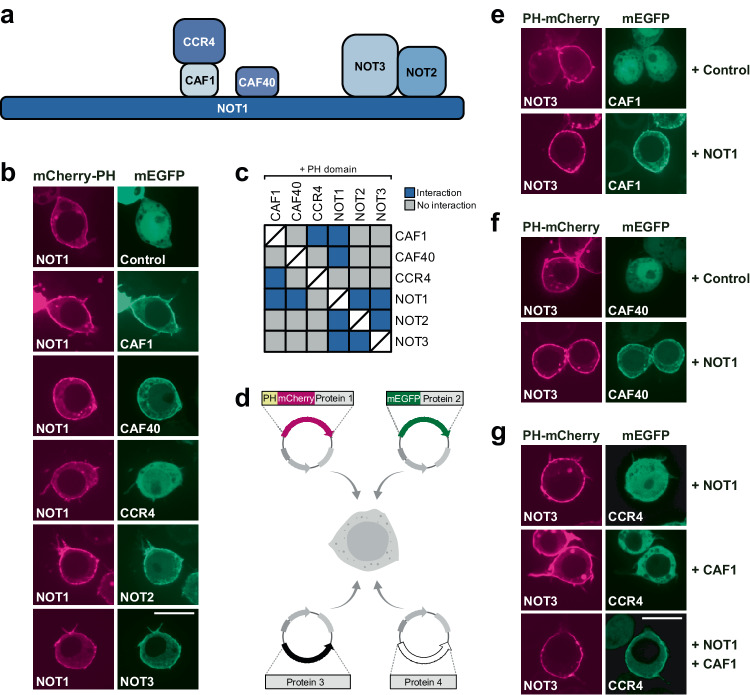
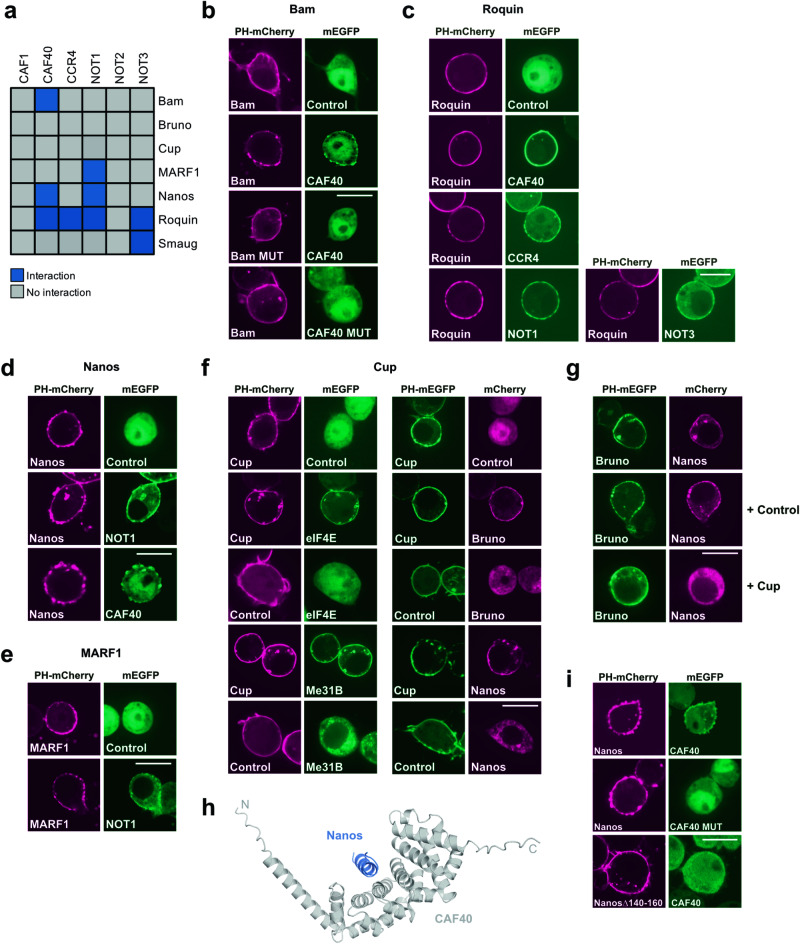
The characterization of protein-protein interactions (PPIs) is fundamental for understanding biochemical processes. Many methods have been established to identify and study direct PPIs; however, the screening and investigation of PPIs involving large or poorly soluble proteins remain challenging. As a result, we developed ReLo, a simple, rapid, and versatile cell culture-based method for detecting and investigating interactions in a cellular context. Importantly, our data strongly suggest that with ReLo specifically direct binary PPIs are detected. By applying additional bridging experiments ReLo can also be used to determine the binding topology of subunits within multiprotein complexes. Moreover, ReLo has the potential to identify protein domains that mediate complex formation, screen for interfering point mutations, study interactions that depend on conformation or protein arginine methylation, and it is sensitive to drugs that mediate or interfere with an interaction. Taken together, ReLo is a simple and quick alternative for the study of PPIs particularly when established methods fail.
Overview
The claims and statistics of this paper haven’t been checked yet.
Run the check — free, no account needed. It reads the open-access text and checks the sources it cites.
Integrity signals
Registry
Cites
Statistics
Figures
Verification
Claims the paper makes
The claims and statistics of this paper haven’t been checked yet.
Run the check — free, no account needed. It reads the open-access text and checks the sources it cites.
Self-check
Percentages, sums and reported differences re-computed from the paper’s own numbers.
The self-check needs the paper’s full text.
Citations
Cites
Highly accurate protein structure prediction with AlphaFold
Jumper, J., Evans, R., Pritzel, A., Green, T., Figurnov, M., Ronneberger, O., Tunyasuvunakool, K., Bates, R., Žídek, A., Potapenko, A., et al. (2021) · Nature · doi:10.1038/s41586-021-03819-2 · Cited by 43,764
Research works printed but not linked: 81
- 2004, Co-immunoprecipitation from transfected cells, Methods Mol Biol, 261, 337
- 1995, Detection of protein-protein interactions by coimmunoprecipitation and dimerization, Methods Enzymol, 254, 491, 10.1016/0076-6879(95)54034-2 · DOI
- 10.1038/13732 · DOI · Paper page
- 10.1016/j.cbpa.2018.10.017 · DOI
- 10.1002/wdev.399 · DOI
- 10.1007/s00018-013-1287-3 · DOI
- 10.1111/j.1365-313X.2007.03332.x · DOI
- 2021, The characterization of protein interactions – what, how and how much?, Chem Soc Rev, 50, 12292, 10.1039/D1CS00548K · DOI
- 10.2144/000112396 · DOI
- 10.1007/s11427-018-9500-7 · DOI
- 10.1042/BST20201058 · DOI
- 2020, Detecting Protein-Protein Interaction Based on Protein Fragment Complementation Assay, Curr Protein Pept Sci, 21, 598, 10.2174/1389203721666200213102829 · DOI
- 2017, CAPPI: A Cytoskeleton-Based Localization Assay Reports Protein-Protein Interaction in Living Cells by Fluorescence Microscopy, Mol Plant, 10, 1473, 10.1016/j.molp.2017.09.006 · DOI
- 10.1093/mp/ssm015 · DOI
- 10.1093/plcell/koab004 · DOI
- 10.2144/000113452 · DOI
- 10.1073/pnas.0911262107 · DOI
- 10.1371/journal.pone.0054583 · DOI · Paper page
- 10.1038/ncomms5925 · DOI
- 10.1016/j.chembiol.2007.07.017 · DOI
- 10.1038/srep41926 · DOI
- 10.1242/dev.27.2.353 · DOI
- 1999, Identification and characterization of a novel line of Drosophila Schneider s2 cells that respond to wingless signaling, Journal of Biological Chemistry, 273, 32353
- 10.1021/bi00049a039 · DOI
- 10.1073/pnas.92.23.10472 · DOI · Paper page
- 10.1073/pnas.1332735100 · DOI
- 10.2144/000112455 · DOI
- 10.1101/gad.297051.117 · DOI
- 10.1101/gad.10.17.2179 · DOI
- 10.1016/j.celrep.2015.06.055 · DOI
- 10.1073/pnas.1515568112 · DOI
- 10.1038/nrm3154 · DOI
- 10.1002/j.1460-2075.1982.tb01276.x · DOI · Paper page
- 1988, A conserved NTP-motif in putative helicases, Nature, 333, 22, 10.1038/333022a0 · DOI
- 10.1016/j.cell.2014.05.018 · DOI
- 10.1007/s00018-015-1847-9 · DOI
- 10.1016/j.cub.2006.04.037 · DOI
- 10.1101/gad.1956010 · DOI
- 10.1261/rna.1869710 · DOI
- 10.1038/emboj.2009.365 · DOI · Paper page
- 10.1038/ncb1872 · DOI
- 10.1126/science.274.5285.239 · DOI
- 10.1126/science.1092472 · DOI · Paper page
- 10.1126/science.274.5289.948 · DOI · Paper page
- 10.1007/978-3-319-46503-6_13 · DOI
- 10.3389/fgene.2014.00143 · DOI
- 10.1038/nature12962 · DOI
- 10.1016/j.tcb.2016.08.001 · DOI
- Hu, Y. , Comjean, A. , Perrimon, N. & Mohr, S. E . The Drosophila Gene Expression Tool (DGET) for expression analyses. BMC Bioinformatics 18, 98 (2017). · DOI
- 10.1126/science.1066333 · DOI · Paper page
- 10.1006/bbrc.2000.4151 · DOI
- 10.1073/pnas.95.9.5187 · DOI
- 10.1007/978-1-61779-412-4_20 · DOI
- 10.1261/rna.064584.117 · DOI
- 10.1038/ncomms14307 · DOI
- 10.15252/embj.201593634 · DOI
- 10.1038/s41467-018-06404-w · DOI · Paper page
- 10.1016/j.cub.2005.01.048 · DOI
- 10.1242/dev.02649 · DOI
- 10.1101/gad.10.20.2600 · DOI
- 10.1101/gad.10.20.2610 · DOI
- 10.1016/S1097-2765(00)80368-8 · DOI
- 2023, RNA binding proteins Smaug and Cup induce CCR4–NOT- dependent deadenylation of the nanos mRNA in a reconstituted system, Nucleic Acids Res, 51, 3950, 10.1093/nar/gkad159 · DOI
- 10.1038/sj.emboj.7600026 · DOI
- 10.1016/S1534-5807(03)00400-3 · DOI
- 10.1083/jcb.200309088 · DOI
- 10.1073/pnas.0406451101 · DOI
- 10.1093/nar/gkw565 · DOI
- 10.1016/j.celrep.2015.09.033 · DOI
- 10.1261/rna.033639.112 · DOI
- 10.1101/gad.17136311 · DOI
- 2000, Nanos interacts with Cup in the female germline of Drosophila, Development, 127, 5225, 10.1242/dev.127.23.5225 · DOI
- 10.1371/journal.pgen.1005199 · DOI
- 2020, An Interaction Network of RNA-Binding Proteins Involved in Drosophila Oogenesis, Molecular and Cellular Proteomics, 19, 1485, 10.1074/mcp.RA119.001912 · DOI
- Evans, R. , et al. Protein complex prediction with AlphaFold-Multimer. bioRxiv 2021.10.04.463034 (2021) doi:https://doi.org/10.1101/2021.10.04.463034. · DOI · Paper page
- 2022, ColabFold: making protein folding accessible to all, Nature Methods, 19, 679, 10.1038/s41592-022-01488-1 · DOI · Paper page
- 10.1016/j.tips.2013.04.007 · DOI · Paper page
- 10.1002/iub.383 · DOI · Paper page
- 10.1101/gad.1424106 · DOI
- 10.1016/j.celrep.2015.07.054 · DOI
- 10.1038/nmeth.2019 · DOI · Paper page
Metadata
- Authors
- Salgania, H. K., Metz, J., & Jeske, M.
- Affiliations
- Heidelberg University (DE)
- Corresponding author
- Jeske, Mandy
- Venue
- Nature Communications
- Publisher
- openRxiv
- Published
- 2022-03-04
- Volume
- 15
- Issue
- 1
- Pages
- 2875-2875
- ISSN
- 2041-1723 (ISSN-L)
- PMC
- PMC10991417
- OpenAlex
- W4393872440
- Cited by
- 17
- References
- 1
- Citations by year
- 2026: 5 · 2025: 6 · 2024: 4 · 2023: 2
- FWCI
- 3.37
- Type
- journal article
- Language
- en
- Open access
- gold
- doi.org
- Licence
- cc-by
- Locations
- Nature Communications (publishedVersion, cc-by)
- bioRxiv (Cold Spring Harbor Laboratory) (acceptedVersion, cc-by-nc)
- PubMed Central (publishedVersion, cc-by)
- PubMed (publishedVersion)
- RePEc: Research Papers in Economics (submittedVersion)
- DOAJ (DOAJ: Directory of Open Access Journals) (submittedVersion, cc-by-sa)
- Funders
- Deutsche Forschungsgemeinschaft (INST 35/1314-1 FUGG and INST 35/1503-1 FUGG, INST 35/1314-1 FUGG., INST35/1503‐1FUGG, INST 35/1314‐1, JE827/1-1, 35/1503-1, 35/1503-1 FUGG, 35/1314-1 FUGG, INST 35, INST 35/1503‐1, 35/1314-1)
- Universität Heidelberg
- Topics
- Life Sciences › Biochemistry, Genetics and Molecular Biology › Cell Biology › Biotin and Related Studies
- Life Sciences › Biochemistry, Genetics and Molecular Biology › Biophysics › Advanced Fluorescence Microscopy Techniques
- Life Sciences › Biochemistry, Genetics and Molecular Biology › Molecular Biology › Bioinformatics and Genomic Networks
- Keywords
- protein-protein interaction, protein complexes, protein domains, drug screening
- MeSH terms
- Proteins, Protein Interaction Mapping
About these checks
Registry, retraction, Cites and statistics results are computed, not judged, with one exception: a printed reference that no index lists is read once by a model before it counts as a citation error. Claims are extracted by a model and kept only when their quote appears verbatim in the text; each cited source is then checked, with a model’s help, for whether it says what the claim relies on. Those verdicts can be wrong — read the claim’s quote and the cited source before relying on one.
Statistics and arithmetic are recomputed, not judged.
Confidence bands are shown only for fields calibrated on our annotated test set. None is calibrated yet, so no band is shown.
What counts as a claim ›How we measure confidence ›How we check this ›
Are you an author, or do you see a problem with this page? Request a review
How to cite
Cite CoChat for the checks on this page, and the paper for its own findings.
- This page
- CoChat. (2026). Citation check: ReLo is a simple and quick colocalization assay to identify and characterize direct protein-protein interactions. https://app.cochat.ai/papers/10.1101/2022.03.04.482790
- The paper
- Salgania, H. K., Metz, J., & Jeske, M. (2022). ReLo is a simple and quick colocalization assay to identify and characterize direct protein-protein interactions. Nature Communications. https://doi.org/10.1101/2022.03.04.482790
