

The DOI matches its Crossref record; 1 of the 1 references it cites were found in a registry or an index.
The Plasmodium falciparum CCCH zinc finger protein ZNF4 plays an important role in gametocyte exflagellation through the regulation of male gametocyte enriched transcripts
Open accessPreprint — published as 10.3390/cells11101666 · Paper page
Abstract
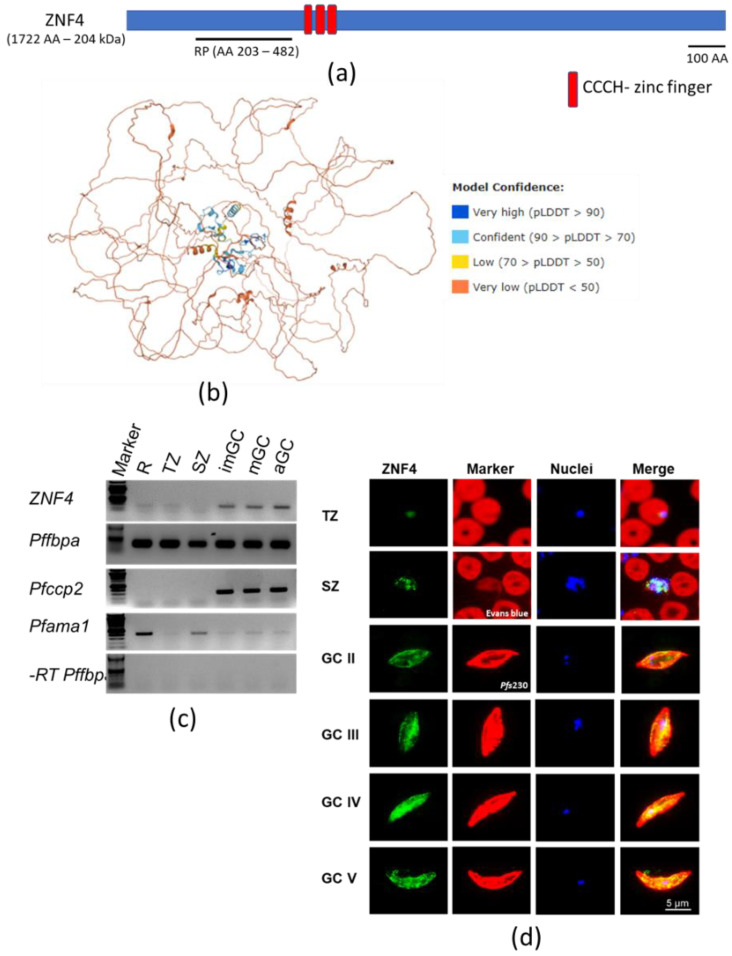
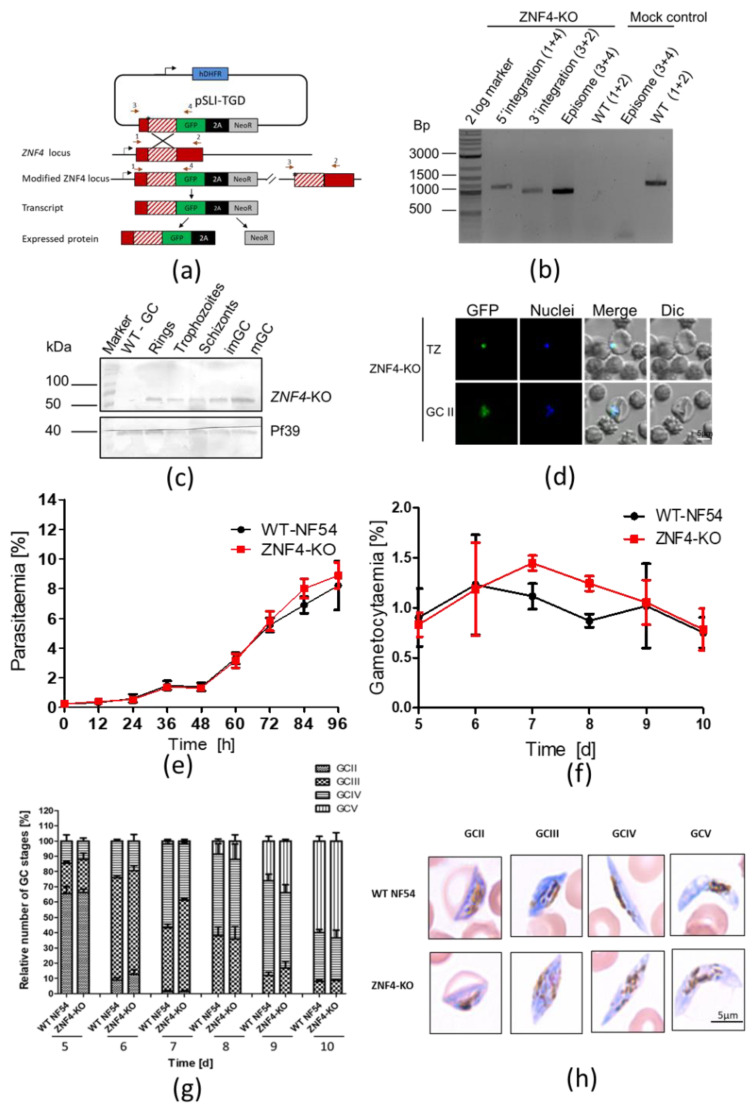
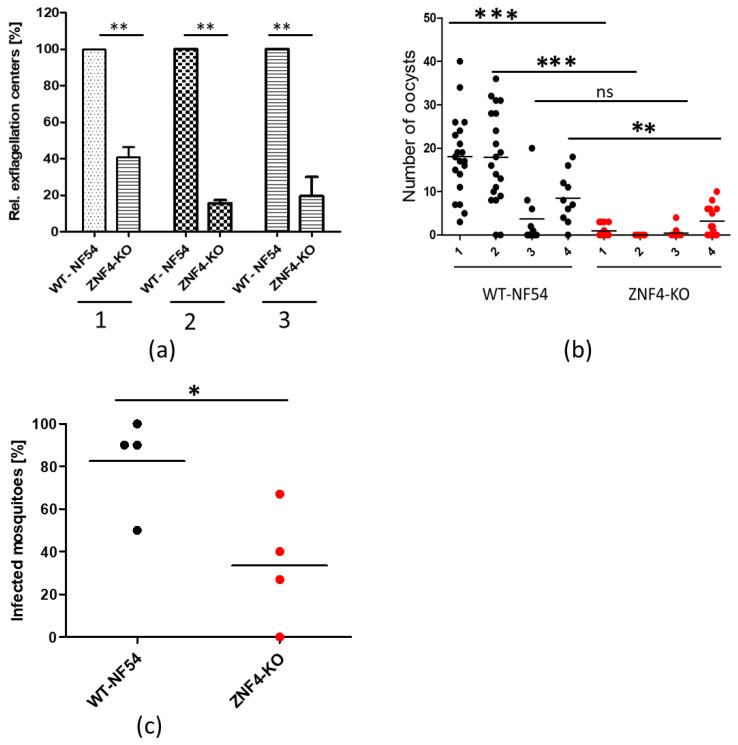
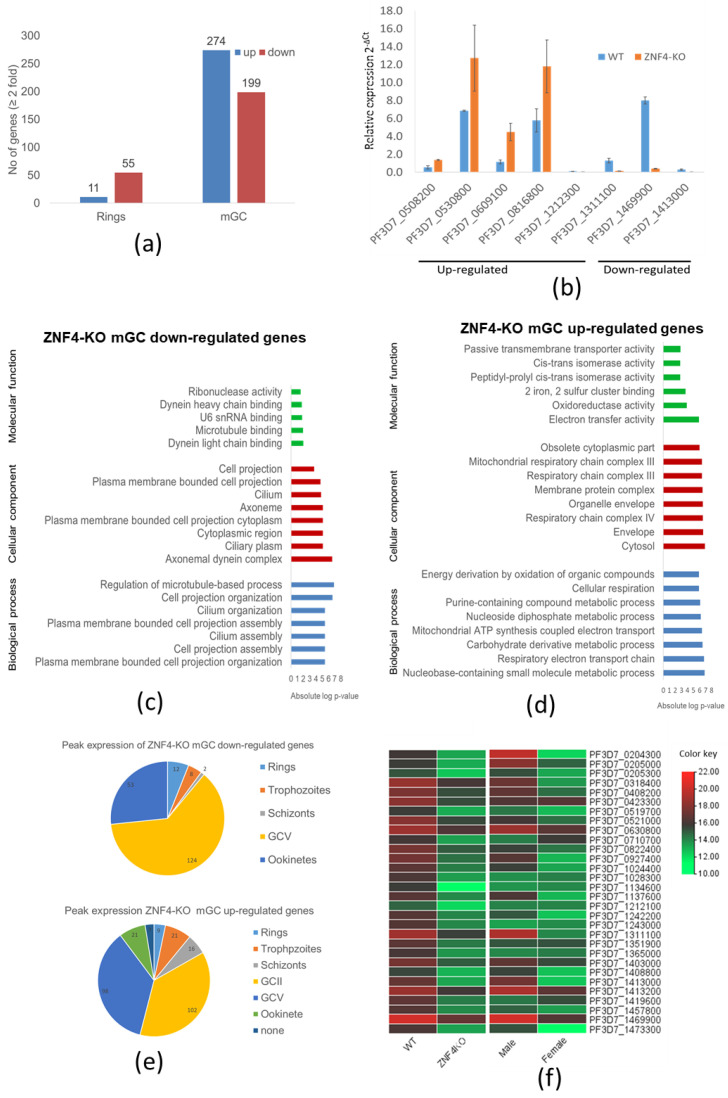
CCCH zinc finger proteins (ZFPs) function mainly as RNA-binding proteins (RBPs) where they play a central role in the mRNA metabolism. Over 27 CCCH-ZFPs are encoded in the genome of the human malaria parasite Plasmodium falciparum , the causative agent of malaria tropica. However, little is known about their functions. In this study, we characterize one member of the PfCCCH-ZFP named ZNF4. We show that ZNF4 is highly expressed in mature gametocytes where it predominantly localizes to the cytoplasm. Targeted gene disruption of ZNF4 showed no significant effect in asexual blood stage replication and gametocyte development while male gametocyte exflagellation was significantly impaired leading to reduced malaria transmission in the mosquito. Comparative transcriptomics between wildtype (WT) and the ZNF4-deficient line (ZNF4-KO) demonstrated the de-regulation of about 473 genes (274-upregulated and 199 down-regulated) in mature gametocytes. Most of the down-regulated genes show peak expression in mature gametocyte with male enriched genes associated to the axonemal dynein complex formation and cell projection organization highly affected, pointing to the phenotype in male gametocyte exflagellation. Up-regulated genes are associated to ATP synthesis. Our combine data therefore indicate that ZNF4 is a CCCH zinc finger protein which plays an important role in male gametocyte exflagellation through the regulation of male gametocyte enriched genes. Author Summary: CCCH ZFPs have gained significant interest due to their ability to interact with RNA and control different RNA metabolic processes. The role of CCCH ZFPs in the malaria parasite Plasmodium falciparum has not been well studied. In this study we report the functional characterization of a PfCCCH-ZFP named ZNF4. Using mouse anti-ZNF4 antisera and a ZNF4-HA tag parasite line we show that the protein is mainly expressed in the cytosol of mature gametocytes. To determine the function of ZNF4, we generated a ZNF4 knockout parasite line and we found that the asexual blood stages and gametocytes developed normally while the ability of the male gametocytes to exflagellate as well as the further development of the parasite in the mosquito was significantly impaired. Interestingly, when the transcriptome of mature gametocytes of the ZNF4-KO was compared to the WT, down-regulated genes were mainly male gametocyte enriched genes associated to processes involved in gametocyte exflagellation such axonemal dynein complex formation and cell projection organization indicating that ZNF4 plays an important role in male gametocyte exflagellation through the regulation of male gametocyte enriched transcripts.
Overview
The claims and statistics of this paper haven’t been checked yet.
Run the check — free, no account needed. It reads the open-access text and checks the sources it cites.
Integrity signals
Registry
Cites
Statistics
Figures
Verification
Claims the paper makes
The claims and statistics of this paper haven’t been checked yet.
Run the check — free, no account needed. It reads the open-access text and checks the sources it cites.
Self-check
Percentages, sums and reported differences re-computed from the paper’s own numbers.
The self-check needs the paper’s full text.
Citations
Cites
Highly accurate protein structure prediction with AlphaFold
Jumper, J., Evans, R., Pritzel, A., Green, T., Figurnov, M., Ronneberger, O., Tunyasuvunakool, K., Bates, R., Žídek, A., Potapenko, A., et al. (2021) · Nature · doi:10.1038/s41586-021-03819-2 · Cited by 43,764
Research works printed but not linked: 58
- 10.1111/cmi.12604 · DOI
- 10.1155/2010/976827 · DOI
- 10.1038/nrmicro3519 · DOI
- 10.1038/nature12920 · DOI
- 10.1038/nature12970 · DOI
- 10.1093/NAR/GKAB683 · DOI
- 10.1111/mmi.14334 · DOI
- 10.15252/EMBR.202051660 · DOI
- 10.1371/journal.ppat.1004905 · DOI
- 10.1016/j.chom.2016.12.003 · DOI
- 10.1111/mmi.14388 · DOI
- 10.1371/journal.ppat.1007249 · DOI
- 10.1371/journal.ppat.1000767 · DOI
- 10.1126/science.1125129 · DOI
- 10.1242/jcs.059824 · DOI
- 10.1242/jcs.186908 · DOI
- 10.3389/fcimb.2017.00320 · DOI
- 10.3390/ijms20205087 · DOI
- 10.1111/CMI.13387 · DOI
- 10.3390/v12040404 · DOI
- 10.1210/me.10.2.140 · DOI
- 10.1104/pp.109.145656 · DOI
- 10.4161/psb.6.5.15105 · DOI
- 10.1093/NAR/GKAB1061 · DOI · Paper page
- 10.1038/nmeth.4223 · DOI
- 10.1186/1471-2164-12-587 · DOI
- 10.1093/nar/gkw536 · DOI
- 10.1016/J.MOLP.2020.06.009 · DOI
- 10.1101/2021.09.02.458722 · DOI
- 10.1038/nature12311 · DOI · Paper page
- 10.1126/SCIENCE.AAP7847 · DOI
- 10.3389/fcimb.2021.624945 · DOI
- 10.1371/journal.pgen.1009306 · DOI
- 10.1242/jcs.051326 · DOI
- 10.1093/infdis/jix237 · DOI
- 10.7554/ELIFE.34463 · DOI
- 10.1038/s41431-019-0489-z · DOI
- 10.1371/JOURNAL.PGEN.1007602 · DOI
- 10.1126/science.8178152 · DOI
- 10.1101/gad.8.17.2072 · DOI
- 10.1016/j.celrep.2015.06.008 · DOI
- 10.1074/jbc.M110053200 · DOI
- 10.1128/MCB.01683-13 · DOI
- 10.1371/journal.ppat.1003268 · DOI
- 10.3390/pathogens10121536 · DOI
- 10.1038/nri.2016.129 · DOI
- 10.1186/1471-2164-14-256 · DOI
- 10.1038/294364a0 · DOI
- 10.2307/3280287 · DOI
- 10.1186/S12864-015-1695-X · DOI
- 10.1093/bioinformatics/bts635 · DOI · Paper page
- 10.1038/nbt.3122 · DOI
- 10.1093/bioinformatics/btt656 · DOI · Paper page
- 10.1006/meth.2001.1262 · DOI · Paper page
- 10.1046/j.1365-2958.2003.03570.x · DOI · Paper page
- 10.1186/1475-2875-9-147 · DOI
- 1998, Plasmodium falciparum: Purification of the various gametocyte developmental stages from in vitro-cultivated parasites, Am J Trop Med Hyg, 59, 505, 10.4269/ajtmh.1998.59.505 · DOI
- 10.1016/j.molbiopara.2007.04.008 · DOI
Metadata
- Authors
- Hanhsen, B., Farrukh, A., Pradel, G., & Ngwa, C. J.
- Affiliations
- RWTH Aachen University (DE)
- Corresponding author
- Ngwa, Che Julius
- Venue
- Cells
- Publisher
- openRxiv
- Published
- 2022-03-10
- Volume
- 11
- Issue
- 10
- Pages
- 1666-1666
- ISSN
- 2073-4409 (ISSN-L)
- PMC
- PMC9139750
- OpenAlex
- W4280578208
- Cited by
- 27
- References
- 1
- Citations by year
- 2026: 4 · 2025: 4 · 2024: 5 · 2023: 11 · 2022: 2
- FWCI
- 4.86
- Type
- journal article
- Language
- en
- Open access
- gold
- doi.org
- Licence
- cc-by
- Locations
- Cells (publishedVersion, cc-by)
- bioRxiv (Cold Spring Harbor Laboratory) (acceptedVersion, cc-by)
- PubMed Central (publishedVersion, cc-by)
- PubMed (publishedVersion)
- DOAJ (DOAJ: Directory of Open Access Journals) (submittedVersion, cc-by-sa)
- RWTH Publications (RWTH Aachen) (submittedVersion, other-oa)
- Funders
- Deutsche Forschungsgemeinschaft (PR905/20-1, No 731060, NG170/1‐1)
- Topics
- Health Sciences › Medicine › Public Health, Environmental and Occupational Health › Malaria Research and Control
- Life Sciences › Immunology and Microbiology › Parasitology › Bird parasitology and diseases
- Life Sciences › Biochemistry, Genetics and Molecular Biology › Molecular Biology › RNA Research and Splicing
- Keywords
- Plasmodium falciparum, CCCH zinc finger proteins, male gametocytes, ATP production, mosquito-borne transmission, gene knockout, transcriptomics, RNA-binding proteins
- MeSH terms
- Animals, Cytoplasm, Malaria, Male, Culicidae, Plasmodium falciparum, Zinc Fingers
About these checks
Registry, retraction, Cites and statistics results are computed, not judged, with one exception: a printed reference that no index lists is read once by a model before it counts as a citation error. Claims are extracted by a model and kept only when their quote appears verbatim in the text; each cited source is then checked, with a model’s help, for whether it says what the claim relies on. Those verdicts can be wrong — read the claim’s quote and the cited source before relying on one.
Statistics and arithmetic are recomputed, not judged.
Confidence bands are shown only for fields calibrated on our annotated test set. None is calibrated yet, so no band is shown.
What counts as a claim ›How we measure confidence ›How we check this ›
Are you an author, or do you see a problem with this page? Request a review
