

Variants in the SOX9 transactivation middle domain induce axial skeleton dysplasia and scoliosis
Open accessPreprint — published as 10.1073/pnas.2313978121
The DOI matches its Crossref record; 62 of the 62 references it cites were found in a registry or an index.
Abstract
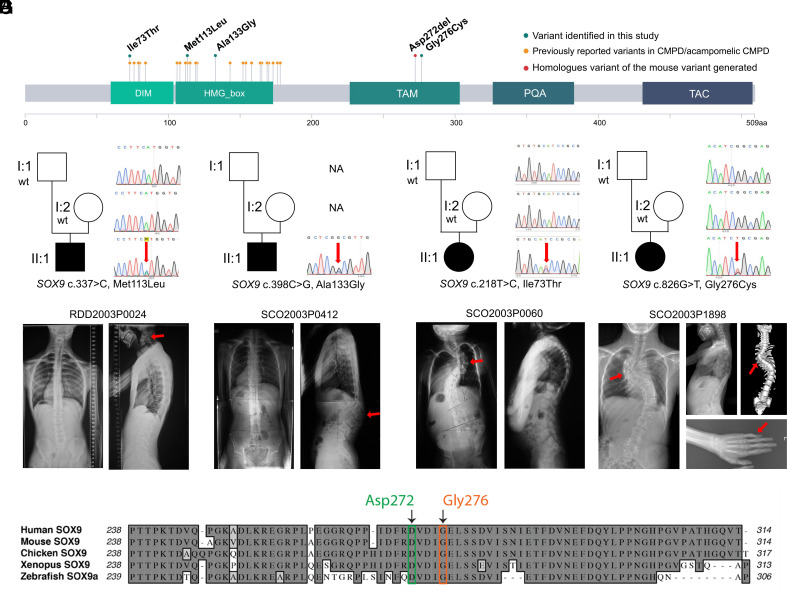
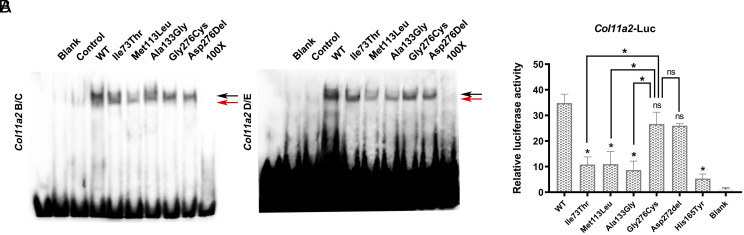
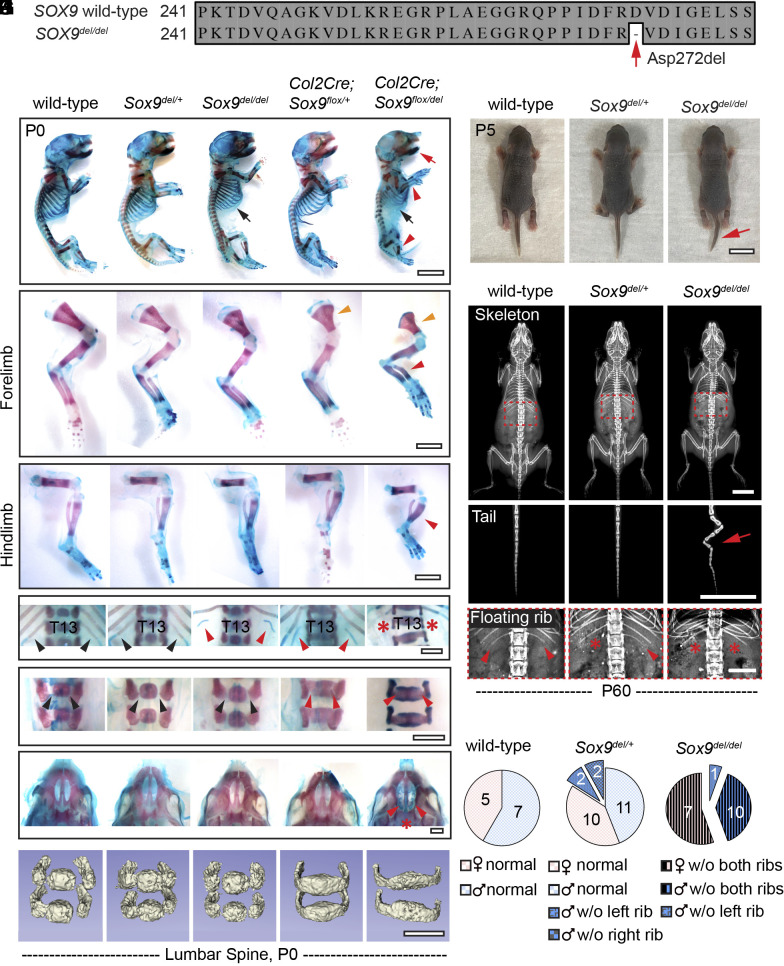
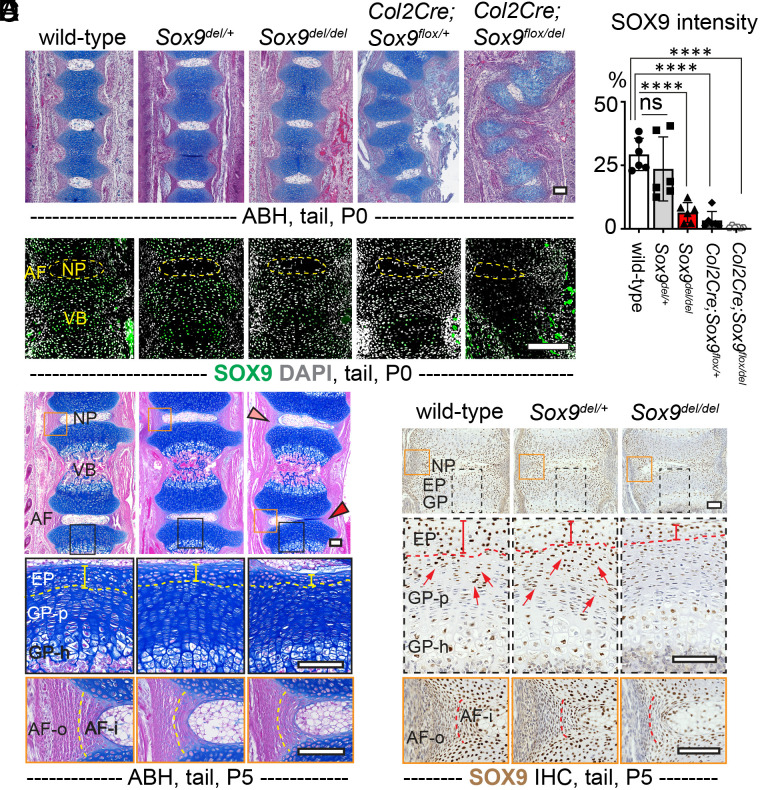
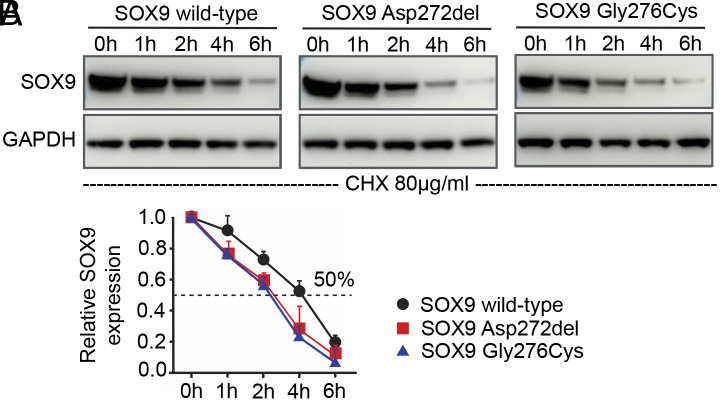
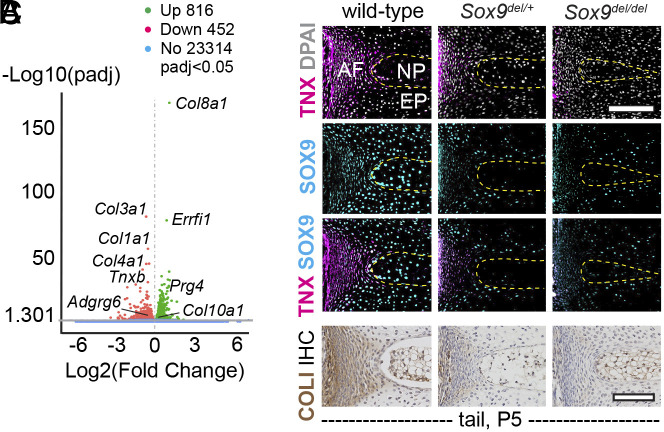
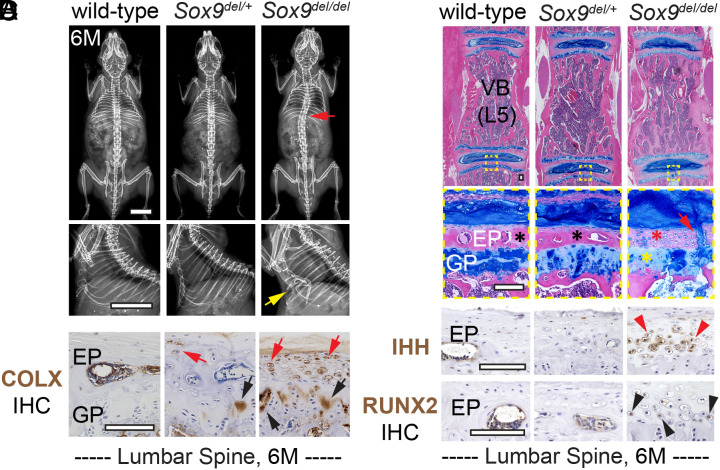
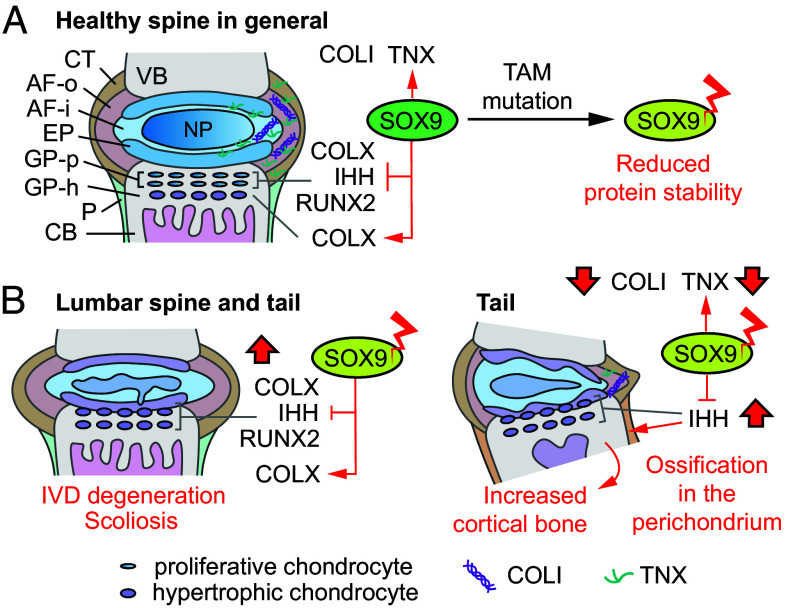
SOX9 is an essential transcriptional regulator of cartilage development and homeostasis. In humans, dysregulation of SOX9 is associated with a wide spectrum of skeletal disorders, including campomelic and acampomelic dysplasia, and scoliosis. The mechanism of how SOX9 variants contribute to the spectrum of axial skeletal disorders is not well understood. Here, we report four novel pathogenic variants of SOX9 identified in a large cohort of patients with congenital vertebral malformations. Three of these heterozygous variants are in the HMG and DIM domains, and for the first time, we report a pathogenic variant within the transactivation middle (TAM) domain of SOX9 . Probands with these variants exhibit variable skeletal dysplasia, ranging from isolated vertebral malformation to acampomelic dysplasia. We also generated a Sox9 hypomorphic mutant mouse model bearing a microdeletion within the TAM domain ( Sox9 Asp272del ). We demonstrated that disturbance of the TAM domain with missense mutation or microdeletion results in reduced protein stability but does not affect the transcriptional activity of SOX9. Homozygous Sox9 Asp272del mice exhibited axial skeletal dysplasia including kinked tails, ribcage anomalies, and scoliosis, recapitulating phenotypes observed in human, while heterozygous mutants display a milder phenotype. Analysis of primary chondrocytes and the intervertebral discs in Sox9 Asp272del mutant mice revealed dysregulation of a panel of genes with major contributions of the extracellular matrix, angiogenesis, and ossification-related processes. In summary, our work identified the first pathologic variant of SOX9 within the TAM domain and demonstrated that this variant is associated with reduced SOX9 protein stability. Our finding suggests that reduced SOX9 stability caused by variants in the TAM domain may be responsible for the milder forms of axial skeleton dysplasia in humans.
Overview
The claims and statistics of this paper haven’t been checked yet.
Free: it reads the open-access text and checks the first 5 claims that cite a source we can check. Create a free account to check every claim.
Integrity signals
Registry
Cites
Statistics
Figures
Verification
Claims the paper makes
The claims and statistics of this paper haven’t been checked yet.
Free: it reads the open-access text and checks the first 5 claims that cite a source we can check. Create a free account to check every claim.
Self-check
Percentages, sums and reported differences re-computed from the paper’s own numbers.
The self-check needs the paper’s full text.
Citations
Cites
Highly accurate protein structure prediction with AlphaFold
Jumper, J., Evans, R., Pritzel, A., Green, T., Figurnov, M., Ronneberger, O., Tunyasuvunakool, K., Bates, R., Žídek, A., Potapenko, A., et al. (2021) · Nature · doi:10.1038/s41586-021-03819-2 · Cited by 43,764
Richards, S., Aziz, N., Bale, S., Bick, D., Das, S., Gastier-Foster, J., Grody, W. W., Hegde, M., Lyon, E., Spector, E., et al. (2015) · Genetics in Medicine · doi:10.1038/gim.2015.30 · Cited by 32,594
Akiyama, H., Chaboissier, M.-C., Martin, J. F., Schedl, A., & de Crombrugghe, B. (2002) · Genes & Development · doi:10.1101/gad.1017802 · Cited by 1,721
Wagner, T., Wirth, J., Meyer, J., Zabel, B., Held, M., Zimmer, J., Pasantes, J., Bricarelli, F. D., Keutel, J., Hustert, E., et al. (1994) · Cell · doi:10.1016/0092-8674(94)90041-8 · Cited by 1,618
Campomelic dysplasia and autosomal sex reversal caused by mutations in an SRY-related gene
Foster, J. W., Dominguez-Steglich, M. A., Guioli, S., Kwok, C., Weller, P. A., Stevanović, M., Weissenbach, J., Mansour, S., Young, I. D., Goodfellow, P. N., et al. (1994) · Nature · doi:10.1038/372525a0 · Cited by 1,612
Clinical application of whole-exome sequencing across clinical indications
Retterer, K., Juusola, J., Cho, M. T., Vitazka, P., Millan, F., Gibellini, F., Vertino-Bell, A., Smaoui, N., Neidich, J., Monaghan, K. G., et al. (2016) · Genetics in Medicine · doi:10.1038/gim.2015.148 · Cited by 1,035
Inhibition of eukaryotic translation elongation by cycloheximide and lactimidomycin
Schneider-Poetsch, T., Ju, J., Eyler, D. E., Dang, Y., Bhat, S., Merrick, W. C., Green, R., Shen, B., & Liu, J. O. (2010) · Nature Chemical Biology · doi:10.1038/nchembio.304 · Cited by 1,014
Sex determination involves synergistic action of SRY and SF1 on a specific Sox9 enhancer
Sekido, R., & Lovell-Badge, R. (2008) · Nature · doi:10.1038/nature06944 · Cited by 969
SOX9 directly regulates the type-ll collagen gene
Bell, D. M., Leung, K. K. H., Wheatley, S. C., Ng, L. J., Zhou, S., Wing Ling, K., Har Sham, M., Koopman, P., Tam, P. P. L., & Cheah, K. S. E. (1997) · Nature Genetics · doi:10.1038/ng0697-174 · Cited by 933
Bi, W., Huang, W., Whitworth, D. J., Deng, J. M., Zhang, Z., Behringer, R. R., & de Crombrugghe, B. (2001) · Proceedings of the National Academy of Sciences · doi:10.1073/pnas.111092198 · Cited by 541
The cell biology of intervertebral disc aging and degeneration
Zhao, C.-Q., Wang, L.-M., Jiang, L.-S., & Dai, L.-Y. (2007) · Ageing Research Reviews · doi:10.1016/j.arr.2007.08.001 · Cited by 440
Self-citationDegeneration and regeneration of the intervertebral disc: lessons from development
Smith, L. J., Nerurkar, N. L., Choi, K.-S., Harfe, B. D., & Elliott, D. M. (2011) · Disease Models & Mechanisms · doi:10.1242/dmm.006403 · Cited by 397
Tenascin-X deficiency is associated with Ehlers-Danlos syndrome
Burch, G. H., Gong, Y., Liu, W., Dettman, R. W., Curry, C. J., Smith, L., Miller, W. L., & Bristow, J. (1997) · Nature Genetics · doi:10.1038/ng0997-104 · Cited by 366
SOX9 and the many facets of its regulation in the chondrocyte lineage
Lefebvre, V., & Dvir-Ginzberg, M. (2017) · Connective Tissue Research · doi:10.1080/03008207.2016.1183667 · Cited by 347
Houston, C. S., Opitz, J. M., Spranger, J. W., Macpherson, R. I., Reed, M. H., Gilbert, E. F., Herrmann, J., & Schinzel, A. (1983) · American Journal of Medical Genetics · doi:10.1002/ajmg.1320150103 · Cited by 300
Genetic variants in GPR126 are associated with adolescent idiopathic scoliosis
Kou, I., Takahashi, Y., Johnson, T. A., Takahashi, A., Guo, L., Dai, J., Qiu, X., Sharma, S., Takimoto, A., Ogura, Y., et al. (2013) · Nature Genetics · doi:10.1038/ng.2639 · Cited by 290
Bridgewater, L. C., Lefebvre, V., & de Crombrugghe, B. (1998) · Journal of Biological Chemistry · doi:10.1074/jbc.273.24.14998 · Cited by 285
Sugimoto, Y., Takimoto, A., Akiyama, H., Kist, R., Scherer, G., Nakamura, T., Hiraki, Y., & Shukunami, C. (2013) · Development · doi:10.1242/dev.096354 · Cited by 271
Mao, J. R., Taylor, G., Dean, W. B., Wagner, D. R., Afzal, V., Lotz, J. C., Rubin, E. M., & Bristow, J. (2002) · Nature Genetics · doi:10.1038/ng850 · Cited by 261
Haseeb, A., Kc, R., Angelozzi, M., de Charleroy, C., Rux, D., Tower, R. J., Yao, L., Pellegrino da Silva, R., Pacifici, M., Qin, L., et al. (2021) · Proceedings of the National Academy of Sciences · doi:10.1073/pnas.2019152118 · Cited by 234
Leung, V. Y. L., Gao, B., Leung, K. K. H., Melhado, I. G., Wynn, S. L., Au, T. Y. K., Dung, N. W. F., Lau, J. Y. B., Mak, A. C. Y., Chan, D., et al. (2011) · PLoS Genetics · doi:10.1371/journal.pgen.1002356 · Cited by 218
Pfeifer, D., Kist, R., Dewar, K., Devon, K., Lander, E. S., Birren, B., Korniszewski, L., Back, E., & Scherer, G. (1999) · The American Journal of Human Genetics · doi:10.1086/302455 · Cited by 213
Velagaleti, G. V. N., Bien-Willner, G. A., Northup, J. K., Lockhart, L. H., Hawkins, J. C., Jalal, S. M., Withers, M., Lupski, J. R., & Stankiewicz, P. (2005) · The American Journal of Human Genetics · doi:10.1086/429252 · Cited by 182
SOX E genes: SOX9 and SOX8 in mammalian testis development
Barrionuevo, F. J., & Scherer, G. (2009) · The International Journal of Biochemistry & Cell Biology · doi:10.1016/j.biocel.2009.07.015 · Cited by 179
Dimerization of SOX9 is required for chondrogenesis, but not for sex determination
Bernard, P. (2003) · Human Molecular Genetics · doi:10.1093/hmg/ddg182 · Cited by 167
The postnatal role of Sox9 in cartilage
Henry, S. P., Liang, S., Akdemir, K. C., & de Crombrugghe, B. (2012) · Journal of Bone and Mineral Research · doi:10.1002/jbmr.1696 · Cited by 160
Clinical, Genetic and Environmental Factors Associated with Congenital Vertebral Malformations
Giampietro, P. F., Raggio, C. L., Blank, R. D., McCarty, C. A., Broeckel, U., & Pickart, M. A. (2012) · Molecular Syndromology · doi:10.1159/000345329 · Cited by 142
Sock, E. (2003) · Human Molecular Genetics · doi:10.1093/hmg/ddg158 · Cited by 141
Functional and Structural Studies of Wild Type SOX9 and Mutations Causing Campomelic Dysplasia
McDowall, S. G., Argentaro, A., Ranganathan, S., Weller, P. A., Mertin, S., Mansour, S., Tolmie, J., & Harley, V. R. (1999) · Journal of Biological Chemistry · doi:10.1074/jbc.274.34.24023 · Cited by 133
Lefebvre, V., Zhou, G., Mukhopadhyay, K., Smith, C. N., Zhang, Z., Eberspaecher, H., Zhou, X., Sinha, S., Maity, S. N., & Crombrugghe, B. D. (1996) · Molecular and Cellular Biology · doi:10.1128/mcb.16.8.4512 · Cited by 131
Roles and regulation of SOX transcription factors in skeletogenesis
Lefebvre, V. (2019) · Current topics in developmental biology/Current Topics in Developmental Biology · doi:10.1016/bs.ctdb.2019.01.007 · Cited by 130
A dual role for NOTCH signaling in joint cartilage maintenance and osteoarthritis
Liu, Z., Chen, J., Mirando, A. J., Wang, C., Zuscik, M. J., O’Keefe, R. J., & Hilton, M. J. (2015) · Science Signaling · doi:10.1126/scisignal.aaa3792 · Cited by 110
Self-citationSox9 is required for notochord maintenance in mice
Barrionuevo, F. J., Taketo, M. M., Scherer, G., & Kispert, A. (2006) · Developmental Biology · doi:10.1016/j.ydbio.2006.03.014 · Cited by 105
Tsingas, M., Ottone, O. K., Haseeb, A., Barve, R. A., Shapiro, I. M., Lefebvre, V., & Risbud, M. V. (2020) · Matrix Biology · doi:10.1016/j.matbio.2020.09.003 · Cited by 104
Leipoldt, M., Erdel, M., Bien-Willner, G. A., Smyk, M., Theurl, M., Yatsenko, S. A., Lupski, J. R., Lane, A., Shanske, A. L., Stankiewicz, P., et al. (2006) · Clinical Genetics · doi:10.1111/j.1399-0004.2007.00736.x · Cited by 104
Identification of SOX9 Interaction Sites in the Genome of Chondrocytes
Oh, C.-D., Maity, S. N., Lu, J.-F., Zhang, J., Liang, S., Coustry, F., de Crombrugghe, B., & Yasuda, H. (2010) · PLoS ONE · doi:10.1371/journal.pone.0010113 · Cited by 99
In vitro model of mesenchymal condensation during chondrogenic development
Ghosh, S., Laha, M. M., Mondal, S., Sengupta, S., & Kaplan, D. L. (2009) · Biomaterials · doi:10.1016/j.biomaterials.2009.08.019 · Cited by 97
Chen, N., Zhao, S., Jolly, A., Wang, L., Pan, H., Yuan, J., Chen, S., Koch, A., Ma, C., Tian, W., et al. (2021) · The American Journal of Human Genetics · doi:10.1016/j.ajhg.2020.12.014 · Cited by 88
Self-citationHuang, Y.-H., Jankowski, A., Cheah, K. S. E., Prabhakar, S., & Jauch, R. (2015) · Scientific Reports · doi:10.1038/srep10398 · Cited by 86
Schock, E. N., & LaBonne, C. (2020) · Frontiers in Physiology · doi:10.3389/fphys.2020.606889 · Cited by 75
Bridgewater, L. C. (2003) · Nucleic Acids Research · doi:10.1093/nar/gkg230 · Cited by 74
Miyake, A., Kou, I., Takahashi, Y., Johnson, T. A., Ogura, Y., Dai, J. M., Qiu, X., Takahashi, A., Jiang, H., Huang, Y., et al. (2013) · PLoS ONE · doi:10.1371/journal.pone.0072802 · Cited by 72
SOX9 is targeted for proteasomal degradation by the E3 ligase FBW7 in response to DNA damage
Hong, X., Liu, W., Song, R., Shah, J. J., Feng, X., Tsang, C. K., Morgan, K. M., Bunting, S. F., Inuzuka, H., Zheng, X., et al. (2016) · Nucleic Acids Research · doi:10.1093/nar/gkw748 · Cited by 68
Self-citationDiagnostic yield and clinical impact of exome sequencing in early-onset scoliosis (EOS)
Zhao, S., Zhang, Y., Chen, W., Li, W., Wang, S., Wang, L., Zhao, Y., Lin, M., Ye, Y., Lin, J., et al. (2020) · Journal of Medical Genetics · doi:10.1136/jmedgenet-2019-106823 · Cited by 65
Self-citationThe SOXE transcription factors—SOX8, SOX9 and SOX10—share a bi-partite transactivation mechanism
Haseeb, A., & Lefebvre, V. (2019) · Nucleic Acids Research · doi:10.1093/nar/gkz523 · Cited by 60
PTHrP targets HDAC4 and HDAC5 to repress chondrocyte hypertrophy
Nishimori, S., Lai, F., Shiraishi, M., Kobayashi, T., Kozhemyakina, E. A., Yao, T., Lassar, A. B., & Kronenberg, H. M. (2019) · JCI Insight · doi:10.1172/jci.insight.97903 · Cited by 56
Zhao, L., Li, G., & Zhou, G. (2008) · Journal of Bone and Mineral Research · doi:10.1359/jbmr.081236 · Cited by 49
Self-citationHu, G., Codina, M., & Fisher, S. (2012) · Matrix Biology · doi:10.1016/j.matbio.2012.06.001 · Cited by 42
Liu, Z., Easson, G. W. D., Zhao, J., Makki, N., Ahituv, N., Hilton, M. J., Tang, S. Y., & Gray, R. S. (2019) · PLoS Genetics · doi:10.1371/journal.pgen.1008096 · Cited by 38
Self-citationvon Bohlen, A. E., Böhm, J., Pop, R., Johnson, D. S., Tolmie, J., Stücker, R., Morris-Rosendahl, D. J., & Scherer, G. (2017) · Molecular Genetics & Genomic Medicine · doi:10.1002/mgg3.282 · Cited by 36
Current Concepts in the Etiology and Pathogenesis of Pectus Excavatum in Humans—A Systematic Review
David, V. L. (2022) · Journal of Clinical Medicine · doi:10.3390/jcm11051241 · Cited by 35
Dominant‐negativeSOX9mutations in campomelic dysplasia
Csukasi, F., Durán, I., Zhang, W., Martin, J. H., Barad, M., Bamshad, M. J., Weis, M. A., Eyre, D. R., Krakow, D., & Cohn, D. H. (2019) · Human Mutation · doi:10.1002/humu.23888 · Cited by 34
Liu, Z., Hussien, A. A., Wang, Y., Heckmann, T., Gonzalez, R., Karner, C. M., Snedeker, J. G., & Gray, R. S. (2021) · eLife · doi:10.7554/elife.67781 · Cited by 31
Self-citationAcampomelic campomelic dysplasia
Macpherson, R. I., Skinner, S. A., & Donnenfeld, A. E. (1989) · Pediatric Radiology · doi:10.1007/bf02010643 · Cited by 31
Staffler, A., Hammel, M., Wahlbuhl, M., Bidlingmaier, C., Flemmer, A. W., Pagel, P., Nicolaï, T., Wegner, M., & Holzinger, A. (2010) · Human Mutation · doi:10.1002/humu.21238 · Cited by 29
Regulation of Chondrocyte Survival in Mouse Articular Cartilage by p63
Taniguchi, Y., Kawata, M., Chang, S. H., Mori, D., Okada, K., Kobayashi, H., Sugita, S., Hosaka, Y., Inui, H., Taketomi, S., et al. (2017) · Arthritis & Rheumatology · doi:10.1002/art.39976 · Cited by 24
Wada, Y. S., Nishimura, G., Nagai, T., Sawai, H., 吉形真由美, Miyagawa, S., Hanita, T., Sato, S., Hasegawa, T., Ishikawa, S., et al. (2009) · American Journal of Medical Genetics Part A · doi:10.1002/ajmg.a.33107 · Cited by 23
Takeda, K., Kou, I., Otomo, N., Grauers, A., Fan, Y., Ogura, Y., Takahashi, Y., Momozawa, Y., Einarsdóttir, E., Kere, J., et al. (2019) · Journal of Human Genetics · doi:10.1038/s10038-019-0575-7 · Cited by 19
A Recurrent Rare SOX9 Variant (M469V) is Associated with Congenital Vertebral Malformations
Wu, N., Wang, L., Hu, J., Zhao, S., Liu, B., Li, Y., Du, H., Zhang, Y., Li, X., Yan, Z., et al. (2019) · Current Gene Therapy · doi:10.2174/1566523219666190924120307 · Cited by 18
Self-citationAu, T. Y. K., Yip, R. K. H., Wynn, S. L., Tan, T. Y., Fu, X., Geng, Y., Szeto, I. Y. Y., Niu, B., Yip, K. Y.-L., Cheung, M. C. H., et al. (2022) · Proceedings of the National Academy of Sciences · doi:10.1073/pnas.2208623119 · Cited by 15
Geraldo, M. T., Valente, G. T., Nakajima, R. T., & Martins, C. (2016) · PLoS ONE · doi:10.1371/journal.pone.0156199 · Cited by 13
Calvache, C., Vásquez, E. C., Romero, V., Hosomichi, K., & Palacios, J. (2022) · Frontiers in Pediatrics · doi:10.3389/fped.2022.975947 · Cited by 8
Research works printed but not linked: 18
- M. Lewandoski, E. N. Meyers, G. R. Martin, Analysis of Fgf8 gene function in vertebrate development. Cold Spring Harb. Symp. Quant. Biol. 62, 159– 168 (1997). 9598348 · DOI
- S. Vivekanandan, B. Moovarkumudalvan, J. Lescar, P. R. Kolatkar, Crystallization and X-ray diffraction analysis of the HMG domain of the chondrogenesis master regulator Sox9 in complex with a ChIP-Seq-identified DNA element. Acta Crystallogr. F, Struct. Biol. Commun. 71, 1437– 1441 (2015). 26527273 PMC4631595
- S. Naqvi, Precise modulation of transcription factor levels identifies features underlying dosage sensitivity. Nat. Genet. 55, 841– 851 (2023). 37024583 PMC10181932
- J. D. Peacock, D. J. Huk, H. N. Ediriweera, J. Lincoln, Sox9 transcriptionally represses Spp1 to prevent matrix mineralization in maturing heart valves and chondrocytes. PLoS ONE 6, e26769 (2011). 22046352 PMC3202586
- A. Subramanian, L. F. Kanzaki, T. F. Schilling, Mechanical force regulates Sox9 expression at the developing enthesis. Development 150, dev201141 (2023). 37497608 PMC10445799
- T. Saito, The effect of mechanical stress on enthesis homeostasis in a rat Achilles enthesis organ culture model. J. Orthop. Res. 40, 1872– 1882 (2022). 34783068
- S. Unger, G. Scherer, A. Superti-Furga, “Campomelic dysplasia” in GeneReviews((R)), M. P. Adam, Eds. (University of Washington, Seattle, WA, 1993). 20301724
- P. Smits, V. Lefebvre, Sox5 and Sox6 are required for notochord extracellular matrix sheath formation, notochord cell survival and development of the nucleus pulposus of intervertebral discs. Development 130, 1135– 1148 (2003). 12571105
- J. R. Cobb, Scoliosis; quo vadis. J. Bone Joint Surg. Am. 40-A, 507– 510 (1958). 13539079
- I. Abid, M. M. Ewais, J. Marranca, D. E. Jaroszewski, Pectus excavatum: A review of diagnosis and current treatment options. J. Am. Osteopath. Assoc. 117, 106– 113 (2017). 28134952
- C. L. Le Maitre, Development of a standardized histopathology scoring system for human intervertebral disc degeneration: An Orthopaedic Research Society Spine Section Initiative. JOR Spine 4, e1167 (2021). 34337340 PMC8313169
- T. Hattori, Transcriptional regulation of chondrogenesis by coactivator Tip60 via chromatin association with Sox9 and Sox5. Nucleic Acids Res. 36, 3011– 3024 (2008). 18390577 PMC2396410
- T. Hattori, Interactions between PIAS proteins and SOX9 result in an increase in the cellular concentrations of SOX9. J. Biol. Chem. 281, 14417– 14428 (2006). 16554309
- H. M. Kronenberg, Developmental regulation of the growth plate. Nature 423, 332– 336 (2003). 12748651
- S. Ohba, X. He, H. Hojo, A. P. McMahon, Distinct transcriptional programs underlie Sox9 regulation of the mammalian chondrocyte. Cell Rep. 12, 229– 243 (2015). 26146088 PMC4504750
- C. M. Karner, F. Long, L. Solnica-Krezel, K. R. Monk, R. S. Gray, Gpr126/Adgrg6 deletion in cartilage models idiopathic scoliosis and pectus excavatum in mice. Hum. Mol. Genet. 24, 4365– 4373 (2015). 25954032 PMC4492399
- CNCB-NGDC Members and Partners, Database resources of the national genomics data center, china national center. GSA. https://ngdc.cncb.ac.cn/gsa-human. Deposited 7 November 2023. PMC9825504 36420893
- Z. Liu, R. S. Gray, Costal chondrocytes from both heterozygous and homozygous Sox9 Asp272 microdeletion mouse. NCBI BioProject. https://www.ncbi.nlm.nih.gov/bioproject?term=PRJNA821841. Accessed 31 March 2022.
Metadata
- Authors
- Wang, L., Liu, Z., Zhao, S., Xu, K., Aceves, V., Qiu, C., Troutwine, B., Liu, L., Ma, S., Niu, Y., Wang, S., Yuan, S., Li, X., Zhao, L., Liu, X., Wu, Z., Zhang, T. J., Gray, R. S., & Wu, N.
- Affiliations
- University of Southern California (US)
- The University of Texas at Austin (US)
- Qilu Hospital of Shandong University (CN)
- Chinese Academy of Medical Sciences & Peking Union Medical College (CN)
- Corresponding author
- Liu, Zhaoyang
- Gray, Ryan S.
- Venue
- Proceedings of the National Academy of Sciences
- Publisher
- openRxiv
- Published
- 2023-05-30
- Volume
- 122
- Issue
- 4
- Pages
- e2313978121-e2313978121
- ISSN
- 0027-8424 (ISSN-L)
- PMC
- PMC11789016
- OpenAlex
- W4406794797
- Cited by
- 4
- References
- 62
- Citations by year
- 2026: 2 · 2025: 1 · 2024: 1
- FWCI
- 1.75
- Type
- journal article
- Language
- en
- Open access
- hybrid
- doi.org
- Licence
- cc-by-nc-nd
- Locations
- Proceedings of the National Academy of Sciences (publishedVersion, cc-by-nc-nd)
- medRxiv (acceptedVersion)
- Europe PMC (PubMed Central) (publishedVersion, cc-by-nc-nd)
- PubMed Central (publishedVersion, cc-by-nc-nd)
- PubMed (publishedVersion)
- PubMed Central (submittedVersion)
- Funders
- University of Southern California
- University of Texas at Austin
- National Natural Science Foundation of China (82,172,483, 2021-I2M-1-052, 81874022, 2102522, 82072391, 2020-I2M-C, 81874022 82172483, 81930068, 82172382, 81874022 and 82172483)
- Central South University
- Chinese Academy of Medical Sciences (I2M-C, 2020-I2M-C, 2021-I2M-1–052, 2021-I2M-1-051, 2019PT320025, 2022-)
- Natural Science Foundation of Shandong Province (ZR202102210113)
- Peking Union Medical College Hospital
- National Institutes of Health
- Dell Medical School, University of Texas at Austin
- Xiangya Hospital, Central South University
- National Key Research and Development Program of China (2023YFC2507701, 2022YFC2703102, 2023YFC2507700)
- National Institute of Arthritis and Musculoskeletal and Skin Diseases (R00AR077090, R01AR072009)
- Topics
- Life Sciences › Biochemistry, Genetics and Molecular Biology › Genetics › Connective tissue disorders research
- Health Sciences › Medicine › Surgery › Scoliosis diagnosis and treatment
- Health Sciences › Medicine › Orthopedics and Sports Medicine › Bone Tumor Diagnosis and Treatments
- Keywords
- SOX9, missense mutations, scoliosis, congenital vertebral anomalies, protein stability, ADGRG6, tenascin-X, growth plate, annulus fibrosus, chondrogenesis, extracellular matrix
About these checks
Registry, retraction, Cites and statistics results are computed, not judged, with one exception: a printed reference that no index lists is read once by a model before it counts as a citation error. Claims are extracted by a model and kept only when their quote appears verbatim in the text; each cited source is then checked, with a model’s help, for whether it says what the claim relies on. Those verdicts can be wrong — read the claim’s quote and the cited source before relying on one.
Statistics and arithmetic are recomputed, not judged.
Confidence bands are shown only for fields calibrated on our annotated test set. None is calibrated yet, so no band is shown.
What counts as a claim ›How we measure confidence ›How we check this ›
Are you an author, or do you see a problem with this page? Request a review
Data sources
Bibliographic data: Semantic Scholar, OpenAlex, Crossref.
Contains information from the Semantic Scholar Academic Graph Datasets, made available under the ODC Attribution License (ODC-BY 1.0).
Semantic Scholar’s data is described in: Kinney, R., et al. (2023). The Semantic Scholar Open Data Platform. arXiv:2301.10140.
