

The DOI matches its Crossref record; 1 of the 1 references it cites were found in a registry or an index.
PRIME-BSPre: A genome-wide protein-RNA binding sites prediction method based on templates
Open accessPreprint — published as 10.1186/s12864-026-12657-3 · Paper page
Abstract
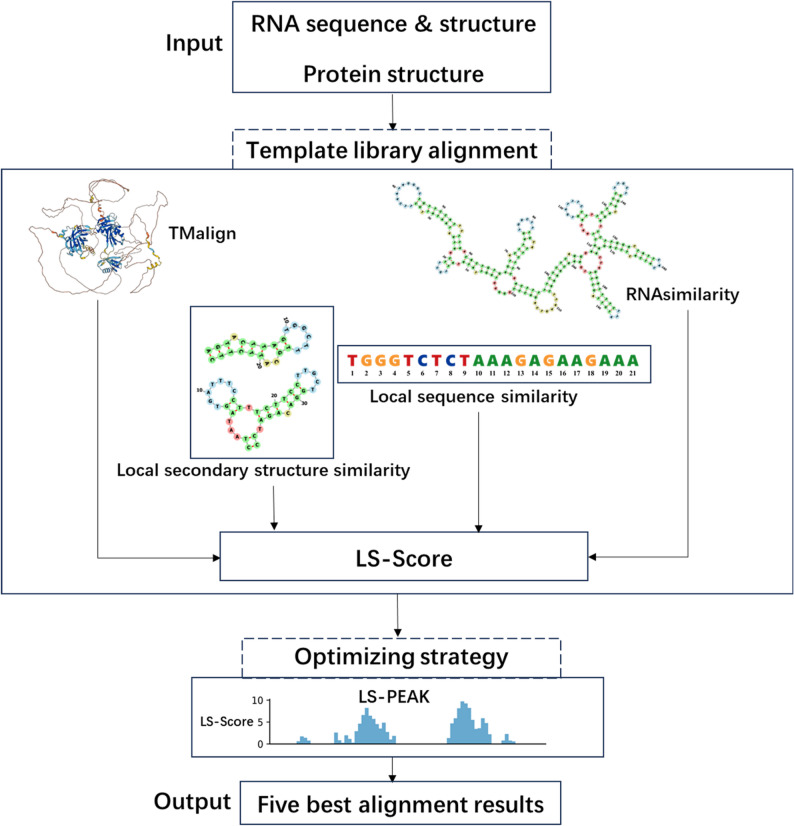
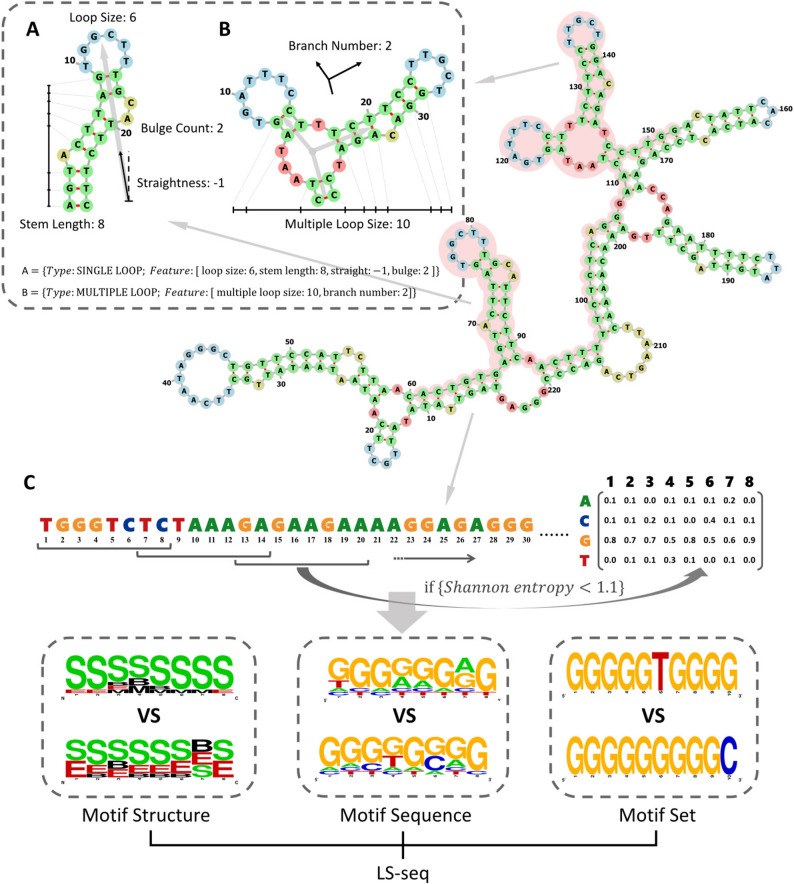
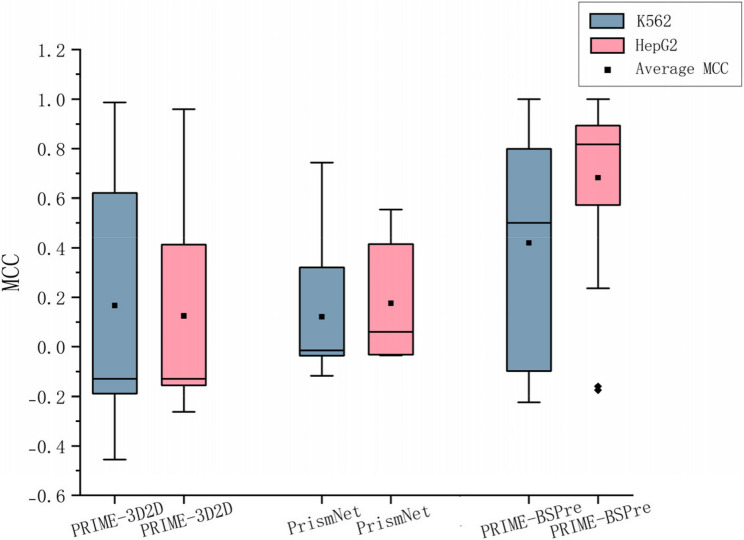
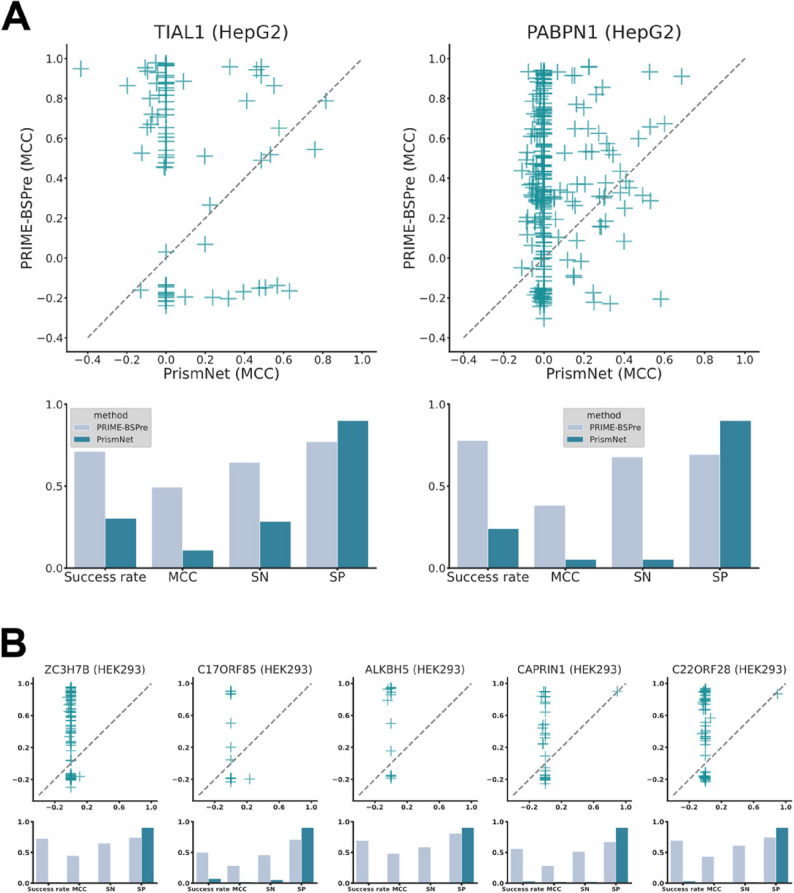
Identification of RNA binding sites that potentially interact with RNA-binding proteins facilitates a comprehensive analysis of protein-RNA interactions and enables further investigation into the mechanisms underlying RNA splicing and modification. However, the current experimental data remains limited in comparison to the vast family of RBPs, and deep learning prediction methods are inadequate for those RBPs lacking sufficient interaction data for training. Therefore, we present PRIME-BSPre, a genome-wide method for predicting protein-RNA binding sites based on templates that incorporate both RNA sequence and secondary structure as well as the tertiary structure of corresponding RBPs. We have successfully benchmarked our method on the human genome, demonstrating excellent prediction performance on RBP datasets beyond our library and robustness across cell lines. Additionally, we are pioneers in introducing the low Shannon entropy algorithm to describe binding preferences of RNA motifs. Our predicted results further support the hypothesis that RBPs preferentially bind RNA motifs with low complexity.
Overview
The claims and statistics of this paper haven’t been checked yet.
Run the check — free, no account needed. It reads the open-access text and checks the sources it cites.
Integrity signals
Registry
Cites
Statistics
Figures
Verification
Claims the paper makes
The claims and statistics of this paper haven’t been checked yet.
Run the check — free, no account needed. It reads the open-access text and checks the sources it cites.
Self-check
Percentages, sums and reported differences re-computed from the paper’s own numbers.
The self-check needs the paper’s full text.
Citations
Cites
Highly accurate protein structure prediction with AlphaFold
Jumper, J., Evans, R., Pritzel, A., Green, T., Figurnov, M., Ronneberger, O., Tunyasuvunakool, K., Bates, R., Žídek, A., Potapenko, A., et al. (2021) · Nature · doi:10.1038/s41586-021-03819-2 · Cited by 43,764
Research works printed but not linked: 41
- 10.1186/gb-2009-10-3-r30 · DOI
- 10.1038/nbt.3300 · DOI · Paper page
- 10.1016/j.molcel.2012.05.021 · DOI
- 10.1038/s41596-022-00680-z · DOI
- 10.1093/bfgp/elu047 · DOI
- 2017, RNAcompete-S: Combined RNA sequence/structure preferences for RNA binding proteins derived from a single-step in vitro selection, Methods, 126, 18, 10.1016/j.ymeth.2017.06.024 · DOI
- 10.1093/NAR/GKAB1049 · DOI · Paper page
- Danecek P , Bonfield JK , Liddle J , Marshall J , Ohan V , Pollard MO , Whitwham A , Keane T , McCarthy SA , Davies RM et al. 2021. Twelve years of SAMtools and BCFtools. Gigascience 10. · DOI
- 10.1371/journal.pgen.1002384 · DOI
- 10.1093/nar/gkg938 · DOI
- 10.1016/j.molcel.2018.05.001 · DOI · Paper page
- 10.1093/nar/gkac243 · DOI
- 10.1038/nrg3778 · DOI · Paper page
- 2021, Repetitive DNA: genomic dark matter matters, Nat Rev Genet, 22, 342, 10.1038/s41576-021-00354-8 · DOI
- 10.1038/nrg3813 · DOI · Paper page
- 10.1016/j.cell.2010.03.009 · DOI · Paper page
- 10.1093/nar/gkl544 · DOI
- 10.1371/journal.pcbi.1000832 · DOI
- 10.1038/nsmb.1838 · DOI · Paper page
- 10.1016/j.molcel.2014.04.016 · DOI
- 10.1038/35057062 · DOI · Paper page
- 2022, PRIESSTESS: interpretable, high-performing models of the sequence and structure preferences of RNA-binding proteins, Nucleic Acids Res, 50, e111, 10.1093/nar/gkac694 · DOI
- 2022, Systematic identification of NF90 target RNAs by iCLIP analysis, Sci Rep, 12, 364, 10.1038/s41598-021-04101-1 · DOI
- 10.1093/nar/gkz1062 · DOI
- 10.1186/gb-2014-15-1-r17 · DOI
- 10.1093/bioinformatics/btw259 · DOI
- 10.1093/nar/gku406 · DOI
- 10.1038/nature12311 · DOI · Paper page
- 10.1186/1471-2105-11-129 · DOI
- 2015, Erratum: Structural imprints in vivo decode RNA regulatory mechanisms, Nature, 527, 264, 10.1038/nature15717 · DOI
- 10.1038/nature14263 · DOI
- 10.1038/sj.embor.7400325 · DOI · Paper page
- 2021, Predicting dynamic cellular protein-RNA interactions by deep learning using in vivo RNA structures, Cell Res, 31, 495, 10.1038/s41422-021-00476-y · DOI
- 2016, RNA Sequence Context Effects Measured In Vitro Predict In Vivo Protein Binding and Regulation, Mol Cell, 64, 294, 10.1016/j.molcel.2016.08.035 · DOI
- 10.1038/s41586-020-2077-3 · DOI · Paper page
- 10.1038/nmeth.3810 · DOI · Paper page
- 10.1093/NAR/GKAB1061 · DOI · Paper page
- 10.1261/rna.029041.111 · DOI
- 2020, PRIME-3D2D is a 3D2D model to predict binding sites of protein-RNA interaction, Commun Biol, 3, 384, 10.1038/s42003-020-1114-y · DOI
- 10.1093/nar/gkad353 · DOI
- 10.1093/nar/gki524 · DOI · Paper page
Metadata
- Authors
- Wei, X., Duan, Y., Li, D., Liu, X., Xie, J., & Liu, S.
- Affiliations
- Huazhong University of Science and Technology (CN)
- Corresponding author
- Liu, Shiyong
- Venue
- BMC Genomics
- Publisher
- openRxiv
- Published
- 2023-10-10
- Volume
- 27
- Issue
- 1
- ISSN
- 1471-2164 (ISSN-L)
- PMC
- PMC13032426
- OpenAlex
- W7130849569
- Cited by
- 0
- References
- 1
- FWCI
- 0.00
- Type
- journal article
- Language
- en
- Open access
- gold
- doi.org
- Licence
- cc-by
- Locations
- BMC Genomics (publishedVersion, cc-by)
- bioRxiv (Cold Spring Harbor Laboratory) (acceptedVersion, cc-by-nc-nd)
- PubMed Central (publishedVersion, cc-by)
- PubMed (publishedVersion)
- DOAJ (DOAJ: Directory of Open Access Journals) (submittedVersion, cc-by-sa)
- Funders
- National Natural Science Foundation of China (32271267)
- Huazhong University of Science and Technology
- Topics
- Life Sciences › Biochemistry, Genetics and Molecular Biology › Molecular Biology › RNA Research and Splicing
- Life Sciences › Biochemistry, Genetics and Molecular Biology › Molecular Biology › Genomics and Phylogenetic Studies
- Life Sciences › Biochemistry, Genetics and Molecular Biology › Molecular Biology › RNA and protein synthesis mechanisms
- Keywords
- RNA-binding proteins, template-based modeling, RNA secondary structure, RNA tertiary structure, RNA motifs, genomic prediction, human genome
- MeSH terms
- Prediction Algorithms, Algorithms, Binding Sites, Humans, Nucleic Acid Conformation, Protein Binding, RNA, Genome, Human, RNA-Binding Proteins, Computational Biology, Genomics
About these checks
Registry, retraction, Cites and statistics results are computed, not judged, with one exception: a printed reference that no index lists is read once by a model before it counts as a citation error. Claims are extracted by a model and kept only when their quote appears verbatim in the text; each cited source is then checked, with a model’s help, for whether it says what the claim relies on. Those verdicts can be wrong — read the claim’s quote and the cited source before relying on one.
Statistics and arithmetic are recomputed, not judged.
Confidence bands are shown only for fields calibrated on our annotated test set. None is calibrated yet, so no band is shown.
What counts as a claim ›How we measure confidence ›How we check this ›
Are you an author, or do you see a problem with this page? Request a review
How to cite
Cite CoChat for the checks on this page, and the paper for its own findings.
- This page
- CoChat. (2026). Citation check: PRIME-BSPre: A genome-wide protein-RNA binding sites prediction method based on templates. https://app.cochat.ai/papers/10.1101/2023.10.08.561403
- The paper
- Wei, X., Duan, Y., Li, D., Liu, X., Xie, J., & Liu, S. (2023). PRIME-BSPre: A genome-wide protein-RNA binding sites prediction method based on templates. BMC Genomics. https://doi.org/10.1101/2023.10.08.561403
