

Double data extraction was insufficient for minimizing errors in evidence synthesis: a randomized controlled trial
Open accessThe DOI matches its Crossref record; 21 of the 21 references it cites were found in a registry or an index.
Abstract
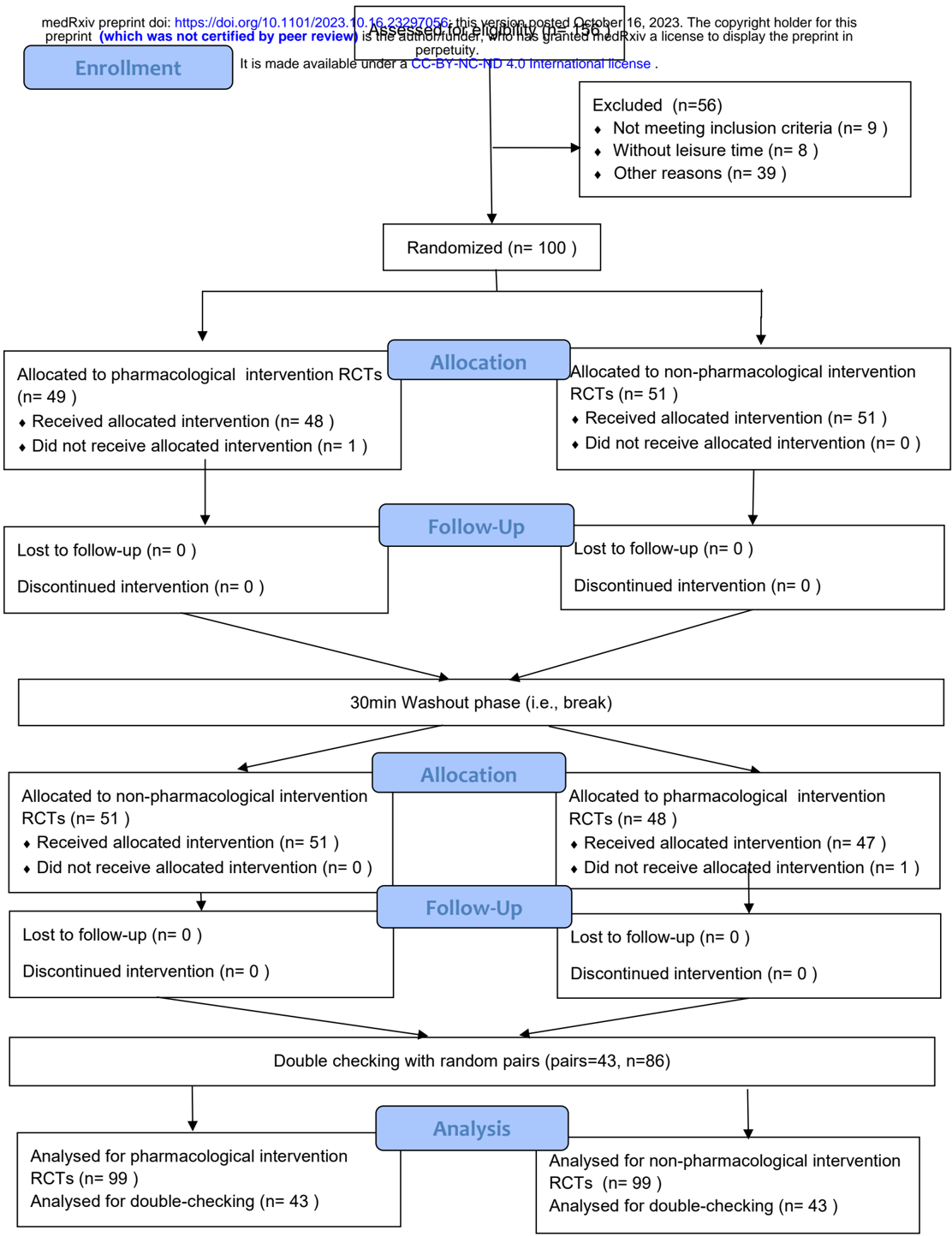
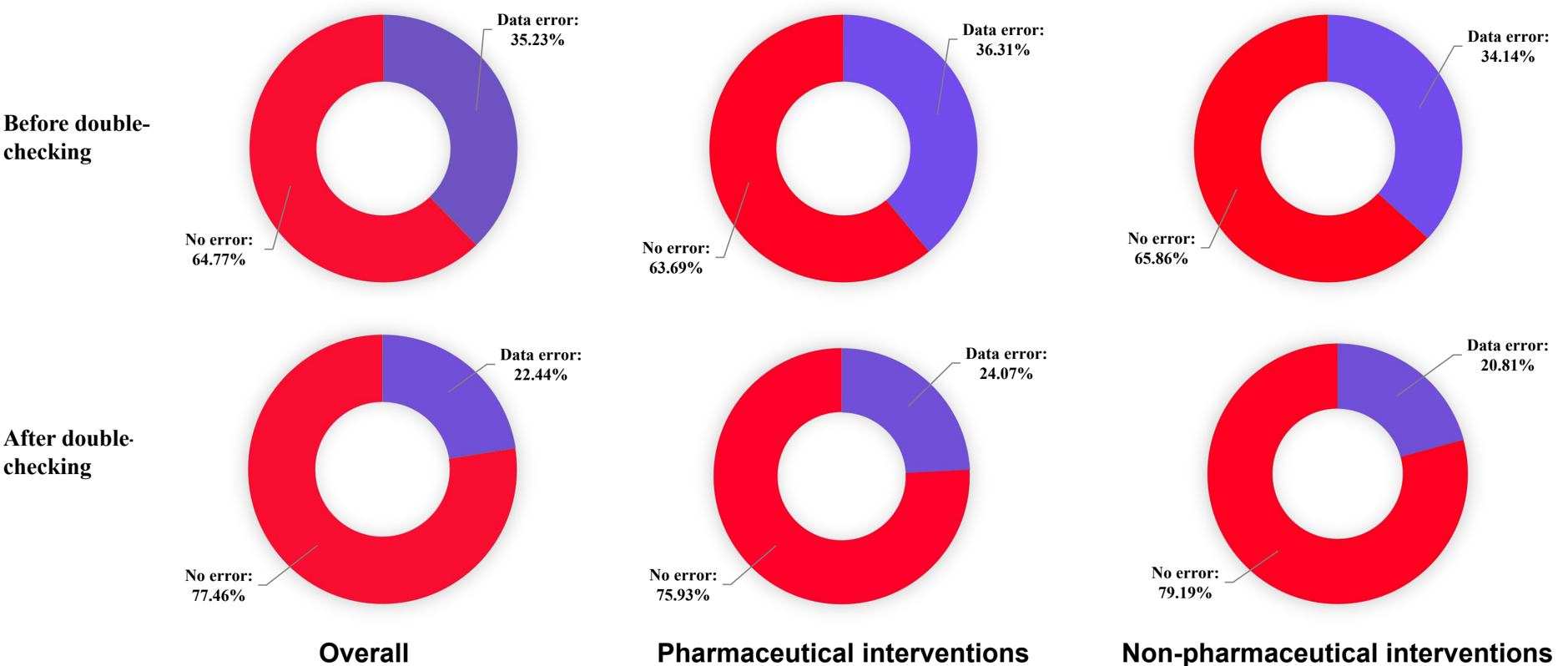
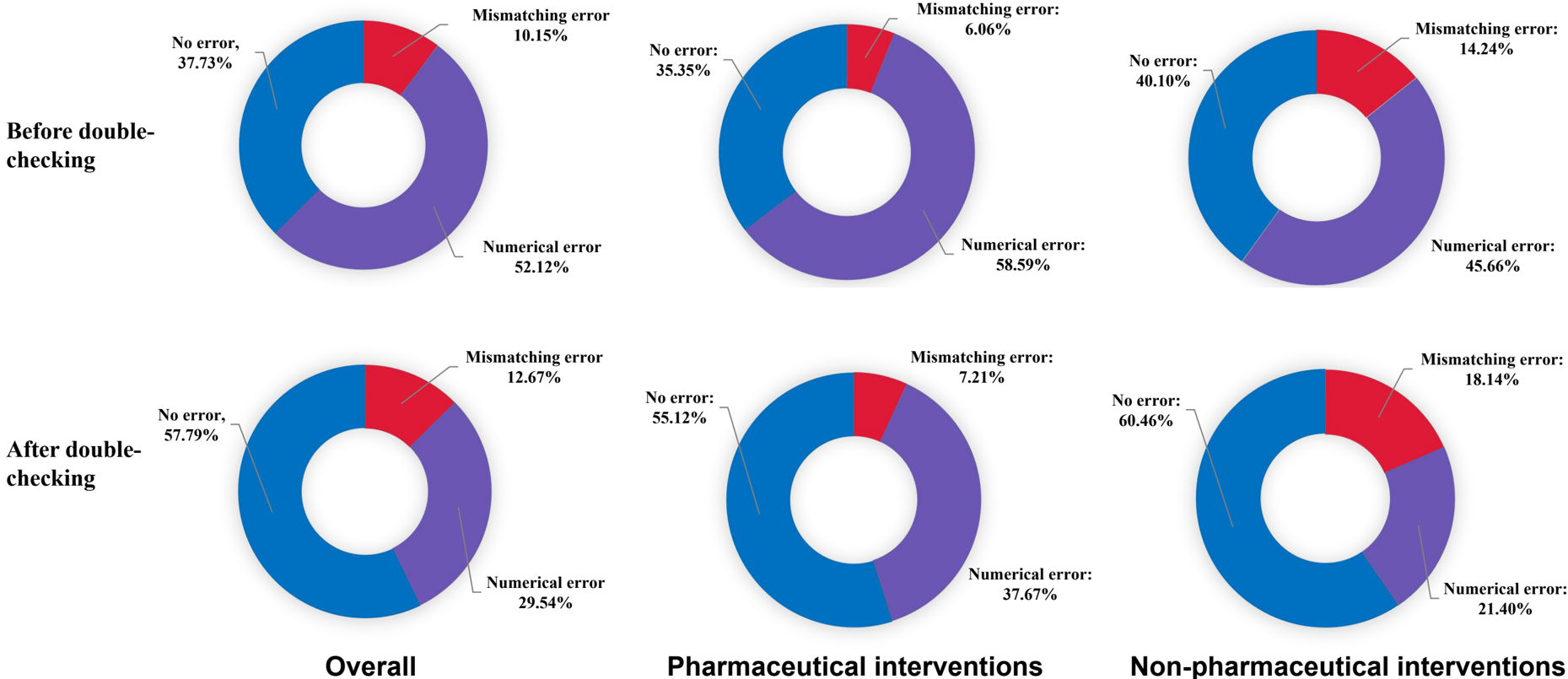
Objectives: The objective was to investigate the role of double extraction in reducing data errors in evidence synthesis for pharmaceutical and non-pharmaceutical interventions. Design: Crossover randomized controlled trial (RCT). Setting: University teaching center and hospital evidence-based medicine center. Participants: Eligible 100 participants were 2 nd year or above post-graduate students (e.g., masters, doctoral program), who were randomly (1:1) assigned for data extraction tasks of either 10 RCTs of pharmaceutical interventions or 10 of non-pharmaceutical interventions, followed by a cross-over pattern and a further double-checking process. Intervention: The intervention of this trial was double-checking process for data extraction. Primary and secondary outcome measures: The primary outcome was the error rates for RCTs in the pharmaceutical versus non-pharmaceutical intervention group, in terms of both study level and cell level (2 by 2 table). The secondary outcome was the absolute difference in the error rates before and after the double-checking process for both the pharmaceutical and non-pharmaceutical intervention groups, again, in terms of both study level and cell level (2 by 2 table). Results: The error rates in RCTs of pharmaceutical and non-pharmaceutical groups were 64.65% and 59.90%, with an absolute difference of 4.75% and an odds ratio (OR) of 1.29 [95% confidence interval (CI): 1.06 to 1.57, P = 0.01] when measured at the study level. After double-checking, the error rates decreased to 44.88% and 39.54%, and the difference between the two groups remained at 5.34%, with the OR of 1.27 (95%CI: 1.1 to 1.46; P < 0.01). Similar results were observed when measured at the cell level. Conclusion: Double-checking reduced data extraction errors, but the error rate still remained high after the process. Further evidence synthesis research may consider to use triple data extraction or else effective methods to minimize potential errors. Trial registration number: Chinese Clinical Trial Registry Center (Identifier: ChiCTR2200062206) Strengths and limitations of the study: This is the third randomized trial focusing on data extraction strategies and the first one in the Asia-Pacific region. This is the first randomized trial that compares error rates of data extraction in trials of pharmaceutical interventions and non-pharmaceutical interventions. We validated the effectiveness of double data extraction while also identifying its limitations, providing valuable evidence for future data extraction strategies. To ensure the feasibility of the trial, we restricted subjects to 2 post-graduate students or above, which may affects the representativeness of the sample. The readability of the chosen randomized controlled trials for pharmaceutical and non-pharmaceutical interventions may vary, potentially resulting in selection bias that can distort the outcomes.
Overview
The claims and statistics of this paper haven’t been checked yet.
Free: it reads the open-access text and checks the first 5 claims that cite a source we can check. Create a free account to check every claim.
Integrity signals
Registry
Cites
Statistics
Figures
Verification
Claims the paper makes
The claims and statistics of this paper haven’t been checked yet.
Free: it reads the open-access text and checks the first 5 claims that cite a source we can check. Create a free account to check every claim.
Claims other papers make about this one
Each is checked against this paper’s own text: does it say what the citing paper says it does?
The source backs part of the claim, not all of it — or backs it for a different population, condition or comparison.
In the citing paper
“However, we addressed this by performing randomized and blinded adjudication, adopting best practices seen in radiology, ophthalmology, and clinical trials 28-31 .”
From Automation of Systematic Reviews with Large Language Models (2025) · cites this paper as [29]
Experimental — accuracy not yet measuredThe check wasn’t confident either way, so it gives no verdict — never disputed.
In the citing paper
“This adjudication framework was adapted from established protocols in radiology, ophthalmology, and clinical trials 28-31 .”
From Automation of Systematic Reviews with Large Language Models (2025) · cites this paper as [29]
Experimental — accuracy not yet measured
Self-check
Percentages, sums and reported differences re-computed from the paper’s own numbers.
The self-check needs the paper’s full text.
Citations
Cites
The PRISMA 2020 statement: An updated guideline for reporting systematic reviews
Page, M. J., McKenzie, J. E., Bossuyt, P. M., Boutron, I., Hoffmann, T. C., Mulrow, C. D., Shamseer, L., Tetzlaff, J. M., Akl, E. A., Brennan, S. E., et al. (2021) · BMJ · doi:10.1136/bmj.n71 · Cited by 108,283
Shea, B. J., Reeves, B. C., Wells, G., Thuku, M., Hamel, C., Moran, J., Moher, D., Tugwell, P., Welch, V., Kristjansson, E., et al. (2017) · BMJ · doi:10.1136/bmj.j4008 · Cited by 10,636 · cited 1×
“This method has been documented and highlighted in most of the current guidelines and collaboration groups [9-12].”
Systematic Reviews in Health Care: Meta‐Analysis in Context
(2001) · doi:10.1002/9780470693926 · Cited by 1,693
Progress in evidence-based medicine: a quarter century on
Djulbegovic, B., & Guyatt, G. H. (2017) · The Lancet · doi:10.1016/s0140-6736(16)31592-6 · Cited by 1,022 · cited 1×
“certain topic, in order to provide comprehensive, and probably, more precise evidence to support informed decision-making [1].”
Cross‐over Trials In Clinical Research
Senn, S. (2002) · doi:10.1002/0470854596 · Cited by 653
Single data extraction generated more errors than double data extraction in systematic reviews
Buscemi, N., Hartling, L., Vandermeer, B., Tjosvold, L., & Klassen, T. P. (2006) · Journal of Clinical Epidemiology · doi:10.1016/j.jclinepi.2005.11.010 · Cited by 464
Chapter 3: Systematic Reviews of Effectiveness
Tufanaru, C., Munn, Z., Aromataris, E., Campbell, J., & Hopp, L. (2019) · JBI Reviewer's Manual · doi:10.46658/jbirm-17-03 · Cited by 443 · cited 1×
“Finally, the systematic review by Gillies et al [17] and the systematic review by Yuan et al [18] were selected.”
Mathes, T., Klaßen, P., & Pieper, D. (2017) · BMC Medical Research Methodology · doi:10.1186/s12874-017-0431-4 · Cited by 240 · cited 1×
“Among which, data extraction serves as the most important procedure which transforms the ‘raw materials' to the new research that largely determines the reliability of the synthesized evidence [3].”
Gillies, M. B., Ranakusuma, A., Hoffmann, T., Thorning, S., McGuire, T., Glasziou, P., & Mar, C. D. (2014) · Canadian Medical Association Journal · doi:10.1503/cmaj.140848 · Cited by 173 · cited 1×
“Finally, the systematic review by Gillies et al [17] and the systematic review by Yuan et al [18] were selected.”
Doi, S. A., Furuya-Kanamori, L., Xu, C., Lin, L., Chivese, T., & Thalib, L. (2022) · Journal of Clinical Epidemiology · doi:10.1016/j.jclinepi.2020.08.019 · Cited by 150 · cited 1×
“The odds ratio (OR) was used as the effect estimate by setting a logit link and binomial distribution for the response variable [20].”
Self-citationJones, A. P., Remmington, T., Williamson, P. R., Ashby, D., & Smyth, R. L. (2005) · Journal of Clinical Epidemiology · doi:10.1016/j.jclinepi.2004.11.024 · Cited by 114 · cited 1×
“In three large-scale reproducibility studies, data extraction errors occur in almost 66.8% of meta-analyses and 85.1% of systematic reviews [5-7].”
InfluentialValidity of data extraction in evidence synthesis practice of adverse events: reproducibility study
Xu, C., Yu, T., Furuya-Kanamori, L., Lin, L., Zorzela, L., Zhou, X., Dai, H., Loke, Y., & Vohra, S. (2022) · BMJ · doi:10.1136/bmj-2021-069155 · Cited by 82 · cited 3×
“According to our classification of data errors, the rate of numerical errors was higher than mismatching errors, aligning with the findings of our previous studies [6].”
Self-citationBagos, P. G., & Nikolopoulos, G. K. (2009) · The International Journal of Biostatistics · doi:10.2202/1557-4679.1168 · Cited by 68
Li, T., Saldanha, I. J., Jap, J., Smith, B. T., Canner, J., Hutfless, S. M., Branch, V., Carini, S., Chan, W., de Bruijn, B., et al. (2019) · Journal of Clinical Epidemiology · doi:10.1016/j.jclinepi.2019.07.005 · Cited by 54 · cited 1×
“16%) in the frequency of data extraction errors between these two methods [14].”
Minimal Clinically Important Difference (MCID)—Adding Meaning to Statistical Inference
Chan, L. S. (2013) · American Journal of Public Health · doi:10.2105/ajph.2013.301580 · Cited by 52 · cited 2×
“For the statistical inference, we pre-defined a minimal clinical important difference of the error rate to avoid the misuse of P value, which we set as 5% [22].”
Automatic extraction of quantitative data from ClinicalTrials.gov to conduct meta-analyses
Pradhan, R., Hoaglin, D. C., Cornell, M., Liu, W., Wang, V., & Yu, H. (2019) · Journal of Clinical Epidemiology · doi:10.1016/j.jclinepi.2018.08.023 · Cited by 51 · cited 1×
“However, due to the time-and labor-intensive nature, the procedure is susceptible to human errors, which eventually resulted in data extraction errors [4].”
Yuan, Z. Z., Yang, Z., Liu, Q., & Liu, Y. M. (2017) · Orthopaedics & Traumatology Surgery & Research · doi:10.1016/j.otsr.2017.08.020 · Cited by 37 · cited 1×
“Finally, the systematic review by Gillies et al [17] and the systematic review by Yuan et al [18] were selected.”
Randomization Procedures in Orthopaedic Trials
Randelli, P., Arrigoni, P., Lubowitz, J. H., Cabitza, P., & Denti, M. (2008) · Arthroscopy: The Journal of Arthroscopic & Related Surgery · doi:10.1016/j.arthro.2008.01.011 · Cited by 36
Synthesis of evidence from zero‐events studies: A comparison of one‐stage framework methods
Xu, C., Furuya‐Kanamori, L., & Lin, L. (2021) · Research Synthesis Methods · doi:10.1002/jrsm.1521 · Cited by 33 · cited 1×
“For the main analysis, a generalized linear mixed model (GLMM) was used to compare the error rates for data extraction of the two groups, . before and after the double-checking process [19].”
Self-citationXu, C., Doi, S. A. R., Zhou, X., Lin, L., Furuya‐Kanamori, L., & Tao, F. (2022) · Sleep Medicine Reviews · doi:10.1016/j.smrv.2022.101708 · Cited by 20 · cited 1×
“Moreover, several empirical studies suggested that error rates may differ between pharmaceutical and non-pharmaceutical interventions [5, 6], and whether there is an advantage of double data extraction in bridging such differences remains unclear.”
Self-citationZhu, Y., Ren, P., Doi, S. A. R., Furuya‐Kanamori, L., Lin, L., Zhou, X., Tao, F., & Xu, C. (2023) · Contemporary Clinical Trials Communications · doi:10.1016/j.conctc.2023.101189 · Cited by 3 · cited 1×
“The protocol for the trial was published previously [15], and findings are reported following the CONSORT 2010 statement and its extension to randomized crossover trials [16].”
Self-citation
Research works printed but not linked: 3
- Committee on Standards for Systematic Reviews of Comparative Effectiveness Research, Board on Health Care Services. In: Eden J, Levit L, Berg A, Morton S, editors. Finding what works in health care: standards for systematic reviews. Washington, DC: National Academies Press; 2011.
- Chandler J, Cumpston M, Thomas J, et al. Chapter I: Introduction. In: Higgins JPT, Thomas J, Chandler J, et al (editors). Cochrane Handbook for Systematic Reviews of Interventions version 6.3. Cochrane, 2022. Available from www.training.cochrane.org/handbook.
- Dwan K, Li T, Altman DG, et al. CONSORT 2010 statement: extension to randomised crossover trials. BMJ 2019; 366: l4378
Cited by
Automation of Systematic Reviews with Large Language Models
Cao, C., Arora, R., Cento, P., Budak, A., Manta, K., Farahani, E., Cecere, M., Selemon, A., Sang, J., Gong, L. X., et al. (2025) · medRxiv · doi:10.1101/2025.06.13.25329541 · Cited by 33
Hilkenmeier, F., Pelzer, M., Stierle, C. M. G., & Fink‐Lamotte, J. (2025) · Social Science Computer Review · doi:10.1177/08944393251404052 · Cited by 23
How good are large language models for automated data extraction from randomized trials?Preprint
Sun, Z., Zhang, R., Doi, S. A. R., Furuya‐Kanamori, L., Yu, T., Lin, L., & Xu, C. (2024) · medRxiv · doi:10.1101/2024.02.20.24303083 · Cited by 26
Self-citation
Metadata
- Authors
- Tang, L., Wang, R., Doi, S. A. R., Furuya-Kanamori, L., Lin, L., Qin, Z., Tao, F., & Xu, C.
- Affiliations
- Qatar University (QA)
- University of Arizona (US)
- Peking University (CN)
- Anhui Medical University (CN)
- Corresponding author
- Xu, Chang
- Venue
- medRxiv
- Publisher
- openRxiv
- Published
- 2023-10-16
- OpenAlex
- W4387666266
- Cited by
- 3
- References
- 21
- Citations by year
- 2025: 2 · 2024: 1
- Type
- posted content
- Language
- en
- Open access
- green
- doi.org
- Licence
- Locations
- medRxiv (acceptedVersion, cc-by-nc-nd)
- Funders
- Qatar Foundation
- British Society for Research on Ageing
- National Natural Science Foundation of China (72204003, NPRP-BSRA01-0406-210030, BSRA01-0406-210030)
- Fonds National de la Recherche Luxembourg
- Anhui Medical University
- Qatar National Research Fund (NPRP-BSRA01-0406-210030, BSRA01-0406-210030)
- Topics
- Social Sciences › Decision Sciences › Statistics, Probability and Uncertainty › Meta-analysis and systematic reviews
- Health Sciences › Health Professions › General Health Professions › Health Sciences Research and Education
- Physical Sciences › Mathematics › Statistics and Probability › Statistical Methods in Epidemiology
- Keywords
- data extraction errors, evidence synthesis, meta-analysis, double-checking, pharmacological interventions, non-pharmaceutical interventions, error rate, research trainees, evidence-based medicine
About these checks
Registry, retraction, Cites and statistics results are computed, not judged, with one exception: a printed reference that no index lists is read once by a model before it counts as a citation error. Claims are extracted by a model and kept only when their quote appears verbatim in the text; each cited source is then checked, with a model’s help, for whether it says what the claim relies on. Those verdicts can be wrong — read the claim’s quote and the cited source before relying on one.
Statistics and arithmetic are recomputed, not judged.
Confidence bands are shown only for fields calibrated on our annotated test set. None is calibrated yet, so no band is shown.
What counts as a claim ›How we measure confidence ›How we check this ›
Are you an author, or do you see a problem with this page? Request a review
Data sources
Bibliographic data: Semantic Scholar, OpenAlex, Crossref.
Contains information from the Semantic Scholar Academic Graph Datasets, made available under the ODC Attribution License (ODC-BY 1.0).
Semantic Scholar’s data is described in: Kinney, R., et al. (2023). The Semantic Scholar Open Data Platform. arXiv:2301.10140.
