

The DOI matches its Crossref record; 43 of the 43 references it cites were found in a registry or an index.
The Arabidopsis Information Resource in 2024
Open accessPreprint — published as 10.1093/genetics/iyae027 · Paper page
Abstract
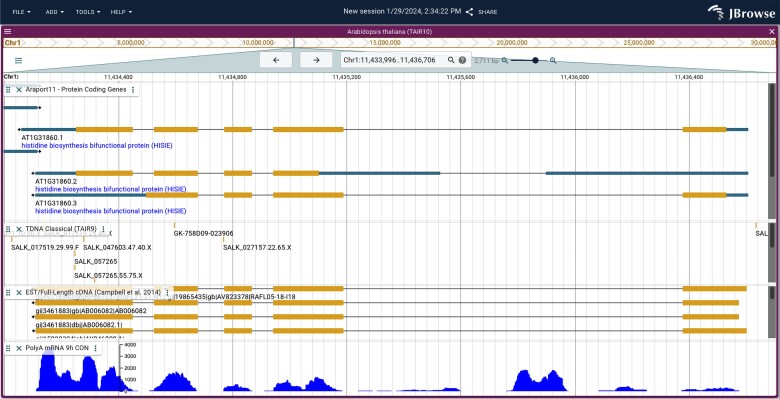
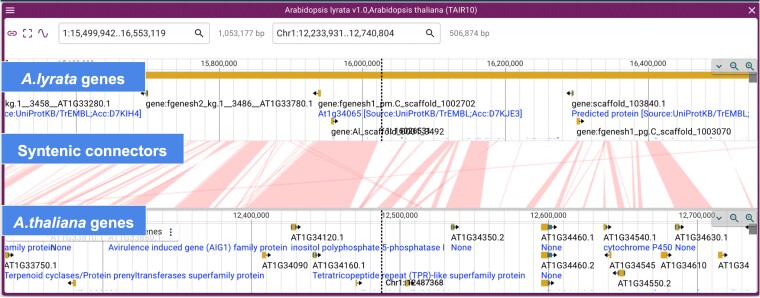
Since 1999, The Arabidopsis Information Resource ( www.arabidopsis.org ) has been curating data about the Arabidopsis thaliana genome. Its primary focus is integrating experimental gene function information from the peer-reviewed literature and codifying it as controlled vocabulary annotations. Our goal is to produce a ‘gold standard’ functional annotation set that reflects the current state of knowledge about the Arabidopsis genome. At the same time, the resource serves as a nexus for community-based collaborations aimed at improving data quality, access and reuse. For the past decade, our work has been made possible by subscriptions from our global user base. This update covers our ongoing biocuration work, some of our modernization efforts that contribute to the first major infrastructure overhaul since 2011, the introduction of JBrowse2, and the resource’s role in community activities such as organizing the structural reannotation of the genome. For gene function assessment, we used Gene Ontology annotations as a metric to evaluate: (1) what is currently known about Arabidopsis gene function, and (2) the set of ‘unknown’ genes. Currently, 74% of the proteome has been annotated to at least one Gene Ontology term. Of those loci, half have experimental support for at least one of the following aspects: molecular function, biological process, or cellular component. Our work sheds light on the genes for which we have not yet identified any published experimental data and have no functional annotation. Drawing attention to these unknown genes highlights knowledge gaps and potential sources of novel discoveries. Article Summary: The Arabidopsis Information Resource (TAIR, www.arabidopsis.org ) is a comprehensive website about Arabidopsis thaliana , a small plant that’s very easy to grow and analyze in the laboratory and is used to understand how many other plants function. We share our progress in data collection and organization, website and tool improvement, and our involvement in community projects.
Overview
The claims and statistics of this paper haven’t been checked yet.
Run the check — free, no account needed. It reads the open-access text and checks the sources it cites.
Integrity signals
Registry
Cites
Statistics
Figures
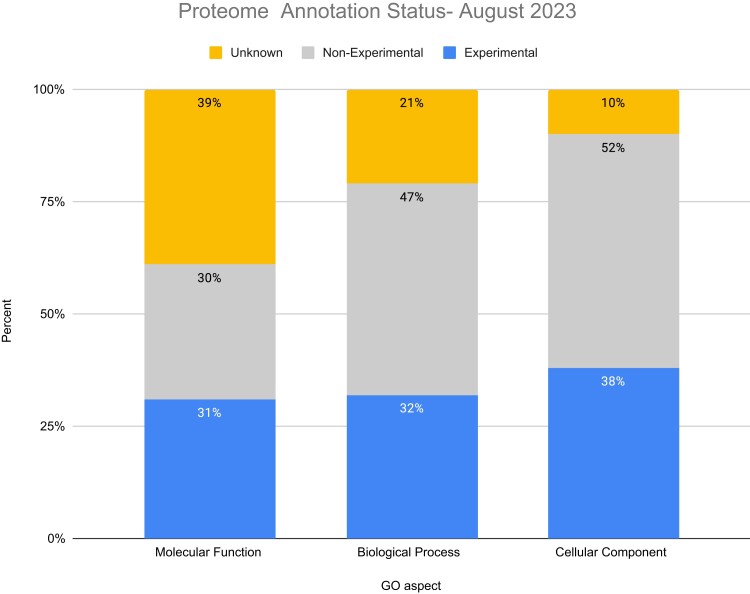
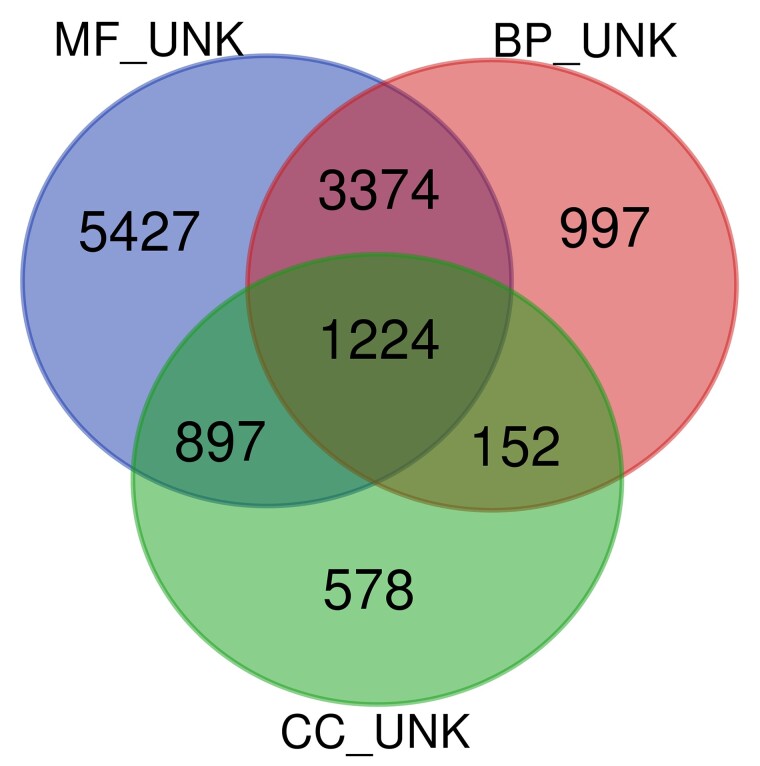
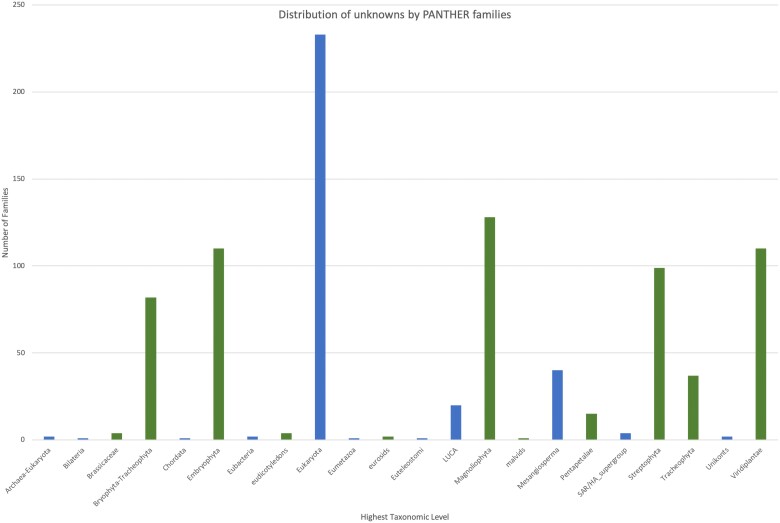
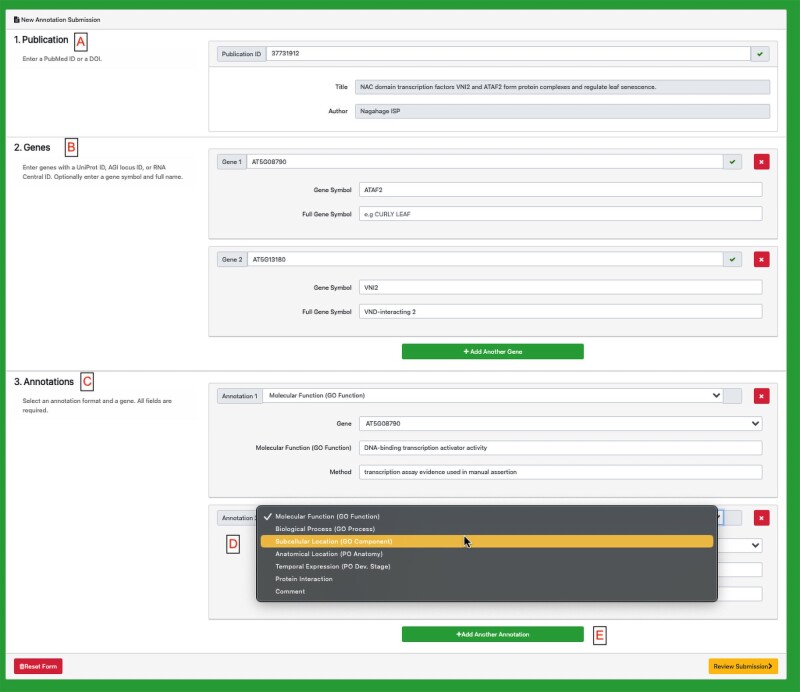

Verification
Claims the paper makes
The claims and statistics of this paper haven’t been checked yet.
Run the check — free, no account needed. It reads the open-access text and checks the sources it cites.
Self-check
Percentages, sums and reported differences re-computed from the paper’s own numbers.
The self-check needs the paper’s full text.
Citations
Cites
Gene Ontology: tool for the unification of biology
Ashburner, M., Ball, C. A., Blake, J. A., Botstein, D., Butler, H., Cherry, J. M., Davis, A. P., Dolinski, K., Dwight, S. S., Eppig, J. T., et al. (2000) · Nature Genetics · doi:10.1038/75556 · Cited by 43,206
The FAIR Guiding Principles for scientific data management and stewardship
Wilkinson, M. D., Dumontier, M., Aalbersberg, I. J., Appleton, G., Axton, M., Baak, A., Blomberg, N., Boiten, J.-W., da Silva Santos, L. B., Bourne, P. E., et al. (2016) · Scientific Data · doi:10.1038/sdata.2016.18 · Cited by 18,423
InterProScan 5: genome-scale protein function classification
JONES, P. M., Binns, D., Chang, H.-Y., Fraser, M., Li, W., McAnulla, C., McWilliam, H., Maslen, J., Mitchell, A., Nuka, G., et al. (2014) · Bioinformatics · doi:10.1093/bioinformatics/btu031 · Cited by 9,511
Analysis of the genome sequence of the flowering plant Arabidopsis thaliana
Initiative, T. A. G. (2000) · Nature · doi:10.1038/35048692 · Cited by 9,301
UniProt: the Universal Protein Knowledgebase in 2023
The UniProt Consortium, Bateman, A., Martin, M.-J., Orchard, S., Magrane, M., Ahmad, S., Alpi, E., Bowler-Barnett, E. H., Britto, R., Bye-A-Jee, H., et al. (2023) · Nucleic Acids Research · doi:10.1093/nar/gkac1052 · Cited by 7,210
The Gene Ontology Resource: 20 years and still GOing strong
The Gene Ontology Consortium (2019) · Nucleic Acids Research · doi:10.1093/nar/gky1055 · Cited by 4,747
The Gene Ontology knowledgebase in 2023
Aleksander, S., Balhoff, J. P., Carbon, S., Cherry, J. M., Drabkin, H., Ebert, D., Feuermann, M., Gaudet, P., Harris, N. L., Hill, D. P., et al. (2023) · Genetics · doi:10.1093/genetics/iyad031 · Cited by 2,873
Self-citationLarge-scale gene function analysis with the PANTHER classification system
Mi, H., Muruganujan, A., Casagrande, J. T., & Thomas, P. D. (2013) · Nature Protocols · doi:10.1038/nprot.2013.092 · Cited by 2,496
The Arabidopsis Information Resource (TAIR): improved gene annotation and new tools
Lamesch, P., Berardini, T., Li, D., Swarbreck, D., Wilks, C., Sasidharan, R., Müller, R., Dreher, K. A., Alexander, D. L., Garcia-Hernandez, M., et al. (2011) · Nucleic Acids Research · doi:10.1093/nar/gkr1090 · Cited by 2,378
Self-citationImproving the Arabidopsis genome annotation using maximal transcript alignment assemblies
Haas, B. J. (2003) · Nucleic Acids Research · doi:10.1093/nar/gkg770 · Cited by 2,316
Research works printed but not linked: 1
- Saha S. , S. Cain , E. K. S. Cannon , N. Dunn , A. Farmer , et al., 2022 Recommendations for extending the GFF3 specification for improved interoperability of genomic data. arXiv [q-bio.OT].
Cited by
Sorted by citations
Le, T.-N., Schümann, U., Smith, N. A., Tiwari, S., Au, P. C. K., Zhu, Q., Taylor, J. M., Kazan, K., Llewellyn, D. J., Zhang, R., et al. (2014) · Genome biology · doi:10.1186/s13059-014-0458-3 · Cited by 279
Martínez, M., & Dı́az, I. (2008) · BMC Evolutionary Biology · doi:10.1186/1471-2148-8-198 · Cited by 156
Functional genomics of abiotic stress tolerance in cereals
Langridge, P. (2006) · Briefings in Functional Genomics and Proteomics · doi:10.1093/bfgp/eli005 · Cited by 145
Sharma, R. K., Bhardwaj, P., Negi, R. K., Mohapatra, T., & Ahuja, P. S. (2009) · BMC Plant Biology · doi:10.1186/1471-2229-9-53 · Cited by 127
Quantitative assessment of relationship between sequence similarity and function similarity
Joshi, T., & Xu, D. H. (2007) · BMC Genomics · doi:10.1186/1471-2164-8-222 · Cited by 110
Metadata
- Authors
- Reiser, L., Bakker, E., Subramaniam, S., Chen, X., Sawant, S., Khosa, K., Prithvi, T., & Berardini, T. Z.
- Affiliations
- Phoenix Bioinformatics (US)
- Corresponding author
- Reiser, Leonore
- Berardini, Tanya Z.
- Venue
- Genetics
- Publisher
- openRxiv
- Published
- 2023-11-07
- Volume
- 227
- Issue
- 1
- ISSN
- 0016-6731 (ISSN-L)
- PMC
- PMC11075553
- OpenAlex
- W4392600686
- Cited by
- 202
- References
- 43
- Citations by year
- 2026: 79 · 2025: 59 · 2024: 29
- FWCI
- 22.73
- Type
- journal article
- Language
- en
- Open access
- hybrid
- doi.org
- Licence
- cc-by
- Locations
- Genetics (publishedVersion, cc-by)
- bioRxiv (Cold Spring Harbor Laboratory) (acceptedVersion, cc-by)
- PubMed Central (publishedVersion, cc-by)
- PubMed (publishedVersion)
- Funders
- National Human Genome Research Institute (U24HG012212)
- Topics
- Health Sciences › Medicine › Health Informatics › Biomedical Text Mining and Ontologies
- Life Sciences › Biochemistry, Genetics and Molecular Biology › Molecular Biology › Genomics and Phylogenetic Studies
- Life Sciences › Biochemistry, Genetics and Molecular Biology › Molecular Biology › Bioinformatics and Genomic Networks
- Keywords
- Arabidopsis thaliana, gene function annotation, controlled vocabulary, Gene Ontology, biocuration, genome reannotation, unknown genes
- MeSH terms
- Arabidopsis, Genome, Plant, Arabidopsis Proteins, Databases, Genetic, Molecular Sequence Annotation, Gene Ontology
About these checks
Registry, retraction, Cites and statistics results are computed, not judged, with one exception: a printed reference that no index lists is read once by a model before it counts as a citation error. Claims are extracted by a model and kept only when their quote appears verbatim in the text; each cited source is then checked, with a model’s help, for whether it says what the claim relies on. Those verdicts can be wrong — read the claim’s quote and the cited source before relying on one.
Statistics and arithmetic are recomputed, not judged.
Confidence bands are shown only for fields calibrated on our annotated test set. None is calibrated yet, so no band is shown.
What counts as a claim ›How we measure confidence ›How we check this ›
Are you an author, or do you see a problem with this page? Request a review
