

The DOI matches its Crossref record; 1 of the 1 references it cites were found in a registry or an index.
Exploring TAS2R46 Biomechanics through Molecular Dynamics and Network Analysis
Open accessPreprint — published as 10.3389/fmolb.2024.1473675
Abstract
Understanding the intricate interplay between structural features and signal-processing events is crucial for unravelling the mechanisms of biomolecular systems. G protein-coupled receptors (GPCRs), a pervasive protein family in humans, serve a wide spectrum of vital functions. TAS2Rs, a subfamily of GPCRs, play a primary role in recognizing bitter molecules and triggering events leading to the perception of bitterness, a crucial defence mechanism against spoiled or poisonous food. Beyond taste, TAS2Rs function is associated with many diseases as they are expressed in several extra-oral tissues. Since the precise mechanism of TAS2R activation is poorly understood, this work aims to characterize the mechanisms underlying the signal transduction on the recently experimentally solved human TAS2R46 bitter taste receptor using molecular dynamics simulations coupled with network-based analysis. The results show that the allosteric activation of the receptor is associated with more correlated dynamics of the receptor and the formation of an interaction between two helices which mainly convey the signal transferring from the extracellular to the intracellular region. By elucidating the hallmarks of the allosteric network of TAS2R46 under varying conditions (ligand-bound, ligand-free, and transition states), this study has enabled the identification of the unique functional mechanisms of this receptor, thereby establishing a foundation for a more profound characterisation of this intriguing class of receptors. Highlights: The dynamics of TAS2R46 in different states were studied through molecular dynamics and network analysis. The presence of the bitter agonist increases intra-protein correlations. TM3 and TM6 helices mediate the allosteric network in Holo TAS2R46. The rotation of Y241 6.48 residue is pivotal in the allosteric network for the Holo TAS2R46.
Overview
The claims and statistics of this paper haven’t been checked yet.
Run the check — free, no account needed. It reads the open-access text and checks the sources it cites.
Integrity signals
Registry
Cites
Statistics
Figures
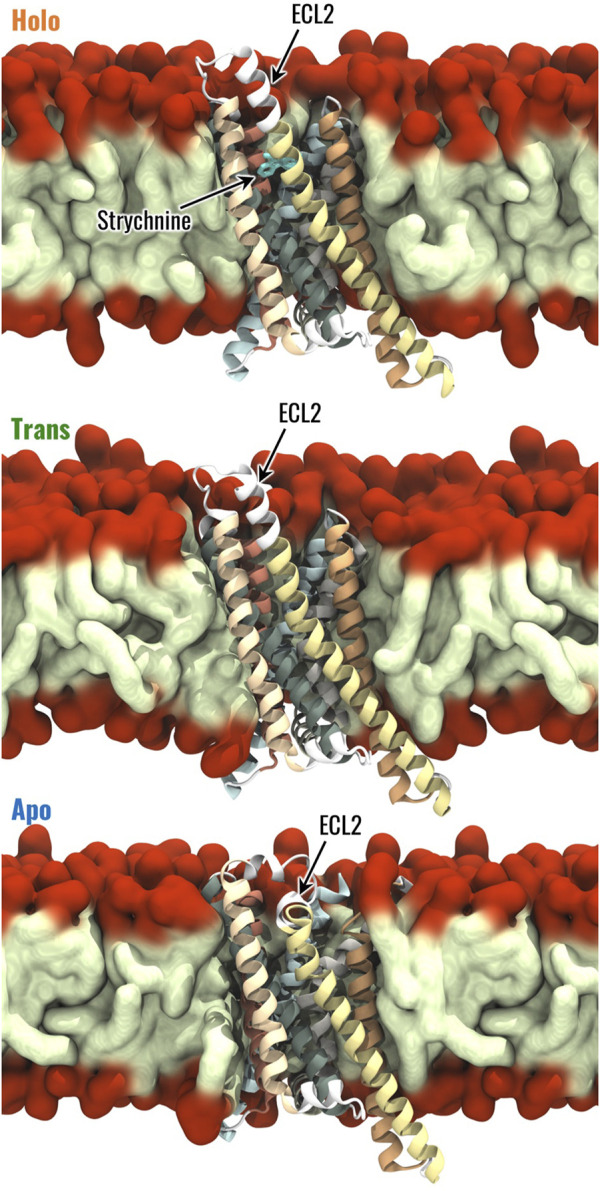
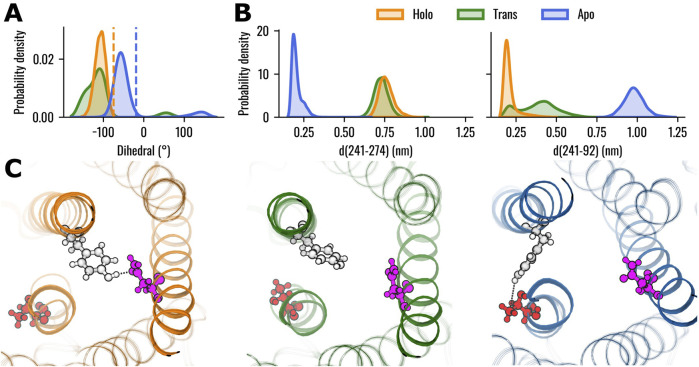
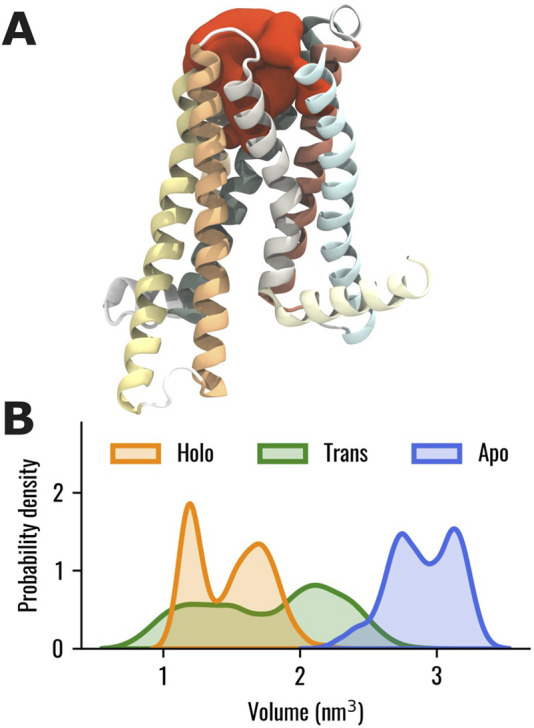
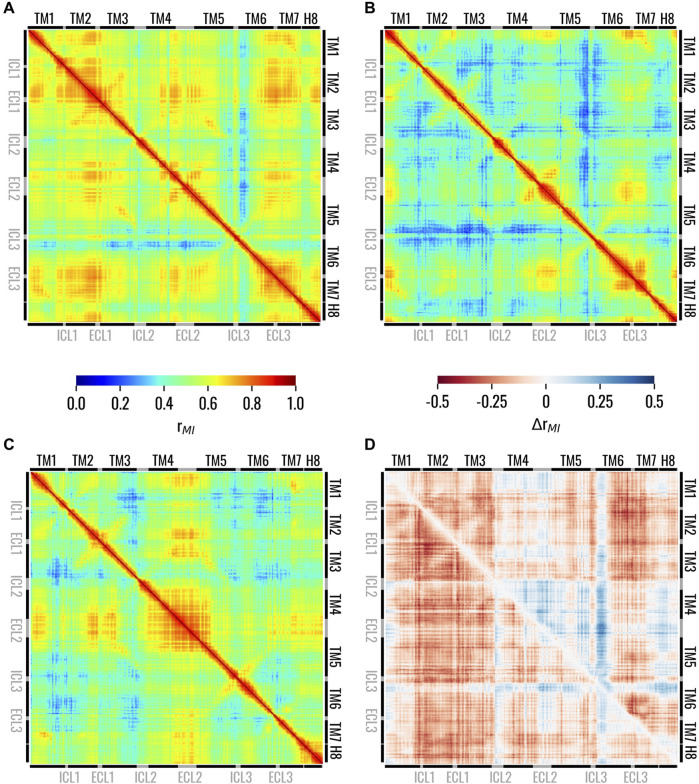
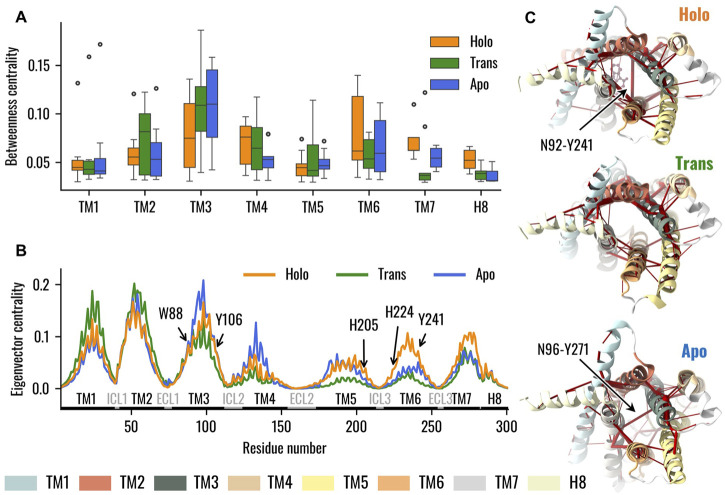
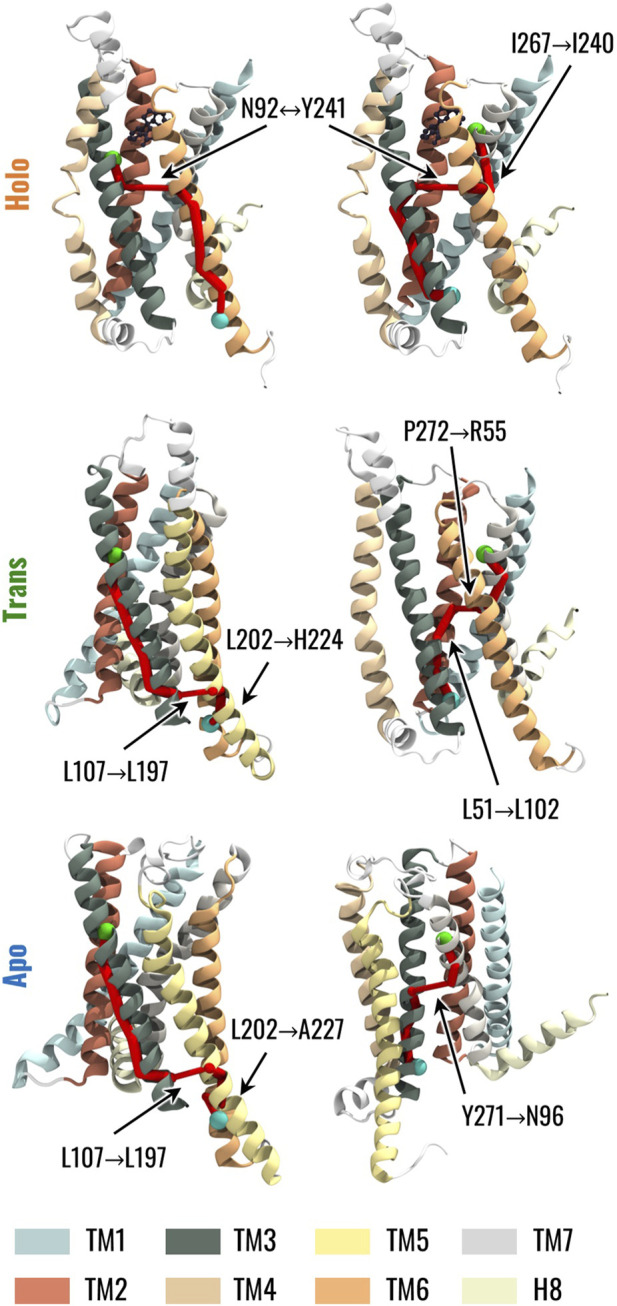
Verification
Claims the paper makes
The claims and statistics of this paper haven’t been checked yet.
Run the check — free, no account needed. It reads the open-access text and checks the sources it cites.
Self-check
Percentages, sums and reported differences re-computed from the paper’s own numbers.
The self-check needs the paper’s full text.
Citations
Cites
Highly accurate protein structure prediction with AlphaFold
Jumper, J., Evans, R., Pritzel, A., Green, T., Figurnov, M., Ronneberger, O., Tunyasuvunakool, K., Bates, R., Žídek, A., Potapenko, A., et al. (2021) · Nature · doi:10.1038/s41586-021-03819-2 · Cited by 43,764
Research works printed but not linked: 79
- 10.1016/S1043-9471(05)80049-7 · DOI
- 10.1016/j.semcdb.2012.08.006 · DOI
- 10.1007/400_2008_5 · DOI
- 10.3390/molecules25194423 · DOI
- 10.1063/1.448118 · DOI
- 10.1016/j.jsb.2020.107634 · DOI
- 10.1016/j.bpj.2014.06.015 · DOI
- 10.1111/febs.15783 · DOI
- 10.1021/acs.jpcb.2c00200 · DOI
- 10.1523/JNEUROSCI.3248-12.2013 · DOI
- 10.1021/jf070503p · DOI
- 10.1073/pnas.0913862107 · DOI
- 10.1007/s10237-023-01792-5 · DOI
- 10.1016/S0092-8674(00)80706-0 · DOI
- 10.1093/nar/gky974 · DOI
- 10.1186/s12859-015-0567-3 · DOI
- 10.1038/s41598-017-11509-1 · DOI
- 10.1016/bs.mcb.2015.10.005 · DOI
- 10.1016/j.bmc.2015.04.025 · DOI
- 10.1021/acs.jctc.1c01217 · DOI
- 10.1007/s00018-019-03194-2 · DOI
- 10.1371/journal.pone.0003974 · DOI
- 10.1042/BST20150283 · DOI
- 10.1021/acs.jctc.2c01246 · DOI
- 10.1101/2022.11.24.517821 · DOI
- 10.1016/j.chemphyslip.2016.04.006 · DOI
- 10.1093/nar/gkh429 · DOI · Paper page
- 10.1529/biophysj.105.070599 · DOI
- 10.1002/(SICI)1096-987X(199709)18:12<1463::AID-JCC4>3.3.CO;2-L · DOI
- 10.1016/0263-7855(96)00018-5 · DOI · Paper page
- 10.1109/MCSE.2007.55 · DOI · Paper page
- 10.1021/acs.jcim.9b00604 · DOI
- 10.1007/s12274-017-1734-9 · DOI
- 10.1016/j.ejphar.2006.04.010 · DOI
- 10.1103/PhysRevE.69.066138 · DOI · Paper page
- 10.1002/prot.20784 · DOI
- 10.1093/bioinformatics/btu822 · DOI
- 10.1063/5.0012280 · DOI
- 10.1038/s41573-018-0002-3 · DOI
- 10.1021/ci400552z · DOI
- 2014, Bitter taste receptors in the wrong place: novel airway smooth muscle targets for treating asthma, Trans Am Clin Climatol Assoc, 125, 64
- 10.1007/s00217-022-04044-5 · DOI
- 10.1016/j.isci.2022.105855 · DOI
- 10.1371/journal.pone.0064675 · DOI
- 10.1063/5.0018980 · DOI
- 10.1016/j.bpj.2022.10.021 · DOI
- 10.1124/mol.117.110395 · DOI
- 10.1016/j.bbagen.2018.07.009 · DOI
- 10.1016/j.tips.2009.02.006 · DOI
- 10.1038/s41598-024-56893-7 · DOI · Paper page
- 10.3303/CET23102048 · DOI
- 10.1016/j.tifs.2021.07.013 · DOI
- 10.1152/ajplung.00106.2017 · DOI
- 10.1093/nar/gkac1013 · DOI
- 10.1093/chemse/bjh064 · DOI
- 10.1111/j.1471-4159.2012.07808.x · DOI
- 10.1038/nature10361 · DOI · Paper page
- 10.1016/B978-0-12-809324-5.02908-4 · DOI
- 10.1074/jbc.M110.144444 · DOI
- 10.1093/nar/gkv315 · DOI
- 10.1021/acs.jctc.5b00472 · DOI
- 10.3109/10799899709036594 · DOI
- 10.1021/acs.jpcb.8b01657 · DOI
- 10.1021/acs.jctc.9b00697 · DOI
- 10.1074/jbc.M111.246983 · DOI
- 10.1021/acs.jcim.9b01082 · DOI
- 10.1021/acs.jctc.9b00591 · DOI
- 10.1016/j.isci.2023.106422 · DOI
- 10.1007/s00018-021-03968-7 · DOI
- 10.2174/092986712799320556 · DOI
- 10.1038/nature19107 · DOI
- 10.1038/nature11896 · DOI
- 10.1002/jcc.20035 · DOI
- 10.21105/joss.03021 · DOI · Paper page
- 10.1126/science.abo1633 · DOI
- 10.3389/fmolb.2018.00009 · DOI
- 10.1038/nature22363 · DOI
- 10.7554/eLife.50279 · DOI
- 10.3390/ijms20174237 · DOI
Metadata
- Authors
- Cannariato, M., Fanunza, R., Zizzi, E. A., Miceli, M., Di Benedetto, G., Deriu, M. A., & Pallante, L.
- Affiliations
- Politecnico di Torino (IT)
- Corresponding author
- Pallante, Lorenzo
- ORCID
- Venue
- Frontiers in Molecular Biosciences
- Publisher
- openRxiv
- Published
- 2023-11-21
- Volume
- 11
- Pages
- 1473675-1473675
- ISSN
- 2296-889X (ISSN-L)
- PMC
- PMC11646861
- OpenAlex
- W4404899993
- Cited by
- 10
- References
- 1
- Citations by year
- 2026: 5 · 2025: 3 · 2024: 1 · 2023: 1
- FWCI
- 1.22
- Type
- journal article
- Language
- en
- Open access
- gold
- doi.org
- Licence
- cc-by
- Locations
- Frontiers in Molecular Biosciences (publishedVersion, cc-by)
- bioRxiv (Cold Spring Harbor Laboratory) (acceptedVersion)
- PubMed Central (publishedVersion, cc-by)
- PubMed (publishedVersion)
- PORTO@Iris (submittedVersion, cc-by)
- DOAJ (DOAJ: Directory of Open Access Journals) (submittedVersion, cc-by-sa)
- Funders
- European Commission (872181, HORIZON2020)
- HORIZON EUROPE Framework Programme (872181, HORIZON-MSCA-2023-SE-01)
- H2020 Marie Skłodowska-Curie Actions (2023-SE-01, HORIZON-MSCA-2023-SE-01, 872181)
- Topics
- Life Sciences › Biochemistry, Genetics and Molecular Biology › Molecular Biology › Receptor Mechanisms and Signaling
- Health Sciences › Nursing › Nutrition and Dietetics › Biochemical Analysis and Sensing Techniques
- Life Sciences › Biochemistry, Genetics and Molecular Biology › Molecular Biology › Protein Structure and Dynamics
- Keywords
- bitter taste receptors, G protein-coupled receptors, strychnine, allosteric networks, conformational change, ligand binding, receptor dynamics, signal transduction, bitter taste perception
About these checks
Registry, retraction, Cites and statistics results are computed, not judged, with one exception: a printed reference that no index lists is read once by a model before it counts as a citation error. Claims are extracted by a model and kept only when their quote appears verbatim in the text; each cited source is then checked, with a model’s help, for whether it says what the claim relies on. Those verdicts can be wrong — read the claim’s quote and the cited source before relying on one.
Statistics and arithmetic are recomputed, not judged.
Confidence bands are shown only for fields calibrated on our annotated test set. None is calibrated yet, so no band is shown.
What counts as a claim ›How we measure confidence ›How we check this ›
Are you an author, or do you see a problem with this page? Request a review
