

The DOI matches its Crossref record; 2 of the 2 references it cites were found in a registry or an index.
Diverse bacteriohemerythrin genes of Methylomonas denitrificans FJG1 provide insight into the survival and activity of methanotrophs in low oxygen ecosystems
Open accessPreprint — published as 10.1128/mbio.01533-25 · Paper page
Abstract
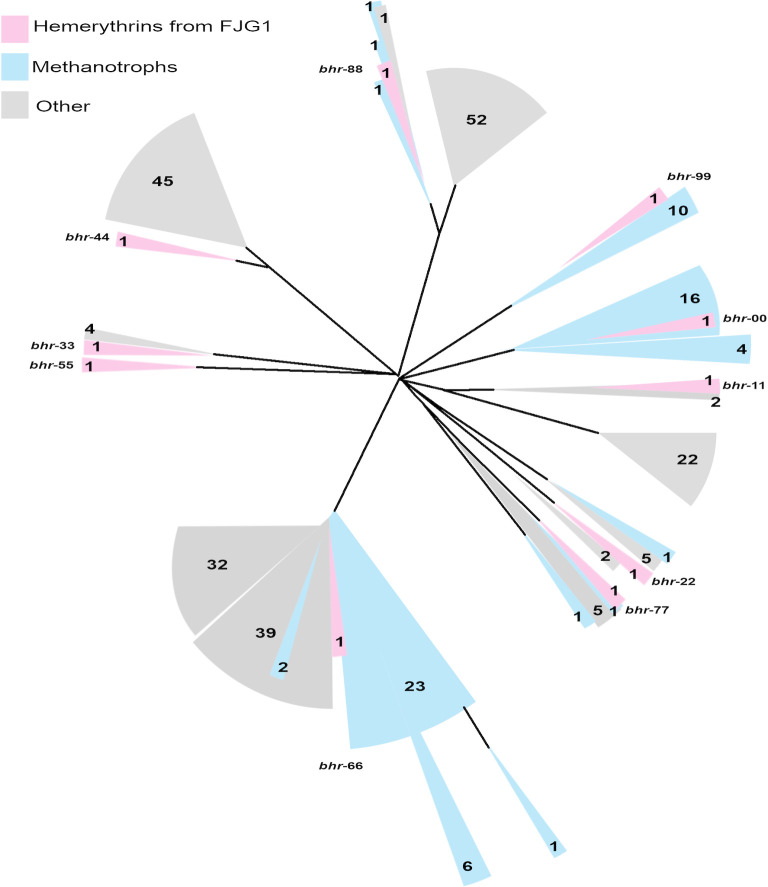
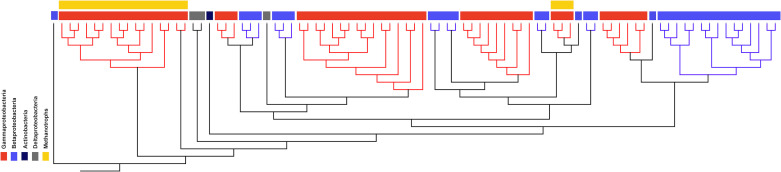
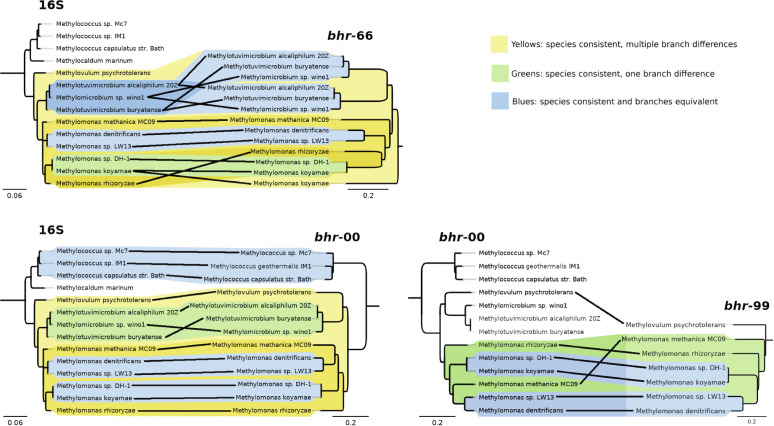
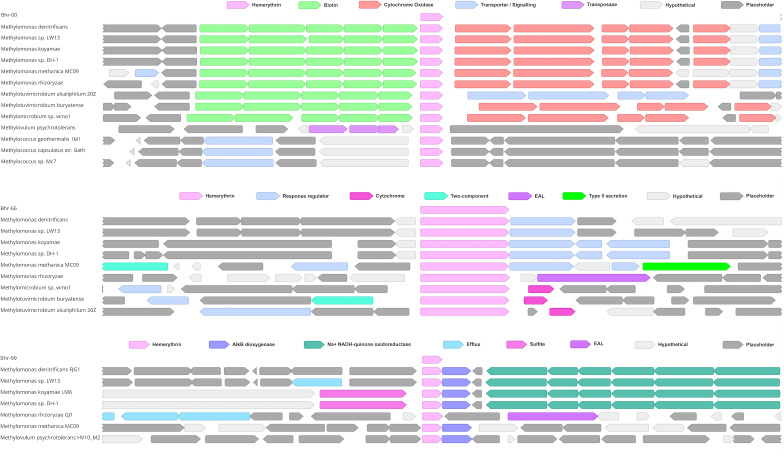
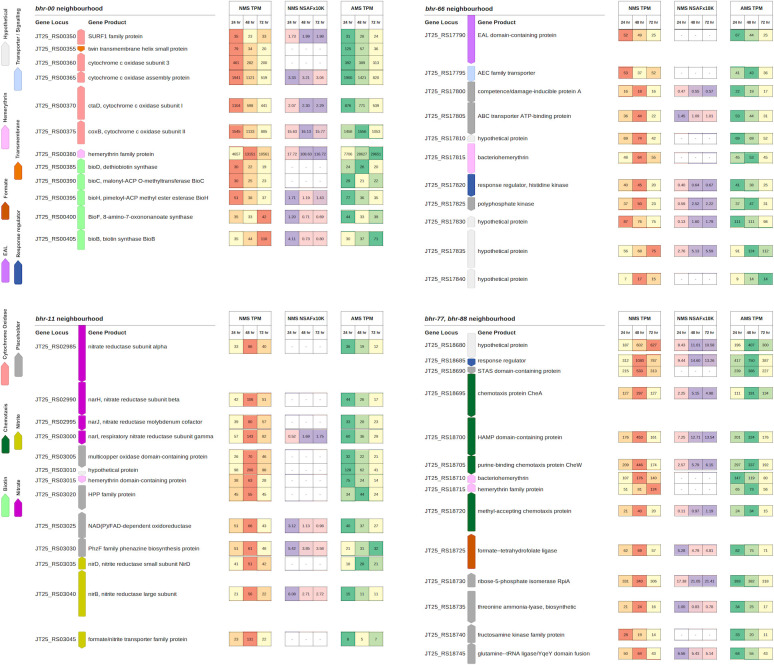
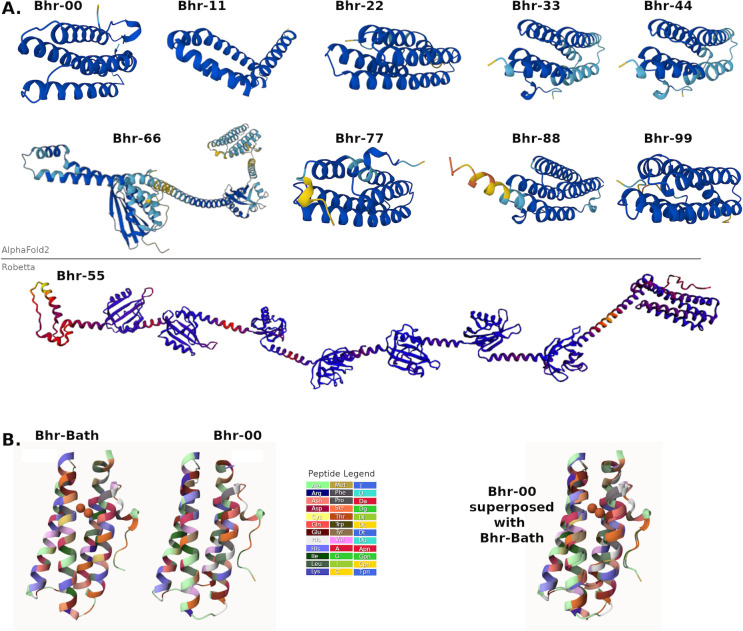
Proteobacterial methanotrophs are dependent on the oxidation of methane for ATP production and assimilation of carbon into biomass. Interestingly, some types of gammaproteobacterial methanotrophs thrive in oxygen-depleted zones of lakes and other aquatic ecosystems despite their reliance on oxygen to support methane oxidation. The model gammaproteobacterial methanotroph, Methylomonas denitrificans FJG1, oxidizes methane coupled to nitrate reduction under hypoxia and highly upregulates its expression of bacteriohemerythrin (Bhr). Bhr is a homolog of eukaryotic hemerythrin, which is a protein associated with oxygen binding. Ten bhr homologs were identified in the genome of M. denitrificans FJG1, requiring phylogenetic and gene expression analyses to pinpoint which homolog is likely responsible for delivering oxygen to support methane oxidation to under low oxygen conditions. This study examined the prevalence and phylogeny of the 10 bhr homologs from M. denitrificans FJG1 in the genomes of other methanotrophs and across the Bacteria. The homolog denoted “ bhr- 00” was specific to methanotroph genomes, was highly expressed in M. denitrificans FJG1 under hypoxia, and its predicted structure was nearly identical to a purified oxygen-scavenging hemerythrin protein from Methylococcus capsulatus Bath. Other bhr homologs upregulated from denitrifying cultures of M. denitrificans FJG1 included those with gene neighborhoods related to oxygen sensing, denitrification and chemotaxis. Together, this study uncovered potential multifunctional roles of bacteriohemerythrin genes of M. denitrificans FJG1 under low oxygen conditions and identified the bhr homolog that most likely enables and supports oxygen delivery to methane monooxygenase enzymes in anoxic ecosystems. Importance: Aerobic gammaproteobacterial methanotrophs can survive and grow in anoxic lakes, but mechanisms that provide them with oxygen to support methane oxidation remain uncharacterized. Methylomonas denitrificans FJG1 encodes 10 copies of bacteriohemerthyrin ( bhr ), of which 7 are expressed at the mRNA level under low oxygen conditions. Comparing the 10 bhr homologs from M. denitrificans FJG1 with those from other methanotrophs and bacterial genomes shows that two are specific to methanotrophs. Gene neighbourhoods surrounding conserved bhr genes in methanotrophs suggest a range of potential functions including oxygen respiration, oxygen sensing, chemotaxis, and nitrate reduction. The results from this study illuminate a previously undescribed diversity of structures and potential functions of bhr homologs in M. denitrificans FJG1 and related methanotrophic bacteria. The results pinpoint a methanotroph-specific homolog, bhr -00, that is likely responsible for oxygen binding and delivery to methane monooxygenase enzymes to promote methane oxidation in low oxygen ecosystems.
Overview
The claims and statistics of this paper haven’t been checked yet.
Run the check — free, no account needed. It reads the open-access text and checks the sources it cites.
Integrity signals
Registry
Cites
Statistics
Figures
Verification
Claims the paper makes
The claims and statistics of this paper haven’t been checked yet.
Run the check — free, no account needed. It reads the open-access text and checks the sources it cites.
Self-check
Percentages, sums and reported differences re-computed from the paper’s own numbers.
The self-check needs the paper’s full text.
Citations
Cites
Highly accurate protein structure prediction with AlphaFold
Jumper, J., Evans, R., Pritzel, A., Green, T., Figurnov, M., Ronneberger, O., Tunyasuvunakool, K., Bates, R., Žídek, A., Potapenko, A., et al. (2021) · Nature · doi:10.1038/s41586-021-03819-2 · Cited by 43,764
Varadi, M., Bertoni, D., Magana, P., Paramval, U., Pidruchna, I., Radhakrishnan, M., Tsenkov, M., Nair, S., Mirdita, M., Yeo, J., et al. (2024) · Nucleic Acids Research · doi:10.1093/nar/gkad1011 · Cited by 2,052
Research works printed but not linked: 36
- 10.1002/pro.3374 · DOI
- Costa-Paiva EM , Whelan NV , Waits DS , Santos SR , Schrago CG , Halanych KM . 2017. Discovery and evolution of novel hemerythrin genes in annelid worms. BMC Evol Biol 17. · DOI
- 10.1111/j.1432-1033.1992.tb17321.x · DOI
- 10.1111/1462-2920.12341 · DOI
- 1993, Amino acid sequence of the small cadmium-binding protein (MP II) from Nereis diversicolour (annelida, polychaeta) - Evidence for a myohemerythrin structure, Eur J Biochem, 217, 151, 10.1111/j.1432-1033.1993.tb18230.x · DOI
- 10.1021/bi992796o · DOI
- 10.1111/j.1574-6968.2007.01011.x · DOI
- 10.1016/j.genrep.2018.04.008 · DOI
- 10.1016/j.jinorgbio.2012.02.019 · DOI
- 10.1016/j.jinorgbio.2008.02.008 · DOI
- 10.1016/j.jinorgbio.2015.04.001 · DOI
- Nariya S , Kalyuzhnaya MG . 2020. Hemerythrins enhance aerobic respiration in Methylomicrobium alcaliphilum 20Z R a methane-consuming bacterium. FEMS Microbiol Lett 367. · DOI
- Beals DG , Puri AW . 2024. Linking methanotroph phenotypes to genotypes using a simple spatially resolved model ecosystem. ISME J 18. · DOI
- 10.1111/1462-2920.12772 · DOI
- Kits KD , Campbell DJ , Rosana AR , Stein LY . 2015. Diverse electron sources support denitrification under hypoxia in the obligate methanotroph Methylomicrobium album strain BG8. Front Microbiol 6. · DOI
- Li B , Tao Y , Mao ZD , Gu QJ , Han YX , Hu BL , Wang HW , Lai AX , Xing P , Wu QL . 2023. Iron oxides act as an alternative electron acceptor for aerobic methanotrophs in anoxic lake sediments. Water Res 234. · DOI
- 2013, Highly efficient methane biocatalysis revealed in a methanotrophic bacterium, Nature Comm, 4, 7
- Kitanishi K . 2022. Bacterial hemerythrin domain-containing oxygen and redox sensors: Versatile roles for oxygen and redox signaling. Front Molec Biosci 9. · DOI
- 10.1007/s10863-014-9565-9 · DOI
- Alvarez-Carreño C , Becerra A , Lazcano A . 2016. Molecular evolution of the oxygen-binding hemerythrin domain. Plos One 11. · DOI
- 10.1128/MMBR.63.2.479-506.1999 · DOI · Paper page
- 10.1016/j.str.2009.07.016 · DOI
- 10.1073/pnas.82.3.713 · DOI
- Oshkin IY , Tikhonova EN , Suleimanov RZ , Ashikhmin AA , Ivanova AA , Pimenov NV , Dedysh SN . 2023. All kinds of sunny colors synthesized from methane: genome-encoded carotenoid production by Methylomonas species. Microorganisms 11. · DOI
- Reis PCJ , Tsuji JM , Weiblen C , Schiff SL , Scott M , Stein LY , Neufeld JD . 2024. Enigmatic persistence of aerobic methanotrophs in oxygen-limiting freshwater habitats. ISME J 18. · DOI
- 10.1016/j.tim.2020.01.006 · DOI
- Schorn S , Graf JS , Littmann S , Hach PF , Lavik G , Speth DR , Schubert CJ , Kuypers MMM , Milucka J . 2024. Persistent activity of aerobic methane-oxidizing bacteria in anoxic lake waters due to metabolic versatility. Nat Commun 15. · DOI
- 10.1038/nmeth.1322 · DOI · Paper page
- 10.1021/pr8010099 · DOI
- 10.1021/pr801109k · DOI
- 10.1021/pr100594k · DOI
- 10.1016/j.ymeth.2006.07.028 · DOI
- Cox J , Mann M . 2012. 1D and 2D annotation enrichment: a statistical method integrating quantitative proteomics with complementary high-throughput data. BMC Bioinformatics 13. · DOI
- 10.1093/nar/gky1004 · DOI
- 10.1093/nar/gkab314 · DOI · Paper page
- 10.1038/nbt.2839 · DOI
Metadata
- Authors
- Weiblen, C., Kits, K. D., Kleiner, M., Sauvageau, D., & Stein, L. Y.
- Affiliations
- University of Alberta (CA)
- North Carolina State University (US)
- Corresponding author
- Stein, Lisa Y.
- Venue
- mBio
- Publisher
- openRxiv
- Published
- 2024-01-07
- Volume
- 16
- Issue
- 11
- Pages
- e0153325-e0153325
- ISSN
- 2150-7511 (ISSN-L)
- PMC
- PMC12607906
- OpenAlex
- W4414510811
- Cited by
- 8
- References
- 2
- Citations by year
- 2026: 4 · 2025: 3 · 2024: 1
- FWCI
- 2.10
- Type
- journal article
- Language
- en
- Open access
- gold
- doi.org
- Licence
- Locations
- mBio (publishedVersion, cc-by)
- bioRxiv (Cold Spring Harbor Laboratory) (acceptedVersion)
- Europe PMC (PubMed Central) (publishedVersion, cc-by)
- PubMed (publishedVersion)
- DOAJ (DOAJ: Directory of Open Access Journals) (submittedVersion, cc-by-sa)
- Funders
- University of Alberta
- Mitacs
- Canada First Research Excellence Fund
- Natural Sciences and Engineering Research Council of Canada
- Topics
- Life Sciences › Biochemistry, Genetics and Molecular Biology › Molecular Biology › Microbial metabolism and enzyme function
- Physical Sciences › Environmental Science › Environmental Chemistry › Methane Hydrates and Related Phenomena
- Physical Sciences › Chemistry › Inorganic Chemistry › Metal-Catalyzed Oxygenation Mechanisms
- Keywords
- methanotrophic bacteria, methane oxidation, hypoxia, oxygen delivery, methane monooxygenase, denitrification, gene expression, oxygen sensing, anoxic lakes, Gammaproteobacteria, Methylococcus capsulatus, phylogenetic analysis
- MeSH terms
- Bacterial Proteins, Hemerythrin, Methane, Oxidation-Reduction, Oxygen, Phylogeny, Ecosystem, Methylomonas
About these checks
Registry, retraction, Cites and statistics results are computed, not judged, with one exception: a printed reference that no index lists is read once by a model before it counts as a citation error. Claims are extracted by a model and kept only when their quote appears verbatim in the text; each cited source is then checked, with a model’s help, for whether it says what the claim relies on. Those verdicts can be wrong — read the claim’s quote and the cited source before relying on one.
Statistics and arithmetic are recomputed, not judged.
Confidence bands are shown only for fields calibrated on our annotated test set. None is calibrated yet, so no band is shown.
What counts as a claim ›How we measure confidence ›How we check this ›
Are you an author, or do you see a problem with this page? Request a review
How to cite
Cite CoChat for the checks on this page, and the paper for its own findings.
- This page
- CoChat. (2026). Citation check: Diverse bacteriohemerythrin genes of Methylomonas denitrificans FJG1 provide insight into the survival and activity of methanotrophs in low oxygen ecosystems. https://app.cochat.ai/papers/10.1101/2024.01.07.574550
- The paper
- Weiblen, C., Kits, K. D., Kleiner, M., Sauvageau, D., & Stein, L. Y. (2024). Diverse bacteriohemerythrin genes of Methylomonas denitrificans FJG1 provide insight into the survival and activity of methanotrophs in low oxygen ecosystems. mBio. https://doi.org/10.1101/2024.01.07.574550
