

The DOI matches its Crossref record; 1 of the 1 references it cites were found in a registry or an index.
Influenza A Virus H7 nanobody recognizes a conserved immunodominant epitope on hemagglutinin head and confers heterosubtypic protection
Open accessPreprint — published as 10.1038/s41467-024-55193-y · Paper page
Abstract
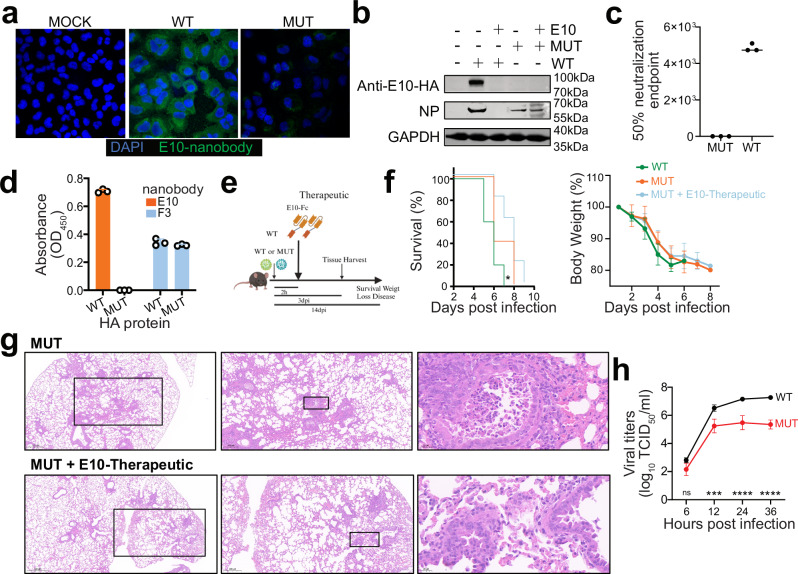
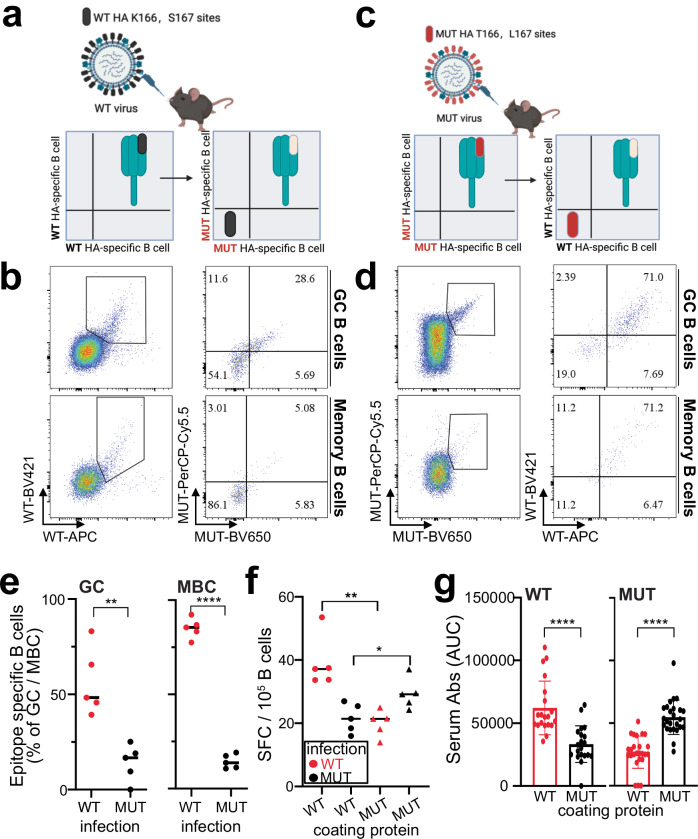
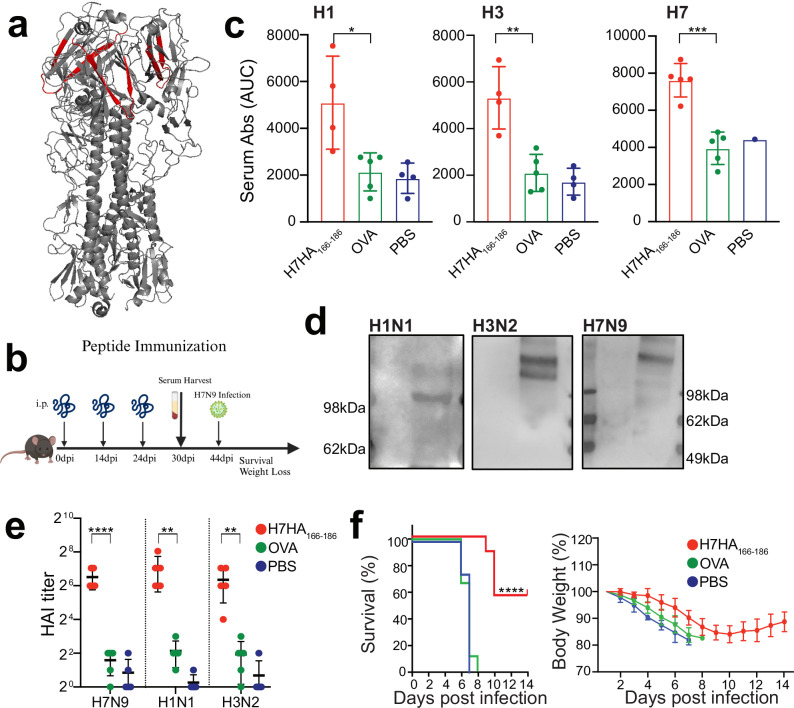
Influenza remains a persistent global health challenge, largely due to the virus’ continuous antigenic drift and shift, which impede the development of a universal vaccine. To address this, the identification of broadly neutralizing antibodies and their epitopes is crucial. Nanobodies, with their unique characteristics and binding capacity, offer a promising avenue to identify such epitopes. Here, we isolated and purified a hemagglutinin (HA)-specific nanobody that recognizes an H7 subtype of influenza A virus. Notably, the nanobody, named E10, exhibited broad-spectrum binding, cross-group neutralization and in vivo protection across various influenza A subtypes. Through phage display and in vitro characterization, we demonstrated that E10 specifically targets an epitope on HA head. This epitope is part of the conserved lateral patch of HA head and proved to be highly immunodominant upon H7 infection. Importantly, immunization with a peptide including the E10 epitope elicited cross-reactive antibodies and mediated partial protection from lethal viral challenge. Our data highlight the potential of E10 and its associated epitope as a candidate for future influenza prevention strategies.
Overview
The claims and statistics of this paper haven’t been checked yet.
Run the check — free, no account needed. It reads the open-access text and checks the sources it cites.
Integrity signals
Registry
Cites
Statistics
Figures
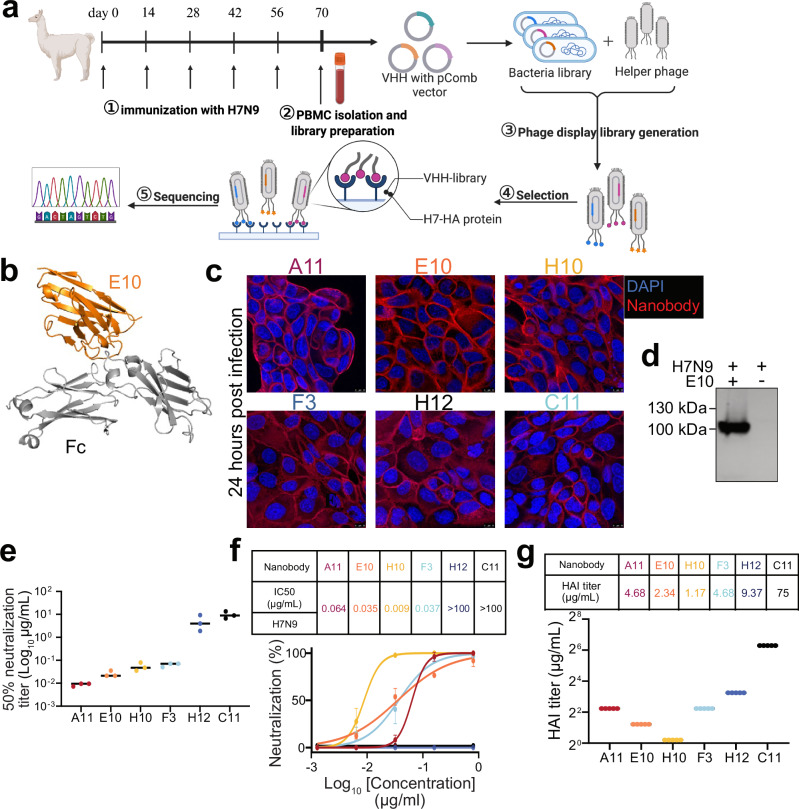
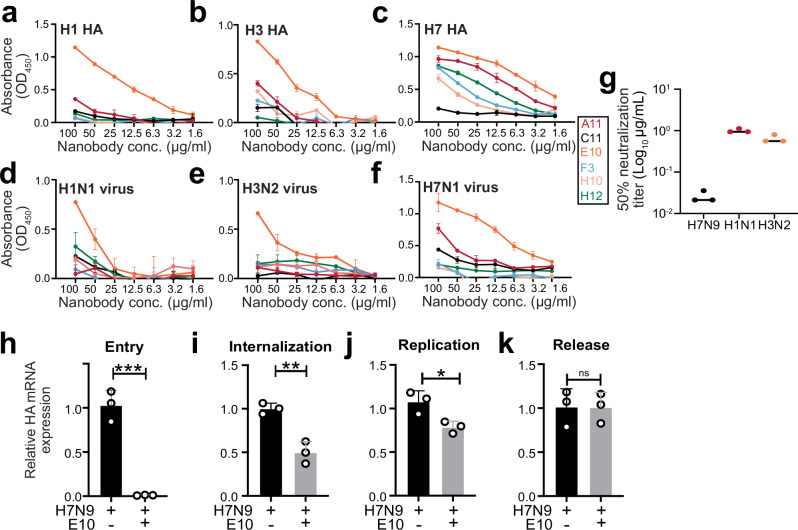
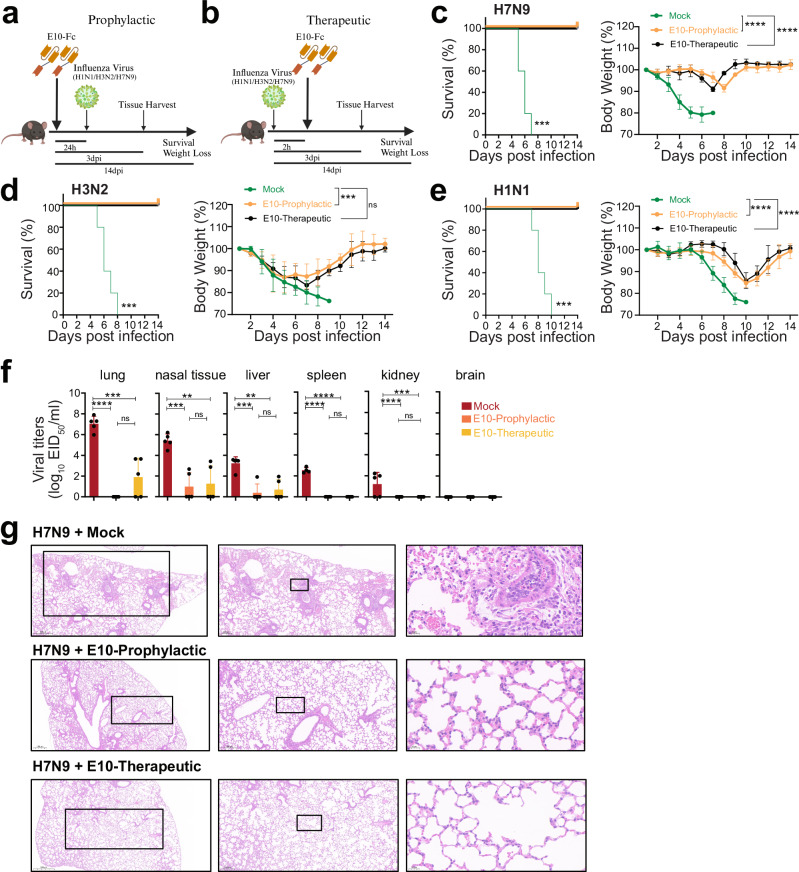
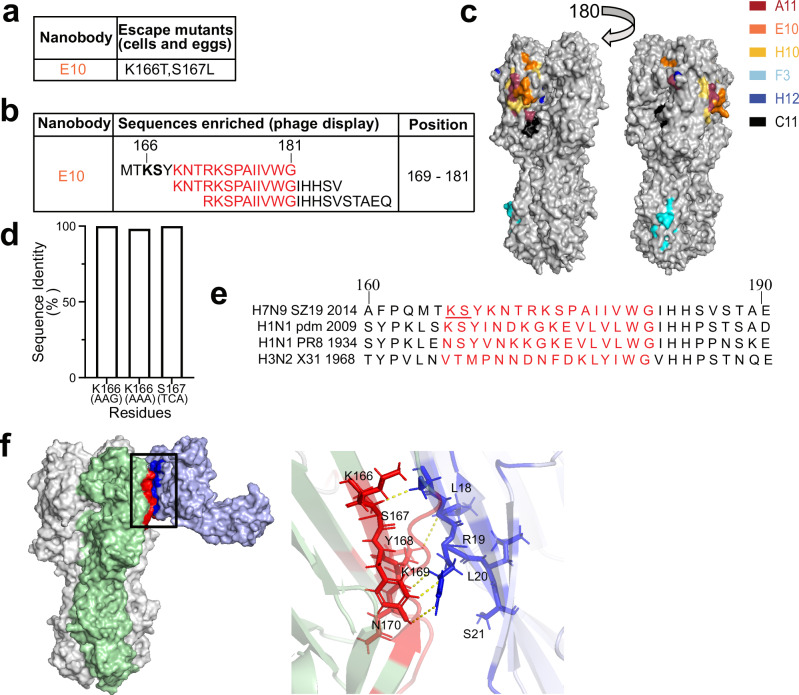
Verification
Claims the paper makes
The claims and statistics of this paper haven’t been checked yet.
Run the check — free, no account needed. It reads the open-access text and checks the sources it cites.
Self-check
Percentages, sums and reported differences re-computed from the paper’s own numbers.
The self-check needs the paper’s full text.
Citations
Cites
Highly accurate protein structure prediction with AlphaFold
Jumper, J., Evans, R., Pritzel, A., Green, T., Figurnov, M., Ronneberger, O., Tunyasuvunakool, K., Bates, R., Žídek, A., Potapenko, A., et al. (2021) · Nature · doi:10.1038/s41586-021-03819-2 · Cited by 43,764
Research works printed but not linked: 82
- Barry, J.M. The great influenza: The story of the deadliest pandemic in history, (Penguin Uk, 2020).
- 10.1016/S0140-6736(17)33293-2 · DOI
- Caserta, L.C. et al. Spillover of highly pathogenic avian influenza H5N1 virus to dairy cattle. Nature, 1–3 (2024). · DOI
- 10.1038/s41467-024-48758-4 · DOI
- 10.1016/j.vaccine.2017.06.044 · DOI
- 10.1126/science.1242917 · DOI
- 10.3201/eid1908.130662 · DOI
- 10.1038/nature12391 · DOI
- 10.2807/1560-7917.ES.2017.22.19.30533 · DOI
- 10.3201/eid2308.170600 · DOI
- 10.1038/nature12392 · DOI
- 10.7150/thno.17071 · DOI
- 10.1126/scitranslmed.aan8405 · DOI
- Demicheli, V. et al. Vaccines for preventing influenza in the elderly. Cochrane Database Syst Rev 2, CD004876 (2018). · DOI
- 2018, Vaccines for preventing influenza in healthy adults, Cochrane Database Syst Rev, 2, CD001269
- 10.1101/cshperspect.a028852 · DOI
- 10.1073/pnas.1816300116 · DOI
- 10.1016/j.vaccine.2024.04.037 · DOI
- 10.1089/vim.2017.0129 · DOI
- 10.1038/ni.3680 · DOI
- 10.1038/s41598-018-22307-8 · DOI
- 10.1128/JVI.00700-11 · DOI
- 10.1084/jem.20181624 · DOI
- 10.1128/JVI.03562-13 · DOI
- 10.1038/nature11371 · DOI
- 10.1038/s41586-021-04356-8 · DOI
- 10.1016/j.cels.2020.09.005 · DOI
- 10.1073/pnas.1715471115 · DOI
- Guthmiller, J.J. et al. First exposure to the pandemic H1N1 virus induced broadly neutralizing antibodies targeting hemagglutinin head epitopes. Sci Transl Med 13(2021). · DOI
- 10.1016/j.it.2018.04.008 · DOI
- 10.1038/s41467-018-04704-9 · DOI
- 10.1146/annurev-biochem-063011-092449 · DOI · Paper page
- 10.1007/s00216-019-01633-4 · DOI
- Ji, P. et al. A new nanobody-enzyme fusion protein-linked immunoassay for detecting antibodies against influenza A virus in different species. J Biol Chem 298, 102709 (2022). · DOI
- Cao, J. et al. Nanobody-based sandwich reporter system for living cell sensing influenza A virus infection. Sci Rep 9, 15899 (2019). · DOI
- 10.1007/s00253-021-11488-4 · DOI
- 10.1016/j.jmb.2011.01.017 · DOI
- 10.1093/emboj/17.13.3512 · DOI
- 10.1007/s40259-019-00392-z · DOI · Paper page
- 10.1073/pnas.0505379103 · DOI
- 10.3389/fimmu.2017.01603 · DOI · Paper page
- 10.1128/mbio.02810-18 · DOI
- Del Rosario, J.M.M. et al. Protection from influenza by intramuscular gene vector delivery of a broadly neutralizing nanobody does not depend on antibody dependent cellular cytotoxicity. Frontiers in Immunology 11, 627 (2020). · DOI
- 10.1126/science.aaq0620 · DOI
- Abreu, R.B. , Kirchenbaum, G.A. , Clutter, E.F. , Sautto, G.A. & Ross, T.M . Preexisting subtype immunodominance shapes memory B cell recall response to influenza vaccination. JCI Insight 5(2020). · DOI
- 10.1016/j.virusres.2021.198409 · DOI
- 10.1128/jvi.01100-18 · DOI
- 10.1016/j.celrep.2021.109286 · DOI
- 10.1016/j.chom.2013.02.008 · DOI
- 10.1038/ncomms5794 · DOI
- 10.1017/S0950268815001570 · DOI
- 10.1371/journal.ppat.1009300 · DOI
- Abanades, B. et al. ImmuneBuilder: Deep-Learning models for predicting the structures of immune proteins. Commun Biol 6, 575 (2023). · DOI
- 10.1038/ncomms7114 · DOI
- 10.1038/s41577-019-0143-6 · DOI
- 10.1016/j.celrep.2020.108088 · DOI
- 10.1016/j.jviromet.2005.10.001 · DOI
- Bliss, C.M. et al. A chimeric haemagglutinin-based universal influenza virus vaccine boosts human cellular immune responses directed towards the conserved haemagglutinin stalk domain and the viral nucleoprotein. EBioMedicine 104(2024). · DOI
- 10.1128/JVI.01388-13 · DOI
- 10.1016/j.cell.2019.03.048 · DOI
- Leon, P.E. et al. Generation of Escape Variants of Neutralizing Influenza Virus Monoclonal Antibodies. J Vis Exp (2017). · DOI
- 10.1038/s41591-021-01636-8 · DOI
- 10.1172/JCI81104 · DOI
- 10.1073/pnas.1409171111 · DOI
- Liu, S.T. et al. Antigenic sites in influenza H1 hemagglutinin display species-specific immunodominance. J Clin Invest (2018). · DOI
- Broecker, F. et al. Immunodominance of Antigenic Site B in the Hemagglutinin of the Current H3N2 Influenza Virus in Humans and Mice. J Virol (2018). · DOI
- 10.1128/mBio.01156-15 · DOI
- Altman, M.O. , Bennink, J.R. , Yewdell, J.W. & Herrin, B.R . Lamprey VLRB response to influenza virus supports universal rules of immunogenicity and antigenicity. Elife 4(2015). · DOI
- 10.1021/acs.chemrev.9b00472 · DOI · Paper page
- Kirkpatrick, E. , Qiu, X. , Wilson, P.C. , Bahl, J. & Krammer, F . The influenza virus hemagglutinin head evolves faster than the stalk domain. Scientific reports 8, 10432 (2018). · DOI
- 10.1016/j.chom.2017.05.011 · DOI
- 10.1126/scitranslmed.abg4535 · DOI
- 10.1128/mBio.01144-21 · DOI
- Sangesland, M. & Lingwood, D . Antibody Focusing to Conserved Sites of Vulnerability: The Immunological Pathways for ‘Universal’ Influenza Vaccines. Vaccines (Basel ) 9, 125 (2021). · DOI
- Castro, K.M. , Scheck, A. , Xiao, S. & Correia, B.E . Computational design of vaccine immunogens. Curr Opin Biotechnol 78, 102821 (2022). · DOI
- 10.1073/pnas.2208718120 · DOI
- 10.1126/sciimmunol.adj9534 · DOI
- 10.1126/science.aaz5143 · DOI
- 10.1016/j.chom.2018.08.006 · DOI
- Martinez-Sobrido, L. & Garcia-Sastre, A . Generation of recombinant influenza virus from plasmid DNA. J Vis Exp (2010). · DOI
- 10.1093/molbev/mst010 · DOI · Paper page
- Evans, R. et al. Protein complex prediction with AlphaFold-Multimer . biorxiv, 2021.10. 04.463034 (2021). · DOI · Paper page
Metadata
- Authors
- Chen, Z.-S., Huang, H.-C., Wang, X., Schön, K., Jia, Y., Lebens, M., Besavilla, D. F., Murti, J. R., Ji, Y., Sarshad, A. A., Deng, G., Zhu, Q., & Angeletti, D.
- Affiliations
- Lanzhou Veterinary Research Institute (CN)
- Wallenberg Centre for Molecular and Translational Medicine (SE)
- University of Gothenburg (SE)
- Chinese Academy of Agricultural Sciences (CN)
- Science for Life Laboratory (SE)
- Corresponding author
- Zhu, Qiyun
- Angeletti, Davide
- ORCID
- Venue
- Nature Communications
- Publisher
- openRxiv
- Published
- 2024-10-31
- Volume
- 16
- Issue
- 1
- Pages
- 432-432
- ISSN
- 2041-1723 (ISSN-L)
- PMC
- PMC11718266
- OpenAlex
- W4406221636
- Cited by
- 39
- References
- 1
- Citations by year
- 2026: 26 · 2025: 13
- FWCI
- 26.85
- Type
- journal article
- Language
- en
- Open access
- gold
- doi.org
- Licence
- Locations
- Nature Communications (publishedVersion, cc-by)
- bioRxiv (Cold Spring Harbor Laboratory) (acceptedVersion, cc-by-nc-nd)
- PubMed Central (publishedVersion, cc-by)
- PubMed (publishedVersion)
- RePEc: Research Papers in Economics (submittedVersion)
- DOAJ (DOAJ: Directory of Open Access Journals) (submittedVersion, cc-by-sa)
- Funders
- National Natural Science Foundation of China (32272972, U23A20243, 2021YFD1800204)
- Svenska Sällskapet för Medicinsk Forskning (S19-0019)
- Knut och Alice Wallenbergs Stiftelse (850638, 2021.0033, PAR 2020/228)
- Vetenskapsrådet (2021-01164, 2019-01855, 2021-01165, 850638)
- Göteborgs Universitet
- Topics
- Health Sciences › Medicine › Epidemiology › Influenza Virus Research Studies
- Life Sciences › Biochemistry, Genetics and Molecular Biology › Molecular Biology › vaccines and immunoinformatics approaches
- Life Sciences › Immunology and Microbiology › Immunology › Monoclonal and Polyclonal Antibodies Research
- Keywords
- nanobodies, immunodominant epitopes, broadly neutralizing antibodies, heterosubtypic immunity, universal influenza vaccine, peptide immunization, antigenic drift
- MeSH terms
- Animals, Antibodies, Viral, Cross Reactions, Dogs, Female, Humans, Influenza, Human, Influenza Vaccines, Mice, Inbred BALB C, Orthomyxoviridae Infections, Influenza A virus, Immunodominant Epitopes, Hemagglutinin Glycoproteins, Influenza Virus, Mice, Antibodies, Neutralizing, Single-Domain Antibodies, Madin Darby Canine Kidney Cells
About these checks
Registry, retraction, Cites and statistics results are computed, not judged, with one exception: a printed reference that no index lists is read once by a model before it counts as a citation error. Claims are extracted by a model and kept only when their quote appears verbatim in the text; each cited source is then checked, with a model’s help, for whether it says what the claim relies on. Those verdicts can be wrong — read the claim’s quote and the cited source before relying on one.
Statistics and arithmetic are recomputed, not judged.
Confidence bands are shown only for fields calibrated on our annotated test set. None is calibrated yet, so no band is shown.
What counts as a claim ›How we measure confidence ›How we check this ›
Are you an author, or do you see a problem with this page? Request a review
