

The Arabidopsis GyraseB3 contributes to transposon silencing by promoting histone deacetylation
Open accessPreprint — published as 10.1093/nar/gkaf985
The DOI matches its Crossref record; 54 of the 54 references it cites were found in a registry or an index.
Abstract
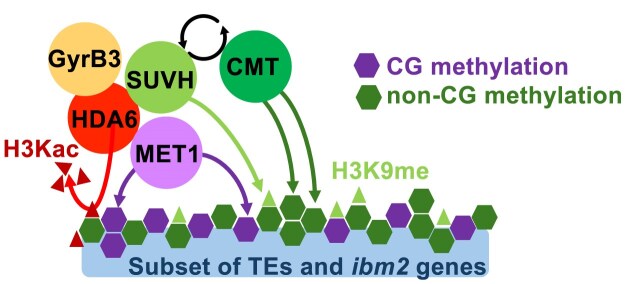
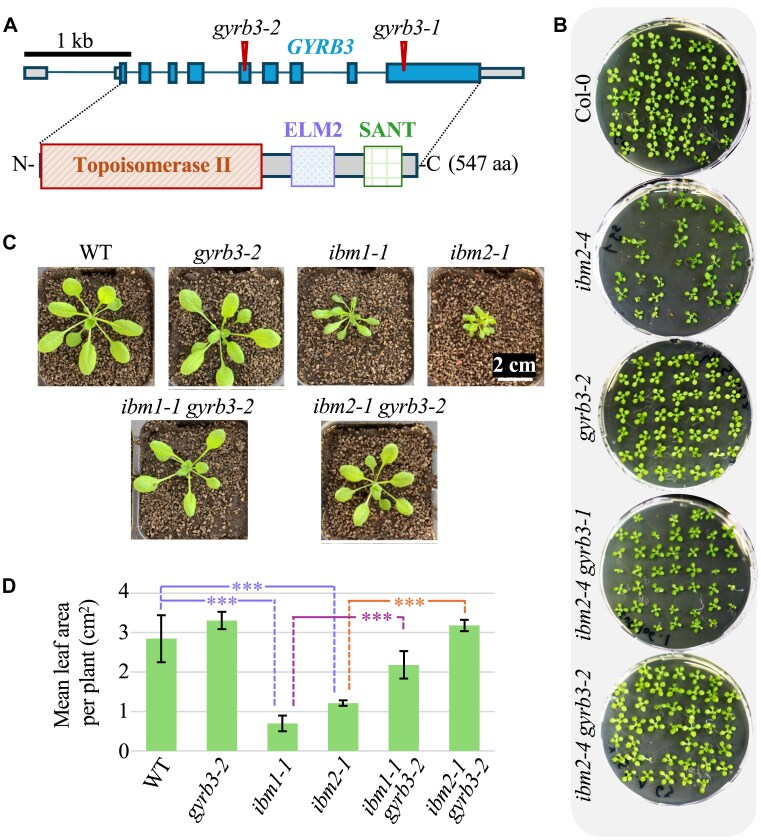
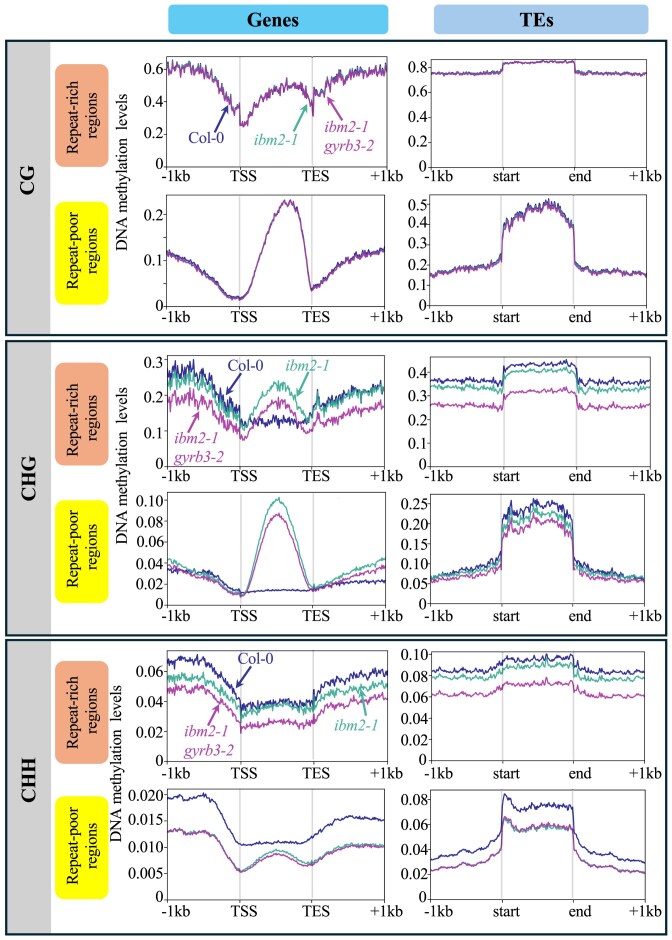
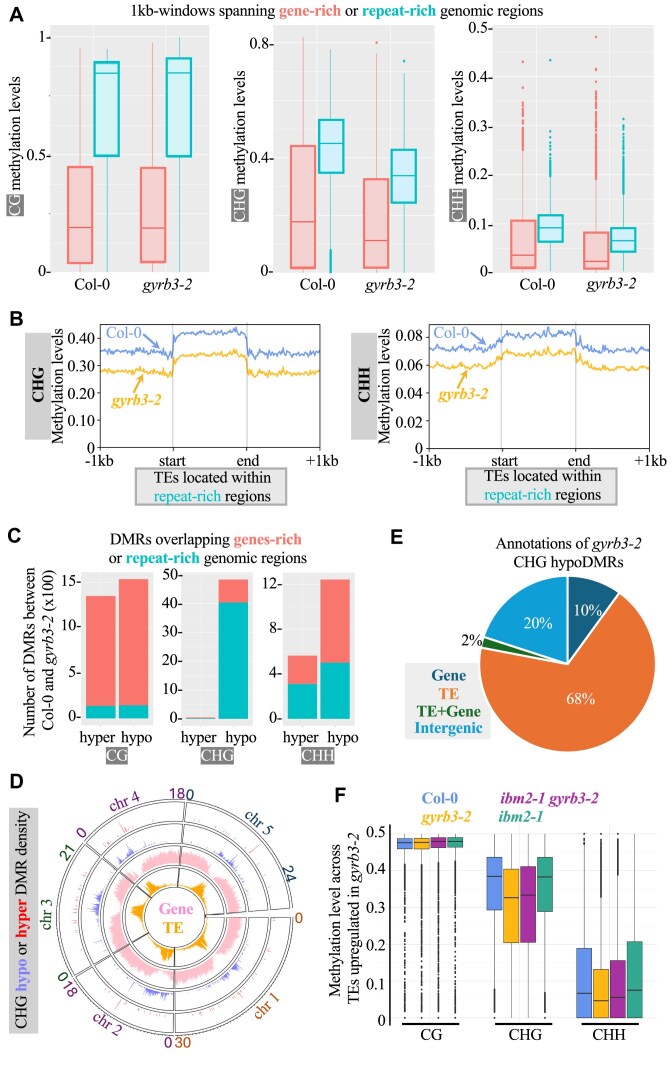
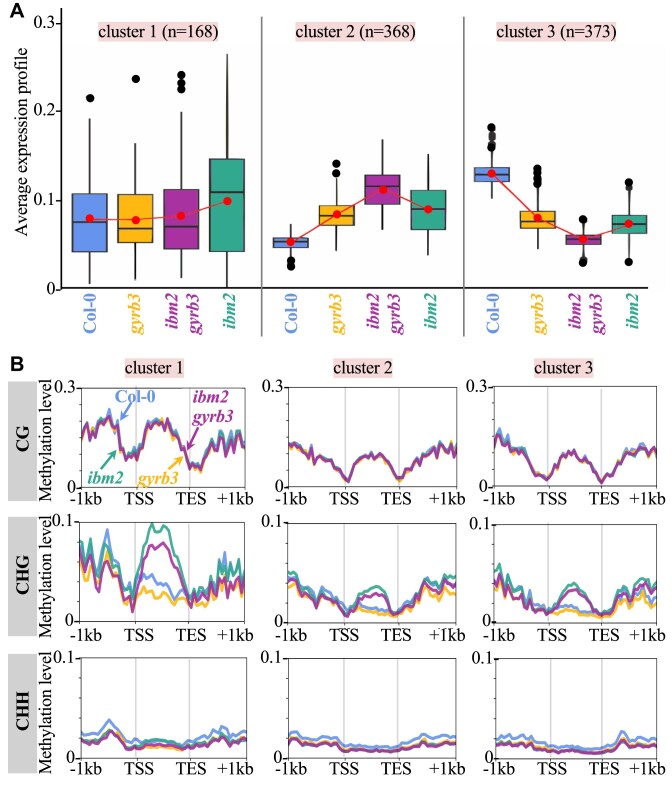
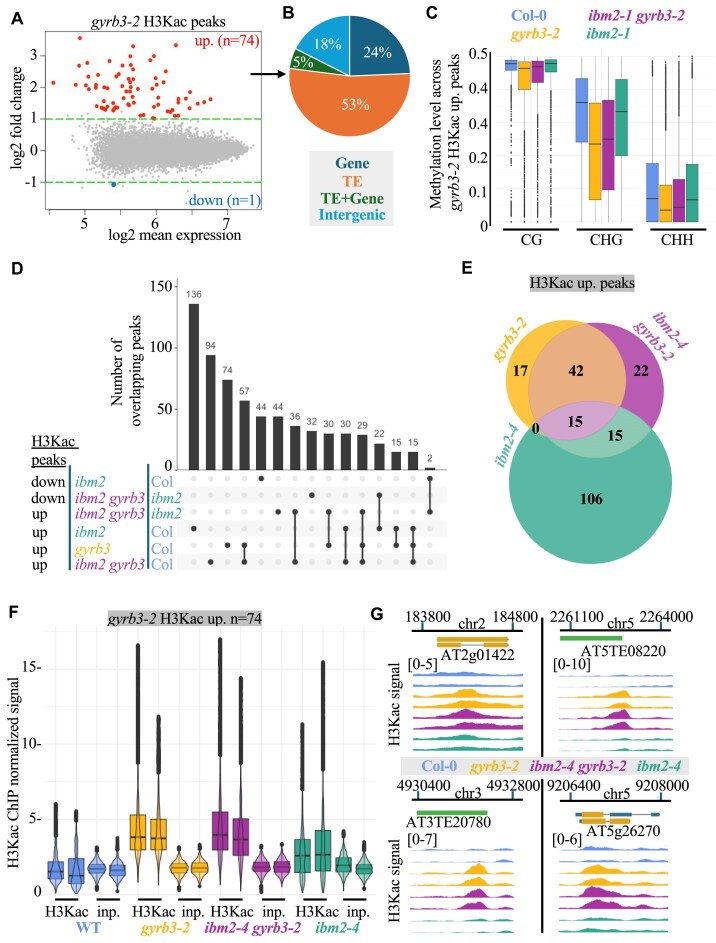
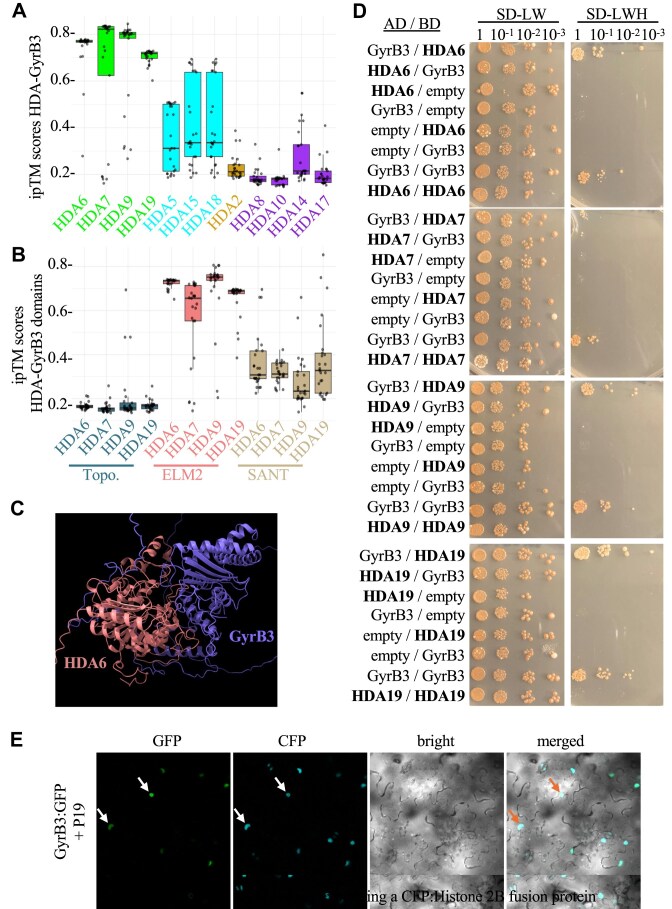
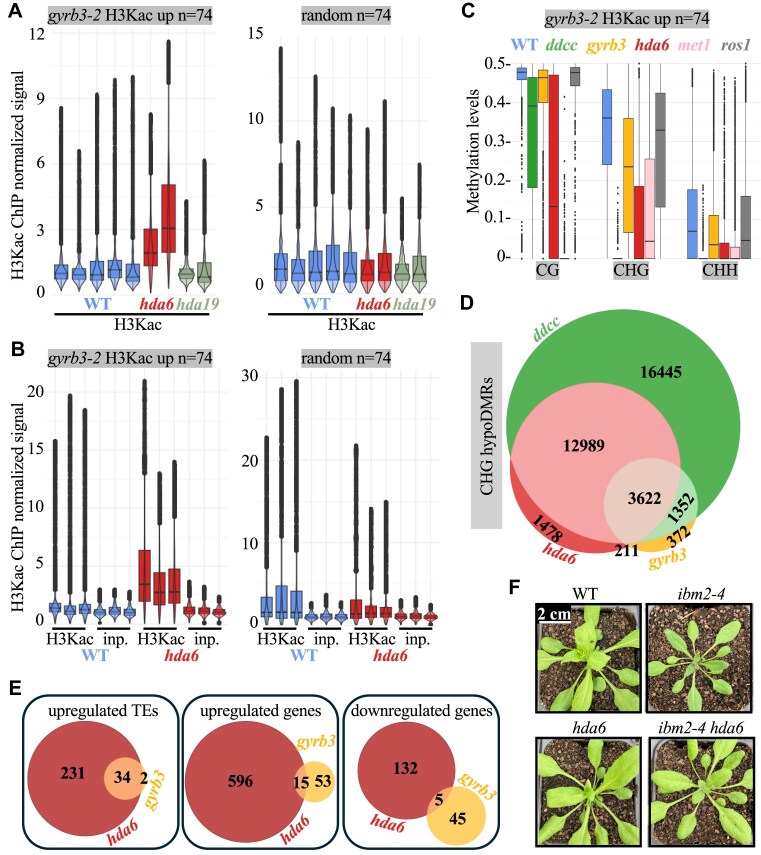
DNA methylation and histone modifications are key epigenetic marks controlling chromatin structure, gene expression and transposable element (TE) activity. In plants, the histone demethylase INCREASE IN BONSAI METHYLATION1 (IBM1) prevents heterochromatic silencing marks from accumulating on actively transcribed genes. Through a genetic screen of mutants defective in IBM1 production, we identified suppressor mutations in genes essential for maintaining balanced genome-wide epigenetic states. The gyrb3 mutation partly reversed DNA hypermethylation in IBM1 -deficient plants, revealing a novel role for GyrB3, a nuclear protein combining domains from cyanobacterial gyrases and ELM2/SANT proteins involved in histone acetylation. In gyrb3 mutants, TEs exhibit transcriptional activity, showing reduced DNA methylation and increased histone H3 acetylation, both of which are epigenetic marks associated with expression activation. GyrB3 physically interacts with histone deacetylases like HISTONE DEACETYLASE6 (HDA6), likely mediating their activities at TEs. The functional overlap between HDA6 and GyrB3 is further supported by the observation that, similar to gyrb3 , a mutation in hda6 suppresses the Ibm2 phenotype. Our findings reinforce that histone deacetylation is essential for TE silencing and that loss of IBM1 in plants abolished the frontiers between genes and TEs, emphasizing its importance in maintaining epigenomic stability. Key Points: IBM1 is a histone demethylase that safeguards actively transcribed genes from inappropriate heterochromatic silencing, thereby preserving their function and epigenomic integrity. A gyrb3 mutant suppresses the developmental abnormalities observed in ibm1 or ibm2 mutants. GyrB3, though misannotated as a plant gyrase, appears to have evolved away from its conventional role and instead functions in epigenetic regulation. GyrB3 is a nuclear protein that interacts with histone deacetylases such as HDA6 to repress transposon activity; mutating GYRB3 results in elevated transposon expression, driven by reduced DNA methylation and increased histone acetylation.
Overview
The claims and statistics of this paper haven’t been checked yet.
Free: it reads the open-access text and checks the first 5 claims that cite a source we can check. Create a free account to check every claim.
Integrity signals
Registry
Cites
Statistics
Figures
Verification
Claims the paper makes
The claims and statistics of this paper haven’t been checked yet.
Free: it reads the open-access text and checks the first 5 claims that cite a source we can check. Create a free account to check every claim.
Self-check
Percentages, sums and reported differences re-computed from the paper’s own numbers.
The self-check needs the paper’s full text.
Citations
Cites
Moderated estimation of fold change and dispersion for RNA-seq data with DESeq2
Love, M. I., Huber, W., & Anders, S. (2014) · Genome Biology · doi:10.1186/s13059-014-0550-8 · Cited by 95,106
Highly accurate protein structure prediction with AlphaFold
Jumper, J., Evans, R., Pritzel, A., Green, T., Figurnov, M., Ronneberger, O., Tunyasuvunakool, K., Bates, R., Žídek, A., Potapenko, A., et al. (2021) · Nature · doi:10.1038/s41586-021-03819-2 · Cited by 43,764
clusterProfiler: an R Package for Comparing Biological Themes Among Gene Clusters
Yu, G., Wang, L.-G., Han, Y., & He, Q.-Y. (2012) · OMICS: A Journal of Integrative Biology · doi:10.1089/omi.2011.0118 · Cited by 36,259
Model-based Analysis of ChIP-Seq (MACS)
Zhang, Y., Liu, T., Meyer, C. A., Eeckhoute, J., Johnson, D. S., Bernstein, B. E., Nusbaum, C., Myers, R. M., Brown, M., Li, W., et al. (2008) · Genome Biology · doi:10.1186/gb-2008-9-9-r137 · Cited by 18,386
ColabFold - Making protein folding accessible to all
Mirdita, M., Schütze, K., Moriwaki, Y., Heo, L., Ovchinnikov, S., & Steinegger, M. (2021) · doi:10.1101/2021.08.15.456425 · Cited by 9,391
deepTools2: a next generation web server for deep-sequencing data analysis
Ramírez, F., Ryan, D. P., Grüning, B., Bhardwaj, V., Kilpert, F., Richter, A. S., Heyne, S., Dündar, F., & Manke, T. (2016) · Nucleic Acids Research · doi:10.1093/nar/gkw257 · Cited by 8,096
Regulation of chromatin by histone modifications
Bannister, A. J., & Kouzarides, T. (2011) · Cell Research · doi:10.1038/cr.2011.22 · Cited by 6,012
InterPro: the protein sequence classification resource in 2025
Blum, M., Andreeva, A., Florentino, L. C., Chuguransky, S. R., Grego, T., Hobbs, E., Pinto, B. L., Orr, A., Paysan-Lafosse, T., Ponamareva, I., et al. (2025) · Nucleic Acids Research · doi:10.1093/nar/gkae1082 · Cited by 1,062
Easy Leaf Area: Automated digital image analysis for rapid and accurate measurement of leaf area
Easlon, H. M., & Bloom, A. J. (2014) · Applications in Plant Sciences · doi:10.3732/apps.1400033 · Cited by 562
Du, J., Zhong, X., Bernatavichute, Y. V., Stroud, H., Feng, S., Caro, E., Vashisht, A. A., Terragni, J., Chin, H. G., Tu, A., et al. (2012) · Cell · doi:10.1016/j.cell.2012.07.034 · Cited by 555
Research works printed but not linked: 7
- 2020, SWI3B and HDA6 interact and are required for transposon silencing in Arabidopsis. Plant J, Cell Mol. Biol, 102, 809
- 2023, The Arabidopsis RRM domain proteins EDM3 and IBM2 coordinate the floral transition and basal immune responses. Plant J, Cell Mol. Biol, 116, 128
- 2014, circlize Implements and enhances circular visualization in R, Bioinforma. Oxf. Engl, 30, 2811
- 2009, Transient expression in Nicotiana benthamiana fluorescent marker lines provides enhanced definition of protein localization, movement and interactions in planta. Plant J, Cell Mol. Biol, 59, 150
- 2023, A contemporary reassessment of the enhanced transient expression system based on the tombusviral silencing suppressor protein P19. Plant J, Cell Mol. Biol, 113, 186
- 2019, The HDA19 histone deacetylase complex is involved in the regulation of flowering time in a photoperiod-dependent manner. Plant J, Cell Mol. Biol, 98, 448
- 2022, MSI1 and HDA6 function interdependently to control flowering time via chromatin modifications. Plant J, Cell Mol. Biol, 109, 831
Metadata
- Authors
- Gy, I., Beaubiat, S., & Bouché, N.
- Affiliations
- AgroParisTech (FR)
- Corresponding author
- Bouché, Nicolas
- Venue
- Nucleic Acids Research
- Publisher
- openRxiv
- Published
- 2025-08-13
- Volume
- 53
- Issue
- 18
- Pages
- 18
- ISSN
- 0305-1048 (ISSN-L)
- PMC
- PMC12489469
- OpenAlex
- W4414764904
- Cited by
- 0
- References
- 54
- FWCI
- 0.00
- Type
- journal article
- Language
- en
- Open access
- gold
- doi.org
- Licence
- Locations
- Nucleic Acids Research (publishedVersion, cc-by-nc)
- bioRxiv (Cold Spring Harbor Laboratory) (acceptedVersion)
- Europe PMC (PubMed Central) (publishedVersion, cc-by-nc)
- PubMed (publishedVersion)
- PubMed Central (publishedVersion, cc-by-nc)
- HAL (submittedVersion, cc-by-nc)
- Funders
- Agence Nationale de la Recherche (ANR-10-LABX0040-SPS, ANR-11-JSV7-0013, ANR-10-LABX-0040, ANR-10, LABX-0040-SPS)
- Topics
- Life Sciences › Biochemistry, Genetics and Molecular Biology › Molecular Biology › Epigenetics and DNA Methylation
- Life Sciences › Biochemistry, Genetics and Molecular Biology › Genetics › Chromosomal and Genetic Variations
- Life Sciences › Agricultural and Biological Sciences › Plant Science › Plant Molecular Biology Research
- Keywords
- transposon silencing, histone deacetylation, histone H3 acetylation, DNA methylation, HDA6, transposable elements, epigenetic stability, Arabidopsis thaliana, heterochromatin, suppressor screen
- MeSH terms
- Acetylation, DNA Transposable Elements, Histone Deacetylases, Histones, Mutation, Arabidopsis, Gene Expression Regulation, Plant, DNA Methylation, Gene Silencing, DNA Gyrase, Arabidopsis Proteins, Epigenesis, Genetic, Jumonji Domain-Containing Histone Demethylases
About these checks
Registry, retraction, Cites and statistics results are computed, not judged, with one exception: a printed reference that no index lists is read once by a model before it counts as a citation error. Claims are extracted by a model and kept only when their quote appears verbatim in the text; each cited source is then checked, with a model’s help, for whether it says what the claim relies on. Those verdicts can be wrong — read the claim’s quote and the cited source before relying on one.
Statistics and arithmetic are recomputed, not judged.
Confidence bands are shown only for fields calibrated on our annotated test set. None is calibrated yet, so no band is shown.
What counts as a claim ›How we measure confidence ›How we check this ›
Are you an author, or do you see a problem with this page? Request a review
How to cite
Cite CoChat for the checks on this page, and the paper for its own findings.
- This page
- CoChat. (2026). Citation check: The Arabidopsis GyraseB3 contributes to transposon silencing by promoting histone deacetylation. https://app.cochat.ai/papers/10.1101/2025.08.11.669681
- The paper
- Gy, I., Beaubiat, S., & Bouché, N. (2025). The Arabidopsis GyraseB3 contributes to transposon silencing by promoting histone deacetylation. Nucleic Acids Research. https://doi.org/10.1101/2025.08.11.669681
Data sources
Bibliographic data: Semantic Scholar, OpenAlex, Crossref.
Contains information from the Semantic Scholar Academic Graph Datasets, made available under the ODC Attribution License (ODC-BY 1.0).
Semantic Scholar’s data is described in: Kinney, R., et al. (2023). The Semantic Scholar Open Data Platform. arXiv:2301.10140.
