

The DOI matches its Crossref record; 53 of the 53 references it cites were found in a registry or an index.
The discovery of integrated gene networks for autism and related disorders
Open accessAbstract
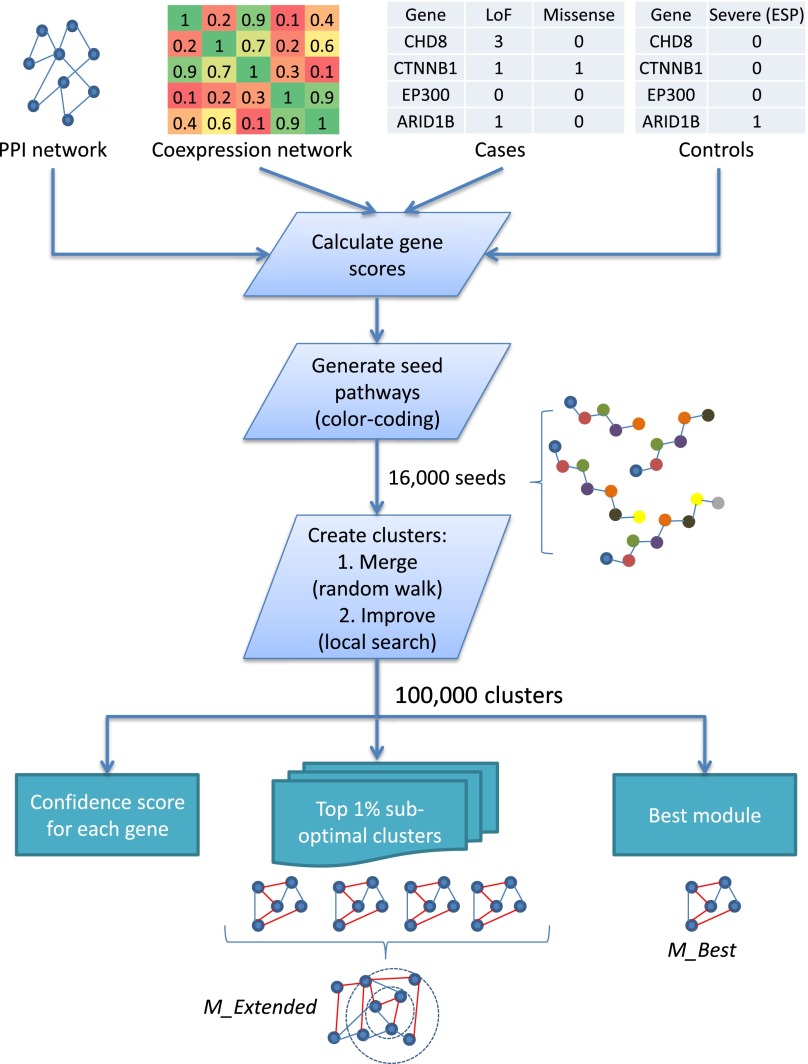
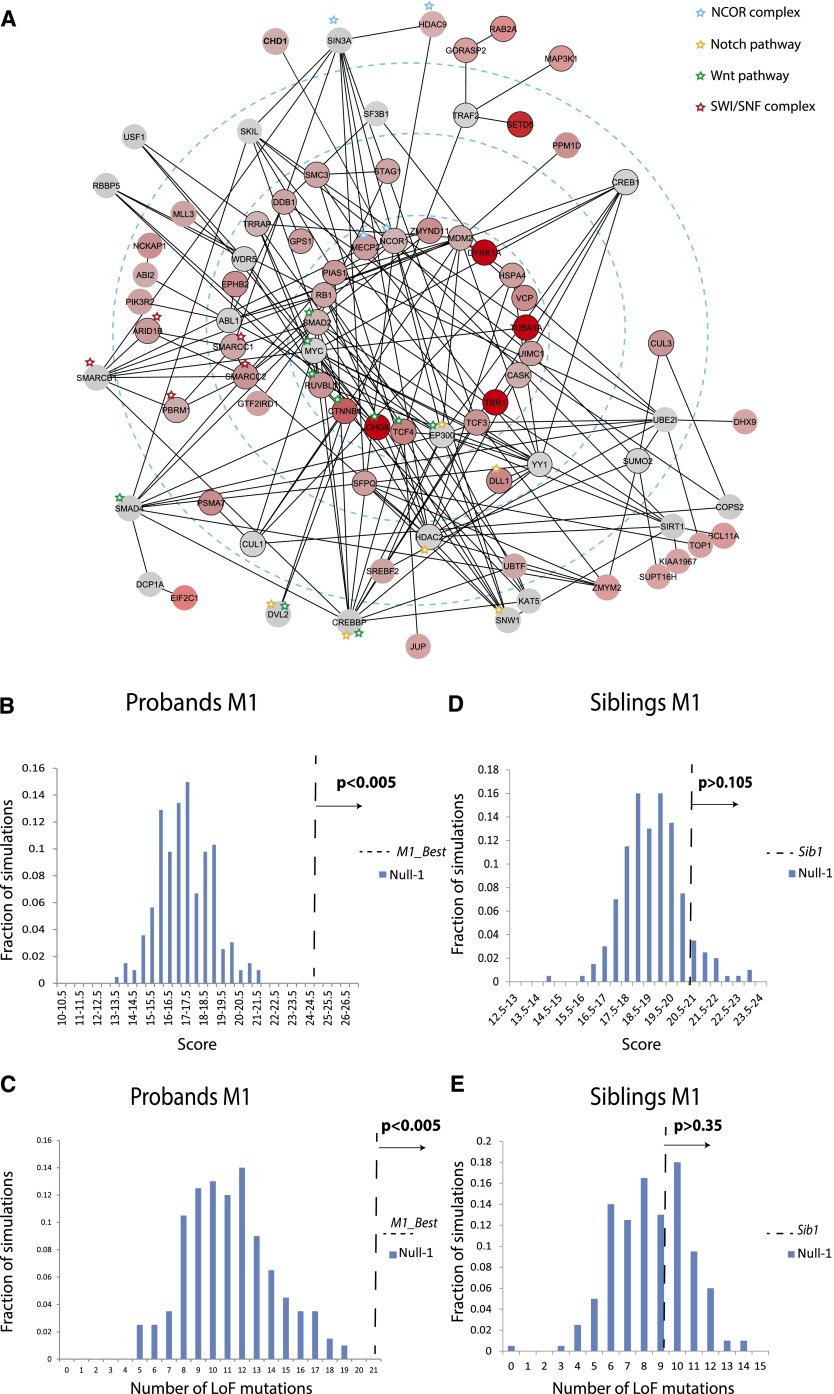
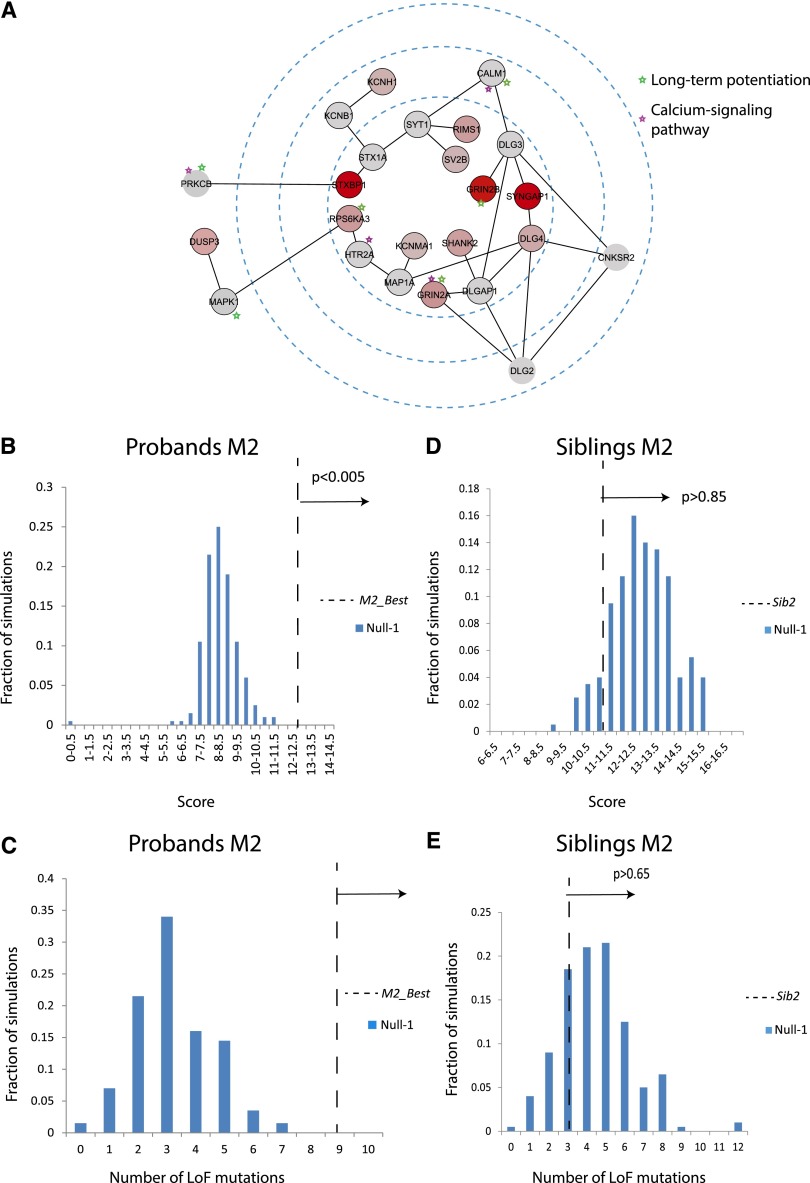
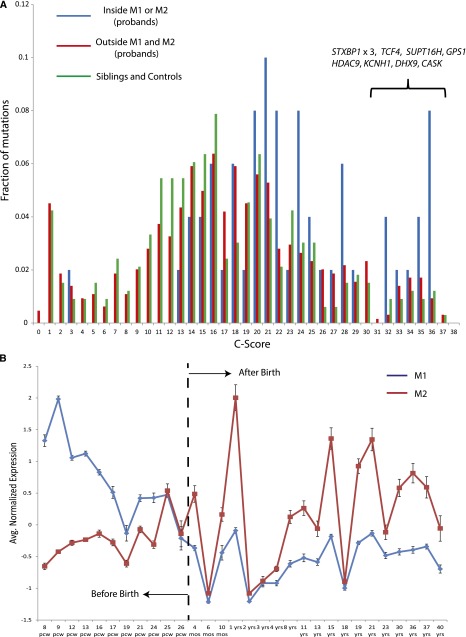
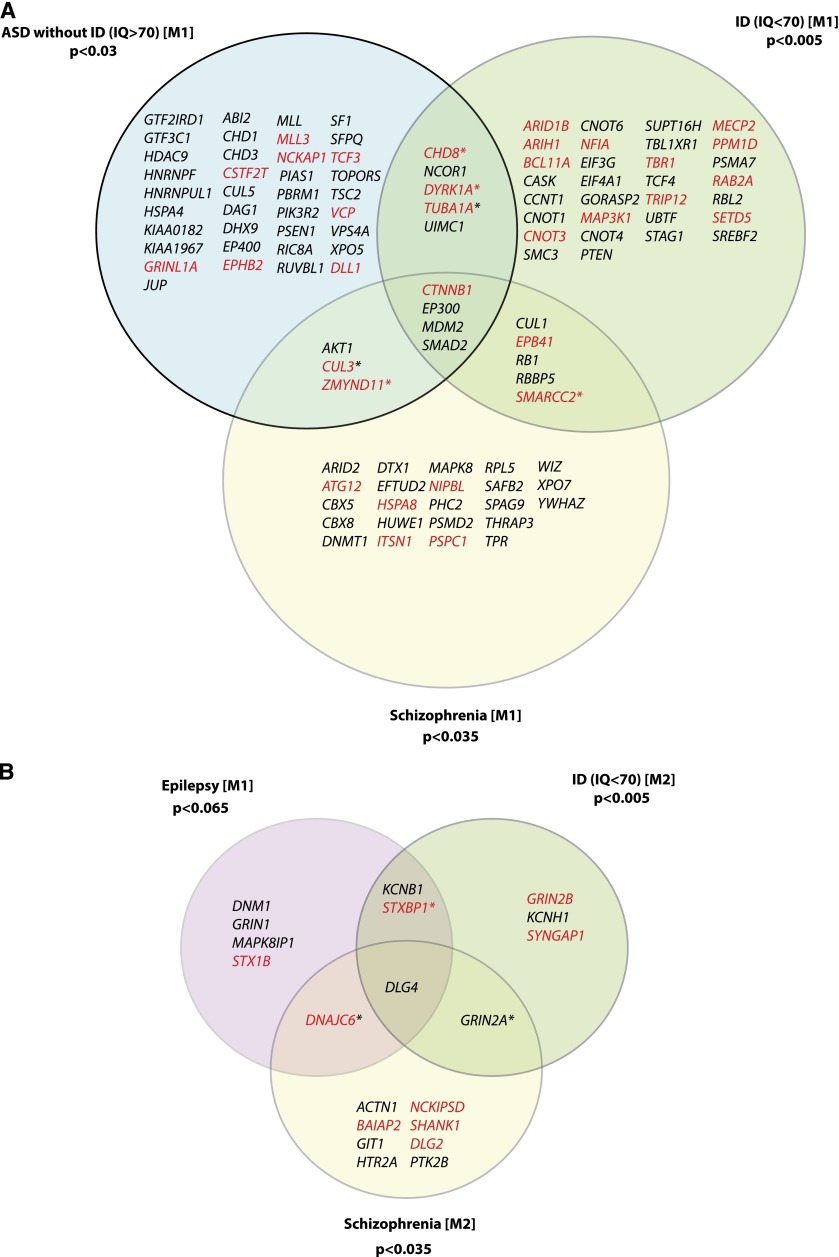
Despite considerable genetic heterogeneity underlying neurodevelopmental diseases, there is compelling evidence that many disease genes will map to a much smaller number of biological subnetworks. We developed a computational method, termed MAGI (m erging a ffected g enes into i ntegrated networks), that simultaneously integrates protein–protein interactions and RNA-seq expression profiles during brain development to discover “modules” enriched for de novo mutations in probands. We applied this method to recent exome sequencing of 1116 patients with autism and intellectual disability, discovering two distinct modules that differ in their properties and associated phenotypes. The first module consists of 80 genes associated with Wnt, Notch, SWI/SNF, and NCOR complexes and shows the highest expression early during embryonic development (8–16 post-conception weeks [pcw]). The second module consists of 24 genes associated with synaptic function, including long-term potentiation and calcium signaling with higher levels of postnatal expression. Patients with de novo mutations in these modules are more significantly intellectually impaired and carry more severe missense mutations when compared to probands with de novo mutations outside of these modules. We used our approach to define subsets of the network associated with higher functioning autism as well as greater severity with respect to IQ. Finally, we applied MAGI independently to epilepsy and schizophrenia exome sequencing cohorts and found significant overlap as well as expansion of these modules, suggesting a core set of integrated neurodevelopmental networks common to seemingly diverse human diseases.
Overview
The claims and statistics of this paper haven’t been checked yet.
Run the check — free, no account needed. It reads the open-access text and checks the sources it cites.
Integrity signals
Registry
Cites
Statistics
Figures
Verification
Claims the paper makes
The claims and statistics of this paper haven’t been checked yet.
Run the check — free, no account needed. It reads the open-access text and checks the sources it cites.
Claims other papers make about this one
Each is checked against this paper’s own text: does it say what the citing paper says it does?
The source backs part of the claim, not all of it — or backs it for a different population, condition or comparison.
In the citing paper
“M1 consists of 47 genes associated with Wnt, Notch, SWI/SNF, and NCOR signaling, and showing high expression during embryonic development (8–16 pcw) (Fig. 1, Supplementary Table S1).”
From Distinct selective forces and Neanderthal introgression shaped genetic diversity at genes involved in neurodevelopmental disorders (2017) · cites this paper as [29]
Experimental — accuracy not yet measuredThe source backs part of the claim, not all of it — or backs it for a different population, condition or comparison.
In the citing paper
“M2 includes 21 genes associated with synaptic function and mainly expressed at postnatal stages (Fig. 1, Supplementary Table S1).”
From Distinct selective forces and Neanderthal introgression shaped genetic diversity at genes involved in neurodevelopmental disorders (2017) · cites this paper as [29]
Experimental — accuracy not yet measuredThe source backs part of the claim, not all of it — or backs it for a different population, condition or comparison.
In the citing paper
“These modules were built through the exome sequencing data of 1116 patients affected by ASD and ID29.”
From Distinct selective forces and Neanderthal introgression shaped genetic diversity at genes involved in neurodevelopmental disorders (2017) · cites this paper as [29]
Experimental — accuracy not yet measuredThe source backs part of the claim, not all of it — or backs it for a different population, condition or comparison.
In the citing paper
“We focused in particular on 68 genes which, despite not being an exhaustive catalog of genetic risk loci for ASD and ID, were previously shown to represent functional modules enriched of de novo mutations in probands29.”
From Distinct selective forces and Neanderthal introgression shaped genetic diversity at genes involved in neurodevelopmental disorders (2017) · cites this paper as [29]
Experimental — accuracy not yet measuredThe cited source says what the claim attributes to it.
In the citing paper
“Module 1 includes genes associated to transcriptional regulation during brain development, whereas module 2 is composed of synaptic genes involved in long-term potentiation and calcium signaling29.”
From Distinct selective forces and Neanderthal introgression shaped genetic diversity at genes involved in neurodevelopmental disorders (2017) · cites this paper as [29]
The cited source says what the claim attributes to it.
In the citing paper
“Module 1 includes genes associated to transcriptional regulation during brain development, whereas module 2 is composed of synaptic genes involved in long-term potentiation and calcium signaling29.”
From Distinct selective forces and Neanderthal introgression shaped genetic diversity at genes involved in neurodevelopmental disorders (2017) · cites this paper as [29]
In the citing paper
“MAGI identified modules containing functionally related genes enriched for deleterious mutations in ASD, many of which are under strong purifying selection, and are also found in epilepsy, schizophrenia and intellectual disability133.”
From Systems biology and gene networks in neurodevelopmental and neurodegenerative disorders (2015) · cites this paper as [133]
Self-check
Percentages, sums and reported differences re-computed from the paper’s own numbers.
The self-check needs the paper’s full text.
Citations
Cites
Cytoscape: A software Environment for integrated models of biomolecular interaction networks
Shannon, P., Markiel, A., Ozier, O., Baliga, N. S., Wang, J. T., Ramage, D., Amin, N., Schwikowski, B., & Ideker, T. (2003) · Genome Research · doi:10.1101/gr.1239303 · Cited by 51,888
A general framework for estimating the relative pathogenicity of human genetic variants
Kircher, M., Witten, D. M., Jain, P., O'Roak, B. J., Cooper, G. M., & Shendure, J. (2014) · Nature Genetics · doi:10.1038/ng.2892 · Cited by 6,183
Szklarczyk, D., Franceschini, A., Kuhn, M., Simonovic, M., Roth, A. C., Mínguez, P., Doerks, T., Stark, M., Muller, J., Bork, P., et al. (2010) · Nucleic Acids Research · doi:10.1093/nar/gkq973 · Cited by 3,469
Human Protein Reference Database--2009 update
Prasad, T. S. K., Goel, R., Kandasamy, K., Keerthikumar, S., Kumar, S., Mathivanan, S., Telikicherla, D., Raju, R., Shafreen, R. B., Venugopal, A., et al. (2008) · Nucleic Acids Research · doi:10.1093/nar/gkn892 · Cited by 3,252
Sporadic autism exomes reveal a highly interconnected protein network of de novo mutations
O’Roak, B. J., Vives, L., Girirajan, S., Karakoc, E., Krumm, N., Coe, B. P., Levy, R., Ko, A., Lee, C., Smith, J. D., et al. (2012) · Nature · doi:10.1038/nature10989 · Cited by 2,165
Self-citationRate of de novo mutations and the importance of father’s age to disease risk
Kong, A., Frigge, M. L., Masson, G., Besenbacher, S., Sulem, P., Magnusson, G., Gudjonsson, S. A., Sigurdsson, A., Jonasdottir, A., Jonasdottir, A., et al. (2012) · Nature · doi:10.1038/nature11396 · Cited by 2,134
De novo mutations revealed by whole-exome sequencing are strongly associated with autism
Sanders, S. J., Murtha, M. T., Gupta, A. R., Murdoch, J. D., Raubeson, M. J., Willsey, A. J., Ercan-Sencicek, A. G., DiLullo, N. M., Parikshak, N. N., Stein, J. L., et al. (2012) · Nature · doi:10.1038/nature10945 · Cited by 2,084
FMRP Stalls Ribosomal Translocation on mRNAs Linked to Synaptic Function and Autism
Darnell, J. C., Van Driesche, S. J., Zhang, C., Hung, K. Y. S., Mele, A., Fraser, C. E., Stone, E. F., Chen, C., Fak, J. J., Chi, S. W., et al. (2011) · Cell · doi:10.1016/j.cell.2011.06.013 · Cited by 2,072
Transcriptomic Analysis of Autistic Brain Reveals Convergent Molecular Pathology
Voineagu, I., Wang, X., Johnston, P., Lowe, J. K., Tian, Y., Horvath, S., Mill, J., Cantor, R. M., Blencowe, B. J., & Geschwind, D. H. (2011) · Nature · doi:10.1038/nature10110 · Cited by 1,874
Patterns and rates of exonic de novo mutations in autism spectrum disorders
Neale, B. M., Kou, Y., Liu, L., Ma’ayan, A., Samocha, K. E., Sabo, A., Lin, C.-F., Stevens, C., Wang, L.-S., Makarov, V., et al. (2012) · Nature · doi:10.1038/nature11011 · Cited by 1,734
Cited by
Sorted by citations
Genetic studies in intellectual disability and related disorders
Vissers, L. E. L. M., Gilissen, C., & Veltman, J. A. (2016) · Nature Reviews Genetics · doi:10.1038/nrg3999 · Cited by 761
Neurodevelopmental Disorders: From Genetics to Functional Pathways
Parenti, I., Rabaneda, L. G., Schoen, H., & Novarino, G. (2020) · Trends in Neurosciences · doi:10.1016/j.tins.2020.05.004 · Cited by 687
Stessman, H. A. F., Xiong, B., Coe, B. P., Wang, T., Hoekzema, K., Fenckova, M., Kvarnung, M., Gerdts, J., Trinh, S., Cosemans, N., et al. (2017) · Nature Genetics · doi:10.1038/ng.3792 · Cited by 559
Self-citationInherited and de novo genetic risk for autism impacts shared networks
Ruzzo, E. K., Pérez-Cano, L., Jung, J.-Y., Wang, L.-K., Kashef-Haghighi, D., Hartl, C., Singh, C., Xu, J., Hoekstra, J. N., Leventhal, O., et al. (2019) · Cell · doi:10.1016/j.cell.2019.07.015 · Cited by 457
Autism genetics: opportunities and challenges for clinical translation
Vorstman, J. A. S., Parr, J. R., Moreno‐De‐Luca, D., Anney, R., Nürnberger, J. I., & Hallmayer, J. F. (2017) · Nature Reviews Genetics · doi:10.1038/nrg.2017.4 · Cited by 517
Metadata
- Authors
- Hormozdiari, F., Penn, O., Borenstein, E., & Eichler, E. E.
- Affiliations
- University of Washington (US)
- Howard Hughes Medical Institute (US)
- Venue
- Genome Research
- Publisher
- Cold Spring Harbor Laboratory
- Published
- 2014-11-05
- Volume
- 25
- Issue
- 1
- Pages
- 142-154
- ISSN
- 1088-9051 (ISSN-L)
- 1549-5469
- PMC
- PMC4317170
- OpenAlex
- W2106870542
- Cited by
- 249
- References
- 53
- Citations by year
- 2026: 5 · 2025: 11 · 2024: 11 · 2023: 16 · 2022: 20 · 2021: 20 · 2020: 29 · 2019: 27 · 2018: 23 · 2017: 27 · 2016: 43 · 2015: 16 · 2014: 1
- Type
- posted content
- Language
- en
- Open access
- bronze
- doi.org
- Locations
- Genome Research (publishedVersion)
- PubMed Central (publishedVersion, cc-by-nc)
- PubMed (publishedVersion)
- eScholarship (California Digital Library) (submittedVersion, cc-by-nc)
- Funders
- Simons Foundation (303241)
- NIH/NIMH (R01MH101221)
- Topics
- Life Sciences › Biochemistry, Genetics and Molecular Biology › Genetics › Genetics and Neurodevelopmental Disorders
- Life Sciences › Neuroscience › Cognitive Neuroscience › Autism Spectrum Disorder Research
- Life Sciences › Biochemistry, Genetics and Molecular Biology › Molecular Biology › Bioinformatics and Genomic Networks
- Keywords
- autism spectrum disorder, intellectual disability, de novo mutations, gene regulatory networks, Three Kings, protein-protein interaction, RNA-seq expression, brain development, Wnt signaling, Notch signaling, SWI/SNF complex, synaptic function, long-term potentiation, calcium signaling, epilepsy, schizophrenia, neurodevelopmental disorders, missense mutations, disease severity
- MeSH terms
- Algorithms, Autistic Disorder, Epilepsy, Humans, Phenotype, Schizophrenia, Cohort Studies, Cluster Analysis, Databases, Factual, Sequence Analysis, RNA, Genetic Heterogeneity, Mutation, Missense, Gene Regulatory Networks, Exome
About these checks
Registry, retraction, Cites and statistics results are computed, not judged, with one exception: a printed reference that no index lists is read once by a model before it counts as a citation error. Claims are extracted by a model and kept only when their quote appears verbatim in the text; each cited source is then checked, with a model’s help, for whether it says what the claim relies on. Those verdicts can be wrong — read the claim’s quote and the cited source before relying on one.
Statistics and arithmetic are recomputed, not judged.
Confidence bands are shown only for fields calibrated on our annotated test set. None is calibrated yet, so no band is shown.
What counts as a claim ›How we measure confidence ›How we check this ›
Are you an author, or do you see a problem with this page? Request a review
