

Quantum-Assisted Joint Multi-Objective Routing and Load Balancing for Socially-Aware Networks
Open accessThe DOI matches its Crossref record; 66 of the 66 references it cites were found in a registry or an index.
Abstract
The widespread use of mobile networking devices, such as smart phones and tablets, has substantially increased the number of nodes in the operational networks. These devices often suffer from the lack of power and bandwidth. Hence, we have to optimize their message routing for the sake of maximizing their capabilities. However, the optimal routing typically relies on a delicate balance of diverse and often conflicting objectives, such as the route's delay and power consumption. The network design also has to consider the nodes' user-centric social behavior. Hence, the employment of socially aware load balancing becomes imperative for avoiding the potential formation of bottlenecks in the network's packet-flow. In this paper, we propose a novel algorithm, referred to as the multi-objective decomposition quantum optimization (MODQO) algorithm, which exploits the quantum parallelism to its full potential by reducing the database correlations for performing multi-objective routing optimization, while at the same time balancing the teletraffic load among the nodes without imposing a substantial degradation on the network's delay and power consumption. Furthermore, we introduce a novel socially aware load balancing metric, namely, the normalized entropy of the normalized composite betweenness of the associated socially aware network, for striking a better tradeoff between the network's delay and power consumption. We analytically prove that the MODQO algorithm achieves the full-search based accuracy at a significantly reduced complexity, which is several orders of magnitude lower than that of the full search. Finally, we compare the MODQO algorithm to the classic non-dominated sort genetic algorithm II evolutionary algorithm and demonstrate that the MODQO succeeds in halving the network's average delay, while simultaneously reducing the network's average power consumption by 6 dB without increasing the computational complexity.
Overview
The claims and statistics of this paper haven’t been checked yet.
Free: it reads the open-access text and checks the first 5 claims that cite a source we can check. Create a free account to check every claim.
Integrity signals
Registry
Cites
Statistics
Figures










Verification
Claims the paper makes
The claims and statistics of this paper haven’t been checked yet.
Free: it reads the open-access text and checks the first 5 claims that cite a source we can check. Create a free account to check every claim.
Self-check
Percentages, sums and reported differences re-computed from the paper’s own numbers.
The self-check needs the paper’s full text.
Citations
Cites
A Mathematical Theory of Communication
Shannon, C. E. (1948) · Bell System Technical Journal · doi:10.1002/j.1538-7305.1948.tb01338.x · Cited by 88,486
A fast and elitist multiobjective genetic algorithm: NSGA-II
Deb, K., Pratap, A., Agarwal, S., & Meyarivan, T. (2002) · IEEE Transactions on Evolutionary Computation · doi:10.1109/4235.996017 · Cited by 50,053 · cited 23×
“10022 VOLUME 4, 2016 For the sake of simplicity, we have assumed that the number Npop of individuals per generation is equal to the numberNgen of generetions, i.e. we have: Npop = Ngen, (100) yielding a total complexity in terms of the number of CFEs, which is equal to: LNSGA-II = N 3pop, (101) since the non-dominated…”
BackgroundMethodInfluentialQuantum Computation and Quantum Information
Nielsen, M. A., Chuang, I., & Grover, L. K. (2002) · American Journal of Physics · doi:10.1119/1.1463744 · Cited by 21,895
On Information and Sufficiency
Kullback, S., & Leibler, R. A. (1951) · The Annals of Mathematical Statistics · doi:10.1214/aoms/1177729694 · Cited by 20,193
The Structure and Function of Complex Networks
Newman, M. E. J. (2003) · SIAM Review · doi:10.1137/s003614450342480 · Cited by 18,719 · cited 1×
“the so-called BUBBLE algorithm, which exploits the social networking metrics of the centrality [17] routinely used in the community detection [18] for the sake of performing socially aware multi-cast routing in the context of DTNs.”
Handbook of Mathematical Functions with Formulas, Graphs, and Mathematical Tables
W., J. W., Abramowitz, M., & Stegun, I. A. (1965) · Mathematics of Computation · doi:10.2307/2004114 · Cited by 18,663
The Internet of Things: A survey
Atzori, L., Iera, A., & Morabito, G. (2010) · Computer Networks · doi:10.1016/j.comnet.2010.05.010 · Cited by 15,613
A Set of Measures of Centrality Based on Betweenness
Freeman, L. C. (1977) · Sociometry · doi:10.2307/3033543 · Cited by 10,295 · cited 2×
“Explicitly, the betweenness centrality Bsin is defined as [51]:”
BackgroundThe Computer for the 21st Century
Weiser, M. (1991) · Scientific American · doi:10.1038/scientificamerican0991-94 · Cited by 10,017
A fast quantum mechanical algorithm for database search
Grover, L. K. (1996) · Proceedings of the twenty-eighth annual ACM symposium on Theory of computing - STOC '96 · doi:10.1145/237814.237866 · Cited by 8,830 · cited 37×
“Subsequently, a BBHT-QSA process, which is termed as Backward BBHT-QSA (BW-BBHT-QSA) [43], is activated in order to search for route-solutions that are not dominated by the hitherto generated OPF.”
BackgroundInfluentialQuantum Computation and Quantum Information: 10th Anniversary Edition
Nielsen, M. A., & Chuang, I. L. (2012) · doi:10.1017/cbo9780511976667 · Cited by 8,436
Error bounds for convolutional codes and an asymptotically optimum decoding algorithm
Viterbi, A. (1967) · IEEE Transactions on Information Theory · doi:10.1109/tit.1967.1054010 · Cited by 6,759 · cited 4×
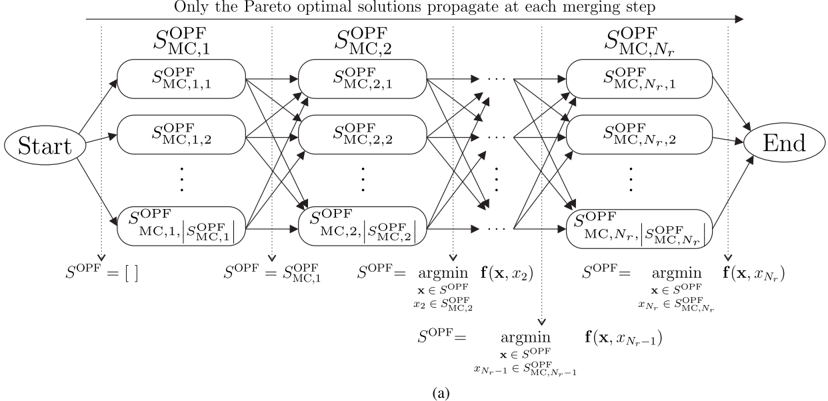
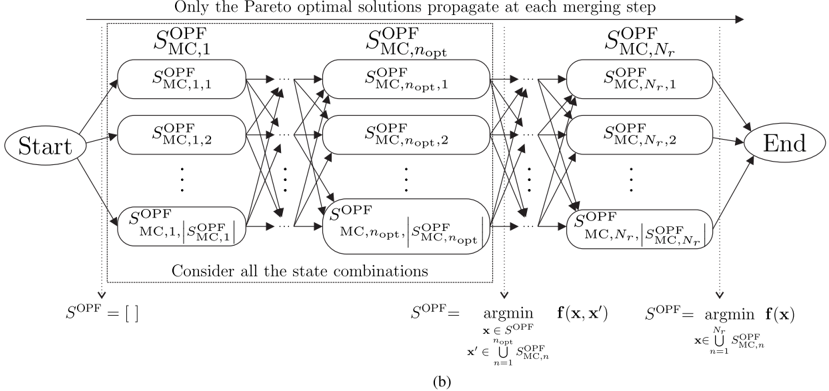
“11a a trellis path visiting the trellis nodes SOPFMC,1,2, S OPF MC,2,1 and S OPF MC,3,5 represents the particular route-combination formed by the second identified Pareto-optimal route of the first active pair of source and destination MCs, the first identified Pareto-optimal route of the second active pair of source…”
MethodInfluentialAn Information Flow Model for Conflict and Fission in Small Groups
Zachary, W. W. (1977) · Journal of Anthropological Research · doi:10.1086/jar.33.4.3629752 · Cited by 4,704 · cited 3×
“Complete karate club social relationship [50] used for determining the social relationship of the MCs in the OSN layer.”
MethodInfluentialThe Internet of Things: How the Next Evolution of the Internet Is Changing Everything
Evans, D. (2011) · Cited by 2,687
Rényi Divergence and Kullback-Leibler Divergence
van Erven, T., & Harremoes, P. (2014) · IEEE Transactions on Information Theory · doi:10.1109/tit.2014.2320500 · Cited by 1,555 · cited 2×
“where the Kullback-Leibler divergence DKL(B̄com||U ) is defined as [56]:”
BackgroundBUBBLE Rap: Social-Based Forwarding in Delay-Tolerant Networks
Hui, P., Crowcroft, J., & Yoneki, E. (2011) · IEEE Transactions on Mobile Computing · doi:10.1109/tmc.2010.246 · Cited by 1,515
Atzori, L., Iera, A., Morabito, G., & Nitti, M. (2012) · Computer Networks · doi:10.1016/j.comnet.2012.07.010 · Cited by 1,238
Cooperative Game Theory Approaches for Network Partitioning
Avrachenkov, K. E., Kondratev, A. Y., & Mazalov, V. V. (2017) · Lecture Notes in Computer Science · doi:10.1007/978-3-319-62389-4_49 · Cited by 1,073
Geographic routing in social networks
Liben-Nowell, D., Novak, J., Kumar, R., Raghavan, P., & Tomkins, A. (2005) · Proceedings of the National Academy of Sciences · doi:10.1073/pnas.0503018102 · Cited by 838 · cited 1×
“To elaborate further, in [20], each MU is assumed to communicate with its contacts with a probability that is inversely proportional to their respective geographic distance [21], while the technological network is relies on a grid-based network.”
Background(1996) · Cited by 824
Grover’s quantum searching algorithm is optimal
Zalka, C. (1999) · Physical Review A · doi:10.1103/physreva.60.2746 · Cited by 635 · cited 37×
“Subsequently, a BBHT-QSA process, which is termed as Backward BBHT-QSA (BW-BBHT-QSA) [43], is activated in order to search for route-solutions that are not dominated by the hitherto generated OPF.”
BackgroundMethodInfluentialSIoT: Giving a Social Structure to the Internet of Things
Atzori, L., Iera, A., & Morabito, G. (2011) · IEEE Communications Letters · doi:10.1109/lcomm.2011.090911.111340 · Cited by 606 · cited 1×
“Additionally, from a slightly different perspective, namely from that of the Internet of Things (IoT) [2], networked devices perpetually proliferate [3], [4] and they also tend to exhibit social behavior [5], [6].”
BackgroundDistributed community detection in delay tolerant networks
Hui, P., Yoneki, E., Chan, S. Y., & Crowcroft, J. (2007) · Proceedings of 2nd ACM/IEEE international workshop on Mobility in the evolving internet architecture · doi:10.1145/1366919.1366929 · Cited by 370 · cited 1×
“the so-called BUBBLE algorithm, which exploits the social networking metrics of the centrality [17] routinely used in the community detection [18] for the sake of performing socially aware multi-cast routing in the context of DTNs.”
A Quantum Algorithm for Finding the Minimum
Durr, C., & Hoyer, P. (1996) · arXiv · doi:10.48550/arxiv.quant-ph/9607014 · Cited by 359 · cited 11×
“III-B has been proposed by Durr–Høyer [39] in the form of the so-called Durr-Høyer Algorithm (DHA).”
BackgroundMethodInfluentialA Survey of Social-Based Routing in Delay Tolerant Networks: Positive and Negative Social Effects
Zhu, Y., Xu, B., Shi, X., & Wang, Y. (2013) · IEEE Communications Surveys & Tutorials · doi:10.1109/surv.2012.032612.00004 · Cited by 295 · cited 1×
“Apart from optimal routing, the new socially aware design paradigm has to account for the nodes’ social selfishness [26].”
BackgroundBehavior of Multiobjective Evolutionary Algorithms on Many-Objective Knapsack Problems
Ishibuchi, H., Akedo, N., & Nojima, Y. (2015) · IEEE Transactions on Evolutionary Computation · doi:10.1109/tevc.2014.2315442 · Cited by 288 · cited 1×
“Explicitly, this problem is NP-hard, since it belongs to the class of Multi-Objective Knapsack Problems [64].”
BackgroundCooperative Load Balancing in Hybrid Visible Light Communications and WiFi
Li, X., Zhang, R., & Hanzo, L. (2015) · IEEE Transactions on Communications · doi:10.1109/tcomm.2015.2409172 · Cited by 250 · cited 1×
“Therefore, instead of optimizing a specific parameter, such as the sum-rate considered in [53], we can readily manipulate this”
BackgroundSelf-citationQuadrature Amplitude Modulation
Hanzo, L. L., Ng, S. X., Keller, T., & Webb, W. (2011) · ePrints Soton (University of Southampton) · doi:10.1109/9780470010594 · Cited by 246
Self-citationQuantum speed-up for unsupervised learning
Aïmeur, E., Brassard, G., & Gambs, S. (2013) · Machine Learning · doi:10.1007/s10994-012-5316-5 · Cited by 214
MIMO‐OFDM for LTE, Wi‐Fi and WiMAX: Coherent versus Non‐coherent and Cooperative Turbo‐transceivers
Hanzo, L., Akhtman, Y. (., Wang, L., & Jiang, M. (2010) · Wiley eBooks · doi:10.1002/9780470711750 · Cited by 200
Self-citationExploiting Friendship Relations for Efficient Routing in Mobile Social Networks
Bulut, E., & Szymanski, B. K. (2012) · IEEE Transactions on Parallel and Distributed Systems · doi:10.1109/tpds.2012.83 · Cited by 199 · cited 2×
“To elaborate further, Bulut and Szymanski [13] proposed a routing scheme in the context of Delay-Tolerant Networks (DTN) for maximizing the associated routing efficiency by grouping the Mobile Users (MU) into clusters based on their contact history.”
BackgroundConcepts in statistical mechanics
Hobson, A. (1971) · Medical Entomology and Zoology · Cited by 171
Conjoining Speeds up Information Diffusion in Overlaying Social-Physical Networks
Yagan, O., Qian, D., Zhang, J., & Cochran, D. (2013) · IEEE Journal on Selected Areas in Communications · doi:10.1109/jsac.2013.130606 · Cited by 166 · cited 1×
“Additionally, epidemic routing [23] has been deployed [24], [25] in this specific cross-layer design,”
The Impact of Node Selfishness on Multicasting in Delay Tolerant Networks
Li, Y., Su, G., Wu, D. O., Jin, D., Su, L., & Zeng, L. (2011) · IEEE Transactions on Vehicular Technology · doi:10.1109/tvt.2011.2149552 · Cited by 140 · cited 1×
“Explicitly, the nodes’ social selfishness stems from their tendency to select specific routes for the sake of optimizing a specific utility, while being oblivious to the potential degradation of the overall network’s performance inflicted by their particular choice [27], [28].”
BackgroundEvaluating the Impact of Social Selfishness on the Epidemic Routing in Delay Tolerant Networks
Li, Y., Hui, P., Jin, D., Su, L., & Zeng, L. (2010) · IEEE Communications Letters · doi:10.1109/lcomm.2010.093010.100492 · Cited by 140 · cited 1×
“Explicitly, the nodes’ social selfishness stems from their tendency to select specific routes for the sake of optimizing a specific utility, while being oblivious to the potential degradation of the overall network’s performance inflicted by their particular choice [27], [28].”
BackgroundDeb, K. (2006) · Springer eBooks · doi:10.1007/0-387-28356-0_10 · Cited by 118
From Technological Networks to Social Networks
Chen, K., Chiang, M., & Poor, H. V. (2013) · IEEE Journal on Selected Areas in Communications · doi:10.1109/jsac.2013.sup.0513049 · Cited by 103 · cited 1×
“increased number results in a paradigm shift as to how the networks are designed and maintained [7], leading to encapsulating Social Network Analysis (SNA) [8] tools into the network’s design.”
BackgroundMartins, F. V. C., Carrano, E. G., Wanner, E. F., Takahashi, R. H. C., & Mateus, G. R. (2011) · IEEE Sensors Journal · doi:10.1109/jsen.2010.2048897 · Cited by 95
Secure Routing Based on Social Similarity in Opportunistic Networks
Yao, L., Man, Y., Huang, Z. Y., Deng, J. W., & Wang, X. (2015) · IEEE Transactions on Wireless Communications · doi:10.1109/twc.2015.2476466 · Cited by 93
Modeling Epidemics Spreading on Social Contact Networks
Zhang, Z., Wang, H., Wang, C., & Fang, H. (2015) · IEEE Transactions on Emerging Topics in Computing · doi:10.1109/tetc.2015.2398353 · Cited by 88 · cited 1×
“Additionally, epidemic routing [23] has been deployed [24], [25] in this specific cross-layer design,”
Masazade, E., Rajagopalan, R., Varshney, P. K., Mohan, C. K., Sendur, G. K., & Keskinoz, M. (2010) · IEEE Transactions on Systems, Man, and Cybernetics, Part B (Cybernetics) · doi:10.1109/tsmcb.2009.2026633 · Cited by 76 · cited 1×
“To mitigate the increased complexity, evolutionary heuristic methods have been employed in [32] and [34]–[36] by relying on near-optimal accuracy for improving the performance of the associated socially-oblivious networking.”
MethodHypercube-Based Multipath Social Feature Routing in Human Contact Networks
Wu, J., & Wang, Y. (2012) · IEEE Transactions on Computers · doi:10.1109/tc.2012.209 · Cited by 72 · cited 1×
“The authors of [10]–[16] advocated routing schemes, where both the specific QoS criteria and SNA-aided design are considered.”
BackgroundSocial Network Analysis in Enterprise
Lin, C., Wu, L., Wen, Z., Tong, H., Griffiths-Fisher, V., Shi, L., & Lubensky, D. M. (2012) · Proceedings of the IEEE · doi:10.1109/jproc.2012.2203090 · Cited by 64 · cited 5×
“The authors of [10]–[16] advocated routing schemes, where both the specific QoS criteria and SNA-aided design are considered.”
BackgroundInfluentialBotsinis, P., Ng, S. X., & Hanzo, L. (2013) · IEEE Access · doi:10.1109/access.2013.2259536 · Cited by 64 · cited 2×
“6The readers should refer to [62] for a more detailed tutorial.”
BackgroundSelf-citationBEEINFO: Interest-Based Forwarding Using Artificial Bee Colony for Socially Aware Networking
Xia, F., Liu, L., Li, J., Ahmed, A. M., Yang, L. T., & Ma, J. (2014) · IEEE Transactions on Vehicular Technology · doi:10.1109/tvt.2014.2305192 · Cited by 59 · cited 2×
“[16] employed Bee Colony Optimization (BCO) in the form of the so-called BEEINFO packet forwarding scheme for the sake of the sake of maximizing the associated packet delivery ratio.”
BackgroundMethodMulti-objective routing optimization using evolutionary algorithms
Yetgin, H., Cheung, K. T. K., & Hanzo, L. (2012) · 2012 IEEE Wireless Communications and Networking Conference (WCNC) · doi:10.1109/wcnc.2012.6214324 · Cited by 58 · cited 4×
“For the sake of mitigating the effect of social selfishness as well as the potential degradation [32] of the routing efficiency metrics, a multi-objective optimization approach can be employed by relying on the concept of Paretooptimality [33] borrowed from socially-oblivious treatises.”
MethodInfluentialSelf-citationSEDUM: Exploiting Social Networks in Utility--Based Distributed Routing for DTNs
Li, Z., & Shen, H. (2011) · IEEE Transactions on Computers · doi:10.1109/tc.2011.232 · Cited by 52
Botsinis, P., Alanis, D., Babar, Z., Ng, S. X., & Hanzo, L. (2015) · IEEE Transactions on Communications · doi:10.1109/tcomm.2015.2458857 · Cited by 48
Self-citationQuantum-Assisted Routing Optimization for Self-Organizing Networks
ALANIS, D., BOTSINIS, P., NG, S. X., & HANZO, L. (2014) · IEEE Access · doi:10.1109/access.2014.2327596 · Cited by 46 · cited 12×
“where the quantum registers |x〉, |i〉, |t〉 are often referred to asQuantum Index Register (QIR),Quantum Control Register (QCR) and Oracle Workspace (OW), respectively [42].”
BackgroundMethodInfluentialSelf-citationThe Road From Classical to Quantum Codes: A Hashing Bound Approaching Design Procedure
Babar, Z., Botsinis, P., Alanis, D., Ng, S. X., & Hanzo, L. (2015) · IEEE Access · doi:10.1109/access.2015.2405533 · Cited by 41
Self-citationCapacity of Wireless Networks with Social Behavior
Azimdoost, B., Sadjadpour, H. R., & Garcia-Luna-Aceves, J. J. (2012) · IEEE Transactions on Wireless Communications · doi:10.1109/twc.2012.121112.111581 · Cited by 41 · cited 1×
“To elaborate further, in [20], each MU is assumed to communicate with its contacts with a probability that is inversely proportional to their respective geographic distance [21], while the technological network is relies on a grid-based network.”
BackgroundHu, J., Yang, L., Poor, H. V., & Hanzo, L. (2015) · IEEE Access · doi:10.1109/access.2015.2477307 · Cited by 34 · cited 1×
“The same OSN layer has been deployed in [22] in conjunction with a mobile multi-cast network and a hybrid routing scheme has been proposed for the sake of improving the content dissemination among members of the same community.”
Self-citationTemporal Workload-Aware Replicated Partitioning for Social Networks
Türk, A., Selvitopi, R. O., Ferhatosmanoğlu, H., & Aykanat, C. (2014) · IEEE Transactions on Knowledge and Data Engineering · doi:10.1109/tkde.2014.2302291 · Cited by 29 · cited 1×
“This brings the requires socially-aware load balancing [29]–[31].”
BackgroundNon-Dominated Quantum Iterative Routing Optimization for Wireless Multihop Networks
Alanis, D., Botsinis, P., Babar, Z., Ng, S. X., & Hanzo, L. (2015) · IEEE Access · doi:10.1109/access.2015.2478793 · Cited by 26 · cited 12×
“context of Wireless Multihop Networks (WMHNs), has been advocated in [43], where the so-calledNon-DominatedQuantum Iterative Optimization (NDQIO) algorithm has been shown to achieve optimal accuracy at the expense of an even further complexity reduction compared to the NDQIO algorithm by exploiting the hybrid synergie…”
BackgroundMethodInfluentialSelf-citationSMART: Utilizing Distributed Social Map for Lightweight Routing in Delay-Tolerant Networks
Chen, K., & Shen, H. (2013) · IEEE/ACM Transactions on Networking · doi:10.1109/tnet.2013.2281583 · Cited by 26
Noncoherent Quantum Multiple Symbol Differential Detection for Wireless Systems
Botsinis, P., Alanis, D., Babar, Z., Ng, S. X., & Hanzo, L. (2015) · IEEE Access · doi:10.1109/access.2015.2432015 · Cited by 23
Self-citationEpidemic forwarding in mobile social networks
Sun, H., & Wu, C. (2012) · International Conference on Communications · doi:10.1109/icc.2012.6364533 · Cited by 20 · cited 1×
“Additionally, epidemic routing [23] has been deployed [24], [25] in this specific cross-layer design,”
QoS routing algorithm based on multi-objective optimization for Wireless Mesh Networks
Camelo, M., Omana, C., & Castro, H. (2010) · 2010 IEEE Latin-American Conference on Communications · doi:10.1109/latincom.2010.5640973 · Cited by 20 · cited 1×
“To mitigate the increased complexity, evolutionary heuristic methods have been employed in [32] and [34]–[36] by relying on near-optimal accuracy for improving the performance of the associated socially-oblivious networking.”
MethodStai, E., Karyotis, V. A., & Papavassiliou, S. (2014) · IEEE Wireless Communications · doi:10.1109/mwc.2014.6757892 · Cited by 20 · cited 1×
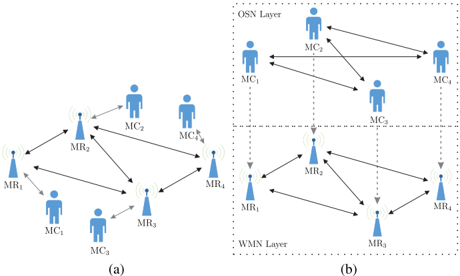
“Apart from the above-mentioned routing schemes considering SNA-related metrics, some contributions utilize the structure of a twin-layer composite network [19], where the top layer characterizes the users’ social relationships, hence it is often referred to as an Online Social Network (OSN).”
BackgroundIs the Low-Complexity Mobile-Relay-Aided FFR-DAS Capable of Outperforming the High-Complexity CoMP?
Yang, S., Xu, X., Alanis, D., Ng, S. X., & Hanzo, L. (2015) · IEEE Transactions on Vehicular Technology · doi:10.1109/tvt.2015.2416333 · Cited by 19 · cited 1×
“As far as the forwarding scheme is concerned, we have utilized theDecode-and-Forward (DF) scheme [42], [60] due to the scheme’s capability of encapsulating the routing information into the packet header.”
MethodSelf-citationSociality-Aware Access Point Selection in Enterprise Wireless LANs
Xue, G., He, Q., Zhu, H., He, T., & Liu, Y. (2013) · IEEE Transactions on Parallel and Distributed Systems · doi:10.1109/tpds.2012.301 · Cited by 18
Peer-Assisted Social Media Streaming with Social Reciprocity
Wang, Z., Wu, C., Sun, L., & Yang, S. (2012) · IEEE Transactions on Network and Service Management · doi:10.1109/tnsm.2012.12.120244 · Cited by 16 · cited 1×
“This brings the requires socially-aware load balancing [29]–[31].”
BackgroundThe Stability Region of the Delay in Pareto Opportunistic Networks
Boldrini, C., Conti, M., & Passarella, A. (2014) · IEEE Transactions on Mobile Computing · doi:10.1109/tmc.2014.2316506 · Cited by 13
Zhang, W., Brejza, M. F., Wang, T., Maunder, R. G., & Hanzo, L. (2015) · IEEE Transactions on Communications · doi:10.1109/tcomm.2015.2493149 · Cited by 10 · cited 1×
“can be portrayed as the irregular trellis diagram [65] of Fig.”
BackgroundSelf-citationFully-Parallel Quantum Turbo Decoder
Babar, Z., Nguyen, H. V., Botsinis, P., Alanis, D., Chandra, D., Ng, S. X., Maunder, R. G., & Hanzo, L. (2016) · IEEE Access · doi:10.1109/access.2016.2581978 · Cited by 6 · cited 1×
“The recent advances in quantum computation [37]–[43] and in quantum information processing [44]–[46] provides us with an attractive framework, offering a significant complexity reduction by exploiting the concept of Quantum Parallelism (QP) [47].”
BackgroundSelf-citation(1998) · doi:10.1002/(sici)1521-3978(199806)46:4/5<493::aid-prop493>3.0.co;2-p · cited 25×
“Subsequently, a BBHT-QSA process, which is termed as Backward BBHT-QSA (BW-BBHT-QSA) [43], is activated in order to search for route-solutions that are not dominated by the hitherto generated OPF.”
BackgroundMethodInfluential
Research works printed but not linked: 3
- steele, 1999, Mobile Radio Communications Second and Third Generation Cellular and WATM Systems
- hu, 2016, Cross-layer design for wireless mesh networking aided content sharing in online social networks, IEEE Trans Veh Technol
- imre, 2013, Advanced Quantum Communications An Engineering Approach
Cited by
Quantum Machine Learning for 6G Communication Networks: State-of-the-Art and Vision for the Future
Nawaz, S. J., Sharma, S. K., Wyne, S., Patwary, M. N., & Asaduzzaman, M. (2019) · IEEE Access · doi:10.1109/access.2019.2909490 · Cited by 658
“In this regard, authors in [36] employed a multi-objective decomposition quantum optimization algo-rithm for the joint optimization of routing and load balancing in socially-aware networks.”
MethodIntegrated Data and Energy Communication Network: A Comprehensive Survey
Hu, J., Yang, K., Wen, G., & Hanzo, L. (2018) · IEEE Communications Surveys & Tutorials · doi:10.1109/comst.2018.2860778 · Cited by 156
“Pareto front based optimisation [295] can be relied upon for achieving the joint optimality of both WET and WIT, which deserves our further effort invested in multiple objective based optimisation algorithms and their applications in highdimensional resource allocation, as exemplified in the WIT”
MethodSelf-citationQuantum Search Algorithms for Wireless Communications
Botsinis, P., Alanis, D., Babar, Z., Nguyen, H. V., Chandra, D., Ng, S. X., & Hanzo, L. (2019) · IEEE Communications Surveys & Tutorials · doi:10.1109/comst.2018.2882385 · Cited by 149
“In fact, several quantum-assisted treatises have been disseminated in [65], [66], [122], and [134] in the context of the multi-objective routing problem.”
BackgroundMethodInfluentialSelf-citationDuality of Quantum and Classical Error Correction Codes: Design Principles and Examples
Babar, Z., Chandra, D., Nguyen, H. V., Botsinis, P., Alanis, D., Ng, S. X., & Hanzo, L. (2019) · IEEE Communications Surveys & Tutorials · doi:10.1109/comst.2018.2861361 · Cited by 82
“This massive parallel processing potential may be beneficially exploited in largescale communication systems’ processes, for example in multiuser detection [9], [10] and in routing optimization [11], [12], as well as in diverse other applications, such as data mining [13] and Gait Recognition [14], [15], just to name…”
BackgroundSelf-citationQuantum Information Processing, Sensing, and Communications: Their Myths, Realities, and Futures
Hanzo, L., Babar, Z., Cai, Z., Chandra, D., Djordjević, I. B., Koczor, B., Ng, S. X., Razavi, M., & Simeone, O. (2025) · Proceedings of the IEEE · doi:10.1109/jproc.2024.3510394 · Cited by 54
Self-citation
Metadata
- Authors
- Alanis, D., Hu, J., Botsinis, P., Babar, Z., Ng, S. X., & Hanzo, L.
- Affiliations
- University of Southampton (GB)
- University of Electronic Science and Technology of China (CN)
- Venue
- IEEE Access
- Published
- 2016
- Volume
- 4
- Pages
- 9993-10028
- ISSN
- 2169-3536 (ISSN-L)
- OpenAlex
- W2554636950
- Cited by
- 15
- References
- 65
- Citations by year
- 2025: 1 · 2024: 1 · 2022: 2 · 2021: 2 · 2020: 1 · 2019: 2 · 2018: 5 · 2017: 1
- FWCI
- 2.52
- Type
- journal article
- Language
- en
- Open access
- gold
- doi.org
- Locations
- IEEE Access (publishedVersion, cc-by)
- ePrints Soton (University of Southampton) (acceptedVersion)
- DOAJ (DOAJ: Directory of Open Access Journals) (submittedVersion, cc-by-sa)
- Funders
- EPSRC that of the European Research Council, Advanced Fellow Grant (EP/L018659/1)
- Royal Society’s Wolfson Research Merit Award
- University of Electronic Science and Technology of China (A03013023601053)
- National Natural Science Foundation of China (61601097)
- Topics
- Physical Sciences › Computer Science › Computer Networks and Communications › Network Traffic and Congestion Control
- Physical Sciences › Computer Science › Computational Theory and Mathematics › Advanced Multi-Objective Optimization Algorithms
- Physical Sciences › Computer Science › Computer Networks and Communications › Mobile Ad Hoc Networks
- Keywords
- quantum-assisted optimization, multi-objective routing, load balancing, mobile devices, power consumption, network latency, entropy measures, NSGA-II comparison
About these checks
Registry, retraction, Cites and statistics results are computed, not judged, with one exception: a printed reference that no index lists is read once by a model before it counts as a citation error. Claims are extracted by a model and kept only when their quote appears verbatim in the text; each cited source is then checked, with a model’s help, for whether it says what the claim relies on. Those verdicts can be wrong — read the claim’s quote and the cited source before relying on one.
Statistics and arithmetic are recomputed, not judged.
Confidence bands are shown only for fields calibrated on our annotated test set. None is calibrated yet, so no band is shown.
What counts as a claim ›How we measure confidence ›How we check this ›
Are you an author, or do you see a problem with this page? Request a review
Data sources
Bibliographic data: Semantic Scholar, OpenAlex, Crossref.
Contains information from the Semantic Scholar Academic Graph Datasets, made available under the ODC Attribution License (ODC-BY 1.0).
Semantic Scholar’s data is described in: Kinney, R., et al. (2023). The Semantic Scholar Open Data Platform. arXiv:2301.10140.
