

Quantum Search Algorithms for Wireless Communications
Open accessThe DOI matches its Crossref record; 203 of the 204 references it cites were found in a registry or an index.
Abstract
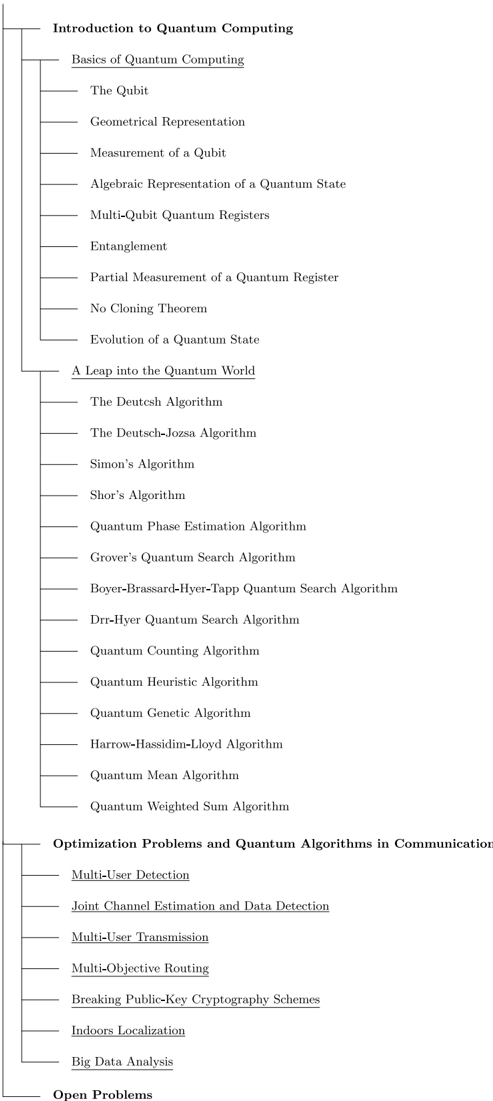
Faster, ultra-reliable, low-power, and secure communications has always been high on the wireless evolutionary agenda. However, the appetite for faster, more reliable, greener, and more secure communications continues to grow. The state-of-the-art methods conceived for achieving the performance targets of the associated processes may be accompanied by an increase in computational complexity. Alternatively, a degraded performance may have to be accepted due to the lack of jointly optimized system components. In this survey we investigate the employment of quantum computing for solving problems in wireless communication systems. By exploiting the inherent parallelism of quantum computing, quantum algorithms may be invoked for approaching the optimal performance of classical wireless processes, despite their reduced number of cost-function evaluations. In this contribution we discuss the basics of quantum computing using linear algebra, before presenting the operation of the major quantum algorithms, which have been proposed in the literature for improving wireless communications systems. Furthermore, we investigate a number of optimization problems encountered both in the physical and network layer of wireless communications, while comparing their classical and quantum-assisted solutions. Finally, we state a number of open problems in wireless communications that may benefit from quantum computing.
Overview
The claims and statistics of this paper haven’t been checked yet.
Free: it reads the open-access text and checks the first 5 claims that cite a source we can check. Create a free account to check every claim.
Integrity signals
Registry
Cites
Statistics
Figures
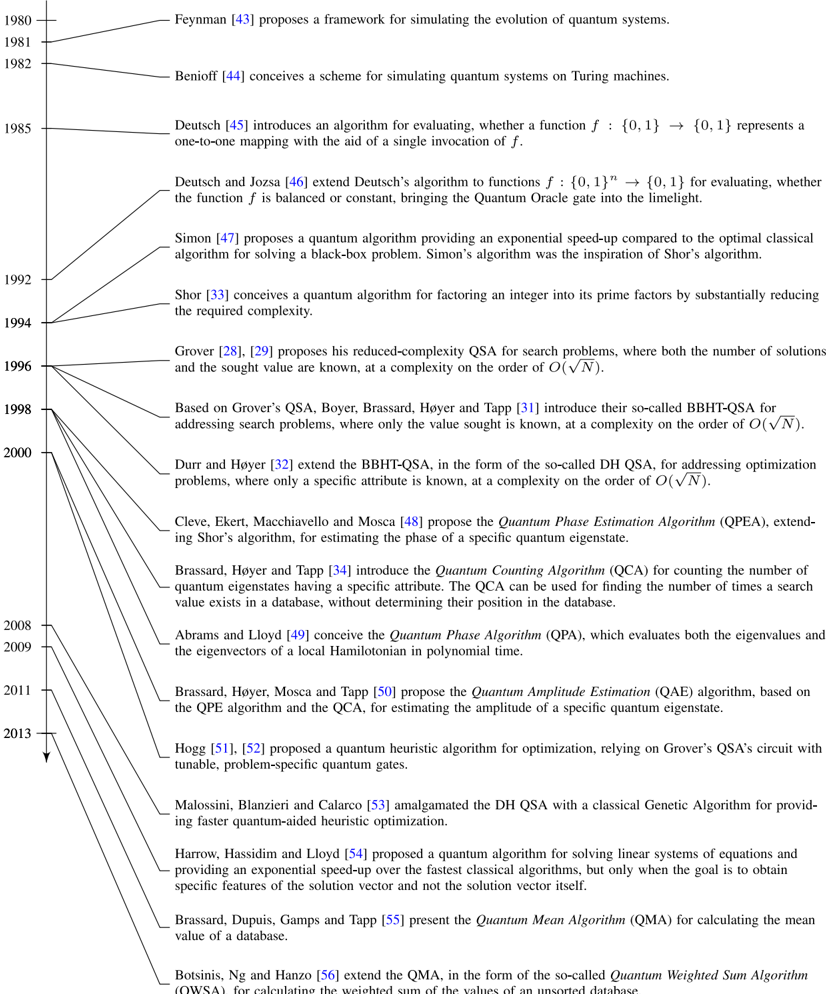
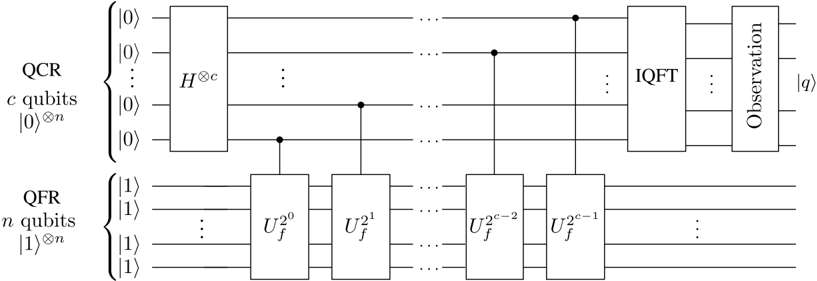
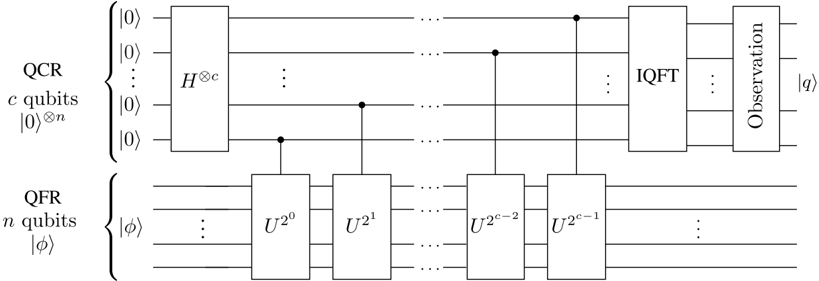
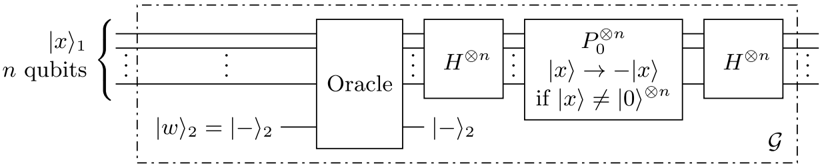
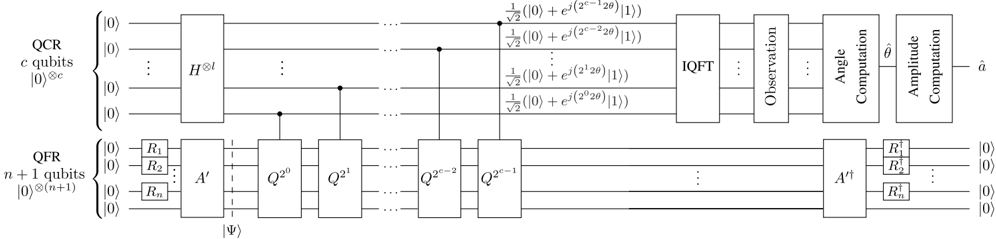
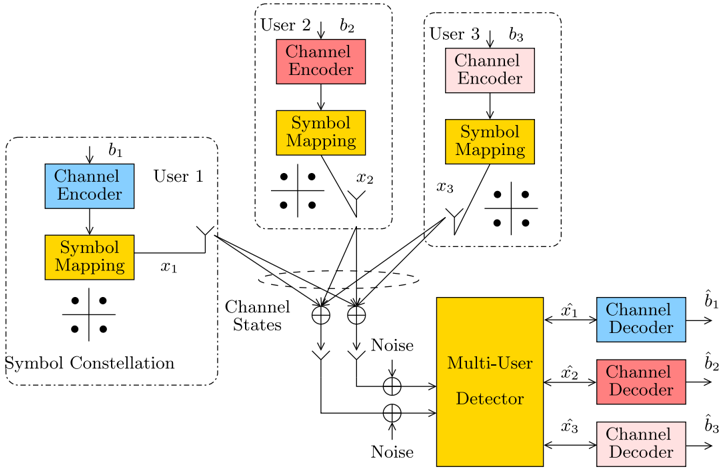
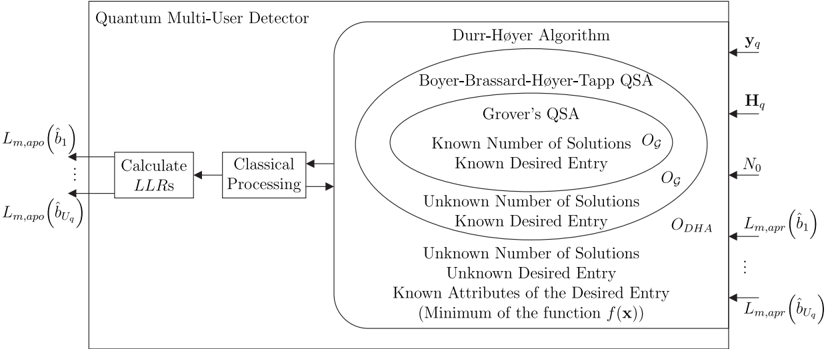
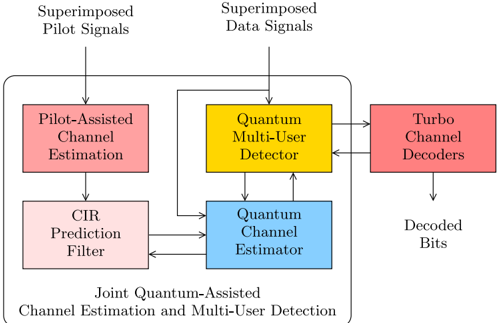
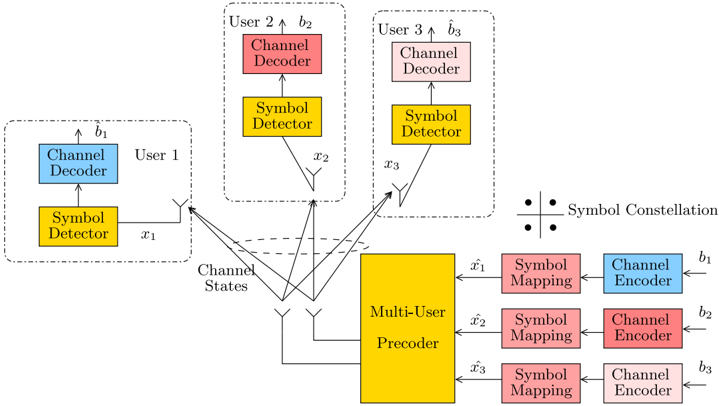
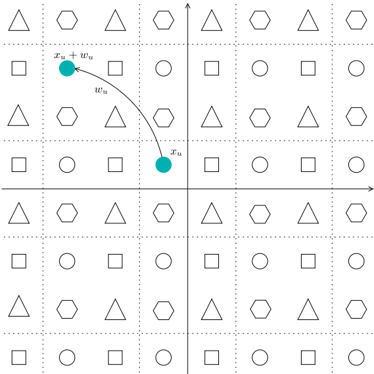
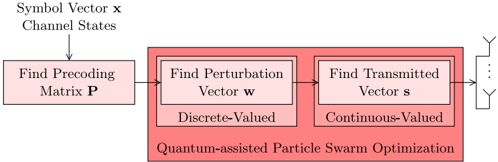
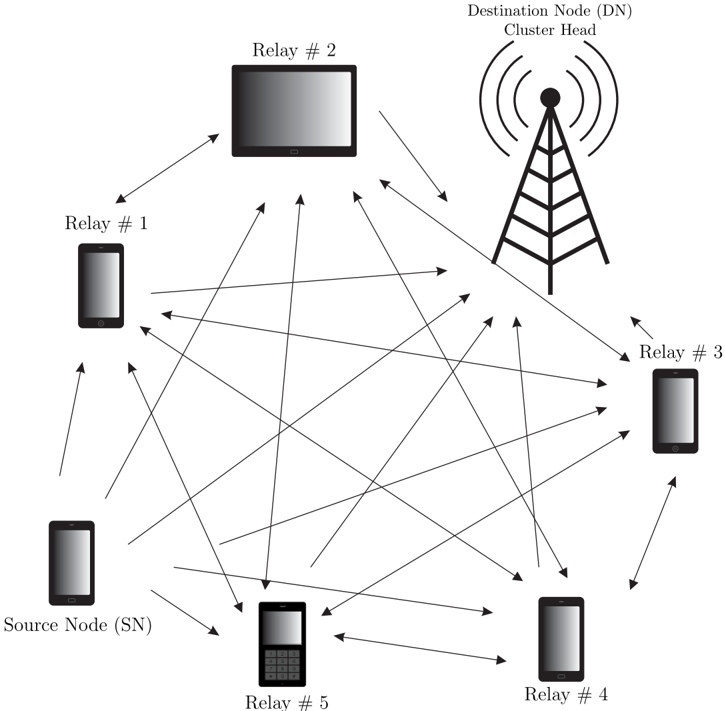





Verification
Claims the paper makes
The claims and statistics of this paper haven’t been checked yet.
Free: it reads the open-access text and checks the first 5 claims that cite a source we can check. Create a free account to check every claim.
Claims other papers make about this one
Each is checked against this paper’s own text: does it say what the citing paper says it does?
The source backs part of the claim, not all of it — or backs it for a different population, condition or comparison.
In the citing paper
“The QC-assisted communications is another new research area, which is envisioned to hold promise for achieving extremely high data rates and link security in future 6G and beyond communications [30].”
From Quantum Machine Learning for 6G Communication Networks: State-of-the-Art and Vision for the Future (2019) · cites this paper as [30]
Experimental — accuracy not yet measuredThe source backs part of the claim, not all of it — or backs it for a different population, condition or comparison.
In the citing paper
“Combining the operations of channel estimation, channel equalization, and symbols decoding in a single block can help in resolving these limitations [30].”
From Quantum Machine Learning for 6G Communication Networks: State-of-the-Art and Vision for the Future (2019) · cites this paper as [30]
Experimental — accuracy not yet measuredThe cited source says what the claim attributes to it.
In the citing paper
“The quantumassisted communications can enhance various aspects of the existing classical communication networks including channel estimation, optimal Multi-User Detection (MUD), the design of optimal precoding matrix and the optimal routing by employing the quantum algorithms [30].”
From Quantum Machine Learning for 6G Communication Networks: State-of-the-Art and Vision for the Future (2019) · cites this paper as [30]
The cited source says what the claim attributes to it.
In the citing paper
“and IBM has a recent plan of finalizing a gate-based quantum computer with 50 qubits by 2020 [30].”
From Quantum Machine Learning for 6G Communication Networks: State-of-the-Art and Vision for the Future (2019) · cites this paper as [30]
Self-check
Percentages, sums and reported differences re-computed from the paper’s own numbers.
The self-check needs the paper’s full text.
Citations
Cites
Boyd, S., & Vandenberghe, L. (2004) · doi:10.1017/cbo9780511804441 · Cited by 56,601
Genetic algorithms in search, optimization, and machine learning
(1989) · Choice Reviews Online · doi:10.5860/choice.27-0936 · Cited by 49,010
A note on two problems in connexion with graphs
Dijkstra, E. W. (1959) · Numerische Mathematik · doi:10.1007/bf01386390 · Cited by 29,065
Quantum Computation and Quantum Information
Nielsen, M. A., Chuang, I., & Grover, L. K. (2002) · American Journal of Physics · doi:10.1119/1.1463744 · Cited by 21,895
A Tutorial on Support Vector Machines for Pattern Recognition
Burges, C. J. C. (1998) · Data Mining and Knowledge Discovery · doi:10.1023/a:1009715923555 · Cited by 16,429
A method for obtaining digital signatures and public-key cryptosystems
Rivest, R. L., Shamir, A., & Adleman, L. (1978) · Communications of the ACM · doi:10.1145/359340.359342 · Cited by 13,462
A method for obtaining digital signatures and public-key cryptosystems
Rivest, R. L., Shamir, A., & Adleman, L. (1983) · Communications of the ACM · doi:10.1145/357980.358017 · Cited by 13,012
Pattern Recognition and Machine Learning
(2006) · doi:10.1007/978-0-387-45528-0 · Cited by 9,824
Least Squares Support Vector Machine Classifiers
Suykens, J. A. K., & Vandewalle, J. (1999) · Neural Processing Letters · doi:10.1023/a:1018628609742 · Cited by 9,362
(2012) · Cited by 9,062
Research works printed but not linked: 4
- jordan, 2011, Quantum Algorithm Zoo
- mosca, 2012, Quantum Algorithms, 2303
- verdu, 1998, Multiuser Detection
- 10.1109/JSAC.2015.2430520 · doi:10.1109/jsac.2015.2430520
Cited by
6G Wireless Networks: Vision, Requirements, Architecture, and Key Technologies
Zhang, Z., Xiao, Y., Ma, Z., Xiao, M., Ding, Z., Lei, X., Karagiannidis, G. K., & Fan, P. (2019) · IEEE Vehicular Technology Magazine · doi:10.1109/mvt.2019.2921208 · Cited by 2,575
6G and Beyond: The Future of Wireless Communications Systems
Akyildiz, I. F., Kak, A., & Nie, S. (2020) · IEEE Access · doi:10.1109/access.2020.3010896 · Cited by 1,385
Noor-A-Rahim, M., Liu, Z., Lee, H., Khyam, M. O., He, J., Pesch, D., Moessner, K., Saad, W., & Poor, H. V. (2022) · Proceedings of the IEEE · doi:10.1109/jproc.2022.3173031 · Cited by 737
Quantum Machine Learning for 6G Communication Networks: State-of-the-Art and Vision for the Future
Nawaz, S. J., Sharma, S. K., Wyne, S., Patwary, M. N., & Asaduzzaman, M. (2019) · IEEE Access · doi:10.1109/access.2019.2909490 · Cited by 658
6G Wireless Communications Networks: A Comprehensive Survey
Alsabah, M., Naser, M. A., Mahmmod, B. M., Abdulhussain, S. H., Eissa, M. R., Al-Baidhani, A., Noordin, N. K., Sait, S. M., Al-Utaibi, K. A., & Hashim, F. (2021) · IEEE Access · doi:10.1109/access.2021.3124812 · Cited by 575
Metadata
- Authors
- Botsinis, P., Alanis, D., Babar, Z., Nguyen, H. V., Chandra, D., Ng, S. X., & Hanzo, L.
- Affiliations
- University of Southampton (GB)
- ORCID
- Venue
- IEEE Communications Surveys & Tutorials
- Published
- 2019
- Volume
- 21
- Issue
- 2
- Pages
- 1209-1242
- ISSN
- 1553-877X (ISSN-L)
- 2373-745X
- OpenAlex
- W2947173962
- Cited by
- 149
- References
- 204
- Citations by year
- 2026: 11 · 2025: 19 · 2024: 30 · 2023: 30 · 2022: 20 · 2021: 21 · 2020: 14 · 2019: 4
- FWCI
- 5.49
- Type
- journal article
- Language
- en
- Open access
- hybrid
- doi.org
- Locations
- IEEE Communications Surveys & Tutorials (publishedVersion, cc-by)
- ePrints Soton (University of Southampton) (submittedVersion)
- Funders
- Engineering and Physical Sciences Research Council (EP/L018659/1)
- Topics
- Physical Sciences › Computer Science › Artificial Intelligence › Quantum Computing Algorithms and Architecture
- Physical Sciences › Physics and Astronomy › Atomic and Molecular Physics, and Optics › Quantum Information and Cryptography
- Physical Sciences › Computer Science › Artificial Intelligence › Metaheuristic Optimization Algorithms Research
- Keywords
- quantum search, quantum computing, wireless communication, quantum algorithms, optimization problems, physical layer, network layer, quantum-assisted optimization, computational complexity, low-power communication, secure communication
About these checks
Registry, retraction, Cites and statistics results are computed, not judged, with one exception: a printed reference that no index lists is read once by a model before it counts as a citation error. Claims are extracted by a model and kept only when their quote appears verbatim in the text; each cited source is then checked, with a model’s help, for whether it says what the claim relies on. Those verdicts can be wrong — read the claim’s quote and the cited source before relying on one.
Statistics and arithmetic are recomputed, not judged.
Confidence bands are shown only for fields calibrated on our annotated test set. None is calibrated yet, so no band is shown.
What counts as a claim ›How we measure confidence ›How we check this ›
Are you an author, or do you see a problem with this page? Request a review
How to cite
Cite CoChat for the checks on this page, and the paper for its own findings.
- This page
- CoChat. (2026). Citation check: Quantum Search Algorithms for Wireless Communications. https://app.cochat.ai/papers/10.1109/comst.2018.2882385
- The paper
- Botsinis, P., Alanis, D., Babar, Z., Nguyen, H. V., Chandra, D., Ng, S. X., & Hanzo, L. (2019). Quantum Search Algorithms for Wireless Communications. IEEE Communications Surveys & Tutorials. https://doi.org/10.1109/comst.2018.2882385
Data sources
Bibliographic data: Semantic Scholar, OpenAlex, Crossref.
Contains information from the Semantic Scholar Academic Graph Datasets, made available under the ODC Attribution License (ODC-BY 1.0).
Semantic Scholar’s data is described in: Kinney, R., et al. (2023). The Semantic Scholar Open Data Platform. arXiv:2301.10140.
