

State-of-Health Estimation for Lithium-Ion Batteries Based on Wiener Process With Modeling the Relaxation Effect
Open accessThe DOI matches its Crossref record; 66 of the 66 references it cites were found in a registry or an index.
Abstract
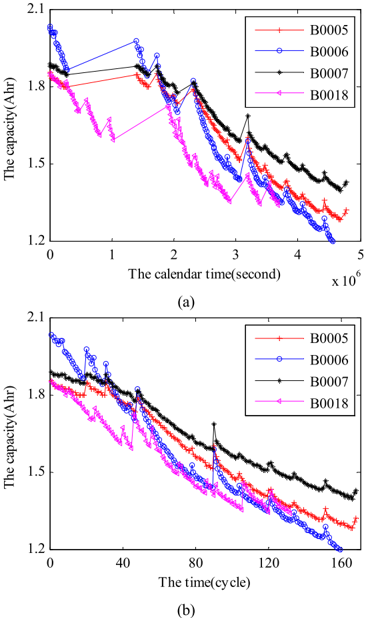
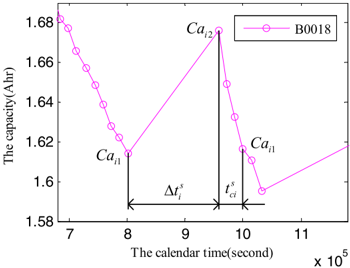
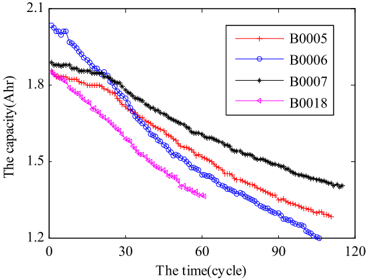
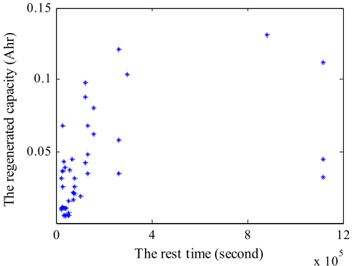
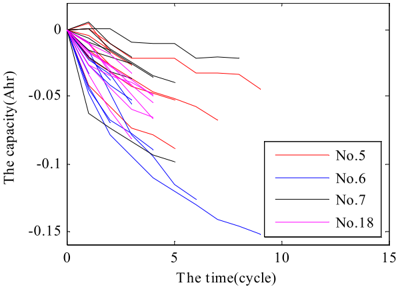
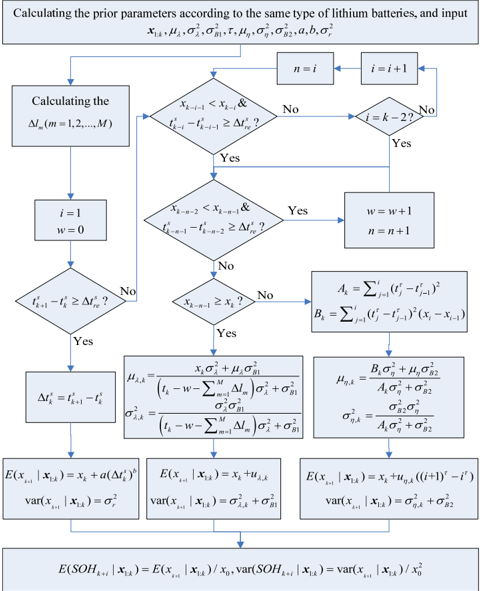
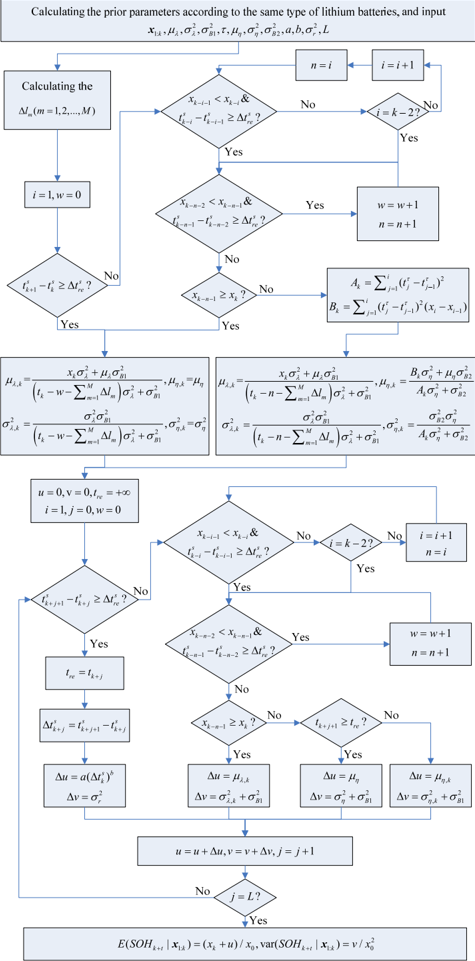
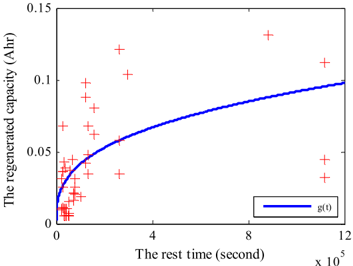
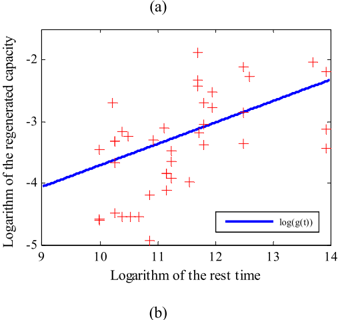
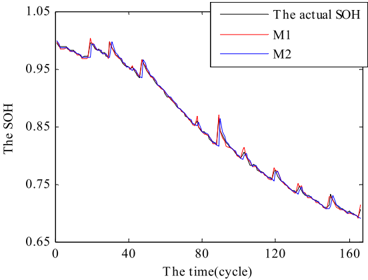
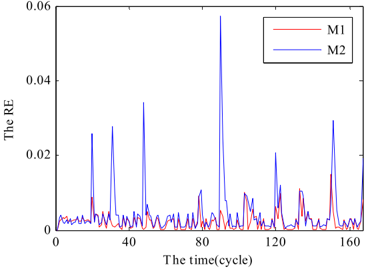
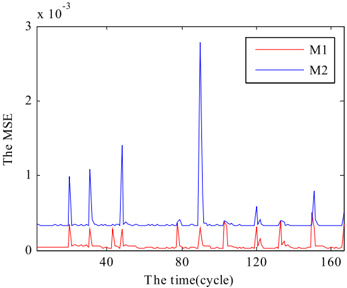
State-of-Health (SOH) is an intuitive reflection to the capacity during the degradation of lithium-ion batteries. Accurate SOH estimation can not only grasp the battery performance but also achieve a better balance between the safety and economic benefits for lithium-ion battery application system. Relaxation effect refers to the capacity regeneration phenomenon of lithium-ion batteries during long rest time. This paper mainly studies the impact of relaxation effect on the degradation law of lithium-ion batteries, and proposes a novel SOH estimation method based on the Wiener process. First, the life cycle of a lithium-ion battery is divided into three parts, i.e., the degradation process that eliminates the relaxation effect, the capacity regeneration process during the rest time, and the degradation process of the regenerated capacity. Next, the degradation model after eliminating the relaxation effect is established based on linear Wiener process, the capacity regenerated model is developed by the normal distribution, and the degradation model of regenerated capacity is established based on a nonlinear Wiener process. Then, for the degradation model based on nonlinear Wiener process, a two-step maximum likelihood estimation (MLE) method for prior parameters is proposed, and the random variables representing the personality features are updated online under the Bayesian framework. For the capacity regenerated model, a parameter estimation method based on MLE is proposed. In addition, a one-step and a multi-step SOH prediction method based on piecewise modeling are developed. Finally, the experiments are carried out based on the degradation data of lithium-ion batteries published by the NASA, and the results show that the method proposed in this paper can effectively improve the accuracy of the SOH estimation.
Overview
The claims and statistics of this paper haven’t been checked yet.
Free: it reads the open-access text and checks the first 5 claims that cite a source we can check. Create a free account to check every claim.
Integrity signals
Registry
Cites
Statistics
Figures






Verification
Claims the paper makes
The claims and statistics of this paper haven’t been checked yet.
Free: it reads the open-access text and checks the first 5 claims that cite a source we can check. Create a free account to check every claim.
Claims other papers make about this one
Each is checked against this paper’s own text: does it say what the citing paper says it does?
In the citing paper
“A new method of SOH estimation based on WP was established based on the degradation model and regenerative capacity model after eliminating the relaxation effect.”
From A Review of Lithium-Ion Battery State of Health Estimation and Prediction Methods (2021) · cites this paper as [131]
In the citing paper
“Xu et al. [131] divided the degradation cycle of lithium batteries into three stages: the degradation process of eliminating the relaxation effect; the capacity regeneration process; and the degradation process of regenerated capacity.”
From A Review of Lithium-Ion Battery State of Health Estimation and Prediction Methods (2021) · cites this paper as [131]
Self-check
Percentages, sums and reported differences re-computed from the paper’s own numbers.
The self-check needs the paper’s full text.
Citations
Cites
A review on the key issues for lithium-ion battery management in electric vehicles
Lu, L., Han, X., Li, J., Hua, J., & Ouyang, M. (2013) · Journal of Power Sources · doi:10.1016/j.jpowsour.2012.10.060 · Cited by 4,837 · cited 1×
“Lithium-ion batteries have been widely applied in mobile phones, notebook computers, electric vehicles, hybrid vehicles, aviation, aerospace and other industries due to their high energy density, light weight, long life, low self-discharge rate and no memory effect [1]–[4].”
BackgroundRemaining useful life estimation – A review on the statistical data driven approaches
Si, X.-S., Wang, W., Hu, C.-H., & Zhou, D.-H. (2011) · European Journal of Operational Research · doi:10.1016/j.ejor.2010.11.018 · Cited by 2,162 · cited 6×
“It is widely used in general degradation modeling [49].”
MethodInfluentialSelf-citationA review on lithium-ion battery ageing mechanisms and estimations for automotive applications
Barré, A., Deguilhem, B., Grolleau, S., Gérard, M., Suard, F., & Riu, D. (2013) · Journal of Power Sources · doi:10.1016/j.jpowsour.2013.05.040 · Cited by 1,758 · cited 1×
“or even failure of lithium-ion batteries [5], [6].”
BackgroundWaag, W., Fleischer, C., & Sauer, D. U. (2014) · Journal of Power Sources · doi:10.1016/j.jpowsour.2014.02.064 · Cited by 1,059 · cited 1×
“This is essential important for some areas with requirement of high safety and high reliability, such as electric vehicles, military and aerospace [13]–[15].”
BackgroundXiong, R., Li, L., & Tian, J. (2018) · Journal of Power Sources · doi:10.1016/j.jpowsour.2018.10.019 · Cited by 1,017 · cited 5×
“This type of methods mainly includes Coulomb counting method, open-circuit voltage method and the resistance-based method [19], [20].”
BackgroundMethodInfluentialHannan, M. A., Hoque, M. M., Hussain, A., Yusof, Y., & Ker, P. J. (2018) · IEEE Access · doi:10.1109/access.2018.2817655 · Cited by 988
A review on prognostics and health monitoring of Li-ion battery
Zhang, J., & Lee, J. (2011) · Journal of Power Sources · doi:10.1016/j.jpowsour.2011.03.101 · Cited by 792
Yang, D., Zhang, X., Pan, R., Wang, Y., & Chen, Z. (2018) · Journal of Power Sources · doi:10.1016/j.jpowsour.2018.03.015 · Cited by 765 · cited 1×
“[59] constructed a Gaussian regression model for SOH estimation based on the charging curve.”
MethodLipu, M. S. H., Hannan, M. A., Hussain, A., Hoque, M. M., Ker, P. J., Saad, M. H. M., & Ayob, A. (2018) · Journal of Cleaner Production · doi:10.1016/j.jclepro.2018.09.065 · Cited by 755 · cited 2×
“The estimation accuracy of these methods can be easily affected by the time-varying current and ambient temperature [21].”
BackgroundMethodBattery Energy Storage System (BESS) and Battery Management System (BMS) for Grid-Scale Applications
Lawder, M. T., Suthar, B., Northrop, P. W. C., De, S., Hoff, C. M., Leitermann, O., Crow, M. L., Santhanagopalan, S., & Subramanian, V. R. (2014) · Proceedings of the IEEE · doi:10.1109/jproc.2014.2317451 · Cited by 713 · cited 1×
“Engineering practice shows that the battery management system (BMS) is especially important for ensuring the safe, effective and reliable operation of lithium-ion batteries [9]–[12].”
Background
Research works printed but not linked: 2
- Dr. Tang received the Excellent Doctoral Dissertation Award of Shaanxi Province, in 2017.
- XIAOSHENG SI received the B.Eng., M.Eng., and Ph.D. degrees from the Department of Automa- tion, High-Tech Institute of Xi'an, Xi'an, China, in 2006, 2009, and 2014, respectively. He is currently an Associate Professor with the High-Tech Institute of Xi'an. He has authored or coauthored more than 50 articles in sev- eral journals including the European Journal of Operational Research, the IEEE TRANSACTIONS ON INDUSTRIAL ELECTRONICS, the IEEE TRANSACTIONS ON RELIABILITY, the IEEE TRANSACTIONS ON FUZZY SYSTEMS, the IEEE TRANSACTIONS ON SYSTEMS, MAN AND CYBERNETICS-PART A, the IEEE TRANSACTIONS ON AUTOMATION SCIENCE AND ENGINEERING, Reliability Engineer- ing and System Safety, and Mechanical Systems and Signal Processing. His research interests include evidence theory, expert systems, prognostics and health management, reliability estimation, predictive maintenance, and lifetime estimation.
Cited by
A review of the state of health for lithium-ion batteries: Research status and suggestions
Tian, H., Qin, P., Li, K., & Zhao, Z. (2020) · Journal of Cleaner Production · doi:10.1016/j.jclepro.2020.120813 · Cited by 651
Ge, M.-F., Liu, Y., Jiang, X., & Liu, J. (2021) · Measurement · doi:10.1016/j.measurement.2021.109057 · Cited by 418
A Review of Lithium-Ion Battery State of Health Estimation and Prediction Methods
Yao, L., Xu, S., Tang, A., Zhou, F., Hou, J., Xiao, Y., & Fu, Z. (2021) · World Electric Vehicle Journal · doi:10.3390/wevj12030113 · Cited by 237
“[131] divided the degradation cycle of lithium batteries into three stages: the degradation process of eliminating the relaxation effect; the capacity regeneration process; and the degradation process of regenerated capacity.”
BackgroundShu, X., Shen, S., Shen, J., Zhang, Y., Li, G., Chen, Z., & Liu, Y. (2021) · iScience · doi:10.1016/j.isci.2021.103265 · Cited by 208
“…one-step-ahead forecasting, multi-step-ahead forecasting tasks are iScience 24, 103265, November 19, 2021 13 more intractable, because this kind of forecasting needs to deal with additional complications, such as accumulation of errors, reduced accuracy, and increased uncertainty (Xu et al., 2019).”
BackgroundCritical summary and perspectives on state-of-health of lithium-ion battery
Yang, B., Qian, Y., Li, Q., Chen, Q., Wu, J., Luo, E., Xie, R., Zheng, R., Yan, Y., Su, S., et al. (2024) · Renewable and Sustainable Energy Reviews · doi:10.1016/j.rser.2023.114077 · Cited by 202
Metadata
- Authors
- Xu, X., Yu, C., Tang, S., Sun, X., Si, X., & Wu, L.
- Affiliations
- Capital Normal University (CN)
- Venue
- IEEE Access
- Published
- 2019
- Volume
- 7
- Pages
- 105186-105201
- ISSN
- 2169-3536 (ISSN-L)
- OpenAlex
- W2953131344
- Cited by
- 64
- References
- 66
- Citations by year
- 2026: 4 · 2025: 5 · 2024: 9 · 2023: 12 · 2022: 8 · 2021: 13 · 2020: 9 · 2019: 4
- FWCI
- 3.88
- Type
- journal article
- Language
- en
- Open access
- gold
- doi.org
- Locations
- IEEE Access (publishedVersion, cc-by)
- DOAJ (DOAJ: Directory of Open Access Journals) (submittedVersion, cc-by-sa)
- Funders
- National Natural Science Foundation of China (61573366, 61573076, 61703410, 61773386, 61873273, 61873175)
- Young Elite Scientists Sponsorship Program of China Association for Science and Technology (2016QNRC001)
- Natural Science Foundation of Shaanxi Province (2017JQ6015)
- Key project B class of Beijing Natural Science Foundation of China (KZ201710028028)
- Topics
- Physical Sciences › Engineering › Automotive Engineering › Battery Modeling and Management
- Physical Sciences › Engineering › Safety, Risk, Reliability and Quality › Reliability and Maintenance Optimization
- Physical Sciences › Engineering › Electrical and Electronic Engineering › Advancements in Battery Materials
- Keywords
- state of health estimation, lithium-ion batteries, Brownian motion, battery degradation modeling, relaxation effects, capacity recovery, nonlinear Wiener process, maximum likelihood estimation, Bayesian parameter updating, battery capacity degradation
About these checks
Registry, retraction, Cites and statistics results are computed, not judged, with one exception: a printed reference that no index lists is read once by a model before it counts as a citation error. Claims are extracted by a model and kept only when their quote appears verbatim in the text; each cited source is then checked, with a model’s help, for whether it says what the claim relies on. Those verdicts can be wrong — read the claim’s quote and the cited source before relying on one.
Statistics and arithmetic are recomputed, not judged.
Confidence bands are shown only for fields calibrated on our annotated test set. None is calibrated yet, so no band is shown.
What counts as a claim ›How we measure confidence ›How we check this ›
Are you an author, or do you see a problem with this page? Request a review
How to cite
Cite CoChat for the checks on this page, and the paper for its own findings.
- This page
- CoChat. (2026). Citation check: State-of-Health Estimation for Lithium-Ion Batteries Based on Wiener Process With Modeling the Relaxation Effect. https://app.cochat.ai/papers/10.1109/access.2019.2923095
- The paper
- Xu, X., Yu, C., Tang, S., Sun, X., Si, X., & Wu, L. (2019). State-of-Health Estimation for Lithium-Ion Batteries Based on Wiener Process With Modeling the Relaxation Effect. IEEE Access. https://doi.org/10.1109/access.2019.2923095
Data sources
Bibliographic data: Semantic Scholar, OpenAlex, Crossref.
Contains information from the Semantic Scholar Academic Graph Datasets, made available under the ODC Attribution License (ODC-BY 1.0).
Semantic Scholar’s data is described in: Kinney, R., et al. (2023). The Semantic Scholar Open Data Platform. arXiv:2301.10140.
