

The DOI matches its Crossref record.
A Novel and Optimal Battery Sizing Procedure Based on MG Frequency Security Criterion Using Coordinated Application of BESS, LED Lighting Loads, and Photovoltaic Systems
Open accessAbstract
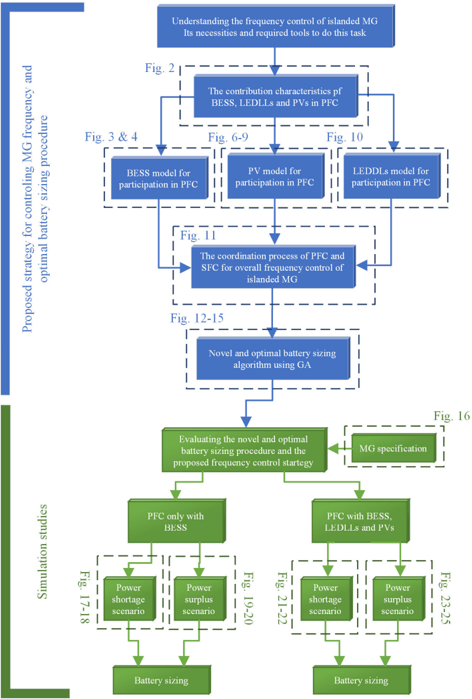
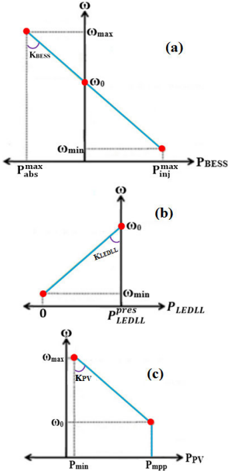
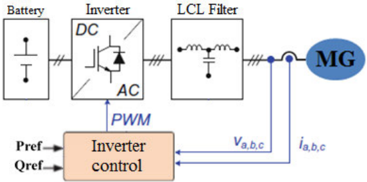
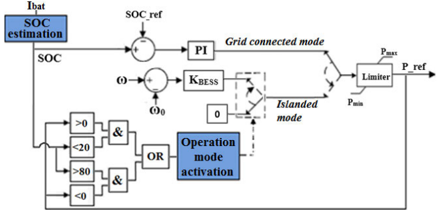
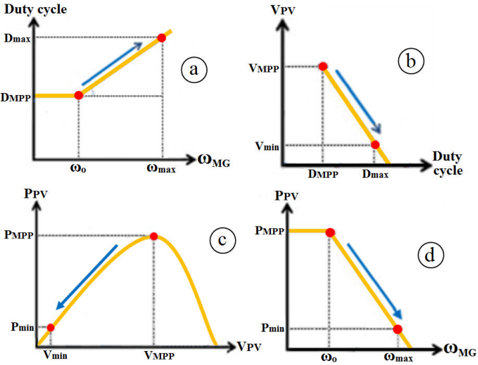
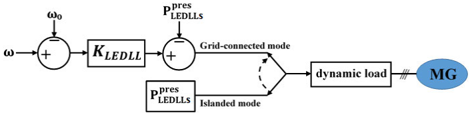
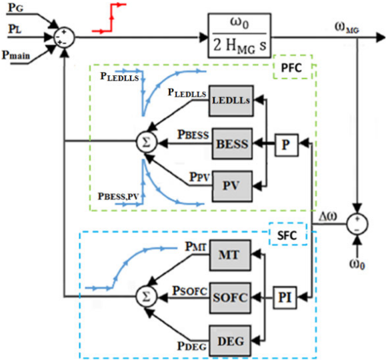
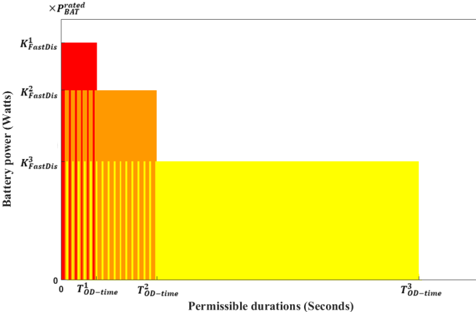
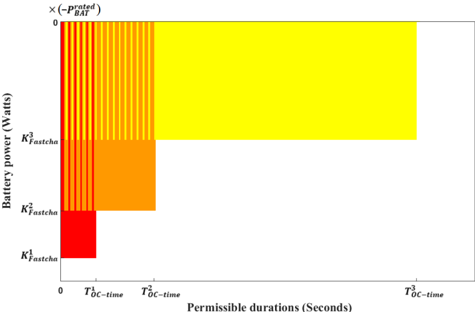
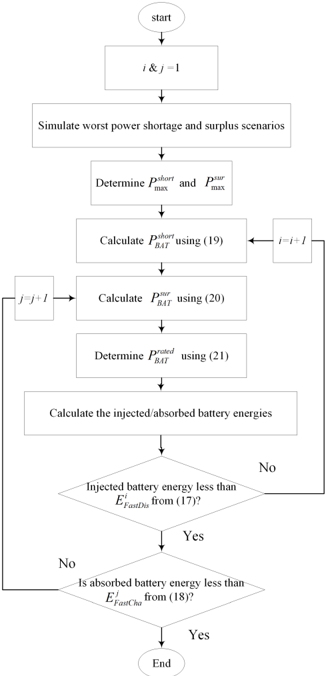
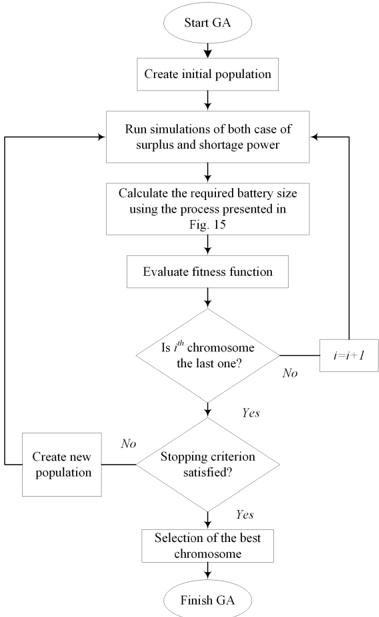
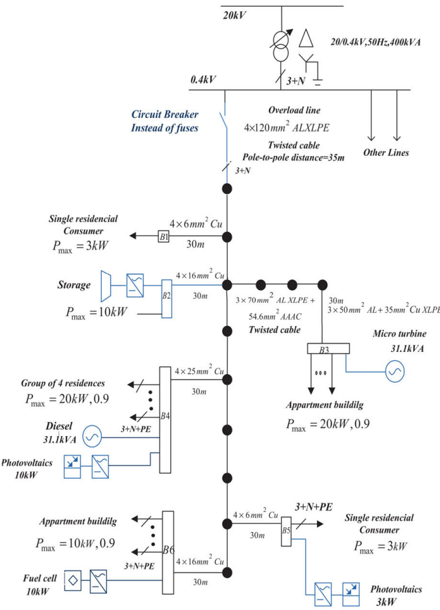
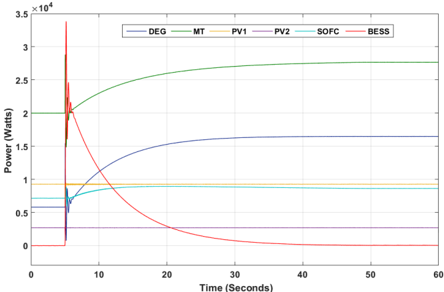
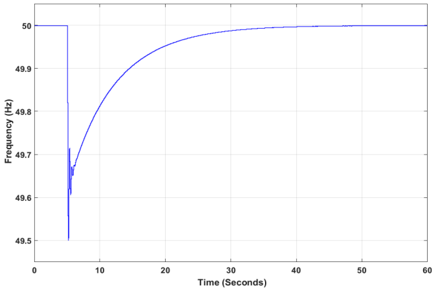
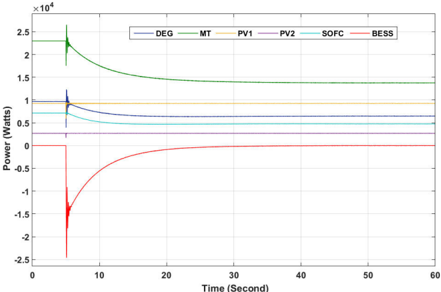
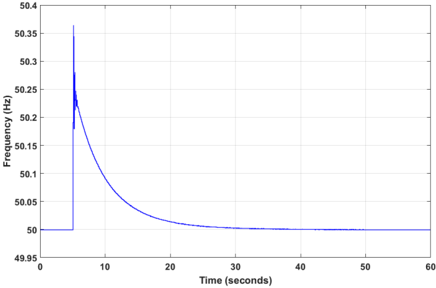
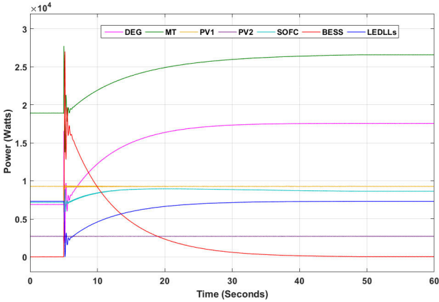
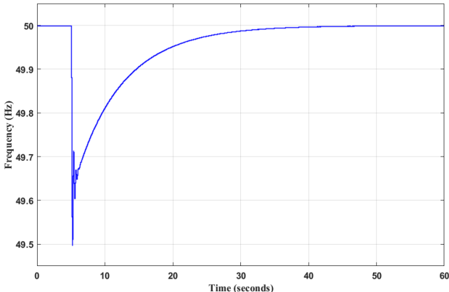
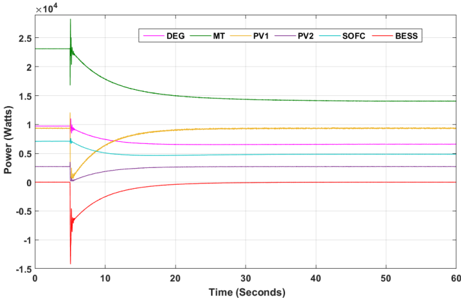
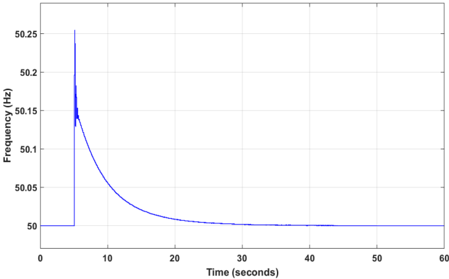
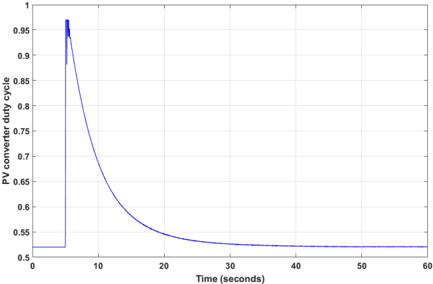
This paper proposes a novel and optimal battery sizing procedure for the primary frequency control (PFC) of islanded microgrid (MG). The Battery Energy Storage System (BESS), Photovoltaic (PV) systems and LED Lighting Loads (LEDLLs) are coordinated to quickly intercept frequency deviation in the stage of PFC. The PVs decrease their power generation in the case of surplus of power generation. The LEDLLs decrease their power consumption in the case of power shortage. The BESS participates in PFC in both cases by injecting/absorbing power. Some batteries with overloading characteristics are capable of fast discharge/charge for a short period, which can be used to reduce the required battery size for PFC application. The conventional overloading characteristics is based on constant power discharge/charge, but the BESS power varies in response to frequency deviation. To overcome this problem, a modified overloading characteristic is presented based on variable power discharge/charge, which is used to propose a battery sizing algorithm. The Genetic Algorithm is used to optimally determine the frequency controllers’ coefficients of the BESS, PVs and LEDLLs to minimize the required battery size while maintaining the MG frequency within safe operational limits. The proposed battery sizing procedure is evaluated on the CIGRE low voltage benchmark system using simulation in MATLAB/Simulink software. The results show that beside the overloading characteristics of the battery, the participation of PVs and LEDLLs in PFC also reduces the required battery size, because their participation reduces the share of BESS participation in PFC.
Overview
The claims and statistics of this paper haven’t been checked yet.
Run the check — free, no account needed. It reads the open-access text and checks the sources it cites.
Integrity signals
Registry
Cites
Statistics
Figures



Verification
Claims the paper makes
The claims and statistics of this paper haven’t been checked yet.
Run the check — free, no account needed. It reads the open-access text and checks the sources it cites.
Claims other papers make about this one
Each is checked against this paper’s own text: does it say what the citing paper says it does?
In the citing paper
“Bagheri-Sanjareh et al. [90] say that to control LED dimming, there are several approaches.Ways to control LED dimming include analog dimming and pulse width modulation (PWM) [91] dimming.”
From Machine Learning Methods in Smart Lighting Toward Achieving User Comfort: A Survey (2022) · cites this paper as Bagheri-Sanjareh et al. [90]
Self-check
Percentages, sums and reported differences re-computed from the paper’s own numbers.
The self-check needs the paper’s full text.
Citations
Cites
No references could be resolved yet.
Research works printed but not linked: 33
- 10.1016/S0378-7796(02)00033-0 · DOI
- 10.1016/j.rser.2010.09.041 · DOI
- 10.3233/JIFS-17698 · DOI
- 10.1016/B978-0-12-805343-0.00012-7 · DOI
- friedel, 2009, Modeling and Simulation of a Hybrid Wind-Diesel Microgrid
- 10.1016/j.ijepes.2019.105463 · DOI
- 10.1016/j.ijepes.2013.07.005 · DOI
- 10.1109/TPWRS.2006.873018 · DOI
- 10.1109/TEC.2013.2263885 · DOI
- 10.1007/s40565-015-0178-z · DOI
- 10.1109/TEC.2014.2358612 · DOI
- 10.1109/TSTE.2015.2450539 · DOI
- 10.1109/TSTE.2013.2261567 · DOI
- 10.1016/j.epsr.2018.02.009 · DOI
- 10.1109/TSG.2016.2544141 · DOI
- 10.1007/s40565-018-0442-0 · DOI
- kim, 2010, Cooperative control strategy of energy storage system and microsources for stabilizing the microgrid during islanded operation, IEEE Trans Power Electron, 25, 3037, 10.1109/TPEL.2010.2073488 · DOI
- 10.1109/JESTPE.2013.2289991 · DOI
- 10.1016/j.apenergy.2019.01.102 · DOI
- 10.1007/s40565-017-0332-x · DOI
- 10.1109/ACCESS.2019.2936859 · DOI
- 10.1109/EEEIC.2018.8494490 · DOI
- 10.1109/TSG.2015.2429919 · DOI
- 10.1109/PESW.2001.917016 · DOI
- 10.1016/j.ijepes.2019.105428 · DOI
- 10.1109/TIE.2012.2194969 · DOI
- 10.1109/MIE.2013.2280038 · DOI
- 10.1109/JESTPE.2018.2890385 · DOI
- 10.1109/MPE.2015.2397335 · DOI
- 10.1109/TSG.2016.2632127 · DOI
- xiao, 2016, LED lighting loads actively participating in power system frequency regulation, Proc IEEE Power Energy Soc Innov Smart Grid Technol Conf (ISGT), 1
- 10.1109/ICECUBE.2018.8610962 · DOI
- 10.1109/TIE.2011.2130503 · DOI
Cited by
Sorted by citations
Machine Learning Methods in Smart Lighting Toward Achieving User Comfort: A Survey
Putrada, A. G., Abdurohman, M., Perdana, D., & Nuha, H. H. (2022) · IEEE Access · doi:10.1109/access.2022.3169765 · Cited by 101
“Bagheri et al. [90] say that to control LED dimming, there are several approaches.”
Background
Metadata
- Authors
- Bagheri-Sanjareh, M., Nazari, M. H., & Gharehpetian, G. B.
- Affiliations
- Amirkabir University of Technology (IR)
- Venue
- IEEE Access
- Published
- 2020
- Volume
- 8
- Pages
- 95345-95359
- ISSN
- 2169-3536 (ISSN-L)
- OpenAlex
- W3027616065
- Cited by
- 37
- References
- 0
- Citations by year
- 2025: 4 · 2024: 2 · 2023: 3 · 2022: 8 · 2021: 14 · 2020: 6
- FWCI
- 3.83
- Type
- journal article
- Language
- en
- Open access
- gold
- doi.org
- Locations
- IEEE Access (publishedVersion, cc-by)
- DOAJ (DOAJ: Directory of Open Access Journals) (submittedVersion, cc-by-sa)
- Topics
- Physical Sciences › Engineering › Control and Systems Engineering › Microgrid Control and Optimization
- Physical Sciences › Engineering › Electrical and Electronic Engineering › Frequency Control in Power Systems
- Physical Sciences › Energy › Energy Engineering and Power Technology › Power Systems and Renewable Energy
- Keywords
- battery sizing, primary frequency control, islanded microgrids, battery energy storage, photovoltaic systems, frequency security, frequency deviation, genetic algorithm optimization
About these checks
Registry, retraction, Cites and statistics results are computed, not judged, with one exception: a printed reference that no index lists is read once by a model before it counts as a citation error. Claims are extracted by a model and kept only when their quote appears verbatim in the text; each cited source is then checked, with a model’s help, for whether it says what the claim relies on. Those verdicts can be wrong — read the claim’s quote and the cited source before relying on one.
Statistics and arithmetic are recomputed, not judged.
Confidence bands are shown only for fields calibrated on our annotated test set. None is calibrated yet, so no band is shown.
What counts as a claim ›How we measure confidence ›How we check this ›
Are you an author, or do you see a problem with this page? Request a review
How to cite
Cite CoChat for the checks on this page, and the paper for its own findings.
- This page
- CoChat. (2026). Citation check: A Novel and Optimal Battery Sizing Procedure Based on MG Frequency Security Criterion Using Coordinated Application of BESS, LED Lighting Loads, and Photovoltaic Systems. https://app.cochat.ai/papers/10.1109/access.2020.2995461
- The paper
- Bagheri-Sanjareh, M., Nazari, M. H., & Gharehpetian, G. B. (2020). A Novel and Optimal Battery Sizing Procedure Based on MG Frequency Security Criterion Using Coordinated Application of BESS, LED Lighting Loads, and Photovoltaic Systems. IEEE Access. https://doi.org/10.1109/access.2020.2995461
