

The DOI matches its Crossref record; 37 of the 38 references it cites were found in a registry or an index.
Behavioral Based Insider Threat Detection Using Deep Learning
Open accessAbstract
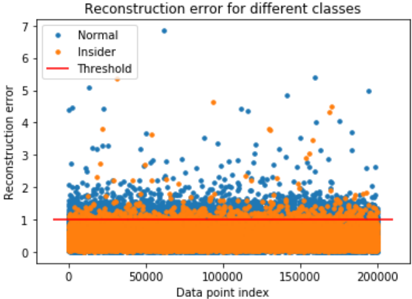
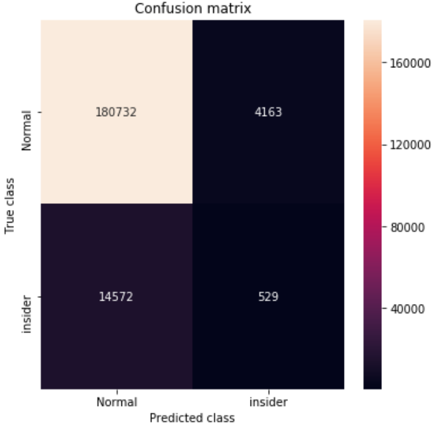
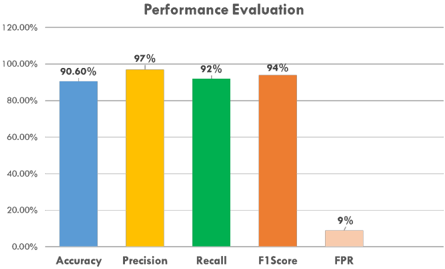
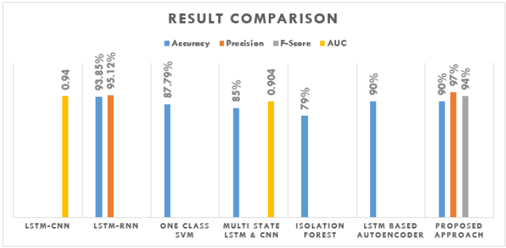
The most detrimental cyber attacks are usually not originated by malicious outsiders or malware but from trusted insiders. The main advantage insider attackers have over external elements is their ability to bypass security checks and remain undiscovered, this may cause serious damage to the organizational assets.This paper focuses on insider threat detection through behavioral analysis of users. User behavior is categorized as normal or malicious based on user activity. A series of events and activities are analyzed for feature selection to efficiently detect adversarial behavior. Selected feature vectors are used for model training during the implementation phase. A deep learning based approach is proposed that detects insiders with greater accuracy and low false positive rate. A rich event / user role based feature set containing Logon/Logoff events, User_role, Functional_unit etc are used for detection. The dataset used is the CMU CERT synthetic insider threat dataset r4.2. Performance of our proposed algorithm has been compared to other well-known techniques i.e. long short term Memory- convolutional neural network, random forest, long short term memory- recurrent neural network, one class support vector machine , Markov chain model,multi state long short term memory & convolutional neural network, gated recurrent unit & skipgram. The comparison proved that our novel approach produces relatively good accuracy( 90.60%), precision(97%) and F1 Score (94%).
Overview
The claims and statistics of this paper haven’t been checked yet.
Free: it reads the open-access text and checks the first 5 claims that cite a source we can check. Create a free account to check every claim.
Integrity signals
Registry
Cites
Statistics
Figures



Verification
Claims the paper makes
The claims and statistics of this paper haven’t been checked yet.
Free: it reads the open-access text and checks the first 5 claims that cite a source we can check. Create a free account to check every claim.
Claims other papers make about this one
Each is checked against this paper’s own text: does it say what the citing paper says it does?
The cited source doesn’t support the claim as written.
In the citing paper
“Trade-offs involve increased complexity, raising computational demands and reducing explainability compared to traditional ML [28,39].”
From A systematic review on insider threat detection using natural language processing (2025) · cites this paper as [28]
Checked by a reasoning model — may be wrong.
Experimental — accuracy not yet measuredThe source backs part of the claim, not all of it — or backs it for a different population, condition or comparison.
In the citing paper
“Several studies [45], [49], [55], [57] , [62] have demonstrated that deep learning, characterized by the use of neural networks with multiple layers, has remarkable capabilities in capturing intricate patterns within complex datasets.”
From A Review of Recent Advances, Challenges, and Opportunities in Malicious Insider Threat Detection Using Machine Learning Methods (2024) · cites this paper as [49]
Experimental — accuracy not yet measuredThe source backs part of the claim, not all of it — or backs it for a different population, condition or comparison.
In the citing paper
“Studies justify preprocessing as essential for reducing noise, normalizing data variations, and enhancing model performance, addressing QA1 by providing clear lower metrics [28,39].”
From A systematic review on insider threat detection using natural language processing (2025) · cites this paper as [28]
Experimental — accuracy not yet measured
Self-check
Percentages, sums and reported differences re-computed from the paper’s own numbers.
The self-check needs the paper’s full text.
Citations
Cites
A framework for understanding and predicting insider attacks
Schultz, E. E. (2002) · Computers & Security · doi:10.1016/s0167-4048(02)01009-x · Cited by 324
Insider Threat Detection with Deep Neural Network
Yuan, F., Cao, Y., Shang, Y., Liu, Y., Tan, J., & Fang, B. (2018) · Lecture Notes in Computer Science · doi:10.1007/978-3-319-93698-7_4 · Cited by 168 · cited 3×
“A technique using LSTM-CNN algorithm has been shown to identify user anomalous behavior in [5], by monitoring user activities and extracting temporal features.”
MethodProactive Insider Threat Detection through Graph Learning and Psychological Context
Brdiczka, O., Liu, J., Price, B., Shen, J., Patil, A., Chow, R., Bart, E., & Ducheneaut, N. (2012) · IEEE Security and Privacy Workshops (SPW) · doi:10.1109/spw.2012.29 · Cited by 147 · cited 2×
“A framework which uses the combined approach of Structural Anomaly Detection (SA) and Psychological Profiling (PP) of users for insider threat detection is proposed in [36].”
MethodInsider Threat Detection Based on User Behavior Modeling and Anomaly Detection Algorithms
Kim, J., Park, M., Kim, H., Cho, S., & Kang, P. (2019) · Applied Sciences · doi:10.3390/app9194018 · Cited by 134
User Behavior Analytics for Anomaly Detection Using LSTM Autoencoder - Insider Threat Detection
Sharma, B., Pokharel, P., & Joshi, B. (2020) · Proceedings of the 11th International Conference on Advances in Information Technology · doi:10.1145/3406601.3406610 · Cited by 130 · cited 1×
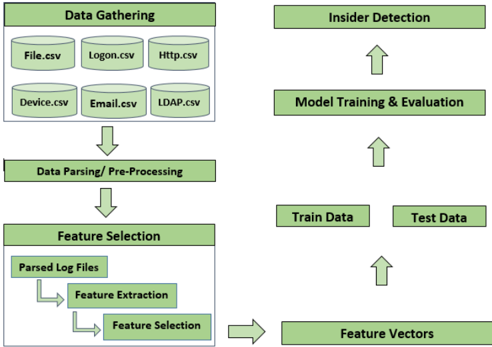
“The dataset consists of various csv files [38], in which following are included: 1) logon.csv : Log of users logging in and out on a computer 2) device.csv :Log of users connecting and disconnecting external devices (USB) 3) http.csv :Users browser history 4) email.csv :Email logs 5) file.csv :Log of…”
MethodScenario-Based Insider Threat Detection From Cyber Activities
Chattopadhyay, P., Wang, L., & Tan, Y.-P. (2018) · IEEE Transactions on Computational Social Systems · doi:10.1109/tcss.2018.2857473 · Cited by 115 · cited 2×
“A supervised time series based solution using two layer deep auto-encoder can also be used for insider attack detection [4].”
MethodComparing Insider IT Sabotage and Espionage: A Model-Based Analysis
Band, S. R., Cappelli, D. M., Fischer, L. F., Moore, A. P., Shaw, E. D., & Trzeciak, R. F. (2006) · Figshare · doi:10.1184/r1/6572663 · Cited by 99
Comparing Insider IT Sabotage and Espionage: A Model-Based Analysis
Band, S. R., Cappelli, D. M., Fischer, L. F., et al. (2006) · Figshare · doi:10.1184/r1/6572663.v1 · Cited by 98
Insider Threat Detection with Long Short-Term Memory
Lu, J., & Wong, R. K. (2019) · Australasian Computer Science Week Multiconference (ACSW) · doi:10.1145/3290688.3290692 · Cited by 80 · cited 2×
“The most widely used technique is LSTM [5], [10], [14], [19], [29], [32].”
MethodAnomaly-Based Insider Threat Detection Using Deep Autoencoders
Liu, L., De Vel, O., Chen, C., Zhang, J., & Xiang, Y. (2018) · 2018 IEEE International Conference on Data Mining Workshops (ICDMW) · doi:10.1109/icdmw.2018.00014 · Cited by 79 · cited 1×
“7 [17] Evaluation platform , memory & processing requirement and model train and test time are all missing 8 [24] The performance of the technique is compared with an existing technique Pearson-OCSVM 9 [12] Real life scenario evaluation of the model is missing.”
Method
Research works printed but not linked: 4
- 2016, Insider Threat Test Dataset
- gavai, 2015, Supervised and unsupervised methods to detect insider threat from enterprise social and online activity data, J Wireless Mobile Netw Ubiquitous Comput Dependable Appl, 6, 13
- 2019, Insider Threat Report 2019
- 2018, Insider Report 2018
Cited by
Alzaabi, F. R., & Mehmood, A. (2024) · IEEE Access · doi:10.1109/access.2024.3369906 · Cited by 204
“In this context, the effectiveness of the Variational Autoencoder(VAE) is demonstrated in [49] in identifying internal threats with high accuracy.”
BackgroundA Comprehensive Review of AI’s Current Impact and Future Prospects in Cybersecurity
Siam, A. A., Alazab, M., Awajan, A. W., & Faruqui, N. (2025) · IEEE Access · doi:10.1109/access.2025.3528114 · Cited by 88
“As shown in Table 6, RNNs are widely used to detect insider threats through sequential behavior analysis [86], while deep neural networks (DNNs) excel in advanced threat detection by extracting complex patterns from endpoint data [85].”
Wang, Z. Q., & El Saddik, A. (2023) · IEEE Access · doi:10.1109/access.2023.3324371 · Cited by 49
BRITD: behavior rhythm insider threat detection with time awareness and user adaptation
Song, S., Gao, N., Zhang, Y., & Ma, C. (2024) · Cybersecurity · doi:10.1186/s42400-023-00190-9 · Cited by 45
“…et al. 2018), DBN (Lin et al. 2017), CNN (Hu et al. 2019; Bu and Cho 2020), RNN (Zhang et al. 2018; Yuan et al. 2019; Tuor et al. 2017; Nasir et al. 2021; Dr et al. 2022; Villarreal-Vasquez et al. 2023), Transformer (Yuan et al. 2020), isomorphic graph representation learning (Jiang…”
BackgroundMethodInfluentialAghware, F. O., Ojugo, A. A., Adigwe, W., Odiakaose, C. C., Ojei, E. O., Ashioba, N. C., Okpor, M. D., & Geteloma, V. O. (2024) · Journal of Computing Theories and Applications · doi:10.62411/jcta.10323 · Cited by 82
Metadata
- Authors
- Nasir, R., Afzal, M., Latif, R., & Iqbal, W.
- Affiliations
- National University of Sciences and Technology (PK)
- Prince Sultan University (SA)
- Corresponding author
- Iqbal, Waseem
- Venue
- IEEE Access
- Published
- 2021
- Volume
- 9
- Pages
- 143266-143274
- ISSN
- 2169-3536 (ISSN-L)
- OpenAlex
- W3202733154
- Semantic Scholar
- 278da2f2e2cf30c3231873fa2d252cb053f40138
- Cited by
- 146
- References
- 38
- Citations by year
- 2026: 42 · 2025: 45 · 2024: 35 · 2023: 19 · 2022: 5
- FWCI
- 6.62
- Type
- journal article
- Language
- en
- Open access
- gold
- doi.org
- Licence
- Locations
- IEEE Access (publishedVersion, cc-by-nc-nd)
- DOAJ (DOAJ: Directory of Open Access Journals) (submittedVersion, cc-by-sa)
- Funders
- Artificial Intelligence Data Analytics Lab (AIDA) CCIS, Prince Sultan University, Riyadh, Saudi Arabia
- Topics
- Physical Sciences › Computer Science › Computer Networks and Communications › Network Security and Intrusion Detection
- Physical Sciences › Computer Science › Information Systems › Information and Cyber Security
- Physical Sciences › Computer Science › Information Systems › User Authentication and Security Systems
- Keywords
- insider threat detection, user behavior analysis, behavioral biometrics, deep learning, false positive reduction
About these checks
Registry, retraction, Cites and statistics results are computed, not judged, with one exception: a printed reference that no index lists is read once by a model before it counts as a citation error. Claims are extracted by a model and kept only when their quote appears verbatim in the text; each cited source is then checked, with a model’s help, for whether it says what the claim relies on. Those verdicts can be wrong — read the claim’s quote and the cited source before relying on one.
Statistics and arithmetic are recomputed, not judged.
Confidence bands are shown only for fields calibrated on our annotated test set. None is calibrated yet, so no band is shown.
What counts as a claim ›How we measure confidence ›How we check this ›
Are you an author, or do you see a problem with this page? Request a review
How to cite
Cite CoChat for the checks on this page, and the paper for its own findings.
- This page
- CoChat. (2026). Citation check: Behavioral Based Insider Threat Detection Using Deep Learning. https://app.cochat.ai/papers/10.1109/access.2021.3118297
- The paper
- Nasir, R., Afzal, M., Latif, R., & Iqbal, W. (2021). Behavioral Based Insider Threat Detection Using Deep Learning. IEEE Access. https://doi.org/10.1109/access.2021.3118297
Data sources
Bibliographic data: Semantic Scholar, OpenAlex, Crossref.
Contains information from the Semantic Scholar Academic Graph Datasets, made available under the ODC Attribution License (ODC-BY 1.0).
Semantic Scholar’s data is described in: Kinney, R., et al. (2023). The Semantic Scholar Open Data Platform. arXiv:2301.10140.
