

Behavioral Based Insider Threat Detection Using Deep Learning
Open accessThe DOI matches its Crossref record; 37 of the 38 references it cites were found in a registry or an index.
Abstract
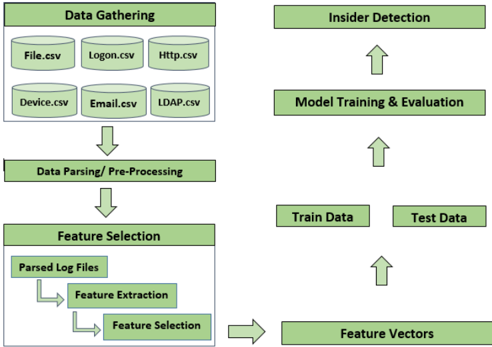
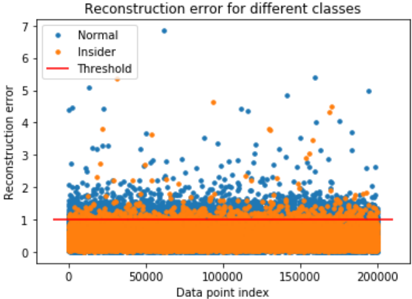
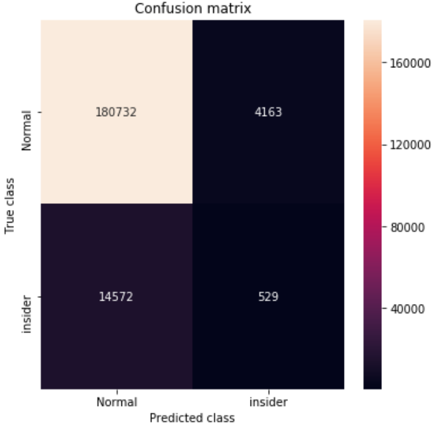
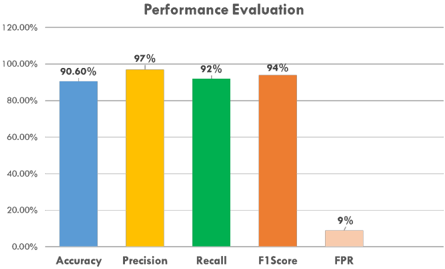
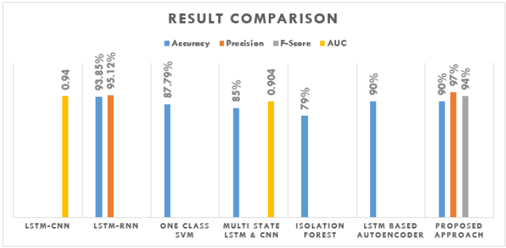
The most detrimental cyber attacks are usually not originated by malicious outsiders or malware but from trusted insiders. The main advantage insider attackers have over external elements is their ability to bypass security checks and remain undiscovered, this may cause serious damage to the organizational assets.This paper focuses on insider threat detection through behavioral analysis of users. User behavior is categorized as normal or malicious based on user activity. A series of events and activities are analyzed for feature selection to efficiently detect adversarial behavior. Selected feature vectors are used for model training during the implementation phase. A deep learning based approach is proposed that detects insiders with greater accuracy and low false positive rate. A rich event / user role based feature set containing Logon/Logoff events, User_role, Functional_unit etc are used for detection. The dataset used is the CMU CERT synthetic insider threat dataset r4.2. Performance of our proposed algorithm has been compared to other well-known techniques i.e. long short term Memory- convolutional neural network, random forest, long short term memory- recurrent neural network, one class support vector machine , Markov chain model,multi state long short term memory & convolutional neural network, gated recurrent unit & skipgram. The comparison proved that our novel approach produces relatively good accuracy( 90.60%), precision(97%) and F1 Score (94%).
Overview
The claims and statistics of this paper haven’t been checked yet.
Free: it reads the open-access text and checks the first 5 claims that cite a source we can check. Create a free account to check every claim.
Integrity signals
Registry
Cites
Statistics
Figures



Verification
Claims the paper makes
The claims and statistics of this paper haven’t been checked yet.
Free: it reads the open-access text and checks the first 5 claims that cite a source we can check. Create a free account to check every claim.
Claims other papers make about this one
Each is checked against this paper’s own text: does it say what the citing paper says it does?
The cited source doesn’t support the claim as written.
In the citing paper
“Trade-offs involve increased complexity, raising computational demands and reducing explainability compared to traditional ML [28,39].”
From A systematic review on insider threat detection using natural language processing (2025) · cites this paper as [28]
Checked by a reasoning model — may be wrong.
Experimental — accuracy not yet measuredThe source backs part of the claim, not all of it — or backs it for a different population, condition or comparison.
In the citing paper
“Several studies [45], [49], [55], [57] , [62] have demonstrated that deep learning, characterized by the use of neural networks with multiple layers, has remarkable capabilities in capturing intricate patterns within complex datasets.”
From A Review of Recent Advances, Challenges, and Opportunities in Malicious Insider Threat Detection Using Machine Learning Methods (2024) · cites this paper as [49]
Experimental — accuracy not yet measuredThe source backs part of the claim, not all of it — or backs it for a different population, condition or comparison.
In the citing paper
“Studies justify preprocessing as essential for reducing noise, normalizing data variations, and enhancing model performance, addressing QA1 by providing clear lower metrics [28,39].”
From A systematic review on insider threat detection using natural language processing (2025) · cites this paper as [28]
Experimental — accuracy not yet measured
Self-check
Percentages, sums and reported differences re-computed from the paper’s own numbers.
The self-check needs the paper’s full text.
Citations
Cites
A framework for understanding and predicting insider attacks
Schultz, E. E. (2002) · Computers & Security · doi:10.1016/s0167-4048(02)01009-x · Cited by 324
Insider Threat Detection with Deep Neural Network
Yuan, F., Cao, Y., Shang, Y., Liu, Y., Tan, J., & Fang, B. (2018) · Lecture Notes in Computer Science · doi:10.1007/978-3-319-93698-7_4 · Cited by 168 · cited 3×
“A technique using LSTM-CNN algorithm has been shown to identify user anomalous behavior in [5], by monitoring user activities and extracting temporal features.”
MethodInsider Threat Detection Based on User Behavior Modeling and Anomaly Detection Algorithms
Kim, J., Park, M., Kim, H., Cho, S., & Kang, P. (2019) · Applied Sciences · doi:10.3390/app9194018 · Cited by 134
User Behavior Analytics for Anomaly Detection Using LSTM Autoencoder - Insider Threat Detection
Sharma, B., Pokharel, P., & Joshi, B. (2020) · Proceedings of the 11th International Conference on Advances in Information Technology · doi:10.1145/3406601.3406610 · Cited by 130 · cited 1×
“The dataset consists of various csv files [38], in which following are included: 1) logon.csv : Log of users logging in and out on a computer 2) device.csv :Log of users connecting and disconnecting external devices (USB) 3) http.csv :Users browser history 4) email.csv :Email logs 5) file.csv :Log of…”
MethodProactive Insider Threat Detection through Graph Learning and Psychological Context
Brdiczka, O., Liu, J., Price, B., Shen, J., Patil, A., Chow, R., Bart, E., & Ducheneaut, N. (2012) · 2012 IEEE Symposium on Security and Privacy Workshops · doi:10.1109/spw.2012.29 · Cited by 115 · cited 2×
“A framework which uses the combined approach of Structural Anomaly Detection (SA) and Psychological Profiling (PP) of users for insider threat detection is proposed in [36].”
MethodScenario-Based Insider Threat Detection From Cyber Activities
Chattopadhyay, P., Wang, L., & Tan, Y.-P. (2018) · IEEE Transactions on Computational Social Systems · doi:10.1109/tcss.2018.2857473 · Cited by 115 · cited 2×
“A supervised time series based solution using two layer deep auto-encoder can also be used for insider attack detection [4].”
MethodComparing Insider IT Sabotage and Espionage: A Model-Based Analysis
Band, S. R., Cappelli, D. M., Fischer, L. F., et al. (2006) · Figshare · doi:10.1184/r1/6572663.v1 · Cited by 98
Comparing Insider IT Sabotage and Espionage: A Model-Based Analysis
Band, S. R., Cappelli, D. M., Fischer, L. F., Moore, A. P., Shaw, E. D., & Trzeciak, R. F. (2006) · Figshare · doi:10.1184/r1/6572663 · Cited by 98
Anomaly-Based Insider Threat Detection Using Deep Autoencoders
Liu, L., De Vel, O., Chen, C., Zhang, J., & Xiang, Y. (2018) · 2018 IEEE International Conference on Data Mining Workshops (ICDMW) · doi:10.1109/icdmw.2018.00014 · Cited by 79 · cited 1×
“7 [17] Evaluation platform , memory & processing requirement and model train and test time are all missing 8 [24] The performance of the technique is compared with an existing technique Pearson-OCSVM 9 [12] Real life scenario evaluation of the model is missing.”
MethodInsider Threat Detection with Long Short-Term Memory
Lu, J., & Wong, R. K. (2019) · Proceedings of the Australasian Computer Science Week Multiconference · doi:10.1145/3290688.3290692 · Cited by 75 · cited 2×
“The most widely used technique is LSTM [5], [10], [14], [19], [29], [32].”
Method
Research works printed but not linked: 4
- 2016, Insider Threat Test Dataset
- 28. Gaurang Gavai, Kumar Sricharan, Dave Gunning, John Hanley, Mudita Singhal, and Rob Rolleston."Supervised and Unsupervised methods to detect Insider Threat from Enterprise Social and Online Activity Data" Journal of Wireless Mobile Networks, Ubiquitous Computing, and De- pendable Applications, volume: 6
- 2. "Insider threat report 2019"
- 1. "Insider Report 2018", CA Technologies VOLUME 4, 2016
Cited by
Alzaabi, F. R., & Mehmood, A. (2024) · IEEE Access · doi:10.1109/access.2024.3369906 · Cited by 204
“In this context, the effectiveness of the Variational Autoencoder(VAE) is demonstrated in [49] in identifying internal threats with high accuracy.”
BackgroundA Comprehensive Review of AI’s Current Impact and Future Prospects in Cybersecurity
Siam, A. A., Alazab, M., Awajan, A. W., & Faruqui, N. (2025) · IEEE Access · doi:10.1109/access.2025.3528114 · Cited by 88
“As shown in Table 6, RNNs are widely used to detect insider threats through sequential behavior analysis [86], while deep neural networks (DNNs) excel in advanced threat detection by extracting complex patterns from endpoint data [85].”
Wang, Z. Q., & El Saddik, A. (2023) · IEEE Access · doi:10.1109/access.2023.3324371 · Cited by 49
BRITD: behavior rhythm insider threat detection with time awareness and user adaptation
Song, S., Gao, N., Zhang, Y., & Ma, C. (2024) · Cybersecurity · doi:10.1186/s42400-023-00190-9 · Cited by 45
“…et al. 2018), DBN (Lin et al. 2017), CNN (Hu et al. 2019; Bu and Cho 2020), RNN (Zhang et al. 2018; Yuan et al. 2019; Tuor et al. 2017; Nasir et al. 2021; Dr et al. 2022; Villarreal-Vasquez et al. 2023), Transformer (Yuan et al. 2020), isomorphic graph representation learning (Jiang…”
BackgroundMethodInfluentialAghware, F. O., Ojugo, A. A., Adigwe, W., Odiakaose, C. C., Ojei, E. O., Ashioba, N. C., Okpor, M. D., & Geteloma, V. O. (2024) · Journal of Computing Theories and Applications · doi:10.62411/jcta.10323 · Cited by 82
Insider threat detection using supervised machine learning algorithms
Manoharan, P., Yin, J., Wang, H., Zhang, Y., & Ye, W. (2024) · Telecommunication Systems · doi:10.1007/s11235-023-01085-3 · Cited by 34
“This paper [47] discussed a deep learning approach to detect insider threats based on user behavior.”
Unveiling Shadows: Harnessing Artificial Intelligence for Insider Threat Detection
Yilmaz, E., & Can, O. (2024) · Engineering, Technology & Applied Science Research · doi:10.48084/etasr.6911 · Cited by 32
Tanaji, B. A., & Roychowdhury, S. (2024) · Applied Soft Computing · doi:10.1016/j.asoc.2024.111628 · Cited by 37
An Artificial Neural Network Autoencoder for Insider Cyber Security Threat Detection
Saminathan, K., Reddy, M. S. T., Damodharan, S., Maheswar, R., & Lörincz, J. (2023) · Future Internet · doi:10.3390/fi15120373 · Cited by 41
Insights into user behavioral-based insider threat detection: systematic review
Kamatchi, K., & Uma, E. (2025) · International Journal of Information Security · doi:10.1007/s10207-025-01002-6 · Cited by 48
“This inherent limitation can make training LSTM-based models [131–141] computationally expensive and time-consuming, especially for large datasets or complex threat detection scenarios.”
Randive, K., Mohan, R., & Sivakrishna, A. M. (2023) · Journal of Information Security and Applications · doi:10.1016/j.jisa.2023.103434 · Cited by 27
Ako, R. E., Aghware, F. O., Okpor, M. D., Akazue, M. I., Yoro, R. E., Ojugo, A. A., Setiadi, D. R. I. M., Odiakaose, C. C., Abere, R. A., Emordi, F. U., et al. (2024) · Journal of Computing Theories and Applications · doi:10.62411/jcta.10562 · Cited by 54
“…on how well the model fits [105] – [107] in its quest for ground truth (adoption of relevant feats concerning its nearness to the target class) [108] – [110] – which in some cases, may not always be available during training [111] – [114] to often result in poor generalization and model…”
BackgroundLaAeb: A comprehensive log-text analysis based approach for insider threat detection
Fei, K., Zhou, J., Zhou, Y., Gu, X., Fan, H., Li, B., Wang, W., & Chen, Y. (2024) · Computers & Security · doi:10.1016/j.cose.2024.104126 · Cited by 32
Implementing Data Exfiltration Defense in Situ: A Survey of Countermeasures and Human Involvement
Chung, M.-H., Yang, Y., Wang, L., Cento, G., Jerath, K., Raman, A., Lie, D., & Chignell, M. (2023) · ACM Computing Surveys · doi:10.1145/3582077 · Cited by 34
“Previous work on data exiltration has relied on anomalous behavior detection, often using statistical and machine learning techniques [111, 134].”
A Machine Learning Framework & Development for Insider Cyber-crime Threats Detection
Yousef, R., Jazzar, M., Eleyan, A., & Bejaoui, T. (2023) · 2023 International Conference on Smart Applications, Communications and Networking (SmartNets) · doi:10.1109/smartnets58706.2023.10215718 · Cited by 20
“[10] proposed a system using user-based profiling.”
Mitigating Insider Threat: A Neural Network Approach for Enhanced Security
Lavanya, P., Glory, H. A., & Sriram, V. S. S. (2024) · IEEE Access · doi:10.1109/access.2024.3404814 · Cited by 25
Anomaly Detection and Enterprise Security using User and Entity Behavior Analytics (UEBA)
Zunair Ahmed Khan, M., Mubashir Khan, M., & Arshad, J. (2022) · 2022 3rd International Conference on Innovations in Computer Science & Software Engineering (ICONICS) · doi:10.1109/iconics56716.2022.10100596 · Cited by 19
“This paper [34] centers around insider danger identification through conducting an investigation of”
BackgroundOmoruwou, F., Ojugo, A. A., & Ilodigwe, S. E. (2024) · Journal of Computing Theories and Applications · doi:10.62411/jcta.9539 · Cited by 40
Al-Muntaser, B., Mohamed, M. A., & Tuama, A. Y. (2023) · International Journal of Advanced Computer Science and Applications · doi:10.14569/ijacsa.2023.0140636 · Cited by 26
“By monitoring user activities during using the system like login and logoff beside other activities during doing normal task and then deploying these data by using deep leaning to detect insider [13].”
MethodM-EOS: Modified equilibrium optimization based stacked CNN for insider threat detection
Anju, A., & Krishnamurthy, M. (2024) · Wireless Networks · doi:10.1007/s11276-024-03678-5 · Cited by 17
“One of the most fundamental yet difficult problems in cyber security is spotting hostile activity [1].”
Towards the Advancement of Cashless Transaction: A Security Analysis of Electronic Payment Systems
Moon, I. T., Shamsuzzaman, M., Mridha, M. M. R., & Rahaman, A. S. M. M. (2022) · Journal of Computer and Communications · doi:10.4236/jcc.2022.107007 · Cited by 31
“As the insiders are permitted to penetrate the cyber assets of the system, hence an adequate possibility is to be impaired the integrity of data by the malicious insider compared with an exterior invader [54].”
BackgroundAn insider threat detection method based on improved Test-Time Training model
Tao, X., Liu, J., Yu, Y., Zhang, H., & Huang, Y. (2025) · High-Confidence Computing · doi:10.1016/j.hcc.2024.100283 · Cited by 23
Neuro-Symbolic AI and Behavioral Intelligence: Towards Explainable Cybersecurity Mechanisms
Shreha, S. A., Ravikumar, R. N., & Aarthi, S. (2025) · Advances in computational intelligence and robotics book series · doi:10.4018/979-8-3373-5012-7.ch005 · Cited by 17
Hadi, H. J., Ahmad, N., Aziz, K., Cao, Y., & Alshara, M. A. (2024) · IEEE Access · doi:10.1109/access.2024.3510533 · Cited by 23
Jones, L. A. (2024) · SocioEconomic Challenges · doi:10.61093/sec.8(2).44-63.2024 · Cited by 25
Proposed Method for Threat Detection Using User Behavior Analysis
Pandhurnekar, V., Iyyappan, A., Dhok, D., Khante, V., & Wazalwar, S. (2023) · IEEE International Conference on Technology, Engineering, Management for Societal Impact using Marketing, Entrepreneurship and Talent (TEMSMET) · doi:10.1109/temsmet56707.2023.10150053 · Cited by 14
“Various algorithms using statistical approaches for prediction have been used in this field of research.[8]”
MethodUnsupervised User-Based Insider Threat Detection Using Bayesian Gaussian Mixture Models
Bertrand, S., Desharnais, J., & Tawbi, N. (2023) · Conference on Privacy, Security and Trust · doi:10.1109/pst58708.2023.10320169 · Cited by 19
“As examples, Nasir et al. [10] and Sharma et al. [11] propose the use of LSTM-AutoEncoders to encode and decode session activity summary vectors and label the sessions with the highest reconstruction error score as being of malicious nature.”
MethodContextual feature representation for image-based insider threat classification
Duan, S.-M., Yuan, J.-T., & Wang, B. (2024) · Computers & Security · doi:10.1016/j.cose.2024.103779 · Cited by 17
Ojugo, A. A., Ejeh, P. O., Akazue, M. I., Ashioba, N. C., Odiakaose, C. C., Ako, R. E., Nwozor, B. U., & Emordi, F. U. (2023) · Journal of Computing Theories and Applications · doi:10.33633/jcta.v1i2.9355 · Cited by 31
“…variant addresses the fundamental issues raised therein the Markovian process via the (a) use of positional data (alignment) in the sequences (i.e., resident and migrant nodes) and (b) use of a null transition state(s) to match insert/delete (migration) sequences for observed transition [72], [73].”
MethodMulti-Granularity User Anomalous Behavior Detection
Feng, W., Cao, Y. J., Chen, Y., Wang, Y., Hu, N., Jia, Y., & Gu, Z. (2024) · Applied Sciences · doi:10.3390/app15010128 · Cited by 23
Insider Threat Detection Based On Heterogeneous Graph Neural Network
Tian, T., Gong, Y., Jiang, B., Liu, J., Feng, H., & Lu, Z. (2023) · IEEE International Conference on Trust, Security and Privacy in Computing and Communications (TrustCom) · doi:10.1109/trustcom60117.2023.00096 · Cited by 9
“Related research proposes deep feed-forward neural networks to detect insider threats [18] [19].”
BackgroundSocial Engineering Threat: Phishing Detection using Machine Learning Approach
Spoorthi, M., Hegde, R., & Soumyasri, S. M. (2023) · IEEE Mysore Sub Section International Conference (MysuruCon) · doi:10.1109/mysurucon59703.2023.10397016 · Cited by 9
“However, in real-world scenarios with more varied and complicated behavioral patterns and hostile insiders who would try to dodge detection by changing their behavior, the proposed approach may run into difficulties [2][23].”
BackgroundA systematic review on insider threat detection using natural language processing
Kundiya, K., & Haribhakta, Y. (2025) · International Journal of Information Security · doi:10.1007/s10207-025-01145-6 · Cited by 9
Applying metaheuristic optimization for insider-threat detection using natural language processing
Živković, T., Zivkovic, M. Z., Jovanović, L., Šimić, V., Radomirović, B., Mzili, T., Zeljkovic, V., & Bačanin, N. (2026) · International Journal of Data Science and Analytics · doi:10.1007/s41060-025-00996-5 · Cited by 16
“Conventional rule-based systems often fail to identify subtle behavioral deviations or context-dependent actions that may indicate insider threats [7, 8].”
Rahman, M. M. H., Al-Naeem, M., & Ibrahim, A. A. (2022) · IEEE Access · doi:10.1109/access.2022.3214819 · Cited by 10
“hand, does not constitute a security policy breach in the same way that a hostile policy violation does [8].”
BackgroundParking Analytics Framework using Deep Learning
Benjdira, B., Koubâa, A., Boulila, W., & Ammar, A. (2022) · International Conference of Smart Systems and Emerging Technologies (SMARTTECH) · doi:10.1109/smarttech54121.2022.00051 · Cited by 13
“It has enabled several industrial applications ranging from surveillance [2] and public safety [3]–[5] to robotics perception [6], medical intervention [7], [8], and face recognition [9], [10].”
BackgroundCloud Insider Threat Detection using Deep Learning Models
Shanmugapriya, D., Dhanya, C., Asha, S., Padmavathi, G., & Suthishni, D. N. P. (2024) · International Conference on Computing for Sustainable Global Development · doi:10.23919/indiacom61295.2024.10498767 · Cited by 8
“(1) to generate a unique manufactured synthetic dataset [1,2,7,5 ]. while overall λ is specified by way of a spontaneous numeral among 0 and 1, the proportional data is designed through exclamation among x i and x zi .”
BackgroundLog2Graph: A graph convolution neural network based method for insider threat detection
Fei, K., Zhou, J., Su, L., Wang, W., & Chen, Y. (2024) · Journal of Computer Security · doi:10.3233/jcs-230092 · Cited by 15
NLP and Neural Networks for Insider Threat Detection
Baghalizadeh-Moghadam, N., Neal, C., Cuppens, F., & Cuppens-Boulahia, N. (2024) · IEEE International Conference on Trust, Security and Privacy in Computing and Communications (TrustCom) · doi:10.1109/trustcom63139.2024.00279 · Cited by 12
“This problem is also tackled by Nasir et al. [33] and Sharma et al. [16] by using LSTM-AutoEncoders to encode and decode user session activity over time and identify sessions with high reconstruction errors as potential threats.”
SiaDNN: Siamese deep neural network for anomaly detection in user behavior
Patel, T., & Iyer, S. S. (2025) · Knowledge-Based Systems · doi:10.1016/j.knosys.2025.113769 · Cited by 8
Ofori, H. K., Bell-Dzide, K., Brown-Acquaye, W. L., Lempogo, F., Frimpong, S. O., Agbehadji, I. E., & Millham, R. C. (2025) · Symmetry · doi:10.3390/sym17101704 · Cited by 7
Al-Na’amneh, Q., Aljawarneh, M. M., Hazaymih, R., Alzboon, L., Laila, D. A., & Albawaneh, S. (2025) · Advances in computational intelligence and robotics book series · doi:10.4018/979-8-3693-9919-4.ch013 · Cited by 9
Muñiz, D. Á., Pérez-Miguel, L., Miguel, Muñoz, A. M., Larriva-Novo, X. A., Álvarez-Campana, M., & Rivera, D. (2025) · Computers & Security · doi:10.1016/j.cose.2025.104743 · Cited by 12
Adeduro, O. O., Josh-Falade, O., & Mesioye, A. E. (2026) · Journal of Future Artificial Intelligence and Technologies · doi:10.62411/faith.3048-3719-307 · Cited by 7
Human Factors In Security Management: Understanding And Mitigating Insider Threats
Asasfeh, A., Alnawayseh, S. E. A., Alomoush, R. A., & Salahat, M. (2024) · International Conference on Cyber Resilience (ICCR) · doi:10.1109/iccr61006.2024.10532956 · Cited by 11
“Paradoxically, this obligation to managers to prevent revenge-pushed behaviors renders them chargeable for mitigating such occurrences [16].”
BackgroundResearch Opportunity of Insider Threat Detection based on Machine Learning Methods
Prajitno, N. T. M., Hadiyanto, H., & Rochim, A. F. (2023) · International Conference on Artificial Intelligence in Information and Communication (ICAIIC) · doi:10.1109/icaiic57133.2023.10067010 · Cited by 7
“The stages of the process commonly start with data processing, feature selection, data learning, detection, and evaluation [6][62].”
BackgroundGörmez, Y., Arslan, H., IŞIK, Y. E., & GÜNDÜZ, V. (2024) · Bilişim Teknolojileri Dergisi · doi:10.17671/gazibtd.1386734 · Cited by 5
An Adaptive Insider Threat Detection Framework Using Causal Analysis and Liquid Neural Networks
Sivakrishna, A. M., Mohan, R., & Anumandla, S. K. (2025) · Security and Privacy · doi:10.1002/spy2.70157 · Cited by 4
“Similarly, Nasir et al. [24] employed an LSTM Autoencoder.”
Insider Threat Defense Strategies: Survey and Knowledge Integration
Song, C., Zhang, J., Ma, L., Hu, X., Zheng, J., & Yang, L. (2024) · Lecture notes in computer science · doi:10.1007/978-981-97-5489-2_10 · Cited by 5
Temporal Quantum Neural Networks for Insider Threat Detection
Sivakrishna, A. M., Mohan, R., Nair, N. S., & Rohini, V. (2025) · International Conference on Recent Advances in Information Technology · doi:10.1109/rait65068.2025.11089064 · Cited by 8
“Long short-term memory (LSTM) networks are leveraged for their ability to capture sequential behavioral patterns, as shown in studies focusing on temporal data [7].”
An Efficient Insider Threat Detection Framework Using Bayesian‐Optimized XGBoost
Sivakrishna, A. M., Mohan, R., & Rohini, V. (2025) · Security and Privacy · doi:10.1002/spy2.70122 · Cited by 6
“Similarly, LSTM Autoencoder [17] achieves a precision of 97%, but its over-all accuracy is lower at 90.6%, suggesting that while it excels in detecting insider threats, it may also misclassify benign activities as threats.”
InfluentialAI-Powered Zero Trust Access Evaluation Using Behavioral Fingerprinting
Yadav, H., Ramachandran, G. S., & Sharma, K. (2025) · International Journal of Computer Applications · doi:10.5120/ijca2025925193 · Cited by 4
Machine Learning-Based Network Monitoring for Cybersecurity Threat Detection
Eshmawi, A. A., Al-Nowami, A., Mirza, M., Abu-Raya, N., Al-Thabit, R., Shiaeles, S. N., Choi, J., & Ashraf, I. (2025) · Journal of Network and Systems Management · doi:10.1007/s10922-025-10001-w · Cited by 5
“Meanwhile, [49] introduces a deep learning-based framework incorporating user-role and event features (e.g., Logon/Logoff, functional unit) from the CERT r4.”
Farhadighalati, N., Estrada-Jimenez, L. A., Kalateh, S., Nikghadam-Hojjati, S., & Barata, J. (2025) · Informatics · doi:10.3390/informatics13010001 · Cited by 4
“Specific violation types include unauthorized cross-department access [49] (e.g., administrative credentials used to access clinical data), off-shift access from unusual locations or devices [50] (simulating compromised credentials used by external attackers), role-resource mismatches (e.g.,…”
Insider Threat Detection using Explainable Machine Learning Models in Corporate Networks
Bhatnagar, P., Mandru, S. K., Sharma, P., Singh, V., Singh, J. P., & Katheria, S. (2025) · International Conference on Electronics, Communication and Aerospace Technology (ICECA) · doi:10.1109/iceca66444.2025.11383006 · Cited by 3
“Nasir et al. (2021) proposed a deep learning method for insider threat detection based on behavioral analysis of the users.”
InfluentialBrizimor, S. E., Okpor, M. D., Yoro, R. E., Emordi, F. U., Ifioko, M., Odiakose, C., Ojugo, A. A., Ejeh, P. O., Abere, R. A., Ako, R. E., et al. (2024) · Advances in Multidisciplinary & Scientific Research Journal Publication · doi:10.22624/aims/sij/v10n1p7 · Cited by 23
CGBA: A Efficient Insider Attacker Detection Technique in Machine Learning
Nandini, K., Girisha, G. S., & Reddy, S. R. (2024) · International Conference on Advances in Computing, Communication and Applied Informatics (ACCAI) · doi:10.1109/accai61061.2024.10601886 · Cited by 3
“A malicious insider is an individual who possesses access to sensitive information within an organization and intentionally exploits it against the company's interests [13].”
BackgroundPerformance Evaluation Framework for Insider Threat Detection Using Machine Learning
Abdallah, H. E.-E., Abd-Elkader, H. H., Mohamed, K. K., AbdelMoniem, M., El-Assal, N. W., Mohamed, S. M., Said, S. A., & Salem, S. A. (2024) · Intelligent Methods, Systems, and Applications (IMSA) · doi:10.1109/imsa61967.2024.10652829 · Cited by 6
“[4] In this paper, a performance evaluation framework for insider threat detection using machine learning is proposed, which helps cybersecurity analysts who use information from user actions to identify and detect malicious insider threats at various granularity levels (day, week, session, and…”
BackgroundEnhancing Insider Threat Detection with Machine Learning Techniques
Prasad, P. S. S., Nayak, S. K., & Krishna, M. V. (2024) · International Conference on Integrated Intelligence and Communication Systems (ICIICS) · doi:10.1109/iciics63763.2024.10860057 · Cited by 4
“[11] used user behavior analysis to distinguish between normal and malicious insider threat detection.”
Users’ Scenario-Base for Analysing Insider Threat Detection Based on User’s Downloads Activity Logs
Padiet, P., Islam, R., & Khan, M. A. (2024) · Lecture notes in networks and systems · doi:10.1007/978-3-031-53963-3_30 · Cited by 3
A Framework for Insider Threat Detection Using Role-Based Profile Assessment and Threshold
Al-Na’amneh, Q., Aljawarneh, M. M., & Hazaymih, R. (2025) · Advances in computational intelligence and robotics book series · doi:10.4018/979-8-3693-9919-4.ch006 · Cited by 5
Unsupervised Insider Threat Detection Using Multi-Head Self-Attention Mechanisms
Bertrand, S., Germain, P., & Tawbi, N. (2024) · Intelligent Cybersecurity Conference (ICSC) · doi:10.1109/icsc63108.2024.10895186 · Cited by 6
“In the insider threat detection literature, Long Short-Term Memory networks were proposed by Nasir et al. [19] and Sharma et al. [20] to generate session-based feature vectors from audit data.”
BBNAC: Blockchain Based Network Access Control for IT/OT Infrastructures
Korkuç, Ç., Genç, Y., Dogantuna, T., Afacan, E., & Dener, M. (2026) · Journal of Network and Systems Management · doi:10.1007/s10922-026-10033-w · Cited by 8
“Such attacks often occur without the knowledge of users, necessitating cybersecurity strategies that are effective against these types of threats [22].”
Akampurira, P., Edozie, E., Sadiq, B. O., & Buhari, M. D. (2026) · F1000Research · doi:10.12688/f1000research.178351.2 · Cited by 2
Analysis of Malicious Intruder Threats to Data Integrity
Padiet, P., Islam, R., & Khan, M. A. (2023) · Lecture notes in networks and systems · doi:10.1007/978-3-031-33743-7_29 · Cited by 3
Kim, J.-S., Seo, J., Hwang, S.-J., Shin, J., & Choi, Y.-H. (2024) · ACM Symposium on Cloud Computing (SoCC) · doi:10.1145/3698038.3698533 · Cited by 2
“Although methods for detecting cloud abnormal behavior through contextual user data [27, 33] also exist, it is difficult to apply them in typical cloud environments because they utilize data used for organizational management purposes, such as role and department.”
An authorization framework to mitigate insider threat in CIM-based smart grid
Mahmoudi-Nasr, P. (2024) · Sustainable Energy Grids and Networks · doi:10.1016/j.segan.2024.101572 · Cited by 2
Dere, K. D., & Aher, P. G. (2024) · International Conference on IoT Based Control Networks and Intelligent Systems (ICICNIS) · doi:10.1109/icicnis64247.2024.10823167 · Cited by 2
“Rida Nasir et al.,[19] introduced a LSTM-Autoencoder for insider threat detection.”
AI-Enhanced Cybersecurity: A Comprehensive Review of Techniques and Challenges
Burhanuddin, L. A. B., Shibghatullah, A. S., Ilias, I. S. C., Zainudin, Z., & Zamry, N. M. (2025) · Studies in computational intelligence · doi:10.1007/978-3-031-75091-5_7 · Cited by 5
Assessing the impact of user behavior and insider threats on critical infrastructure
Agarkar, A. A., Karyakarte, M. S., Kulkarni, R. V., Baug, V., Abhang, S. P., & Sule, B. (2025) · Information Security Journal A Global Perspective · doi:10.1080/19393555.2025.2502553 · Cited by 3
“In their work, Nasir et al. (2021) show how deep learning can detect behavior-based insider threats.”
AI Based Methods for Insider Threats Detection for Cloud Risk Mitigation
Wairagade, A., Sonani, R., & Govindarajan, V. (2025) · International Conference on IT Innovation and Knowledge Discovery (ITIKD) · doi:10.1109/itikd63574.2025.11004994 · Cited by 3
“Researchers [41], suggested the use of an LSTM auto encoder for the detection of insider threats.”
Randive, K. D., Mohan, R., & Sivakrishna, A. M. (2025) · International Journal of Data Science and Analytics · doi:10.1007/s41060-025-00960-3 · Cited by 2
“The ITD methods approached through the use of VecRep in anomaly detection [12, 23–25, 29–31, 35] behavioral pro-filing [36], and rule-based systems [26, 37] have certain limitations.”
Malware Detection Classification using Recurrent Neural Network
Kumar, P. S., Salma, U., Mishra, I., Selvarajan, S., Tripathi, D. R., & Siva Rama Krishna, T. (2022) · International Conference on Technological Advancements in Computational Sciences (ICTACS) · doi:10.1109/ictacs56270.2022.9988624 · Cited by 2
“[16] III.”
MethodTanaji, B. A., & Roychowdhury, S. (2023) · SSRN Electronic Journal · doi:10.2139/ssrn.4463279 · Cited by 2
Systematic Literature Review and Metadata Analysis of Insider Threat Detection Mechanism
Idris, I., & Damilola, A. N. (2023) · International Journal of Computer Science and Mobile Computing · doi:10.47760/ijcsmc.2023.v12i04.007 · Cited by 3
An Abnormal Behavior Detection Method Based on User Behavior Correlation Feature Sequence Modeling
Zhou, Y., Sun, L., Wu, J., Gao, Y., & Wu, X. (2024) · IEEE International Conference on Data Science in Cyberspace · doi:10.1109/dsc63484.2024.00027 · Cited by 1
Insider threats in highly automated cyber systems
Chawande, S. (2024) · World Journal of Advanced Engineering Technology and Sciences · doi:10.30574/wjaets.2024.13.2.0642 · Cited by 6
“Modern threat detection systems must provide thorough explainability with regulatory compliance and ethical standards to protect security standards without harming human values (Nasir et al., 2021).”
Lavanya, P., Glory, H. A., Aggarwal, M., & Sriram, V. S. S. (2025) · Scientific Reports · doi:10.1038/s41598-025-12127-y · Cited by 1
Gautam, A., Jalal, M., Khurana, S. S., & Singh, P. (2025) · Engineering Applications of Artificial Intelligence · doi:10.1016/j.engappai.2025.111849 · Cited by 1
Performance Evaluation of LSTM Autoencoder for Behavioral-Based Insider Threat Detection
Iseed, S., & Hamarsheh, M. M. N. (2025) · International Conference on Smart Applications, Communications and Networking (SmartNets) · doi:10.1109/smartnets65254.2025.11106886 · Cited by 1
“The authors in [26] propose a behavioral-based insider threat detection model leveraging LSTM-Autoencoders to analyze user activities and detect deviations from normal behavior.”
MITD-Net: Markov image-based threat detection network
Algabri, M. N. A., Alhrazi, F., Luis, C. Q., Abdu, A., Gu, Y. H., & Algabri, R. (2025) · Scientific Reports · doi:10.1038/s41598-025-19275-1 · Cited by 1
“LSTM autoencoder 23 : This model uses an LSTM Autoencoder through behavioral analysis.”
Explicit Behavioral Embedding Method for Generating Explanations of Insider Threat Events
Abbasi, A. M., Muqtadir, F., Basir, O., & Cao, S. C. (2025) · IEEE International Carnahan Conference on Security Technology (ICCST) · doi:10.1109/iccst63435.2025.11293461 · Cited by 1
“Let x i ∈ R d represent the probability vector of frequencies observed in the day [12] for the user, where d is the number of action-types that the user performs and are logged by the monitoring system.”
Sankar, N., Pandiyarajan, P., & Maheswaran, B. (2025) · International Conference on Advances in Next-Gen Computer Science (ICANCS) · doi:10.1109/icancs65819.2025.11376885 · Cited by 1
The human firewall: modeling AI-driven influence and human vulnerability in hybrid ecosystems
Beg, S. (2026) · AI & Society · doi:10.1007/s00146-026-02985-z · Cited by 8
“…system would operate through two complementary cycles: real-time detection, in which UEBA monitors live interactions to flag early-warning patterns (Nasir et al. 2021), and counterfactual exploration, in which ABM generates scenarios that allow organisations to model vulnerabilities before they…”
Rohini, V., & Mohan, R. (2026) · Knowledge-Based Systems · doi:10.1016/j.knosys.2026.116407 · Cited by 2
A METHOD FOR TEMPORAL EARLY FORECASTING OF INSIDER INCIDENTS WITH RISK PROBABILITY CALIBRATION
Радівілова, Т., & Pantelieiev, V. (2026) · Cybersecurity Education Science Technique · doi:10.28925/2663-4023.2026.34.1362 · Cited by 1
Identifying Insider Cyber Threats Using Behaviour Modelling and Analysis
Akash, T. D., Jayan, A., Gaur, N., Reddy, S. V. V., & Chellam, M. B. (2023) · OITS International Conference on Information Technology (OCIT) · doi:10.1109/ocit59427.2023.10431144 · Cited by 1
“…in the form of a binary tree, anomalies lie on the nodes at a lesser depth [17] Insider threat detection based on user and role behaviour analysis [18] LSTM Autoencoder Rich session-based and role-based feature vectors with user session-based flexible time windows [11] A single feature vector used…”
BackgroundMethodAlshehhi, B., Khelalfa, H. M., & Yusof, S. A. M. (2023) · International Arab Conference on Information Technology (ACIT) · doi:10.1109/acit58888.2023.10453889 · Cited by 2
Artificial Intelligence for Information Security
Isaoglu, L., & Yiltas-Kaplan, D. (2023) · Advances in information security, privacy, and ethics book series · doi:10.4018/978-1-6684-7110-4.ch004
Gayathri, B. (2024) · ICST Transactions on Scalable Information Systems · doi:10.4108/eetsis.6134 · Cited by 1
“Nasir et al. [21] created a method for detecting insider attacks using deep learning, which is described.”
TS-AUBD: A Novel Two-Stage Method for Abnormal User Behavior Detection
Cao, Y., Chen, Y., Wang, Y., Hu, N., Gu, Z., & Jia, Y. (2024) · Lecture notes in computer science · doi:10.1007/978-981-97-7244-5_2
Behavior-Based Insider Threat Detection Using a Deep Neural Network
Besnaci, S., Hafidi, M., & Lamia, M. (2025) · Communications in computer and information science · doi:10.1007/978-3-031-82156-1_15
MITD: A Multi-Dimensional Insider Threat Detection Framework Based On Deep Learning
Peng, L., Feng, J., Huang, Y., Zhou, H., Qin, H., & Qiu, F. (2024) · International Congress on Image and Signal Processing (CISP) · doi:10.1109/cisp-bmei64163.2024.10906151
“Nasir [21], Jianguo [22], MEWRGNN [23], LADOHD [24], and Randive [25], on the other hand, have addressed a series of challenges in insider threat detection through deep learning models, graph neural networks, LSTM frameworks, and wavelet convolutional neural networks, respectively.”
Ilampiray, P., & Ramya, S. T. (2025) · International Conference on Electronics and Renewable Systems (ICEARS) · doi:10.1109/icears64219.2025.10940183
“Moreover, supervised learning techniques assist in determining the specific mapping for identifying the outcome of the undefined information [10].”
Insider Attack Monitoring and Secured Data Transfer Using KPCC and BiO ‐ ELSTM in Cloud Computing
Yalla, R. K. M. K., Mamidala, V., Yallamelli, A. R. G., Devarajan, M. V., Ganesan, T., & Sambas, A. (2025) · Transactions on Emerging Telecommunications Technologies · doi:10.1002/ett.70095 · Cited by 1
“Table 3 evaluates the proposed work’s performance by comparing it with existing works like [23–27] regarding accuracy, precision, and recall.”
Trust Risk Assessment Technology Based on Collaborative Analysis of Joint User Behavior
Zhao, G., Zhao, J., & Liu, A. (2024) · IEEE International Conference on Communication Technology (ICCT) · doi:10.1109/icct62411.2024.10946386
“Nasir et al. [17] effectively detected anomalies through user behavior analysis using deep learning methods.”
Deep Learning for Threat Detection and Analysis
Pokkuluri, K. S., N., S. S. S. N. U. D., & Khang, A. (2025) · Advances in information security, privacy, and ethics book series · doi:10.4018/979-8-3693-6371-3.ch002
Behavioral Computing for Human Factor Security and Safety in Cyberfinance
Wang, C. (2025) · Springer eBooks · doi:10.1007/978-981-96-5194-8_8
Designing a Framework to Tackle the Multifaceted Intricacies of Insider Threats
Salem, R. B., Cuppens, F., Cuppens-Boulahia, N., & Khechine, H. (2025) · Lecture notes in computer science · doi:10.1007/978-3-032-00633-2_13
Securing Cloud: Leveraging Machine Learning for Threat Detection and Mitigation
Nehra, D., & Singh, K. (2025) · Advances in computational intelligence and robotics book series · doi:10.4018/979-8-3373-1807-3.ch010
Metadata
- Authors
- Nasir, R., Afzal, M., Latif, R., & Iqbal, W.
- Affiliations
- National University of Sciences and Technology (PK)
- Prince Sultan University (SA)
- Corresponding author
- Iqbal, Waseem
- Venue
- IEEE Access
- Published
- 2021
- Volume
- 9
- Pages
- 143266-143274
- ISSN
- 2169-3536 (ISSN-L)
- OpenAlex
- W3202733154
- Semantic Scholar
- 278da2f2e2cf30c3231873fa2d252cb053f40138
- Cited by
- 146
- References
- 38
- Citations by year
- 2026: 42 · 2025: 45 · 2024: 35 · 2023: 19 · 2022: 5
- FWCI
- 6.62
- Type
- journal article
- Language
- en
- Open access
- gold
- doi.org
- Licence
- Locations
- IEEE Access (publishedVersion, cc-by-nc-nd)
- DOAJ (DOAJ: Directory of Open Access Journals) (submittedVersion, cc-by-sa)
- Funders
- Artificial Intelligence Data Analytics Lab (AIDA) CCIS, Prince Sultan University, Riyadh, Saudi Arabia
- Topics
- Physical Sciences › Computer Science › Computer Networks and Communications › Network Security and Intrusion Detection
- Physical Sciences › Computer Science › Information Systems › Information and Cyber Security
- Physical Sciences › Computer Science › Information Systems › User Authentication and Security Systems
- Keywords
- insider threat detection, user behavior analysis, behavioral biometrics, deep learning, false positive reduction
About these checks
Registry, retraction, Cites and statistics results are computed, not judged, with one exception: a printed reference that no index lists is read once by a model before it counts as a citation error. Claims are extracted by a model and kept only when their quote appears verbatim in the text; each cited source is then checked, with a model’s help, for whether it says what the claim relies on. Those verdicts can be wrong — read the claim’s quote and the cited source before relying on one.
Statistics and arithmetic are recomputed, not judged.
Confidence bands are shown only for fields calibrated on our annotated test set. None is calibrated yet, so no band is shown.
What counts as a claim ›How we measure confidence ›How we check this ›
Are you an author, or do you see a problem with this page? Request a review
Data sources
Bibliographic data: Semantic Scholar, OpenAlex, Crossref.
Contains information from the Semantic Scholar Academic Graph Datasets, made available under the ODC Attribution License (ODC-BY 1.0).
Semantic Scholar’s data is described in: Kinney, R., et al. (2023). The Semantic Scholar Open Data Platform. arXiv:2301.10140.
