

Behavioral Based Insider Threat Detection Using Deep Learning
Open accessThe DOI matches its Crossref record; 37 of the 38 references it cites were found in a registry or an index.
Abstract
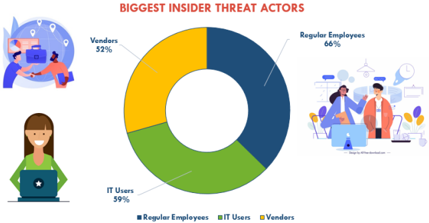
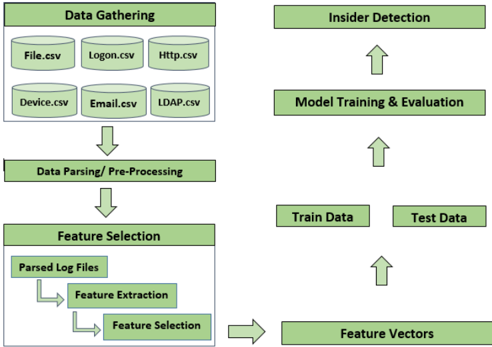
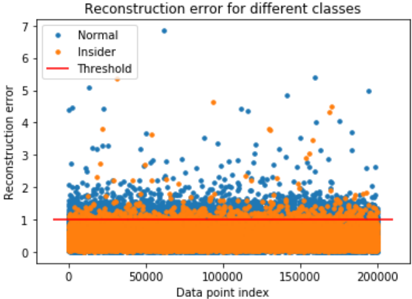
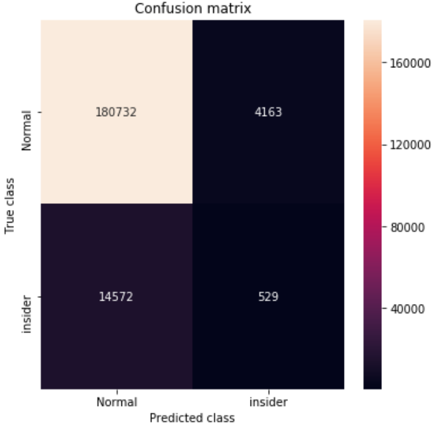
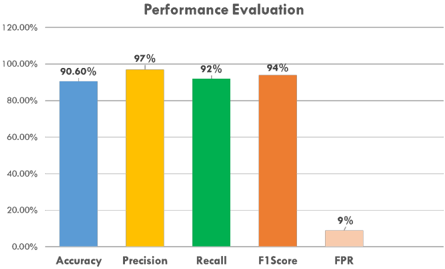
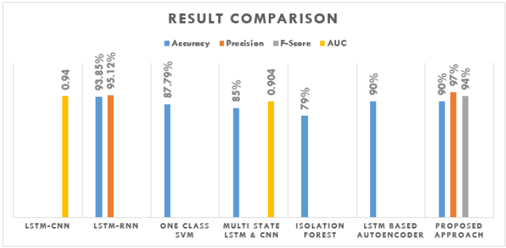
The most detrimental cyber attacks are usually not originated by malicious outsiders or malware but from trusted insiders. The main advantage insider attackers have over external elements is their ability to bypass security checks and remain undiscovered, this may cause serious damage to the organizational assets.This paper focuses on insider threat detection through behavioral analysis of users. User behavior is categorized as normal or malicious based on user activity. A series of events and activities are analyzed for feature selection to efficiently detect adversarial behavior. Selected feature vectors are used for model training during the implementation phase. A deep learning based approach is proposed that detects insiders with greater accuracy and low false positive rate. A rich event / user role based feature set containing Logon/Logoff events, User_role, Functional_unit etc are used for detection. The dataset used is the CMU CERT synthetic insider threat dataset r4.2. Performance of our proposed algorithm has been compared to other well-known techniques i.e. long short term Memory- convolutional neural network, random forest, long short term memory- recurrent neural network, one class support vector machine , Markov chain model,multi state long short term memory & convolutional neural network, gated recurrent unit & skipgram. The comparison proved that our novel approach produces relatively good accuracy( 90.60%), precision(97%) and F1 Score (94%).
Overview
The claims and statistics of this paper haven’t been checked yet.
Free: it reads the open-access text and checks the first 5 claims that cite a source we can check. Create a free account to check every claim.
Integrity signals
Registry
Cites
Statistics
Figures



Verification
Claims the paper makes
The claims and statistics of this paper haven’t been checked yet.
Free: it reads the open-access text and checks the first 5 claims that cite a source we can check. Create a free account to check every claim.
Claims other papers make about this one
Each is checked against this paper’s own text: does it say what the citing paper says it does?
The cited source doesn’t support the claim as written.
In the citing paper
“Trade-offs involve increased complexity, raising computational demands and reducing explainability compared to traditional ML [28,39].”
From A systematic review on insider threat detection using natural language processing (2025) · cites this paper as [28]
Checked by a reasoning model — may be wrong.
Experimental — accuracy not yet measuredThe source backs part of the claim, not all of it — or backs it for a different population, condition or comparison.
In the citing paper
“Several studies [45], [49], [55], [57] , [62] have demonstrated that deep learning, characterized by the use of neural networks with multiple layers, has remarkable capabilities in capturing intricate patterns within complex datasets.”
From A Review of Recent Advances, Challenges, and Opportunities in Malicious Insider Threat Detection Using Machine Learning Methods (2024) · cites this paper as [49]
Experimental — accuracy not yet measuredThe source backs part of the claim, not all of it — or backs it for a different population, condition or comparison.
In the citing paper
“Studies justify preprocessing as essential for reducing noise, normalizing data variations, and enhancing model performance, addressing QA1 by providing clear lower metrics [28,39].”
From A systematic review on insider threat detection using natural language processing (2025) · cites this paper as [28]
Experimental — accuracy not yet measured
Self-check
Percentages, sums and reported differences re-computed from the paper’s own numbers.
The self-check needs the paper’s full text.
Citations
Cites
A framework for understanding and predicting insider attacks
Schultz, E. E. (2002) · Computers & Security · doi:10.1016/s0167-4048(02)01009-x · Cited by 324
Insider Threat Detection with Deep Neural Network
Yuan, F., Cao, Y., Shang, Y., Liu, Y., Tan, J., & Fang, B. (2018) · Lecture Notes in Computer Science · doi:10.1007/978-3-319-93698-7_4 · Cited by 168 · cited 3×
“A technique using LSTM-CNN algorithm has been shown to identify user anomalous behavior in [5], by monitoring user activities and extracting temporal features.”
MethodInsider Threat Detection Based on User Behavior Modeling and Anomaly Detection Algorithms
Kim, J., Park, M., Kim, H., Cho, S., & Kang, P. (2019) · Applied Sciences · doi:10.3390/app9194018 · Cited by 134
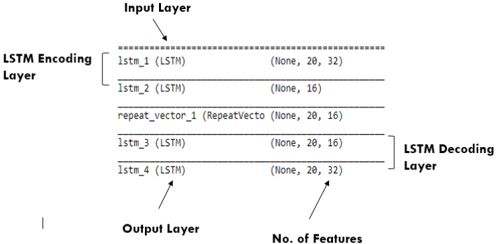
User Behavior Analytics for Anomaly Detection Using LSTM Autoencoder - Insider Threat Detection
Sharma, B., Pokharel, P., & Joshi, B. (2020) · Proceedings of the 11th International Conference on Advances in Information Technology · doi:10.1145/3406601.3406610 · Cited by 130 · cited 1×
“The dataset consists of various csv files [38], in which following are included: 1) logon.csv : Log of users logging in and out on a computer 2) device.csv :Log of users connecting and disconnecting external devices (USB) 3) http.csv :Users browser history 4) email.csv :Email logs 5) file.csv :Log of…”
MethodProactive Insider Threat Detection through Graph Learning and Psychological Context
Brdiczka, O., Liu, J., Price, B., Shen, J., Patil, A., Chow, R., Bart, E., & Ducheneaut, N. (2012) · 2012 IEEE Symposium on Security and Privacy Workshops · doi:10.1109/spw.2012.29 · Cited by 115 · cited 2×
“A framework which uses the combined approach of Structural Anomaly Detection (SA) and Psychological Profiling (PP) of users for insider threat detection is proposed in [36].”
MethodScenario-Based Insider Threat Detection From Cyber Activities
Chattopadhyay, P., Wang, L., & Tan, Y.-P. (2018) · IEEE Transactions on Computational Social Systems · doi:10.1109/tcss.2018.2857473 · Cited by 115 · cited 2×
“A supervised time series based solution using two layer deep auto-encoder can also be used for insider attack detection [4].”
MethodComparing Insider IT Sabotage and Espionage: A Model-Based Analysis
Band, S. R., Cappelli, D. M., Fischer, L. F., et al. (2006) · Figshare · doi:10.1184/r1/6572663.v1 · Cited by 98
Comparing Insider IT Sabotage and Espionage: A Model-Based Analysis
Band, S. R., Cappelli, D. M., Fischer, L. F., Moore, A. P., Shaw, E. D., & Trzeciak, R. F. (2006) · Figshare · doi:10.1184/r1/6572663 · Cited by 98
Anomaly-Based Insider Threat Detection Using Deep Autoencoders
Liu, L., De Vel, O., Chen, C., Zhang, J., & Xiang, Y. (2018) · 2018 IEEE International Conference on Data Mining Workshops (ICDMW) · doi:10.1109/icdmw.2018.00014 · Cited by 79 · cited 1×
“7 [17] Evaluation platform , memory & processing requirement and model train and test time are all missing 8 [24] The performance of the technique is compared with an existing technique Pearson-OCSVM 9 [12] Real life scenario evaluation of the model is missing.”
MethodInsider Threat Detection with Long Short-Term Memory
Lu, J., & Wong, R. K. (2019) · Proceedings of the Australasian Computer Science Week Multiconference · doi:10.1145/3290688.3290692 · Cited by 75 · cited 2×
“The most widely used technique is LSTM [5], [10], [14], [19], [29], [32].”
Method
Research works printed but not linked: 4
- 2016, Insider Threat Test Dataset
- 28. Gaurang Gavai, Kumar Sricharan, Dave Gunning, John Hanley, Mudita Singhal, and Rob Rolleston."Supervised and Unsupervised methods to detect Insider Threat from Enterprise Social and Online Activity Data" Journal of Wireless Mobile Networks, Ubiquitous Computing, and De- pendable Applications, volume: 6
- 2. "Insider threat report 2019"
- 1. "Insider Report 2018", CA Technologies VOLUME 4, 2016
Cited by
Items 101–146 of 146
Log File Based Insider Attacks Detection: A Comparative Analysis
Rajvanshi, S., & Deep, G. (2025) · Engineering cyber-physical systems and critical infrastructures · doi:10.1007/978-3-032-06798-2_23
Intelligent Agents in Cybersecurity: Deep Learning to Analyze User Behavior Applying
Tsahat, C. O. O., Moukengue, C. G. L. N., & A-Ndzeli, N. (2025) · Journal of Intelligent Learning Systems and Applications · doi:10.4236/jilsa.2025.174018 · Cited by 1
Contrastive Learning with Knowledge-Enhanced Prompts for Insider Threat Detection
Yu, H., Guo, Y., Wang, J., Zhu, M., Xu, Y., & Li, Z. (2025) · International Joint Conference on Neural Networks (IJCNN) · doi:10.1109/ijcnn64981.2025.11229300
“Currently, insider threat detection approaches can be roughly classified into two categories: Machine Learning (ML) [2]–[5] and Deep Learning (DL) [6]–[9].”
Hussein, A. I., Hlail, O. S., Hussein, M. I., Ahmed, A. A., Hassan, M. R., & Satar, N. S. M. (2025) · International Conference on Business Analytics for Technology and Security (ICBATS) · doi:10.1109/icbats66542.2025.11258291
“[ 28] The synthetic cybersecurity data is generated using a combination of a normal distribution and cumulative sum technique, replicating the evolving characteristics of threats over time [29], [30].”
Enhancing Security against Outsider SSH Lateral Movement through Rule-Based Detection
Stiawan, D., Rini, D. P., Heryanto, A., Saputra, I. P. A., Kurniawan, F., Wijaya, A., Rahim, A., Hermansyah, A., & Ningrum, S. K. (2025) · Proceeding of the Electrical Engineering Computer Science and Informatics · doi:10.1109/eecsi67060.2025.11290553
“While this paper focuses on external threats masquerading as insiders, threats originating from legitimate internal users whether malicious or unintentional also pose a significant risk [4].”
Adaptive Security Operations Center
Janardhana, D. R., Tejas, M., Rayala, V., & Kanchan, J. (2025) · IEEE International Conference on Electronics, Computing and Communication Technologies (CONECCT) · doi:10.1109/conecct65861.2025.11306779
“Custom rule-writing capabilities, as explored in multiple studies, have emerged as a key feature, enabling security teams to tailor detections to evolving threats, such as polymorphic malware [14].”
Deep Ensemble-Based Insider Threat Detection Dealing with Small Data
Amadigwe, D., Shi, Q., Yang, Z., Choubey, P., Haidar, A., Shao, S., Lei, T., & Zhangt, W. (2025) · Cyber Awareness and Research Symposium (CARS) · doi:10.1109/cars67163.2025.11337593
“…its network abnormal behavior detection mechanism based on GcForest (early version of Deep Forest) with accuracy score of 0.9958 and outperforming the other comparison algorithms: KNN, SVM, NBC. Rida Nasir et al, in [17] proposed a behavior-based insider threat detection system using deep learning.”
InfluentialForensic-Ready Approaches to Insider Threat Mitigation and Human Behavior Analysis
Arora, P., Tripathi, P., & Verma, S. (2026) · IGI Global eBooks · doi:10.4018/979-8-3373-4898-8.ch014
A Hybrid Machine Learning Framework for Insider Threat Detection and Response
S., S. S., Selvaraj, R., Suresh, V., Gugan, I., & Yogesh, D. (2025) · International Conference on Electronics, Communication and Aerospace Technology (ICECA) · doi:10.1109/iceca66444.2025.11383492
“The deep learning-based solutions suggested by Nasir et al. [15] and Varsha Suresh and Madhavu [14] have shown that the sophisticated neural design can be used to detect behavioural anomalies in large-enterprise systems.”
QUANT-IT: Quantum Embeddings with NGBoost for Insider Threat Detection
Sivakrishna, A. M., Ramasundaram, M., Rasikannan, L., & Rohini, V. (2025) · IEEE Conference on Information and Communication Technology (CICT) · doi:10.1109/cict67193.2025.11399119
“Deep learning approaches include Long Short-Term Memory (LSTM) networks [11], LSTM Autoencoders [9], Convolutional Neural Networks (CNNs) using image features such as ResNet50 [34], complex architectures such as Multi-level Wavelet Capsule Networks [35] and liquid neural networks with causal…”
InfluentialHuman Factor in Cybersecurity: Insider Kill chain Risks for Corporate Security
Robinson, R. J. (2025) · International Conference on Electrical and Computer Engineering Researches (ICECER) · doi:10.1109/icecer65523.2025.11400888
Detecting Insider Threats Using Unsupervised Machine Learning
Darla, S., N, Y. N. M., Tarun, N., Gaonkar, V. V., & K, M. G. D. (2026) · Contemporary Computing Innovations Conference (CCIC) · doi:10.1109/ccic68129.2026.11486248
“Our main contributions include: as system logons, file handling, and device usage [3], [11].”
InfluentialAkampurira, P., Edozie, E., Sadiq, B. O., & Buhari, M. D. (2026) · F1000Research · doi:10.12688/f1000research.178351.1
Dornala, S. K., & Senthilkumar, P. (2026) · Lecture notes in networks and systems · doi:10.1007/978-3-032-18907-3_22
Sareddy, M. R., Algaet, M. A., Khalifa, Z. A., Mohammed, B. S., & Kalaikumaran, T. (2026) · African Journal of Science Technology Innovation and Development · doi:10.1080/20421338.2026.2651540
“Nasir et al. (2021) deployed behaviour-based insider threat detection systems using Deep Learning (DL).”
InfluentialKashyapi, Y. V., & Yamini, B. (2026) · International Conference on Augmented Intelligence and Sustainable Systems (ICAISS) · doi:10.1109/icaiss68683.2026.11526463
“[ 6][16][20] In real world Security Operations Centers (SOCs), these kinds of limits lead to alert fatigue and delayed incident response.”
A Deep Learning Fusion Model for Insider Threat Detection in High Risk Infrastructure
Ali, S. M., Alshahrani, H. M., Razzaque, A., Reshan, M. S. A., Yousaf, M., Alqazzaz, A., Arain, Q. A., & Shaikh, A. (2026) · IET Computers & Digital Techniques · doi:10.1049/cdt2/6332765
Scenario Driven Insider Threat Detection Using Dual Modelling Architecture
Lavanya, P., Vaishnavi, P., Giridhar, P., Glory, H. A., & Sriram, V. S. S. (2026) · Lecture notes in networks and systems · doi:10.1007/978-3-032-23945-7_11
Hamza, Y. A., & Dabagh, N. B. A. (2026) · Communications in computer and information science · doi:10.1007/978-3-032-24239-6_1
Unsupervised Graph Learning For Insider Threat Detection
Bertrand, S., Germain, P., & Tawbi, N. (2026) · IFIP advances in information and communication technology · doi:10.1007/978-3-032-27993-4_2
Gardezi, D. S. H. I., Kumar, M. K., Sharma, N., Govindasamy, M., Shukla, H., & Nagaraj, P. (2026) · International Conference on Emerging Trends in Advancements and Applications of Computational Intelligence Techniques (ETAACT) · doi:10.1109/etaact69135.2026.11541857
“Bayesian Gaussian Mixture Model [13] 93% DANTE (LSTM on system logs)[14] 98.1% Behavioral Deep Learning [15] 90.6% Proposed BioTypeGuard 99.7% Figure 6 and Table II compare the accuracy of different insider threat detection methods.”
InfluentialRetractedSneha, H. N., Nijhum, D. C., & Hosen, M. H. (2026) · IEEE International Conference on Quantum Photonics, Artificial Intelligence & Networking (QPAIN) · doi:10.1109/qpain69676.2026.11546192
“Nasir et al. [17] introduced an LSTM autoencoder trained on event-based and role-based features, achieving 90.6% accuracy, 97% precision and 94% F1-score on CERT r4.”
InfluentialPahari, A., Adhikari, A., Olukola, O., Sherif, A., & Rahimi, N. (2026) · Communications in computer and information science · doi:10.1007/978-3-032-29003-8_13
VM-Based Enhanced Data Security and Insider Attack Detection Using R2GRU and LL-SE
Sitaraman, S. R., Alagarsundaram, P., Gattupalli, K., Gollavilli, V. S. B. H., Nagarajan, H., & Khalid, H. M. (2026) · SN Computer Science · doi:10.1007/s42979-026-05098-y
“However, the existing [ 18 ] and [ 16] attained a low accuracy of 90.60% and 97%, accordingly by using the LSTM-Auto encoder and Light Gradient Boosting Machine (Light GBM).”
InfluentialC, G. K. R., Sowmiya, M., Ramya, A., Thaimoor Khan, J., & Thangakumar, J. (2026) · International Conference on Connected Intelligence for Industrial Applications (CI2A) · doi:10.1109/ci2a69097.2026.11576984
HITD: Hypergraph Representation Learning for Insider Threat Detection
Tian, C., Kong, D., Zhu, Y. C., An, N., Tian, T., Jiang, B., & Lu, Z. (2026) · International Conference on Computer Supported Cooperative Work in Design (CSCWD) · doi:10.1109/cscwd68734.2026.11581565
“Nasir R [12] proposed the LSTM-Autoencoder architecture for detection, which no longer uses a fixed time window, but uses a flexible time window based on user session.”
AI-Based Insider Threat Detection in Organisations
Vivek, B. S., Ruthvini, M., & Kumar, K. S. (2026) · International Conference on AI, Data Science, Cyber Security and Smart Manufacturing for Sustainable Development (ICADCS) · doi:10.1109/icadcs70036.2026.11583338
Threat Analysis of Insider Threats for Organizational Security
Robinson, R. J. (2026) · Lecture notes in networks and systems · doi:10.1007/978-3-032-23515-2_8
Slim, A., Charef, M., & Maazouzi, F. (2026) · Arabian Journal for Science and Engineering · doi:10.1007/s13369-026-11520-7
CyberPanel: A Distributed Insider Threat Detection System with Integrated GRC Framework
Mohamed, M., Hamdi, Y., Abdelaal, S., & Mohamed, S. A. E. (2026) · IEEE International Conference on Smart Sustainable Systems for Computer and Engineering Applications (3SCEA) · doi:10.1109/3scea68071.2026.11602714
“Recent research trained machine learning models to spot unusual actions by users - security teams no longer depend only on fixed rule sets to flag threats [12], [13].”
Arora, S., Meenu, Gangrade, A., Saranya, M. L., Shamila, M., & Shukla, P. K. (2025) · IEEE International Conference on Innovate for Humanitarian: Tech Solutions for Global Challenge (ICIH) · doi:10.1109/icih67754.2025.11608791
“Albeit, this enhanced identification in enterprise networks, most of the models are central and ill-prepared to hybrid clouds [12-13].”
AI-Driven Predictive Cybersecurity for User Behavior Analysis in Government Institutions
Mohamed, A., & Al-Gindy, A. (2026) · Lecture notes in networks and systems · doi:10.1007/978-3-032-32636-2_8
CLASSIFICATION OF VISITORS AND IDENTIFYING INTRUDERS IN A NETWORK
Hejazi, N., & Ozdemır, E. (2026) · International Journal of Informatics and Applied Mathematics · doi:10.53508/ijiam.1780395
Smart Insider Threat Detection and Employee Risk Profiling Framework
Roy, S., & Marimurthu, P. (2026) · OPJU International Technology Conference on Smart Computing for Innovation and Advancement in Industry (OTCON) · doi:10.1109/otcon69332.2026.11629824
“Nasir et al. came up with a deep learning-based behavioral framework that synthesized user roles and event logs, which performed better than various baseline models, but the framework highly relied on sequential data and could not be generalized [5].”
Adaptive Behavioural Intelligent Insider Threat Detection: A Systematic ReviewPreprint
Galadima, I. B., Wahab, N. H. A., Osman, M. Z., & Danlamid, G. (2026) · SSRN Electronic Journal · doi:10.2139/ssrn.7302121
Hybrid Ensemble Learning Model with Explainable Anomaly Detection for Insider Threat Analysis
Oommen, L., Abhinav, P., V, Indu Shree, B., & Gadde, A. (2026) · International Conference on Power, Control and Computing Technologies (ICPC2T) · doi:10.1109/icpc2t68221.2026.11646349
“Nevertheless, these methods were unable to detect new or unforeseen insider activities, and typically generated numerous false alarms [1].”
A survey on adversarial attacks and defenses in Malware classification using deep learning
Kaushik, N., & Kaur, M. (2026) · AIP conference proceedings · doi:10.1063/5.0285846
SrinivasaRao, P., Bhavani, K. L., Rao, K. T., & Gogineni, A. (2026) · International Conference on Smart Systems and Inventive Technology (ICSSIT) · doi:10.1109/icssit69151.2026.11656630
“Therefore it will be necessary to preprocess the data for subsequent analysis, before collected data is analyzed [12].”
InfluentialKundiya, K. R., & Haribhakta, Y. V. (2026) · IEEE Access · doi:10.1109/access.2026.3726811
“To capture temporal behavioral dependencies, researchers introduced sequence-based approaches such as Recurrent Neural Networks (RNNs) and BiLSTMs [3], [14], [15].”
Prasanthi, K., Devarajulu, V. S., Krishna, P. V., & Saritha, V. (2026) · Discover Artificial Intelligence · doi:10.1007/s44163-026-01779-y
“The EPMC utilizes the specific strengths of deep neural networks (DNN), gated recurrent units (GRU), and Transformer models to capture various aspects of user behavior and potential abnormalities [10].”
Rafae, A., Aiche, A., Erritali, M., & Tardif, P.-M. (2026) · Computers · doi:10.3390/computers15090616
Insider Threat Detection Using Encoder Decoder Transformer with Cross Attention for CERT Dataset
Kumar, K. P., Snehitha, M., Nishitha, B., & Geethika, K. (2026) · International Conference on Trends in Quantum Computing and Emerging Business Technologies (TQCEBT) · doi:10.1109/tqcebt67648.2026.11681233
“Although deep learning techniques for modeling behavior have seen significant improvements [8], conventional approaches are still challenged to account for the very heterogeneous nature of the logs created, as well as the long-range context associated with each log.”
Anomaly-Based Detection of Insider Threats Using Network Traffic Behaviour
Sumayah, K., Ullas, S., & Sreerag, G. (2026) · International Conference on Emerging Technologies in Computing and Communication (ETCC) · doi:10.1109/etcc69750.2026.11681991
ITDF: A Deep Learning Insider Threat Detection Framework Based on Abnormal Logon Behavior
Hajr, L., Alhogail, A. A., Albassam, S. A. A., & Berri, J. (2026) · IEEE Access · doi:10.1109/access.2026.3733166
“Similarly, Nasir et al. [14] employed an LSTM autoencoder to detect anomalies in user behavior for insider threat detection.”
CausalXBoost: A Causal Explainable CatBoost Framework for Insider Threat Detection
Jayaraman, V., Harvin Krishnan, H., Vishaal, R. G. S., Aishwarya, B., Parthasarathy, S., & Kavitha, R. (2026) · International Conference Computational Vision and Bio Inspired Computing · doi:10.1109/iccvbic71195.2026.11689492
“Machine learning (ML) and deep learning (DL) techniques could surpass these issues by effectively identifying insider threat [8][9].”
A systematic review of federated learning applications in mitigating insider threats
Mdaghri, A. A., Alae, A., & Hilali, A. A. (2026) · Applied Soft Computing · doi:10.1016/j.asoc.2026.116478
Metadata
- Authors
- Nasir, R., Afzal, M., Latif, R., & Iqbal, W.
- Affiliations
- National University of Sciences and Technology (PK)
- Prince Sultan University (SA)
- Corresponding author
- Iqbal, Waseem
- Venue
- IEEE Access
- Published
- 2021
- Volume
- 9
- Pages
- 143266-143274
- ISSN
- 2169-3536 (ISSN-L)
- OpenAlex
- W3202733154
- Semantic Scholar
- 278da2f2e2cf30c3231873fa2d252cb053f40138
- Cited by
- 146
- References
- 38
- Citations by year
- 2026: 42 · 2025: 45 · 2024: 35 · 2023: 19 · 2022: 5
- FWCI
- 6.62
- Type
- journal article
- Language
- en
- Open access
- gold
- doi.org
- Licence
- Locations
- IEEE Access (publishedVersion, cc-by-nc-nd)
- DOAJ (DOAJ: Directory of Open Access Journals) (submittedVersion, cc-by-sa)
- Funders
- Artificial Intelligence Data Analytics Lab (AIDA) CCIS, Prince Sultan University, Riyadh, Saudi Arabia
- Topics
- Physical Sciences › Computer Science › Computer Networks and Communications › Network Security and Intrusion Detection
- Physical Sciences › Computer Science › Information Systems › Information and Cyber Security
- Physical Sciences › Computer Science › Information Systems › User Authentication and Security Systems
- Keywords
- insider threat detection, user behavior analysis, behavioral biometrics, deep learning, false positive reduction
About these checks
Registry, retraction, Cites and statistics results are computed, not judged, with one exception: a printed reference that no index lists is read once by a model before it counts as a citation error. Claims are extracted by a model and kept only when their quote appears verbatim in the text; each cited source is then checked, with a model’s help, for whether it says what the claim relies on. Those verdicts can be wrong — read the claim’s quote and the cited source before relying on one.
Statistics and arithmetic are recomputed, not judged.
Confidence bands are shown only for fields calibrated on our annotated test set. None is calibrated yet, so no band is shown.
What counts as a claim ›How we measure confidence ›How we check this ›
Are you an author, or do you see a problem with this page? Request a review
Data sources
Bibliographic data: Semantic Scholar, OpenAlex, Crossref.
Contains information from the Semantic Scholar Academic Graph Datasets, made available under the ODC Attribution License (ODC-BY 1.0).
Semantic Scholar’s data is described in: Kinney, R., et al. (2023). The Semantic Scholar Open Data Platform. arXiv:2301.10140.
