

An Improved YOLOv8 Algorithm for Rail Surface Defect Detection
Open accessThe DOI matches its Crossref record; 32 of the 33 references it cites were found in a registry or an index.
Abstract
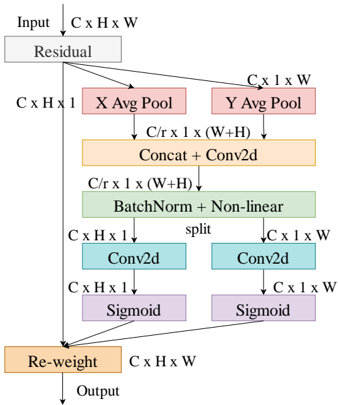
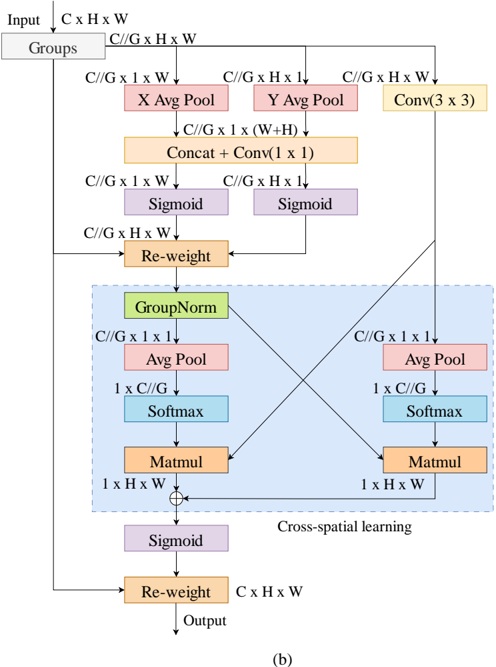
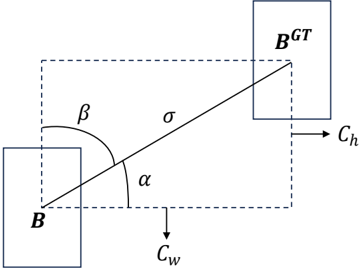
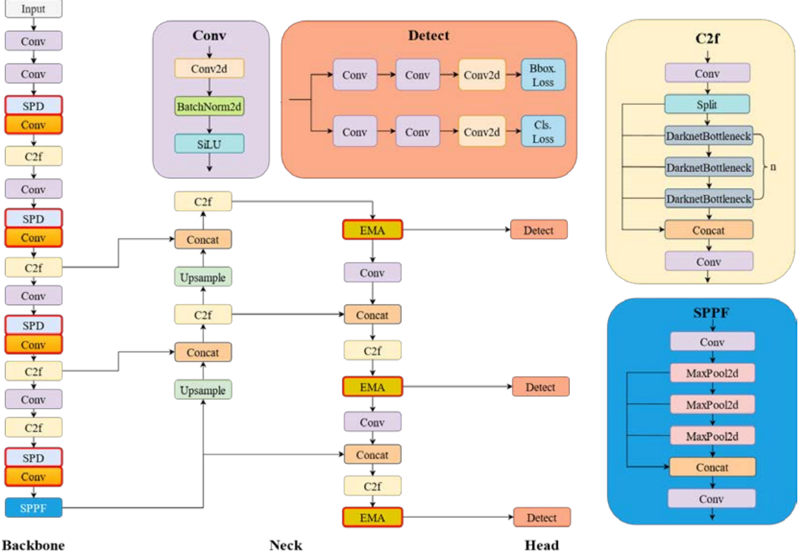
To tackle the issues raised by detecting small targets and densely occluded targets in railroad track surface defect detection, we present an algorithm for detecting defects on railroad tracks based on the YOLOv8 model. Firstly, we enhance the model’s attention towards small and medium-sized targets by substituting replacing the original convolution with the SPD-Conv building block in the backbone network of YOLOv8n, while preserving the original network structure. Secondly, we integrate the integrating the EMA attention mechanism module into the neck component, allowing the model to leverage information from different layers of features and improve feature representation capabilities. Lastly, we substitute the original C-IOU with the Focal-SIoU loss function in YOLOv8., which adjusts the weights of positive and negative samples to penalize difficult-to-classify samples more heavily. This enhancement improves the model’s capability to accurately recognize challenging samples and ensures that the network allocates greater attention to each target instance, resulting in improved performance and effectiveness of the model. The experimental results reveal notable advancements in precision, recall, and average accuracy attained by our enhanced algorithm. Compared to the original YOLOv8n model, our enhanced algorithm demonstrates remarkable precision, recall, and average accuracy of 93.9%, 93.7%, and 94.1%, respectively. These improvements amount to 3.6%, 5.0%, and 5.7%, respectively. Notably, these enhancements are accomplished while maintaining the dimensions of the model and the parameter count. During the identification of defects on railroad track surfaces, our improved algorithm surpasses other widely used algorithms in terms of performance.
Overview
The claims and statistics of this paper haven’t been checked yet.
Free: it reads the open-access text and checks the first 5 claims that cite a source we can check. Create a free account to check every claim.
Integrity signals
Registry
Cites
Statistics
Figures




Verification
Claims the paper makes
The claims and statistics of this paper haven’t been checked yet.
Free: it reads the open-access text and checks the first 5 claims that cite a source we can check. Create a free account to check every claim.
Claims other papers make about this one
Each is checked against this paper’s own text: does it say what the citing paper says it does?
The source backs part of the claim, not all of it — or backs it for a different population, condition or comparison.
In the citing paper
“The deep learning-based YOLOv8 model is used to detect the object and its applications are diverse including road accident detection [48].”
From Visual Detection of Traffic Incident through Automatic Monitoring of Vehicle Activities (2024) · cites this paper as [48]
Experimental — accuracy not yet measured
Self-check
Percentages, sums and reported differences re-computed from the paper’s own numbers.
The self-check needs the paper’s full text.
Citations
Cites
Focal Loss for Dense Object Detection
Lin, T.-Y., Goyal, P., Girshick, R., He, K., & Dollar, P. (2017) · 2017 IEEE International Conference on Computer Vision (ICCV) · doi:10.1109/iccv.2017.324 · Cited by 30,581 · cited 1×
“(c)The Focal-Segmentation Intersection over Union (Focal-SIoU) [26], [27] loss function is utilized as a replacement for the original Complete-Intersection over Union (C-IoU) loss function.”
MethodYOLOv4: Optimal Speed and Accuracy of Object Detection
Bochkovskiy, A., Wang, C.-Y., & Liao, H.-Y. M. (2020) · arXiv · doi:10.48550/arxiv.2004.10934 · Cited by 10,307 · cited 1×
“(4) In the data augmentation step during training, an operation of disabling Mosiac enhancement [34] for the last 10 epochs in YOLOX was introduced, resulting in improved accuracy.”
BackgroundDistance-IoU Loss: Faster and Better Learning for Bounding Box Regression
Zheng, Z., Wang, P., Liu, W., Li, J., Ye, R., & Ren, D. (2019) · arXiv · doi:10.48550/arxiv.1911.08287 · Cited by 5,313 · cited 1×
“Additionally, CIoU Loss [33] was also incorporated.”
Distance-IoU Loss: Faster and Better Learning for Bounding Box Regression
Zheng, Z., Wang, P., Liu, W., Li, J., Ye, R., & Ren, D. (2020) · Proceedings of the AAAI Conference on Artificial Intelligence · doi:10.1609/aaai.v34i07.6999 · Cited by 5,288
YOLOX: Exceeding YOLO Series in 2021
Ge, Z., Liu, S., Wang, F., Li, Z., & Sun, J. (2021) · arXiv · doi:10.48550/arxiv.2107.08430 · Cited by 2,965 · cited 1×
“(2)TheHead section has been considerably changed from YOLOv5 to the prevailing decoupled header structure in use [29], which segregates the classification and detection headers, as well as from Anchor-Based to Anchor-Free [30].”
MethodA Review of Yolo Algorithm Developments
Jiang, P., Ergu, D., Liu, F., Cai, Y., & Ma, B. (2022) · Procedia Computer Science · doi:10.1016/j.procs.2022.01.135 · Cited by 2,783 · cited 1×
“The model series known as You Only Look Once (YOLO) [8], as a widely utilized target detection framework, has been extensively employed in detecting railroad track defects, yielding commendable accuracy and detection outcomes.”
YOLACT: Real-Time Instance Segmentation
Bolya, D., Zhou, C., Xiao, F., & Lee, Y. J. (2019) · 2019 IEEE/CVF International Conference on Computer Vision (ICCV) · doi:10.1109/iccv.2019.00925 · Cited by 2,536 · cited 1×
“Additionally, this algorithm has developed an instance segmentation model using the You Only Look At Coefficients (YOLACT) [28] architecture.”
MethodZhang, S., Chi, C., Yao, Y., Lei, Z., & Li, S. Z. (2020) · 2020 IEEE/CVF Conference on Computer Vision and Pattern Recognition (CVPR) · doi:10.1109/cvpr42600.2020.00978 · Cited by 2,354 · cited 1×
“(2)TheHead section has been considerably changed from YOLOv5 to the prevailing decoupled header structure in use [29], which segregates the classification and detection headers, as well as from Anchor-Based to Anchor-Free [30].”
MethodU-Net and Its Variants for Medical Image Segmentation: A Review of Theory and Applications
Siddique, N., Paheding, S., Elkin, C. P., & Devabhaktuni, V. (2021) · IEEE Access · doi:10.1109/access.2021.3086020 · Cited by 1,960 · cited 1×
“Noteworthy examples encompass the adoption of models like U-Net [10] and Mask R-CNN [11] for localizing and segmenting defective regions on the track.”
MethodEfficient Multi-Scale Attention Module with Cross-Spatial Learning
Ouyang, D., He, S., Zhang, G., Luo, M., Guo, H., Zhan, J., & Huang, Z. (2023) · ICASSP 2023 - 2023 IEEE International Conference on Acoustics, Speech and Signal Processing (ICASSP) · doi:10.1109/icassp49357.2023.10096516 · Cited by 1,788
Generalized focal loss: Learning qualified and distributed bounding boxes for dense object detection
Li, X., Wang, W., Wu, L., Chen, S., Hu, X., Li, J., Tang, J., & Yang, J. (2020) · arXiv · doi:10.48550/arxiv.2006.04388 · Cited by 1,241 · cited 1×
“Distribution Focal Loss was employed since the regression branch needed to be aligned with the integral form representation proposed in Distribution Focal Loss [32].”
MethodSelf-citationSunkara, R., & Luo, T. (2023) · Lecture Notes in Computer Science · doi:10.1007/978-3-031-26409-2_27 · Cited by 893
SIoU Loss: More Powerful Learning for Bounding Box Regression
Gevorgyan, Z. (2022) · arXiv (Cornell University) · doi:10.48550/arxiv.2205.12740 · Cited by 570 · cited 1×
“(c)The Focal-Segmentation Intersection over Union (Focal-SIoU) [26], [27] loss function is utilized as a replacement for the original Complete-Intersection over Union (C-IoU) loss function.”
MethodIoU Loss for 2D/3D Object Detection
Zhou, D., Fang, J., Song, X., Guan, C., Yin, J., Dai, Y., & Yang, R. (2019) · 2019 International Conference on 3D Vision (3DV) · doi:10.1109/3dv.2019.00019 · Cited by 474 · cited 1×
“(4) The IoU loss is defined as follows [35], encompassing : The following expression outlines the formulation of the final SIoU loss function :”
BackgroundDeep Learning Techniques—R-CNN to Mask R-CNN: A Survey
Bharati, P., & Pramanik, A. (2020) · Advances in Intelligent Systems and Computing · doi:10.1007/978-981-13-9042-5_56 · Cited by 420 · cited 1×
“Noteworthy examples encompass the adoption of models like U-Net [10] and Mask R-CNN [11] for localizing and segmenting defective regions on the track.”
MethodCrack Detection and Comparison Study Based on Faster R-CNN and Mask R-CNN
Xu, X., Zhao, M., Shi, P., Ren, R., He, X., Wei, X., & Yang, H. (2022) · Sensors · doi:10.3390/s22031215 · Cited by 367 · cited 1×
“Alternatively, the Region-based Convolutional Neural Networks (Faster R-CNN) [9], another prevalent target detection model, leverages candidate region extraction and classification regression networks to precisely locate and identify defects on the track.”
BackgroundReal-Time Flying Object Detection with YOLOv8
Reis, D., Kupec, J., Hong, J., & Daoudi, A. (2023) · arXiv (Cornell University) · doi:10.48550/arxiv.2305.09972 · Cited by 337 · cited 1×
“Casas et al. [16] used the YOLOv8 [17] model to automatically detect and calculate eucalyptus stacked timber in forestry, using the CSPDarknet53 backbone network with a mAP50 of 83.9%.”
MethodInfluentialBL-YOLOv8: An Improved Road Defect Detection Model Based on YOLOv8
Wang, X., Gao, H., Jia, Z., & Li, Z. (2023) · Sensors · doi:10.3390/s23208361 · Cited by 311 · cited 1×
“Wang et al. [22] introduced an improved road defect detection algorithm that integrates the BiFPN concept and reconstructs the neck structure of YOLOv8s within the framework, which improved the average accuracy by 3.3% in comparison with original model mAP@0.5.These advancements not just increase…”
ResultInfluentialAdversarial example detection for DNN models: a review and experimental comparison
Aldahdooh, A., Hamidouche, W., Fezza, S. A., & Déforges, O. (2022) · Artificial Intelligence Review · doi:10.1007/s10462-021-10125-w · Cited by 183
A Review of Infrared Thermography for Delamination Detection on Infrastructures and Buildings
Tomita, K., & Chew, M. Y. L. (2022) · Sensors · doi:10.3390/s22020423 · Cited by 162 · cited 2×
“Traditional rail defect detection methods include manual detection [3], magnetic particle detection [4], and infrared thermography detection [5].”
MethodDetection for Rail Surface Defects via Partitioned Edge Feature
Ni, X., Liu, H., Ma, Z., Wang, C., & Liu, J. (2021) · IEEE Transactions on Intelligent Transportation Systems · doi:10.1109/tits.2021.3058635 · Cited by 112 · cited 1×
“The detection of surface defects on railroad tracks presents several challenges that necessitate resolution [23].”
BackgroundResearch on deep learning method for rail surface defect detection
Feng, J. H., Yuan, H., Hu, Y. X., Lin, J. T., Liu, S. W., & Luo, X. (2020) · IET Electrical Systems in Transportation · doi:10.1049/iet-est.2020.0041 · Cited by 87 · cited 2×
“The friction and rolling contact between high-speed trains and the rail surface can lead to wear, deformation, and, over time, the accumulation of corrugation, cracks, scars, rail breaks and other defects [2].”
BackgroundRailway defect detection based on track geometry using supervised and unsupervised machine learning
Sresakoolchai, J., & Kaewunruen, S. (2022) · Structural Health Monitoring · doi:10.1177/14759217211044492 · Cited by 81 · cited 1×
“Internationally, Sresakoolchai and Kaewunruen [13] introduced a novel approach aimed at detecting track defects through the utilization of Track Geometry Correlation (TGC) to acquire precise geometric representations of the track.”
MethodTu, Z., Wu, S., Kang, G., & Lin, J. T. (2021) · IEEE Transactions on Instrumentation and Measurement · doi:10.1109/tim.2021.3117357 · Cited by 79 · cited 1×
“Overall, deep learning algorithms [12] have exhibited substantial promise and yielded remarkable outcomes in the field of detecting defects in railroad tracks.”
BackgroundA Study on Railway Surface Defects Detection Based on Machine Vision
Bai, T., Gao, J., Yang, J., & Yao, D. (2021) · Entropy · doi:10.3390/e23111437 · Cited by 76 · cited 1×
“Bai et al. [19] proposed an enhanced YOLOv4-based method for detecting defects on railroad surfaces.”
MethodCUFuse: Camera and Ultrasound Data Fusion for Rail Defect Detection
Chen, Z., Wang, Q., He, Q., Yu, T., Zhang, M., & Wang, P. (2022) · IEEE Transactions on Intelligent Transportation Systems · doi:10.1109/tits.2022.3189677 · Cited by 67 · cited 1×
“The introduction of these models presents a new solution for rail defect detection, allowing for significant reduction in human and material resource investments while enhancing the accuracy and efficiency of detection [7].”
A Review on Rail Defect Detection Systems Based on Wireless Sensors
Zhao, Y., Liu, Z., Yi, D., Yu, X., Sha, X., Li, L., Sun, H., Zhan, Z., & Li, W. J. (2022) · Sensors · doi:10.3390/s22176409 · Cited by 60 · cited 1×
“Consequently, the safety risks associated with railroads are also on the rise [1].”
BackgroundAutomatic Detection and Counting of Stacked Eucalypt Timber Using the YOLOv8 Model
Casas, G. G., Ismail, Z. H., Limeira, M. M. C., da Silva, A. A. L., & Leite, H. G. (2023) · Forests · doi:10.3390/f14122369 · Cited by 56 · cited 1×
“Casas et al. [16] used the YOLOv8 [17] model to automatically detect and calculate eucalyptus stacked timber in forestry, using the CSPDarknet53 backbone network with a mAP50 of 83.9%.”
MethodInfluentialHigh Speed Railway Fastener Defect Detection by Using Improved YoLoX-Nano Model
Hu, J., Qiao, P., Lv, H., Yang, L., Ouyang, A., He, Y., & Liu, Y. (2022) · Sensors · doi:10.3390/s22218399 · Cited by 49 · cited 1×
“An enhanced YOLOX-Nano method for rail fastener defect detection was proposed by Hu et al. [21] by incorporating Adaptive Spatial Feature Fusion (ASFF) is applied immediately following the feature maps produced by the output of the PAFPN, and the mAP value of the improved YOLOX-Nano model increased…”
MethodYOLOv8-based Spatial Target Part Recognition
Zhou, Y., Zhu, W., He, Y., & Li, Y. (2023) · IEEE International Conference on Information Technology, Big Data and Artificial Intelligence (ICIBA) · doi:10.1109/iciba56860.2023.10165260 · Cited by 30 · cited 1×
“(3) For Loss computation, the TaskAlignedAssigner positive sample assignment strategy [31] was utilized.”
MethodDefect Detection of Track Fasteners Based on Pruned YOLO V5 Model
Wang, X., Zhang, J., Wang, Y., Li, M., & Liu, D. (2022) · IEEE Data Driven Control and Learning Systems Conference (DDCLS) · doi:10.1109/ddcls55054.2022.9858442 · Cited by 9 · cited 1×
“An innovative approach for detecting track fastener defects was introduced by Wang et al [20], leveraging the YOLOV5 framework.”
MethodSelf-citationMachine Learning of Diagnostic Neural Network for Railway Track Monitoring
Orlov, S. P., Пилецкая, А. В., Kusakina, N., & Tyugashev, A. A. (2022) · Studies in systems, decision and control · doi:10.1007/978-3-030-95116-0_5 · Cited by 8
Research works printed but not linked: 7
- J.W. Huo, Z. Liu, Y.D. Wang, et al. Planar electromagnetic tomography for rail flaw detection[J]. Chinese Journal of Electrical Engineering,2021,41(15):5351-5361.
- Hu Xiaoqun. Research on the application of nondestructive testing technology in steel structure construction engineering[J]. Real Estate World,2023(19):142-144.
- Xu X, Zhao M, Shi P, et al. Crack detection and comparison study based on faster R-CNN and mask R-CNN[J]. Sensors, 2022, 22(3): 1215.
- Mohan K K, Prasad C R, Kishore P V V. Yolo v2 with bifold skip: a deep learning model for video based real time train bogie part identification and defect detection[J]. J Eng Sci Technol, 2021, 16(3): 2166-2190.
- Cao Hongpeng. Development of visual inspection system for surface defects of cold heavy rail based on deep learning [D]. Zhejiang University,2021.
- SUSTECH 2023. track defect detection Dataset [M]. Roboflow.
- FENG 2023. clipping Dataset
Cited by
ALF-YOLO: Enhanced YOLOv8 based on multiscale attention feature fusion for ship detection
Wang, S., Li, Y., & Qiao, S. (2024) · Ocean Engineering · doi:10.1016/j.oceaneng.2024.118233 · Cited by 114
Lightweight rail surface defect detection algorithm based on an improved YOLOv8
CanYang, X., Yingying, L., Yongqiang, L., Tian, R., & Guo, T. (2024) · Measurement · doi:10.1016/j.measurement.2024.115922 · Cited by 66
A wall climbing robot based on machine vision for automatic welding seam inspection
Du, Y., Liu, M., Wang, J., Liu, X., Wang, K., Liu, Z., Dong, Q., Yao, J., Lu, D., & Su, Y. (2024) · Ocean Engineering · doi:10.1016/j.oceaneng.2024.118825 · Cited by 29
Visual Detection of Traffic Incident through Automatic Monitoring of Vehicle Activities
Karim, A., Raza, M. A., Alharthi, Y. Z., Abbas, G., Othmen, S., Hossain, M. S., Nahar, A., & Mercorelli, P. (2024) · World Electric Vehicle Journal · doi:10.3390/wevj15090382 · Cited by 23
Gupta, C., Gill, N. S., Gulia, P., Duhan, S., Alduaiji, N., Shukla, P. K., & Dwivedi, A. (2025) · BioData Mining · doi:10.1186/s13040-025-00497-y · Cited by 20
“CSP layers divide the feature maps into two parts and use a cross-stage partial approach to boost feature learning while reducing computation [69].”
Metadata
- Authors
- Wang, Y., Zhang, K., Wang, L., & Wu, L.
- Affiliations
- Zhejiang Normal University (CN)
- Venue
- IEEE Access
- Published
- 2024
- Volume
- 12
- Pages
- 44984-44997
- ISSN
- 2169-3536 (ISSN-L)
- OpenAlex
- W4393170784
- Cited by
- 82
- References
- 33
- Citations by year
- 2026: 23 · 2025: 39 · 2024: 20
- FWCI
- 13.69
- Type
- journal article
- Language
- en
- Open access
- gold
- doi.org
- Licence
- Locations
- IEEE Access (publishedVersion, cc-by-nc-nd)
- DOAJ (DOAJ: Directory of Open Access Journals) (submittedVersion, cc-by-sa)
- Funders
- Science and Technology Planning Project of Jinhua (2022-1-096)
- Topics
- Physical Sciences › Engineering › Civil and Structural Engineering › Infrastructure Maintenance and Monitoring
- Physical Sciences › Engineering › Industrial and Manufacturing Engineering › Industrial Vision Systems and Defect Detection
- Physical Sciences › Computer Science › Computer Vision and Pattern Recognition › Advanced Neural Network Applications
- Keywords
- rail surface defect detection, YOLOv8, small object detection, occluded object detection, SPD-Conv, railway track inspection, object detection
About these checks
Registry, retraction, Cites and statistics results are computed, not judged, with one exception: a printed reference that no index lists is read once by a model before it counts as a citation error. Claims are extracted by a model and kept only when their quote appears verbatim in the text; each cited source is then checked, with a model’s help, for whether it says what the claim relies on. Those verdicts can be wrong — read the claim’s quote and the cited source before relying on one.
Statistics and arithmetic are recomputed, not judged.
Confidence bands are shown only for fields calibrated on our annotated test set. None is calibrated yet, so no band is shown.
What counts as a claim ›How we measure confidence ›How we check this ›
Are you an author, or do you see a problem with this page? Request a review
Data sources
Bibliographic data: Semantic Scholar, OpenAlex, Crossref.
Contains information from the Semantic Scholar Academic Graph Datasets, made available under the ODC Attribution License (ODC-BY 1.0).
Semantic Scholar’s data is described in: Kinney, R., et al. (2023). The Semantic Scholar Open Data Platform. arXiv:2301.10140.
