

Machine Learning Based Misbehaviour Detection in VANET Using Consecutive BSM Approach
The DOI matches its Crossref record; 42 of the 42 references it cites were found in a registry or an index.
Abstract
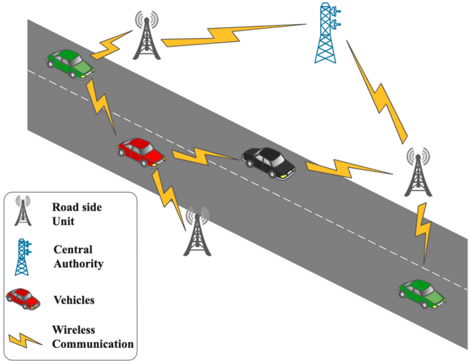
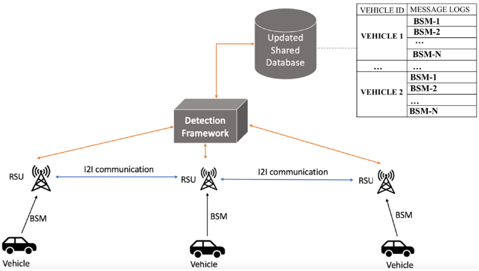
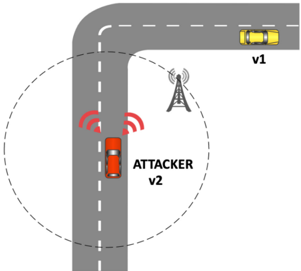
Vehicular ad-hoc network (VANET) is an emerging technology for vehicle-to-vehicle communication vital for reducing road accidents and traffic congestion in an Intelligent Transportation System (ITS). VANET communication is vulnerable to various attacks and cryptographic techniques are commonly used for message integrity and authentication of vehicles. However, cryptograhpic techniques alone may not be sufficient to protect against insider attacks. Many VANET safety applications rely on periodic broadcast of basic safety messages (BSMs) from surrounding vehicles that contain important status information about a vehicle such as its position, speed, and heading. If an attacker (misbehaving vehicle) injects false position information in a BSM, it can lead to serious consequences including traffic congestion or even accidents. Therefore, it is imperative to accurately detect and identify such attackers to ensure safety in the network. This paper presents a novel data-centric approach to detectposition falsificationattacks, using machine learning (ML) algorithms. Unlike existing techniques, the proposed approach combines information from 2 consecutive BSMs for training and testing. Simulations using the Vehicular Reference Misbehavior (VeReMi) dataset demonstrate that the proposed model clearly outperforms existing approaches for identifying a range of different attack types.
Overview
The claims and statistics of this paper haven’t been checked yet.
Free: it reads the open-access text and checks the first 5 claims that cite a source we can check. Create a free account to check every claim.
Integrity signals
Registry
Cites
Statistics
Figures

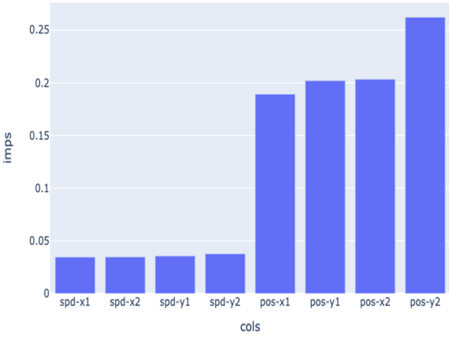
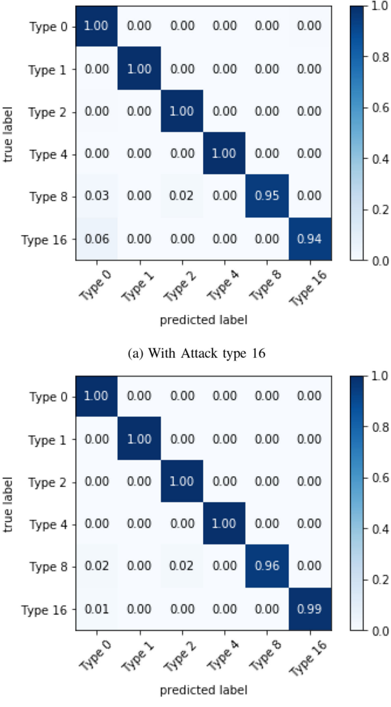

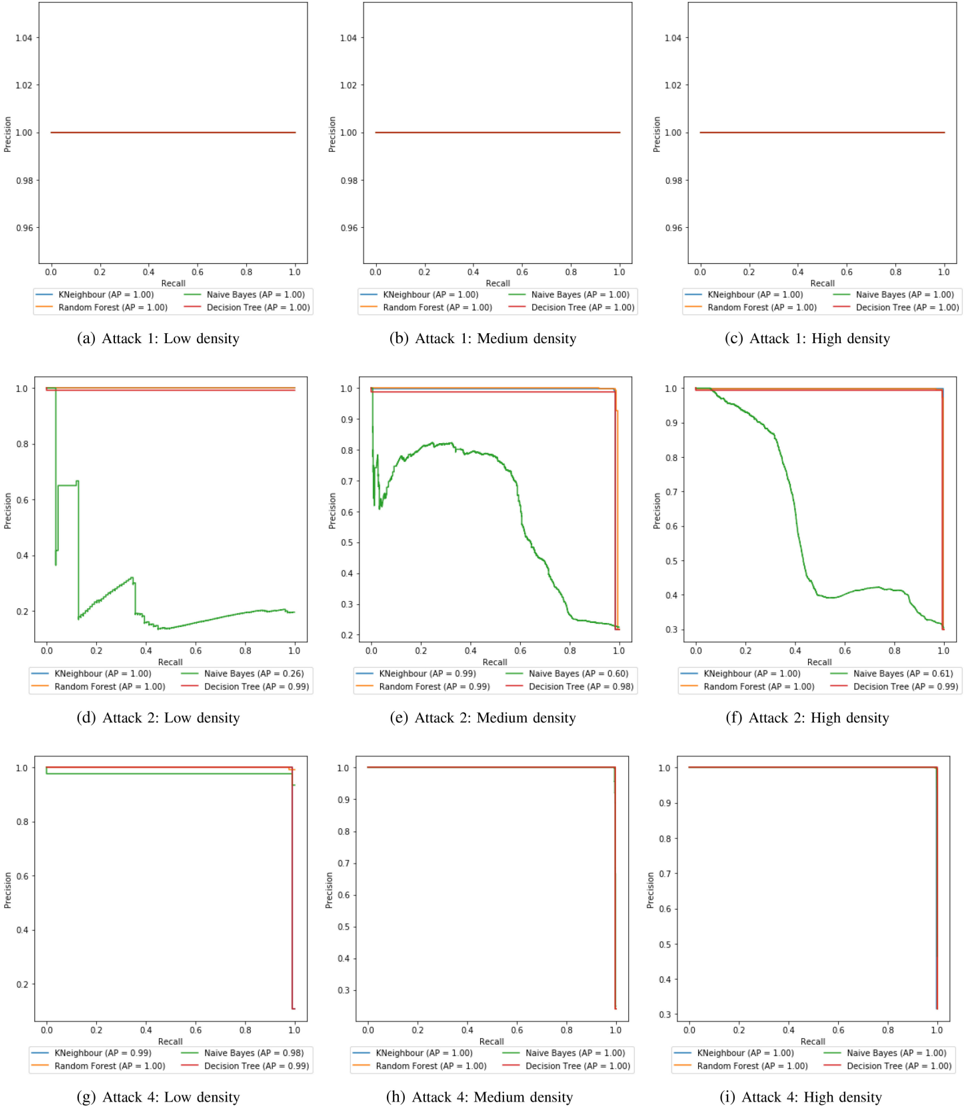
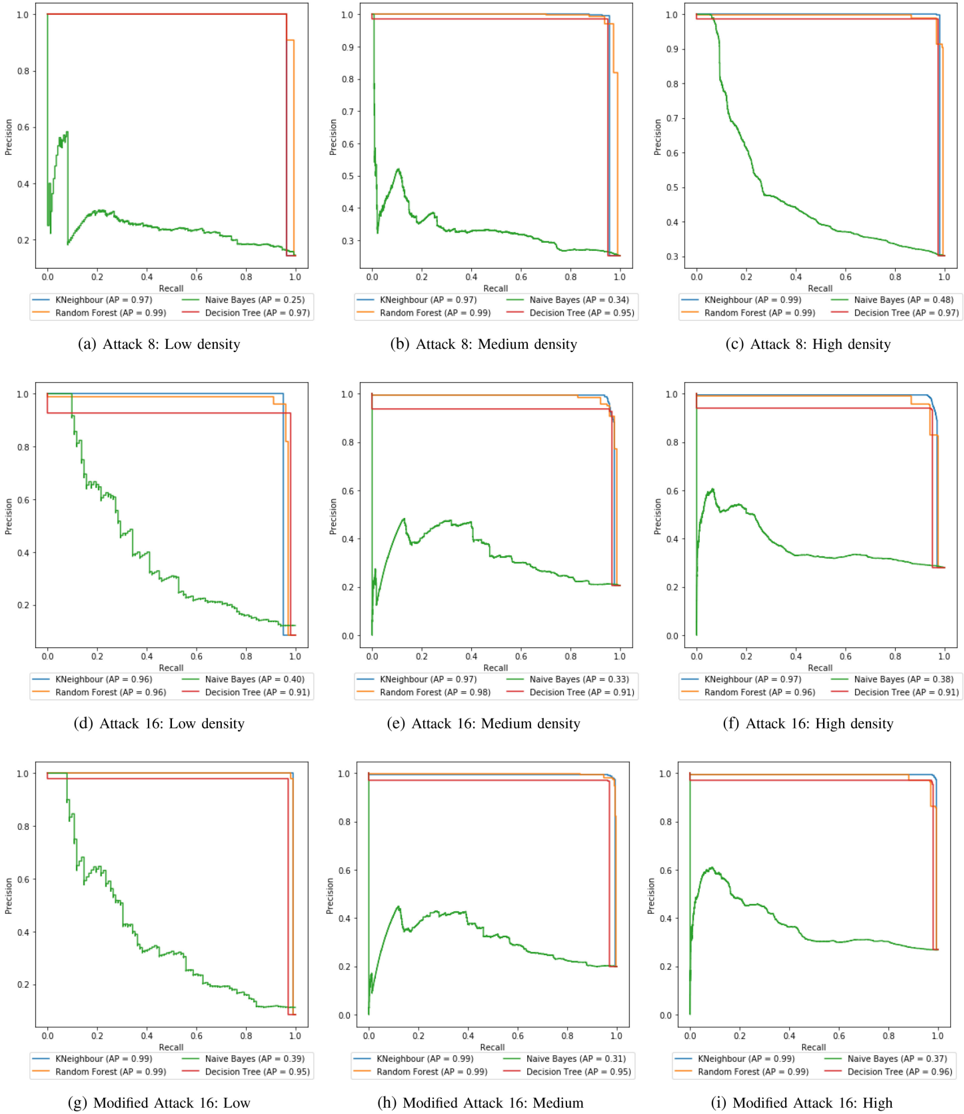

Verification
Claims the paper makes
The claims and statistics of this paper haven’t been checked yet.
Free: it reads the open-access text and checks the first 5 claims that cite a source we can check. Create a free account to check every claim.
Claims other papers make about this one
Each is checked against this paper’s own text: does it say what the citing paper says it does?
The source backs part of the claim, not all of it — or backs it for a different population, condition or comparison.
In the citing paper
“Traditional security measures such as firewalls and signature-based IDSs are inadequate in VANETs due to their real-time, mobile, and scalable requirements12,13.”
From A Hybrid Deep Learning Model for Detection and Mitigation of DDoS Attacks in VANETs (2025) · cites this paper as [12]
Experimental — accuracy not yet measured
Self-check
Percentages, sums and reported differences re-computed from the paper’s own numbers.
The self-check needs the paper’s full text.
Citations
Cites
Ensemble methods in machine learning
Dietterich, T. G. (2000) · Lecture Notes in Computer Science · doi:10.1007/3-540-45014-9_1 · Cited by 8,408
A comprehensive survey on vehicular Ad Hoc network
Al-Sultan, S., Al-Doori, M. M., Al-Bayatti, A. H., & Zedan, H. (2014) · Journal of Network and Computer Applications · doi:10.1016/j.jnca.2013.02.036 · Cited by 1,348
Vehicular ad hoc networks (VANETS): status, results, and challenges
Zeadally, S., Hunt, R., Chen, Y.-S., Irwin, A., & Hassan, A. (2012) · Telecommunication Systems · doi:10.1007/s11235-010-9400-5 · Cited by 1,208
Indian Hedgehog: A Mechanotransduction Mediator in Condylar Cartilage
Tang, G. H., Rabie, A. B. M., & Hägg, U. (2004) · Journal of Dental Research · doi:10.1177/154405910408300516 · Cited by 819
VANet security challenges and solutions: A survey
Hasrouny, H., Samhat, A. E., Bassil, C., & Laouiti, A. (2017) · Vehicular Communications · doi:10.1016/j.vehcom.2017.01.002 · Cited by 642
Supervised Classification Algorithms in Machine Learning: A Survey and Review
Sen, P. C., Hajra, M., & Ghosh, M. (2020) · Advances in Intelligent Systems and Computing · doi:10.1007/978-981-13-7403-6_11 · Cited by 515
Mohammed, M., Khan, M. B., & Bashier, E. B. M. (2016) · doi:10.1201/9781315371658 · Cited by 389
Area under the Precision-Recall Curve: Point Estimates and Confidence Intervals
Boyd, K., Eng, K. H., & Page, C. D. (2013) · Lecture Notes in Computer Science · doi:10.1007/978-3-642-40994-3_29 · Cited by 381
k-Nearest Neighbor Classification
Mucherino, A., Papajorgji, P. J., & Pardalos, P. M. (2009) · Springer optimization and its applications · doi:10.1007/978-0-387-88615-2_4 · Cited by 369
An effective intrusion detection approach using SVM with naïve Bayes feature embedding
Gu, J., & Lu, S. (2021) · Computers & Security · doi:10.1016/j.cose.2020.102158 · Cited by 340
A survey on authentication schemes in VANETs for secured communication
Manvi, S. S., & Tangade, S. (2017) · Vehicular Communications · doi:10.1016/j.vehcom.2017.02.001 · Cited by 311
A Survey of Intelligent Transportation Systems
An, S.-H., Lee, B.-H., & Shin, D.-R. (2011) · 2011 Third International Conference on Computational Intelligence, Communication Systems and Networks · doi:10.1109/cicsyn.2011.76 · Cited by 255
VeReMi: A Dataset for Comparable Evaluation of Misbehavior Detection in VANETs
van der Heijden, R. W., Lukaseder, T., & Kargl, F. (2018) · Lecture Notes of the Institute for Computer Sciences, Social Informatics and Telecommunications Engineering · doi:10.1007/978-3-030-01701-9_18 · Cited by 252
Luxembourg SUMO Traffic (LuST) Scenario: Traffic Demand Evaluation
Codeca, L., Frank, R., Faye, S., & Engel, T. (2017) · IEEE Intelligent Transportation Systems Magazine · doi:10.1109/mits.2017.2666585 · Cited by 247
(2018) · Optimization Techniques and Applications with Examples · doi:10.1002/9781119490616.ch9 · Cited by 243
Toward Intelligent Vehicular Networks: A Machine Learning Framework
Liang, L., Ye, H., & Li, G. Y. (2019) · IEEE Internet of Things Journal · doi:10.1109/jiot.2018.2872122 · Cited by 240
A survey on security attacks in VANETs: Communication, applications and challenges
Arif, M., Wang, G., Zakirul Alam Bhuiyan, M., Wang, T., & Chen, J. (2019) · Vehicular Communications · doi:10.1016/j.vehcom.2019.100179 · Cited by 236
Host-Based Intrusion Detection for VANETs: A Statistical Approach to Rogue Node Detection
Zaidi, K., Milojevic, M. B., Rakocevic, V., Nallanathan, A., & Rajarajan, M. (2016) · IEEE Transactions on Vehicular Technology · doi:10.1109/tvt.2015.2480244 · Cited by 197
Binkhonain, M., & Zhao, L. (2019) · Expert Systems with Applications: X · doi:10.1016/j.eswax.2019.100001 · Cited by 194
Comparative Analysis of Decision Tree Classification Algorithms
Priyam, A., Gupta, R., Rathee, A., & Srivastava, S. K. (2013) · Cited by 189
Anomaly intrusion detection method for vehicular networks based on survival analysis
Han, M. L., Kwak, B. I., & Kim, H. K. (2018) · Vehicular Communications · doi:10.1016/j.vehcom.2018.09.004 · Cited by 189
Integrating Plausibility Checks and Machine Learning for Misbehavior Detection in VANET
So, S., Sharma, P., & Petit, J. (2018) · 2018 17th IEEE International Conference on Machine Learning and Applications (ICMLA) · doi:10.1109/icmla.2018.00091 · Cited by 164
Misbehavior Detection using Machine Learning in Vehicular Communication Networks
Gyawali, S., & Qian, Y. (2019) · ICC 2019 - 2019 IEEE International Conference on Communications (ICC) · doi:10.1109/icc.2019.8761300 · Cited by 130
A. Ghaleb, F., Saeed, F., Al-Sarem, M., Ali Saleh Al-rimy, B., Boulila, W., Eljialy, A. E. M., Aloufi, K., & Alazab, M. (2020) · Electronics · doi:10.3390/electronics9091411 · Cited by 99
Machine Learning Based Approach to Detect Position Falsification Attack in VANETs
Singh, P. K., Gupta, S., Vashistha, R., Nandi, S. K., & Nandi, S. (2019) · Communications in computer and information science · doi:10.1007/978-981-13-7561-3_13 · Cited by 79
Classification of Security Attacks in VANET: A Review of Requirements and Perspectives
Hezam Al Junaid, M. A., Syed, A. A., Mohd Warip, M. N., Fazira Ku Azir, K. N., & Romli, N. H. (2018) · MATEC Web of Conferences · doi:10.1051/matecconf/201815006038 · Cited by 70
Misbehavior Detection Based on Ensemble Learning in VANET
Grover, J., Laxmi, V., & Gaur, M. S. (2012) · Lecture notes in computer science · doi:10.1007/978-3-642-29280-4_70 · Cited by 67
Ensemble-Based Hybrid Context-Aware Misbehavior Detection Model for Vehicular Ad Hoc Network
Ghaleb, F. A., Maarof, M. A., Zainal, A., Al-rimy, B. A. S., Alsaeedi, A., & Boulila, W. (2019) · Remote Sensing · doi:10.3390/rs11232852 · Cited by 56
Machine Learning Approach for Detecting Location Spoofing in VANET
Sharma, A., & Jaekel, A. (2021) · International Conference on Computer Communications and Networks (ICCCN) · doi:10.1109/icccn52240.2021.9522170 · Cited by 49
Self-citationReal-Time Detection and Mitigation of DDoS Attacks in Intelligent Transportation Systems
Haydari, A., & Yilmaz, Y. (2018) · 2018 21st International Conference on Intelligent Transportation Systems (ITSC) · doi:10.1109/itsc.2018.8569698 · Cited by 43
ReFIoV: A Novel Reputation Framework for Information-Centric Vehicular Applications
Magaia, N., & Sheng, Z. (2018) · IEEE Transactions on Vehicular Technology · doi:10.1109/tvt.2018.2886572 · Cited by 41
Machine Learning Based Approach to Detect Wormhole Attack in VANETs
Singh, P. K., Gupta, R. R., Nandi, S. K., & Nandi, S. (2019) · Advances in intelligent systems and computing · doi:10.1007/978-3-030-15035-8_63 · Cited by 32
Detection of Position Falsification Attacks in VANETs Applying Trust Model and Machine Learning
Montenegro, J., Iza, C., & Aguilar Igartua, M. (2020) · Proceedings of the 17th ACM Symposium on Performance Evaluation of Wireless Ad Hoc, Sensor, & Ubiquitous Networks · doi:10.1145/3416011.3424757 · Cited by 31
Artificial Intelligence Based Intrusion Detection System to Detect Flooding Attack in VANETs
Aneja, M. J. S., Bhatia, T., Sharma, G., & Shrivastava, G. (2018) · Advances in information security, privacy, and ethics book series · doi:10.4018/978-1-5225-4100-4.ch006 · Cited by 28
A new procedure for misbehavior detection in vehicular ad-hoc networks using machine learning
Sonker, A., & Gupta, R. K. (2021) · International Journal of Power Electronics and Drive Systems/International Journal of Electrical and Computer Engineering · doi:10.11591/ijece.v11i3.pp2535-2547 · Cited by 28
A Taxonomy of Security Attacks and Issues in Vehicular Ad-Hoc Networks (VANETs)
Tyagi, P., & Dembla, D. (2014) · International Journal of Computer Applications · doi:10.5120/15893-5040 · Cited by 25
Misbehavior detection in vehicular ad-hoc networks
Heijden, V. D. R., Dietzel, S., & Kargl, F. (2013) · Cited by 24
A trusted neighbor table based location verification for VANET routing
Xue, X., Lin, N., Ding, J., & Ji, Y. (2010) · IET International Conference on Wireless, Mobile and Multimedia Networks (ICWMMN) · doi:10.1049/cp.2010.0603 · Cited by 20
Denial of Service Attack in VANET: A Survey
Raghuwanshi, V., & Jain, S. (2015) · International Journal of Engineering Trends and Technology · doi:10.14445/22315381/ijett-v28p204 · Cited by 19
Machine learning in the real world
Chaoji, V., Rastogi, R. R., & Roy, G. (2016) · Proceedings of the VLDB Endowment · doi:10.14778/3007263.3007318 · Cited by 19
Position Falsification Misbehavior Detection in VANETs
Khot, A., & Dave, M. (2020) · Lecture notes in networks and systems · doi:10.1007/978-981-15-7130-5_39 · Cited by 16
Special Section on Vehicular Networks and Communication Systems: From Laboratory into Reality
Bai, F., Hannes Hartenstein, B., Gruteser, M., Kravets, R. H., Zhang, T., & Stancil, D. D. (2013) · IEEE Transactions on Vehicular Technology · doi:10.1109/tvt.2013.2286434 · Cited by 1
Research works printed but not linked: 4
- A. Liaw et al., "Classification and regression by randomforest," R News, vol. 2, no. 3, pp. 18-22, 2002.
- K. M. Leung, "Naive bayesian classifier," Polytech. Univ. Dept. Comput. Sci./Finance Risk Eng., vol. 2007, pp. 123-156, 2007.
- S. Sharanya and S. Karthikeyan, "Classifying malicious nodes in VANETs using support vector machines with modified fading memory," ARPN J. Eng. Appl. Sci., vol. 12, no. 1, pp. 171-176, 2017.
- J. Brownlee, "A gentle introduction to imbalanced classification," Mach. Learn. Mastery, vol. 22, 2019.
Cited by
Abdel Hakeem, S. A., & Kim, H. (2025) · IEEE Transactions on Intelligent Transportation Systems · doi:10.1109/tits.2025.3558849 · Cited by 90
TON-IoT: Detection of Attacks on Internet of Things in Vehicular Networks
Sharma, A., Babbar, H., & Sharma, A. (2022) · 2022 6th International Conference on Electronics, Communication and Aerospace Technology · doi:10.1109/iceca55336.2022.10009070 · Cited by 55
“According to the report of global status given by the World Health Organisation (WHO) on road safety, road accidents are the major cause of people’s demise within the age group 6-30 years [1].”
BackgroundSelf-citationA Hybrid Deep Learning Model for Detection and Mitigation of DDoS Attacks in VANETs
Jayakrishna, N., & Prasanth, N. N. (2025) · Scientific Reports · doi:10.1038/s41598-025-15215-1 · Cited by 20
Metadata
- Authors
- Sharma, A., & Jaekel, A.
- Affiliations
- School of Computer Science, University of Windsor, Windsor, ON, Canada
- ORCID
- Jaekel, Arunita
- Venue
- IEEE Open Journal of Vehicular Technology
- Published
- 2022
- Volume
- 3
- Pages
- 1-14
- ISSN
- 2644-1330
- Cited by
- 88
- References
- 42
- Funders
- Natural Sciences and Engineering Research Council of Canada (RGPIN-2015-05641)
About these checks
Registry, retraction, Cites and statistics results are computed, not judged, with one exception: a printed reference that no index lists is read once by a model before it counts as a citation error. Claims are extracted by a model and kept only when their quote appears verbatim in the text; each cited source is then checked, with a model’s help, for whether it says what the claim relies on. Those verdicts can be wrong — read the claim’s quote and the cited source before relying on one.
Statistics and arithmetic are recomputed, not judged.
Confidence bands are shown only for fields calibrated on our annotated test set. None is calibrated yet, so no band is shown.
What counts as a claim ›How we measure confidence ›How we check this ›
Are you an author, or do you see a problem with this page? Request a review
Data sources
Bibliographic data: Semantic Scholar, OpenAlex, Crossref.
Contains information from the Semantic Scholar Academic Graph Datasets, made available under the ODC Attribution License (ODC-BY 1.0).
Semantic Scholar’s data is described in: Kinney, R., et al. (2023). The Semantic Scholar Open Data Platform. arXiv:2301.10140.
