

The DOI matches its Crossref record.
Understanding Security Risks of Embedded Devices Through Fine-Grained Firmware Fingerprinting
Open accessAbstract
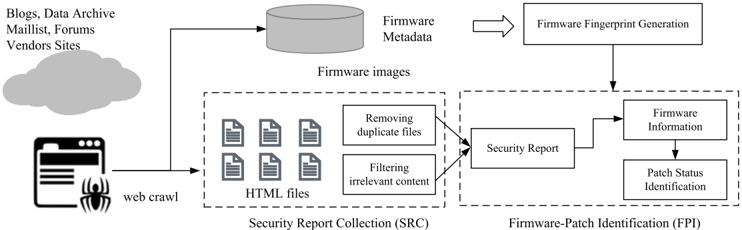
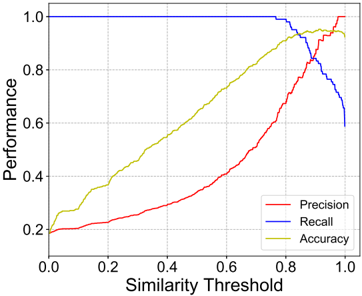
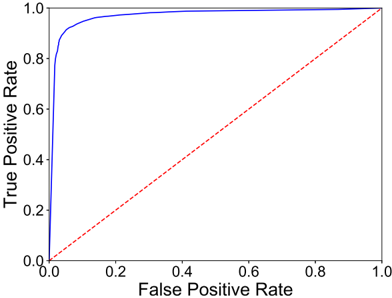
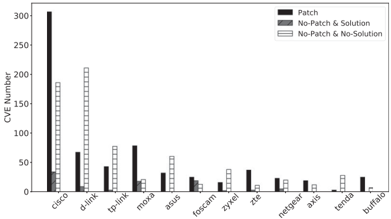
An increasing number of embedded devices are connecting to the Internet, ranging from cameras, routers to printers, while an adversary can exploit security flaws already known to compromise those devices. Security patches are usually associated with the device firmware, which relies on the device vendors and products. Due to compatibility and release-time issues, many embedded devices are still using outdated firmware with known vulnerabilities or flaws. In this article, we conduct a systematic study on device vulnerabilities by leveraging firmware fingerprints. Specifically, we use a web crawler to gather 9,716 firmware images from official websites of device vendors, and 347,685 security reports scattered across data archives, blogs, and forums. We propose to generate fine-grained fingerprints based on the subtle differences between the filesystems of various firmware images. Furthermore, machine learning algorithms and regex are used to identify device vulnerabilities and corresponding device firmware fingerprints. We perform real-world experiments to validate the performance of the firmware fingerprint, which yields high accuracy of 91% precision and 90% recall. We reveal that 6,898 reports have the firmware and related vulnerability information, and there are more than 10% of firmware vulnerabilities without any patches or solutions for mitigating underlying security risks.
Overview
The claims and statistics of this paper haven’t been checked yet.
Run the check — free, no account needed. It reads the open-access text and checks the sources it cites.
Integrity signals
Registry
Cites
Statistics
Figures






Verification
Claims the paper makes
The claims and statistics of this paper haven’t been checked yet.
Run the check — free, no account needed. It reads the open-access text and checks the sources it cites.
Claims other papers make about this one
Each is checked against this paper’s own text: does it say what the citing paper says it does?
The source backs part of the claim, not all of it — or backs it for a different population, condition or comparison.
In the citing paper
“OTA technology can be used to repair defects such as insecure services and expired components [28].”
From A Survey of IoT Privacy Security: Architecture, Technology, Challenges, and Trends (2024) · cites this paper as [28]
Experimental — accuracy not yet measured
Self-check
Percentages, sums and reported differences re-computed from the paper’s own numbers.
The self-check needs the paper’s full text.
Citations
Cites
No references could be resolved yet.
Research works printed but not linked: 25
- 10.1145/2976749.2978315 · DOI
- zander, 2008, An improved clock-skew measurement technique for revealing hidden services, Proc 17th Conf Secur Symp, 211
- 10.1109/TDSC.2005.26 · DOI
- 10.1016/j.comnet.2018.11.013 · DOI
- cui, 2013, When firmware modifications attack: A case study of embedded exploitation, Proc Symp Network and Distributed System Security, 1, 1
- sabottke, 2015, Vulnerability disclosure in the age of social media: Exploiting twitter for predicting real-world exploits, Proc 24th USENIX Secur Symp, 1041
- 10.1145/3393691.3394220 · DOI
- 10.1145/3133956.3134072 · DOI
- 10.1109/JSAC.2020.2980921 · DOI
- zaddach, 2013, Embedded devices security and firmware reverse engineering, Proc Black Hat USA
- bellard, 2005, QEMU, a fast and portable dynamic translator, Proc Annu Conf USENIX Annu Tech Conf, 41
- mikolov, 2013, Distributed representations of words and phrases and their compositionality, Proc Neural Inf Process Syst, 3111
- 10.1145/3133956.3134018 · DOI
- 10.1609/aaai.v34i01.5466 · DOI
- 10.14722/ndss.2015.23294 · DOI
- 10.1109/INFOCOM.2018.8486326 · DOI
- costin, 2014, A large-scale analysis of the security of embedded firmwares, Proc 23th USENIX Secur Symp, 95
- 10.1109/SP.2014.44 · DOI
- 10.14722/ndss.2016.23415 · DOI
- kai, 2018, DTaint: Detecting the taint-style vulnerability in embedded device firmware, Proc 48th Annu IEEE/IFIP Int Conf Dependable Syst Netw, 430
- 10.14722/ndss.2014.23229 · DOI
- antonakakis, 2017, Understanding the mirai botnet, Proc Usenix Secur Symp, 1092
- feng, 2018, Acquisitional rule-based engine for discovering internet-of-things devices, Proc 27th USENIX Secur Symp, 327
- 10.1145/2810103.2813703 · DOI
- durumeric, 2013, ZMap: Fast Internet-wide scanning and its security applications, Proc 22th USENIX Secur Symp, 605
Cited by
Sorted by citations
A Survey of IoT Privacy Security: Architecture, Technology, Challenges, and Trends
Sun, P., Shen, S., Wan, Y., Wu, Z., Fang, Z., & Gao, X.-Z. (2024) · IEEE Internet of Things Journal · doi:10.1109/jiot.2024.3372518 · Cited by 172
Metadata
- Authors
- Li, Q., Tan, D., Ge, X., Wang, H., Li, Z., & Liu, J.
- Affiliations
- Beijing Jiaotong University (CN)
- Virginia Tech (US)
- Chinese Academy of Sciences (CN)
- Venue
- IEEE Transactions on Dependable and Secure Computing
- Published
- 2022-11-01
- Volume
- 19
- Issue
- 6
- Pages
- 4099-4112
- ISSN
- 1545-5971 (ISSN-L)
- 1941-0018
- 2160-9209
- OpenAlex
- W3207023396
- Cited by
- 17
- References
- 0
- Citations by year
- 2026: 6 · 2025: 6 · 2024: 3 · 2023: 2
- FWCI
- 0.56
- Type
- journal article
- Language
- en
- Open access
- hybrid
- doi.org
- Locations
- IEEE Transactions on Dependable and Secure Computing (publishedVersion, cc-by)
- VTechWorks (Virginia Tech) (submittedVersion, cc-by)
- Funders
- National Key R&D Program of China (2018YFB0803402, 2020YFB2103802)
- National Natural Science Foundation of China (61972024)
- Topics
- Physical Sciences › Computer Science › Computer Networks and Communications › IoT and Edge/Fog Computing
- Physical Sciences › Computer Science › Hardware and Architecture › Security and Verification in Computing
- Physical Sciences › Computer Science › Computer Networks and Communications › Network Security and Intrusion Detection
- Keywords
- embedded devices, firmware vulnerabilities, vulnerability detection, security patching, vulnerability reports, Internet of Things security
About these checks
Registry, retraction, Cites and statistics results are computed, not judged, with one exception: a printed reference that no index lists is read once by a model before it counts as a citation error. Claims are extracted by a model and kept only when their quote appears verbatim in the text; each cited source is then checked, with a model’s help, for whether it says what the claim relies on. Those verdicts can be wrong — read the claim’s quote and the cited source before relying on one.
Statistics and arithmetic are recomputed, not judged.
Confidence bands are shown only for fields calibrated on our annotated test set. None is calibrated yet, so no band is shown.
What counts as a claim ›How we measure confidence ›How we check this ›
Are you an author, or do you see a problem with this page? Request a review
