

DALSA: Domain Adaptation for Supervised Learning From Sparsely Annotated MR Images
Open accessThe DOI matches its Crossref record; 48 of the 50 references it cites were found in a registry or an index.
Abstract
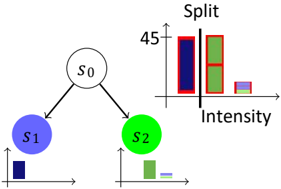
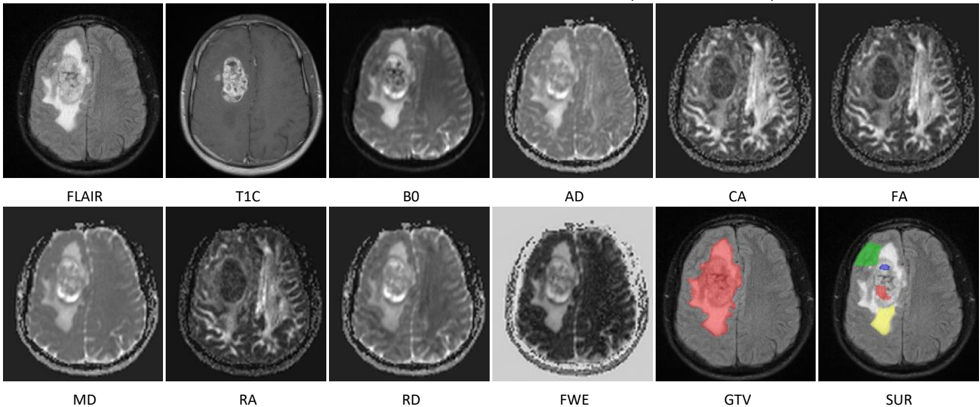
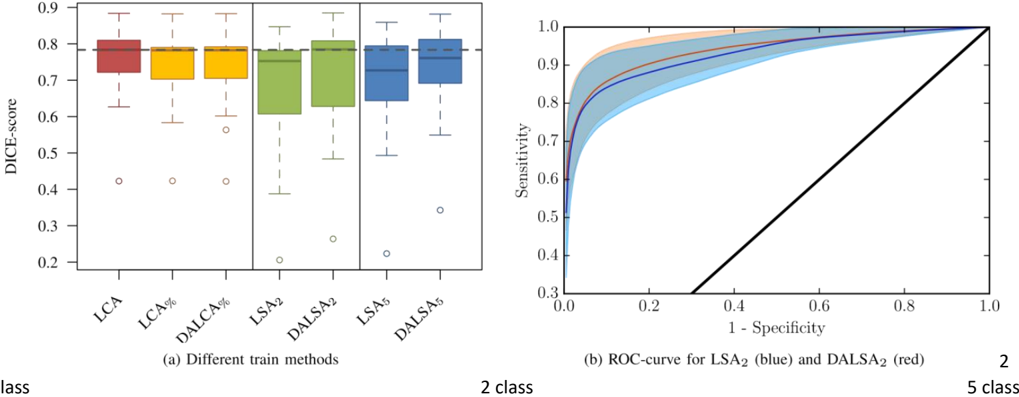
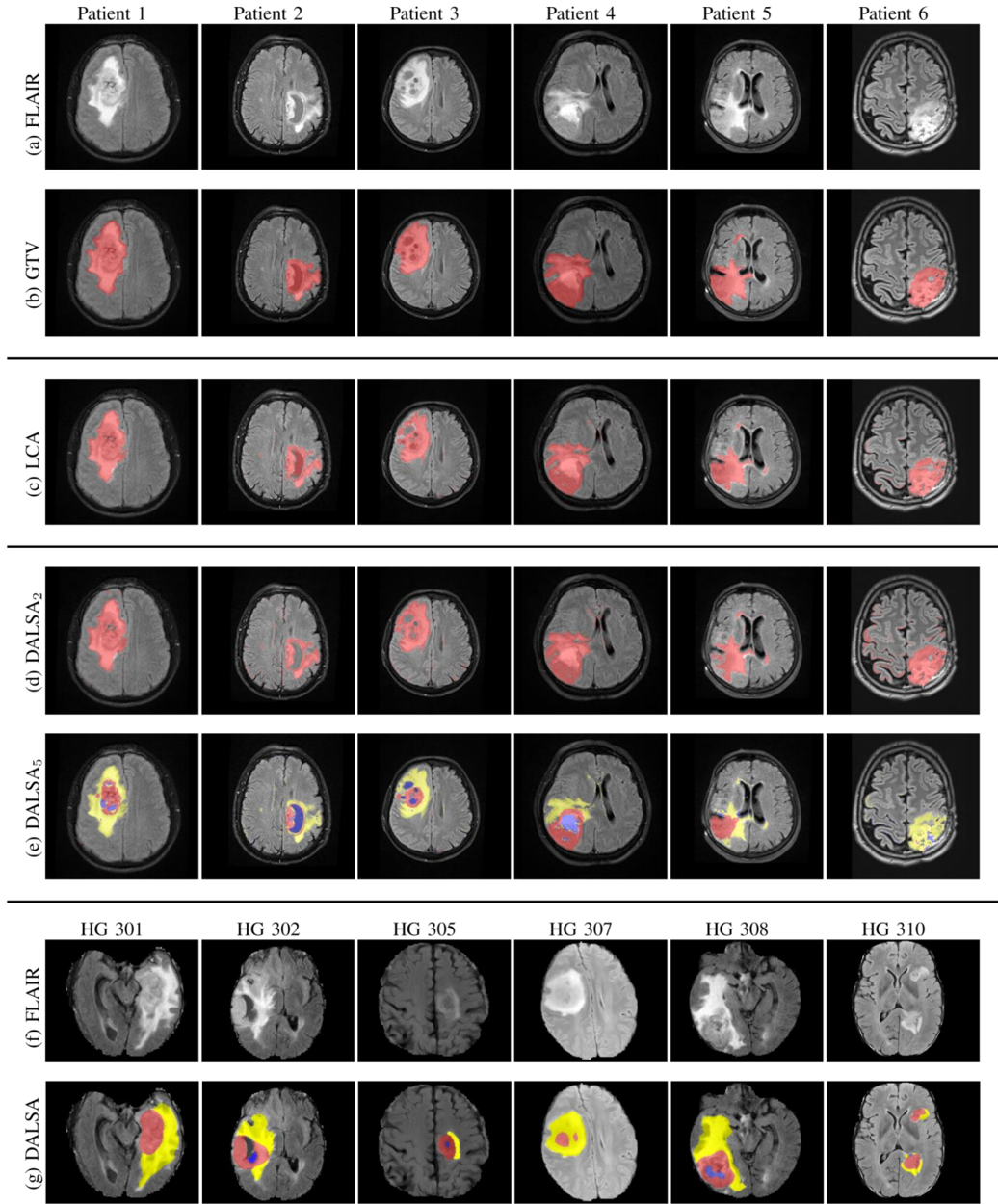
We propose a new method that employs transfer learning techniques to effectively correct sampling selection errors introduced by sparse annotations during supervised learning for automated tumor segmentation. The practicality of current learning-based automated tissue classification approaches is severely impeded by their dependency on manually segmented training databases that need to be recreated for each scenario of application, site, or acquisition setup. The comprehensive annotation of reference datasets can be highly labor-intensive, complex, and error-prone. The proposed method derives high-quality classifiers for the different tissue classes from sparse and unambiguous annotations and employs domain adaptation techniques for effectively correcting sampling selection errors introduced by the sparse sampling. The new approach is validated on labeled, multi-modal MR images of 19 patients with malignant gliomas and by comparative analysis on the BraTS 2013 challenge data sets. Compared to training on fully labeled data, we reduced the time for labeling and training by a factor greater than 70 and 180 respectively without sacrificing accuracy. This dramatically eases the establishment and constant extension of large annotated databases in various scenarios and imaging setups and thus represents an important step towards practical applicability of learning-based approaches in tissue classification.
Overview
The claims and statistics of this paper haven’t been checked yet.
Free: it reads the open-access text and checks the first 5 claims that cite a source we can check. Create a free account to check every claim.
Integrity signals
Registry
Cites
Statistics
Figures
Verification
Claims the paper makes
The claims and statistics of this paper haven’t been checked yet.
Free: it reads the open-access text and checks the first 5 claims that cite a source we can check. Create a free account to check every claim.
Claims other papers make about this one
Each is checked against this paper’s own text: does it say what the citing paper says it does?
The cited source says what the claim attributes to it.
In the citing paper
“(1) gliomas may have the same appearance as gliosis and stroke in MRI data (Goetz et al., 2016)”
From A deep learning model integrating FCNNs and CRFs for brain tumor segmentation (2018) · cites this paper as Goetz et al., 2016
Self-check
Percentages, sums and reported differences re-computed from the paper’s own numbers.
The self-check needs the paper’s full text.
Citations
Cites
Breiman, L. (2001) · Machine Learning · doi:10.1023/a:1010933404324 · Cited by 133,538 · cited 1×
“The classification in our main experiments is based on random forests [32], [33].”
MethodScikit-learn: Machine Learning in Python
Pedregosa, F., Varoquaux, G., Gramfort, A., Michel, V., Thirion, B., Grisel, O., Blondel, M., Müller, A., Nothman, J., Louppe, G., et al. (2012) · arXiv · doi:10.48550/arxiv.1201.0490 · Cited by 71,016 · cited 1×
“Since the original random forest definition does not support observation weights, we used a variant that is similar to the random forest implementation in the python scikit module [34].”
MethodSample Selection Bias as a Specification Error
Heckman, J. J. (1979) · Econometrica · doi:10.2307/1912352 · Cited by 28,779 · cited 1×
“However, if only small areas of an image are used for training, this assumption becomes invalid and a sampling selection bias occurs [26].”
BackgroundWu, Y. (1999) · Technometrics · doi:10.1080/00401706.1999.10485951 · Cited by 27,221
The Elements of Statistical Learning
Hastie, T., Tibshirani, R., & Friedman, J. (2009) · Springer Series in Statistics · doi:10.1007/978-0-387-84858-7 · Cited by 25,970
Classification and Regression Trees.
Gordon, A. D., Breiman, L., Friedman, J. H., Olshen, R. A., & Stone, C. J. (1984) · Biometrics · doi:10.2307/2530946 · Cited by 23,522
Measures of the Amount of Ecologic Association Between Species
Dice, L. R. (1945) · Ecology · doi:10.2307/1932409 · Cited by 11,874 · cited 1×
“The quality of the obtained segmentation on the left-out patient was evaluated on the basis of the manually annotated ground truth using the well-known DICE score [41] as well as the sensitivity (true positive rate) and specificity (true negative rate).”
MethodRussell, E. L., Chiang, L. H., & Braatz, R. D. (2000) · Advances in Industrial Control · doi:10.1007/978-1-4471-0409-4_3 · Cited by 7,862
The multimodal brain tumor image segmentation benchmark (BRATS)
Menze, B. H., Jakab, A., Bauer, S., Kalpathy-Cramer, J., Farahani, K., Kirby, J., Burren, Y., Porz, N., Slotboom, J., Wiest, R., et al. (2015) · IEEE Transactions on Medical Imaging · doi:10.1109/tmi.2014.2377694 · Cited by 6,781 · cited 3×
“Total annotation time per rater was about one hour, resulting in a total annotation time per segmentation of four hours [12].”
BackgroundAn Introduction to Generalized Linear Models.
Chang, P. C., & Dobson, A. J. (1991) · Journal of the American Statistical Association · doi:10.2307/2290548 · Cited by 2,509
Research works printed but not linked: 4
- B. Menze, M. Reyes, and K. Van Leemput, "The Multimodal Brain Tumorimage Segmentation Benchmark (BRATS)," IEEE Transactions on Medical Imaging, vol. PP, no. 99, pp. 1-1, 2014.
- U. Kothe, "STL-style generic programming with images,"¨ C++ Report Magazine, vol. 12, no. 1, pp. 24-30, 2000.
- M. Goetz, C. Weber, B. Stieltjes, and K. Maier-Hein, "Learning from Small Amounts of Labeled Data in a Brain Tumor Classification Task," in Workshop on Transfer and Multi-task learning: Theory Meets Practice (NIPS'14), 2014. [Online]. Available: http://www.cims.nyu. edu/ ∼ munoz/multitask/Paper 9 nips2014-Workshop-Final.pdf
- J. Kleesiek, A. Biller, G. Urban, U. Koethe, M. Bendszus, and F. Hamprecht, "ilastik for Multi-modal Brain Tumor Segmentation," Proceedings of MICCAI 2013 Challenge on Multimodal Brain Tumor Segmentation (BRATS 2013), 2014.
Cited by
Domain adaptation for medical image analysis: A survey
Guan, H., & Liu, M. (2022) · IEEE Transactions on Biomedical Engineering · doi:10.1109/tbme.2021.3117407 · Cited by 1,057
“learning [7] and lifelong learning [8] to the problem of brain segmentation across”
A deep learning model integrating FCNNs and CRFs for brain tumor segmentation
Zhao, X., Wu, Y., Song, G., Li, Z., Zhang, Y., & Fan, Y. (2018) · Medical Image Analysis · doi:10.1016/j.media.2017.10.002 · Cited by 813
Maier, O., Menze, B. H., von der Gablentz, J., Häni, L., Heinrich, M. P., Liebrand, M., Winzeck, S., Basit, A., Bentley, P., Chen, L., et al. (2017) · Medical Image Analysis · doi:10.1016/j.media.2016.07.009 · Cited by 524
“We define the 943 similarity between two images as the DC that can be achieved ETs (Geurts et al., 2006) which incorporate DALSA to show 955 the general applicability of our approach (Goetz et al., 2016).”
MethodSelf-citationA review on brain tumor segmentation of MRI images
Wadhwa, A., Bhardwaj, A., & Singh Verma, V. (2019) · Magnetic Resonance Imaging · doi:10.1016/j.mri.2019.05.043 · Cited by 374
Soltaninejad, M., Yang, G., Lambrou, T., Allinson, N., Jones, T. L., Barrick, T. R., Howe, F. A., & Ye, X. (2018) · Computer Methods and Programs in Biomedicine · doi:10.1016/j.cmpb.2018.01.003 · Cited by 222
“[15] proposed a new random forest based method which uses domain adaptation to reduce sample selection errors.”
Method
Metadata
- Authors
- Goetz, M., Weber, C., Binczyk, F., Polanska, J., Tarnawski, R., Bobek-Billewicz, B., Koethe, U., Kleesiek, J., Stieltjes, B., & Maier-Hein, K. H.
- Affiliations
- German Cancer Research Center (DE)
- Silesian University of Technology (PL)
- The Maria Sklodowska-Curie National Research Institute of Oncology (PL)
- University Hospital of Basel (CH)
- ORCID
- Venue
- IEEE Transactions on Medical Imaging
- Published
- 2016-01
- Volume
- 35
- Issue
- 1
- Pages
- 184-196
- ISSN
- 0278-0062 (ISSN-L)
- 1558-254X
- OpenAlex
- W1162227652
- Cited by
- 98
- References
- 50
- Citations by year
- 2026: 3 · 2025: 5 · 2024: 15 · 2023: 11 · 2022: 5 · 2021: 17 · 2020: 9 · 2019: 9 · 2018: 8 · 2017: 8 · 2016: 8
- FWCI
- 6.94
- Type
- journal article
- Language
- en
- Open access
- green
- arxiv.org
- Locations
- IEEE Transactions on Medical Imaging (publishedVersion)
- PubMed (publishedVersion)
- arXiv (Cornell University) (submittedVersion, cc-by-nc-nd)
- arXiv (Cornell University)
- Funders
- Deutsche Forschungsgemeinschaft (SFB 125 / I04, SFB 125 / R01)
- Topics
- Physical Sciences › Computer Science › Computer Vision and Pattern Recognition › Medical Image Segmentation Techniques
- Physical Sciences › Computer Science › Computer Vision and Pattern Recognition › Brain Tumor Detection and Classification
- Physical Sciences › Computer Science › Artificial Intelligence › Domain Adaptation and Few-Shot Learning
- Keywords
- domain adaptation, transfer learning, sparse annotations, tumor segmentation, tissue classification, high-grade glioma, magnetic resonance imaging, annotation cost reduction, multimodal MRI
- MeSH terms
- Machine Learning, Algorithms, Brain Neoplasms, Decision Trees, Glioma, Humans, Image Processing, Computer-Assisted, Magnetic Resonance Imaging
About these checks
Registry, retraction, Cites and statistics results are computed, not judged, with one exception: a printed reference that no index lists is read once by a model before it counts as a citation error. Claims are extracted by a model and kept only when their quote appears verbatim in the text; each cited source is then checked, with a model’s help, for whether it says what the claim relies on. Those verdicts can be wrong — read the claim’s quote and the cited source before relying on one.
Statistics and arithmetic are recomputed, not judged.
Confidence bands are shown only for fields calibrated on our annotated test set. None is calibrated yet, so no band is shown.
What counts as a claim ›How we measure confidence ›How we check this ›
Are you an author, or do you see a problem with this page? Request a review
Data sources
Bibliographic data: Semantic Scholar, OpenAlex, Crossref.
Contains information from the Semantic Scholar Academic Graph Datasets, made available under the ODC Attribution License (ODC-BY 1.0).
Semantic Scholar’s data is described in: Kinney, R., et al. (2023). The Semantic Scholar Open Data Platform. arXiv:2301.10140.
