

Practical and Robust Federated Learning With Highly Scalable Regression Training
Open accessThe DOI matches its Crossref record; 42 of the 42 references it cites were found in a registry or an index.
Abstract
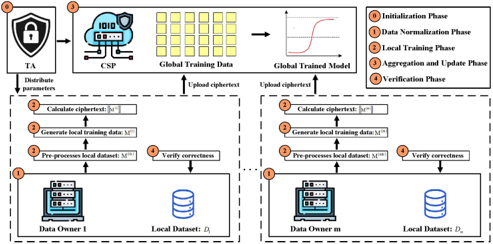
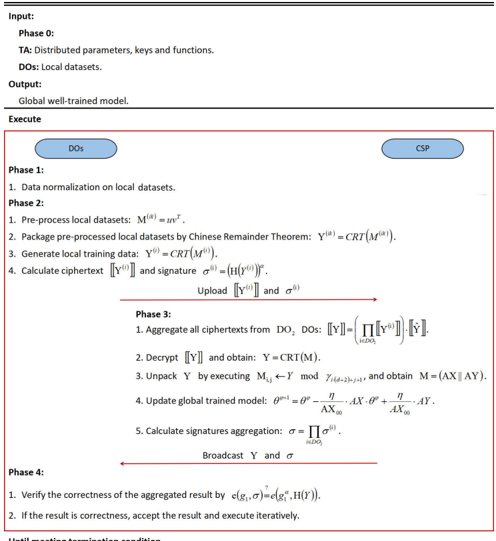
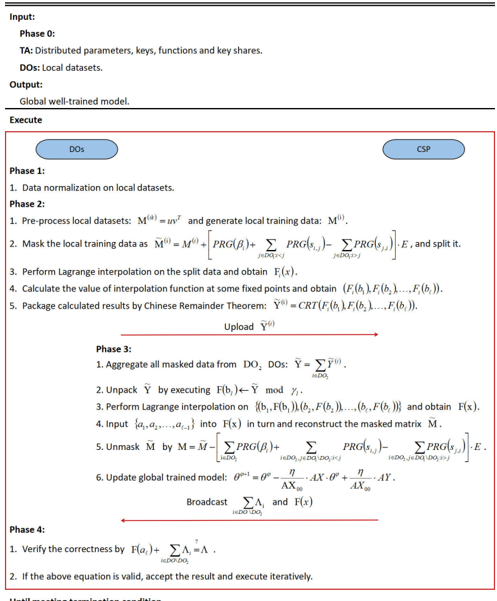
Privacy-preserving federated learning, as one of the privacy-preserving computation techniques, is a promising distributed and privacy-preserving machine learning (ML) approach for Internet of Medical Things (IoMT), due to its ability to train a regression model without collecting raw data of data owners (DOs). However, traditional interactive federated regression training (IFRT) schemes rely on multiple rounds of communication to train a global model and are still under various privacy and security threats. To overcome these problems, several noninteractive federated regression training (NFRT) schemes have been proposed and applied in a variety of scenarios. However, there are still several challenges: 1) how to protect the privacy of DOs' local dataset; 2) how to realize highly scalable regression training without linear dependence on sample dimension; 3) how to tolerate DOs' dropout; and 4) how to enable DOs to verify the correctness of aggregated results returned from the cloud service provider (CSP). In this article, we propose two practical noninteractive federated learning schemes with privacy-preserving for IoMT, named homomorphic encryption based NFRT (HE-NFRT) and double-masking protocol based NFRT (Mask-NFRT), respectively, which are based on a comprehensive consideration of NFRT, privacy concerns, high-efficiency, robustness, and verification mechanism. The security analyses display that our proposed schemes are able to protect the privacy of DOs' local training data, resist collusion attack, and support strong verification to each DO. The performance evaluation results demonstrate that our proposed HE-NFRT scheme is desirable for a high-dimensional and high-security IoMT application while Mask-NFRT scheme is desirable for a high-dimensional and large-scale IoMT application.
Overview
The claims and statistics of this paper haven’t been checked yet.
Free: it reads the open-access text and checks the first 5 claims that cite a source we can check. Create a free account to check every claim.
Integrity signals
Registry
Cites
Statistics
Figures
Verification
Claims the paper makes
The claims and statistics of this paper haven’t been checked yet.
Free: it reads the open-access text and checks the first 5 claims that cite a source we can check. Create a free account to check every claim.
Claims other papers make about this one
Each is checked against this paper’s own text: does it say what the citing paper says it does?
The cited source says what the claim attributes to it.
In the citing paper
“FL allows ML model training while preserving data privacy [35,36,37]”
From A Novel Blockchain-Based Deepfake Detection Method Using Federated and Deep Learning Models (2024) · cites this paper as [36]
Self-check
Percentages, sums and reported differences re-computed from the paper’s own numbers.
The self-check needs the paper’s full text.
Citations
Cites
Deep Residual Learning for Image Recognition
He, K., Zhang, X., Ren, S., & Sun, J. (2016) · 2016 IEEE Conference on Computer Vision and Pattern Recognition (CVPR) · doi:10.1109/cvpr.2016.90 · Cited by 235,474
Self-citationNew directions in cryptography
Diffie, W., & Hellman, M. (1976) · IEEE Transactions on Information Theory · doi:10.1109/tit.1976.1055638 · Cited by 14,713
Communication-Efficient Learning of Deep Networks from Decentralized Data
McMahan, H. B., Moore, E., Ramage, D., Hampson, S., & Arcas, B. A. Y. (2016) · arXiv · doi:10.48550/arxiv.1602.05629 · Cited by 14,215 · cited 2×
“To solve the above problems, federated learning [6], [7] is a promising distributed ML approach for IoMT, in which raw data are kept with DOs.”
BackgroundShamir, A. (1979) · Communications of the ACM · doi:10.1145/359168.359176 · Cited by 13,756 · cited 9×
“In particular, PrivFL [9], VerifyNet [17], and VeriFL [18] use secret sharing protocol [24] to tolerate users’ dropout.”
BackgroundMethodInfluentialPractical Secure Aggregation for Privacy-Preserving Machine Learning
Bonawitz, K., Ivanov, V., Kreuter, B., Marcedone, A., McMahan, H. B., Patel, S., Ramage, D., Segal, A., & Seth, K. (2017) · Proceedings of the 2017 ACM SIGSAC Conference on Computer and Communications Security · doi:10.1145/3133956.3133982 · Cited by 3,956 · cited 5×
“How to design a robust NFRT scheme is challenging [9], [16], [17], [18].”
BackgroundMethodInfluentialFederated Learning: Strategies for Improving Communication Efficiency
Konečný, J., McMahan, H. B., Yu, F. X., Richtárik, P., Suresh, A. T., & Bacon, D. (2016) · arXiv · doi:10.48550/arxiv.1610.05492 · Cited by 3,766 · cited 1×
“To solve the above problems, federated learning [6], [7] is a promising distributed ML approach for IoMT, in which raw data are kept with DOs.”
BackgroundTowards Federated Learning at Scale: System Design
Bonawitz, K., Eichner, H., Grieskamp, W., Huba, D., Ingerman, A., Ivanov, V., Kiddon, C., Konečný, J., Mazzocchi, S., McMahan, H. B., et al. (2019) · arXiv · doi:10.48550/arxiv.1902.01046 · Cited by 2,334 · cited 2×
“3) Robustness: In IoMT applications, it is common for DOs to unable to upload data to the CSP in time due to battery problems and unreliable networks [15].”
BackgroundSecureML: A System for Scalable Privacy-Preserving Machine Learning
Mohassel, P., & Zhang, Y. (2017) · 2017 IEEE Symposium on Security and Privacy (SP) · doi:10.1109/sp.2017.12 · Cited by 1,936 · cited 10×
“Although NFRT has been researched in recent works [10], [11], [12], [13], to address the above problems, there are still some challenges.”
BackgroundMethodInfluentialAggregate and Verifiably Encrypted Signatures from Bilinear Maps
Boneh, D., Gentry, C., Lynn, B., & Shacham, H. (2003) · Lecture Notes in Computer Science · doi:10.1007/3-540-39200-9_26 · Cited by 1,821 · cited 1×
“VerifyNet [17], VeriFL [18], PVFL [21], and VFL [22] support verification to each user by linear homomorphic hash [45] or bilinear aggregate signature [46].”
MethodRobust and Communication-Efficient Federated Learning From Non-i.i.d. Data
Sattler, F., Wiedemann, S., Muller, K.-R., & Samek, W. (2020) · IEEE Transactions on Neural Networks and Learning Systems · doi:10.1109/tnnls.2019.2944481 · Cited by 1,725 · cited 2×
“However, these schemes [42], [43], [44] still involve multiple round interactive communications between users and the server.”
Background
Research works printed but not linked: 2
- L. Yann, C. Corinna, and J. B. Christopher. (1998). The MNIST Database of Handwritten Digits. [Online]. Available: http://yann.lecun.com/ exdb/mnist/
- Z. Huang, W.-J. Lu, C. Hong, and J. Ding, "Cheetah: Lean and fast secure two-party deep neural network inference," in Proc. USENIX Secur., 2022, pp. 1-4. [Online]. Available: http://ia.cr/2022/207
Cited by
Interpreting Black-Box Models: A Review on Explainable Artificial Intelligence
Hassija, V., Chamola, V., Mahapatra, A., Singal, A., Goel, D., Huang, K., Scardapane, S., Spinelli, I., Mahmud, M., & Hussain, A. (2024) · Cognitive Computation · doi:10.1007/s12559-023-10179-8 · Cited by 2,495
“So , along with a strong foundation, necessary amendments will always help in adding more to the structure of XAI, which will lead to a greater impact [94, 95].”
BackgroundA Novel Blockchain-Based Deepfake Detection Method Using Federated and Deep Learning Models
Heidari, A., Navimipour, N. J., Dag, H., Talebi, S., & Unal, M. (2024) · Cognitive Computation · doi:10.1007/s12559-024-10255-7 · Cited by 164
Denial of service attacks in edge computing layers: Taxonomy, vulnerabilities, threats and solutions
Uddin, R., Kumar, S., & Chamola, V. (2023) · Ad Hoc Networks · doi:10.1016/j.adhoc.2023.103322 · Cited by 124
Uddin, M. P., Xiang, Y., Hasan, M., Bai, J., Zhao, Y., & Gao, L. (2025) · ACM Computing Surveys · doi:10.1145/3727643 · Cited by 137
Hanafi, A. V., Ghaffari, A., Rezaei, H., Valipour, A., & Arasteh, B. (2023) · Cluster Computing · doi:10.1007/s10586-023-04102-x · Cited by 90
“Support Vector Machine [12], K-Nearest Neighbor (KNN) [24], decision tree, Random Forest (RF) [25], and simple Bayesian are examples of approaches that can be used in machine learning [26, 27].”
Sai, S., Hassija, V., Chamola, V., & Guizani, M. (2023) · IEEE Internet of Things Journal · doi:10.1109/jiot.2023.3308991 · Cited by 75
“We exploit the FL paradigm [15], [16], [17] to globally train the machine learning model for personalized diagnosis with the help of local updates from the individuals’ devices.”
MethodAlEisa, H. N., Alrowais, F., Allafi, R., Almalki, N. S., Faqih, R., Marzouk, R., Alnfiai, M. M., Motwakel, A., & Ibrahim, S. S. (2023) · IEEE Transactions on Consumer Electronics · doi:10.1109/tce.2023.3325827 · Cited by 59
“Anomaly detection in CPS typically makes use of deep neural networks such as autoen-coders (AE) [36], [37], recurrent neural networks (RNN) [38], convolutional neural networks (CNN) [39], [40], [41], and generative adversarial networks (GAN) [42], [43].”
BackgroundMethodZhao, S., Xu, S., Han, S., Ren, S., Wang, Y., Chen, Z., Chen, X., Lin, J., & Liu, W. (2023) · IEEE Internet of Things Journal · doi:10.1109/jiot.2023.3309132 · Cited by 47
“In our threat model, we assume that the TA is trustable and other entities are honest-but-curious [35], which means that the CC, FN, and users will strictly execute the protocol, but remain curious about other users private information (such as individual users private key and power consumption…”
BackgroundSelf-citationHamzei, M., Khandagh, S., & Navimipour, N. J. (2023) · Sensors · doi:10.3390/s23167233 · Cited by 46
Alsubai, S., Alqahtani, A., Garg, H., Sha, M., & Gumaei, A. (2024) · Complex & Intelligent Systems · doi:10.1007/s40747-024-01477-1 · Cited by 55
“In future studies, we shall extend our approach to the diverse environment and handle the problems related to federated learning, cybersecurity, and health management [45–47].”
From accuracy to approximation: A survey on approximate homomorphic encryption and its applications
Liu, W., You, L., Shao, Y., Shen, X., Hu, G., Shi, J., & Gao, S. (2024) · Computer Science Review · doi:10.1016/j.cosrev.2024.100689 · Cited by 44
Detection of Ponzi scheme on Ethereum using machine learning algorithms
Onu, I. J., Omolara, A. E., Alawida, M., Abiodun, O. I., & Alabdultif, A. (2023) · Scientific Reports · doi:10.1038/s41598-023-45275-0 · Cited by 44
“Moreover, Han et al. 52 use Practical and Robust Federated Learning With Highly Scalable Regression Training to detect network vulnerabilities.”
MethodMeng, L., & Li, D. (2023) · Journal of Grid Computing · doi:10.1007/s10723-023-09695-6 · Cited by 39
“Previous studies [33–36] focused on encrypting data for privacy but neglected the need to protect computation operations from untrusted service providers.”
Tao, M., Liao, L., Zhang⋆, Y., Liu, L., Min, G., Niyato, D. T., & Dustdar, S. (2025) · IEEE Transactions on Mobile Computing · doi:10.1109/tmc.2025.3595117 · Cited by 27
“…we introduce a loss function F ( w k ) to measure the model training cost and loss, which is defined as where, as a logistic regression model [31], f i ( w ki ) is the loss function of local model parameters w ki in the data sample ( x ij , y ij ) , and D = (cid:10) N i =1 D i is the total…”
Magsi, A. H., Mohsan, S. A. H., Muhammad, G., & Abbasi, S. (2023) · Electronics · doi:10.3390/electronics12183870 · Cited by 25
A Cloud-Edge-Based Multi-Objective Task Scheduling Approach for Smart Manufacturing Lines
Yin, H., Huang, X., & Cao, E. (2024) · Journal of Grid Computing · doi:10.1007/s10723-023-09723-5 · Cited by 27
“Robust implies that it can handle various challenges and uncertainties that may arise during the federated learning process, such as unreliable network connections or noisy data [35, 36].”
Work Scheduling in Cloud Network Based on Deep Q-LSTM Models for Efficient Resource Utilization
Xing, Y. (2024) · Journal of Grid Computing · doi:10.1007/s10723-024-09746-6 · Cited by 19
“This article [26] focuses on resource scheduling in Cloud computing to enhance QoS, reduce costs, and mitigate environmental impact.”
MPP-MDA: Multifunctional Privacy-Preserving Multisubset Data Aggregation for AMI Networks
Sun, D., Zhao, S., Tao, W., Gu, M., Lin, J., & Han, S. (2024) · IEEE Internet of Things Journal · doi:10.1109/jiot.2024.3449751 · Cited by 18
“For preserving users’ privacy, privacy-preserving data aggregation (PPDA) techniques have been widely applied to AMI networks [1], [2], [6] and Internet of Things [5], [7], [8], [9].”
Self-citationFed-GAN: Federated Generative Adversarial Network With Privacy-Preserving for Cross-Device Scenarios
Han, S., Ding, H., Zhao, S., Ren, S., Zeng, S., Xue, M., & Wang, R. (2025) · IEEE Transactions on Dependable and Secure Computing · doi:10.1109/tdsc.2025.3567564 · Cited by 27
“Han et al. [34] proposed two practical non-interactive FL methods, named HE-NFRT and Mask-NFRT, which can be used for privacy-preserving IoMT.”
Self-citationYu, C., Shen, S., Wang, S., Zhang, K., & Hai, Z. (2024) · IEEE Transactions on Neural Networks and Learning Systems · doi:10.1109/tnnls.2024.3383748 · Cited by 29
“Furthermore, practical and robust HFL was investigated in [25] to improve security and privacy.”
Towards improving community detection in complex networks using influential nodes
Zheng, H., Zhao, H., & Ahmadi, G. (2023) · Journal of Complex Networks · doi:10.1093/comnet/cnae001 · Cited by 15
Wang, C. (2023) · Technological Forecasting and Social Change · doi:10.1016/j.techfore.2023.123070 · Cited by 14
Suganthi, P., & Kavitha, R. (2023) · Sadhana · doi:10.1007/s12046-023-02249-2 · Cited by 14
Application of Federated Learning in Cardiology: Key Challenges and Potential Solutions
Rahman, S., Karmarkar, C., & Islam, S. M. S. (2024) · Mayo Clinic Proceedings Digital Health · doi:10.1016/j.mcpdig.2024.09.005 · Cited by 12
“7,8 As a result, handling heterogeneity with noisy signals for CVD detection is challenging compared with that of other domains.”
Qin, P. D., Wang, Y., & Zhang, X. (2025) · IEEE Transactions on Communications · doi:10.1109/tcomm.2025.3548018 · Cited by 15
“Meanwhile, Federated learning can protect privacy in medical applications as shown in [22], [23], [24], [32], and [33].”
Xiong, J., Yang, J., Yan, L., Awais, M., Khan, A. A., Alizadehsani, R., & Acharya, U. R. (2023) · Expert Systems with Applications · doi:10.1016/j.eswa.2023.122088 · Cited by 18
Zhang, S., Tang, Y., Wang, D., Karia, N. B., & Wang, C. (2023) · Journal of Grid Computing · doi:10.1007/s10723-023-09707-5 · Cited by 10
Federated Learning Based on Model Discrepancy and Variance Reduction
Zhang, H., Li, C., Dai, W., Zou, J., & Xiong, H. (2025) · IEEE Transactions on Neural Networks and Learning Systems · doi:10.1109/tnnls.2024.3517658 · Cited by 14
“…of clients, has recently attracted broad research interest, resulting in a large volume of works on the intersection of FL within domains including compression for communication efficiency [12], [13], [14], fairness [15], [16], robustness [17], [18], [19], and federated generative model [10], [20].”
Provatas, N., Konstantinou, I., & Koziris, N. (2025) · IEEE Access · doi:10.1109/access.2025.3535085 · Cited by 16
“Domains of interest in federated learning include communication efficiency [117], [118], [119], scalability [120], [121], [122], personalization [123], [124], [125] and security and privacy [126], [127], [128].”
Medical Data as a Key Asset in the Digital Health Era: A Framework for Challenges and Strategies
Wang, J., Lin, A., Huang, Y., Li, G., Chen, T., Sun, C., Qian, W., Ren, S., Wong, H. Z. H., Ding, Y., et al. (2025) · iMetaMed · doi:10.1002/imm3.70014 · Cited by 17
Self-citationJiang, J. H., Chao, W., Cao, T., Culp, S., Napoléon, B., El-Dika, S. S., Machicado, J. D., Pannala, R., Mok, S. R. S., Luthra, A., et al. (2023) · Biomimetics · doi:10.3390/biomimetics8060496 · Cited by 16
“This approach will further improve the performance and adaptability of the AI model while maintaining data privacy and security [78–80].”
MethodHai, T., Sarkar, A., Aksoy, M., Khan, M. Z., & Alahmadi, A. M. (2023) · Engineering Applications of Artificial Intelligence · doi:10.1016/j.engappai.2023.107561 · Cited by 10
Honeypot Based Industrial Threat Detection Using Game Theory in Cyber-Physical System
Zhou, X., Almutairi, L., Alsenani, T. R., & Ahmad, M. N. (2023) · Journal of Grid Computing · doi:10.1007/s10723-023-09689-4 · Cited by 8
“Game theory is an effective tool for studying the issues of diverse networks, including wireless networks [11], cognitive radio channel allocation [12], telecommunication networks [13], and marketing and security problems [14].”
FL-OTCSEnc: Towards secure federated learning with deep compressed sensing
Wu, L., Jin, Y., Yan, Y., & Hao, K. (2024) · Knowledge-Based Systems · doi:10.1016/j.knosys.2024.111534 · Cited by 11
Fed-EHP: Efficient and Heterogeneous Privacy-Preserving Personalized Federated Learning
Han, S., Pan, J., Zhao, S., Ren, S., Wang, Z., He, S., Ren, K., Qin, Z., & Chen, X. (2025) · IEEE Transactions on Dependable and Secure Computing · doi:10.1109/tdsc.2025.3634446 · Cited by 12
“…substantial computational overhead are not realistic for practical FL. Finally, an alternative solution to address the privacy issue in FL is to adopt an SMPC technique, which enables the collaborative computation of a function among multiple parties without disclosing their private inputs [38].”
Self-citationXiao, Y., & Voronkova, D. K. (2024) · Cluster Computing · doi:10.1007/s10586-024-04316-7 · Cited by 8
“…network lifetime by combining the MVP algorithm with other techniques and environments, such as airspace planning algorithm [74] and robust federated learning [75]; • Using deep belief network [76], distributed parallel algorithms [77], and other meta-heuristic methods to enhance network lifetime.”
Smart Financial Investor’s Risk Prediction System Using Mobile Edge Computing
Cheng, C., & Huang, H. (2023) · Journal of Grid Computing · doi:10.1007/s10723-023-09710-w · Cited by 6
Jiang, Y., Ma, B., Wang, X., Yu, G., Sun, C., Ni, W., & Liu, R. P. (2024) · Neurocomputing · doi:10.1016/j.neucom.2024.128317 · Cited by 9
Dynamic Secure Multi-Access Scheme for Interaction in Internet of Vehicles
Khan, M. A., Alluhaidan, A. S., Alharthi, A. M., Alqarni, A., & Tyagi, S. (2024) · IEEE Transactions on Vehicular Technology · doi:10.1109/tvt.2024.3453962 · Cited by 5
Initial-condition effects on ReLU-type hyper-jerk system and its application in image encryption
Zhang, Y., Peng, D., Chen, C., Zhao, G., & Zhang, X.-Q. (2023) · Physica Scripta · doi:10.1088/1402-4896/acedd3 · Cited by 5
An IoT-based Covid-19 Healthcare Monitoring and Prediction Using Deep Learning Methods
Liu, J., Yang, X., Liao, T., & Hang, Y. (2024) · Journal of Grid Computing · doi:10.1007/s10723-024-09742-w · Cited by 5
Joo, H.-G., Hong, S., & Shin, D.-J. (2025) · IEEE Transactions on Neural Networks and Learning Systems · doi:10.1109/tnnls.2025.3590015 · Cited by 4
“This methodology has gained considerable attention due to its privacy-preserving capabilities and broad applicability [2], [3], [4], [5], [6], [7], [8], [9], [10], [11], [12].”
Blockchain-based federated learning in internet of health things
Balasubramaniam, A., Surendiran, B., Dhivya, K., Chowdhury, S., Govindaraj, R., Mehbodniya, A., & Webber, J. L. (2024) · Elsevier eBooks · doi:10.1016/b978-0-443-13897-3.00010-2 · Cited by 4
Wang, L., Pan, C., Zhao, H., Ji, M., Wang, X., Yuan, J., Liu, M., & Jiao, D. (2025) · Sensors · doi:10.3390/s25051590 · Cited by 3
“Federated learning has been successfully applied to a variety of machine learning tasks, including image classification [10,11], regression prediction [12,13], and time series forecasting [14,15].”
A proximal policy optimisation algorithm-based algorithm for cardiovascular disorders detection
Niu, Y., Fan, X., & Xue, R. (2025) · Journal of Medical Engineering & Technology · doi:10.1080/03091902.2025.2471332 · Cited by 3
“In particular, DRL has been perfect for solving repeated decision-making problems under changing environmental conditions and, therefore, finds wide practical applications [74,75].”
Lin, X. S., Zhao, X., Yin, Z., Pan, H., Jing, P., Li, W., Wang, K., & Shu, Y. (2025) · The Journal of Supercomputing · doi:10.1007/s11227-025-07516-z · Cited by 3
Collusion-Resistant and Reliable Incentive Mechanism for Federated Learning
Yang, J., Long, M., Yan, W., Liu, L., Cao, W., Li, Q., & Han, P. (2025) · Electronics · doi:10.3390/electronics14224447 · Cited by 1
Tapwal, R. (2025) · IEEE Transactions on Artificial Intelligence · doi:10.1109/tai.2025.3590703 · Cited by 1
“Addressing scalability, Barnawi et al. [6] developed a differentially private FL framework for privacy-preserving training, while Han et al. [7] enhanced FL scalability for large datasets in regression tasks.”
Aarthi, S., & Gohil, J. A. (2026) · Advances in computational intelligence and robotics book series · doi:10.4018/979-8-3373-8889-2.ch013 · Cited by 1
Computer-Assisted Diagnosis of Obstructive Sleep Apnea in Adults: A Narrative Review
Jiang, Y., LUO, H., Yerbolat, M., & Tao, J. (2026) · IRBM · doi:10.1016/j.irbm.2026.100928 · Cited by 1
CRAFT: cold-start recommender with attention and federated training
Sivakumar, N., John, R. S., Bijo, A., Suganeshwari, G., Anbalagan, S., & Thandapani, S. (2026) · Scientific Reports · doi:10.1038/s41598-026-47175-5 · Cited by 1
“Additionally, federated training using regression techniques can be scaled to enhance robustness and efficiency on large-scale distributed systems 34 .”
Chittaiah, N. M., & Manjula, S. H. (2026) · Engineering Technology & Applied Science Research · doi:10.48084/etasr.18548 · Cited by 1
“Fixed thresholds can, therefore, be too conservative in the earlier stages of training and too aggressive when gradients stabilize [3].”
A review of federated learning: architectures, challenges, and targeted solutions
Velaei, M., Ghahramani, H., Ghaffari, A., & Derakhshanfard, N. (2026) · Cluster Computing · doi:10.1007/s10586-026-06286-4 · Cited by 1
“These models are widely used in FL [ 76 , 77 ].”
Homomorphic Encryption Based Full Flow Privacy Protection Scheme for Federated Learning
Zhou, J., Jiang, R., Chen, G., & Wang, L. (2024) · International Conference on Computer Information Science and Application Technology (CISAT) · doi:10.1109/cisat62382.2024.10695226 · Cited by 1
“Differential privacy methods [7] [8] [9] [10] [11] [17] inevitably reduce the accuracy of the trained federated learning model and has weak security.”
BackgroundFederated adaptive pruning with differential privacy
Wang, Z., Shen, J., Dai, H., Xu, J., Yang, G., & Zhou, H. (2025) · Future Generation Computer Systems · doi:10.1016/j.future.2025.107783 · Cited by 1
Self-citationSaraswat, D., Das, M. L., & Tanwar, S. (2025) · Security and Privacy · doi:10.1002/spy2.70032
“Han et al. [27] examine two proposed approaches, referred to as HE-NFRT and Mask-NFRT , for privacy-preserving FL in the context of Internet of Medical Things (IoMT) applications.”
Fair incentive allocation in vertical federated learning using nucleolus
Khan, A., ten Thij, M., Tang, G., Thuijsman, F., & Wilbik, A. (2026) · Elsevier eBooks · doi:10.1016/b978-0-44-343852-3.00015-2
A Robust and Secure Model for Federated Learning in the Metaverse
Bhavana, R., & Lepakshi, V. A. (2026) · International Conference on AI-Driven Smart Systems and Ubiquitous Computing (ICAUC) · doi:10.1109/icauc68182.2026.11441114
“S.Han., et al[15]This paper proposes two robust and privacy-preserving noninteractive federated learning (NFRT) schemes-HE-NFRT and Mask-NFRT-designed for high-dimensional, large-scale Internet of Medical Things (IoMT) applications.”
Kim, H., Kim, M. K., & Han, B. (2026) · Scientific Reports · doi:10.1038/s41598-026-55961-4
Zhan, J., Jiang, Z., & Liu, L. (2026) · Scientific Reports · doi:10.1038/s41598-026-63242-3
PNFR: practicality-enhanced and non-interactive privacy-preserving federated regressions
Xie, H., Zhou, T., Chen, S., Li, Y., & Yang, X. (2026) · The Computer Journal · doi:10.1093/comjnl/bxag085
Metadata
- Authors
- Han, S., Ding, H., Zhao, S., Ren, S., Wang, Z., Lin, J., & Zhou, S.
- Affiliations
- Hangzhou City University (CN)
- Zhejiang Gongshang University (CN)
- Zhejiang University (CN)
- Zhejiang Ponshine Information Technology Company Ltd., Hangzhou, China
- Venue
- IEEE Transactions on Neural Networks and Learning Systems
- Published
- 2024-10
- Volume
- 35
- Issue
- 10
- Pages
- 13801-13815
- ISSN
- 2162-237X (ISSN-L)
- 2162-2388
- OpenAlex
- W4379805355
- Cited by
- 60
- References
- 42
- Citations by year
- 2026: 9 · 2025: 16 · 2024: 15
- FWCI
- 5.66
- Type
- journal article
- Language
- en
- Open access
- hybrid
- doi.org
- Locations
- IEEE Transactions on Neural Networks and Learning Systems (publishedVersion, cc-by)
- PubMed (publishedVersion)
- Funders
- National Natural Science Foundation of China (62072403, U20A20182, 61906167)
- Zhejiang Provincial Natural Science Foundation of China (LQ22F020001, LTY21F020001)
- Ministry of Education Humanities and Social Sciences General Project (22JDSZ3124)
- Scientific Research Fund of Zhejiang Provincial Education Department (Y202147355)
- Laboratory Work Research Project of Universities in Zhejiang (20220003)
- “Pioneer” and “Leading Goose” R&D Program of Zhejiang (2022C01243)
- Key Research and Development Program of Zhejiang Province (2020C01076)
- Topics
- Physical Sciences › Computer Science › Artificial Intelligence › Privacy-Preserving Technologies in Data
- Physical Sciences › Computer Science › Computer Networks and Communications › Cryptography and Data Security
- Physical Sciences › Computer Science › Information Systems › Cloud Data Security Solutions
- Keywords
- privacy-preserving federated learning, Internet of Medical Things, homomorphic encryption, collusion resistance, scalability, high-dimensional data, cloud service provider security
About these checks
Registry, retraction, Cites and statistics results are computed, not judged, with one exception: a printed reference that no index lists is read once by a model before it counts as a citation error. Claims are extracted by a model and kept only when their quote appears verbatim in the text; each cited source is then checked, with a model’s help, for whether it says what the claim relies on. Those verdicts can be wrong — read the claim’s quote and the cited source before relying on one.
Statistics and arithmetic are recomputed, not judged.
Confidence bands are shown only for fields calibrated on our annotated test set. None is calibrated yet, so no band is shown.
What counts as a claim ›How we measure confidence ›How we check this ›
Are you an author, or do you see a problem with this page? Request a review
Data sources
Bibliographic data: Semantic Scholar, OpenAlex, Crossref.
Contains information from the Semantic Scholar Academic Graph Datasets, made available under the ODC Attribution License (ODC-BY 1.0).
Semantic Scholar’s data is described in: Kinney, R., et al. (2023). The Semantic Scholar Open Data Platform. arXiv:2301.10140.
