

Faster R-CNN: Towards Real-Time Object Detection with Region Proposal Networks
Open accessThe DOI matches its Crossref record; 56 of the 60 references it cites were found in a registry or an index; 15 of the 27 sources its claims cite were checked for support.
Abstract
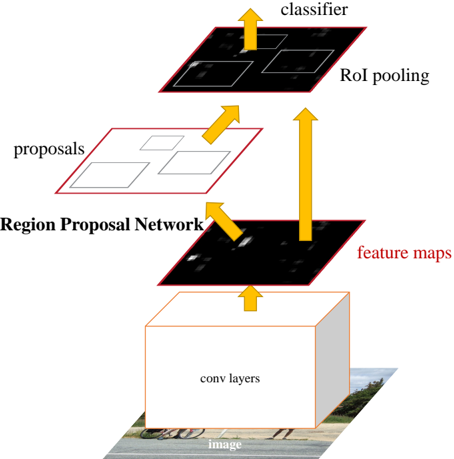
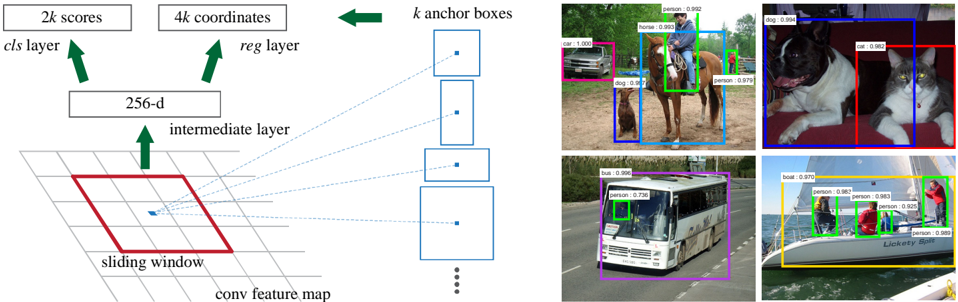
State-of-the-art object detection networks depend on region proposal algorithms to hypothesize object locations. Advances like SPPnet [1] and Fast R-CNN [2] have reduced the running time of these detection networks, exposing region proposal computation as a bottleneck. In this work, we introduce a Region Proposal Network (RPN) that shares full-image convolutional features with the detection network, thus enabling nearly cost-free region proposals. An RPN is a fully convolutional network that simultaneously predicts object bounds and objectness scores at each position. The RPN is trained end-to-end to generate high-quality region proposals, which are used by Fast R-CNN for detection. We further merge RPN and Fast R-CNN into a single network by sharing their convolutional features-using the recently popular terminology of neural networks with 'attention' mechanisms, the RPN component tells the unified network where to look. For the very deep VGG-16 model [3] , our detection system has a frame rate of 5 fps (including all steps) on a GPU, while achieving state-of-the-art object detection accuracy on PASCAL VOC 2007, 2012, and MS COCO datasets with only 300 proposals per image. In ILSVRC and COCO 2015 competitions, Faster R-CNN and RPN are the foundations of the 1st-place winning entries in several tracks. Code has been made publicly available.
Overview
CoChat Summary
TL;DR
Faster R-CNN introduces a Region Proposal Network (RPN) that shares convolutional features with Fast R-CNN, making region proposals nearly cost-free and enabling a unified object detection system. It achieves near real-time detection with state-of-the-art accuracy on PASCAL VOC and MS COCO.
Key findings
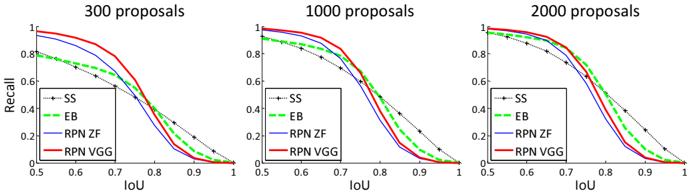
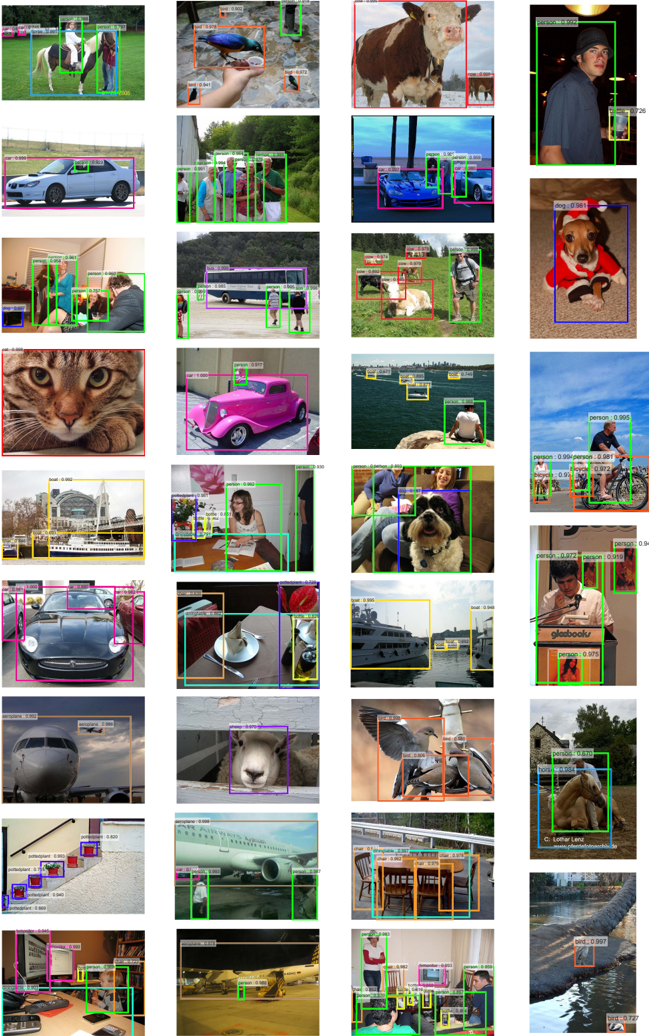
- With VGG-16 and shared features, Faster R-CNN reaches 69.9% mAP on PASCAL VOC 2007 test using 300 proposals, 73.2% with VOC07+12 training, 70.4% on VOC 2012 with 07++12, and 78.8% on VOC 2007 with COCO+07+12.
- Runtime: VGG-16 RPN + Fast R-CNN takes 198 ms total (5 fps), with RPN proposals costing 10 ms; ZF runs at 59 ms total (17 fps), versus SS + Fast R-CNN at 1830 ms (0.5 fps).
- Ablations: sharing features improves ZF mAP from 58.7% (unshared) to 59.9%; removing the reg layer drops mAP to 52.1%, and removing cls with 100 proposals drops it to 44.6%.
- On MS COCO test-dev, Faster R-CNN with VGG-16 and COCO train reaches 42.1% mAP@0.5 and 21.5% mAP@[.5,.95]; with COCO trainval it reaches 42.7% and 21.9%.
Methods
- The RPN is a fully convolutional network that slides a 3×3 window over shared conv features and predicts objectness scores and box regressions relative to anchors; default anchors use 3 scales (128², 256², 512²) and 3 aspect ratios (1:1, 1:2, 2:1), giving k = 9 anchors per position.
- Training uses a 4-step alternating scheme with ImageNet-pretrained ZF or VGG-16, SGD, single-scale images (shorter side s = 600), NMS at IoU 0.7, and 300 proposals at test time; evaluation is on PASCAL VOC 2007/2012 and MS COCO.
- Main metrics are detection mAP on PASCAL VOC and mAP@0.5 / mAP@[.5,.95] on MS COCO, with timing measured on a K40 GPU.
Limitations
- Stated in the paper: non-approximate joint training would require a differentiable RoI pooling/warping layer and is beyond the paper’s scope; the approximate joint training ignores gradients with respect to proposal box coordinates.
- Stated in the paper: cross-boundary anchors are ignored during training, and multi-scale feature extraction may improve accuracy but does not offer a good speed-accuracy trade-off.
- Evident from the text: the main experiments focus on PASCAL VOC and MS COCO with ZF/VGG-16 backbones, so generalization to other datasets, backbones, or detection regimes is not extensively characterized.
Model-written summary. Check it against the paper before relying on it.
Integrity signals
Registry
Cites
Statistics
Figures


Verification
Claims the paper makes
12 Valid · 5 Not valid · 8 Not checked · 83 Own results and interpretations
Every source the paper cites for this claim was checked and supports it.
In the paper
“Only by replacing VGG-16 with a 101layer residual net (ResNet-101) [18], the Faster R-CNN system increases the mAP from 41.5%/21.2% (VGG16) to 48.4%/27.2% (ResNet-101) on the COCO val set.”
What the sources say
- Supportedcites [18] [18] K. He, X. Zhang, S. Ren, and J. Sun, 'Deep residual learning for image recognition,' arXiv:1512.03385 , 2015. - source
Table 8 (p. 8) reports the exact COCO validation-set mAP values for baseline Faster R-CNN with VGG-16 and ResNet-101. Section 4.3 (p. 8) says the detection implementation was the same for both models and attributes the gain to replacing VGG-16 with ResNet-101. (LLM, conf=0.95)
plainstates a cause- Asserted: passes — The authors put it forward as true.
- Checkable: passes — It can be checked against evidence.
- Load-bearing: passes — The paper’s conclusions depend on it.
- Based: passes — The paper gives a reason why it holds.
- Supported
Every source the paper cites for this claim was checked and supports it.
In the paper
“This observation is still valid even when one increases the depth substantially to over 100 layers [18].”
What the sources say
- Supportedcites [18] [18] K. He, X. Zhang, S. Ren, and J. Sun, 'Deep residual learning for image recognition,' arXiv:1512.03385 , 2015. - source
In ImageNet Classification (p. 7), the paper reports that 101- and 152-layer ResNets outperform the 34-layer model, with no observed degradation. Its CIFAR-10 analysis (p. 7) also reports that a 110-layer ResNet converges well. These results support the stated extension to over 100 layers, although the isolated sentence does not specify what “this observation” refers to. (LLM, conf=0.87)
plain- Asserted: passes — The authors put it forward as true.
- Checkable: passes — It can be checked against evidence.
- Load-bearing: unclear — It is unclear whether the paper’s conclusions depend on it.
- Based: passes — The paper gives a reason why it holds.
- Supported
The cited sources support only part of this claim — read each source’s verdict below.
In the paper
“In ILSVRC and COCO 2015 competitions, Faster R-CNN and RPN are the basis of several 1st-place entries [18] in the tracks of ImageNet detection, ImageNet localization, COCO detection, and COCO segmentation.”
What the sources say
- Partly supportedcites [18] [18] K. He, X. Zhang, S. Ren, and J. Sun, 'Deep residual learning for image recognition,' arXiv:1512.03385 , 2015. - sourceExperimental — accuracy not yet measured
Section 4.3 (p. 8) lists first-place finishes in all four tracks, and the Object Detection Baselines (p. 10) describe a Faster R-CNN system using an RPN. The ImageNet Localization section (p. 12) also identifies its RPN-based method. But the copy attributes the entries collectively to deep residual nets; it does not establish that Faster R-CNN and RPN underpinned the COCO segmentation entry. (LLM, conf=0.86)
plainstates a cause- Asserted: passes — The authors put it forward as true.
- Checkable: passes — It can be checked against evidence.
- Load-bearing: unclear — It is unclear whether the paper’s conclusions depend on it.
- Based: passes — The paper gives a reason why it holds.
- Partly supported
The cited sources that could be checked couldn’t confirm or dispute this claim.
In the paper
“Yet when compared to efficient detection networks [2], Selective Search is an order of magnitude slower, at 2 seconds per image in a CPU implementation.”
What the sources say
- Could not verifycites [4] [4] J. R. Uijlings, K. E. van de Sande, T. Gevers, and A. W. Smeulders, 'Selective search for object recognition,' International Journal of Computer Vision (IJCV) , 2013. - sourceExperimental — accuracy not yet measured
The computational discussion in §5.3 (pp. 12–13) gives timings for complete object-recognition pipelines, not a two-second CPU runtime for Selective Search. The comparisons in §5.2.1 (p. 11) concern other object-location methods, not efficient detection networks. Searches for a two-second per-image runtime and a network comparison found neither claim in our copy. (LLM, conf=0.73)
- Not checked — no full text of the sourcecites [2] [2] R. Girshick, 'Fast R-CNN,' in IEEE International Conference on Computer Vision (ICCV) , 2015. - source
plainstates an association- Asserted: passes — The authors put it forward as true.
- Checkable: passes — It can be checked against evidence.
- Load-bearing: passes — The paper’s conclusions depend on it.
- Based: passes — The paper gives a reason why it holds.
- Could not verify
Every source the paper cites for this claim was checked and supports it.
In the paper
“We comprehensively evaluate our method on the PASCAL VOC detection benchmarks [11] where RPNs with Fast R-CNNs produce detection accuracy better than the strong baseline of Selective Search with Fast R-CNNs.”
What the sources say
- Supportedcites [11] [11] M. Everingham, L. Van Gool, C. K. I. Williams, J. Winn, and A. Zisserman, 'The PASCAL Visual Object Classes Challenge 2007 (VOC2007) Results,' 2007. - source
The citation is attached to “PASCAL VOC detection benchmarks,” not to the citing authors’ comparison of RPNs and Selective Search. Sections 5.2 and 6.2 describe the VOC detection task, its submitted methods, and its results, confirming the benchmark identification. (LLM, conf=0.92)
plainstates a cause- Asserted: passes — The authors put it forward as true.
- Checkable: passes — It can be checked against evidence.
- Load-bearing: passes — The paper’s conclusions depend on it.
- Based: passes — The paper gives a reason why it holds.
- Rests on an assumption not shown here.
- Supported
56 more claims
Create a free account to see all 108 claims and to verify the 2 references still open.
- Probably not a substantial claim. 11
- It may state two separate claims as one. 40
- The quote only partly states this claim. 1
Claims other papers make about this one
Each is checked against this paper’s own text: does it say what the citing paper says it does?
The source backs part of the claim, not all of it — or backs it for a different population, condition or comparison.
In the citing paper
“Unlike the original paper [19] that adopted stage-wise training regarding RPN, we use an improved implementation with end-to-end joint training similar to [37], which leads to higher baselines than [19].”
From Non-local Neural Networks (2018) · cites this paper as [37]
Experimental — accuracy not yet measuredThe source backs part of the claim, not all of it — or backs it for a different population, condition or comparison.
In the citing paper
“Faster RCNN is the first near-realtime deep learning detector (COCO mAP@.5=42.7%, VOC07 mAP=73.2%, 17fps with ZF-Net [48]).”
From Object Detection in 20 Years: A Survey (2023) · cites this paper as [19]
Experimental — accuracy not yet measuredThe source backs part of the claim, not all of it — or backs it for a different population, condition or comparison.
In the citing paper
“Faster RCNN is the first near-realtime deep learning detector (COCO mAP@.5=42.7%, VOC07 mAP=73.2%, 17fps with ZF-Net [48]).”
From Object Detection in 20 Years: A Survey (2023) · cites this paper as [47]
Experimental — accuracy not yet measuredThe source backs part of the claim, not all of it — or backs it for a different population, condition or comparison.
In the citing paper
“In the deep learning era, due to the increase of computing power, bootstrap was shortly discarded in object detection during 2014-2016 [16-20].”
From Object Detection in 20 Years: A Survey (2023) · cites this paper as [19]
Experimental — accuracy not yet measuredThe source backs part of the claim, not all of it — or backs it for a different population, condition or comparison.
In the citing paper
“The most commonly used idea to reduce the feature computational redundancy is to compute the feature map of the whole image only once [18, 19, 124], which have achieved tens or even hundreds of times of acceleration.”
From Object Detection in 20 Years: A Survey (2023) · cites this paper as [19]
Experimental — accuracy not yet measured
21 more claims about this paper
Create a free account to see every claim other papers make about this one.
Citations
Cites
Deep Residual Learning for Image Recognition
He, K., Zhang, X., Ren, S., & Sun, J. (2016) · 2016 IEEE Conference on Computer Vision and Pattern Recognition (CVPR) · doi:10.1109/cvpr.2016.90 · Cited by 235,474 · cited 7×
“to propose regions from data, and thus can easily benefit from deeper and more expressive features (such as the 101layer residual nets adopted in [18]).”
BackgroundInfluentialSelf-citationVery Deep Convolutional Networks for Large-Scale Image Recognition
Simonyan, K., & Zisserman, A. (2014) · arXiv · doi:10.48550/arxiv.1409.1556 · Cited by 114,148
ImageNet classification with deep convolutional neural networks
Krizhevsky, A., Sutskever, I., & Hinton, G. E. (2017) · Communications of the ACM · doi:10.1145/3065386 · Cited by 112,155 · cited 1×
“For the regression loss, we use L where R is the robust loss function (smooth L 1 ) defined in [5].”
MethodGoing deeper with convolutions
Szegedy, C., Liu, W., Jia, Y., Sermanet, P., Reed, S., Anguelov, D., Erhan, D., Vanhoucke, V., & Rabinovich, A. (2015) · 2015 IEEE Conference on Computer Vision and Pattern Recognition (CVPR) · doi:10.1109/cvpr.2015.7298594 · Cited by 48,562 · cited 1×
“1× 10(6) parameters (1536 × (4 + 1) × 800 for GoogleNet [34] in MultiBox [27]).”
Microsoft COCO: Common Objects in Context
Lin, T.-Y., Maire, M., Belongie, S., Hays, J., Perona, P., Ramanan, D., Dollár, P., & Zitnick, C. L. (2014) · Lecture Notes in Computer Science · doi:10.1007/978-3-319-10602-1_48 · Cited by 45,460 · cited 1×
“Region proposal methods typically rely on inexpensive features and economical inference schemes.”
MethodImageNet Large Scale Visual Recognition Challenge
Russakovsky, O., Deng, J., Su, H., Krause, J., Satheesh, S., Ma, S., Huang, Z., Karpathy, A., Khosla, A., Bernstein, M., et al. (2015) · International Journal of Computer Vision · doi:10.1007/s11263-015-0816-y · Cited by 39,380 · cited 1×
“, the shared convolutional layers) are initialized by pre-training a model for ImageNet classification [36], as is standard practice [5].”
MethodFully convolutional networks for semantic segmentation
Long, J., Shelhamer, E., & Darrell, T. (2015) · 2015 IEEE Conference on Computer Vision and Pattern Recognition (CVPR) · doi:10.1109/cvpr.2015.7298965 · Cited by 38,834 · cited 5×
“Our RPNs are thus a kind of fully-convolutional network (FCN) [14] and they can be trained end-to-end specifically for the task for generating detection proposals.”
BackgroundMethodInfluentialRich Feature Hierarchies for Accurate Object Detection and Semantic Segmentation
Girshick, R., Donahue, J., Darrell, T., & Malik, J. (2014) · 2014 IEEE Conference on Computer Vision and Pattern Recognition · doi:10.1109/cvpr.2014.81 · Cited by 32,684 · cited 7×
“, Selective Search [4] object detectors, RCNN [5], and Fast R-CNN [2]).”
BackgroundMethodInfluentialSelf-citationGirshick, R. (2015) · 2015 IEEE International Conference on Computer Vision (ICCV) · doi:10.1109/iccv.2015.169 · Cited by 28,105
Self-citationThe pascal visual object classes (VOC) challenge
Everingham, M., Van Gool, L., Williams, C. K. I., Winn, J., & Zisserman, A. (2010) · International Journal of Computer Vision · doi:10.1007/s11263-009-0275-4 · Cited by 19,599
Research works printed but not linked: 1
- [10] S. Ren, K. He, R. Girshick, and J. Sun, 'Faster R-CNN: Towards real-time object detection with region proposal networks,' in Neural Information Processing Systems (NIPS) , 2015. -
Cited by
Items 51,501–51,600 of 56,408
Towards More Generalisable Compositional Feature Learning in Human‐Object Interaction Detection
Liang, S., Zhuang, Z., Xie, C., et al. (2025) · IET Computer Vision · doi:10.1049/cvi2.70037
Illumination guided domain adaptation object detection in thermal imagery
Zhou, Y., Zhang, H., Sun, Y., Liu, Y., & Kung, S. (2025) · Neurocomputing · doi:10.1016/j.neucom.2025.131237 · Cited by 1
Multi-Modal Learning with Missing Modality Data via Hybrid Prompt Learning
Cheng, Y., Xuan, S., Du, X., Gu, Z., & Liu, J. (2025) · Journal of Circuits Systems and Computers · doi:10.1142/s0218126625503827
Artificial Intelligence in Cranio-Maxillo-Facial Surgery
den Bosch, S. V., van Nistelrooij, N., Beyer, M., Do, W., Bergé, S. J., & Vinayahalingam, S. (2025) · Springer eBooks · doi:10.1007/978-3-031-94495-6_8
SCSP-YOLO: a method for detecting surface defects on strip steel
Jiang, S., Xu, Y., Lu, H., & Wang, S. (2025) · Pattern Analysis and Applications · doi:10.1007/s10044-025-01530-w
Energy-Based Bounding Box Generation for Object Detection
Dang, D. T. (2025) · Lecture notes of the Institute for Computer Sciences, Social Informatics and Telecommunications Engineering · doi:10.1007/978-3-032-01497-9_24
Xue, Y., Dong, C., Wei, Z., Ma, Z., Hao, Z., & Chen, X. (2025) · IEEE International Symposium on the Application of Artificial Intelligence in Electrical Engineering (AAIEE) · doi:10.1109/aaiee64965.2025.11100851 · Cited by 1
Su, J. (2025) · International Conference on Smart City and Sustainable Development · doi:10.1145/3747012.3747058
Marine Ship Detection Based on Twin Feature Pyramid Network and Spatial Attention
Jin, H., & Zhou, Y. (2025) · Computers, materials & continua/Computers, materials & continua (Print) · doi:10.32604/cmc.2025.067867
Longfei, 王. W., Likang, 樊. F., Yiqiang, 彭. P., Jie, 曹. C., Liu, 何. H., Xulei, 刘. L., & Xiyuan, 高. G. (2025) · Laser & Optoelectronics Progress · doi:10.3788/lop242537
Cell Images Detection: An Intelligent Analysis Method with YOLOv8
Wang, H., Yu, W., Yan, J., et al. (2025) · International Conference on Machine Learning and Intelligent Systems Engineering (MLISE) · doi:10.1109/mlise66443.2025.11100275
Distribution-aware network with context and entity attention for scene graph generation
Pan, T., Wang, L., Zhang, R., Yu, Z., & Li, Y. (2025) · Engineering Applications of Artificial Intelligence · doi:10.1016/j.engappai.2025.111984
Anchor-Based Gravity Alignment for Panoramas
Bergmann, M. A., Stringhini, R. M., da Silveira, T. L. T., et al. (2025) · Proceedings - International Conference on Image Processing · doi:10.1109/icip55913.2025.11084672
Improved Cervical Cell Detection Model Based on Hybrid-Domain Feature Pyramid Network
Huang, Q., Yin, Z., Chen, Y., et al. (2025) · Proceedings - International Conference on Image Processing · doi:10.1109/icip55913.2025.11084444
Chang, H., Li, M., Huang, S., & Li, M. (2025) · IEEE Access · doi:10.1109/access.2025.3599213
A Scalable Image Compression Using Conditional Diffusion Model in Human-Machine Hybrid Vision
Kuang, J., Luo, Y., Yi, P., Zhu, J., & Yu, L. (2025) · Proceedings - International Conference on Image Processing · doi:10.1109/icip55913.2025.11084519
Murata, K., Yamamoto, T., Obinata, Y., & Nakayama, O. (2025) · Proceedings - International Conference on Image Processing · doi:10.1109/icip55913.2025.11084459
Metalwork: A Synthetic Dataset and Baseline for Stereo Matching of Metal Workpieces
Li, S., Zuo, B., & Wang, Y. (2025) · Proceedings - International Conference on Image Processing · doi:10.1109/icip55913.2025.11084385
A dual branch graphic text detection network based on progressive Domain adaptation
Zhou, G., Feng, Y., Zhang, T., Chen, X., Zhang, L., & Jia, Z. (2025) · Proceedings - International Conference on Image Processing · doi:10.1109/icip55913.2025.11084646
CADOT: Cityscape Aerial Image Dataset For Object Detection
Vu, M.-D., Mokraoui, A., Feng, F., Arezki, B., Sonna, B., Bahaduri, B., & Talaoubrid, H. (2025) · Proceedings - International Conference on Image Processing · doi:10.1109/icip55913.2025.11084552
Semantic Context Re-Mining for Multimodal Guided Human-Object Interaction Detection
Dong, J., & Yang, H. (2025) · Proceedings - International Conference on Image Processing · doi:10.1109/icip55913.2025.11084581
A framework for detecting defects in transmission line pins based on image matching
Ji, Y., Zhao, J., Liu, L., Wang, L., & Haiyan, F. (2025) · Electrical Engineering · doi:10.1007/s00202-025-03257-7
SALA: Semantic alignment and localization alignment for visual grounding
Li, H., Wang, X., Yang, L., Li, Q., & Xiao, B. (2025) · Neurocomputing · doi:10.1016/j.neucom.2025.131265 · Cited by 3
A path aggregation network with deformable convolution for visual object detection
Rao, C. S., Hu, Z., Zhao, Q., et al. (2025) · PeerJ Computer Science · doi:10.7717/peerj-cs.3083
“The fusion methods can be the addition of the corresponding elements of the features, such as FPN ( Lin et al., 2017 ), SPP ( He et al., 2015 ), etc ., and also can be stitching of channel dimensions, including the path aggregation network structure used in YOLOv4 ( Liu et al., 2018 ; Bochkovskiy,…”
STA-TAD: Spatial-Temporal Adapter on ViT for Temporal Action Detection
Zhang, Z., Wu, T.-W., Zhang, Q., Li, W., & Wang, Z. (2025) · Lecture notes in computer science · doi:10.1007/978-981-95-0100-7_16
An Improved YOLOv8 Object Detection Method for Images Recognition for Wearable AR Smart Maintenance
Wang, Y., Wang, J., Ye, C., et al. (2025) · Communications in computer and information science · doi:10.1007/978-981-95-1334-5_12
Automatic Electric Tricycles Trajectory Tracking and Multi-Violation Detection
Guo, L., Yu, B., Xie, B., et al. (2025) · Sensors · doi:10.3390/s25165135
“Representative algorithms of this approach include the R-CNN series (R-CNN [27], Fast R-CNN [28], Faster R-CNN [29], and Mask R-CNN [30]).”
Gurve, M. K., Behera, S., Prasad, Y., & Nitin, N. (2025) · Cluster Computing · doi:10.1007/s10586-025-05181-8
“For example, Two-stage detectors such as RCNN [12], and its versions including Fast-RCNN [11], Faster RCNN [34], Cascade R-CNN [5] and Mask-RCNN [13], are known for their high accuracy, but are computationally intensive and slower, making them less practical for real-time tasks.”
Amsa-Yolo: Real-Time Object Detection with Adaptive Multi-Scale Attention MechanismPreprint
Wang, R., wang, C., Sun, P. J., et al. (2025) · SSRN Electronic Journal · doi:10.2139/ssrn.5396172
Wang, C., & Xie, H. (2025) · IEEE Transactions on Intelligent Transportation Systems · doi:10.1109/tits.2025.3596166 · Cited by 3
“Convolutional Neural Networks (CNNs) [22] have become the backbone of modern pedestrian recognition systems, with architectures like Faster R-CNN [4], YOLO [5], and SSD [6] o ff ering significant improvements in both accuracy and speed.”
Yu, R., Zou, C., Li, J., Gao, B., Tang, J., Qian, H., & Wu, H. (2025) · IEEE Transactions on Computer-Aided Design of Integrated Circuits and Systems · doi:10.1109/tcad.2025.3600366
“First, for CNN network structures with extremely long branches, such as object detection algorithms based on the FPN architecture [22] like YOLO-v5 and Faster-RCNN-FPN [23], the differences in layer counts among the branches of the data aggregation layers are significant.”
Remote Sensing for Mining Detection: Comparative Analysis of Deep Learning Models
Ariyarathne, M., Wanasinghe, T. R., & Huang, W. (2025) · International Symposium on Antenna Technology and Applied Electromagnetics · doi:10.1109/antem64578.2025.11114110 · Cited by 1
“The first two approaches were modified from baseline models (Faster R-CNN [13] and YOLOv5), while the third introduced a novel method.”
Hassane, E. M. A. E., Youssef, S. M., Salama, G. I., et al. (2025) · International Conference on Machine Intelligence and Smart Innovation (ICMISI) · doi:10.1109/icmisi65108.2025.11115332
VGTest: Automated Testing of Visual Grounding Models
Wang, Y., & Pan, Y. (2025) · doi:10.1109/icnlp65360.2025.11108520
Measurement of Secondary Dendrite Arm Spacing Using Deep LearningPreprint
Fujiwara, S., Ode, M., Kojima, Y., & Muramatsu, M. (2025) · SSRN Electronic Journal · doi:10.2139/ssrn.5396650
MDM‐TLI: Multi‐Defect Detection Model for Transmission Line Insulators
Zhao, L., An, Y., Li, Y., Fu, L., Liu, S., & Wang, L. (2025) · IET Image Processing · doi:10.1049/ipr2.70180
Shami, A. A., Bachri, M., Young, C., & Grissom, D. (2025) · Lecture notes in networks and systems · doi:10.1007/978-3-031-99965-9_37 · Cited by 2
Pan, H., Yu-jin, Z., Song, J., & Xu, H. (2025) · Electronics · doi:10.3390/electronics14163302
Sheng, Q., Yin, C., Wang, B., Xiao, L., Li, J., & Du, Y. (2025) · International Journal of Remote Sensing · doi:10.1080/01431161.2025.2544357
“Sayed and Brostow (2021) explored five reasons for the decrease in detection accuracy and proposed corresponding solutions, combining ResNet-50 (He et al. 2016) and Faster-RCNN (Ren et al. 2017) to generate a high-detection-rate model.”
An Improved YOLOv8-Based Object Detection Algorithm for Skin Diseases
Yu, X. (2025) · Critical Reviews in Biomedical Engineering · doi:10.1615/critrevbiomedeng.2025059866
Zhao, Z., Guo, F., Qin, Y., Chen, Z., Wu, Y., Ai, L. M., & Wenwen, Q. (2025) · SSRN Electronic Journal · doi:10.2139/ssrn.5398759
Rusydi, A. T., Fauzi, R., & Suakanto, S. (2024) · International Conference on Digital Business and Technology Management (ICONDBTM) · doi:10.1109/icondbtm64135.2024.11122721
Zhu, K., Lan, Z., Xie, K., et al. (2024) · International Conference on Mechatronics and Computer Technology Engineering (MCTE) · doi:10.1109/mcte62870.2024.11117961
A Deep Neural Network for Insulator Defect Detection in Aerial Images
Chen, A., He, X., Zhang, C., & Zhong, J. (2025) · Journal of Electrical Engineering and Technology · doi:10.1007/s42835-025-02408-x · Cited by 1
LAP-Net: a lightweight PCB defect detection network combined with attention mechanisms
Li, Z., Ai, Q., Peng, E., Mao, S., & Han, T. (2025) · Journal of Real-Time Image Processing · doi:10.1007/s11554-025-01749-0
“The other is two-stage methods, whose typical algorithms include RCNN [13], Fast RCNN [14], Faster RCNN [15], and Mask RCNN [16].”
A Benchmark for Pedestrian Detection in Rain and Fog
张, 伟. (2025) · Computer Science and Application · doi:10.12677/csa.2025.158207
Wei, X., Haorui, W., Haoming, L., Zhang, L., & Yu, X. (2025) · Multimedia Systems · doi:10.1007/s00530-025-01932-0
“The R-CNN series of algorithms [13, 14] are typical two-stage defect detection algorithms.”
Big-LITTLE-Net: a dual-branch network for small UAV detection
Chen, Y., Tang, W., Rao, Y., Ding, H., Zhu, S., & Wang, Y. (2025) · Multimedia Systems · doi:10.1007/s00530-025-01882-7
“To verify the overall performance, the method proposed in this paper is compared through experiments with other object detection algorithms such as Cascade R-CNN [39], Faster R-CNN [40], FCOS [41], YOLOv8_m [42], and YOLOX-l to assess the final detection results.”
Thapa, G. J., Thapa, K., Poudel, S., Pun, D. B. P., Shrestha, S., Poudel, P., Acharya, H., Lamsal, B. K., Sada, R., & Wich, S. A. (2025) · PLoS ONE · doi:10.1371/journal.pone.0330350 · Cited by 1
Xue, F., Zhang, W., Chen, H., & Song, F. (2025) · Measurement Science and Technology · doi:10.1088/1361-6501/adfe04 · Cited by 2
“Two main strategies have emerged: object detection [13, 14] and semantic segmentation [15, 16].”
Deep Learning Based Tomato Plant Disease Detection: A Review on Challenges and Future Directions
Sharma, P., & Gupta, S. (2025) · International Conference on Computing for Sustainable Global Development · doi:10.23919/indiacom66777.2025.11115883
Research on the Optimization of the Detr Model Based on Hybrid Supervision in Object Detection
Xu, F. (2024) · International Academic Exchange Conference on Science and Technology Innovation (IAECST) · doi:10.1109/iaecst64597.2024.11117718
YOLO-CLA: An Efficient and Lightweight Dense Target Detection Model Based on YOLOv5
Liu, J., Zeng, S., Li, X., et al. (2024) · International Academic Exchange Conference on Science and Technology Innovation (IAECST) · doi:10.1109/iaecst64597.2024.11117296
Deep Learning Based Multi-Class Waste Object Detection and Classification
Advithi, D., Deepini, S., Pragnya, B. S., et al. (2025) · International Conference on Computing for Sustainable Global Development · doi:10.23919/indiacom66777.2025.11115672
Small Target Detection in UAV Images Based on SCMS-YOLOv8
Yang, S., & Ge, H. (2025) · International Conference on Automation, Control and Robotics Engineering (CACRE) · doi:10.1109/cacre66141.2025.11119557
“Two-stage methods, such as Fast R-CNN and Faster R-CNN[2], typically perform object localization by generating region proposals, followed by classification and regression.”
Loosened Bolt detection in Steel joints using Deep Learning Techniques
Mummadi, A., Alapati, M., Omeshwari, T., Abboju, S., Arun, P., & Venkatesh, D. (2025) · Procedia Structural Integrity · doi:10.1016/j.prostr.2025.07.072 · Cited by 1
FFYOLO: A Lightweight Small Target Detection Algorithm for UAVs
Su, G., Lu, F., & Yan, S. (2025) · Lecture notes in computer science · doi:10.1007/978-981-95-1233-1_51
DHPE-DETR: A Dynamic Hybrid Position Encoding-Based Multi-Scale Traffic Sign Detection Algorithm
Ren, Y., Zhang, J., Liu, B., & Ren, B. (2025) · IEEE Access · doi:10.1109/access.2025.3598815
Lightweight Detection Network for Small Target Defects in Shaft Lining Crack
Hu, R. B., Jia, X., Han, X., et al. (2025) · IET Image Processing · doi:10.1049/ipr2.70170
Borianne, P., Theveny, F., Cabrera‐Bosquet, L., et al. (2025) · SSRN Electronic Journal · doi:10.2139/ssrn.5401537
AdaptiveFocus-DETR: Enhanced Real-Time Detection with Adaptive Feature Focus
Guan, F., Zhang, Y., Guo, T., & Guan, Z. (2025) · IEEE International Conference on Mechatronics and Automation (ICMA) · doi:10.1109/icma65362.2025.11120816
Lin, X., Shi, M., Su, Y., Zhang, W., Cai, Y., Liu, L., & Liu, Z. (2025) · Internet of Things · doi:10.1016/j.iot.2025.101741
Turnstile Status and Passenger Posture Based Passenger ticket Evading Action Surveillance SystemPreprint
Limin, Z., Liu, Y., Wen-yan, Z., Changyou, G., & Guan-Hua, F. U. (2025) · Research Square · doi:10.21203/rs.3.rs-7213496/v1
Li, H., Yang, J., Qian, Y., Liu, F., & Wang, Y. (2025) · International Journal of Pattern Recognition and Artificial Intelligence · doi:10.1142/s021800142357015x
Convolutional neural networks—Image classification and object detection
Wang, S., & Xu, G. (2025) · Elsevier eBooks · doi:10.1016/b978-0-443-43954-4.00002-0
Chang, S.-T., Lin, S., & Lin, Y. (2025) · International Journal of Applied Earth Observation and Geoinformation · doi:10.1016/j.jag.2025.104796
GPESNet: Global Prompt-Embedded Segmentation Network for Weld Defect Detection
Ye, Y., Fang, T., Lu, Y., et al. (2025) · IEEE International Conference on Mechatronics and Automation (ICMA) · doi:10.1109/icma65362.2025.11120819
“In defect detection, numerous studies have applied general object detection models, such as the YOLO series [8], [9], the R-CNN series [10], [11], and SSD [12], to accurately locate and identify weld defects.”
Yuan, J., Lai, C., Cheng, K., Hou, M., & Li, S. (2025) · International Conference on Computer Vision and Computational Intelligence (CVCI) · doi:10.1145/3744725.3744727
An Improved YOLOv5 Algorithm for Ultra-Thin Silicon Wafer Defect Detection
Chen, W., Jin, L., Yao, C., et al. (2025) · IEEE International Conference on Mechatronics and Automation (ICMA) · doi:10.1109/icma65362.2025.11120797
“𝑚𝑚𝐴𝐴𝑃𝑃 To validate the effectiveness of our model improvements, we conducted comparative experiments with multiple state-of-the-art object detection algorithms, including Faster R-CNN [15], YOLOv4 [16], YOLOv5m, and YOLOv5s.”
MCPD‐YOLOv3: A Novel Lightweight Detection Model for Surgical Instruments in Laparoscopic Images
Li, Y., li, C., Zhang, K., Miao, Y., Shi, W., & Jiang, Z. (2025) · International Journal of Medical Robotics and Computer Assisted Surgery · doi:10.1002/rcs.70104
“The representatives of two‐ stage methods include R‐CNN [6], Fast R‐CNN [7] and Faster R‐CNN [8]; the one‐stage methods consist of SSD [9], Reti-naNet [10], the YOLO series [11–13].”
Zhang, Y.-B., Zheng, L.-Y., Bijma, P., Wang, Z.-S., de With, P. D., & Langenhuizen, P. (2025) · Computers and Electronics in Agriculture · doi:10.1016/j.compag.2025.110856
A Comparative Study of a Real-Time Multi-Person Tracking System in an Urban Square Dataset
Jafarzadeh, P., Zelioli, L., Farahnakian, F., Nevalainen, P., & Heikkonen, J. (2025) · International Conference on Activity and Behavior Computing (ABC) · doi:10.1109/abc64332.2025.11118548
Optimizing Fire and Smoke Detection in CCTV Systems using Real-Time Detection Transformers
Imran, M. M., & Razzaq, F. A. (2024) · International Conference on Innovative Computing (ICIC) · doi:10.1109/icic63915.2024.11116389
P‐49: Deep Learning Enables Intelligent Defect Detection and Interception in LCD Manufacturing
Xiao, X., Wang, N., & Xiong, Y. (2025) · SID Symposium Digest of Technical Papers · doi:10.1002/sdtp.18509
Examining the role of semiotics in social media-driven information campaigns
Gurung, M. I., & Agarwal, N. (2025) · Data & Policy · doi:10.1017/dap.2025.10022 · Cited by 3
“Early architectures like AlexNet, VGGNet, and ResNet laid the groundwork for extracting visual patterns and hierarchies Ren et al. (2015).”
Comparative Analysis of Object Detection and Recognition in Low Light Image Techniques
Jasim, F. B., & Khayeat, A. R. H. (2024) · IEEE International Conference on Engineering Technologies and Applied Sciences (ICETAS) · doi:10.1109/icetas62372.2024.11120190
Li, S., Zhang, Y., Hong, Y., Yuan, W., & Sun, J. (2025) · Journal of X-Ray Science and Technology · doi:10.1177/08953996251370580 · Cited by 2
“Initially, two-stage methods like RCNN and its derivatives, Fast RCNN and Faster RCNN, 18 dominated the fi eld by generating region proposals for further classi fi cation and bounding box re fi nement.”
Self-citationMillion Clandestine Gravesites Over Southeastern China's Land Surfaces Revealed by Satellite ImagesPreprint
Xu, L., Wang, Z., & Ye, Z. (2025) · SSRN Electronic Journal · doi:10.2139/ssrn.5405128
A-CLAPS: Automatic Correction of Language and Pronunciation Errors in Slide-based Presentations
Li, Y., Liu, Y., & Zhao, Y. (2025) · IEEE Annual Computers, Software, and Applications Conference (COMPSAC) · doi:10.1109/compsac65507.2025.00189
“Advances in computer vision, from early SIFT and HOG techniques to modern CNN-based models like YOLO [4] and Faster R-CNN [5], enable real-time accuracy.”
On‐Orbit Fast Small Target Detection Method Based on the Improved YOLOv5 Model
Li, Q., & Zhu, Z. (2025) · International Journal of Aerospace Engineering · doi:10.1155/ijae/5533761
HLM-YOLO: A Lightweight Instance Segmentation Model for Road Potholes
Cheng, J., & Cheng, Y. (2025) · Communications in computer and information science · doi:10.1007/978-981-95-0848-8_15
Research and Application of Real-Time Object Detection Algorithm Based on Low-Light Environments
葛, 岩. (2025) · Modeling and Simulation · doi:10.12677/mos.2025.148567
Adaptive Spatiotemporal Feature Fusion for Visual Object Tracking
Lv, T., Peng, P., Long, J., Ye, Y., & Lu, X. (2025) · IEEE Internet of Things Journal · doi:10.1109/jiot.2025.3602909
“In recent years, multiscale feature fusion has attracted considerable attention [37], [38].”
Efficient Object Detection Using Quasi-2D LiDAR Data for Autonomous Vehicles
Das, S., Clemens, J., Ghugare, D., & Schill, K. (2025) · International Conference on Information Fusion (FUSION) · doi:10.23919/fusion65864.2025.11124054 · Cited by 2
Source Detection in Broadband Passive SONAR with Vision Transformers and Poisson RFS Loss
Shaw, W., Fontana, M., Üney, M., Colquitt, D. J., Riches, S., & Jones, C. (2025) · International Conference on Information Fusion (FUSION) · doi:10.23919/fusion65864.2025.11124186
“Common object detection frameworks, such as YOLO [19], [21] and Faster R-CNN [22], [23], rely on bounding boxes and spatial coherence of objects, making them less suitable for passive SONAR.”
An Object-Tracking Technique for Counting Grape Clusters in Brazilian Northeast's Pergola Vineyards
Sasse, A., Wieland, J. P. V. B., Pereira, A. G., Proença, L. R., Freitas, I. M. P., Rangel, P., & de Farias, C. M. (2025) · International Conference on Information Fusion (FUSION) · doi:10.23919/fusion65864.2025.11124157
“Instead of YOLO, they used Faster R-CNN [17] for detection.”
Fire detection models based on attention mechanisms and multiscale features
Zhang, S., Chen, M., Li, K., Wen, H., & Sun, L. (2025) · Computer Science and Information Systems · doi:10.2298/csis241225059z
Huynh, T. P., Vovan, T., & Huynh, H. X. (2025) · International Conference on Intelligent Information Technology (ICIIT) · doi:10.1145/3731763.3731787
Kumar, S., Bosse, S., & Shah, C. B. (2025) · Frontiers in Artificial Intelligence · doi:10.3389/frai.2025.1599345 · Cited by 2
“This contrasts with the semantic segmentation approach proposed by Long et al. (2015), where segmentation and classification are coupled (Ren et al., 2015; Girshick, 2015; He et al., 2017).”
A detection method for surface defects on metal workpieces based on feature enhancement
Liu, J., Le, W., Jia, Z., & Tian, J. (2025) · International Conference on Software Engineering and Computer Applications · doi:10.1145/3747912.3747943
ACNEREC: An AI-Based Recognition System to Detect Acne Types
Nuzhat, Z. T., Shohan, I. A., Akter, S., et al. (2025) · Lecture notes in networks and systems · doi:10.1007/978-981-96-5754-4_15
Content-Based Food Image Retrieval Using Pre-Trained Neural Network Models
Nguyen, H. V. N., Nguyen, K. H., Nguyen, A. Q., Hua, T. T., Huynh, H. K. N., Nguyen, H. H., & Tran, H. N. (2025) · International Conference on Intelligent Information Technology (ICIIT) · doi:10.1145/3731763.3731798
From Detection to Parameters Estimation: A Pipeline for SDSS Photometric Images
Mao, Y., Tu, L., Yan, C., Zhao, C., Miao, J., Jiang, Y., Xu, Z., & Zheng, M. (2025) · Research in Astronomy and Astrophysics · doi:10.1088/1674-4527/ae0014 · Cited by 1
RCM: A Novel Fire Detection Technique That Effectively Resists Interference in Complex Scenarios
Fang, Z., Jiang, X., Xu, L., & Fang, X. (2025) · IEEE Access · doi:10.1109/access.2025.3603263 · Cited by 1
Artificial Intelligence on the Edge for Enabling Reliable Affordable Mass
Lore, K. G., Wilson, J. P., Nageshrao, S. P., Wang, G., Wang, T. E., Moulin, M., Bhatia, A., & Stramandinoli, F. (2025) · IEEE Engineering Reliable Autonomous Systems (ERAS) · doi:10.1109/eras63351.2025.11135584
SMA-YOLO: An enhanced architecture for the detection of corn diseases based on YOLOv12Preprint
Guo, D., Yuan, G., Liu, B., et al. (2025) · SSRN Electronic Journal · doi:10.2139/ssrn.5406101
Serikbay, A., Nurmanova, V., Akhmetov, Y., Zollanvari, A., & Bagheri, M. (2025) · International Transactions on Electrical Energy Systems · doi:10.1155/etep/8669289
Fine-Grained Semantic Image-Text Retrieval with Dual-Branch Attention
Gu, Y., Wang, M., Gan, J., et al. (2025) · Lecture notes in networks and systems · doi:10.1007/978-3-031-94898-5_53
MSCD R-CNN: An Advanced Instance Segmentation Approach for Cell Segmentation and Analysis
Tu, S., Chen, W., Mao, L., & Liu, H. (2025) · Lecture notes in networks and systems · doi:10.1007/978-3-031-94898-5_30 · Cited by 1
An Enhanced YOLO-Based Framework for Wiring Harness Connector Object Detection
Lei, C., Wong, K. Y., Azlan, N. A. A. N., & Gao, C. (2025) · Lecture notes in networks and systems · doi:10.1007/978-3-031-94898-5_11
Metadata
- Authors
- Ren, S., He, K., Girshick, R., & Sun, J.
- Affiliations
- University of Science and Technology of China (CN)
- Visual Computing Group, Microsoft Research, Beijing, China
- Meta (United States) (US)
- ORCID
- Venue
- IEEE Transactions on Pattern Analysis and Machine Intelligence
- Published
- 2017-06-01
- Volume
- 39
- Issue
- 6
- Pages
- 1137-1149
- ISSN
- 0162-8828 (ISSN-L)
- 2160-9292
- 1939-3539
- OpenAlex
- W639708223
- Cited by
- 73,472
- References
- 60
- Citations by year
- 2026: 5632 · 2025: 9233 · 2024: 9699 · 2023: 9795 · 2022: 9251 · 2021: 9857 · 2020: 7617 · 2019: 6376 · 2018: 3729 · 2017: 1740
- FWCI
- 2215.09
- Type
- journal article
- Language
- en
- Open access
- green
- arxiv.org
- Licence
- Locations
- IEEE Transactions on Pattern Analysis and Machine Intelligence (publishedVersion)
- PubMed (publishedVersion)
- arXiv (Cornell University) (submittedVersion)
- arXiv (Cornell University)
- neural information processing systems
- Funders
- Microsoft Research
- Topics
- Physical Sciences › Computer Science › Computer Vision and Pattern Recognition › Advanced Neural Network Applications
- Physical Sciences › Computer Science › Computer Vision and Pattern Recognition › Visual Attention and Saliency Detection
- Physical Sciences › Computer Science › Computer Vision and Pattern Recognition › Advanced Image and Video Retrieval Techniques
- Keywords
- Faster R-CNN, region proposal network, real-time object detection, Fast R-CNN, bounding box regression, VGG16, attention mechanism, end-to-end learning, Pascal VOC, MS COCO
About these checks
Registry, retraction, Cites and statistics results are computed, not judged, with one exception: a printed reference that no index lists is read once by a model before it counts as a citation error. Claims are extracted by a model and kept only when their quote appears verbatim in the text; each cited source is then checked, with a model’s help, for whether it says what the claim relies on. Those verdicts can be wrong — read the claim’s quote and the cited source before relying on one.
The claim verdicts this report counts are experimental: their accuracy is not yet measured.
A language model drew the claims from the paper on 2026-10-10, under version 3 of the claim definition (model deepseek-v4.1-flash, prompt extract-v3).
A second model labelled each claim on 2026-10-10 (model jev-1.13-20260917, definition revision gold-guideline-v0.2).
Cited sources are checked with a language model’s help (gpt-6-sol).
Statistics and arithmetic are recomputed, not judged.
Confidence bands are shown only for fields calibrated on our annotated test set. None is calibrated yet, so no band is shown.
What counts as a claim ›How we measure confidence ›How we check this ›
Are you an author, or do you see a problem with this page? Request a review
Data sources
Bibliographic data: Semantic Scholar, OpenAlex, Crossref.
Contains information from the Semantic Scholar Academic Graph Datasets, made available under the ODC Attribution License (ODC-BY 1.0).
Semantic Scholar’s data is described in: Kinney, R., et al. (2023). The Semantic Scholar Open Data Platform. arXiv:2301.10140.
