

Faster R-CNN: Towards Real-Time Object Detection with Region Proposal Networks
Open accessThe DOI matches its Crossref record; 56 of the 60 references it cites were found in a registry or an index; 15 of the 27 sources its claims cite were checked for support.
Abstract
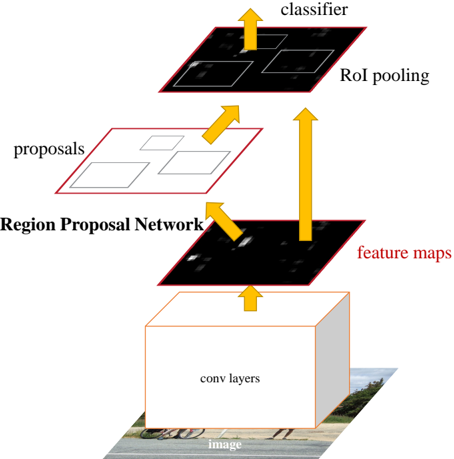
State-of-the-art object detection networks depend on region proposal algorithms to hypothesize object locations. Advances like SPPnet [1] and Fast R-CNN [2] have reduced the running time of these detection networks, exposing region proposal computation as a bottleneck. In this work, we introduce a Region Proposal Network (RPN) that shares full-image convolutional features with the detection network, thus enabling nearly cost-free region proposals. An RPN is a fully convolutional network that simultaneously predicts object bounds and objectness scores at each position. The RPN is trained end-to-end to generate high-quality region proposals, which are used by Fast R-CNN for detection. We further merge RPN and Fast R-CNN into a single network by sharing their convolutional features-using the recently popular terminology of neural networks with 'attention' mechanisms, the RPN component tells the unified network where to look. For the very deep VGG-16 model [3] , our detection system has a frame rate of 5 fps (including all steps) on a GPU, while achieving state-of-the-art object detection accuracy on PASCAL VOC 2007, 2012, and MS COCO datasets with only 300 proposals per image. In ILSVRC and COCO 2015 competitions, Faster R-CNN and RPN are the foundations of the 1st-place winning entries in several tracks. Code has been made publicly available.
Overview
CoChat Summary
TL;DR
Faster R-CNN introduces a Region Proposal Network (RPN) that shares convolutional features with Fast R-CNN, making region proposals nearly cost-free and enabling a unified object detection system. It achieves near real-time detection with state-of-the-art accuracy on PASCAL VOC and MS COCO.
Key findings
- With VGG-16 and shared features, Faster R-CNN reaches 69.9% mAP on PASCAL VOC 2007 test using 300 proposals, 73.2% with VOC07+12 training, 70.4% on VOC 2012 with 07++12, and 78.8% on VOC 2007 with COCO+07+12.
- Runtime: VGG-16 RPN + Fast R-CNN takes 198 ms total (5 fps), with RPN proposals costing 10 ms; ZF runs at 59 ms total (17 fps), versus SS + Fast R-CNN at 1830 ms (0.5 fps).
- Ablations: sharing features improves ZF mAP from 58.7% (unshared) to 59.9%; removing the reg layer drops mAP to 52.1%, and removing cls with 100 proposals drops it to 44.6%.
- On MS COCO test-dev, Faster R-CNN with VGG-16 and COCO train reaches 42.1% mAP@0.5 and 21.5% mAP@[.5,.95]; with COCO trainval it reaches 42.7% and 21.9%.
Methods
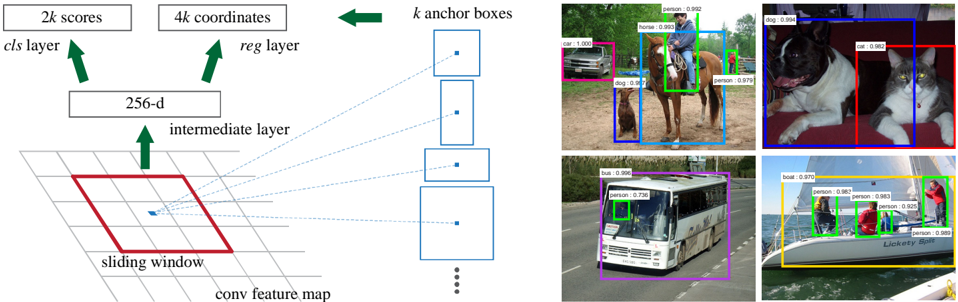
- The RPN is a fully convolutional network that slides a 3×3 window over shared conv features and predicts objectness scores and box regressions relative to anchors; default anchors use 3 scales (128², 256², 512²) and 3 aspect ratios (1:1, 1:2, 2:1), giving k = 9 anchors per position.
- Training uses a 4-step alternating scheme with ImageNet-pretrained ZF or VGG-16, SGD, single-scale images (shorter side s = 600), NMS at IoU 0.7, and 300 proposals at test time; evaluation is on PASCAL VOC 2007/2012 and MS COCO.
- Main metrics are detection mAP on PASCAL VOC and mAP@0.5 / mAP@[.5,.95] on MS COCO, with timing measured on a K40 GPU.
Limitations
- Stated in the paper: non-approximate joint training would require a differentiable RoI pooling/warping layer and is beyond the paper’s scope; the approximate joint training ignores gradients with respect to proposal box coordinates.
- Stated in the paper: cross-boundary anchors are ignored during training, and multi-scale feature extraction may improve accuracy but does not offer a good speed-accuracy trade-off.
- Evident from the text: the main experiments focus on PASCAL VOC and MS COCO with ZF/VGG-16 backbones, so generalization to other datasets, backbones, or detection regimes is not extensively characterized.
Model-written summary. Check it against the paper before relying on it.
Integrity signals
Registry
Cites
Statistics
Figures


Verification
Claims the paper makes
12 Valid · 5 Not valid · 8 Not checked · 83 Own results and interpretations
Every source the paper cites for this claim was checked and supports it.
In the paper
“Only by replacing VGG-16 with a 101layer residual net (ResNet-101) [18], the Faster R-CNN system increases the mAP from 41.5%/21.2% (VGG16) to 48.4%/27.2% (ResNet-101) on the COCO val set.”
What the sources say
- Supportedcites [18] [18] K. He, X. Zhang, S. Ren, and J. Sun, 'Deep residual learning for image recognition,' arXiv:1512.03385 , 2015. - source
Table 8 (p. 8) reports the exact COCO validation-set mAP values for baseline Faster R-CNN with VGG-16 and ResNet-101. Section 4.3 (p. 8) says the detection implementation was the same for both models and attributes the gain to replacing VGG-16 with ResNet-101. (LLM, conf=0.95)
plainstates a cause- Asserted: passes — The authors put it forward as true.
- Checkable: passes — It can be checked against evidence.
- Load-bearing: passes — The paper’s conclusions depend on it.
- Based: passes — The paper gives a reason why it holds.
- Supported
Every source the paper cites for this claim was checked and supports it.
In the paper
“This observation is still valid even when one increases the depth substantially to over 100 layers [18].”
What the sources say
- Supportedcites [18] [18] K. He, X. Zhang, S. Ren, and J. Sun, 'Deep residual learning for image recognition,' arXiv:1512.03385 , 2015. - source
In ImageNet Classification (p. 7), the paper reports that 101- and 152-layer ResNets outperform the 34-layer model, with no observed degradation. Its CIFAR-10 analysis (p. 7) also reports that a 110-layer ResNet converges well. These results support the stated extension to over 100 layers, although the isolated sentence does not specify what “this observation” refers to. (LLM, conf=0.87)
plain- Asserted: passes — The authors put it forward as true.
- Checkable: passes — It can be checked against evidence.
- Load-bearing: unclear — It is unclear whether the paper’s conclusions depend on it.
- Based: passes — The paper gives a reason why it holds.
- Supported
The cited sources support only part of this claim — read each source’s verdict below.
In the paper
“In ILSVRC and COCO 2015 competitions, Faster R-CNN and RPN are the basis of several 1st-place entries [18] in the tracks of ImageNet detection, ImageNet localization, COCO detection, and COCO segmentation.”
What the sources say
- Partly supportedcites [18] [18] K. He, X. Zhang, S. Ren, and J. Sun, 'Deep residual learning for image recognition,' arXiv:1512.03385 , 2015. - sourceExperimental — accuracy not yet measured
Section 4.3 (p. 8) lists first-place finishes in all four tracks, and the Object Detection Baselines (p. 10) describe a Faster R-CNN system using an RPN. The ImageNet Localization section (p. 12) also identifies its RPN-based method. But the copy attributes the entries collectively to deep residual nets; it does not establish that Faster R-CNN and RPN underpinned the COCO segmentation entry. (LLM, conf=0.86)
plainstates a cause- Asserted: passes — The authors put it forward as true.
- Checkable: passes — It can be checked against evidence.
- Load-bearing: unclear — It is unclear whether the paper’s conclusions depend on it.
- Based: passes — The paper gives a reason why it holds.
- Partly supported
The cited sources that could be checked couldn’t confirm or dispute this claim.
In the paper
“Yet when compared to efficient detection networks [2], Selective Search is an order of magnitude slower, at 2 seconds per image in a CPU implementation.”
What the sources say
- Could not verifycites [4] [4] J. R. Uijlings, K. E. van de Sande, T. Gevers, and A. W. Smeulders, 'Selective search for object recognition,' International Journal of Computer Vision (IJCV) , 2013. - sourceExperimental — accuracy not yet measured
The computational discussion in §5.3 (pp. 12–13) gives timings for complete object-recognition pipelines, not a two-second CPU runtime for Selective Search. The comparisons in §5.2.1 (p. 11) concern other object-location methods, not efficient detection networks. Searches for a two-second per-image runtime and a network comparison found neither claim in our copy. (LLM, conf=0.73)
- Not checked — no full text of the sourcecites [2] [2] R. Girshick, 'Fast R-CNN,' in IEEE International Conference on Computer Vision (ICCV) , 2015. - source
plainstates an association- Asserted: passes — The authors put it forward as true.
- Checkable: passes — It can be checked against evidence.
- Load-bearing: passes — The paper’s conclusions depend on it.
- Based: passes — The paper gives a reason why it holds.
- Could not verify
Every source the paper cites for this claim was checked and supports it.
In the paper
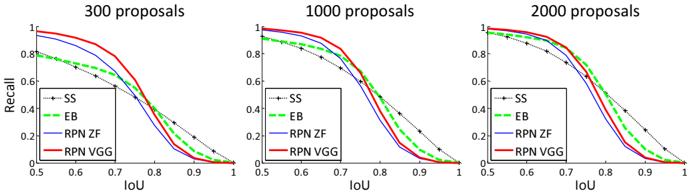
“We comprehensively evaluate our method on the PASCAL VOC detection benchmarks [11] where RPNs with Fast R-CNNs produce detection accuracy better than the strong baseline of Selective Search with Fast R-CNNs.”
What the sources say
- Supportedcites [11] [11] M. Everingham, L. Van Gool, C. K. I. Williams, J. Winn, and A. Zisserman, 'The PASCAL Visual Object Classes Challenge 2007 (VOC2007) Results,' 2007. - source
The citation is attached to “PASCAL VOC detection benchmarks,” not to the citing authors’ comparison of RPNs and Selective Search. Sections 5.2 and 6.2 describe the VOC detection task, its submitted methods, and its results, confirming the benchmark identification. (LLM, conf=0.92)
plainstates a cause- Asserted: passes — The authors put it forward as true.
- Checkable: passes — It can be checked against evidence.
- Load-bearing: passes — The paper’s conclusions depend on it.
- Based: passes — The paper gives a reason why it holds.
- Rests on an assumption not shown here.
- Supported
56 more claims
Create a free account to see all 108 claims and to verify the 2 references still open.
- Probably not a substantial claim. 11
- It may state two separate claims as one. 40
- The quote only partly states this claim. 1
Claims other papers make about this one
Each is checked against this paper’s own text: does it say what the citing paper says it does?
The source backs part of the claim, not all of it — or backs it for a different population, condition or comparison.
In the citing paper
“Unlike the original paper [19] that adopted stage-wise training regarding RPN, we use an improved implementation with end-to-end joint training similar to [37], which leads to higher baselines than [19].”
From Non-local Neural Networks (2018) · cites this paper as [37]
Experimental — accuracy not yet measuredThe source backs part of the claim, not all of it — or backs it for a different population, condition or comparison.
In the citing paper
“Faster RCNN is the first near-realtime deep learning detector (COCO mAP@.5=42.7%, VOC07 mAP=73.2%, 17fps with ZF-Net [48]).”
From Object Detection in 20 Years: A Survey (2023) · cites this paper as [19]
Experimental — accuracy not yet measuredThe source backs part of the claim, not all of it — or backs it for a different population, condition or comparison.
In the citing paper
“Faster RCNN is the first near-realtime deep learning detector (COCO mAP@.5=42.7%, VOC07 mAP=73.2%, 17fps with ZF-Net [48]).”
From Object Detection in 20 Years: A Survey (2023) · cites this paper as [47]
Experimental — accuracy not yet measuredThe source backs part of the claim, not all of it — or backs it for a different population, condition or comparison.
In the citing paper
“In the deep learning era, due to the increase of computing power, bootstrap was shortly discarded in object detection during 2014-2016 [16-20].”
From Object Detection in 20 Years: A Survey (2023) · cites this paper as [19]
Experimental — accuracy not yet measuredThe source backs part of the claim, not all of it — or backs it for a different population, condition or comparison.
In the citing paper
“The most commonly used idea to reduce the feature computational redundancy is to compute the feature map of the whole image only once [18, 19, 124], which have achieved tens or even hundreds of times of acceleration.”
From Object Detection in 20 Years: A Survey (2023) · cites this paper as [19]
Experimental — accuracy not yet measured
21 more claims about this paper
Create a free account to see every claim other papers make about this one.
Citations
Cites
Deep Residual Learning for Image Recognition
He, K., Zhang, X., Ren, S., & Sun, J. (2016) · 2016 IEEE Conference on Computer Vision and Pattern Recognition (CVPR) · doi:10.1109/cvpr.2016.90 · Cited by 235,474 · cited 7×
“to propose regions from data, and thus can easily benefit from deeper and more expressive features (such as the 101layer residual nets adopted in [18]).”
BackgroundInfluentialSelf-citationVery Deep Convolutional Networks for Large-Scale Image Recognition
Simonyan, K., & Zisserman, A. (2014) · arXiv · doi:10.48550/arxiv.1409.1556 · Cited by 114,148
ImageNet classification with deep convolutional neural networks
Krizhevsky, A., Sutskever, I., & Hinton, G. E. (2017) · Communications of the ACM · doi:10.1145/3065386 · Cited by 112,155 · cited 1×
“For the regression loss, we use L where R is the robust loss function (smooth L 1 ) defined in [5].”
MethodGoing deeper with convolutions
Szegedy, C., Liu, W., Jia, Y., Sermanet, P., Reed, S., Anguelov, D., Erhan, D., Vanhoucke, V., & Rabinovich, A. (2015) · 2015 IEEE Conference on Computer Vision and Pattern Recognition (CVPR) · doi:10.1109/cvpr.2015.7298594 · Cited by 48,562 · cited 1×
“1× 10(6) parameters (1536 × (4 + 1) × 800 for GoogleNet [34] in MultiBox [27]).”
Microsoft COCO: Common Objects in Context
Lin, T.-Y., Maire, M., Belongie, S., Hays, J., Perona, P., Ramanan, D., Dollár, P., & Zitnick, C. L. (2014) · Lecture Notes in Computer Science · doi:10.1007/978-3-319-10602-1_48 · Cited by 45,460 · cited 1×
“Region proposal methods typically rely on inexpensive features and economical inference schemes.”
MethodImageNet Large Scale Visual Recognition Challenge
Russakovsky, O., Deng, J., Su, H., Krause, J., Satheesh, S., Ma, S., Huang, Z., Karpathy, A., Khosla, A., Bernstein, M., et al. (2015) · International Journal of Computer Vision · doi:10.1007/s11263-015-0816-y · Cited by 39,380 · cited 1×
“, the shared convolutional layers) are initialized by pre-training a model for ImageNet classification [36], as is standard practice [5].”
MethodFully convolutional networks for semantic segmentation
Long, J., Shelhamer, E., & Darrell, T. (2015) · 2015 IEEE Conference on Computer Vision and Pattern Recognition (CVPR) · doi:10.1109/cvpr.2015.7298965 · Cited by 38,834 · cited 5×
“Our RPNs are thus a kind of fully-convolutional network (FCN) [14] and they can be trained end-to-end specifically for the task for generating detection proposals.”
BackgroundMethodInfluentialRich Feature Hierarchies for Accurate Object Detection and Semantic Segmentation
Girshick, R., Donahue, J., Darrell, T., & Malik, J. (2014) · 2014 IEEE Conference on Computer Vision and Pattern Recognition · doi:10.1109/cvpr.2014.81 · Cited by 32,684 · cited 7×
“, Selective Search [4] object detectors, RCNN [5], and Fast R-CNN [2]).”
BackgroundMethodInfluentialSelf-citationGirshick, R. (2015) · 2015 IEEE International Conference on Computer Vision (ICCV) · doi:10.1109/iccv.2015.169 · Cited by 28,105
Self-citationThe pascal visual object classes (VOC) challenge
Everingham, M., Van Gool, L., Williams, C. K. I., Winn, J., & Zisserman, A. (2010) · International Journal of Computer Vision · doi:10.1007/s11263-009-0275-4 · Cited by 19,599
Research works printed but not linked: 1
- [10] S. Ren, K. He, R. Girshick, and J. Sun, 'Faster R-CNN: Towards real-time object detection with region proposal networks,' in Neural Information Processing Systems (NIPS) , 2015. -
Cited by
Items 54,801–54,900 of 56,407
A Scalar per Patch from Pre-Trained ViTs Enables Fast Moving Navigation in the Real World
Janny, S., Antsfeld, L., & Wolf, C. (2026) · Lecture notes in computer science · doi:10.1007/978-3-032-37016-7_13
FQ-YOLO: A Deep Learning Framework for Joint Fruit Detection and Quality Grading
Fatima, S. S., Yashwanth, C. S., hussain, S. A., et al. (2026) · International Conference on Inventive Research in Computing Applications (ICIRCA) · doi:10.1109/icirca69024.2026.11570594
“The original object identification methods that were used in agriculture relied heavily on the highly accurate, but also highly resource-hogging, two-stage object detectors such as Faster RCNN [6].”
EST-YOLO: an efficient Mamba-enhanced detector for UAV remote sensing object detection
Fan, C., & Li, Z. (2026) · Engineering Research Express · doi:10.1088/2631-8695/ae814c
“Two-stage detectors first generate a set of candidate regions using an region proposal network (RPN) [3], followed by feature alignment and reclassification for each candidate.”
YOLO-based semantic adaptive steganography driven by a locally active memristor hyperchaotic system
Huang, L., & Li, J. (2026) · Chaos Solitons & Fractals · doi:10.1016/j.chaos.2026.118663
Tian, Z., Li, X., & Lin, Y. (2026) · IEEE International Conference on Control, Electronics and Computer Technology (ICCECT) · doi:10.1109/iccect68671.2026.11565286
“Two-stage detectors including R-CNN [12], Fast R-CNN [13] and Faster R-CNN [4] first generate regional candidate boxes and then classify the targets in the boxes, which achieves high detection accuracy but at the cost of low processing speed.”
Babu, G. P., Babu, K. A., Reddy, R. V. G., & Reddy, P. B. K. (2026) · International Conference on Inventive Research in Computing Applications (ICIRCA) · doi:10.1109/icirca69024.2026.11570524
Peng, J., Shi, Y., You, M., & Guo, J. (2026) · Biomedical Signal Processing and Control · doi:10.1016/j.bspc.2026.110831
Spatial and Channel Synergistic Attention for Rotated Object Detection in Remote Sensing Images
Wen, H., Li, D., Li, Y., Tong, J., Zuo, Z., Li, D., Dou, M., Shi, Y., & Wang, Y. (2026) · IEEE International Conference on Control, Electronics and Computer Technology (ICCECT) · doi:10.1109/iccect68671.2026.11565133
“The first encompasses two-stage frameworks, typified by Faster R-CNN [3], Mask R-CNN [4], and FPN [5], which yield superior localization precision by virtue of sophisticated region proposal mechanisms.”
Lǚ, J., Liu, Y., Yu, M., & Wei, G. (2026) · Research Square · doi:10.21203/rs.3.rs-9832324/v1
Choi, J. I., Lan, Q., & Tian, Q. (2026) · Neural Networks · doi:10.1016/j.neunet.2026.109271 · Cited by 2
Peng, P., Zhang, M., Ding, G., & Lv, T. (2026) · Fishes · doi:10.3390/fishes11070373
Hemalatha, R., Manoranjitham, R., Punitha, S. C., et al. (2026) · International Conference on Inventive Research in Computing Applications (ICIRCA) · doi:10.1109/icirca69024.2026.11570331
Yolo-Rdsi: a Dynamic Shape-Aware Detector Based on Yolo for Pcb Surface Defect Detection
Gao, R., & Dong, Y. (2026) · doi:10.1109/dipca70202.2026.11565967
“Two-stage models like R-CNN [1] , Faster R-CNN [2] , and Mask R-CNN [3] extract candidate regions before determining target categories and locations.”
K, A., Solomi, V. S., & Sankuru, R. C. (2026) · SSRN Electronic Journal · doi:10.2139/ssrn.6986037
Zhang, C., Chen, J., Tang, D., & Zhang, Z. (2026) · Proceedings of the Institution of Mechanical Engineers Part C Journal of Mechanical Engineering Science · doi:10.1177/09544062261461647
“10 To address this limitation, Ren et al. 11 introduced the region proposal network, which generates high-quality object proposals by sharing convolutional features with the detection network, significantly improving both detection accuracy and speed.”
Wang, J., & Liu, J. (2026) · Chinese Control and Decision Conference (CCDC) · doi:10.1109/ccdc69976.2026.11560290
“In recent years, significant progress has been made in object detection algorithms based on deep learning, mainly divided into two categories: One is the two-stage object detection algorithm, such as the Faster R-CNN [1] series of algorithms.”
Multi-Object Detection and Tracking Algorithm Based on Improved YOLO11n and ByteTrack
Jiao, Y., & Liu, G. (2026) · Chinese Control and Decision Conference (CCDC) · doi:10.1109/ccdc69976.2026.11559953
Research on Weld Seam Extraction Based on Multi-Dimensional Information Fusion
Zhao, Y., & Chi, Y. (2026) · Chinese Control and Decision Conference (CCDC) · doi:10.1109/ccdc69976.2026.11560275
“Compared with traditional CNN [3] and the two-stage detector Faster R-CNN [4], they significantly improve inference speed while ensuring accuracy, thus performing excellently in weld seam segmentation.”
SMCI-YOLO: a low-light detector based on synergistic multi-component interaction
Hu, J., Wang, H., Zeng, M., Liu, S., Huang, H., & Xie, X. (2026) · The European Physical Journal Plus · doi:10.1140/epjp/s13360-026-07961-6
“However, two-stage detectors [16–18] suffer from high computational complexity and slow inference, making them often unsuitable for real-time applications.”
Joint Super-Resolution Reconstruction for Small Traffic Sign Detection via Multitask Learning
Lv, Z., Wang, S., Zheng, L., Tang, Y., & Yuan, Q. (2026) · IEEE Transactions on Intelligent Transportation Systems · doi:10.1109/tits.2026.3704948
“The two stage detectors divide the detection process into two stages from coarse to fine, first generating region proposals and then classifying them into specific object categories, e.g. Faster-RCNN [33], Mask RCNN [34], Cascade RCNN [35], Sparse RCNN [36].”
Huang, L., & Yang, Q. (2026) · IEEE Transactions on Geoscience and Remote Sensing · doi:10.1109/tgrs.2026.3706691
An Improved YOLO with Multi-Scale Attention for Lightweight Steel Surface Defect Detection
Li-xia, W., Wu, X., Tong, X., et al. (2026) · doi:10.1109/aiita69518.2026.11567102
“Two-stage detection algorithms represented by Faster R-CNN [2] achieve high accuracy but fail to meet the real-time demands of production lines; the YOLO series [3]–[5], as representative single-stage algorithms, balances detection speed and accuracy with ease of embedded deployment, and has been…”
SCP-Net: A Lightweight and Efficient Detector for Diverse Parcel Categories in Logistics
Pan, L., Wang, Q., Liu, P., & Fan, Y. (2026) · Chinese Control and Decision Conference (CCDC) · doi:10.1109/ccdc69976.2026.11559677
“The comparison suite includes the classic two-stage detector Faster R-CNN [18], the latest Transformer-driven RT-DETRv2-S [19], and the representative lightweight YOLO series (incorporating YOLOv11n and its advanced iterations YOLOv12n and YOLOv13n) [20].”
Wang, K., Liu, J., Li, C., & Yu, B. (2026) · Applied Sciences · doi:10.3390/app16126259
Pan, S., Zhou, Y., Zeng, X., et al. (2026) · Chinese Control and Decision Conference (CCDC) · doi:10.1109/ccdc69976.2026.11559725
“Two-stage approaches, such as Faster R-CNN [4], achieve high precision but low inference speed due to region proposal operations.”
Lightweight Underwater Object Detection via Pruned and Knowledge-Distilled YOLOv8
Liao, G., Liu, Z., Cao, L., Yang, Y., & Li, Q. (2026) · Chinese Control and Decision Conference (CCDC) · doi:10.1109/ccdc69976.2026.11560609
“Among existing detection frameworks, the YOLO series has achieved strong real-time capability due to its single-stage architecture and end-to-end optimization strategy [6]–[8].”
A Multi Target Detection Method for NanoDet-YOLOv8n Cascade Model
Yang, M., Chen, X., Chen, H., Ke, R., Zhu, X., & Luo, J. (2026) · Chinese Control and Decision Conference (CCDC) · doi:10.1109/ccdc69976.2026.11560069
“Furthermore, two-stage lightweight designs tailored for x86 embedded systems show improved small-object recall in surveillance tasks [15].”
Robust Physical Adversarial Attack Method Against Person Detectors Under High-Viewing
Huo, L., Meng, R., & Zhou, L. (2026) · doi:10.1109/aiita69518.2026.11567150
“Specifically, we consider single-stage models (YOLOv2 [19], YOLOv3 [20]), two-stage model (Faster R-CNN [21]), and transformer-based model (D-DETR [22]).”
Dong, S., Tang, Z., Zuo, C., Xi, K., 芮孝芳, & Dai, Z. (2026) · Journal of Intelligent Transportation Systems · doi:10.1080/15472450.2026.2688120
Ma, W., Wang, Z., Li, K. E., et al. (2026) · doi:10.1109/scecs69812.2026.11565977
“While two-stage detectors such as Faster R-CNN [6] achieve high accuracy, single-stage detectors offer better latency for edge deployment.”
Li, Y. (2026) · International Conference on Artificial Intelligence and Industrial Technology Applications (AIITA) · doi:10.1109/aiita69518.2026.11567158
“In object detection, two-stage detectors [8-9] are accurate but slower, whereas YOLO one-stage detectors [10] better balance speed and accuracy.”
Almasi, P., Premadasa, R., Jáuregui, D., & Zhang, Q. (2026) · Journal of Bridge Engineering · doi:10.1061/jbenf2.beeng-8159
Hardware-Friendly Multiscale Infrared Object Detection
Zhu, W., Xin, G., Lu, C., et al. (2026) · IEEE Transactions on Geoscience and Remote Sensing · doi:10.1109/tgrs.2026.3707030
SCS-YOLO: An Improved PCB Surface Defect Detection Algorithm Based on YOLOv11
Tie, J., Song, Q., Zhu, C., Wu, M., Ruan, C., & Chen, Y. (2026) · International Conference on Artificial Intelligence and Industrial Technology Applications (AIITA) · doi:10.1109/aiita69518.2026.11567141
“A representative method is Faster R-CNN [3], which improves detection performance through the introduction of a Region Proposal Network.”
Han, T., hao, H., Gao, C., et al. (2026) · Engineering Research Express · doi:10.1088/2631-8695/ae8222
“Faster R-CNN-R50 is a classic two-stage detection framework that first generates proposals through a region proposal network and then performs classification and regression [11].”
Real-Time Insulator Micro-Defect Detection for Power Grid Systems via UAV-based Edge Computing
Zhu, Y., & Wang, K. (2026) · doi:10.1109/icaisisas68969.2026.11567862
“To comprehensively evaluate the performance of our al-gorithm in realistic UAV edge computing scenarios, we benchmarked YOLOv8n-P2 against several mainstream object detection architectures, including Faster R-CNN [9], YOLOv5s, YOLOv7-tiny [10], and the baseline YOLOv8n [11].”
Ship detection and tracking based on an improved YOLO11n and ByteTrack framework
Xuan, B. N., Viet, H. L., Xuan, U. D., et al. (2025) · Journal of Military Science and Technology · doi:10.54939/1859-1043.j.mst.csce9.2025.111-122
YOLO12-FS: A High-Precision Deep Learning Method for Forest Fire Detection
Feng, X., Ma, H., & Chen, Z. (2026) · Chinese Control and Decision Conference (CCDC) · doi:10.1109/ccdc69976.2026.11560395
Deep Learning-Based Defect Detection in Agricultural Crops: A Comprehensive Approach
Sundar, K. J. A., Vijayakumar, A., & Duraimanickam, D. B. (2026) · Communications in computer and information science · doi:10.1007/978-3-032-27117-4_7
Zang, S.-L., Chen, H.-Y., & Zhang, X. (2026) · Chinese Control and Decision Conference · doi:10.1109/ccdc69976.2026.11560660
“Representative methods include R-CNN [9] and Faster R-CNN [10].”
Quantifying Security Induced Overhead in Vision Based UAS Traffic Monitoring Pipelines
Anaroua, F. I., Watson, B., & Babiceanu, R. F. (2026) · Integrated Communications, Navigation and Surveillance Conference (ICNS) · doi:10.1109/icns69853.2026.11570438
“The emergence of deep learning architectures particularly single-stage detectors such as YOLO variants and two-stage architectures like Faster R-CNN substantially improved detection robustness for small aerial objects in cluttered backgrounds [12], [13].”
Bee-YOLO: Enhancing small and dense object detection via Bee-eye inspired mechanisms
Zhao, Q., Zhang, Y., Xie, X., Huang, J., Zhang, Y., Fang, M., & Zhang, Z. (2026) · Applied Soft Computing · doi:10.1016/j.asoc.2026.115820
SCAFusion: RGB-T Cross-Modal Fusion for Object DetectionPreprint
Zhang, W. K., & Wang, H. (2026) · SSRN Electronic Journal · doi:10.2139/ssrn.6988597
Multi-Domain Interference-Suppressed DETR for SAR Object Detection
Zhang, Z. D., Peng, R., Sun, D., Tan, S., & Wei, Z. (2026) · Remote Sensing · doi:10.3390/rs18132076
Zhu, J., Feng, Y., Wu, C., Xu, H., Li, J., Cao, B., & Wang, Y. (2026) · SSRN Electronic Journal · doi:10.2139/ssrn.6993292
Hua, Z. (2026) · doi:10.1109/scecs69812.2026.11565861
“Faster R-CNN consolidated the two-stage framework by sharing convolutional features between the RPN and the classification head, effectively making the RPN negligible in terms of computational cost [9].”
EFPINet: enhanced feature preservation and interaction network for SAR ship detection
Liu, S., Jiang, W., Wang, Q., et al. (2026) · Advances in Space Research · doi:10.1016/j.asr.2026.06.074
Mai, A.-T., Nicolas, M. M., Ladret, P., & Caplier, A. (2026) · Neurocomputing · doi:10.1016/j.neucom.2026.134318
Sun, L., 孙秋鸽, Zhang, D., et al. (2026) · Measurement Science and Technology · doi:10.1088/1361-6501/ae81d3
CSE-YOLO: A Channel-Spatial Enhancement Infrared Gas Detection Model
Zhao, P., Zheng, Y., Yang, X., et al. (2026) · doi:10.1109/aiita69518.2026.11567274
“There are two important target detection algorithms focused on this issue[2]: 1) Two-stage detection algorithms based on region proposals, represented by R-CNN[3], Fast R-CNN[4], and Faster R-CNN[5], can achieve high precision and robustness while providing high bounding box precision, but their detection speed is slo…”
LG-YO LO : A Lightweight Small Object Detector with Learnable Laplacian-Gated Convolution
Sun, P., & Hua, C. (2026) · Chinese Control and Decision Conference (CCDC) · doi:10.1109/ccdc69976.2026.11560812
MGRN: Multi-granularity reasoning for fine-grained image-text retrieval in open-world scenarios
Liu, T., Sun, Z., Jin, C., Wang, J., Wei, Q., Meng, C., & Chang, S. (2026) · Information Sciences · doi:10.1016/j.ins.2026.124091
Kandel, N., Wu, P., Yu, Y., et al. (2026) · Chinese Control and Decision Conference (CCDC) · doi:10.1109/ccdc69976.2026.11559775
“Two-stage detectors, such as R-CNN [4], Fast R-CNN [5], and Faster R-CNN [6], achieve high detection accuracy through region proposal mechanisms but incur significant computational overhead, limiting their applicability in real-time industrial scenarios.”
YOLO-DwSimAM: An improved YOLOv11 network for insect-pest detection in rice crop
Kumari, S., Marwaha, S., Sachan, H., et al. (2026) · Neurocomputing · doi:10.1016/j.neucom.2026.134315
DEE-Net: A Multi-Scale Discriminative Edge Enhancement Network for Aircraft Surface Defect Detection
Wang, X., Lu, M., Liu, Y., & Qian, J. (2026) · Aerospace · doi:10.3390/aerospace13070568
EK-Det: Expert Knowledge-Guided Wildlife Detection via Cross-Modal Alignment and Soft Fusion
Li, J., Han, H., & GAO, X. (2026) · Chinese Control and Decision Conference (CCDC) · doi:10.1109/ccdc69976.2026.11560455
“Two-stage algorithms, ex-emplified by Faster R-CNN [8], generate region proposals followed by classification.”
Zhang, J., Wang, Y., Liu, Z., & Wang, L. (2026) · Neurocomputing · doi:10.1016/j.neucom.2026.134355 · Cited by 2
Di, X., Cai, W., Wang, X., Yin, Z., Li, S., & Jia, H. (2026) · Entropy · doi:10.3390/e28070718
“…experiments to verify its cross-model effectiveness on unseen mainstream detectors, including higher-version YOLO detectors (YOLOv5, YOLOv8, and YOLO11) and detectors from other frameworks such as Faster R-CNN [43], Mask R-CNN [44], SSD [45], and Real-Time Detection Transformer (RT-DETR) [46].”
Lightweight WSS-YOLO Quince Fruit Detection Algorithm Integrating SimAM
Wu, X., Zou, J., & Hai-wei, W. (2026) · Applied Sciences · doi:10.3390/app16136342
Zhang, R., Hou, J., Shi, Y., et al. (2026) · Drones · doi:10.3390/drones10070486
Xu, Y., Liu, Y., Meng, X., Yuan, Q., Wang, D., Wu, L., Yue, X., Feng, L., & Cuihong, L. (2026) · Agriculture · doi:10.3390/agriculture16131383
Dehghan, P., Azadi, A., Karton, C., Clouthier, A., & Hoshizaki, T. B. (2026) · Sports Engineering · doi:10.1007/s12283-026-00559-2
“Deep learning has advanced player detection through convolutional neural networks (CNNs) [ 35], including you only look once (YOLO) [36 ] and faster R-CNN [37].”
Profumo, D., Akbar, R., Fiorella, L., Fredianelli, L., Ascari, E., D’Alessandro, F., Fidecaro, F., & Licitra, G. (2026) · Sensors · doi:10.3390/s26134042 · Cited by 1
YOLOSO: An Improved YOLO-Based Algorithm for UAV to Detect Small Ground Targets
Lang, B., Yang, H., Xu, R., & Li, H. (2026) · Drones · doi:10.3390/drones10070484 · Cited by 1
Tang, J., Sun, L., Zhang, Z., & Qin, W. (2026) · The Visual Computer · doi:10.1007/s00371-026-04572-1
“To evaluate the effectiveness of the proposed keypoint-guided adaptive passenger upper-body region extraction method, we conducted comparative experiments with three mainstream object detection models: Faster R-CNN [38], D2Det [39], and YOLOX [40].”
YOLO-RDD: An Efficient Lightweight Model for Road Defect Detection
Yang, K., Deng, C., & Sun, J. (2026) · Lecture notes in electrical engineering · doi:10.1007/978-981-92-1635-2_21
Self-citationWang, L. W., Zhang, F., Li, J., Li, X., & Ji, Y. (2026) · Lecture notes in electrical engineering · doi:10.1007/978-981-92-1635-2_18
SWP-YOLO: efficient pitting defect detection network for ball screws
Li, L., Chen, M., Chai, Y., et al. (2026) · Engineering Research Express · doi:10.1088/2631-8695/ae82ba
“Two-stage methods include R-CNN [5], Mask-R-CNN [6], and Faster-RCNN [7], They are representative of two-stage methods.”
Automated Fracture Detection and Segmentation in Musculoskeletal Radiographs Using YOLOv8
Joghatayi, M. A. (2026) · International Biennial Conference on Advances in Artificial Intelligence and Data Science (IBAAIDS) · doi:10.1109/ibaaids66771.2026.11567425
“Two-stage detectors, such as Faster R-CNN [3], have been widely applied in medical imaging due to their high accuracy.”
A brand-neutral logo detection and redaction with transformer detectors
Pathak, A., Singh, J., Kaur, R., Chhabra, G. S., & Singh, A. (2026) · Discover Computing · doi:10.1007/s10791-026-10262-2
“We tested four different non-transformer based object detection models in our work, namely RetinaNet [61], RCNN [62], Faster R-CNN [63], and YOLOv5 [64].”
Improved model for detecting randomly oriented objects on remote sensing images
Пількевич, І. А., Romanchuk, M. P., Naumchak, O. M., et al. (2025) · doi:10.55056/ceur-ws.org/vol-3943/paper26.pdf
Generalized Medical Phrase Grounding
Zhang, W., Chandra, S. S., & Nicolson, A. (2026) · IEEE Transactions on Medical Imaging · doi:10.1109/tmi.2026.3707568 · Cited by 4
Swain, M. (2025) · International Journal of Agriculture and Animal Production · doi:10.55529/ijaap.51.129.144
Huang, J., Zhang, B., Zhou, T., et al. (2026) · IEEE Sensors Journal · doi:10.1109/jsen.2026.3705755
“While deep learning-based object detection and instance segmentation frameworks [8], [9], [10] can learn high-level defect representations and 1558-1748 © 2026 IEEE.”
Ke, J., He, L., Zhang, J., et al. (2026) · Pattern Recognition · doi:10.1016/j.patcog.2026.114338
Environment Perception Algorithm Based on YOLOv5-FCM and Local Three-Channel SGBMPreprint
Huang, J. (2026) · SSRN Electronic Journal · doi:10.2139/ssrn.7002727
3D-LiteNet: A Lightweight Vision-based Deep Learning Approach for Fall Detection in Smart Healthcare
Raychaudhuri, A., Maity, S., Chakrabarti, A., & Bhattacharjee, D. (2026) · Evolving Systems · doi:10.1007/s12530-026-09846-6
“Using the RCNN paradigm (Ren et al. 2016), the researchers also created a technique that merges data from two distinct channels.”
Wu, X., Tang, Y., Zhou, Y., et al. (2026) · Frontiers in Oncology · doi:10.3389/fonc.2026.1857024
“Two-stage detectors, such as the R-CNN family Ren et al. (7) Liu et al. (8), rely on region proposal generation followed by classi fi cation and localization re fi nement.”
Wang, J., Liang, L., Pan, Y., Wang, S. Q., Zhu, Y. U. N. L. O. N., Lyu, W., & Zhao, S. (2026) · Frontiers in Plant Science · doi:10.3389/fpls.2026.1850591
COMPARATIVE ANALYSIS OF DEEP LEARNING MODELS FOR ISCHEMIC STROKE SEGMENTATION IN MRI
Pınar, M., Koç, C., Akgul, E., Aksoy, F. M. C., Girgin, A. B. A., & Aktaş, A. (2026) · İstanbul Ticaret Üniversitesi Fen Bilimleri Dergisi · doi:10.55071/ticaretfbd.1745249
SAR image ship detection network based on quasi-gaussian convolution and pooling-gated mechanism
Peng, X., & Yan, C. (2026) · Expert Systems with Applications · doi:10.1016/j.eswa.2026.133446
Noise-resilient and lightweight: Hypergraph computation for wind turbine blade defect detection
Gong, L., Lv, Y., Tian, J., Fuliu, Y., Hu, Y., Xia, L., & Wang, Y. (2026) · Engineering Applications of Artificial Intelligence · doi:10.1016/j.engappai.2026.116017
Zhu, Q., Zhu, Y., Bai, W., Wang, P., & Chen, W. (2026) · Optics & Laser Technology · doi:10.1016/j.optlastec.2026.115820 · Cited by 3
YOLO26-SimAM: An Energy-Based Attention Augmented Detector for Aero-Engine Surface Defect Inspection
Wang, X., Liu, L., Song, Y., et al. (2026) · Lecture notes in computer science · doi:10.1007/978-3-032-29915-4_41
Towards Robust Multimodal Detection via Progressive Cross‐Domain Feature Fusion
Wang, Y., Wang, Y., Shen, B., Dang, Z., & Hou, Z. (2026) · IET Computer Vision · doi:10.1049/cvi2.70074
Wang, J., Yu, J., Zhao, J., 翟冠钰, & Sun, W. (2026) · International Symposium on Computer Technology and Information Science (ISCTIS) · doi:10.1109/isctis70043.2026.11572063
Xu, J., Huo, H., Mei, A., & Zhang, C. (2026) · Electronics · doi:10.3390/electronics15132819
Yang, X., Wei, T., & Tang, Y. (2026) · Information Processing & Management · doi:10.1016/j.ipm.2026.105032
Lai, M., Yin, M., Li, H., Dou, M., & Gao, Y. (2026) · IEEE Conference on Computer Communications (INFOCOM) · doi:10.1109/infocom59046.2026.11571708
“It is far smaller than common object detection models such as SSD [12], Faster R-CNN [13], and CenterNet [14], and even slightly smaller than YOLOv7-tiny, the lightweight version of the YOLO.”
Hu, Y., Cao, W., Liu, S., & Yu, Z. (2026) · Information Sciences · doi:10.1016/j.ins.2026.123845
RDC-Net: Handling Asymmetric and Multi-Scale Road Damages via Dynamic Relational Mixing
Zhao, S., Yan, M., & Shen, Z. (2026) · International Symposium on Computer Technology and Information Science (ISCTIS) · doi:10.1109/isctis70043.2026.11572609
“In recent years, deep learning has been widely used in fields such as road damage detection, vehicle identification [3], and remote sensing ship detection [4], with mainstream methods including the two-stage Faster R-CNN [7] and one-stage series [1].”
Toward Precision Biodiversity Detection: An Edge‐Deployable Framework for Mitigating Data Redundancy
Sun, H., Liu, Y., & Wang, Y. (2026) · Ecology and Evolution · doi:10.1002/ece3.73927 · Cited by 1
“To validate the effectiveness of WS-YOLO, we compared its performance with several representative object detection models, including the two-stage Faster R-CNN (Ren et al. 2017), the one-stage SSD (Liu et al. 2016), multiple versions from the YOLO series (Chung et al. 2025; Jocher et al. 2025; Thu-Mig 2025; Wang et al…”
An Efficient Frequency-Aware Network for Steel Surface Defect Detection
Chen, Y., Yu, J., & Wu, J. (2026) · International Symposium on Computer Technology and Information Science (ISCTIS) · doi:10.1109/isctis70043.2026.11572595
“In this context, existing methods for steel surface defect detection can be broadly categorized into convolutional neural network (CNN)-based and Transformer-based approaches. strong performance, as exemplified by R-CNN [3] and YOLO [4] series.”
EC-YOLO: A Dynamic Convolution-based Network for Uterine Lesion Detection in Hysteroscopy
Zhang, W. X., & Fan, W. (2026) · International Symposium on Computer Technology and Information Science (ISCTIS) · doi:10.1109/isctis70043.2026.11571940
“Deep learning object detection algorithms are divided into two categories : single-stage ( such as YOLO series, SSD [10-12] ) and two-stage ( such as R-CNN series, Faster R-CNN [13-14] ).”
High-Precision Truck Detection System for Hydrogen Refueling Stations under Extreme Data Scarcity
Jiang, C., Yin, Z., Chi, X., et al. (2026) · International Symposium on Computer Technology and Information Science (ISCTIS) · doi:10.1109/isctis70043.2026.11571905
“Detectors are generally categorized into two types: two-stage detectors such as Faster R-CNN [1] and one-stage detectors such as SSD [2] and YOLO series algorithm [3] .”
Yu, X., Xu, L., Qian, Y., & Zhu, D. (2026) · IET Intelligent Transport Systems · doi:10.1049/itr2.70273
Zhang, T., Liu, R., & Wei, X. (2026) · Intelligent Computing · doi:10.34133/icomputing.0690
Enhancing UAD-YOLOv8 for UAV Obstacle Detection Via Tailored Training and Data Augmentation
Cicenas, B., & Abromavičius, V. (2026) · IEEE Workshop on Advances in Information, Electronic and Electrical Engineering (AIEEE) · doi:10.1109/aieee71113.2026.11576940
“Two-stage detectors such as R-CNN [7], Fast R-CNN [8], and Faster R-CNN [9] introduced region proposal mechanisms that achieved high accuracy, but are computationally expensive, limiting their use in real-time applications.”
Cotton Leaf Spot Detection Based on an Improved YOLOv11n Model
Xie, Y., Zhang, M., Han, Y., Dai, L., Fu, H., & Xu, L. (2026) · Journal of Imaging · doi:10.3390/jimaging12070284
“Two-stage algorithms such as Faster R-CNN significantly improve the localization accuracy of tiny disease spots through region proposal networks (RPNs), but their complex inference processes make them unsuited to meet the requirements for embedded deployment [14].”
Kim, D. B., Rho, J., Wee, S.-Y., & Son, H. (2026) · PLoS ONE · doi:10.1371/journal.pone.0337245
“We also compared the performance of the model with two widely used pretrained models in the R-CNN family – Faster R-CNN [12] and Cascade R-CNN [13].”
Metadata
- Authors
- Ren, S., He, K., Girshick, R., & Sun, J.
- Affiliations
- University of Science and Technology of China (CN)
- Visual Computing Group, Microsoft Research, Beijing, China
- Meta (United States) (US)
- ORCID
- Venue
- IEEE Transactions on Pattern Analysis and Machine Intelligence
- Published
- 2017-06-01
- Volume
- 39
- Issue
- 6
- Pages
- 1137-1149
- ISSN
- 0162-8828 (ISSN-L)
- 2160-9292
- 1939-3539
- OpenAlex
- W639708223
- Cited by
- 73,472
- References
- 60
- Citations by year
- 2026: 5632 · 2025: 9233 · 2024: 9699 · 2023: 9795 · 2022: 9251 · 2021: 9857 · 2020: 7617 · 2019: 6376 · 2018: 3729 · 2017: 1740
- FWCI
- 2215.09
- Type
- journal article
- Language
- en
- Open access
- green
- arxiv.org
- Licence
- Locations
- IEEE Transactions on Pattern Analysis and Machine Intelligence (publishedVersion)
- PubMed (publishedVersion)
- arXiv (Cornell University) (submittedVersion)
- arXiv (Cornell University)
- neural information processing systems
- Funders
- Microsoft Research
- Topics
- Physical Sciences › Computer Science › Computer Vision and Pattern Recognition › Advanced Neural Network Applications
- Physical Sciences › Computer Science › Computer Vision and Pattern Recognition › Visual Attention and Saliency Detection
- Physical Sciences › Computer Science › Computer Vision and Pattern Recognition › Advanced Image and Video Retrieval Techniques
- Keywords
- Faster R-CNN, region proposal network, real-time object detection, Fast R-CNN, bounding box regression, VGG16, attention mechanism, end-to-end learning, Pascal VOC, MS COCO
About these checks
Registry, retraction, Cites and statistics results are computed, not judged, with one exception: a printed reference that no index lists is read once by a model before it counts as a citation error. Claims are extracted by a model and kept only when their quote appears verbatim in the text; each cited source is then checked, with a model’s help, for whether it says what the claim relies on. Those verdicts can be wrong — read the claim’s quote and the cited source before relying on one.
The claim verdicts this report counts are experimental: their accuracy is not yet measured.
A language model drew the claims from the paper on 2026-10-10, under version 3 of the claim definition (model deepseek-v4.1-flash, prompt extract-v3).
A second model labelled each claim on 2026-10-10 (model jev-1.13-20260917, definition revision gold-guideline-v0.2).
Cited sources are checked with a language model’s help (gpt-6-sol).
Statistics and arithmetic are recomputed, not judged.
Confidence bands are shown only for fields calibrated on our annotated test set. None is calibrated yet, so no band is shown.
What counts as a claim ›How we measure confidence ›How we check this ›
Are you an author, or do you see a problem with this page? Request a review
Data sources
Bibliographic data: Semantic Scholar, OpenAlex, Crossref.
Contains information from the Semantic Scholar Academic Graph Datasets, made available under the ODC Attribution License (ODC-BY 1.0).
Semantic Scholar’s data is described in: Kinney, R., et al. (2023). The Semantic Scholar Open Data Platform. arXiv:2301.10140.
