

The Oracle Problem in Software Testing: A Survey
Open accessThe DOI matches its Crossref record; 218 of the 236 references it cites were found in a registry or an index.
Abstract
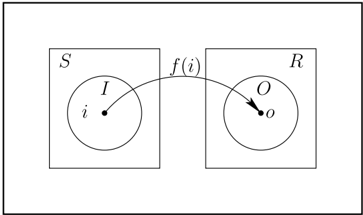
Testing involves examining the behaviour of a system in order to discover potential faults. Given an input for a system, the challenge of distinguishing the corresponding desired, correct behaviour from potentially incorrect behavior is called the “test oracle problem”. Test oracle automation is important to remove a current bottleneck that inhibits greater overall test automation. Without test oracle automation, the human has to determine whether observed behaviour is correct. The literature on test oracles has introduced techniques for oracle automation, including modelling, specifications, contract-driven development and metamorphic testing. When none of these is completely adequate, the final source of test oracle information remains the human, who may be aware of informal specifications, expectations, norms and domain specific information that provide informal oracle guidance. All forms of test oracles, even the humble human, involve challenges of reducing cost and increasing benefit. This paper provides a comprehensive survey of current approaches to the test oracle problem and an analysis of trends in this important area of software testing research and practice.
Overview
The claims and statistics of this paper haven’t been checked yet.
Free: it reads the open-access text and checks the first 5 claims that cite a source we can check. Create a free account to check every claim.
Integrity signals
Registry
Cites
Statistics
Figures


Verification
Claims the paper makes
The claims and statistics of this paper haven’t been checked yet.
Free: it reads the open-access text and checks the first 5 claims that cite a source we can check. Create a free account to check every claim.
Claims other papers make about this one
Each is checked against this paper’s own text: does it say what the citing paper says it does?
In the citing paper
“The metric depends on rigorous testing, which is currently limited by the lack of test oracles [11].”
From A 2030 Roadmap for Software Engineering (2025) · cites this paper as [11]
Self-check
Percentages, sums and reported differences re-computed from the paper’s own numbers.
The self-check needs the paper’s full text.
Citations
Cites
Statecharts: a visual formalism for complex systems
Harel, D. (1987) · Science of Computer Programming · doi:10.1016/0167-6423(87)90035-9 · Cited by 6,751 · cited 2×
“A wide variety of state transition systems exist, including finite state machines [111], Mealy/Moore machines [111], I/O Automata [117], Labeled Transition Systems [180], SDL [54], Harel Statecharts [81], UML state machines [28], X-Machines [95], [96], Simulink/Stateflow [179] and PROMELA [97].”
BackgroundAn Axiomatic Basis for Computer Programming
Hoare, T. (1968) · Cited by 4,330
An axiomatic basis for computer programming
Hoare, C. A. R. (1969) · Communications of the ACM · doi:10.1145/363235.363259 · Cited by 4,002
Holzmann, G. J. (1997) · IEEE Transactions on Software Engineering · doi:10.1109/32.588521 · Cited by 3,803 · cited 2×
“[96], Simulink/Stateflow [179] and PROMELA [97].”
Metaheuristics in combinatorial optimization: Overview and conceptual comparison
Blum, C., & Roli, A. (2003) · ACM Computing Surveys · doi:10.1145/937503.937505 · Cited by 3,236 · cited 1×
“[1] combine a natural language model and metahueristics, strategies that guide a search process [25], to”
BackgroundSymbolic execution and program testing
King, J. C. (1976) · Communications of the ACM · doi:10.1145/360248.360252 · Cited by 3,031 · cited 1×
“For instance, the problem of automatically generating test inputs has been the subject of research interest for nearly four decades [46], [107].”
BackgroundBaader, F., & Nipkow, T. (1998) · Cambridge University Press eBooks · doi:10.1017/cbo9781139172752 · Cited by 2,466
Metaheuristics in Combinatorial Optimization
Gendreau, M., & Potvin, J.-Y. (2005) · Annals of Operations Research · doi:10.1007/s10479-005-3971-7 · Cited by 2,338
Learning regular sets from queries and counterexamples
Angluin, D. (1987) · Information and Computation · doi:10.1016/0890-5401(87)90052-6 · Cited by 2,114 · cited 1×
“Most work has applied L , a wellknown learning algorithm, to learn a black-box system B as a finite state machine with n states [7].”
MethodDART: directed automated random testing
Godefroid, P., Klarlund, N., & Sen, K. (2005) · ACM SIGPLAN Notices · doi:10.1145/1064978.1065036 · Cited by 2,067
Research works printed but not linked: 6
- A. Avizienis and L. Chen, "On the implementation of N-version programming for software fault-tolerance during execution," in Proc. 1st Int. Comput. Softw. Appl. Conf., 1977, pp. 149-155.
- P. McMinn, M. Stevenson, and M. Harman, "Reducing qualita- tive human oracle costs associated with automatically generated test data," in Proc. Int. Workshop Softw. Test Output Validation, Jul. 2010, pp. 1-4. · DOI
- A. J. Offutt, J. Pan, and J. M. Voas, "Procedures for reducing the size of coverage-based test sets," in Int. Conf. Testing Comput. Softw., 1995, pp. 111-123.
- M. Shahbaz, P. McMinn, and M. Stevenson, "Automatic genera- tion of valid and invalid test data for string validation routines," Sci. Comput. Programm., vol. 97, no. 4, pp. 405-425, 2015.
- J. M. Spivey, Z Notation-a Reference Manual, 2nd ed. Englewood Cliffs, NJ, USA: Prentice-Hall, 1992.
- G. V. Bochmann, C. He, and D. Ouimet, "Protocol testing using automatic trace analysis," in Proc. Can. Conf. Elect. Comput. Eng., 1989, pp. 814-820.
Cited by
Items 101–200 of 1,001
How to “DODGE” Complex Software Analytics
Agrawal, A., Fu, W., Chen, D., Shen, X., & Menzies, T. (2019) · IEEE Transactions on Software Engineering · doi:10.1109/tse.2019.2945020 · Cited by 62
“Hence, it is essential to test software before the deployment [8], [41], [45], [67].”
BackgroundResearch on WebAssembly Runtimes: A Survey
Zhang, Y., Liu, M., Wang, H., Ma, Y., Huang, G., & Liu, X. (2025) · ACM Transactions on Software Engineering and Methodology · doi:10.1145/3714465 · Cited by 62
“However, there are still certain limitations, including the article searching and selection.”
Neural-Based Test Oracle Generation: A Large-Scale Evaluation and Lessons Learned
Hossain, S. B., Filieri, A., Dwyer, M. B., Elbaum, S. G., & Visser, W. (2023) · ACM Joint European Software Engineering Conference and Symposium on the Foundations of Software Engineering (ESEC/FSE) · doi:10.1145/3611643.3616265 · Cited by 60
“Unfortunately, manual development of high-quality test suites is extremely costly, time consuming, and error-prone [4, 26].”
BackgroundDifferentially testing soundness and precision of program analyzers
Klinger, C., Christakis, M., & Wüstholz, V. (2019) · ACM SIGSOFT International Symposium on Software Testing and Analysis (ISSTA) · doi:10.1145/3293882.3330553 · Cited by 59
Ayerdi, J., Terragni, V., Arrieta, A., Tonella, P., Sagardui, G., & Arratibel, M. (2021) · ACM Joint European Software Engineering Conference and Symposium on the Foundations of Software Engineering (ESEC/FSE) · doi:10.1145/3468264.3473920 · Cited by 60
“This problem is called the oracle problem and it is recognised as one of the fundamental challenges in software testing [10].”
BackgroundInfluentialRuntime Failure Prevention and Reaction
Falcone, Y., Mariani, L., Rollet, A., & Saha, S. (2018) · Lecture notes in computer science · doi:10.1007/978-3-319-75632-5_4 · Cited by 59
“These oracles detect failures by comparing the observed behaviour to the behaviour defined in the specification, for instance, an oracle might be obtained from a logical specification of the input/output behaviour of the system to detect incorrect outputs [3].”
MethodMetamorphic Testing for Machine Translations: MT4MT
Sun, L., & Zhou, Z. Q. (2018) · Australasian Software Engineering Conference (ASWEC) · doi:10.1109/aswec.2018.00021 · Cited by 59
“software testing, which refers to situations where an oracle is unavailable, or is theoretically available, but practically too difficult or expensive to be applied [4], [5].”
BackgroundMethodFinding Bugs in Cryptographic Hash Function Implementations
Mouha, N., Raunak, M. S., Kuhn, D. R., & Kacker, R. N. (2018) · IEEE Transactions on Reliability · doi:10.1109/tr.2018.2847247 · Cited by 58
“To alleviate the test oracle problem [7], we will develop a systematic testing methodology, which can be considered within the framework of metamorphic testing [8]–[11].”
Methodtestar – scriptless testing through graphical user interface
Vos, T. E. J., Aho, P., Ricós, F. P., Rodríguez-Valdés, O., & Mulders, A. (2021) · Software Testing Verification and Reliability · doi:10.1002/stvr.1771 · Cited by 58
“The difficult part is optimizing the action selection [14] to find faults and recognizing a faulty state when it is found [15-17].”
BackgroundKavuri, S. (2025) · International Journal of Apllied Mathematics · doi:10.12732/ijam.v38i10s.990 · Cited by 57
Compiler testing: a systematic literature analysis
Tang, Y., Ren, Z., Kong, W., & Jiang, H. (2019) · Frontiers of Computer Science · doi:10.1007/s11704-019-8231-0 · Cited by 58
“Given a test case to a compiler under test and a test input to the test case, the task to distinguish the expected and correct behavior of the test case from the potential incorrect behavior is called the “test oracle problem” [29].”
MethodA taxonomy of validation strategies to ensure the safe operation of highly automated vehicles
Batsch, F., Kanarachos, S. A., Cheah, M., Ponticelli, R., & Blundell, M. (2020) · Journal of Intelligent Transportation Systems · doi:10.1080/15472450.2020.1738231 · Cited by 57
Using GitHub Copilot for Test Generation in Python: An Empirical Study
Haji, K. E., Brandt, C., & Zaidman, A. (2024) · doi:10.1145/3644032.3644443 · Cited by 58
A Combinatorial Testing-Based Approach to Fault Localization
Ghandehari, L. S., Lei, Y., Kacker, R. N., Kuhn, R., Xie, T., & Kung, D. C. (2018) · IEEE Transactions on Software Engineering · doi:10.1109/tse.2018.2865935 · Cited by 56
“We refer the reader to existing literature for more detailed discussion on the test oracle problem [4].”
MethodGenerating Critical Test Scenarios for Autonomous Driving Systems via Influential Behavior Patterns
Tian, H., Wu, G., Yan, J., Jiang, Y. L., Wei, J., Chen, W., Li, S., & Ye, D. (2022) · IEEE/ACM International Conference on Automated Software Engineering (ASE) · doi:10.1145/3551349.3560430 · Cited by 55
“As shown in Figure 9, ego a are driving on two adjacent 6.”
BackgroundShin, S. Y., Nejati, S., Sabetzadeh, M., Briand, L., & Zimmer, F. (2018) · ACM SIGSOFT International Symposium on Software Testing and Analysis (ISSTA) · doi:10.1145/3213846.3213852 · Cited by 55
“, fault detection or structural code coverage criteria) to minimize individual test cases in order to improve readability, debugging and manual effort of test oracles [4].”
Lee, S., Hong, S., Yi, J., Kim, T., Kim, C.-J., & Yoo, S. (2019) · IEEE International Conference on Software Testing, Verification and Validation (ICST) · doi:10.1109/icst.2019.00048 · Cited by 55
“Static analysis can be an effective quality assurance technique, because it can be applied directly to the source code, without any need to generate test input [3]–[5] or oracles [6].”
BackgroundSelf-citationGraph-Based Fuzz Testing for Deep Learning Inference Engines
Luo, W., Chai, D., Ruan, X., Wang, J., Fang, C., & Chen, Z. (2021) · ACM/IEEE International Conference on Software Engineering: Companion Proceedings (ICSE-Companion) · doi:10.1109/icse43902.2021.00037 · Cited by 55
“Fuzz testing is a widely used automated testing technique that generates random data as inputs to detect crashes, memory leaks, and other failures in software [7].”
MethodEvaluating Diverse Large Language Models for Automatic and General Bug Reproduction
Kang, S., Yoon, J., Askarbekkyzy, N., & Yoo, S. (2024) · IEEE Transactions on Software Engineering · doi:10.1109/tse.2024.3450837 · Cited by 55
“The oracle problem is nonetheless an obstacle, so program crashes are often used as a proxy for reproducing a bug [46].”
BackgroundSelf-citationA metamorphic testing approach for supporting program repair without the need for a test oracle
Jiang, M., Chen, T. Y., Kuo, F., Towey, D., & Ding, Z. (2016) · Journal of Systems and Software · doi:10.1016/j.jss.2016.04.002 · Cited by 54
Spectrum-Based Fault Localization in Model Transformations
Troya, J., Segura, S., Parejo, J. A., & Ruiz–Cortés, A. (2018) · ACM Transactions on Software Engineering and Methodology · doi:10.1145/3241744 · Cited by 54
“The oracle problem refers to, given an input for a system, the challenge of distinguishing the corresponding desired, correct behavior from potentially incorrect behavior [13].”
BackgroundAdaptive metamorphic testing with contextual bandits
Spieker, H., & Arnaud Gotlieb, B. (2020) · Journal of Systems and Software · doi:10.1016/j.jss.2020.110574 · Cited by 54
Detecting critical bugs in SMT solvers using blackbox mutational fuzzing
Mansur, M. N., Christakis, M., Wüstholz, V., & Zhang, F. (2020) · Proceedings of the 28th ACM Joint Meeting on European Software Engineering Conference and Symposium on the Foundations of Software Engineering · doi:10.1145/3368089.3409763 · Cited by 53
“it is also able to mutate or transform formulas in existing instances. However, since not all of its transformations preserve satisfiability, it is not easily possible to leverage metamorphic testing [9] to Generated Line Function Instances Coverage Coverage 0 43607 21238 100 45433 22005 200 45575 22067 300 45582 2206…”
BackgroundTheoretical and Empirical Analyses of the Effectiveness of Metamorphic Relation Composition
Qiu, K., Zheng, Z., Chen, T. Y., & Poon, P. (2020) · IEEE Transactions on Software Engineering · doi:10.1109/tse.2020.3009698 · Cited by 53
EvoSpex: An Evolutionary Algorithm for Learning Postconditions
Molina, F., Ponzio, P., Aguirre, N., & Frias, M. F. (2021) · ACM/IEEE International Conference on Software Engineering: Companion Proceedings (ICSE-Companion) · doi:10.1109/icse43902.2021.00112 · Cited by 53
Xiao, Y., Liu, A., Li, T., & Liu, X. (2023) · ACM SIGSOFT International Symposium on Software Testing and Analysis (ISSTA) · doi:10.1145/3597926.3598099 · Cited by 53
“To reveal the discordance between existing and required fairness conditions of a given software system [20], a long line of work has been dedicated to performingmodel fairness testing such as test input generation [5, 13, 26, 28, 57, 66, 72, 75, 80, 82, 83] and test oracle identification [9, 10, 17, 18, 36, 40, 61, 67…”
BackgroundA systematic literature review on semantic web enabled software testing
Dadkhah, M., Araban, S., & Paydar, S. (2019) · Journal of Systems and Software · doi:10.1016/j.jss.2019.110485 · Cited by 54
“automating the test oracle has received significantly less attention and remained comparatively less well-solved [86].”
BackgroundCirFix: automatically repairing defects in hardware design code
Ahmad, H., Huang, Y., & Weimer, W. R. (2022) · International Conference on Architectural Support for Programming Languages and Operating Systems (ASPLOS) · doi:10.1145/3503222.3507763 · Cited by 52
“This so-called łoracle problemž [9] remains a challenging issue in general for hardware testing and automated repair: implicit, highlevel test oracles (e.”
BackgroundThe Essence of Software Engineering
Gruhn, V., & Striemer, R. (2018) · Springer eBooks · doi:10.1007/978-3-319-73897-0 · Cited by 53
Adversarial genetic programming for cyber security: a rising application domain where GP matters
O’Reilly, U.-M., Toutouh, J., Pertierra, M., Sanchez, D. P., Garcia, D., Luogo, A. E., Kelly, J., & Hemberg, E. (2020) · Genetic Programming and Evolvable Machines · doi:10.1007/s10710-020-09389-y · Cited by 52
“representations, see e.g. [3,8,97]. The community has used competitive coevolutionary algorithms and GP to coevolve programs and unit tests from their speci- cation, e.g. [13,142,14]. Another study, [18], used coevolution to distinguish correct behavior from incorrect. 3.3 Cyber Security We now turn to the domain of c…”
MethodInfluentialASTRAEA: Grammar-based Fairness Testing
Soremekun, E., Udeshi, S., & Chattopadhyay, S. (2022) · IEEE Transactions on Software Engineering · doi:10.1109/tse.2022.3141758 · Cited by 53
“, by feeding a single input or several similar discriminatory inputs to these models, and taking the most common outcome as the ground truth [9].”
BackgroundArtificial Intelligence for Software Engineering: The Journey So Far and the Road Ahead
Ahmed, I., Aleti, A., Cai, H., Chatzigeorgiou, A., He, P., Hu, X., Pezzè, M., Poshyvanyk, D., & Xia, X. (2025) · ACM Transactions on Software Engineering and Methodology · doi:10.1145/3719006 · Cited by 54
“In this section, we overview the state of the art of integrating deep learning in the different phases of the software life cycle, and discuss the main open challenges for an effective and sustainable integration of deep learning in the software process.”
Zhang, Z., Wang, P., Guo, H., Wang, Z., Zhou, Y., & Huang, Z. (2021) · Information and Software Technology · doi:10.1016/j.infsof.2021.106701 · Cited by 51
Molina, F., d’Amorim, M., & Aguirre, N. (2022) · ACM/IEEE International Conference on Software Engineering: Companion Proceedings (ICSE-Companion) · doi:10.1145/3510003.3510120 · Cited by 50
“Specification inference is closely related to the oracle problem [8], which is the problem of deciding whether or not a program execution is consistent with the desired behavior of the program.”
BackgroundThe integration of machine learning into automated test generation: A systematic mapping study
Fontes, A., & Gay, G. (2023) · Software Testing Verification and Reliability · doi:10.1002/stvr.1845 · Cited by 52
“This verification process usually involves testing—the application of input, and analysis of the resulting output, to identify unexpected behaviours in the system-under-test (SUT) [1].”
BackgroundMethodInfluentialYang, S., Chen, J., Huang, M., Zheng, Z., & Huang, Y. (2024) · ACM/IEEE International Conference on Software Engineering: Companion Proceedings (ICSE-Companion) · doi:10.1145/3597503.3639153 · Cited by 49
Promptware Engineering: Software Engineering for Prompt-Enabled Systems
Chen, Z., Wang, C., Sun, W., Liu, X., Zhang, J. M., & Liu, Y. (2026) · ACM Transactions on Software Engineering and Methodology · doi:10.1145/3796535 · Cited by 53
Automated inference of likely metamorphic relations for model transformations
Troya, J., Segura, S., & Ruiz–Cortés, A. (2017) · Journal of Systems and Software · doi:10.1016/j.jss.2017.05.043 · Cited by 49
“Test oracles are not always available or ay be too difficult to apply, this is known as the oracle problem Barr et al., 2015; Liu et al., 2014; Weyuker, 1982 ).”
BackgroundSemantic matching of GUI events for test reuse: are we there yet?
Mariani, L., Mohebbi, A., Pezzè, M., & Terragni, V. (2021) · ACM SIGSOFT International Symposium on Software Testing and Analysis (ISSTA) · doi:10.1145/3460319.3464827 · Cited by 49
“A GUI test can have one or more assertion oracles that check the correctness of the state Si obtained after the execution of an event ei [10].”
BackgroundPetke, J., Harman, M., Langdon, W. B., & Weimer, W. R. (2017) · IEEE Transactions on Software Engineering · doi:10.1109/tse.2017.2702606 · Cited by 49
Self-citationSoK: What don't we know? Understanding Security Vulnerabilities in SNARKsPreprint
Chaliasos, S., Ernstberger, J., Theodore, D., Wong, D., Jahanara, M. M., & Livshits, B. (2024) · arXiv (Cornell University) · doi:10.48550/arxiv.2402.15293 · Cited by 50
“Unlike typical vulnerabilities, their root causes span from straightforward programming errors to challenges inherent in SNARK DSLs, including the complexity of translating logic to constraints efficiently.”
BackgroundXCorpus – An executable Corpus of Java Programs.
Dietrich, J. B., Schole, H., Sui, L., & Tempero, E. D. (2017) · The Journal of Object Technology · doi:10.5381/jot.2017.16.4.a1 · Cited by 48
Large Language Models for Unit Testing: A Systematic Literature Review
Zhang, Q., Fang, C., Gu, S., Shang, Y., Chen, Z., & Liang, X. Y. (2025) · arXiv (Cornell University) · doi:10.48550/arxiv.2506.15227 · Cited by 47
“To alleviate this burden, researchers have devoted considerable efforts to automating the unit testing process, such as test case and assertion generation [7, 25].”
Emerging Software Testing Technologies
Lonetti, F., & Marchetti, E. (2018) · Advances in computers · doi:10.1016/bs.adcom.2017.11.003 · Cited by 47
Dynamic Scaling of Unit Tests for Code Reward Modeling
Ma, Z., Zhang, X., Zhang, J., Yu, J., Luo, S., & Tang, J. (2025) · Proceedings of the conference - Association for Computational Linguistics. Meeting · doi:10.18653/v1/2025.acl-long.343 · Cited by 45
Automated layout failure detection for responsive web pages without an explicit oracle
Walsh, T. A., Kapfhammer, G. M., & McMinn, P. (2017) · ACM SIGSOFT International Symposium on Software Testing and Analysis (ISSTA) · doi:10.1145/3092703.3092712 · Cited by 45
“paper is connected to prior work leveraging implicit oracles [18].”
MethodSelf-citationAutomated Metamorphic-Relation Generation with ChatGPT: An Experience Report
Zhang, Y., Towey, D., & Pike, M. (2023) · IEEE Annual International Computer Software and Applications Conference (COMPSAC) · doi:10.1109/compsac57700.2023.00275 · Cited by 44
“Furthermore, the testing of ADSs is vulnerable to the oracle problem, which constitutes a fundamental challenge to the efficacy of traditional testing approaches [2].”
BackgroundInfluentialHMER: A Hybrid Mutation Execution Reduction approach for Mutation-based Fault Localization
Li, Z., Wang, H., & Liu, Y. (2020) · Journal of Systems and Software · doi:10.1016/j.jss.2020.110661 · Cited by 44
WES: Agent-based User Interaction Simulation on Real Infrastructure
Ahlgren, J., Berezin, M. E., Bojarczuk, K., Dulskyte, E., Dvortsova, I., George, J., Gucevska, N., Harman, M., Lämmel, R., Meijer, E., et al. (2020) · doi:10.1145/3387940.3392089 · Cited by 44
“lso, although ‘platform realism’ is the goal of all WES systems, there are necessary compromises to achieve scalability, as discussed in Section 5. TheWESTestOracle:Thesemetricsplaytheroleoftestoracle[5], thereby ensuring that the platform level testing problem can be entirely automated. Of course, since WW is a scale…”
BackgroundSelf-citationTo what extent do DNN-based image classification models make unreliable inferences?
Tian, Y., Ma, S., Wen, M., Liu, Y., Cheung, S.-C., & Zhang, X. (2021) · Empirical Software Engineering · doi:10.1007/s10664-021-09985-1 · Cited by 44
Approximate Oracles and Synergy in Software Energy Search Spaces
Bruce, B. R., Petke, J., Harman, M., & Barr, E. T. (2018) · IEEE Transactions on Software Engineering · doi:10.1109/tse.2018.2827066 · Cited by 44
Self-citationZhou, Z. Q., Tse, T. H., & Witheridge, M. (2019) · IEEE Transactions on Software Engineering · doi:10.1109/tse.2019.2915065 · Cited by 44
Matalonga, S., Rodrigues, F. F., & Travassos, G. H. (2017) · Journal of Systems and Software · doi:10.1016/j.jss.2017.05.048 · Cited by 43
“First and foremost, it makes no explicit reference towards the need of a test oracle, as evidenced in the field [69].”
BackgroundMethodInfluentialMetamorphic Testing for Web System Security
Chaleshtari, N. B., Pastore, F., Göknil, A., & Briand, L. (2023) · IEEE Transactions on Software Engineering · doi:10.1109/tse.2023.3256322 · Cited by 43
“Security testing is known to suffer from the oracle problem [6], [7], [8].”
BackgroundInfluentialSoftware Testing Research Challenges: An Industrial Perspective
Alshahwan, N., Harman, M., & Marginean, A. (2023) · IEEE International Conference on Software Testing, Verification and Validation (ICST) · doi:10.1109/icst57152.2023.00008 · Cited by 45
“Automated unit test generation also faces the familiar oracle problem [10]; if we could automatically determine the correct output for a given input, then we would not need the system under test in the first place.”
BackgroundSelf-citationEffective test suites for mixed discrete-continuous stateflow controllers
Matinnejad, R., Nejati, S., Briand, L., & Bruckmann, T. (2015) · ACM Joint European Software Engineering Conference and Symposium on the Foundations of Software Engineering (ESEC/FSE) · doi:10.1145/2786805.2786818 · Cited by 43
“Automated software testing approaches are often hampered by the test oracle problem , i.e., devising a procedure that distinguishes between the correct and incorrect behaviors of the system under test [5, 38].”
BackgroundMethodInfluentialBirchler, C., Khatiri, S., Rani, P., Kehrer, T., & Panichella, S. (2025) · ACM Transactions on Software Engineering and Methodology · doi:10.1145/3711906 · Cited by 42
“A prevalent approach to testing ACPS, such as unmanned aerial vehicles (UAVs) and self-driving cars (SDCs), involves simulation environments, wherein the system under test operates within a simulated physical world [9, 27, 33].”
Metamorphic Testing of Large Language Models for Natural Language Processing
Cho, S. B., Ruberto, S., & Terragni, V. (2025) · IEEE International Conference on Software Maintenance (ICSM) · doi:10.1109/icsme64153.2025.00025 · Cited by 44
“One of the primary challenges in automatically testing LLMs is the oracle problem [12]; the problem of distinguishing between correct and incorrect test executions .”
Finding and understanding bugs in software model checkers
Zhang, C., Su, T., Yan, Y., Zhang, F., Pu, G., & Su, Z. (2019) · ACM Joint European Software Engineering Conference and Symposium on the Foundations of Software Engineering (ESEC/FSE) · doi:10.1145/3338906.3338932 · Cited by 43
“The prominent challenge is the oracle problem [4].”
BackgroundHuman-In-The-Loop Automatic Program Repair
Böhme, M., Kapugama, C. G., & Pham, V.-T. (2020) · IEEE International Conference on Software Testing, Verification and Validation (ICST) · doi:10.1109/icst46399.2020.00036 · Cited by 42
Fraser, G., & Rojas, J. M. (2019) · Springer eBooks · doi:10.1007/978-3-030-00262-6_4 · Cited by 42
Call Me Maybe: Using NLP to Automatically Generate Unit Test Cases Respecting Temporal Constraints
Blasi, A., Gorla, A., Ernst, M. D., & Pezzè, M. (2022) · IEEE/ACM International Conference on Automated Software Engineering (ASE) · doi:10.1145/3551349.3556961 · Cited by 42
“Test oracles — executable assertions that check relevant properties — greatly enhance test cases [3].”
BackgroundManaging Linux servers with LLM-based AI agents: An empirical evaluation with GPT4
Cao, Q., Wang, F., Lindley, L. C., & Wang, Z. (2024) · Machine Learning with Applications · doi:10.1016/j.mlwa.2024.100570 · Cited by 43
Doc2OracLL: Investigating the Impact of Documentation on LLM-Based Test Oracle Generation
Hossain, S. B., Taylor, R., & Dwyer, M. B. (2025) · Proceedings of the ACM on software engineering. · doi:10.1145/3729354 · Cited by 42
“It involves solving two challenges: (1) selecting test inputs to adequately exercise program behavior, and (2) judging whether the program produces the desired result for those inputs – the test oracle problem [3].”
SOFIA: an automated security oracle for black-box testing of SQL-injection vulnerabilities
Ceccato, M., Nguyen, C. D., Appelt, D., & Briand, L. (2016) · IEEE/ACM International Conference on Automated Software Engineering (ASE) · doi:10.1145/2970276.2970343 · Cited by 41
“CCS Concepts •Security and privacy→Web application security; Penetration testing; •Software and its engineering→ Software testing and debugging; Keywords Security testing; Security oracle; SQL-injection;”
BackgroundDataset Coverage for Testing Machine Learning Computer Programs
Nakajima, S., & Bui, H. N. (2016) · Asia-Pacific Software Engineering Conference (APSEC) · doi:10.1109/apsec.2016.049 · Cited by 41
“I. INTRODUCTION Although software testing has limitations, it presents a practical method for providing informal assurance on the quality and reliability of software.”
MethodMetamorphic Testing of Navigation Software: A Pilot Study with Google Maps
Brown, J., Zhou, Z. Q., & Chow, Y.-W. (2018) · Hawaii International Conference on System Sciences (HICSS) · doi:10.24251/hicss.2018.713 · Cited by 41
“The oracle problem is a fundamental challenge in software testing practice but this problem is often ignored by the research community — compared with many other aspects of testing such as automated test case generation, the challenge of test oracle automation “has received significantly less attention, and remains co…”
A monte carlo method for metamorphic testing of machine translation services
Pesu, D., Zhou, Z. Q., Zhen, J., & Towey, D. (2018) · IEEE/ACM International Workshop on Metamorphic Testing (MET) · doi:10.1145/3193977.3193980 · Cited by 41
“Metamorphic testing [5, 7] is widely recognized as a testing paradigm that can effectively address the oracle problem [2, 6, 15].”
BackgroundLearning how to search: generating effective test cases through adaptive fitness function selection
Almulla, H. K., & Gay, G. (2022) · Empirical Software Engineering · doi:10.1007/s10664-021-10048-8 · Cited by 41
“requires the selection of sequences of program input and the creation of oracles that judge the correctness of the resulting execution [11].”
BackgroundHidden in Plain Sight: Exploring Privacy Risks of Mobile Augmented Reality Applications
Lehman, S. M., Alrumayh, A. S., Kolhe, K., Ling, H., & Tan, C. C. (2022) · ACM Transactions on Privacy and Security · doi:10.1145/3524020 · Cited by 42
“Metamorphic testing was developed to help address two problems: the łoracle problemž and the łreliable test set problemž [8, 15].”
Enriching Compiler Testing with Real Program from Bug Report
Zhong, H. (2022) · IEEE/ACM International Conference on Automated Software Engineering (ASE) · doi:10.1145/3551349.3556894 · Cited by 41
“For example, a test oracle says that programs shall not crash [30], but even this widely believed test oracle can fail.”
BackgroundA mapping study on testing non-testable systems
Patel, K., & Hierons, R. M. (2017) · Software Quality Journal · doi:10.1007/s11219-017-9392-4 · Cited by 41
AGORA: Automated Generation of Test Oracles for REST APIs
Alonso, J. C. G., Segura, S., & Ruiz–Cortés, A. (2023) · ACM SIGSOFT International Symposium on Software Testing and Analysis (ISSTA) · doi:10.1145/3597926.3598114 · Cited by 40
“, mechanisms to determine whether a test execution reveals a fault [19].”
BackgroundTowards More Realistic Evaluation for Neural Test Oracle Generation
Liu, Z., Liu, K., Xia, X., & Yang, X. (2023) · ACM SIGSOFT International Symposium on Software Testing and Analysis (ISSTA) · doi:10.1145/3597926.3598080 · Cited by 40
“Although unit test generation tools are powerful, they still face the oracle problem [4] and cannot generate test cases that reveal functional bugs in the current program version.”
BackgroundMethodTesting with Fewer Resources: An Adaptive Approach to Performance-Aware Test Case Generation
Grano, G., Laaber, C., Panichella, A., & Panichella, S. (2019) · IEEE Transactions on Software Engineering · doi:10.1109/tse.2019.2946773 · Cited by 40
“Quantitative human oracle cost reduction aims at reducing test suite and test case size to consequently diminish the amount of human effort required to check the candidate assertions (the oracle problem) [44].”
BackgroundMethodGenMorph: Automatically Generating Metamorphic Relations via Genetic Programming
Ayerdi, J., Terragni, V., Jahangirova, G., Arrieta, A., & Tonella, P. (2024) · IEEE Transactions on Software Engineering · doi:10.1109/tse.2024.3407840 · Cited by 39
“One of the main issues in this domain is the automation of the test oracle problem, the problem of distinguishing between correct and incorrect test executions [1].”
BackgroundAssessing Robustness of ML-Based Program Analysis Tools using Metamorphic Program Transformations
Applis, L., Panichella, A., & van Deursen, A. (2021) · IEEE/ACM International Conference on Automated Software Engineering (ASE) · doi:10.1109/ase51524.2021.9678706 · Cited by 39
“One example is metamorphic testing, which is a well-established technique that is considered a powerful approach as it addresses the Oracle Problem [9] in test generation.”
BackgroundPerformance-Driven Metamorphic Testing of Cyber-Physical Systems
Ayerdi, J., Valle, P., Segura, S., Arrieta, A., Sagardui, G., & Arratibel, M. (2022) · IEEE Transactions on Reliability · doi:10.1109/tr.2022.3193070 · Cited by 39
“This difficulty in predicting the correct output for a given input and then comparing it with the observed output is known as the test oracle problem , and it is recognized as one of the fundamental problems of software testing [10], [59].”
BackgroundMethodDQSOps: Data Quality Scoring Operations Framework for Data-Driven Applications
Bayram, F., Ahmed, B. S., Hallin, E., & Engman, A. (2023) · International Conference on Evaluation and Assessment in Software Engineering (EASE) · doi:10.1145/3593434.3593445 · Cited by 38
Metamorphic Security Testing for Web Systems
Mai, P. X., Pastore, F., Göknil, A., & Briand, L. (2020) · IEEE International Conference on Software Testing, Verification and Validation (ICST) · doi:10.1109/icst46399.2020.00028 · Cited by 38
QoS-aware Metamorphic Testing: An Elevation Case Study
Ayerdi, J., Segura, S., Arrieta, A., Sagardui, G., & Arratibel, M. (2020) · Proceedings/Proceedings - International Symposium on Software Reliability Engineering · doi:10.1109/issre5003.2020.00019 · Cited by 38
“The resulting inability to determine whether a test outcome is correct or not is known as the oracle problem [6].”
BackgroundMetamorphic testing of Datalog engines
Mansur, M. N., Christakis, M., & Wüstholz, V. (2021) · ACM Joint European Software Engineering Conference and Symposium on the Foundations of Software Engineering (ESEC/FSE) · doi:10.1145/3468264.3468573 · Cited by 38
Constraint Handling in NSGA-II for Solving Optimal Testing Resource Allocation Problems
Zhang, G., Su, Z., Li, M., Yue, F., Jiang, J., & Yao, X. (2017) · IEEE Transactions on Reliability · doi:10.1109/tr.2017.2738660 · Cited by 38
“SOFTWARE testing, which aims to detect software failures, discover and correct defects, and thus achieve software quality for customer satisfaction, has played an essential role in the validation and verification of output in the software development industry [1].”
MethodAn Exploratory Study of Field Failures
Gazzola, L., Mariani, L., Pastore, F., & Pezzè, M. (2017) · Proceedings/Proceedings - International Symposium on Software Reliability Engineering · doi:10.1109/issre.2017.10 · Cited by 38
“behavior of the application in response to certain stimuli, pointing to the well known oracle problem [28].”
BackgroundA Survey on Testing and Analysis of Quantum SoftwarePreprint
Paltenghi, M., & Pradel, M. (2024) · arXiv (Cornell University) · doi:10.48550/arxiv.2410.00650 · Cited by 39
“The input is called the test input and the routine that checks if the SUT behaves as expected is called the oracle [7].”
Nature-inspired metaheuristic methods in software testing
Khoshniat, N., Jamarani, A., Ahmadzadeh, A., Kashani, M. H., & Mahdipour, E. (2023) · Soft Computing · doi:10.1007/s00500-023-08382-8 · Cited by 37
“However, there has been significantly less attention to the issue of test oracle automation, as opposed to many aspects of test automation, and it remains by far less well solved (Barr et al. 2014; Singhal et al. 2016).”
Fairness Testing of Large Language Models in Role-Playing
Li, X., Chen, Z., Zhang, J. M., Xiao, Y., Li, T., Sun, W., Liu, Y., Lou, Y., & Liu, X. (2026) · Proceedings of the ACM on software engineering. · doi:10.1145/3808106 · Cited by 38
“2) Automatic test oracle generation: In software testing, a test oracle is used to distinguish incorrect behavior from correct behavior given a specific input [22].”
Search-Based Testing of Procedural Programs: Iterative Single-Target or Multi-target Approach?
Scalabrino, S., Grano, G., Nucci, D. D., Oliveto, R., & Lucia, A. D. (2016) · Lecture notes in computer science · doi:10.1007/978-3-319-47106-8_5 · Cited by 37
“It is worth noting that the generated test cases need to be manually refined to specify for each of them the oracle [4].”
BackgroundA System Identification Based Oracle for Control-CPS Software Fault Localization
He, Z., Chen, Y., Huang, E., Wang, Q., Pei, Y., & Yuan, H. (2019) · ACM/IEEE International Conference on Software Engineering: Companion Proceedings (ICSE-Companion) · doi:10.1109/icse.2019.00029 · Cited by 37
“Duetothe above reality, human oracles are still widely used in control-CPS SFL [28][14][29][30][31][32][33].”
BackgroundInfluentialTesting Feedforward Neural Networks Training Programs
Braiek, H. B., & Khomh, F. (2023) · ACM Transactions on Software Engineering and Methodology · doi:10.1145/3529318 · Cited by 38
“85 of mean absolute error on unscaled outputs within the range of [10, 47].”
BackgroundCsmithEdge: more effective compiler testing by handling undefined behaviour less conservatively
Even-Mendoza, K., Cadar, C., & Donaldson, A. F. (2022) · Empirical Software Engineering · doi:10.1007/s10664-022-10146-1 · Cited by 37
“This avoids the oracle problem [4]: it flags up differences in results that are expected to be the same, yet does not require knowing which (if any) result is correct.”
BackgroundCan we find bugs using LLM-generated oracles?Preprint
Konstantinou, M., Degiovanni, R., & Papadakis, M. (2024) · arXiv (Cornell University) · doi:10.48550/arxiv.2410.21136 · Cited by 37
“Designing test cases is also a time consuming and labour-intense activity that is typically performed manually [5].”
SWE-Marathon: Can Agents Autonomously Complete Ultra-Long-Horizon Software Work?
Desai, R., Hu, J., Cabezas, J., Harsola, N., Shukla, P., Chaim, R. B., Assadi, A. E., Kamath, O. M., Faldu, F., Hebbar, P., et al. (2026) · arXiv · doi:10.48550/arxiv.2606.07682 · Cited by 36
“Local changes propagate across components [2], technical-debt tradeoffs become central [40], and testing grows harder: automatic oracles remain inadequate [11], tests must capture intended functionality [27], and testing already accounts for more than half of industrial software budgets [33].”
EDEFuzz: A Web API Fuzzer for Excessive Data Exposures
Pan, L., Cohney, S., Murray, T., & Pham, V.-T. (2024) · ACM/IEEE International Conference on Software Engineering: Companion Proceedings (ICSE-Companion) · doi:10.1145/3597503.3608133 · Cited by 36
de Villiers, A., & Cuffe, P. (2020) · IEEE Access · doi:10.1109/access.2020.2983558 · Cited by 38
“It is worth considering the Oracle problem [38]: the meter and underlying smart contract mechanism trust the input received to make decisions.”
BackgroundA Combinatorial Approach to Testing Deep Neural Network-based Autonomous Driving Systems
Chandrasekaran, J., Lei, Y., Kacker, R. N., & Kuhn, D. R. (2021) · IEEE International Conference on Software Testing, Verification and Validation Workshops (ICSTW) · doi:10.1109/icstw52544.2021.00022 · Cited by 36
Douvinet, J., Gisclard, B., Kouadio, J. S., Saint-Martin, C., & Martin, G. (2017) · Cybergeo · doi:10.4000/cybergeo.27875 · Cited by 36
Interactive metamorphic testing of debuggers
Tolksdorf, S., Lehmann, D., & Pradel, M. (2019) · ACM SIGSOFT International Symposium on Software Testing and Analysis (ISSTA) · doi:10.1145/3293882.3330567 · Cited by 36
“There, test inputs are randomly generated and a test oracle [2] decides whether the test was successful or failed.”
BackgroundLeveraging mutants for automatic prediction of metamorphic relations using machine learning
Nair, A. A., Meinke, K., & Eldh, S. (2019) · doi:10.1145/3340482.3342741 · Cited by 36
“Lack of adequate, precise and automated oracles is one of the major problems in software testing [2].”
BackgroundUnderstanding the Impact of APIs Behavioral Breaking Changes on Client Applications
Jayasuriya, D., Terragni, V., Dietrich, J. B., & Blincoe, K. (2024) · Proceedings of the ACM on software engineering. · doi:10.1145/3643782 · Cited by 35
“Indeed, current test generators are very effective at increasing code coverage but not at generating assertion oracles that verify the intended program behavior [2].”
Metadata
- Authors
- Barr, E. T., Harman, M., McMinn, P., Shahbaz, M., & Yoo, S.
- Affiliations
- University College London (GB)
- University of Sheffield (GB)
- Venue
- IEEE Transactions on Software Engineering
- Published
- 2015-05-01
- Volume
- 41
- Issue
- 5
- Pages
- 507-525
- ISSN
- 0098-5589 (ISSN-L)
- 1939-3520
- OpenAlex
- W2041713059
- Cited by
- 1,104
- References
- 236
- Citations by year
- 2026: 123 · 2025: 132 · 2024: 116 · 2023: 96 · 2022: 104 · 2021: 114 · 2020: 102 · 2019: 89 · 2018: 98 · 2017: 56 · 2016: 58 · 2015: 16
- FWCI
- 151.12
- Type
- journal article
- Language
- en
- Open access
- hybrid
- doi.org
- Locations
- IEEE Transactions on Software Engineering (publishedVersion, cc-by)
- UCL Discovery (University College London) (submittedVersion)
- Funders
- Engineering and Physical Sciences Research Council (EP/I010165/1, EP/I010386/1)
- Topics
- Physical Sciences › Computer Science › Software › Software Testing and Debugging Techniques
- Physical Sciences › Computer Science › Information Systems › Software Engineering Techniques and Practices
- Physical Sciences › Computer Science › Software › Advanced Software Engineering Methodologies
- Keywords
- oracle problem, software testing, metamorphic testing, informal specification, test automation, fault detection
About these checks
Registry, retraction, Cites and statistics results are computed, not judged, with one exception: a printed reference that no index lists is read once by a model before it counts as a citation error. Claims are extracted by a model and kept only when their quote appears verbatim in the text; each cited source is then checked, with a model’s help, for whether it says what the claim relies on. Those verdicts can be wrong — read the claim’s quote and the cited source before relying on one.
Statistics and arithmetic are recomputed, not judged.
Confidence bands are shown only for fields calibrated on our annotated test set. None is calibrated yet, so no band is shown.
What counts as a claim ›How we measure confidence ›How we check this ›
Are you an author, or do you see a problem with this page? Request a review
Data sources
Bibliographic data: Semantic Scholar, OpenAlex, Crossref.
Contains information from the Semantic Scholar Academic Graph Datasets, made available under the ODC Attribution License (ODC-BY 1.0).
Semantic Scholar’s data is described in: Kinney, R., et al. (2023). The Semantic Scholar Open Data Platform. arXiv:2301.10140.
