

The Oracle Problem in Software Testing: A Survey
Open accessThe DOI matches its Crossref record; 218 of the 236 references it cites were found in a registry or an index.
Abstract
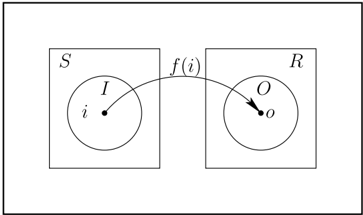
Testing involves examining the behaviour of a system in order to discover potential faults. Given an input for a system, the challenge of distinguishing the corresponding desired, correct behaviour from potentially incorrect behavior is called the “test oracle problem”. Test oracle automation is important to remove a current bottleneck that inhibits greater overall test automation. Without test oracle automation, the human has to determine whether observed behaviour is correct. The literature on test oracles has introduced techniques for oracle automation, including modelling, specifications, contract-driven development and metamorphic testing. When none of these is completely adequate, the final source of test oracle information remains the human, who may be aware of informal specifications, expectations, norms and domain specific information that provide informal oracle guidance. All forms of test oracles, even the humble human, involve challenges of reducing cost and increasing benefit. This paper provides a comprehensive survey of current approaches to the test oracle problem and an analysis of trends in this important area of software testing research and practice.
Overview
The claims and statistics of this paper haven’t been checked yet.
Free: it reads the open-access text and checks the first 5 claims that cite a source we can check. Create a free account to check every claim.
Integrity signals
Registry
Cites
Statistics
Figures


Verification
Claims the paper makes
The claims and statistics of this paper haven’t been checked yet.
Free: it reads the open-access text and checks the first 5 claims that cite a source we can check. Create a free account to check every claim.
Claims other papers make about this one
Each is checked against this paper’s own text: does it say what the citing paper says it does?
In the citing paper
“The metric depends on rigorous testing, which is currently limited by the lack of test oracles [11].”
From A 2030 Roadmap for Software Engineering (2025) · cites this paper as [11]
Self-check
Percentages, sums and reported differences re-computed from the paper’s own numbers.
The self-check needs the paper’s full text.
Citations
Cites
Statecharts: a visual formalism for complex systems
Harel, D. (1987) · Science of Computer Programming · doi:10.1016/0167-6423(87)90035-9 · Cited by 6,751 · cited 2×
“A wide variety of state transition systems exist, including finite state machines [111], Mealy/Moore machines [111], I/O Automata [117], Labeled Transition Systems [180], SDL [54], Harel Statecharts [81], UML state machines [28], X-Machines [95], [96], Simulink/Stateflow [179] and PROMELA [97].”
BackgroundAn Axiomatic Basis for Computer Programming
Hoare, T. (1968) · Cited by 4,330
An axiomatic basis for computer programming
Hoare, C. A. R. (1969) · Communications of the ACM · doi:10.1145/363235.363259 · Cited by 4,002
Holzmann, G. J. (1997) · IEEE Transactions on Software Engineering · doi:10.1109/32.588521 · Cited by 3,803 · cited 2×
“[96], Simulink/Stateflow [179] and PROMELA [97].”
Metaheuristics in combinatorial optimization: Overview and conceptual comparison
Blum, C., & Roli, A. (2003) · ACM Computing Surveys · doi:10.1145/937503.937505 · Cited by 3,236 · cited 1×
“[1] combine a natural language model and metahueristics, strategies that guide a search process [25], to”
BackgroundSymbolic execution and program testing
King, J. C. (1976) · Communications of the ACM · doi:10.1145/360248.360252 · Cited by 3,031 · cited 1×
“For instance, the problem of automatically generating test inputs has been the subject of research interest for nearly four decades [46], [107].”
BackgroundBaader, F., & Nipkow, T. (1998) · Cambridge University Press eBooks · doi:10.1017/cbo9781139172752 · Cited by 2,466
Metaheuristics in Combinatorial Optimization
Gendreau, M., & Potvin, J.-Y. (2005) · Annals of Operations Research · doi:10.1007/s10479-005-3971-7 · Cited by 2,338
Learning regular sets from queries and counterexamples
Angluin, D. (1987) · Information and Computation · doi:10.1016/0890-5401(87)90052-6 · Cited by 2,114 · cited 1×
“Most work has applied L , a wellknown learning algorithm, to learn a black-box system B as a finite state machine with n states [7].”
MethodDART: directed automated random testing
Godefroid, P., Klarlund, N., & Sen, K. (2005) · ACM SIGPLAN Notices · doi:10.1145/1064978.1065036 · Cited by 2,067
Research works printed but not linked: 6
- A. Avizienis and L. Chen, "On the implementation of N-version programming for software fault-tolerance during execution," in Proc. 1st Int. Comput. Softw. Appl. Conf., 1977, pp. 149-155.
- P. McMinn, M. Stevenson, and M. Harman, "Reducing qualita- tive human oracle costs associated with automatically generated test data," in Proc. Int. Workshop Softw. Test Output Validation, Jul. 2010, pp. 1-4. · DOI
- A. J. Offutt, J. Pan, and J. M. Voas, "Procedures for reducing the size of coverage-based test sets," in Int. Conf. Testing Comput. Softw., 1995, pp. 111-123.
- M. Shahbaz, P. McMinn, and M. Stevenson, "Automatic genera- tion of valid and invalid test data for string validation routines," Sci. Comput. Programm., vol. 97, no. 4, pp. 405-425, 2015.
- J. M. Spivey, Z Notation-a Reference Manual, 2nd ed. Englewood Cliffs, NJ, USA: Prentice-Hall, 1992.
- G. V. Bochmann, C. He, and D. Ouimet, "Protocol testing using automatic trace analysis," in Proc. Can. Conf. Elect. Comput. Eng., 1989, pp. 814-820.
Cited by
Items 201–300 of 1,001
Fragment-Based Test Generation for Web Apps
Yandrapally, R., & Mesbah, A. (2022) · IEEE Transactions on Software Engineering · doi:10.1109/tse.2022.3171295 · Cited by 35
Metamorphic Testing for Adobe Data Analytics Software
Jarman, D., Zhou, Z. Q., & Chen, T. Y. (2017) · IEEE/ACM International Workshop on Metamorphic Testing (MET) · doi:10.1109/met.2017.1 · Cited by 35
“In software testing, an oracle is a mechanism against which testers can decide whether the outcomes of test case executions are correct [1].”
Large Language Models: The Next Frontier for Variable Discovery within Metamorphic Testing?
Tsigkanos, C., Rani, P., Müller, S., & Kehrer, T. (2023) · IEEE International Conference on Software Analysis, Evolution, and Reengineering · doi:10.1109/saner56733.2023.00070 · Cited by 27
“Thus, metamorphic testing mitigates the test oracle problem [3] and enables test case generation.”
BackgroundA machine learning approach to generate test oracles
Braga, R., Santos, P., Rabêlo, R., Santiago, J., & Souza, M. (2018) · Brazilian Symposium on Software Engineering · doi:10.1145/3266237.3266273 · Cited by 30
“Given a particular input to a software program, the difficult task of distinguishing the correct behavior from the potentially incorrect behavior of the application is called the “Test Oracle Problem” [1].”
MethodMetamorphic Relation Patterns for Query-Based Systems
Segura, S., Durán, A., Troya, J., & Ruiz–Cortés, A. (2019) · IEEE/ACM International Workshop on Metamorphic Testing (MET) · doi:10.1109/met.2019.00012 · Cited by 35
“problem: it is very difficult, often infeasible, to assess whether the output of a query is correct, either because the expected output is unknown or because it is hard to compare it to the observed output [1], [2].”
BackgroundInferring Automatic Test Oracles
Langdon, W. B., Yoo, S., & Harman, M. (2017) · IEEE/ACM International Workshop on Search-Based Software Testing (SBST) · doi:10.1109/sbst.2017.1 · Cited by 35
“Recently we [2] and others [3],[4] have surveyed the Oracle Problem in testing software.”
BackgroundSelf-citationIncreasing Validity of Simulation Models Through Metamorphic Testing
Olsen, M., & Raunak, M. S. (2018) · IEEE Transactions on Reliability · doi:10.1109/tr.2018.2850315 · Cited by 34
“The term oracle problem is used to refer to the situation where a deterministic way of asserting and checking the expected or correct behavior of the SUT is not available [4].”
BackgroundOn introducing automatic test case generation in practice: A success story and lessons learned
Brunetto, M., Denaro, G., Mariani, L., & Pezzè, M. (2021) · Journal of Systems and Software · doi:10.1016/j.jss.2021.110933 · Cited by 34
Perfect is the enemy of test oracle
Ibrahimzada, A. R., Varli, Y., Tekinoglu, D., & Jabbarvand, R. (2022) · ACM Joint European Software Engineering Conference and Symposium on the Foundations of Software Engineering (ESEC/FSE) · doi:10.1145/3540250.3549086 · Cited by 34
“Furthermore, the absence of automated ground-truths demands humans to decide whether the generated outputs are correct, demonstrating a significant bottleneck that inhibits absolute test automation [6].”
BackgroundGuiding Greybox Fuzzing with Mutation Testing
Vikram, V., Laybourn, I., Li, A., Nair, N., OBrien, K., Sanna, R., & Padhye, R. (2023) · ACM SIGSOFT International Symposium on Software Testing and Analysis (ISSTA) · doi:10.1145/3597926.3598107 · Cited by 34
“The study of the general test oracle problem [39] is outside the scope of this paper.”
BackgroundMethodInfluentialAutomated Oracle Data Selection Support
Gay, G., Staats, M., Whalen, M. W., & Heimdahl, M. P. E. (2015) · IEEE Transactions on Software Engineering · doi:10.1109/tse.2015.2436920 · Cited by 34
A Theoretical Framework for Understanding Mutation-Based Testing Methods
Shin, D., & Bae, D. (2016) · IEEE International Conference on Software Testing, Verification and Validation (ICST) · doi:10.1109/icst.2016.22 · Cited by 34
“This testing system delivers a holistic view of the testing factors, and serves as a guide for discussions in studies such as [16]– [19].”
Oracle problem in software testing
Jahangirova, G. (2017) · ACM SIGSOFT International Symposium on Software Testing and Analysis (ISSTA) · doi:10.1145/3092703.3098235 · Cited by 34
“Five large surveys on the topics related to oracles have been conducted till now [3] [20] [15] [18] [4].”
BackgroundMetamorphic Relation Generation: State of the Art and Research Directions
Li, R., Liu, H., Poon, P., Towey, D., Sun, C., Zheng, Z., Zhou, Z. Q., & Chen, T. Y. (2024) · ACM Transactions on Software Engineering and Methodology · doi:10.1145/3708521 · Cited by 33
“In addition, a survey on test oracles [4] has recognized MT as a mainstream technique to alleviate the oracle problem.”
AugmenTest: Enhancing Tests with LLM-Driven Oracles
Khandaker, S. M., Kifetew, F. M., Prandi, D., & Susi, A. (2025) · IEEE International Conference on Software Testing, Verification and Validation (ICST) · doi:10.1109/icst62969.2025.10988926 · Cited by 33
“However, automating test generation, while essential for keeping pace with rapidly evolving codebases, faces a persistent issue related to generating valid oracles [1].”
No strings attached: an empirical study of string-related software bugs
Eghbali, A., & Pradel, M. (2020) · IEEE/ACM International Conference on Automated Software Engineering (ASE) · doi:10.1145/3324884.3416576 · Cited by 33
“These results underline the need for clever test oracles [4], beyond generic signs of misbehavior, such as error messages.”
Test case generation for agent-based models: A systematic literature review
Clark, A. G., Walkinshaw, N., & Hierons, R. M. (2021) · Information and Software Technology · doi:10.1016/j.infsof.2021.106567 · Cited by 33
“A human oracle is used where no information artifact can be used as the basis of a test oracle, and instead, a human must make the decision as to whether a test case should pass or fail using domain expertise [29].”
BackgroundInfluentialWu, F., Nanavati, J., Harman, M., Jia, Y., & Krinke, J. (2016) · Information and Software Technology · doi:10.1016/j.infsof.2016.03.002 · Cited by 33
Self-citationUsing semi-supervised learning for predicting metamorphic relations
Hardin, B., & Kanewala, U. (2018) · IEEE/ACM International Workshop on Metamorphic Testing (MET) · doi:10.1145/3193977.3193985 · Cited by 33
“However, in the case of scientific code, the correct results are often not known; this complication, known as the oracle problem, makes testing scientific software a difficult task [1].”
BackgroundStatement frequency coverage: A code coverage criterion for assessing test suite effectiveness
Aghamohammadi, A., Mirian‐Hosseinabadi, S., & Jalali, S. (2020) · Information and Software Technology · doi:10.1016/j.infsof.2020.106426 · Cited by 34
The Huawei and Snowden Questions
Lysne, O. (2018) · Springer eBooks · doi:10.1007/978-3-319-74950-1 · Cited by 33
Towards Generating Executable Metamorphic Relations Using Large Language Models
Shin, S. Y., Pastore, F., Bianculli, D., & Băicoianu, A. (2024) · Communications in computer and information science · doi:10.1007/978-3-031-70245-7_9 · Cited by 32
Calò, A., Arcaini, P., Ali, S., Hauer, F., & Ishikawa, F. (2020) · Genetic and Evolutionary Computation Conference (GECCO) · doi:10.1145/3377930.3389827 · Cited by 32
“Irrespective of the type of testing approach, testing of an ADS faces the oracle problem [4, 9].”
MethodThe ASMETA Approach to Safety Assurance of Software Systems
Arcaini, P., Bombarda, A., Bonfanti, S., Gargantini, A., Riccobene, E., & Scandurra, P. (2021) · Lecture notes in computer science · doi:10.1007/978-3-030-76020-5_13 · Cited by 32
Testing Causality in Scientific Modelling Software
Clark, A. G., Foster, M. S., Prifling, B., Walkinshaw, N., Hierons, R. M., Schmidt, V., & Turner, R. D. (2023) · ACM Transactions on Software Engineering and Methodology · doi:10.1145/3607184 · Cited by 32
“Rather than comparing outputs directly, the SUT is run multiple times for each input configuration and statistical tests are performed on the corresponding distributions of outputs.”
BackgroundMethodInfluentialRandom Testing and Evolutionary Testing for Fuzzing GraphQL APIs
Belhadi, A., Zhang, M., & Arcuri, A. (2024) · ACM Transactions on the Web · doi:10.1145/3609427 · Cited by 32
“To improve the effectiveness of the automated GraphQL API testing, several directions may be investigated in the future: (1) Test oracle problem : Given a test case, whether the result of its execution is correct or not can be determined with an automated oracle [34].”
MethodJiang, Y., Liu, J., Ba, J., Yap, R. H. C., Liang, Z., & Rigger, M. (2024) · ACM/IEEE International Conference on Software Engineering: Companion Proceedings (ICSE-Companion) · doi:10.1145/3597503.3623307 · Cited by 32
“Automatically detecting logic bugs in GDBMSs is challenging due to the difficulties in establishing an effective test oracle , which is a mechanism for determining whether a test case has passed or failed [6].”
BackgroundRecent Advances in Automatic Black-Box Testing
Mariani, L., Pezzè, M., & Zuddas, D. (2015) · Advances in computers · doi:10.1016/bs.adcom.2015.04.002 · Cited by 32
“oracles that can only capture failures like crashes and uncaught exceptions [108].”
BackgroundMethodSWE-Universe: Scale Real-World Verifiable Environments to MillionsPreprint
Chen, M., (张磊), L. Z., Feng, Y., Wang, X., Zhao, W., Cao, R., Yang, J., Chen, J., Li, M., Ma, Z., et al. (2026) · arXiv (Cornell University) · doi:10.48550/arxiv.2602.02361 · Cited by 33
“…probability-based approaches (Pacheco et al., 2007), constraint-based (Xiao et al., 2013), and search-based (Harman & McMinn, 2010; Lukasczyk & Fraser, 2022), often suffer from limited coverage and poor readability, and are typically restricted to regression or implicit oracles (Barr et al., 2015).”
Sensor Networks and Data Management in Healthcare: Emerging Technologies and New Challenges
Pike, M., Mustafa, N., Towey, D., & Brusić, V. (2019) · IEEE Annual International Computer Software and Applications Conference (COMPSAC) · doi:10.1109/compsac.2019.00123 · Cited by 31
“The problems of this nature are well-studied in software testing [43], and are known as the oracle problem [44]: Given a system whose output or behaviour can be observed, how can an observer know if this output or behaviour is correct? If there is a mechanism, automated or not, that the observer can use to decide, the…”
BackgroundAdverIntent-Agent: Adversarial Reasoning for Repair Based on Inferred Program Intent
Ye, H., Yang, A. Z. H., Hu, C., Wang, Y., Zhang, T., & Goues, C. L. (2025) · Proceedings of the ACM on software engineering. · doi:10.1145/3728939 · Cited by 32
“AdverIntent-Agent uses test generation to help demonstrate and validate that the inferred intentions are likely adversarial, assuming the intention is correct by construction and thereby sidestepping the oracle problem [1].”
Simpler Hyperparameter Optimization for Software Analytics: Why, How, When?
Agrawal, A., Yang, X., Agrawal, R., Yedida, R., Shen, X., & Menzies, T. (2021) · IEEE Transactions on Software Engineering · doi:10.1109/tse.2021.3073242 · Cited by 30
Production Monitoring to Improve Test Suites
Tiwari, D., Zhang, L., Monperrus, M., & Baudry, B. (2021) · IEEE Transactions on Reliability · doi:10.1109/tr.2021.3101318 · Cited by 30
Automatically testing implementations of numerical abstract domains
Bugariu, A., Wüstholz, V., Christakis, M., & Müller, P. (2018) · IEEE/ACM International Conference on Automated Software Engineering (ASE) · doi:10.1145/3238147.3240464 · Cited by 29
“On the one hand, we derive executable test oracles [9] to check high-level, mathematical properties of abstract-domain implementations.”
MethodA search for improved performance in regular expressions
Cody-Kenny, B., Fenton, M., Ronayne, A., Considine, E., McGuire, T., & O’Neill, M. (2017) · Genetic and Evolutionary Computation Conference (GECCO) · doi:10.1145/3071178.3071196 · Cited by 30
“\d+2-b[%][58w07r\f-]u[{212,}]\?V0Z[1][!\w\d\d+][8dA]\F#2j[{2202,456}]\q|Z)$”
BackgroundQuantifying the Information Leakage in Cache Attacks via Symbolic Execution
Chattopadhyay, S., Beck, M., Rezine, A., & Zeller, A. (2019) · ACM Transactions on Embedded Computing Systems · doi:10.1145/3288758 · Cited by 30
Metamorphic Relations for Detection of Performance Anomalies
Johnston, O., Jarman, D., Berry, J., Zhou, Z. Q., & Chen, T. Y. (2019) · IEEE/ACM International Workshop on Metamorphic Testing (MET) · doi:10.1109/met.2019.00017 · Cited by 29
“In software testing, an oracle is a mechanism, or method, through which a tester can decide whether the test case execution results are correct [6].”
MethodV2: Fast Detection of Configuration Drift in Python
Horton, E., & Parnin, C. (2019) · IEEE/ACM International Conference on Automated Software Engineering (ASE) · doi:10.1109/ase.2019.00052 · Cited by 29
“V2 cannot address such cases, although we note that the problem of determining if program behavior is expected is an open and challenging area of research [16].”
BackgroundUsing machine learning to generate test oracles: a systematic literature review
Fontes, A., & Gay, G. (2021) · doi:10.1145/3472675.3473974 · Cited by 29
“Most commonly, the oracle is formulated as a series of assertions on the values of output and stateful attributes [4].”
BackgroundInfluentialMapping the structure and evolution of software testing research over the past three decades
Salahirad, A., Gay, G., & Mohammadi, E. (2022) · Journal of Systems and Software · doi:10.1016/j.jss.2022.111518 · Cited by 31
“Research interest in test oracles is growing [49, 87], and effective oracles are needed for emerging domains such as web applications.”
BackgroundSynthesizing programs that expose performance bottlenecks
Toffola, L. D., Pradel, M., & Gross, T. R. (2018) · Proceedings of the CGO/Proceedings of the ... CGO · doi:10.1145/3168830 · Cited by 31
“2The term “oracle” is inspired by test oracles, which decide whether a test exposes an error [4].”
BackgroundAn Empirical Validation of Oracle Improvement
Jahangirova, G., Clark, D., Harman, M., & Tonella, P. (2019) · IEEE Transactions on Software Engineering · doi:10.1109/tse.2019.2934409 · Cited by 29
“For a recent survey on the oracle problem and techniques for defining software oracles the reader is referred to the comprehensive review by Barr et al. [2].”
BackgroundMethodSelf-citation“Know What You Know”: Predicting Behavior for Learning-Enabled Systems When Facing Uncertainty
Langford, M. A., & Cheng, B. H. C. (2021) · International Symposium on Software Engineering for Adaptive and Self-Managing Systems (SEAMS) · doi:10.1109/seams51251.2021.00020 · Cited by 29
Tian, H., Han, X., Zhou, Y., Wu, G., Guo, A., Cheng, M., Li, S., Wei, J., & Zhang, T. (2024) · arXiv (Cornell University) · doi:10.48550/arxiv.2406.10857 · Cited by 29
Challenges in Automated Testing Through Graphical User Interface
Aho, P., & Vos, T. E. J. (2018) · IEEE International Conference on Software Testing, Verification and Validation Workshops (ICSTW) · doi:10.1109/icstw.2018.00038 · Cited by 28
“Another challenge in automating GUI testing is the test oracle [4].”
Köroglu, Y., & Şen, A. (2020) · Software Testing Verification and Reliability · doi:10.1002/stvr.1752 · Cited by 28
“…any automated testing tool, for this task, requires not just the system output but also the speci fi cation, so oracles Fully Automated Reinforcement LEArning ‐ Driven speci fi cation ‐ based test generator for Android (FARLEAD ‐ Android) use fall into the category of speci fi ed oracles [30].”
BackgroundMethodIqbal, M., Han, J. C., Zhou, Z. Q., Towey, D., & Chen, T. Y. (2022) · Information and Software Technology · doi:10.1016/j.infsof.2022.107104 · Cited by 28
A Sequential Metamorphic Testing Framework for Understanding Autonomous Vehicle's Decisions
Luu, Q.-H., Liu, H., Chen, T. Y., & Vu, H. L. (2024) · IEEE Transactions on Intelligent Vehicles · doi:10.1109/tiv.2024.3370740 · Cited by 28
“Thisconceptisknownasthe“test oracle” in traditional software testing [15].”
Ye, M., Nan, Y., Dai, H., Yang, S., Luo, X., & Zheng, Z. (2024) · ACM Transactions on Software Engineering and Methodology · doi:10.1145/3674725 · Cited by 28
“Unlike static analysis [29], fuzzing can accurately trigger and identify vulnerabilities based on giving concrete testing oracles and observing the program output [3].”
BackgroundSeparating passing and failing test executions by clustering anomalies
Almaghairbe, R., & Roper, M. (2016) · Software Quality Journal · doi:10.1007/s11219-016-9339-1 · Cited by 28
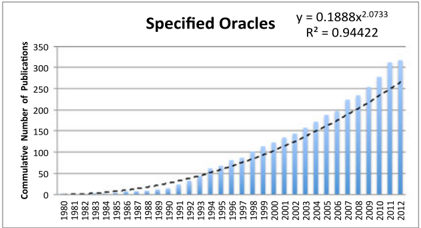
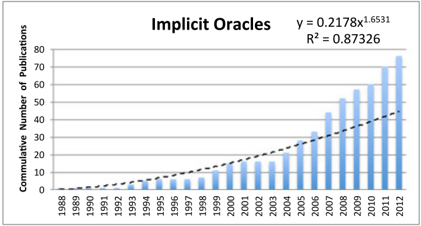
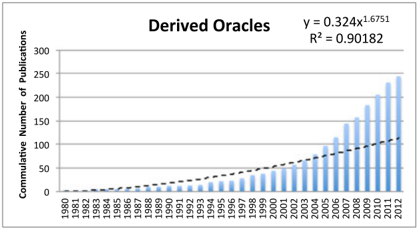
“Three extensive reviews of test oracles exist: by Baresi and Young (2001), by Pezzè and Zhang (2005), and by Barr et al. (2015) who classified the existing literature on test oracles into three broad categories:- specified oracles; implicit oracles; and derived oracles.”
BackgroundMetamorphic testing 20 years later: a hands-on introduction
Segura, S., & Zhou, Z. Q. (2018) · ACM/IEEE International Conference on Software Engineering: Companion Proceedings (ICSE-Companion) · doi:10.1145/3183440.3183468 · Cited by 28
“Because the detection of MR violations does not require the existence of a test oracle for the individual test cases, MT is widely recognized as a mechanism that can effectively address the test oracle problem [1].”
Supporting oracle construction via static analysis
Chen, J., Bai, Y., Hao, D., Zhang, L., Zhang, L., Xie, B., & Mei, H. (2016) · IEEE/ACM International Conference on Automated Software Engineering (ASE) · doi:10.1145/2970276.2970366 · Cited by 28
Hui, M., Wang, L., Li, H., Ren, Y., Song, Y., Zhuang, H., Cui, D., & Li, Q. (2024) · Journal of Systems and Software · doi:10.1016/j.jss.2024.112232 · Cited by 27
TEA-Cloud: A Formal Framework for Testing Cloud Computing Systems
Núñez, A., Cañizares, P. C., Nunez, M. A., & Hierons, R. M. (2020) · IEEE Transactions on Reliability · doi:10.1109/tr.2020.3011512 · Cited by 27
“However, in some situations, an oracle is not available or is computationally too expensive to apply, and alternative approaches must be used [5], [6].”
Background30 Years of Automated GUI Testing: A Bibliometric Analysis
Rodríguez-Valdés, O., Vos, T. E. J., Aho, P., & Marín, B. (2021) · Communications in computer and information science · doi:10.1007/978-3-030-85347-1_34 · Cited by 27
“Automating the definition or checking of the oracles: Oracles [2] are procedures that distinguish between the correct and incorrect behavior of the SUT.”
BackgroundInfluentialHuang, H., Zhou, A., Payer, M., & Zhang, C. (2024) · IEEE Symposium on Security and Privacy (S&P) · doi:10.1109/sp54263.2024.00142 · Cited by 27
“Invariant inference has emerged as a promising technique in program verification [57], [58], [59], [60], software testing [38], [61], [62], [63], and property checking [25], [26], [28], [29], [37], [64], [65], [66].”
MethodTraining Binary Classifiers as Data Structure Invariants
Molina, F., Degiovanni, R., Ponzio, P., Regis, G., Aguirre, N., & Frias, M. F. (2019) · ACM/IEEE International Conference on Software Engineering: Companion Proceedings (ICSE-Companion) · doi:10.1109/icse.2019.00084 · Cited by 27
Unit and regression tests of scientific software: A study on SWMM
Peng, Z., Lin, X.-Y., Simon, M. A., & Niu, N. (2021) · Journal of Computational Science · doi:10.1016/j.jocs.2021.101347 · Cited by 27
Testing Deep Learning-based Visual Perception for Automated Driving
Abrecht, S., Gauerhof, L., Gladisch, C., Groh, K., Heinzemann, C., & Woehrle, M. (2021) · ACM Transactions on Cyber-Physical Systems · doi:10.1145/3450356 · Cited by 27
“There has been work on differential and metamorphic testing of machine learning functions, both so-called derived specifications [11].”
BackgroundInfluentialCode Benchmarks Should Prioritize Rigor, Reliability, and ReproducibilityPreprint
Cao, J., Chan, Y.-K., Ling, Z., Wang, W., Li, S., Liu, M., Qiao, R., Han, Y., Wang, C., Yu, B. X., et al. (2025) · arXiv (Cornell University) · doi:10.48550/arxiv.2501.10711 · Cited by 28
“An oracle (Barr et al., 2014) is a way to determine whether the output is correct or not.”
An Evolutionary Approach to Adapt Tests Across Mobile Apps
Mariani, L., Pezzè, M., Terragni, V., & Zuddas, D. (2021) · doi:10.1109/ast52587.2021.00016 · Cited by 26
“Each test t is associated with one or more assertion oracles [25] that check the correctness of the state Sn obtained after the execution of t [26].”
BackgroundMetamorphic relation prioritization for effective regression testing
Srinivasan, M., & Kanewala, U. (2022) · Software Testing Verification and Reliability · doi:10.1002/stvr.1807 · Cited by 26
“This is known as the oracle problem in software testing [2].”
MethodImproving bioinformatics software quality through incorporation of software engineering practices
Noor, A. (2022) · PeerJ Computer Science · doi:10.7717/peerj-cs.839 · Cited by 26
“This is a type of oracle test problem where given a particular set of inputs for a system, there exists a “challenge of distinguishing the corresponding, desired, correct behavior from potentially incorrect behavior” (Barr et al., 2014).”
BackgroundCasModaTest: A Cascaded and Model-agnostic Self-directed Framework for Unit Test GenerationPreprint
Ni, C., Wang, X., Chen, L., Zhao, D., Cai, Z., Wang, S., & Yang, X. (2024) · arXiv (Cornell University) · doi:10.48550/arxiv.2406.15743 · Cited by 26
“Unit testing plays a critical role in software maintenance to assure the quality of software systems, which helps developers identify defects and errors as early as possible in the development process, reducing the overall cost of the product and hence improving developers’ productivity [1]–[3].”
BackgroundTerminalWorld: Benchmarking Agents on Real-World Terminal TasksPreprint
Chu, Z., Hu, J., Jiang, X., Zou, P., Li, H., Peng, C., O’Hearn, P. W., Barr, E. T., Harman, M., Sarro, F., et al. (2026) · arXiv (Cornell University) · doi:10.48550/arxiv.2605.22535 · Cited by 26
“Based on the formalized instruction (equivalently, the task specification ) and the reference solution in Section 3.2, test generation reduces to solving the test oracle problem [Barr et al., 2015].”
InfluentialSelf-citationFinding and Understanding Defects in Static Analyzers by Constructing Automated Oracles
He, W., Di, P., Ming, M., Zhang, C., Su, T., Li, S., & Sui, Y. (2024) · Proceedings of the ACM on software engineering. · doi:10.1145/3660781 · Cited by 25
General and Practical Property-based Testing for Android Apps
Xiong, Y., Su, T., Wang, J., Sun, J., Pu, G., & Su, Z. (2024) · IEEE/ACM International Conference on Automated Software Engineering (ASE) · doi:10.1145/3691620.3694986 · Cited by 25
Challenges in Testing Large Language Model-Based Software: A Faceted Taxonomy
Dobslaw, F., FELDT, R. H., Yoon, J., & Yoo, S. (2026) · ACM Transactions on Software Engineering and Methodology · doi:10.1145/3806396 · Cited by 28
Self-citationFeedback-Directed Metamorphic Testing
Sun, C., Dai, H., Liu, H., & Chen, T. Y. (2023) · ACM Transactions on Software Engineering and Methodology · doi:10.1145/3533314 · Cited by 25
“The oracle problem [5, 54] significantly influences the applicability and effectiveness of most test case generation strategies.”
BackgroundOn the effectiveness of testing sentiment analysis systems with metamorphic testing
Jiang, M., Chen, T. Y., & Wang, S. (2022) · Information and Software Technology · doi:10.1016/j.infsof.2022.106966 · Cited by 25
PredART: Towards Automatic Oracle Prediction of Object Placements in Augmented Reality Testing
Rafi, T., Zhang, X., & Wang, X. (2022) · IEEE/ACM International Conference on Automated Software Engineering (ASE) · doi:10.1145/3551349.3561160 · Cited by 25
“These efforts have been summarized in two surveys in 2014 [11, 47].”
BackgroundMithra: Anomaly Detection as an Oracle for Cyberphysical Systems
Afzal, A., Goues, C. L., & Timperley, C. S. (2021) · IEEE Transactions on Software Engineering · doi:10.1109/tse.2021.3120680 · Cited by 25
“Fully automated whole-system testing requires oracles that can determine whether a given CPS behaves correctly for a given set of inputs [15].”
A Systematic Mapping Study on Testing of Machine Learning ProgramsPreprint
Sherin, S., Khan, M. U., & Iqbal, M. Z. (2019) · arXiv (Cornell University) · doi:10.48550/arxiv.1907.09427 · Cited by 25
Large Language Models for Software Testing: A Research RoadmapPreprint
Augusto, C., Bertolino, A., Angelis, G. D., Lonetti, F., & Morán, J. (2025) · arXiv (Cornell University) · doi:10.48550/arxiv.2509.25043 · Cited by 27
“One difficult part of software testing is the generation of oracles [13].”
Oracle-Guided Program Selection from Large Language Models
Fan, Z., Ruan, H., Mechtaev, S., & Roychoudhury, A. (2024) · ACM SIGSOFT International Symposium on Software Testing and Analysis (ISSTA) · doi:10.1145/3650212.3680308 · Cited by 25
“To address the above limitations, we propose a new perspective on increasing the quality of LLM-generated code via program selection using the LLM as a test oracle [8].”
Dynamic Human-in-the-Loop Assertion Generation
Zamprogno, L., Hall, B., Holmes, R., & Atlee, J. M. (2022) · IEEE Transactions on Software Engineering · doi:10.1109/tse.2022.3217544 · Cited by 24
“Despite the fact that assertions themselves are short and somewhat repetitive segments of code, prior work has shown that support is needed to reduce the cost of identifying test oracles [6] and that developer-written test case assertions need to be strengthened [7].”
BackgroundMT4NS: Metamorphic Testing for Network Scanning
Zhang, Z., Towey, D., Ying, Z., Zhang, Y., & Zhou, Z. Q. (2021) · IEEE/ACM International Workshop on Metamorphic Testing (MET) · doi:10.1109/met52542.2021.00010 · Cited by 24
Software testing for extended reality applications: a systematic mapping study
Gu, R., Rojas, J. M., & Shin, D. (2025) · Automated Software Engineering · doi:10.1007/s10515-025-00523-7 · Cited by 24
Model Transformation Testing and Debugging: A Survey
Troya, J., Segura, S., Burgueño, L., & Wimmer, M. (2022) · ACM Computing Surveys · doi:10.1145/3523056 · Cited by 23
“This way, we try to gather papers focused on testing that might be referring to the terms “verification” or “validation” and not explicitly to “testing.”
BackgroundProperty-Based Fuzzing for Finding Data Manipulation Errors in Android Apps
Sun, J., Su, T., Jiang, J., Wang, J., Pu, G., & Su, Z. (2023) · ACM Joint European Software Engineering Conference and Symposium on the Foundations of Software Engineering (ESEC/FSE) · doi:10.1145/3611643.3616286 · Cited by 23
“The other category of tools ( e.g. , Monkey [44]) is limited to crash bugs due to the lack of strong test oracles [6].”
BackgroundInfluentialTesting of Smart TV Applications: Key Ingredients, Challenges and Proposed Solutions
Ahmed, B. S., & Bureš, M. (2018) · Advances in intelligent systems and computing · doi:10.1007/978-3-030-02686-8_20 · Cited by 23
Yang, Y., & Chui, T. F. M. (2021) · Water Resources Research · doi:10.1029/2020wr029471 · Cited by 23
“This problem is known as the test oracle problem in software engineering, which refers to the challenge of assessing the correctness of a system's behavior for a given input (Barr et al., 2015; Chen et al., 2018).”
BackgroundMoDALAS: Model-Driven Assurance for Learning-Enabled Autonomous Systems
Langford, M. A., Chan, K. H., Fleck, J. E., McKinley, P. K., & Cheng, B. H. C. (2021) · ACM/IEEE International Conference on Model Driven Engineering Languages and Systems (MODELS) · doi:10.1109/models50736.2021.00027 · Cited by 23
An Optimal Solution for Test Case Generation Using ROBDD Graph and PSO Algorithm
Kalaee, A., & Rafe, V. (2015) · Quality and Reliability Engineering International · doi:10.1002/qre.1934 · Cited by 23
“By oracle, we mean an approach that provides the distinction between desired output and real output.(4) In order to generate test cases, there are many different approaches and tools categorized in two main groups known as white-box testing and black-box testing.”
MethodGenerating Unit Tests for Documentation
Nassif, M., Hernandez, A., Sridharan, A., & Robillard, M. P. (2022) · IEEE Transactions on Software Engineering · doi:10.1109/tse.2021.3087087 · Cited by 22
“Such maintenance tasks can require considerable effort [1], [2], and are often neglected [3].”
BackgroundHarrath, Y., Adohinzin, O., Kaabi, J., & Saathoff, M. (2025) · Computers · doi:10.3390/computers14090374 · Cited by 23
“[179] highlight this limitation, especially when AI models operate with minimal transparency, making it difficult for developers to establish robust testing criteria.”
How to Specify It! A Guide to Writing Properties of Pure Functions
Hughes, J. (2020) · Lecture notes in computer science · doi:10.1007/978-3-030-47147-7_4 · Cited by 22
An Empirical Study on Test Case Prioritization Metrics for Deep Neural Networks
Shi, Y., Yin, B., Zheng, Z., & Li, T. (2021) · IEEE International Conference on Software Quality, Reliability and Security (QRS) · doi:10.1109/qrs54544.2021.00027 · Cited by 22
Variable Discovery with Large Language Models for Metamorphic Testing of Scientific Software
Tsigkanos, C., Rani, P., Müller, S., & Kehrer, T. (2023) · Lecture notes in computer science · doi:10.1007/978-3-031-35995-8_23 · Cited by 23
“In some cases, however, obtaining reliable oracles is challenging or even impossible – this is generally known as the test oracle problem in software engineering [4].”
Dependency-Aware Metamorphic Testing of Datalog Engines
Mansur, M. N., Wüstholz, V., & Christakis, M. (2023) · ACM SIGSOFT International Symposium on Software Testing and Analysis (ISSTA) · doi:10.1145/3597926.3598052 · Cited by 22
Kıraç, F., Aktemur, B., & Sözer, H. (2017) · Journal of Systems and Software · doi:10.1016/j.jss.2017.06.023 · Cited by 22
Effectiveness and challenges in generating concurrent tests for thread-safe classes
Terragni, V., & Pezzè, M. (2018) · IEEE/ACM International Conference on Automated Software Engineering (ASE) · doi:10.1145/3238147.3238224 · Cited by 23
“Implicit oracles report a concurrency fault if an explored thread-interleaving manifests an “obvious” and visible oracle violation like runtime exceptions or endless hangs [4].”
BackgroundTesting Extract-Transform-Load Process in Data Warehouse Systems
Homayouni, H. (2018) · IEEE International Symposium on Software Reliability Engineering Workshops (ISSREW) · doi:10.1109/issrew.2018.000-6 · Cited by 22
“Test assertions compare the test outputs with the expected outputs to verify whether a test passed or failed [14].”
BackgroundResultAlamin, M. A. A., & Uddin, G. (2021) · IEEE International Conference on Autonomous Systems (ICAS) · doi:10.1109/icas49788.2021.9551151 · Cited by 22
Matalonga, S., Amalfitano, D., Doreste, A., Fasolino, A. R., & Travassos, G. H. (2022) · Information and Software Technology · doi:10.1016/j.infsof.2022.106937 · Cited by 22
“This problem is related to the sheer volume of the test cases and the capacity to solve the test oracle problem [61] for each possible context adaptation.”
SimCoTest: a test suite generation tool for simulink/stateflow controllers
Matinnejad, R., Nejati, S., Briand, L., & Bruckmann, T. (2016) · ACM/IEEE International Conference on Software Engineering: Companion Proceedings (ICSE-Companion) · doi:10.1145/2889160.2889162 · Cited by 22
“More precisely, specifications and formal properties, from which assertions (explicit oracles [1]) are derived, are expensive and not generally amenable to capturing continuous dynamics of CPSs [5].”
BackgroundFault detection effectiveness of source test case generation strategies for metamorphic testing
Saha, P., & Kanewala, U. (2018) · IEEE/ACM International Workshop on Metamorphic Testing (MET) · doi:10.1145/3193977.3193982 · Cited by 22
“The oracle problem [2] can occur when there is no oracle present for the program or it is practically infeasible to develop an oracle to verify the correctness of the computed outputs.”
BackgroundSimilarity-based prioritization of test case automation
Flemström, D., Potena, P., Sundmark, D., Afzal, W., & Bohlin, M. (2018) · Software Quality Journal · doi:10.1007/s11219-017-9401-7 · Cited by 22
Quantifying the information leak in cache attacks via symbolic execution
Chattopadhyay, S., Beck, M., Rezine, A., & Zeller, A. (2017) · ACM/IEEE International Conference on Formal Methods and Models for Co-Design (MEMOCODE) · doi:10.1145/3127041.3127044 · Cited by 22
“In other words, our framework CHALICE its the role of a test oracle [9] in the software validation process.”
MethodMetamorphic Exploration of an Unsupervised Clustering Program
Yang, S., Towey, D., & Zhou, Z. Q. (2019) · IEEE/ACM International Workshop on Metamorphic Testing (MET) · doi:10.1109/met.2019.00015 · Cited by 22
“The mechanism against which testers can decide the correctness of test case executions is known as a test oracle [10].”
Background
Metadata
- Authors
- Barr, E. T., Harman, M., McMinn, P., Shahbaz, M., & Yoo, S.
- Affiliations
- University College London (GB)
- University of Sheffield (GB)
- Venue
- IEEE Transactions on Software Engineering
- Published
- 2015-05-01
- Volume
- 41
- Issue
- 5
- Pages
- 507-525
- ISSN
- 0098-5589 (ISSN-L)
- 1939-3520
- OpenAlex
- W2041713059
- Cited by
- 1,104
- References
- 236
- Citations by year
- 2026: 123 · 2025: 132 · 2024: 116 · 2023: 96 · 2022: 104 · 2021: 114 · 2020: 102 · 2019: 89 · 2018: 98 · 2017: 56 · 2016: 58 · 2015: 16
- FWCI
- 151.12
- Type
- journal article
- Language
- en
- Open access
- hybrid
- doi.org
- Locations
- IEEE Transactions on Software Engineering (publishedVersion, cc-by)
- UCL Discovery (University College London) (submittedVersion)
- Funders
- Engineering and Physical Sciences Research Council (EP/I010165/1, EP/I010386/1)
- Topics
- Physical Sciences › Computer Science › Software › Software Testing and Debugging Techniques
- Physical Sciences › Computer Science › Information Systems › Software Engineering Techniques and Practices
- Physical Sciences › Computer Science › Software › Advanced Software Engineering Methodologies
- Keywords
- oracle problem, software testing, metamorphic testing, informal specification, test automation, fault detection
About these checks
Registry, retraction, Cites and statistics results are computed, not judged, with one exception: a printed reference that no index lists is read once by a model before it counts as a citation error. Claims are extracted by a model and kept only when their quote appears verbatim in the text; each cited source is then checked, with a model’s help, for whether it says what the claim relies on. Those verdicts can be wrong — read the claim’s quote and the cited source before relying on one.
Statistics and arithmetic are recomputed, not judged.
Confidence bands are shown only for fields calibrated on our annotated test set. None is calibrated yet, so no band is shown.
What counts as a claim ›How we measure confidence ›How we check this ›
Are you an author, or do you see a problem with this page? Request a review
Data sources
Bibliographic data: Semantic Scholar, OpenAlex, Crossref.
Contains information from the Semantic Scholar Academic Graph Datasets, made available under the ODC Attribution License (ODC-BY 1.0).
Semantic Scholar’s data is described in: Kinney, R., et al. (2023). The Semantic Scholar Open Data Platform. arXiv:2301.10140.
