

The DOI matches its Crossref record; 34 of the 34 references it cites were found in a registry or an index; none of the 45 sources its claims cite is checked for support yet.
Adaptive Charging Networks: A Framework for Smart Electric Vehicle Charging
Open accessAbstract
We describe the architecture and algorithms of the Adaptive Charging Network (ACN), which was first deployed on the Caltech campus in early 2016 and is currently operating at over 100 other sites in the United States. The architecture enables real-time monitoring and control and supports electric vehicle (EV) charging at scale. The ACN adopts a flexible Adaptive Scheduling Algorithm based on convex optimization and model predictive control and allows for significant over-subscription of electrical infrastructure. We describe some of the practical challenges in real-world charging systems, including unbalanced three-phase infrastructure, non-ideal battery charging behavior, and quantized control signals. We demonstrate how the Adaptive Scheduling Algorithm handles these challenges, and compare its performance against baseline algorithms from the deadline scheduling literature using real workloads recorded from the Caltech ACN and accurate system models. We find that in these realistic settings, our scheduling algorithm can improve operator profit by 3.4 times over uncontrolled charging and consistently outperforms baseline algorithms when delivering energy in highly congested systems.
Overview
AI snapshot
Written from the paper’s full text.
TL;DR
The paper describes the Adaptive Charging Network (ACN), a deployed smart EV charging architecture, and its Adaptive Scheduling Algorithm (ASA), which uses convex optimization and model predictive control to manage large-scale charging under real infrastructure constraints. Using Caltech ACN data and simulations, ASA improves energy delivery in congested systems and can increase operator profit by 3.4 times over uncontrolled charging.
Key findings
- The ACN was first deployed at Caltech in early 2016 and operates at over 100 other U.S. sites; the Caltech ACN grew from 54 custom level-2 EVSEs to 136 commercial level-2 EVSEs plus six 50 kW DC fast chargers, delivering over 1,103 MWh as of July 7, 2020.
- In profit-maximization simulations using September 2018 data and SCE TOU EV-4 tariffs, ASA achieved $2,835/month (98.1% of offline optimal) in an idealized setting and $2,600/month (90% of offline optimal) with non-ideal batteries and EVSEs, compared with $763/month for uncontrolled charging—a 3.4× increase.
- For energy delivery under constrained infrastructure, ASA-QC performed within 0.4% of optimal in scenario II and outperformed baselines by as much as 14.1% compared with EDF at 30 kW capacity; non-ideal EVSEs reduced ASA-QC performance, while non-ideal batteries had relatively small effect.
- Providing a peak hint to ASA-PM increased met energy demands to 97.8% versus 95.6% without hints; ASA-PM was within 3.6% of optimal profit, and with the hint within 1.9%.
Methods
- The paper presents the ACN architecture and ASA, an online model predictive control and convex optimization framework with configurable utility functions and constraints for unbalanced three-phase infrastructure, EVSE pilot-signal quantization, and non-ideal battery behavior.
- Data come from the Caltech ACN from May 1 to October 1, 2018, when only 54 EVSEs on transformer t1 were active; this period included 10,415 charging sessions and 92.78 MWh delivered. Simulations use ACN-Sim with 5-minute time slots, a 12-hour optimization horizon, and five scenarios in Table II.
- The analysis compares ASA variants against least laxity first, earliest deadline first, round-robin, uncontrolled charging, and an offline optimal benchmark under varying transformer capacities (20–150 kW) and SCE TOU EV-4 tariff and demand-charge conditions.
Limitations
- The paper states that due to limited space it cannot address all possible ACN and ASA use cases; it assumes drivers provide accurate departure-time and energy-request estimates for simplicity; it does not consider V2G; DCFCs are not directly controlled; and load/generation forecasting and future-arrival information are outside scope.
- The text makes evident that ASA performance is evaluated through simulations using historical Caltech ACN data rather than live field tests of the scheduling algorithm, and the workload data come from a period when charging was free and only 54 EVSEs on one transformer were active.
Model-written summary. Check it against the paper before relying on it.
Integrity signals
Registry
Cites
Statistics
Figures
Verification
Claims the paper makes
71 Own interpretation · 42 No basis given · 30 Own result · 29 Sources not found · 3 Own method · 2 Not checked yet
The paper states this without a source or data behind it here, so there is nothing to check it against. The quote shows it is in the paper.
In the paper
“allows for significant over-subscription of electrical infrastructure”
§ Adaptive Charging Networks: A Framework for Smart Electric Vehicle Charging > Abstract
plaindirect- Asserted: passes — The authors put it forward as true.
- Checkable: passes — It can be checked against evidence.
- Load-bearing: passes — The paper’s conclusions depend on it.
- Based: passes — The paper gives a reason why it holds.
The paper states this without a source or data behind it here, so there is nothing to check it against. The quote shows it is in the paper.
In the paper
“supports electric vehicle (EV) charging at scale”
§ Adaptive Charging Networks: A Framework for Smart Electric Vehicle Charging > Abstract
plaindirect- Asserted: passes — The authors put it forward as true.
- Checkable: passes — It can be checked against evidence.
- Load-bearing: passes — The paper’s conclusions depend on it.
- Based: passes — The paper gives a reason why it holds.
The paper states this without a source or data behind it here, so there is nothing to check it against. The quote shows it is in the paper.
In the paper
“The ACN adopts a flexible Adaptive Scheduling Algorithm based on convex optimization and model predictive control”
§ Adaptive Charging Networks: A Framework for Smart Electric Vehicle Charging > Abstract
plain- Asserted: passes — The authors put it forward as true.
- Checkable: passes — It can be checked against evidence.
- Load-bearing: passes — The paper’s conclusions depend on it.
- Based: passes — The paper gives a reason why it holds.
A result the paper reports from its own data — it cites no other source for it, so there is none to check. The quote shows it is in the paper.
In the paper
“Through our experience building large-scale charging facilities, we find that common assumptions made in theoretical models do not hold in many practical systems.”
§ Adaptive Charging Networks: A Framework for Smart Electric Vehicle Charging > Abstract
plain- Asserted: passes — The authors put it forward as true.
- Checkable: passes — It can be checked against evidence.
- Load-bearing: passes — The paper’s conclusions depend on it.
- Based: passes — The paper gives a reason why it holds.
A result the paper reports from its own data — it cites no other source for it, so there is none to check. The quote shows it is in the paper.
In the paper
“consistently outperforms baseline algorithms when delivering energy in highly congested systems”
§ Adaptive Charging Networks: A Framework for Smart Electric Vehicle Charging > Abstract
plaindirect- Asserted: passes — The authors put it forward as true.
- Checkable: passes — It can be checked against evidence.
- Load-bearing: passes — The paper’s conclusions depend on it.
- Based: passes — The paper gives a reason why it holds.
A result the paper reports from its own data — it cites no other source for it, so there is none to check. The quote shows it is in the paper.
In the paper
“our scheduling algorithm can improve operator profit by 3.4 times over uncontrolled charging”
§ Adaptive Charging Networks: A Framework for Smart Electric Vehicle Charging > Abstract
plaindirect- Asserted: passes — The authors put it forward as true.
- Checkable: passes — It can be checked against evidence.
- Load-bearing: passes — The paper’s conclusions depend on it.
- Based: passes — The paper gives a reason why it holds.
A result the paper reports from its own data — it cites no other source for it, so there is none to check. The quote shows it is in the paper.
In the paper
“demonstrates ASA's effectiveness in realistic scenarios through simulation.”
§ Adaptive Charging Networks: A Framework for Smart Electric Vehicle Charging > Abstract
boosteddirect- Asserted: passes — The authors put it forward as true.
- Checkable: passes — It can be checked against evidence.
- Load-bearing: passes — The paper’s conclusions depend on it.
- Based: passes — The paper gives a reason why it holds.
A result the paper reports from its own data — it cites no other source for it, so there is none to check. The quote shows it is in the paper.
In the paper
“From Table I, we observe a significant difference in system usage between weekdays and weekends.”
§ Adaptive Charging Networks: A Framework for Smart Electric Vehicle Charging > A. Data Collected
plaincorrelational- Asserted: passes — The authors put it forward as true.
- Checkable: passes — It can be checked against evidence.
- Load-bearing: unclear — It is unclear whether the paper’s conclusions depend on it.
- Based: passes — The paper gives a reason why it holds.
The paper states this without a source or data behind it here, so there is nothing to check it against. The quote shows it is in the paper.
In the paper
“Also, charging sessions on weekends tend to be shorter than those during the week.”
§ Adaptive Charging Networks: A Framework for Smart Electric Vehicle Charging > A. Data Collected
hedgedcorrelational- Asserted: passes — The authors put it forward as true.
- Checkable: passes — It can be checked against evidence.
- Load-bearing: passes — The paper’s conclusions depend on it.
- Based: unclear — It is unclear why the paper says it holds.
A result the paper reports from its own data — it cites no other source for it, so there is none to check. The quote shows it is in the paper.
In the paper
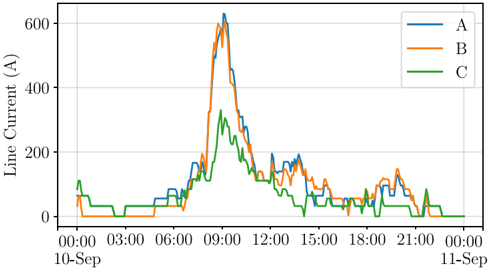
“In our data, we observe that without proper control, these phase imbalances can be significant, as seen in Fig. 5.”
§ Adaptive Charging Networks: A Framework for Smart Electric Vehicle Charging > A. Infrastructure Modeling
plainconditional- Asserted: passes — The authors put it forward as true.
- Checkable: passes — It can be checked against evidence.
- Load-bearing: passes — The paper’s conclusions depend on it.
- Based: passes — The paper gives a reason why it holds.
- Probably not a substantial claim. 72
- It may state two separate claims as one. 43
- The quote only partly states this claim. 1
The paper states this without a source or data behind it here, so there is nothing to check it against. The quote shows it is in the paper.
In the paper
“we present the Adaptive Scheduling Algorithm (ASA) framework for online (causal) smart charging algorithms based on convex optimization and model predictive control (MPC).”
§ Adaptive Charging Networks: A Framework for Smart Electric Vehicle Charging > Abstract
plain- Asserted: passes — The authors put it forward as true.
- Checkable: passes — It can be checked against evidence.
- Load-bearing: passes — The paper’s conclusions depend on it.
- Based: passes — The paper gives a reason why it holds.
Probably not a substantial claim.
The paper states this without a source or data behind it here, so there is nothing to check it against. The quote shows it is in the paper.
In the paper
“The architecture enables real-time monitoring and control”
§ Adaptive Charging Networks: A Framework for Smart Electric Vehicle Charging > Abstract
plaindirect- Asserted: passes — The authors put it forward as true.
- Checkable: passes — It can be checked against evidence.
- Load-bearing: passes — The paper’s conclusions depend on it.
- Based: passes — The paper gives a reason why it holds.
It may state two separate claims as one.
The paper states this without a source or data behind it here, so there is nothing to check it against. The quote shows it is in the paper.
In the paper
“ACN-Live, a framework for safely field testing algorithms directly on the Caltech ACN.”
§ Adaptive Charging Networks: A Framework for Smart Electric Vehicle Charging > Abstract
plain- Asserted: passes — The authors put it forward as true.
- Checkable: passes — It can be checked against evidence.
- Load-bearing: fails — The paper’s conclusions may not depend on it.
- Based: passes — The paper gives a reason why it holds.
Probably not a substantial claim. The paper’s conclusions may not depend on it.
The paper states this without a source or data behind it here, so there is nothing to check it against. The quote shows it is in the paper.
In the paper
“which was first deployed on the Caltech campus in early 2016”
§ Adaptive Charging Networks: A Framework for Smart Electric Vehicle Charging > Abstract
plain- Asserted: passes — The authors put it forward as true.
- Checkable: passes — It can be checked against evidence.
- Load-bearing: fails — The paper’s conclusions may not depend on it.
- Based: passes — The paper gives a reason why it holds.
Probably not a substantial claim. The paper’s conclusions may not depend on it.
In the paper
“ACN-Sim, an open-source simulator that uses data from ACN-Data and realistic models derived from actual ACNs to provide researchers with an environment to evaluate their algorithms and test assumptions [3]”
§ Adaptive Charging Networks: A Framework for Smart Electric Vehicle Charging > Abstract
What the sources say
- Not matchedcites [3]
Couldn’t be matched to a paper in Crossref, so it can’t be checked.
plain- Asserted: passes — The authors put it forward as true.
- Checkable: passes — It can be checked against evidence.
- Load-bearing: fails — The paper’s conclusions may not depend on it.
- Based: passes — The paper gives a reason why it holds.
Probably not a substantial claim. The paper’s conclusions may not depend on it.
- Not matched
In the paper
“ACN-Data, a collection of real finegrained charging data collected from the Caltech ACN and similar sites [2]”
§ Adaptive Charging Networks: A Framework for Smart Electric Vehicle Charging > Abstract
What the sources say
- Not matchedcites [2]
Couldn’t be matched to a paper in Crossref, so it can’t be checked.
plain- Asserted: passes — The authors put it forward as true.
- Checkable: passes — It can be checked against evidence.
- Load-bearing: fails — The paper’s conclusions may not depend on it.
- Based: passes — The paper gives a reason why it holds.
Probably not a substantial claim. The paper’s conclusions may not depend on it.
- Not matched
A result the paper reports from its own data — it cites no other source for it, so there is none to check. The quote shows it is in the paper.
In the paper
“We demonstrate how the Adaptive Scheduling Algorithm handles these challenges”
§ Adaptive Charging Networks: A Framework for Smart Electric Vehicle Charging > Abstract
boosteddirect- Asserted: passes — The authors put it forward as true.
- Checkable: passes — It can be checked against evidence.
- Load-bearing: passes — The paper’s conclusions depend on it.
- Based: passes — The paper gives a reason why it holds.
It may state two separate claims as one.
The paper states this without a source or data behind it here, so there is nothing to check it against. The quote shows it is in the paper.
In the paper
“the ACN has led to the creation of the ACN Research Portal.”
§ Adaptive Charging Networks: A Framework for Smart Electric Vehicle Charging > Abstract
plaindirect- Asserted: passes — The authors put it forward as true.
- Checkable: passes — It can be checked against evidence.
- Load-bearing: fails — The paper’s conclusions may not depend on it.
- Based: passes — The paper gives a reason why it holds.
Probably not a substantial claim. The paper’s conclusions may not depend on it.
The paper states this without a source or data behind it here, so there is nothing to check it against. The quote shows it is in the paper.
In the paper
“We describe some of the practical challenges in real-world charging systems, including unbalanced three-phase infrastructure, non-ideal battery charging behavior, and quantized control signals.”
§ Adaptive Charging Networks: A Framework for Smart Electric Vehicle Charging > Abstract
plain- Asserted: passes — The authors put it forward as true.
- Checkable: passes — It can be checked against evidence.
- Load-bearing: fails — The paper’s conclusions may not depend on it.
- Based: passes — The paper gives a reason why it holds.
Probably not a substantial claim. The paper’s conclusions may not depend on it.
A result the paper reports from its own data — it cites no other source for it, so there is none to check. The quote shows it is in the paper.
In the paper
“These include national laboratories, universities, schools, businesses, apartment complexes, hotels, and public parking facilities.”
§ Adaptive Charging Networks: A Framework for Smart Electric Vehicle Charging > Abstract
plain- Asserted: passes — The authors put it forward as true.
- Checkable: passes — It can be checked against evidence.
- Load-bearing: fails — The paper’s conclusions may not depend on it.
- Based: passes — The paper gives a reason why it holds.
Probably not a substantial claim. The paper’s conclusions may not depend on it. It may state two separate claims as one.
The paper states this without a source or data behind it here, so there is nothing to check it against. The quote shows it is in the paper.
In the paper
“It has spawned a company, PowerFlex Systems, which operates over 100 similar charging systems around the United States.”
§ Adaptive Charging Networks: A Framework for Smart Electric Vehicle Charging > Abstract
plaindirect- Asserted: passes — The authors put it forward as true.
- Checkable: passes — It can be checked against evidence.
- Load-bearing: fails — The paper’s conclusions may not depend on it.
- Based: fails — The paper may give no reason why it holds.
Probably not a substantial claim. The paper’s conclusions may not depend on it. The paper may give no reason why it holds. It may state two separate claims as one.
The paper states this without a source or data behind it here, so there is nothing to check it against. The quote shows it is in the paper.
In the paper
“We describe some of the practical challenges in real-world charging systems, including unbalanced three-phase infrastructure, non-ideal battery charging behavior, and quantized control signals.”
§ Adaptive Charging Networks: A Framework for Smart Electric Vehicle Charging > Abstract
plain- Asserted: passes — The authors put it forward as true.
- Checkable: passes — It can be checked against evidence.
- Load-bearing: fails — The paper’s conclusions may not depend on it.
- Based: fails — The paper may give no reason why it holds.
Probably not a substantial claim. The paper’s conclusions may not depend on it. The paper may give no reason why it holds.
The paper states this without a source or data behind it here, so there is nothing to check it against. The quote shows it is in the paper.
In the paper
“We describe some of the practical challenges in real-world charging systems, including unbalanced three-phase infrastructure, non-ideal battery charging behavior, and quantized control signals.”
§ Adaptive Charging Networks: A Framework for Smart Electric Vehicle Charging > Abstract
plain- Asserted: passes — The authors put it forward as true.
- Checkable: passes — It can be checked against evidence.
- Load-bearing: passes — The paper’s conclusions depend on it.
- Based: fails — The paper may give no reason why it holds.
Probably not a substantial claim. The paper may give no reason why it holds.
The paper states this without a source or data behind it here, so there is nothing to check it against. The quote shows it is in the paper.
In the paper
“is currently operating at over 100 other sites in the United States”
§ Adaptive Charging Networks: A Framework for Smart Electric Vehicle Charging > Abstract
plain- Asserted: passes — The authors put it forward as true.
- Checkable: passes — It can be checked against evidence.
- Load-bearing: fails — The paper’s conclusions may not depend on it.
- Based: fails — The paper may give no reason why it holds.
Probably not a substantial claim. The paper’s conclusions may not depend on it. The paper may give no reason why it holds.
The paper states this without a source or data behind it here, so there is nothing to check it against. The quote shows it is in the paper.
In the paper
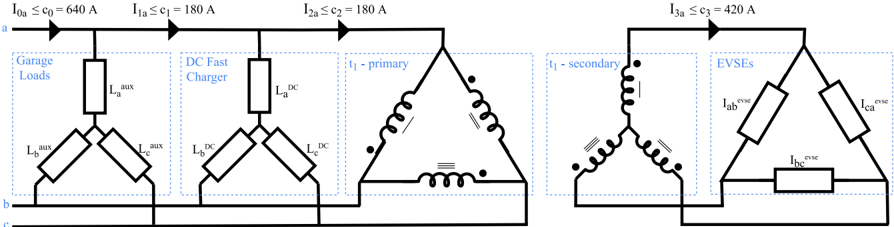
“In the ACN, phase AB has 26 stations, whereas phases BC and CA each have 14.”
§ Adaptive Charging Networks: A Framework for Smart Electric Vehicle Charging > E. Drivers
plain- Asserted: passes — The authors put it forward as true.
- Checkable: passes — It can be checked against evidence.
- Load-bearing: passes — The paper’s conclusions depend on it.
- Based: passes — The paper gives a reason why it holds.
It may state two separate claims as one.
The paper states this without a source or data behind it here, so there is nothing to check it against. The quote shows it is in the paper.
In the paper
“As discussed in Section III-D, the electrical infrastructure within the ACN is oversubscribed and often unbalanced.”
§ Adaptive Charging Networks: A Framework for Smart Electric Vehicle Charging > A. Infrastructure Modeling
plain- Asserted: passes — The authors put it forward as true.
- Checkable: passes — It can be checked against evidence.
- Load-bearing: passes — The paper’s conclusions depend on it.
- Based: passes — The paper gives a reason why it holds.
It may state two separate claims as one.
The paper states this without a source or data behind it here, so there is nothing to check it against. The quote shows it is in the paper.
In the paper
“These EVSEs have delivered over 1,103 MWh as of July 7, 2020.”
§ Adaptive Charging Networks: A Framework for Smart Electric Vehicle Charging > III. ADAPTIVE CHARGING NETWORK ARCHITECTURE
plain- Asserted: passes — The authors put it forward as true.
- Checkable: passes — It can be checked against evidence.
- Load-bearing: fails — The paper’s conclusions may not depend on it.
- Based: passes — The paper gives a reason why it holds.
Probably not a substantial claim. The paper’s conclusions may not depend on it.
A result the paper reports from its own data — it cites no other source for it, so there is none to check. The quote shows it is in the paper.
In the paper
“During this period, the system served 10,415 charging sessions and delivered a total of 92.78 MWh of energy.”
§ Adaptive Charging Networks: A Framework for Smart Electric Vehicle Charging > A. Data Collected
plain- Asserted: passes — The authors put it forward as true.
- Checkable: passes — It can be checked against evidence.
- Load-bearing: fails — The paper’s conclusions may not depend on it.
- Based: passes — The paper gives a reason why it holds.
Probably not a substantial claim. The paper’s conclusions may not depend on it. It may state two separate claims as one.
A result the paper reports from its own data — it cites no other source for it, so there is none to check. The quote shows it is in the paper.
In the paper
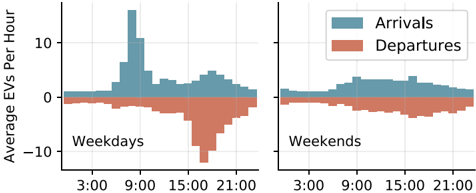
“On weekdays we see a peak in arrivals between 7:00 -10:00 followed by a peak in departures between 16:00 -19:00.”
§ Adaptive Charging Networks: A Framework for Smart Electric Vehicle Charging > E. Battery Tail Capacity Reclamation
plain- Asserted: passes — The authors put it forward as true.
- Checkable: passes — It can be checked against evidence.
- Load-bearing: fails — The paper’s conclusions may not depend on it.
- Based: passes — The paper gives a reason why it holds.
Probably not a substantial claim. The paper’s conclusions may not depend on it. It may state two separate claims as one.
The paper states this without a source or data behind it here, so there is nothing to check it against. The quote shows it is in the paper.
In the paper
“Weekends, however have a more uniform distribution of arrivals and departures.”
§ Adaptive Charging Networks: A Framework for Smart Electric Vehicle Charging > E. Battery Tail Capacity Reclamation
plaincorrelational- Asserted: passes — The authors put it forward as true.
- Checkable: passes — It can be checked against evidence.
- Load-bearing: fails — The paper’s conclusions may not depend on it.
- Based: passes — The paper gives a reason why it holds.
Probably not a substantial claim. The paper’s conclusions may not depend on it.
In the paper
“Since its installation in early 2016, the Caltech ACN has grown from 54 custom-built level-2 electric vehicle supply equipment (EVSEs) in a single garage [25], to 136 commercially available level-2 EVSEs and six 50 kW DC Fast Chargers (DCFCs), spread between three parking garages on campus.”
§ Adaptive Charging Networks: A Framework for Smart Electric Vehicle Charging > III. ADAPTIVE CHARGING NETWORK ARCHITECTURE
What the sources say
- Not matchedcites [25]
Couldn’t be matched to a paper in Crossref, so it can’t be checked.
plainSingle case- Asserted: passes — The authors put it forward as true.
- Checkable: passes — It can be checked against evidence.
- Load-bearing: fails — The paper’s conclusions may not depend on it.
- Based: passes — The paper gives a reason why it holds.
Probably not a substantial claim. The paper’s conclusions may not depend on it. It may state two separate claims as one.
- Not matched
The paper states this without a source or data behind it here, so there is nothing to check it against. The quote shows it is in the paper.
In the paper
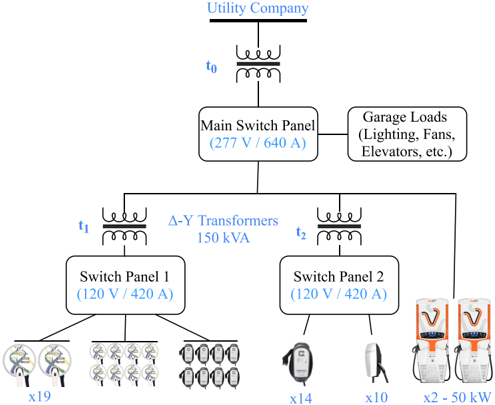
“Since each EVSE in the pod has a maximum charging rate of 32 A, these lines are oversubscribed by 3.2 times.”
§ Adaptive Charging Networks: A Framework for Smart Electric Vehicle Charging > D. Physical System
plaindirect- Asserted: passes — The authors put it forward as true.
- Checkable: passes — It can be checked against evidence.
- Load-bearing: passes — The paper’s conclusions depend on it.
- Based: passes — The paper gives a reason why it holds.
It may state two separate claims as one. The quote only partly states this claim.
A result the paper reports from its own data — it cites no other source for it, so there is none to check. The quote shows it is in the paper.
In the paper
“The Caltech ACN also has a much smaller peak in arrivals beginning around 18:00, which is made up of community members who use the site in the evening including some patrons of the nearby campus gym.”
§ Adaptive Charging Networks: A Framework for Smart Electric Vehicle Charging > E. Battery Tail Capacity Reclamation
plainSingle case- Asserted: passes — The authors put it forward as true.
- Checkable: passes — It can be checked against evidence.
- Load-bearing: fails — The paper’s conclusions may not depend on it.
- Based: passes — The paper gives a reason why it holds.
Probably not a substantial claim. The paper’s conclusions may not depend on it.
The paper states this without a source or data behind it here, so there is nothing to check it against. The quote shows it is in the paper.
In the paper
“For reference, the actual transformer in our system is 150 kW, and a conventional system of this size would require 362 kW of capacity.”
§ Adaptive Charging Networks: A Framework for Smart Electric Vehicle Charging > C. Energy Delivery With Constrained Infrastructure
plainSingle case- Asserted: passes — The authors put it forward as true.
- Checkable: passes — It can be checked against evidence.
- Load-bearing: fails — The paper’s conclusions may not depend on it.
- Based: fails — The paper may give no reason why it holds.
Probably not a substantial claim. The paper’s conclusions may not depend on it. The paper may give no reason why it holds. It may state two separate claims as one.
A result the paper reports from its own data — it cites no other source for it, so there is none to check. The quote shows it is in the paper.
In the paper
“Using real workload data collected from the Caltech ACN and accurate models of ACN infrastructure, we demonstrate that ASA offers significant improvements in terms of energy delivered with constrained infrastructure when continuous pilots are allowed and performs comparably to baselines when pilots are restricted to a discrete set of values.”
§ Adaptive Charging Networks: A Framework for Smart Electric Vehicle Charging > VII. CONCLUSION
boosteddirect- Asserted: passes — The authors put it forward as true.
- Checkable: passes — It can be checked against evidence.
- Load-bearing: passes — The paper’s conclusions depend on it.
- Based: passes — The paper gives a reason why it holds.
It may state two separate claims as one.
A result the paper reports from its own data — it cites no other source for it, so there is none to check. The quote shows it is in the paper.
In the paper
“This results in an maximum increase in value of $0.000050 / kWh, which is an three orders of magnitude lower than the minimum cost of energy in Table III.”
§ Adaptive Charging Networks: A Framework for Smart Electric Vehicle Charging > D. Profit Maximization With TOU Tariffs and Demand Charge
plaindirect- Asserted: passes — The authors put it forward as true.
- Checkable: passes — It can be checked against evidence.
- Load-bearing: passes — The paper’s conclusions depend on it.
- Based: passes — The paper gives a reason why it holds.
It may state two separate claims as one.
The paper states this without a source or data behind it here, so there is nothing to check it against. The quote shows it is in the paper.
In the paper
“The ACN and its scheduling algorithm (ASA) have been proven at scale through deployments around the United States, including the first ACN installed on the Caltech campus in 2016.”
§ Adaptive Charging Networks: A Framework for Smart Electric Vehicle Charging > VII. CONCLUSION
boosted- Asserted: passes — The authors put it forward as true.
- Checkable: passes — It can be checked against evidence.
- Load-bearing: fails — The paper’s conclusions may not depend on it.
- Based: fails — The paper may give no reason why it holds.
Probably not a substantial claim. The paper’s conclusions may not depend on it. The paper may give no reason why it holds. It may state two separate claims as one.
A result the paper reports from its own data — it cites no other source for it, so there is none to check. The quote shows it is in the paper.
In the paper
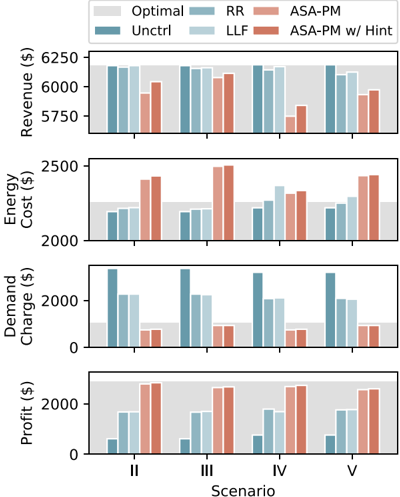
“On the other hand, both ASA-PM algorithms (and the offline optimal) trade-off higher energy costs for much lower peaks resulting in lower overall costs.”
§ Adaptive Charging Networks: A Framework for Smart Electric Vehicle Charging > D. Profit Maximization With TOU Tariffs and Demand Charge
plaindirect- Asserted: passes — The authors put it forward as true.
- Checkable: passes — It can be checked against evidence.
- Load-bearing: passes — The paper’s conclusions depend on it.
- Based: passes — The paper gives a reason why it holds.
It may state two separate claims as one.
The paper states this without a source or data behind it here, so there is nothing to check it against. The quote shows it is in the paper.
In the paper
“To facilitate this new frontier of research, ACN Research Portal provides open-access data from the Caltech and JPL ACNs and an open-source simulation environment based on the ACN architecture.”
§ Adaptive Charging Networks: A Framework for Smart Electric Vehicle Charging > VII. CONCLUSION
plain- Asserted: passes — The authors put it forward as true.
- Checkable: passes — It can be checked against evidence.
- Load-bearing: passes — The paper’s conclusions depend on it.
- Based: passes — The paper gives a reason why it holds.
It may state two separate claims as one.
A result the paper reports from its own data — it cites no other source for it, so there is none to check. The quote shows it is in the paper.
In the paper
“While EVSE quantization and non-ideal batteries each reduce the operator's profit, even in scenario V, ASA-PM w/Hint still produces 90% of the optimal profit.”
§ Adaptive Charging Networks: A Framework for Smart Electric Vehicle Charging > D. Profit Maximization With TOU Tariffs and Demand Charge
plaindirect- Asserted: passes — The authors put it forward as true.
- Checkable: passes — It can be checked against evidence.
- Load-bearing: passes — The paper’s conclusions depend on it.
- Based: passes — The paper gives a reason why it holds.
It may state two separate claims as one.
The paper states this without a source or data behind it here, so there is nothing to check it against. The quote shows it is in the paper.
In the paper
“Even with the peak hint, ASA-PM does not meet 100% of demands even though the offline optimal does.”
§ Adaptive Charging Networks: A Framework for Smart Electric Vehicle Charging > D. Profit Maximization With TOU Tariffs and Demand Charge
plain- Asserted: passes — The authors put it forward as true.
- Checkable: passes — It can be checked against evidence.
- Load-bearing: passes — The paper’s conclusions depend on it.
- Based: passes — The paper gives a reason why it holds.
It may state two separate claims as one.
The paper states this without a source or data behind it here, so there is nothing to check it against. The quote shows it is in the paper.
In the paper
“RR uses no information aside from which EVs are currently present, and as such, performs the worst.”
§ Adaptive Charging Networks: A Framework for Smart Electric Vehicle Charging > C. Energy Delivery With Constrained Infrastructure
plaindirect- Asserted: passes — The authors put it forward as true.
- Checkable: passes — It can be checked against evidence.
- Load-bearing: passes — The paper’s conclusions depend on it.
- Based: passes — The paper gives a reason why it holds.
It may state two separate claims as one.
A result the paper reports from its own data — it cites no other source for it, so there is none to check. The quote shows it is in the paper.
In the paper
“Uncontrolled, LLF and RR result in lower energy costs, but incur very high demand charges.”
§ Adaptive Charging Networks: A Framework for Smart Electric Vehicle Charging > D. Profit Maximization With TOU Tariffs and Demand Charge
plaindirect- Asserted: passes — The authors put it forward as true.
- Checkable: passes — It can be checked against evidence.
- Load-bearing: passes — The paper’s conclusions depend on it.
- Based: passes — The paper gives a reason why it holds.
It may state two separate claims as one.
A result the paper reports from its own data — it cites no other source for it, so there is none to check. The quote shows it is in the paper.
In the paper
“Profits from both ASA-PM and ASA-PM w/ Hint, are within 3.6% and 1.9% of the optimal respectively, and far exceed the profits of all baseline algorithms.”
§ Adaptive Charging Networks: A Framework for Smart Electric Vehicle Charging > D. Profit Maximization With TOU Tariffs and Demand Charge
plaindirect- Asserted: passes — The authors put it forward as true.
- Checkable: passes — It can be checked against evidence.
- Load-bearing: passes — The paper’s conclusions depend on it.
- Based: passes — The paper gives a reason why it holds.
It may state two separate claims as one.
In the paper
“Reference [2] uses data from the ACN to predict user behavior, size solar generation for EV charging systems, and evaluate the potential of EV charging to smooth the duck curve.”
§ Adaptive Charging Networks: A Framework for Smart Electric Vehicle Charging > Abstract
What the sources say
- Not matchedcites [2]
Couldn’t be matched to a paper in Crossref, so it can’t be checked.
plaindirect- Asserted: passes — The authors put it forward as true.
- Checkable: passes — It can be checked against evidence.
- Load-bearing: fails — The paper’s conclusions may not depend on it.
- Based: passes — The paper gives a reason why it holds.
Probably not a substantial claim. The paper’s conclusions may not depend on it. It may state two separate claims as one.
- Not matched
None of the sources cited for this claim could be matched to a paper in Crossref, so there is nothing to check it against.
In the paper
“There is also a tremendous literature on EV charging algorithms; see surveys [9], [10] for extensive pointers to the literature.”
§ Adaptive Charging Networks: A Framework for Smart Electric Vehicle Charging > Abstract
What the sources say
- Not matchedcites [9]
Couldn’t be matched to a paper in Crossref, so it can’t be checked.
- Not matchedcites [10]
Couldn’t be matched to a paper in Crossref, so it can’t be checked.
boosted- Asserted: passes — The authors put it forward as true.
- Checkable: fails — It may be too vague to check against evidence.
- Load-bearing: fails — The paper’s conclusions may not depend on it.
- Based: passes — The paper gives a reason why it holds.
Probably not a substantial claim. It may be too vague to check against evidence. The paper’s conclusions may not depend on it.
- Not matched
In the paper
“Reference [20] proposes a pricing scheme to allocate costs (including demand charge) to charging sessions.”
§ Adaptive Charging Networks: A Framework for Smart Electric Vehicle Charging > Abstract
What the sources say
- Not matchedcites [20]
Couldn’t be matched to a paper in Crossref, so it can’t be checked.
plain- Asserted: passes — The authors put it forward as true.
- Checkable: passes — It can be checked against evidence.
- Load-bearing: fails — The paper’s conclusions may not depend on it.
- Based: passes — The paper gives a reason why it holds.
Probably not a substantial claim. The paper’s conclusions may not depend on it.
- Not matched
In the paper
“The Smart Energy Plaza (SEP) at Argonne National Laboratory consists of six controllable level-2 EVSEs [4].”
§ Adaptive Charging Networks: A Framework for Smart Electric Vehicle Charging > Abstract
What the sources say
- Not matchedcites [4]
Couldn’t be matched to a paper in Crossref, so it can’t be checked.
plain- Asserted: passes — The authors put it forward as true.
- Checkable: passes — It can be checked against evidence.
- Load-bearing: fails — The paper’s conclusions may not depend on it.
- Based: passes — The paper gives a reason why it holds.
Probably not a substantial claim. The paper’s conclusions may not depend on it.
- Not matched
In the paper
“Meanwhile, the Parker project utilized a testbed of 10 bi-directional EVSEs at a commercial site to investigate the potential of EVs to provide frequency regulation services and adapt to marginal emissions signals [8].”
§ Adaptive Charging Networks: A Framework for Smart Electric Vehicle Charging > Abstract
What the sources say
- Not matchedcites [8]
Couldn’t be matched to a paper in Crossref, so it can’t be checked.
plain- Asserted: passes — The authors put it forward as true.
- Checkable: passes — It can be checked against evidence.
- Load-bearing: fails — The paper’s conclusions may not depend on it.
- Based: passes — The paper gives a reason why it holds.
Probably not a substantial claim. The paper’s conclusions may not depend on it.
- Not matched
None of the sources cited for this claim could be matched to a paper in Crossref, so there is nothing to check it against.
In the paper
“References [22], [23] use data to quantify fleet-level flexibility within a charging facility”
§ Adaptive Charging Networks: A Framework for Smart Electric Vehicle Charging > Abstract
What the sources say
- Not matchedcites [22]
Couldn’t be matched to a paper in Crossref, so it can’t be checked.
- Not matchedcites [23]
Couldn’t be matched to a paper in Crossref, so it can’t be checked.
plain- Asserted: passes — The authors put it forward as true.
- Checkable: passes — It can be checked against evidence.
- Load-bearing: fails — The paper’s conclusions may not depend on it.
- Based: passes — The paper gives a reason why it holds.
Probably not a substantial claim. The paper’s conclusions may not depend on it.
- Not matched
A conclusion the paper draws from its own results — it cites no other source for it, so there is none to check. The quote shows it is in the paper.
In the paper
“Algorithms can also enable additional revenue streams by providing grid services.”
§ Adaptive Charging Networks: A Framework for Smart Electric Vehicle Charging > Abstract
plaindirect- Asserted: passes — The authors put it forward as true.
- Checkable: passes — It can be checked against evidence.
- Load-bearing: fails — The paper’s conclusions may not depend on it.
- Based: fails — The paper may give no reason why it holds.
Probably not a substantial claim. The paper’s conclusions may not depend on it. The paper may give no reason why it holds.
- Rests on an assumption: Many large-scale charging sites will provide charging during daytime hours.
None of the sources cited for this claim have been checked yet.
In the paper
“Several works have been based on the ACN and data collected from it.”
§ Adaptive Charging Networks: A Framework for Smart Electric Vehicle Charging > Abstract
plain- Asserted: passes — The authors put it forward as true.
- Checkable: passes — It can be checked against evidence.
- Load-bearing: fails — The paper’s conclusions may not depend on it.
- Based: passes — The paper gives a reason why it holds.
Probably not a substantial claim. The paper’s conclusions may not depend on it.
A conclusion the paper draws from its own results — it cites no other source for it, so there is none to check. The quote shows it is in the paper.
In the paper
“scheduling algorithms can reduce operating costs by optimizing for time-of-use tariffs, demand charges, and on-site renewable generation”
§ Adaptive Charging Networks: A Framework for Smart Electric Vehicle Charging > Abstract
plaindirect- Asserted: passes — The authors put it forward as true.
- Checkable: passes — It can be checked against evidence.
- Load-bearing: passes — The paper’s conclusions depend on it.
- Based: fails — The paper may give no reason why it holds.
Probably not a substantial claim. The paper may give no reason why it holds.
- Rests on an assumption: Most sites are unable to install more than a few charging ports due to limited infrastructure capacity and fear of high electricity bills.
A conclusion the paper draws from its own results — it cites no other source for it, so there is none to check. The quote shows it is in the paper.
In the paper
“Smart charging allows sites to scale their port capacity without costly infrastructure upgrades.”
§ Adaptive Charging Networks: A Framework for Smart Electric Vehicle Charging > Abstract
plaindirect- Asserted: passes — The authors put it forward as true.
- Checkable: passes — It can be checked against evidence.
- Load-bearing: passes — The paper’s conclusions depend on it.
- Based: fails — The paper may give no reason why it holds.
Probably not a substantial claim. The paper may give no reason why it holds.
- Rests on an assumption: Most sites are unable to install more than a few charging ports due to limited infrastructure capacity and fear of high electricity bills.
None of the sources cited for this claim could be matched to a paper in Crossref, so there is nothing to check it against.
In the paper
“Some recent work specifically related to large-scale EV charging includes [11]- [19].”
§ Adaptive Charging Networks: A Framework for Smart Electric Vehicle Charging > Abstract
What the sources say
- Not matchedcites [11]
Couldn’t be matched to a paper in Crossref, so it can’t be checked.
- Not matchedcites [12]
Couldn’t be matched to a paper in Crossref, so it can’t be checked.
- Not matchedcites [13]
Couldn’t be matched to a paper in Crossref, so it can’t be checked.
- Not matchedcites [14]
Couldn’t be matched to a paper in Crossref, so it can’t be checked.
- Not matchedcites [15]
Couldn’t be matched to a paper in Crossref, so it can’t be checked.
- Not matchedcites [16]
Couldn’t be matched to a paper in Crossref, so it can’t be checked.
- Not matchedcites [17]
Couldn’t be matched to a paper in Crossref, so it can’t be checked.
- Not matchedcites [18]
Couldn’t be matched to a paper in Crossref, so it can’t be checked.
- Not matchedcites [19]
Couldn’t be matched to a paper in Crossref, so it can’t be checked.
plain- Asserted: passes — The authors put it forward as true.
- Checkable: passes — It can be checked against evidence.
- Load-bearing: fails — The paper’s conclusions may not depend on it.
- Based: passes — The paper gives a reason why it holds.
Probably not a substantial claim. The paper’s conclusions may not depend on it.
- Not matched
In the paper
“Reference [21] clusters sessions based on their charging behavior using time series of charging current collected from the ACN.”
§ Adaptive Charging Networks: A Framework for Smart Electric Vehicle Charging > Abstract
What the sources say
- Not matchedcites [21]
Couldn’t be matched to a paper in Crossref, so it can’t be checked.
plaindirect- Asserted: passes — The authors put it forward as true.
- Checkable: passes — It can be checked against evidence.
- Load-bearing: fails — The paper’s conclusions may not depend on it.
- Based: passes — The paper gives a reason why it holds.
Probably not a substantial claim. The paper’s conclusions may not depend on it.
- Not matched
None of the sources cited for this claim have been checked yet.
In the paper
“Several smart EV charging systems have been developed, though usually at a smaller scale than the ACN.”
§ Adaptive Charging Networks: A Framework for Smart Electric Vehicle Charging > Abstract
plain- Asserted: passes — The authors put it forward as true.
- Checkable: passes — It can be checked against evidence.
- Load-bearing: fails — The paper’s conclusions may not depend on it.
- Based: passes — The paper gives a reason why it holds.
Probably not a substantial claim. The paper’s conclusions may not depend on it.
None of the sources cited for this claim could be matched to a paper in Crossref, so there is nothing to check it against.
In the paper
“Of particular relevance to this work are [14] and [19], both of which use a MPC framework for scheduling EV charging subject to TOU rates.”
§ Adaptive Charging Networks: A Framework for Smart Electric Vehicle Charging > Abstract
What the sources say
- Not matchedcites [14]
Couldn’t be matched to a paper in Crossref, so it can’t be checked.
- Not matchedcites [19]
Couldn’t be matched to a paper in Crossref, so it can’t be checked.
plain- Asserted: passes — The authors put it forward as true.
- Checkable: passes — It can be checked against evidence.
- Load-bearing: fails — The paper’s conclusions may not depend on it.
- Based: passes — The paper gives a reason why it holds.
Probably not a substantial claim. The paper’s conclusions may not depend on it.
- Not matched
In the paper
“this approach was first proposed in [20].”
§ Adaptive Charging Networks: A Framework for Smart Electric Vehicle Charging > Abstract
What the sources say
- Not matchedcites [20]
Couldn’t be matched to a paper in Crossref, so it can’t be checked.
plain- Asserted: passes — The authors put it forward as true.
- Checkable: passes — It can be checked against evidence.
- Load-bearing: fails — The paper’s conclusions may not depend on it.
- Based: passes — The paper gives a reason why it holds.
Probably not a substantial claim. The paper’s conclusions may not depend on it.
- Not matched
None of the sources cited for this claim could be matched to a paper in Crossref, so there is nothing to check it against.
In the paper
“Likewise, the WinSmartEV system at UCLA consists of quad-port level-2 EVSEs capable of sharing a single oversubscribed circuit and multiple level-1 chargers with binary control [5], [6].”
§ Adaptive Charging Networks: A Framework for Smart Electric Vehicle Charging > Abstract
What the sources say
- Not matchedcites [5]
Couldn’t be matched to a paper in Crossref, so it can’t be checked.
- Not matchedcites [6]
Couldn’t be matched to a paper in Crossref, so it can’t be checked.
plainSingle case- Asserted: passes — The authors put it forward as true.
- Checkable: passes — It can be checked against evidence.
- Load-bearing: fails — The paper’s conclusions may not depend on it.
- Based: passes — The paper gives a reason why it holds.
Probably not a substantial claim. The paper’s conclusions may not depend on it. It may state two separate claims as one.
- Not matched
In the paper
“The My Electric Avenue project tested a control system for 200 Nissan LEAFs to manage congestion in the distribution system [7].”
§ Adaptive Charging Networks: A Framework for Smart Electric Vehicle Charging > Abstract
What the sources say
- Not matchedcites [7]
Couldn’t be matched to a paper in Crossref, so it can’t be checked.
plaindirectSingle case- Asserted: passes — The authors put it forward as true.
- Checkable: passes — It can be checked against evidence.
- Load-bearing: fails — The paper’s conclusions may not depend on it.
- Based: passes — The paper gives a reason why it holds.
Probably not a substantial claim. The paper’s conclusions may not depend on it.
- Not matched
A conclusion the paper draws from its own results — it cites no other source for it, so there is none to check. The quote shows it is in the paper.
In the paper
“Since L(t) and G(t) are unknown for t > 0 this formulation relies on a prediction of these functions into the future.”
§ Adaptive Charging Networks: A Framework for Smart Electric Vehicle Charging > Charging quickly:
plaindirect- Asserted: passes — The authors put it forward as true.
- Checkable: passes — It can be checked against evidence.
- Load-bearing: fails — The paper’s conclusions may not depend on it.
- Based: passes — The paper gives a reason why it holds.
Probably not a substantial claim. The paper’s conclusions may not depend on it.
- Rests on an assumption: Future load L(t) and on-site generation G(t) can be predicted for the profit objective.
A conclusion the paper draws from its own results — it cites no other source for it, so there is none to check. The quote shows it is in the paper.
In the paper
“Our work adds to the existing body of research insights from building real-world EV charging systems.”
§ Adaptive Charging Networks: A Framework for Smart Electric Vehicle Charging > Abstract
plain- Asserted: passes — The authors put it forward as true.
- Checkable: fails — It may be too vague to check against evidence.
- Load-bearing: fails — The paper’s conclusions may not depend on it.
- Based: passes — The paper gives a reason why it holds.
Probably not a substantial claim. It may be too vague to check against evidence. The paper’s conclusions may not depend on it.
The paper states this without a source or data behind it here, so there is nothing to check it against. The quote shows it is in the paper.
In the paper
“The constraints in (1) are second-order cone constraints, which are convex and can be handled by many offthe-shelf solvers such as ECOS, MOSEK, and Gurobi.”
§ Adaptive Charging Networks: A Framework for Smart Electric Vehicle Charging > A. Infrastructure Modeling
plain- Asserted: passes — The authors put it forward as true.
- Checkable: passes — It can be checked against evidence.
- Load-bearing: fails — The paper’s conclusions may not depend on it.
- Based: fails — The paper may give no reason why it holds.
Probably not a substantial claim. The paper’s conclusions may not depend on it. The paper may give no reason why it holds. It may state two separate claims as one.
In the paper
“An exception to this is the work of De Hoog et al. [29], which considers an unbalanced three-phase distribution system but only in the case of wyeconnected EVSEs.”
§ Adaptive Charging Networks: A Framework for Smart Electric Vehicle Charging > A. Infrastructure Modeling
What the sources say
- Not matchedcites [29]
Couldn’t be matched to a paper in Crossref, so it can’t be checked.
plain- Asserted: passes — The authors put it forward as true.
- Checkable: passes — It can be checked against evidence.
- Load-bearing: passes — The paper’s conclusions depend on it.
- Based: passes — The paper gives a reason why it holds.
It may state two separate claims as one.
- Not matched
A conclusion the paper draws from its own results — it cites no other source for it, so there is none to check. The quote shows it is in the paper.
In the paper
“These periodic computations close the control loop and account for discrepancies between the control signal sent to each EV and its actual current draw.”
§ Adaptive Charging Networks: A Framework for Smart Electric Vehicle Charging > Control algorithms:
plaindirect- Asserted: passes — The authors put it forward as true.
- Checkable: passes — It can be checked against evidence.
- Load-bearing: passes — The paper’s conclusions depend on it.
- Based: passes — The paper gives a reason why it holds.
Probably not a substantial claim.
A conclusion the paper draws from its own results — it cites no other source for it, so there is none to check. The quote shows it is in the paper.
In the paper
“It can be difficult to diagnose why a car is charging below its allocated pilot signal since the J1772 standard does not provide a way to gather the EV's state of charge.”
§ Adaptive Charging Networks: A Framework for Smart Electric Vehicle Charging > B. EVSEs and Battery Management System
plaindirect- Asserted: passes — The authors put it forward as true.
- Checkable: passes — It can be checked against evidence.
- Load-bearing: fails — The paper’s conclusions may not depend on it.
- Based: passes — The paper gives a reason why it holds.
Probably not a substantial claim. The paper’s conclusions may not depend on it.
A conclusion the paper draws from its own results — it cites no other source for it, so there is none to check. The quote shows it is in the paper.
In the paper
“The utility functions described so far are not strictly concave in r and hence the optimal solution, r * , is generally non-unique.”
§ Adaptive Charging Networks: A Framework for Smart Electric Vehicle Charging > Minimizing total load variations:
plaindirect- Asserted: passes — The authors put it forward as true.
- Checkable: passes — It can be checked against evidence.
- Load-bearing: passes — The paper’s conclusions depend on it.
- Based: passes — The paper gives a reason why it holds.
It may state two separate claims as one.
A conclusion the paper draws from its own results — it cites no other source for it, so there is none to check. The quote shows it is in the paper.
In the paper
“Here U QC encourages the system to deliver energy as quickly as possible, which helps free capacity for future arrivals.”
§ Adaptive Charging Networks: A Framework for Smart Electric Vehicle Charging > C. Energy Delivery With Constrained Infrastructure
plaindirect- Asserted: passes — The authors put it forward as true.
- Checkable: passes — It can be checked against evidence.
- Load-bearing: passes — The paper’s conclusions depend on it.
- Based: passes — The paper gives a reason why it holds.
It may state two separate claims as one.
A conclusion the paper draws from its own results — it cites no other source for it, so there is none to check. The quote shows it is in the paper.
In the paper
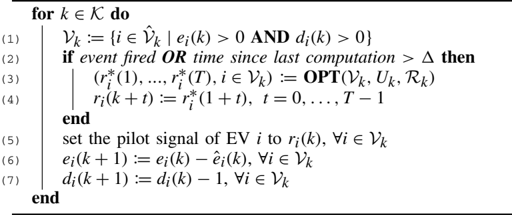
“This constraint helps prevent contactor wear in the EVSEs and improves user experience since most vehicles will notify their owner when charging stops.”
§ Adaptive Charging Networks: A Framework for Smart Electric Vehicle Charging > Algorithm 1: Adaptive Scheduling Algorithm (ASA)
plaindirect- Asserted: passes — The authors put it forward as true.
- Checkable: passes — It can be checked against evidence.
- Load-bearing: passes — The paper’s conclusions depend on it.
- Based: passes — The paper gives a reason why it holds.
Probably not a substantial claim. It may state two separate claims as one.
- Rests on an assumption: Most vehicles will notify their owner when charging stops.
A conclusion the paper draws from its own results — it cites no other source for it, so there is none to check. The quote shows it is in the paper.
In the paper
“Unfortunately, these constraints are discrete, making it difficult to incorporate them into optimization-based algorithms.”
§ Adaptive Charging Networks: A Framework for Smart Electric Vehicle Charging > Algorithm 1: Adaptive Scheduling Algorithm (ASA)
plaindirect- Asserted: passes — The authors put it forward as true.
- Checkable: passes — It can be checked against evidence.
- Load-bearing: passes — The paper’s conclusions depend on it.
- Based: passes — The paper gives a reason why it holds.
It may state two separate claims as one.
What the paper did — it cites no source for this, so there is none to check. The quote shows it is in the paper.
In the paper
“For our simulations, we use ACN-Sim, which includes realistic models for each of the scenarios above.”
§ Adaptive Charging Networks: A Framework for Smart Electric Vehicle Charging > B. Practical Scenarios
plain- Asserted: passes — The authors put it forward as true.
- Checkable: passes — It can be checked against evidence.
- Load-bearing: passes — The paper’s conclusions depend on it.
- Based: passes — The paper gives a reason why it holds.
Probably not a substantial claim.
A conclusion the paper draws from its own results — it cites no other source for it, so there is none to check. The quote shows it is in the paper.
In the paper
“The pilot signal constraints imposed by EVSEs described in Section IV-C are discrete and intractable in general for large problems.”
§ Adaptive Charging Networks: A Framework for Smart Electric Vehicle Charging > D. Quantization of Pilot Signal
plain- Asserted: passes — The authors put it forward as true.
- Checkable: passes — It can be checked against evidence.
- Load-bearing: passes — The paper’s conclusions depend on it.
- Based: fails — The paper may give no reason why it holds.
Probably not a substantial claim. The paper may give no reason why it holds.
None of the sources cited for this claim could be matched to a paper in Crossref, so there is nothing to check it against.
In the paper
“This work extends [25], [26], which describe the ACN in earlier stages of development”
§ Adaptive Charging Networks: A Framework for Smart Electric Vehicle Charging > Abstract
What the sources say
- Not matchedcites [25]
Couldn’t be matched to a paper in Crossref, so it can’t be checked.
- Not matchedcites [26]
Couldn’t be matched to a paper in Crossref, so it can’t be checked.
plain- Asserted: passes — The authors put it forward as true.
- Checkable: passes — It can be checked against evidence.
- Load-bearing: fails — The paper’s conclusions may not depend on it.
- Based: passes — The paper gives a reason why it holds.
Probably not a substantial claim. The paper’s conclusions may not depend on it.
- Not matched
A conclusion the paper draws from its own results — it cites no other source for it, so there is none to check. The quote shows it is in the paper.
In the paper
“We include the regularizer u ES (r) to promote equal sharing between similar EVs and force a unique solution.”
§ Adaptive Charging Networks: A Framework for Smart Electric Vehicle Charging > C. Energy Delivery With Constrained Infrastructure
plaindirect- Asserted: passes — The authors put it forward as true.
- Checkable: passes — It can be checked against evidence.
- Load-bearing: passes — The paper’s conclusions depend on it.
- Based: passes — The paper gives a reason why it holds.
Probably not a substantial claim. It may state two separate claims as one.
In the paper
“In contrast, non-ideal batteries follow the constant current, constant voltage model described in [3], where the initial state of charge and battery capacity are fit to maximize tail behavior, and the tail begins at 80% state-of-charge.”
§ Adaptive Charging Networks: A Framework for Smart Electric Vehicle Charging > B. Practical Scenarios
What the sources say
- Not matchedcites [3]
Couldn’t be matched to a paper in Crossref, so it can’t be checked.
plain- Asserted: passes — The authors put it forward as true.
- Checkable: passes — It can be checked against evidence.
- Load-bearing: fails — The paper’s conclusions may not depend on it.
- Based: passes — The paper gives a reason why it holds.
Probably not a substantial claim. The paper’s conclusions may not depend on it.
- Not matched
A conclusion the paper draws from its own results — it cites no other source for it, so there is none to check. The quote shows it is in the paper.
In the paper
“This means that our system must be able to handle large numbers of flexible sessions on weekdays and smaller numbers of relatively inflexible sessions on weekends.”
§ Adaptive Charging Networks: A Framework for Smart Electric Vehicle Charging > A. Data Collected
plaindirect- Asserted: passes — The authors put it forward as true.
- Checkable: passes — It can be checked against evidence.
- Load-bearing: passes — The paper’s conclusions depend on it.
- Based: passes — The paper gives a reason why it holds.
It may state two separate claims as one.
A conclusion the paper draws from its own results — it cites no other source for it, so there is none to check. The quote shows it is in the paper.
In the paper
“The Caltech ACN also has a much smaller peak in arrivals beginning around 18:00, which is made up of community members who use the site in the evening including some patrons of the nearby campus gym.”
§ Adaptive Charging Networks: A Framework for Smart Electric Vehicle Charging > E. Battery Tail Capacity Reclamation
plain- Asserted: passes — The authors put it forward as true.
- Checkable: passes — It can be checked against evidence.
- Load-bearing: fails — The paper’s conclusions may not depend on it.
- Based: passes — The paper gives a reason why it holds.
Probably not a substantial claim. The paper’s conclusions may not depend on it.
In the paper
“[24] uses ACN-Sim to train reinforcement learning agents to schedule large-scale EV charging.”
§ Adaptive Charging Networks: A Framework for Smart Electric Vehicle Charging > Abstract
What the sources say
- Not matchedcites [24]
Couldn’t be matched to a paper in Crossref, so it can’t be checked.
plain- Asserted: passes — The authors put it forward as true.
- Checkable: passes — It can be checked against evidence.
- Load-bearing: fails — The paper’s conclusions may not depend on it.
- Based: passes — The paper gives a reason why it holds.
Probably not a substantial claim. The paper’s conclusions may not depend on it.
- Not matched
A conclusion the paper draws from its own results — it cites no other source for it, so there is none to check. The quote shows it is in the paper.
In the paper
“This behavior precludes simple solutions such as installing large numbers of level-1 chargers, which would be too slow on weekends and for low laxity weekday sessions, or small numbers of level-2 chargers, which would be insufficient for the number of concurrent sessions on weekdays.”
§ Adaptive Charging Networks: A Framework for Smart Electric Vehicle Charging > A. Data Collected
plaindirect- Asserted: passes — The authors put it forward as true.
- Checkable: passes — It can be checked against evidence.
- Load-bearing: passes — The paper’s conclusions depend on it.
- Based: passes — The paper gives a reason why it holds.
It may state two separate claims as one.
In the paper
“Other models rely on machine learning to learn the relationship between state of charge and current draw [32].”
§ Adaptive Charging Networks: A Framework for Smart Electric Vehicle Charging > B. Battery Management System Behavior
What the sources say
- Not matchedcites [32]
Couldn’t be matched to a paper in Crossref, so it can’t be checked.
plaincorrelational- Asserted: passes — The authors put it forward as true.
- Checkable: passes — It can be checked against evidence.
- Load-bearing: fails — The paper’s conclusions may not depend on it.
- Based: passes — The paper gives a reason why it holds.
Probably not a substantial claim. The paper’s conclusions may not depend on it.
- Not matched
A conclusion the paper draws from its own results — it cites no other source for it, so there is none to check. The quote shows it is in the paper.
In the paper
“This is equivalent to cost minimization when π = 0.”
§ Adaptive Charging Networks: A Framework for Smart Electric Vehicle Charging > Charging quickly:
plain- Asserted: passes — The authors put it forward as true.
- Checkable: passes — It can be checked against evidence.
- Load-bearing: fails — The paper’s conclusions may not depend on it.
- Based: passes — The paper gives a reason why it holds.
Probably not a substantial claim. The paper’s conclusions may not depend on it.
A conclusion the paper draws from its own results — it cites no other source for it, so there is none to check. The quote shows it is in the paper.
In the paper
“By building and operating the Caltech ACN, we have identified several important features of the physical system that have not been addressed in the EV charging literature but pose real problems for implementing practical EV scheduling algorithms.”
§ Adaptive Charging Networks: A Framework for Smart Electric Vehicle Charging > E. Drivers
plain- Asserted: passes — The authors put it forward as true.
- Checkable: passes — It can be checked against evidence.
- Load-bearing: passes — The paper’s conclusions depend on it.
- Based: passes — The paper gives a reason why it holds.
It may state two separate claims as one.
None of the sources cited for this claim could be matched to a paper in Crossref, so there is nothing to check it against.
In the paper
“by providing a more thorough description of the ACN”
§ Adaptive Charging Networks: A Framework for Smart Electric Vehicle Charging > Abstract
What the sources say
- Not matchedcites [25]
Couldn’t be matched to a paper in Crossref, so it can’t be checked.
- Not matchedcites [26]
Couldn’t be matched to a paper in Crossref, so it can’t be checked.
plain- Asserted: passes — The authors put it forward as true.
- Checkable: passes — It can be checked against evidence.
- Load-bearing: passes — The paper’s conclusions depend on it.
- Based: passes — The paper gives a reason why it holds.
Probably not a substantial claim.
- Not matched
A conclusion the paper draws from its own results — it cites no other source for it, so there is none to check. The quote shows it is in the paper.
In the paper
“With this scheme, we can quickly reclaim capacity during the tail region, while still allowing EVs to throttle back up if this reclamation was premature.”
§ Adaptive Charging Networks: A Framework for Smart Electric Vehicle Charging > E. Battery Tail Capacity Reclamation
plaindirect- Asserted: passes — The authors put it forward as true.
- Checkable: passes — It can be checked against evidence.
- Load-bearing: passes — The paper’s conclusions depend on it.
- Based: passes — The paper gives a reason why it holds.
It may state two separate claims as one.
The paper states this without a source or data behind it here, so there is nothing to check it against. The quote shows it is in the paper.
In the paper
“This is a common use case when electricity prices are static or when user satisfaction is the primary concern.”
§ Adaptive Charging Networks: A Framework for Smart Electric Vehicle Charging > C. Energy Delivery With Constrained Infrastructure
plaincorrelational- Asserted: passes — The authors put it forward as true.
- Checkable: passes — It can be checked against evidence.
- Load-bearing: fails — The paper’s conclusions may not depend on it.
- Based: fails — The paper may give no reason why it holds.
Probably not a substantial claim. The paper’s conclusions may not depend on it. The paper may give no reason why it holds. It may state two separate claims as one.
None of the sources cited for this claim could be matched to a paper in Crossref, so there is nothing to check it against.
In the paper
“These baseline algorithms are very common in the deadline scheduling literature and have been applied previously to the EV charging domain [34], [35].”
§ Adaptive Charging Networks: A Framework for Smart Electric Vehicle Charging > C. Energy Delivery With Constrained Infrastructure
What the sources say
- Not matchedcites [34]
Couldn’t be matched to a paper in Crossref, so it can’t be checked.
- Not matchedcites [35]
Couldn’t be matched to a paper in Crossref, so it can’t be checked.
plain- Asserted: passes — The authors put it forward as true.
- Checkable: passes — It can be checked against evidence.
- Load-bearing: fails — The paper’s conclusions may not depend on it.
- Based: passes — The paper gives a reason why it holds.
Probably not a substantial claim. The paper’s conclusions may not depend on it. It may state two separate claims as one.
- Not matched
A conclusion the paper draws from its own results — it cites no other source for it, so there is none to check. The quote shows it is in the paper.
In the paper
“Load management like that found in the ACN is necessary in places without available electrical capacity, but is still helpful in all sites, since we are able to minimize demand charges / responds to TOU rates, even if electrical infrastructure is not a problem.”
§ Adaptive Charging Networks: A Framework for Smart Electric Vehicle Charging > VII. CONCLUSION
plaindirect- Asserted: passes — The authors put it forward as true.
- Checkable: passes — It can be checked against evidence.
- Load-bearing: passes — The paper’s conclusions depend on it.
- Based: fails — The paper may give no reason why it holds.
Probably not a substantial claim. The paper may give no reason why it holds. It may state two separate claims as one.
A conclusion the paper draws from its own results — it cites no other source for it, so there is none to check. The quote shows it is in the paper.
In the paper
“This is reasonable since EVs' onboard charger generally includes power factor correction and voltage phase angles can be easily measured.”
§ Adaptive Charging Networks: A Framework for Smart Electric Vehicle Charging > VII. CONCLUSION
plain- Asserted: passes — The authors put it forward as true.
- Checkable: passes — It can be checked against evidence.
- Load-bearing: fails — The paper’s conclusions may not depend on it.
- Based: fails — The paper may give no reason why it holds.
Probably not a substantial claim. The paper’s conclusions may not depend on it. The paper may give no reason why it holds. It may state two separate claims as one.
The paper states this without a source or data behind it here, so there is nothing to check it against. The quote shows it is in the paper.
In the paper
“In addition, the round robin algorithm is a generalization of the equal sharing algorithm used by many charging providers today.”
§ Adaptive Charging Networks: A Framework for Smart Electric Vehicle Charging > C. Energy Delivery With Constrained Infrastructure
plain- Asserted: passes — The authors put it forward as true.
- Checkable: passes — It can be checked against evidence.
- Load-bearing: fails — The paper’s conclusions may not depend on it.
- Based: fails — The paper may give no reason why it holds.
Probably not a substantial claim. The paper’s conclusions may not depend on it. The paper may give no reason why it holds.
A conclusion the paper draws from its own results — it cites no other source for it, so there is none to check. The quote shows it is in the paper.
In the paper
“Beyond its operational role of charging hundreds of EVs each week, the Caltech ACN and similar sites at research institutions like JPL, NREL, SLAC, and UC San Deigo, provide a valuable platform for research in managed EV charging.”
§ Adaptive Charging Networks: A Framework for Smart Electric Vehicle Charging > VII. CONCLUSION
plain- Asserted: passes — The authors put it forward as true.
- Checkable: fails — It may be too vague to check against evidence.
- Load-bearing: passes — The paper’s conclusions depend on it.
- Based: passes — The paper gives a reason why it holds.
Probably not a substantial claim. It may be too vague to check against evidence.
A conclusion the paper draws from its own results — it cites no other source for it, so there is none to check. The quote shows it is in the paper.
In the paper
“These algorithms are not price aware.”
§ Adaptive Charging Networks: A Framework for Smart Electric Vehicle Charging > D. Profit Maximization With TOU Tariffs and Demand Charge
plain- Asserted: passes — The authors put it forward as true.
- Checkable: passes — It can be checked against evidence.
- Load-bearing: passes — The paper’s conclusions depend on it.
- Based: passes — The paper gives a reason why it holds.
It may state two separate claims as one.
A conclusion the paper draws from its own results — it cites no other source for it, so there is none to check. The quote shows it is in the paper.
In the paper
“We also include the quick charge objective as a regularizer, which encourages the scheduling algorithm to front-load charging within a TOU period.”
§ Adaptive Charging Networks: A Framework for Smart Electric Vehicle Charging > D. Profit Maximization With TOU Tariffs and Demand Charge
plaindirect- Asserted: passes — The authors put it forward as true.
- Checkable: passes — It can be checked against evidence.
- Load-bearing: fails — The paper’s conclusions may not depend on it.
- Based: passes — The paper gives a reason why it holds.
Probably not a substantial claim. The paper’s conclusions may not depend on it.
The paper states this without a source or data behind it here, so there is nothing to check it against. The quote shows it is in the paper.
In the paper
“For example, the J1772 standard does not allow pilot signals below 6 A (except 0).”
§ Adaptive Charging Networks: A Framework for Smart Electric Vehicle Charging > VII. CONCLUSION
plain- Asserted: passes — The authors put it forward as true.
- Checkable: passes — It can be checked against evidence.
- Load-bearing: fails — The paper’s conclusions may not depend on it.
- Based: fails — The paper may give no reason why it holds.
Probably not a substantial claim. The paper’s conclusions may not depend on it. The paper may give no reason why it holds.
A conclusion the paper draws from its own results — it cites no other source for it, so there is none to check. The quote shows it is in the paper.
In the paper
“Places that generally fit this description are workplaces, schools, multi-unit dwellings, and public charging facilities with long dwell times.”
§ Adaptive Charging Networks: A Framework for Smart Electric Vehicle Charging > VII. CONCLUSION
plaincorrelational- Asserted: passes — The authors put it forward as true.
- Checkable: passes — It can be checked against evidence.
- Load-bearing: passes — The paper’s conclusions depend on it.
- Based: fails — The paper may give no reason why it holds.
Probably not a substantial claim. The paper may give no reason why it holds.
A conclusion the paper draws from its own results — it cites no other source for it, so there is none to check. The quote shows it is in the paper.
In the paper
“When even more information is available, i.e., a model of the vehicle's battery or predictions of future EV arrivals, this information can also be accounted for in the constraint set R and objective U(r).”
§ Adaptive Charging Networks: A Framework for Smart Electric Vehicle Charging > VII. CONCLUSION
plainconditional- Asserted: passes — The authors put it forward as true.
- Checkable: passes — It can be checked against evidence.
- Load-bearing: fails — The paper’s conclusions may not depend on it.
- Based: fails — The paper may give no reason why it holds.
Probably not a substantial claim. The paper’s conclusions may not depend on it. The paper may give no reason why it holds.
A conclusion the paper draws from its own results — it cites no other source for it, so there is none to check. The quote shows it is in the paper.
In the paper
“Only ASA-QC actively optimizes over infrastructure constraints, allowing it to better balance phases (increasing throughput) and prioritize EVs including current and anticipated congestion.”
§ Adaptive Charging Networks: A Framework for Smart Electric Vehicle Charging > C. Energy Delivery With Constrained Infrastructure
plaindirect- Asserted: passes — The authors put it forward as true.
- Checkable: passes — It can be checked against evidence.
- Load-bearing: passes — The paper’s conclusions depend on it.
- Based: passes — The paper gives a reason why it holds.
It may state two separate claims as one.
A conclusion the paper draws from its own results — it cites no other source for it, so there is none to check. The quote shows it is in the paper.
In the paper
“It can be hard to reason about exactly why this occurs, though it appears that the postprocessing step leads to initial conditions for the next solve of OPT to produce a higher revenue, higher cost solution.”
§ Adaptive Charging Networks: A Framework for Smart Electric Vehicle Charging > D. Profit Maximization With TOU Tariffs and Demand Charge
hedgeddirect- Asserted: passes — The authors put it forward as true.
- Checkable: passes — It can be checked against evidence.
- Load-bearing: fails — The paper’s conclusions may not depend on it.
- Based: fails — The paper may give no reason why it holds.
Probably not a substantial claim. The paper’s conclusions may not depend on it. The paper may give no reason why it holds.
The paper states this without a source or data behind it here, so there is nothing to check it against. The quote shows it is in the paper.
In the paper
“Within the Caltech ACN, we have five types of EVSEs.”
§ Adaptive Charging Networks: A Framework for Smart Electric Vehicle Charging > VII. CONCLUSION
plain- Asserted: passes — The authors put it forward as true.
- Checkable: passes — It can be checked against evidence.
- Load-bearing: fails — The paper’s conclusions may not depend on it.
- Based: passes — The paper gives a reason why it holds.
Probably not a substantial claim. The paper’s conclusions may not depend on it.
The paper states this without a source or data behind it here, so there is nothing to check it against. The quote shows it is in the paper.
In the paper
“EVSEs from ClipperCreek only support five pilot signals {0, 8, 16, 24, 32} for 32 amp EVSEs and {0, 16, 32, 48, 64} for 64 amp EVSEs.”
§ Adaptive Charging Networks: A Framework for Smart Electric Vehicle Charging > VII. CONCLUSION
plain- Asserted: passes — The authors put it forward as true.
- Checkable: passes — It can be checked against evidence.
- Load-bearing: fails — The paper’s conclusions may not depend on it.
- Based: fails — The paper may give no reason why it holds.
Probably not a substantial claim. The paper’s conclusions may not depend on it. The paper may give no reason why it holds.
The paper states this without a source or data behind it here, so there is nothing to check it against. The quote shows it is in the paper.
In the paper
“We fix the transformer capacity to 150 kW and consider the previous baselines along with uncontrolled charging, which is the most common type of charging system today.”
§ Adaptive Charging Networks: A Framework for Smart Electric Vehicle Charging > D. Profit Maximization With TOU Tariffs and Demand Charge
plain- Asserted: passes — The authors put it forward as true.
- Checkable: passes — It can be checked against evidence.
- Load-bearing: fails — The paper’s conclusions may not depend on it.
- Based: fails — The paper may give no reason why it holds.
Probably not a substantial claim. The paper’s conclusions may not depend on it. The paper may give no reason why it holds.
A conclusion the paper draws from its own results — it cites no other source for it, so there is none to check. The quote shows it is in the paper.
In the paper
“It is, however, important that hints not be too large, as the algorithm can increase the peak as needed, but once a high peak is set, the demand charge cannot be lowered.”
§ Adaptive Charging Networks: A Framework for Smart Electric Vehicle Charging > D. Profit Maximization With TOU Tariffs and Demand Charge
plaindirect- Asserted: passes — The authors put it forward as true.
- Checkable: passes — It can be checked against evidence.
- Load-bearing: passes — The paper’s conclusions depend on it.
- Based: passes — The paper gives a reason why it holds.
It may state two separate claims as one.
The paper states this without a source or data behind it here, so there is nothing to check it against. The quote shows it is in the paper.
In the paper
“For example, LCFS credits for EV charging have averaged between $0.13 -$0.16 / kWh in 2018-2019.”
§ Adaptive Charging Networks: A Framework for Smart Electric Vehicle Charging > D. Profit Maximization With TOU Tariffs and Demand Charge
plain- Asserted: passes — The authors put it forward as true.
- Checkable: passes — It can be checked against evidence.
- Load-bearing: fails — The paper’s conclusions may not depend on it.
- Based: fails — The paper may give no reason why it holds.
Probably not a substantial claim. The paper’s conclusions may not depend on it. The paper may give no reason why it holds.
A conclusion the paper draws from its own results — it cites no other source for it, so there is none to check. The quote shows it is in the paper.
In the paper
“This may be because the minimum current constraint leads to better phase balancing.”
§ Adaptive Charging Networks: A Framework for Smart Electric Vehicle Charging > C. Energy Delivery With Constrained Infrastructure
hedgedconditional- Asserted: passes — The authors put it forward as true.
- Checkable: passes — It can be checked against evidence.
- Load-bearing: passes — The paper’s conclusions depend on it.
- Based: passes — The paper gives a reason why it holds.
Probably not a substantial claim.
A conclusion the paper draws from its own results — it cites no other source for it, so there is none to check. The quote shows it is in the paper.
In the paper
“ACN sites can incorporate low laxity sessions as well, but these should be a small fraction of the total sessions to get the maximum benefit from load management.”
§ Adaptive Charging Networks: A Framework for Smart Electric Vehicle Charging > VII. CONCLUSION
plainconditional- Asserted: passes — The authors put it forward as true.
- Checkable: passes — It can be checked against evidence.
- Load-bearing: passes — The paper’s conclusions depend on it.
- Based: fails — The paper may give no reason why it holds.
Probably not a substantial claim. The paper may give no reason why it holds. It may state two separate claims as one.
The paper states this without a source or data behind it here, so there is nothing to check it against. The quote shows it is in the paper.
In the paper
“Likewise, EDF uses only information about departure time, while LLF also makes use of the EVs energy demand.”
§ Adaptive Charging Networks: A Framework for Smart Electric Vehicle Charging > C. Energy Delivery With Constrained Infrastructure
plain- Asserted: passes — The authors put it forward as true.
- Checkable: passes — It can be checked against evidence.
- Load-bearing: passes — The paper’s conclusions depend on it.
- Based: passes — The paper gives a reason why it holds.
It may state two separate claims as one.
What the paper did — it cites no source for this, so there is none to check. The quote shows it is in the paper.
In the paper
“This percentage is chosen based on maximum historic month-to-month variability in the optimal peak (+11%/-16%).”
§ Adaptive Charging Networks: A Framework for Smart Electric Vehicle Charging > D. Profit Maximization With TOU Tariffs and Demand Charge
plaindirect- Asserted: passes — The authors put it forward as true.
- Checkable: passes — It can be checked against evidence.
- Load-bearing: passes — The paper’s conclusions depend on it.
- Based: passes — The paper gives a reason why it holds.
Probably not a substantial claim.
A conclusion the paper draws from its own results — it cites no other source for it, so there is none to check. The quote shows it is in the paper.
In the paper
“A key feature of the ASA framework is its ability to account for all available information cleanly.”
§ Adaptive Charging Networks: A Framework for Smart Electric Vehicle Charging > C. Energy Delivery With Constrained Infrastructure
plain- Asserted: passes — The authors put it forward as true.
- Checkable: passes — It can be checked against evidence.
- Load-bearing: passes — The paper’s conclusions depend on it.
- Based: passes — The paper gives a reason why it holds.
Probably not a substantial claim.
The paper relies on this without support.
Most sites are unable to install more than a few charging ports due to limited infrastructure capacity and fear of high electricity bills.
“However, with current technology, most sites are unable to install more than a few charging ports due to limited infrastructure capacity and fear of high electricity bills.”
The paper relies on this without support.
Many large-scale charging sites will provide charging during daytime hours.
“Since many of these sites will provide charging during daytime hours, they can make use of abundant solar energy production and enable EVs to provide grid services throughout the day.”
The paper relies on this without support.
Smart charging will substantially reduce the environmental footprint of transportation.
“Smart charging will substantially reduce the environmental footprint of transportation while unlocking immense potential for demand-side management.”
The paper relies on this without support.
Providing charging at diverse sites can reduce range anxiety and provide an alternative to personal charging ports for those who cannot install them at their homes.
“Doing so can reduce range anxiety and provide an alternative to personal charging ports for those who cannot install them at their homes.”
The paper relies on this without support.
Driver demands on the system are stochastic.
“due to the stochastic nature of driver demands on the system”
The paper relies on this without support.
Most EVSEs on the market today only support a finite set of pilot signal values and require quantization of the control signal.
“most EVSEs on the market today, including the ClipperCreek, AeroVironment, Webasto, and Tesla EVSEs in the Caltech ACN, only support a finite set of pilot signal values and require quantization of the control signal.”
The paper relies on this without support.
Human behavior can add significant randomness to the system.
“Human behavior can add significant randomness to the system.”
The paper relies on this without support.
Drivers may arrive, depart, or change their input parameters at any time.
“Drivers may arrive, depart, or change their input parameters at any time.”
The paper relies on this without support.
Most previous work on charging algorithms has focused on single-phase or balanced three-phase systems, making them inapplicable to charging systems like the ACN.
“While many algorithms have been proposed to handle charging with an aggregate power limit or even a hierarchy of limits, most previous work has focused on single-phase or balanced three-phase systems, making them inapplicable to charging systems like the ACN.”
The authors state this as an assumption.
Each charging EV has a unity power factor.
“We assume in this model that each charging EV has a unity power factor”
The authors state this as an assumption.
The voltage phase angles are separated by ±120°.
“which we assume are separated by ±120 •”
The paper relies on this without support.
For level-2 EVSEs, each EV's onboard charger and battery management system (BMS) controls its charging rate.
“For level-2 EVSEs, each EV's onboard charger and battery management system (BMS) controls its charging rate.”
The paper relies on this without support.
Requiring the charging rate to be non-zero from when a car plugs in until its charging demand is met helps prevent contactor wear in the EVSEs.
“This constraint helps prevent contactor wear in the EVSEs and improves user experience since most vehicles will notify their owner when charging stops.”
The paper relies on this without support.
Most vehicles will notify their owner when charging stops.
“since most vehicles will notify their owner when charging stops.”
The paper relies on this without support.
Current charging hardware does not provide state of charge information.
“Since this information is not available with current charging hardware, we use a model-free approach to estimate battery behavior in real-time and use closed-loop control to account for modeling errors.”
The authors state this as an assumption.
Nominal voltage is assumed when expressing r_i(k) in amps and e_i(k) and ê_i(k) in δ × amps.
“For simplicity of notation, we express r i (k) in amps and e i (k) and êi (k) in δ × amps, assuming nominal voltage.”
The authors state this as an assumption.
The maximum time between scheduler calls is set to the length of one period, so only the first charging rate in r* will be applied.
“For simplicity, we assume that the maximum between scheduler calls (see Algorithm 1) is set to the length of one period, so that only the first charging rate in r * will be applied.”
The authors state this as an assumption.
The system does not consider V2G.
“Constraints (5a) ensure that the charging rate in each period is non-negative (we do not consider V2G) and less than its upper bound defined by the EV's BMS and the maximum pilot supported by the EVSE.”
The paper relies on this without support.
Future load L(t) and on-site generation G(t) can be predicted for the profit objective.
“Since L(t) and G(t) are unknown for t > 0 this formulation relies on a prediction of these functions into the future.”
The paper relies on this without support.
Equal sharing among EVs minimizes line losses along the lines feeding each EVSE.
“This regularizer also promotes equal sharing among the EVs, which is desirable for the operator and drivers and minimizes line losses along the lines which feed each EVSE.”
The authors state this as an assumption.
Drivers provide accurate estimates of their departure time and energy request.
“For simplicity we assume that drivers provide accurate estimates of their departure time and energy request.”
The authors state this as an assumption.
Ideal batteries follow the pilot signal exactly.
“Finally, ideal batteries are assumed to follow the pilot signal exactly.”
The authors state this as an assumption.
It is feasible to deliver a minimum charging rate to each EV.
“This constraint implicitly assumes that it is feasible to deliver a minimum charging rate to each EV, thus charging infrastructure should be designed with this constraint in mind if the operators want to ensure a minimum charging rate to each EV.”
Claims other papers make about this one
Each is checked against this paper’s own text: does it say what the citing paper says it does?
The source backs part of the claim, not all of it — or backs it for a different population, condition or comparison.
In the citing paper
“However, due to the random and relatively high EV charging power [2], the sudden pulse-like and high charging load of the charging stations strains the distribution grid [3].”
From Distributed Coordination of Charging Stations Considering Aggregate EV Power Flexibility (2023) · cites this paper as [2]
Experimental — accuracy not yet measured
Citations
Cites
A Review of Charge Scheduling of Electric Vehicles in Smart Grid
Mukherjee, J. C., & Gupta, A. (2014) · IEEE Systems Journal · doi:10.1109/jsyst.2014.2356559 · Cited by 415 · cited 1×
“There is also a tremendous literature on EV charging algorithms; see surveys [9], [10] for extensive pointers to the literature.”
BackgroundLee, Z. J., Li, T., & Low, S. H. (2019) · ACM International Conference on Future Energy Systems (e-Energy) · doi:10.1145/3307772.3328313 · Cited by 411 · cited 5×
“Input through the mobile app can be highly inaccurate, as shown in [2].”
MethodInfluentialSelf-citationSmart Charging for Electric Vehicles: A Survey From the Algorithmic Perspective
Wang, Q., Liu, X., Du, J., & Kong, F. (2016) · IEEE Communications Surveys & Tutorials · doi:10.1109/comst.2016.2518628 · Cited by 275 · cited 1×
“There is also a tremendous literature on EV charging algorithms; see surveys [9], [10] for extensive pointers to the literature.”
BackgroundOptimal Charging of Electric Vehicles Taking Distribution Network Constraints Into Account
de Hoog, J., Alpcan, T., Brazil, M., Thomas, D. A., & Mareels, I. (2014) · IEEE Transactions on Power Systems · doi:10.1109/tpwrs.2014.2318293 · Cited by 241 · cited 1×
“[29], which considers an unbalanced three-phase distribution system but only in the case of wyeconnected EVSEs.”
BackgroundTwo-Stage Economic Operation of Microgrid-Like Electric Vehicle Parking Deck
Guo, Y., Xiong, J., Xu, S., & Su, W. (2015) · IEEE Transactions on Smart Grid · doi:10.1109/tsg.2015.2424912 · Cited by 230 · cited 1×
“Of particular relevance to this work are [14] and [19], both of which use a MPC framework for scheduling EV charging subject to TOU rates.”
BackgroundData-driven smart charging for heterogeneous electric vehicle fleets
Frendo, O., Graf, J., Gaertner, N., & Stuckenschmidt, H. (2020) · Energy and AI · doi:10.1016/j.egyai.2020.100007 · Cited by 179 · cited 1×
“Other models rely on machine learning to learn the relationship between state of charge and current draw [32].”
BackgroundZhang, L., & Li, Y. (2015) · IEEE Transactions on Smart Grid · doi:10.1109/tsg.2015.2505298 · Cited by 170
Two-Stage Mechanism for Massive Electric Vehicle Charging Involving Renewable Energy
Wang, R., Wang, P., & Xiao, G. (2016) · IEEE Transactions on Vehicular Technology · doi:10.1109/tvt.2016.2523256 · Cited by 138
Quiros-Tortos, J., Ochoa, L., & Butler, T. (2018) · IEEE Power and Energy Magazine · doi:10.1109/mpe.2018.2863060 · Cited by 126 · cited 1×
“The My Electric Avenue project tested a control system for 200 Nissan LEAFs to manage congestion in the distribution system [7].”
MethodiEMS for large scale charging of electric vehicles: Architecture and optimal online scheduling
Chen, S., & Tong, L. (2012) · IEEE International Conference on Smart Grid Communications (SmartGridComm) · doi:10.1109/smartgridcomm.2012.6486056 · Cited by 83 · cited 1×
“Some recent work specifically related to large-scale EV charging includes [11]–[18].”
Background
Research works printed but not linked: 4
- lee, 2021, acnportal-Experiments
- 2017, General Service Time-of-Use Electric Vehicle Charging—Demand Metered
- 2020, Caltech ACN Dashboard
- 2020, Global EV outlook 2020: Entering the decade of electric drive?, International Energy Agency
Cited by
Sorted by citations
Sadeghian, O., Oshnoei, A., Mohammadi‐Ivatloo, B., Vahidinasab, V., & Anvari‐Moghaddam, A. (2022) · Journal of Energy Storage · doi:10.1016/j.est.2022.105241 · Cited by 448
“The information system includes a communication interface, data storage, mobile app, and control algorithm [191].”
Deep Reinforcement Learning for Smart Grid Operations: Algorithms, Applications, and Prospects
Li, Y., Yu, C., Shahidehpour, M., Yang, T., Zeng, Z., & Chai, T. (2023) · Proceedings of the IEEE · doi:10.1109/jproc.2023.3303358 · Cited by 223
“In addition, it has witnessed the rapid development of EVs in recent years, which has already become a critical SG component [81], [82], [83], as shown in Fig.”
BackgroundSaner, C. B., Trivedi, A., & Srinivasan, D. (2022) · IEEE Transactions on Smart Grid · doi:10.1109/tsg.2022.3140927 · Cited by 169
Ahmed, I., Rehan, M., Basit, A., et al. (2023) · IEEE Access · doi:10.1109/access.2023.3258859 · Cited by 109
Distributed Coordination of Charging Stations Considering Aggregate EV Power Flexibility
Yan, D., Ma, C., & Chen, Y. (2023) · IEEE Transactions on Sustainable Energy · doi:10.1109/tste.2022.3213173 · Cited by 96
“However, due to the random and relatively high EV charging power [2], the sudden pulse-like and high charging load of the charging stations strains the distribution grid [3].”
Background
Metadata
- Authors
- Lee, Z. J., Lee, G., Lee, T., Jin, C., Lee, R., Low, Z., Chang, D., Ortega, C., & Low, S. H.
- Affiliations
- California Institute of Technology (US)
- Venue
- IEEE Transactions on Smart Grid
- Published
- 2021-09
- Volume
- 12
- Issue
- 5
- Pages
- 4339-4350
- ISSN
- 1949-3053 (ISSN-L)
- 1949-3061
- OpenAlex
- W3112320897
- Semantic Scholar
- 5de6a0fef702431a52a7d1724499404a9ac66aee
- Cited by
- 174
- References
- 32
- Citations by year
- 2026: 24 · 2025: 43 · 2024: 41 · 2023: 37 · 2022: 23 · 2021: 6
- FWCI
- 7.70
- Type
- journal article
- Language
- en
- Open access
- hybrid
- doi.org
- Licence
- Locations
- IEEE Transactions on Smart Grid (publishedVersion, cc-by)
- arXiv (Cornell University) (submittedVersion, other-oa)
- arXiv (Cornell University) (submittedVersion)
- CaltechAUTHORS (California Institute of Technology) (submittedVersion, cc-by)
- arXiv (Cornell University)
- Funders
- National Science Foundation through the Graduate Research Fellowship Program (1745301)
- NSF AIR-TT (1602119)
- NSF Division of Electrical, Communications and Cyber Systems (1932611)
- NSF Division of Computing and Communication Foundations (1637598)
- Resnick Sustainability Institute Graduate Fellowship
- Caltech Rocket Fund
- Caltech CI2 Grant
- Emerging Technologies Coordinating Council of Utilities
- Well Fargo/NREL IN2
- Topics
- Physical Sciences › Engineering › Electrical and Electronic Engineering › Electric Vehicles and Infrastructure
- Physical Sciences › Engineering › Electrical and Electronic Engineering › Smart Grid Energy Management
- Physical Sciences › Engineering › Electrical and Electronic Engineering › Electric Power System Optimization
- Keywords
- electric vehicle charging, charging scheduling, convex optimization, model predictive control, deadline scheduling, real-time monitoring and control
About these checks
Registry, retraction, Cites and statistics results are computed, not judged, with one exception: a printed reference that no index lists is read once by a model before it counts as a citation error. Claims are extracted by a model and kept only when their quote appears verbatim in the text; each cited source is then checked, with a model’s help, for whether it says what the claim relies on. Those verdicts can be wrong — read the claim’s quote and the cited source before relying on one.
A language model drew the claims from the paper on 2026-10-23, under version 3 of the claim definition (model deepseek-v4.1-flash, prompt extract-v3).
A second model labelled each claim on 2026-10-23 (model jev-1.13-20260917, definition revision gold-guideline-v0.2).
Statistics and arithmetic are recomputed, not judged.
Confidence bands are shown only for fields calibrated on our annotated test set. None is calibrated yet, so no band is shown.
What counts as a claim ›How we measure confidence ›How we check this ›
Are you an author, or do you see a problem with this page? Request a review
