

Transfer Learning and Meta Learning-Based Fast Downlink Beamforming Adaptation
Open accessThe DOI matches its Crossref record; 47 of the 47 references it cites were found in a registry or an index.
Abstract
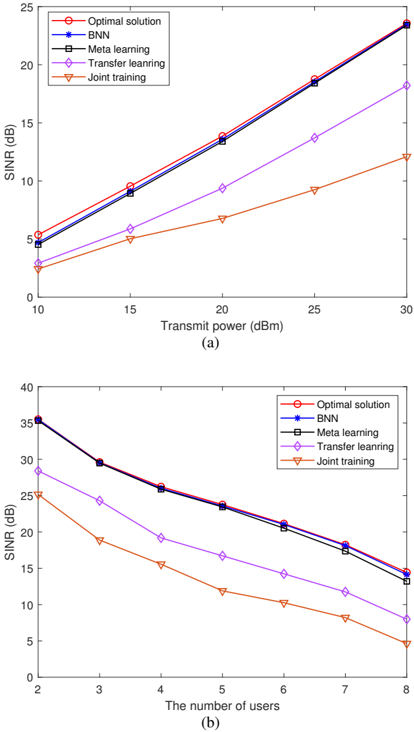
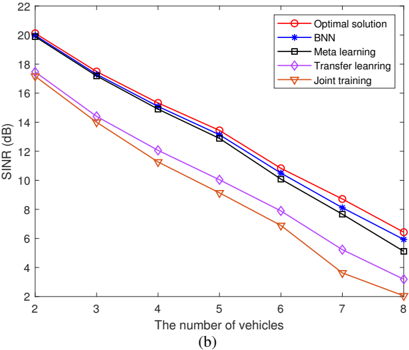
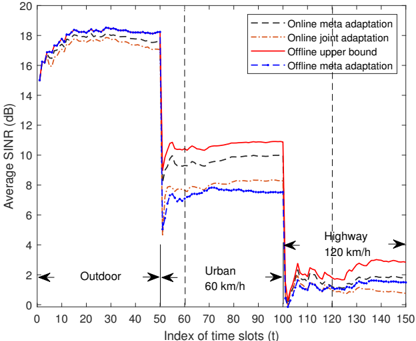
This article studies fast adaptive beamforming optimization for the signal-to-interference-plus-noise ratio balancing problem in a multiuser multiple-input single-output downlink system. Existing deep learning based approaches to predict beamforming rely on the assumption that the training and testing channels follow the same distribution which may not hold in practice. As a result, a trained model may lead to performance deterioration when the testing network environment changes. To deal with this task mismatch issue, we propose two offline adaptive algorithms based on deep transfer learning and meta-learning, which are able to achieve fast adaptation with the limited new labelled data when the testing wireless environment changes. Furthermore, we propose an online algorithm to enhance the adaptation capability of the offline meta algorithm in realistic non-stationary environments. Simulation results demonstrate that the proposed adaptive algorithms achieve much better performance than the direct deep learning algorithm without adaptation in new environments. The meta-learning algorithm outperforms the deep transfer learning algorithm and achieves near optimal performance. In addition, compared to the offline meta-learning algorithm, the proposed online meta-learning algorithm shows superior adaption performance in changing environments.
Overview
The claims and statistics of this paper haven’t been checked yet.
Free: it reads the open-access text and checks the first 5 claims that cite a source we can check. Create a free account to check every claim.
Integrity signals
Registry
Cites
Statistics
Figures








Verification
Claims the paper makes
The claims and statistics of this paper haven’t been checked yet.
Free: it reads the open-access text and checks the first 5 claims that cite a source we can check. Create a free account to check every claim.
Claims other papers make about this one
Each is checked against this paper’s own text: does it say what the citing paper says it does?
In the citing paper
“Transfer learning [103] and continual learning [277] have recently been adopted to address such task mismatch issue in the”
From Edge artificial intelligence for 6g: vision, enabling technologies, and applications (2022) · cites this paper as [103]
Self-check
Percentages, sums and reported differences re-computed from the paper’s own numbers.
The self-check needs the paper’s full text.
Citations
Cites
Adam: A Method for Stochastic Optimization
Kingma, D. P., & Ba, J. (2014) · arXiv · doi:10.48550/arxiv.1412.6980 · Cited by 98,946 · cited 2×
“learning rate, ∇θLossD Tr (θ) is the gradient of the loss function over θ. Alternatively, the network parameter θ also can be updated by using the existing adaptive moment estimation (ADAM) algorithm [39]. Next, we move to the fine-tuning stage when the pre-training stage is finished. Fine-tuning aims to refine all or pa…”
MethodInfluentialPan, S. J., & Yang, Q. (2010) · IEEE Transactions on Knowledge and Data Engineering · doi:10.1109/tkde.2009.191 · Cited by 23,387 · cited 2×
“and corresponding applications have been introduced in [27].”
BackgroundFundamentals of Wireless Communication
Tse, D., & Viswanath, P. (2005) · doi:10.1017/cbo9780511807213 · Cited by 13,162 · cited 1×
“arge-scale case. Besides, the antenna gains of the BS and each vehicle user are set to be 8 dBi and 3 dBi, respectively. The decorrelation distance is set to 50 m. We use Clarke’s model introduced in [42] to generate the small-scale fading of the moving vehicles. The effects of the transmit power and the number of veh…”
MethodModel-Agnostic Meta-Learning for Fast Adaptation of Deep Networks
Finn, C., Abbeel, P., & Levine, S. (2017) · arXiv · doi:10.48550/arxiv.1703.03400 · Cited by 8,512 · cited 4×
“In order to eliminate the model architecture restriction on the applications of meta-learning, the authors in [31] proposed the model-agnostic meta-learning (MAML) algorithm.”
BackgroundMethodInfluentialHow transferable are features in deep neural networks?
Yosinski, J., Clune, J., Bengio, Y., & Lipson, H. (2014) · arXiv · doi:10.48550/arxiv.1411.1792 · Cited by 6,061
Five disruptive technology directions for 5G
Boccardi, F., Heath, R. W., Lozano, A., Marzetta, T. L., & Popovski, P. (2014) · IEEE Communications Magazine · doi:10.1109/mcom.2014.6736746 · Cited by 3,709
Shi, Q., Razaviyayn, M., Luo, Z.-Q., & He, C. (2011) · IEEE Transactions on Signal Processing · doi:10.1109/tsp.2011.2147784 · Cited by 2,129 · cited 1×
“In the last two decades, beamforming optimization has been well studied for some specifical problems, such as signal-to-interferenceplus-noise ratio (SINR) balancing problem [3], [4], power minimization problem [5], [6] and sum rate maximization problem [4], [7]–[9].”
BackgroundSelf-citationPower of Deep Learning for Channel Estimation and Signal Detection in OFDM Systems
Ye, H., Li, G. Y., & Juang, B.-H. (2018) · IEEE Wireless Communications Letters · doi:10.1109/lwc.2017.2757490 · Cited by 2,000
Deep Learning in Mobile and Wireless Networking: A Survey
Zhang, C., Patras, P., & Haddadi, H. (2019) · IEEE Communications Surveys & Tutorials · doi:10.1109/comst.2019.2904897 · Cited by 1,768
Online Learning and Online Convex Optimization
Shalev-Shwartz, S. (2012) · Foundations and Trends® in Machine Learning · doi:10.1561/2200000018 · Cited by 1,246
Research works printed but not linked: 5
- J. Hannan, "Approximation to bayes risk in repeated play," Contributions to the Theory of Games, vol. 3, pp. 97-139, 1957.
- P. Kyosti, "IST-4-027756 WINNER II D1.1.2 v.1.2: WINNER II channel models," Inf. Soc. Technol., 2007.
- 3GPP: Technical Specification Group Radio Access Network: Study LTE-Based V2X Services: (Release 14), Standard 3GPP TR 36.885 V2.0.0, Jun. 2016.
- Gan Zheng (S'05-M'09-SM'12) received the BEng and the MEng from Tianjin University, Tianjin, China, in 2002 and 2004, respectively, both in Electronic and Information Engineering, and the PhD degree in Electrical and Electronic Engineering from The University of Hong Kong in 2008. He is currently Reader of Signal Processing for Wireless Communications in the Wolfson School of Me- chanical, Electrical and Manufacturing Engineering, Loughborough University, UK. His research inter- ests include machine learning for communications, UAV communications, mobile edge caching, full-duplex radio and wireless power transfer. He is the first recipient for the 2013 IEEE Signal Processing Letters Best Paper Award, and he also received 2015 GLOBECOM Best Paper Award, and 2018 IEEE Technical Committee on Green Communications & Computing Best Paper Award. He was listed as a Highly Cited Researcher by Thomson Reuters/Clarivate Analytics in 2019. He currently serves as an Associate Editor for IEEE Communications Letters and IEEE Wireless Communications Letters.
- Kai-Kit Wong (M'01-SM'08-F'16) received the BEng, the MPhil, and the PhD degrees, all in Electri- cal and Electronic Engineering, from the Hong Kong University of Science and Technology, Hong Kong, in 1996, 1998, and 2001, respectively. After gradua- tion, he took up academic and research positions at the University of Hong Kong, Lucent Technologies, Bell-Labs, Holmdel, the Smart Antennas Research Group of Stanford University, and the University of Hull, UK. He is Chair in Wireless Communications at the Department of Electronic and Electrical Engi- neering, University College London, UK. His current research centers around 5G and beyond mobile communications. He is a co-recipient of the 2013 IEEE Signal Processing Letters Best Paper Award and the 2000 IEEE VTS Japan Chapter Award at the IEEE Vehicular Technology Conference in Japan in 2000, and a few other international best paper awards. He is Fellow of IEEE and IET and is also on the editorial board of several international journals.
Cited by
Edge artificial intelligence for 6g: vision, enabling technologies, and applications
Letaief, K. B., Shi, Y., Lu, J., & Lu, J. (2022) · IEEE Journal on Selected Areas in Communications · doi:10.1109/jsac.2021.3126076 · Cited by 829
“Transfer learning [103] and continual learning [277] have recently been adopted to address such task mismatch issue in the “learning to optimize” framework considering the system distribution dynamics.”
Enabling Intelligent Connectivity: A Survey of Secure ISAC in 6G Networks
Zhu, X., Liu, J., Lu, L., Zhang, T., Qiu, T., Wang, C., & Liu, Y. (2025) · IEEE Communications Surveys & Tutorials · doi:10.1109/comst.2024.3432871 · Cited by 211
Meta-learning approaches for learning-to-learn in deep learning: A survey
Tian, Y., Zhao, X., & Huang, W. (2022) · Neurocomputing · doi:10.1016/j.neucom.2022.04.078 · Cited by 161
Transfer Learning for Wireless Networks: A Comprehensive Survey
Nguyen, C. T., Huynh, N. V., Chu, N. H., Saputra, Y. M., Hoang, D. T., Nguyen, D. N., Pham, Q., Niyato, D. T., Dutkiewicz, E., & Hwang, W. (2022) · Proceedings of the IEEE · doi:10.1109/jproc.2022.3175942 · Cited by 180
Multiple Access Techniques for Intelligent and Multifunctional 6G: Tutorial, Survey, and Outlook
Clerckx, B., Mao, Y., Yang, Z., Chen, M., Alkhateeb, A., Liu, L., Qiu, M., Yuan, J., Wong, V. W. S., & Montojo, J. I. (2024) · Proceedings of the IEEE · doi:10.1109/jproc.2024.3409428 · Cited by 180
“These encompass a range of techniques, such as the transformer [186], autoencoder [187], transfer learning [188], and meta-learning [180].”
BackgroundMeta-Reinforcement Learning Based Resource Allocation for Dynamic V2X Communications
Yuan, Y., Zheng, G., Wong, K.-K., & Letaief, K. B. (2021) · IEEE Transactions on Vehicular Technology · doi:10.1109/tvt.2021.3098854 · Cited by 133
“The ability of meta-learning in solving mismatch issues has been proven in computer vision [26] and wireless communications [27], [28].”
BackgroundSelf-citationRobust Beamforming for RIS-Aided Communications: Gradient-Based Manifold Meta Learning
Zhu, F., Wang, X., Huang, C., Yang, Z., Chen, X., Alhammadi, A., Zhang, Z., Yuen, C., & Debbah, M. A. (2024) · IEEE Transactions on Wireless Communications · doi:10.1109/twc.2024.3435023 · Cited by 162
“Furthermore, [24] explored the application of transfer learning in downlink beamforming, in which the NNs were trained offline and fine-tuned online, thereby accelerating the online adaptation of NNs.”
BackgroundAdvanced Deep Learning Models for 6G: Overview, Opportunities, and Challenges
Jiao, L., Shao, Y., Sun, L., Liu, F., Yang, S., Ma, W., Li, L., Liu, X., Hou, B., Zhang, X., et al. (2024) · IEEE Access · doi:10.1109/access.2024.3418900 · Cited by 148
Federated Learning and Meta Learning: Approaches, Applications, and Directions
Liu, X., Deng, Y., Nallanathan, A., & Bennis, M. (2023) · IEEE Communications Surveys & Tutorials · doi:10.1109/comst.2023.3330910 · Cited by 139
“…as good generalization performance on new tasks and the model being easy to fine-tune, it has been widely used for optimization problems in wireless networks, such as traffic prediction [229], transmission rate maximization [230], [231], and multiple-input and multiple-output (MIMO) detectors [232].”
BackgroundResultArtificial General Intelligence (AGI)-Native Wireless Systems: A Journey Beyond 6G
Saad, W., Hashash, O., Thomas, C. K., Chaccour, C., Debbah, M. A., Mandayam, N. B., & Han, Z. (2025) · Proceedings of the IEEE · doi:10.1109/jproc.2025.3526887 · Cited by 113
“For example, consider a downlink multiuser scenario in which the air interface optimizes the beamforming configuration at the base station (BS) for a certain network environment [11].”
Integrated Sensing and Communications Over the Years: An Evolution Perspective
Zhang, D. B., Cui, Y., Cao, X., Su, N., Gong, Y., Liu, F., Yuan, W., Jing, X., Zhang, J. A., Xu, J., et al. (2026) · IEEE Communications Surveys & Tutorials · doi:10.1109/comst.2026.3655674 · Cited by 105
“By leveraging sensing data quality for dynamic client scheduling and power control, the framework improved convergence robustness and reduced training latency in bandwidth-limited environments [181].”
Akrout, M., Feriani, A., Bellili, F., Mezghani, A., & Hossain, E. (2023) · IEEE Communications Surveys & Tutorials · doi:10.1109/comst.2023.3326399 · Cited by 100
“Another line of work employed the standard meta-learning MAML algorithm [87] for adaptive beamforming to new wireless environments [144].”
MethodOnline Meta-Learning for Hybrid Model-Based Deep Receivers
Raviv, T., Park, S., Simeone, O., Eldar, Y. C., & Shlezinger, N. (2023) · IEEE Transactions on Wireless Communications · doi:10.1109/twc.2023.3241841 · Cited by 75
“Meta-learning was adopted to facilitate prediction of blockages [62], beam tracking [63], and power control [64].”
MethodFaramarzi, S., Javadi, S., Zeinali, F., Zarini, H., Mili, M. R., Bennis, M., Li, Y., & Wong, K. (2024) · IEEE Internet of Things Journal · doi:10.1109/jiot.2024.3397007 · Cited by 56
“Recently, it has been demonstrated that meta-learning can effectively address such mismatch issues in wireless networks [35], [50], [52].”
BackgroundSelf-citationUpadhyay, R., Phlypo, R., Saini, R., & Liwicki, M. (2024) · IEEE Access · doi:10.1109/access.2024.3478805 · Cited by 55
A Joint Energy and Latency Framework for Transfer Learning Over 5G Industrial Edge Networks
Yang, B. F., Fagbohungbe, O. I., Cao, X., Yuen, C., Qian, L., Niyato, D. T., & Zhang, Y. (2021) · IEEE Transactions on Industrial Informatics · doi:10.1109/tii.2021.3075444 · Cited by 57
Sun, H., Pu, W., Fu, X., Chang, T., & Hong, M. (2022) · IEEE Transactions on Signal Processing · doi:10.1109/tsp.2022.3143372 · Cited by 59
“Similar ideas have been applied in wireless settings recently [17, 52, 53] to deal with scenarios that network parameters changes.”
BackgroundAlgorithm Unrolling for Massive Access via Deep Neural Networks With Theoretical Guarantee
Shi, Y., Choi, H., Shi, Y., & Zhou, Y. (2021) · IEEE Transactions on Wireless Communications · doi:10.1109/twc.2021.3100500 · Cited by 48
“The continual learning and transfer learning technologies [42], [43] that have been developed for resource allocation and beamforming optimization in dynamic environment have the potential to address this issue.”
BackgroundRobust WMMSE Precoder With Deep Learning Design for Massive MIMO
Shi, J., Lu, A.-A., Zhong, W., Gao, X., & Li, G. Y. (2023) · IEEE Transactions on Communications · doi:10.1109/tcomm.2023.3269849 · Cited by 48
“A fast adaptive beamforming optimization based on deep transfer learning and meta-learning in [12] can achieve fast adaptation in realistic non-stationary environments.”
BackgroundMethodModular Meta-Learning for Power Control via Random Edge Graph Neural Networks
Nikoloska, I., & Simeone, O. (2022) · IEEE Transactions on Wireless Communications · doi:10.1109/twc.2022.3195352 · Cited by 42
“Reference [38] studies fast beamforming in multiuser multiple-input single-output (MISO) downlink systems.”
BackgroundRobust Bayesian Learning for Reliable Wireless AI: Framework and Applications
Zecchin, M., Park, S., Simeone, O., Kountouris, M., & Gesbert, D. (2023) · IEEE Transactions on Cognitive Communications and Networking · doi:10.1109/tccn.2023.3261300 · Cited by 44
“In wireless communications, the problem is particularly pronounced at the physical layer, in which fading dynamics imply short stationary intervals for data collection and training [6], [7], [8], [9].”
BackgroundDeep Joint Semantic Coding and Beamforming for Near-Space Airship-Borne Massive MIMO Network
Wu, M., Gao, Z., Wang, Z., Niyato, D. T., Karagiannidis, G. K., & Chen, S. (2024) · IEEE Journal on Selected Areas in Communications · doi:10.1109/jsac.2024.3460084 · Cited by 39
“The study [47] proposed a beamforming neural network training strategy based on transfer learning for different channel conditions.”
Zhang, X., Li, G., Zhang, J., Peng, L., Hu, A., & Wang, X. (2024) · IEEE Transactions on Vehicular Technology · doi:10.1109/tvt.2024.3367362 · Cited by 33
“[ Different from 25] that used the channel impulse response (CIR) as channel information, we use the CFR to improve the key generation rate.”
BackgroundMethodInfluentialEmbedding Model-Based Fast Meta Learning for Downlink Beamforming Adaptation
Zhang, J., Yuan, Y. X., Zheng, G., Krikidis, I., & Wong, K. (2021) · IEEE Transactions on Wireless Communications · doi:10.1109/twc.2021.3094162 · Cited by 41
“Although the MAML algorithm has shown a good ability on solving the mismatch issues of beamforming in designing dynamic wireless networks [21], it may cause outdated beamforming prediction due to its high complexity in the training and adaptation processes.”
MethodSelf-citationZhang, Y., Simeone, O., Jose, S. T., Maggi, L., & Valcarce, Á. (2023) · IEEE Transactions on Cognitive Communications and Networking · doi:10.1109/tccn.2023.3287240 · Cited by 30
“Applications of meta-learning to communication systems are currently limited to DNN-based models, and encompass demodulation [23], [24], channel prediction [25], beamforming [26], feedback design [27], and power control via graph neural networks [28].”
BackgroundBayesian Active Meta-Learning for Reliable and Efficient AI-Based Demodulation
Cohen, K. M., Park, S., Simeone, O., & Shamai, S. S. (2022) · IEEE Transactions on Signal Processing · doi:10.1109/tsp.2022.3220035 · Cited by 30
“Unlike prior works that considered either frequentist meta-learning [6], [19], [20], [21], [22], [23], [24], [25], [26] or Bayesian learning [40], [41], [42], [43], the proposed Bayesian meta-learning methodology enables both resource-efficient adaptation and a reliable quantification of uncertainty.”
BackgroundMeta-learning Based Beamforming Design for MISO Downlink
Xia, J., & Gündüz, D. (2021) · IEEE International Symposium on Information Theory (ISIT) · doi:10.1109/isit45174.2021.9518251 · Cited by 32
“This idea has been recently employed in [13] for the WSR maximization problem, where there can be a mismatch between test and training SNRs. Meta-learning allows fine-tuning the NN parameters with few training samples.”
BackgroundMethodKnowledge-Driven Meta-Learning for CSI Feedback
Xiao, H., Tian, W., Liu, W. K., Guo, J., Zhang, Z., Jin, S., Shi, Z., Guo, L., & Shen, J. (2023) · IEEE Transactions on Wireless Communications · doi:10.1109/twc.2023.3327984 · Cited by 30
“Modified Transformer [19, 20] Attention mechanism [21–23] Non-local module [24] Side Spatio-temporal feature [25] Reciprocity of downlink and uplink channels [27] Principal component information [28, 29]”
MethodFast Power Control Adaptation via Meta-Learning for Random Edge Graph Neural Networks
Nikoloska, I., & Simeone, O. (2021) · IEEE International Workshop on Signal Processing Advances in Wireless Communications (SPAWC) · doi:10.1109/spawc51858.2021.9593131 · Cited by 28
Zhao, B., Guo, J., & Yang, C. (2024) · IEEE Transactions on Communications · doi:10.1109/tcomm.2024.3388506 · Cited by 25
“It was mentioned in [11] that precoding policy is hard to learn since the input and output of a DNN for learning precoding are with high dimension due to the large numbers of antennas and users.”
BackgroundMethodInfluentialSaikia, P., Singh, K. K., Taghizadeh, O., Huang, W.-J., & Biswas, S. (2023) · IEEE Transactions on Cognitive Communications and Networking · doi:10.1109/tccn.2023.3319543 · Cited by 24
“As a result, we propose ML into RL inorder to address the challenges brought by change of environment in the spectrum sharing scenario [36], [37].”
BackgroundKey Technologies for 6G-Enabled Smart Sustainable City
Kim, N., Kim, G., Shim, S., Jang, S., Song, J., & Lee, B. (2024) · Electronics · doi:10.3390/electronics13020268 · Cited by 29
Meta-Learning for Wireless Communications: A Survey and a Comparison to GNNs
Zhao, B., Wu, J., Ma, Y., & Yang, C. (2024) · IEEE Open Journal of the Communications Society · doi:10.1109/ojcoms.2024.3380512 · Cited by 31
Farahzadi, L., Odeh, I., Kioumarsi, M., & Shafei, B. (2025) · Results in Engineering · doi:10.1016/j.rineng.2025.104978 · Cited by 21
Learning to Continuously Optimize Wireless Resource in Episodically Dynamic Environment
Sun, H., Pu, W., Zhu, M., Fu, X., Chang, T.-H., & Hong, M. (2021) · ICASSP 2021 - 2021 IEEE International Conference on Acoustics, Speech and Signal Processing (ICASSP) · doi:10.1109/icassp39728.2021.9413503 · Cited by 21
“Similar ideas have been applied in wireless settings recently [15, 57, 58] to deal with scenarios that network parameters changes.”
BackgroundAccelerating Reinforcement Learning via Predictive Policy Transfer in 6G RAN Slicing
Nagib, A. M., Abou-Zeid, H., & Hassanein, H. S. (2023) · IEEE Transactions on Network and Service Management · doi:10.1109/tnsm.2023.3258692 · Cited by 26
“Finally, it is worth noting that other researchers address the issue of RL slow convergence using approaches such as heuristics and metalearning [23], [24], [25], [26].”
BackgroundDeep Transfer Learning for Model-Driven Signal Detection in MIMO-NOMA Systems
Wang, X., Zhang, D., Chen, B., Liu, T., Xin, Y., & Xu, Y. (2023) · IEEE Transactions on Vehicular Technology · doi:10.1109/tvt.2023.3274561 · Cited by 20
Learning at the Speed of Wireless: Online Real-Time Learning for AI-Enabled MIMO in NextG
Xu, J., Jere, S., Song, Y., Kao, Y.-H., Zheng, L., & Liu, L. (2024) · IEEE Communications Magazine · doi:10.1109/mcom.001.2300529 · Cited by 18
“Examples of the MAML algorithm being adopted for hybrid learning include the downlink beamforming approach at the transmitter side [4] and the channel prediction method at the receiver side [5].”
MethodRecursive GNNs for Learning Precoding Policies With Size-Generalizability
Guo, J., & Yang, C. (2024) · IEEE Transactions on Machine Learning in Communications and Networking · doi:10.1109/tmlcn.2024.3480044 · Cited by 25
“Most existing works designed fully-connected neural networks (FNNs) [2], [5] and convolutional neural networks (CNNs) [4], [6], [7], [8] for learning precoding policies in multi-input-multi-output (MIMO) or multi-user multi-input-single-output (MU-MISO) systems, which can achieve satisfactory…”
BackgroundMethodSohaib, R. M., Onireti, O., Sambo, Y. A., Swash, M. R., & Imran, M. A. (2024) · IEEE Transactions on Network and Service Management · doi:10.1109/tnsm.2024.3400605 · Cited by 22
“Meta-learning capabilities to address unseen task issues have been well-presented in [29], [30].”
BackgroundEnhancing Adaptive Beamforming in 3-D Space Through Self-Improving Neural Network Techniques
Mallioras, I., Yioultsis, T. V., Kantartzis, N. V., Lazaridis, P. I., & Zaharis, Z. D. (2024) · IEEE Open Journal of the Communications Society · doi:10.1109/ojcoms.2024.3366770 · Cited by 15
“The transfer learning technique followed in [47] is similar to the one utilized in our self-improvement method in the sense that a pre-trained NN is used and fine-tuned to new data.”
BackgroundMethodDeep Learning and Image Super-Resolution-Guided Beam and Power Allocation for mmWave Networks
Cao, Y., Ohtsuki, T. O., Maghsudi, S., & Quek, T. Q. S. (2023) · IEEE Transactions on Vehicular Technology · doi:10.1109/tvt.2023.3282429 · Cited by 15
“References [7], [8], [9], [10] develop solutions based on deep learning to tackle this challenge.”
BackgroundMeta-Gating Framework for Fast and Continuous Resource Optimization in Dynamic Wireless Environments
Hou, Q., Lee, M., Yu, G., & Cai, Y. (2023) · IEEE Transactions on Communications · doi:10.1109/tcomm.2023.3292257 · Cited by 17
“In [11], a downlink beamformer design based on meta-learning has been proposed to enable fast adaptation to a new testing wireless environment.”
MethodMMVS: Enabling Robust Adaptive Video Streaming for Wildly Fluctuating and Heterogeneous Networks
Wang, S., Lin, J., & Dai, Y. (2024) · IEEE Transactions on Multimedia · doi:10.1109/tmm.2024.3443609 · Cited by 14
Khisa, S., Elhattab, M., Assi, C. M., & Sharafeddine, S. (2025) · IEEE Transactions on Communications · doi:10.1109/tcomm.2025.3550371 · Cited by 14
Robust Deep Learning-Based Physical Layer Communications: Strategies and Approaches
Zhu, F., Wang, X., Zhu, C., Gong, T., Yang, Z., Huang, C., Chen, X., Zhang, Z., & Debbah, M. A. (2025) · IEEE Network · doi:10.1109/mnet.2025.3567105 · Cited by 14
“Transfer Learning [4] Utilizes pre-trained models on large datasets for fine-tuning with smaller, task-specific data.”
InfluentialZhou, H., Xia, W., Zheng, G., & Zhu, H. (2025) · IEEE Transactions on Vehicular Technology · doi:10.1109/tvt.2025.3585146 · Cited by 16
Self-citationHybrid-Task Meta-Learning: A GNN Approach for Scalable and Transferable Bandwidth Allocation
Hao, X., She, C., Yeoh, P. L., Liu, Y., Vucetic, B. S., & Li, Y. (2024) · IEEE Transactions on Wireless Communications · doi:10.1109/twc.2024.3487533 · Cited by 15
“…bandwidth in each TTI is stochastic [3], [4], each user may have different QoS requirements [5], [6], [7], and wireless channels are non-stationary [8], [9], making it difficult to develop a low-complexity bandwidth allocation policy that is scalable with the number of users and can satisfy a…”
InfluentialAuto-Encoder Based Orthogonal Time Frequency Space Modulation and Detection With Meta-Learning
Park, J., Hong, J., Kim, H.-J., & Jeong, B. J. (2023) · IEEE Access · doi:10.1109/access.2023.3271993 · Cited by 13
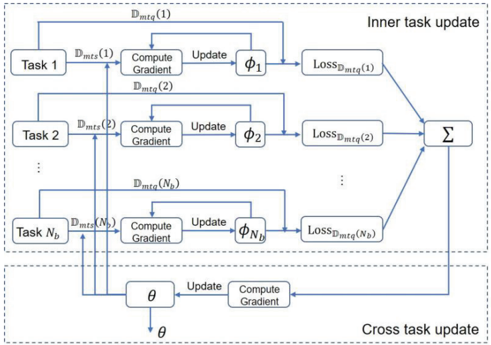
“We note that, in MAML, initial parameters of the model for fast adaptation is learned by alternating between inner-task procedure and cross-task procedure [35].”
BackgroundInfluentialScenario-Adaptive Meta-Learning for mmWave Beam Alignment
Xu, Z., Wang, S., & Zhang, Y. A. (2025) · IEEE Transactions on Wireless Communications · doi:10.1109/twc.2025.3528647 · Cited by 17
“The random generation method in [19] and [20] uses a fully shuffled grid set to collect training samples for one single task.”
InfluentialHandover Strategy Based on Side Information in Air-Ground Integrated Vehicular Networks
Zhou, Y., Sun, J., Yang, J., Gui, G., Gacanin, H., & Adachi, F. (2022) · IEEE Transactions on Vehicular Technology · doi:10.1109/tvt.2022.3188324 · Cited by 17
Toward Standardization of 6G and NextG: Key Technologies to Enable Fundamental Enhancements
Chen, W., Liu, L., Liu, X., Larsson, E. G., Jaafari, M. E., & Quek, T. Q. S. (2026) · IEEE Journal on Selected Areas in Communications · doi:10.1109/jsac.2026.3671338 · Cited by 16
O2SC: Realizing Channel-Adaptive Semantic Communication With One-Shot Online-Learning
Zhang, G., Kang, K., Cai, Y., Hu, Q., Eldar, Y. C., & Swindlehurst, A. L. (2024) · IEEE Transactions on Communications · doi:10.1109/tcomm.2024.3480982 · Cited by 9
“One promising avenue is meta-learning, which aims to improve the learning ability of neural networks by learning from data with different distributions [28], [29], [30], [31], [32].”
Optical RIS-Assisted SLIPT Systems With Rate-Splitting Multiple Access
Javadi, S., Faramarzi, S., Zeinali, F., Zarini, H., Mili, M. R., Diamantoulakis, P. D., Jorswieck, E. A., & Karagiannidis, G. K. (2024) · IEEE Internet of Things Journal · doi:10.1109/jiot.2024.3511664 · Cited by 9
“In this section, a Meta-learning approach is integrated with PPO, introducing the Meta-PPO algorithm to solve problem P 1 [54], [55], [57].”
Shahabodini, S., Mansoori, M., Abouei, J., & Plataniotis, K. N. (2023) · Transactions on Emerging Telecommunications Technologies · doi:10.1002/ett.4926 · Cited by 9
“In 35–37 As mentioned earlier, in dynamic wireless environments, it is pretty challenging to train a single model for the channel estimation task, and it is needed to adapt the network to the test environment.”
BackgroundTransfer Learning Based Detection for Intelligent Reflecting Surface Aided Communications
Khan, S., Durrani, S., & Zhou, X. (2021) · IEEE International Symposium on Personal, Indoor and Mobile Radio Communications (PIMRC) · doi:10.1109/pimrc50174.2021.9569500 · Cited by 10
Intelligent Beamforming Design for Integrated Sensing, Communication, and Computation
Liu, X., Zhang, H., Li, H., & Sun, C. (2025) · IEEE Transactions on Communications · doi:10.1109/tcomm.2025.3634267 · Cited by 15
Non-Intrusive Speech Quality Assessment Based on Deep Neural Networks for Speech Communication
Liu, M., Wang, J., Wang, F., Xiang, F., & Chen, J. (2023) · IEEE Transactions on Neural Networks and Learning Systems · doi:10.1109/tnnls.2023.3321076 · Cited by 8
“Additionally, recent advances in transfer learning, such as meta-learning [49] and domain adaptation [50], have shown promising results in adapting pretrained models to new domains.”
Qing, C., Dong, L., Wang, L., Ling, G., & Wang, J. (2022) · PLoS ONE · doi:10.1371/journal.pone.0268952 · Cited by 8
“Nevertheless, these DL-based CEs still face many challenges, such as low generalization with the environment change [44], long training time, complex parameter tuning, and large memory requirements [45], etc. Relative to the general DL method, the TL features many advantages [24], [46], e.g., huge…”
MethodLearning to Learn to Demodulate with Uncertainty Quantification via Bayesian Meta-Learning.
Cohen, K. M., Park, S., Simeone, O., & Shamai, S. S. (2021) · Research Portal (King's College London) · Cited by 11
Peng, F., Zhang, S., Chen, W., & Wu, Q. (2023) · IEEE Transactions on Wireless Communications · doi:10.1109/twc.2023.3317130 · Cited by 7
“To guarantee the beamforming performance with the wireless environment varying, transfer learning and meta learning are utilized to rapidly adapt the new environment in [43] and [44].”
MethodSAGE-HB: Swift Adaptation and Generalization in Massive MIMO Hybrid Beamforming
Karkan, A. H., Hojatian, H., Frigon, J., & Leduc-Primeau, F. (2024) · IEEE International Conference on Machine Learning for Communication and Networking (ICMLCN) · doi:10.1109/icmlcn59089.2024.10624768 · Cited by 10
“The HBF vectors consist of a digital baseband precoder W = [ w 1 , ..., w u , ..., w N U ] ∈ N RF × N U and analog precoder (AP) which is defined by a N T × N RF matrix A ∈ N T × N RF , where [ A ] n,m = e jφ n,m is the state of the phase-shifter (PS) connected between the n th antenna and m th RF…”
BackgroundResultPark, S., & Simeone, O. (2022) · IEEE International Conference on Acoustics Speech and Signal Processing · doi:10.1109/icassp43922.2022.9746361 · Cited by 7
Karasik, R., Simeone, O., Jang, H., & Shamai, S. S. (2022) · IEEE Transactions on Communications · doi:10.1109/tcomm.2022.3219118 · Cited by 7
“Representative examples include meta-learning for learning to demodulate [29], [30] or decode [31]; for end-to-end learning of encoder and decoder [32]; for beamforming adaptation [33], [34]; for proactive resource allocation [35], [36]; and for channel estimation [37].”
BackgroundParameter-Efficient Online Fine-Tuning of ML-Based Hybrid Beamforming With LoRA
Jabbarvaziri, F., & Lampe, L. (2025) · IEEE Wireless Communications Letters · doi:10.1109/lwc.2025.3543965 · Cited by 6
“Consequently, achieving optimal performance requires periodic or performance-driven online fine-tuning for ML-based beamforming and CSI prediction and compression [6], [7], [8], [9], [10].”
Gao, Q., Zhong, R., Zou, Y., Shin, H., & Liu, Y. (2026) · IEEE Transactions on Wireless Communications · doi:10.1109/twc.2025.3649260 · Cited by 6
Anti-Jamming Communication Using Imitation Learning
Zhou, Z., Niu, Y., Wan, B., & Zhou, W. (2023) · Entropy · doi:10.3390/e25111547 · Cited by 6
“…is underutilized [11] IoT Automated Measurement [12] 5G FDRL FL Performance is sacrificed for security [13] Secrecy-driven FL FL [14] FANET AFRL [15] Beamforming Meta Learning Meta-L High computing power requirements [16] Image Classification MGML [17] Jamming Recognition Meta Learning [18]…”
BackgroundClassification-Based Transfer Learning for Blind Adaptive Receiver Beamforming
Wentz, M., Capper, J., Kurien, B. G., Forsythe, K. W., & Chowdhury, K. R. (2024) · IEEE Consumer Communications and Networking Conference · doi:10.1109/ccnc51664.2024.10454656 · Cited by 6
“While transfer learning has been shown to improve the generality of beamforming networks [11], the concept proposed herein, where the underlying network has been trained for a task other than beamforming, does not appear to have been studied in the literature.”
MPC-Based 5G uRLLC Rate Calculation
Liu, J., Mendes, P. R. D. C., Wirsen, A., & Görges, D. (2024) · IEEE Transactions on Network and Service Management · doi:10.1109/tnsm.2024.3459634 · Cited by 6
Automatic AI Model Selection for Wireless Systems: Online Learning via Digital Twinning
Hou, Q., Zecchin, M., Park, S., Cai, Y., Yu, G., Chowdhury, K. R., & Simeone, O. (2025) · IEEE Transactions on Wireless Communications · doi:10.1109/twc.2025.3527741 · Cited by 9
“As a result, a direct use of simulated data for the optimization of the AMS mapping may yield poor performance when tested in the real system [3], [20], [29].”
Fast Data-Driven Adaptation of Radar Detection via Meta-Learning
Jiang, W., Haimovich, A. M., Govoni, M. A., Garner, T. J., & Simeone, O. (2021) · Asilomar Conference on Signals, Systems and Computers (ACSSC) · doi:10.1109/ieeeconf53345.2021.9723379 · Cited by 6
“…two learning paradigms have been applied to solve problems in communication systems to achieve fast adaptation, such as resource allocation in wireless networks [16], downlink beamforming optimization [17], demodulating over fading channels [18], and decoding for convolutional and turbo codes [19].”
MethodAttention-Based Deep Learning for Hybrid Beamforming in OFDM Systems With Phase Noise
Jabbarvaziri, F., & Lampe, L. (2025) · IEEE Transactions on Wireless Communications · doi:10.1109/twc.2025.3562818 · Cited by 10
“Simulation results demonstrated the resilience of our proposed model against individual and compounded distortions, highlighting its benefits for practical use cases.”
AI-RAN: The pathway to future wireless networks
Feng, C., Yang, H. H., Guo, K., Xia, W., Liu, C., & Quek, T. Q. S. (2026) · Journal of Information and Intelligence · doi:10.1016/j.jiixd.2025.12.013 · Cited by 12
SAMBA: Scenario-Adaptive Meta-Learning for mmWave Beam Alignment
Xu, Z., Wang, S., & Zhang, Y. A. (2023) · IEEE Globecom Workshops (GC Wkshps) · doi:10.1109/gcwkshps58843.2023.10465061 · Cited by 5
“This often involves heuristic strategies such as random task splitting [6] or splitting based on geographic area [7].”
BackgroundMethodInfluentialTransfer Learning With Reconstruction Loss
Cui, W., & Yu, W. (2024) · IEEE Transactions on Machine Learning in Communications and Networking · doi:10.1109/tmlcn.2024.3384329 · Cited by 7
“Although a few works have explored transfer learning on certain wireless communication problems [23], [33], [34], the techniques used are specific to the application settings or objective characteristics.”
MethodTransfer Learning with Input Reconstruction Loss
Cui, W., & Yu, W. (2022) · Globecom · doi:10.1109/globecom48099.2022.10000610 · Cited by 5
“[19] and parts of [20] focus on the setting”
BackgroundEnhancing Model Agnostic Meta-Learning via Gradient Similarity Loss
Tak, J.-H., & Hong, B. (2024) · Electronics · doi:10.3390/electronics13030535 · Cited by 5
“Parallelly, the paradigm of pre-training followed by fine-tuning has gained traction in the realm of neural networks, predominantly for transfer learning and semi-supervised learning [9,10].”
BackgroundChen, Z., Zhang, S., Zeng, S., & Di, B. (2023) · IEEE Vehicular Technology Conference · doi:10.1109/vtc2023-fall60731.2023.10333610 · Cited by 4
“The main idea is to learn from outdated models through transfer learning when updating the beam prediction model to avert retraining the model from scratch [8].”
BackgroundLearning Precoding Policy with Inductive Biases: Graph Neural Networks or Meta-Learning?
Zhao, B., Ma, Y., Wu, J., & Yang, C. (2023) · Globecom · doi:10.1109/globecom54140.2023.10436861 · Cited by 4
“Different from [4] and [9] that only consider indirect learning, we also evaluate the performance of meta-learning when the precoding policy is learned directly, which is a hard task unless the SNR is very low.”
BackgroundMethodInfluentialNear-Field Spot Beamfocusing: A Correlation-Aware Transfer Learning Approach
Fallah, M. A., Monemi, M., Rasti, M., & Latva‐aho, M. (2024) · IEEE Transactions on Mobile Computing · doi:10.1109/tmc.2024.3519382 · Cited by 7
“In such scenarios, a similar TL strategy, as described earlier, can be applied to train the entire ELPM for the new DFP location, leveraging knowledge acquired from previous DFP training processes.”
Liu, Z., Li, Y., Wu, Y., & Gong, Y. (2025) · IEEE Transactions on Wireless Communications · doi:10.1109/twc.2025.3560116 · Cited by 7
MPBA: Meta-Predictive Beam Alignment for mmWave Systems With Environmental Variability
Mu, Y., Cui, Q., Li, Q., Lyu, X., & Tao, X. (2025) · IEEE Transactions on Communications · doi:10.1109/tcomm.2025.3583648 · Cited by 3
Blind Beamforming via Deep Learning-Based Signal Classification and Transfer Learning
Wentz, M., Capper, J., Kurien, B. G., Forsythe, K. W., & Chowdhury, K. R. (2025) · IEEE Transactions on Cognitive Communications and Networking · doi:10.1109/tccn.2025.3598069 · Cited by 3
“Transfer learning has been studied and shown to improve the generalization of models for beamforming [26], [27], but these works used networks that were explicitly designed and pre-trained for beamforming.”
Near-Field Beam Focusing for Extremely Large-Scale IRS-Aided Communication Systems
Li, H., Zhang, Y., Cao, X., Zheng, H., Mu, X., & Zhang, T. (2025) · IEEE Transactions on Wireless Communications · doi:10.1109/twc.2025.3633451 · Cited by 3
Generalizable Learning for Frequency-Domain Channel Extrapolation Under Distribution Shift
Wang, H., Sun, Z., Han, S., Wang, X., & Wang, Z. (2026) · IEEE Transactions on Wireless Communications · doi:10.1109/twc.2025.3650044 · Cited by 3
“To enhance the performance of DNNs in the target environments, several learning paradigms have been designed, including domain adaptation [17], transfer learning [7], [18], and meta-learning [7], [18].”
ProtoBeam: Generalizing Deep Beam Prediction to Unseen Antennas using Prototypical Networks
Mashaal, O., Mohammed, E., Digby, A., Swersky, L., Eshaghbeigi, A., & Abou-Zeid, H. (2024) · Globecom · doi:10.1109/globecom52923.2024.10901744 · Cited by 3
“Additionally, [7] employs MAML and transfer learning to adapt to domain shifts in beamforming, demonstrating that MAML outperforms transfer learning for predicting the power allocation vector.”
Meta-Hierarchical Reinforcement Learning-Based Beamforming for Near-Field Multi-User Communications
Chen, Y., Al–Rubaye, S., Tsourdos, A., Li, H., Shi, X., Wei, Z., Liu, Z., Baker, L., & Gillingham, C. (2025) · IEEE Transactions on Wireless Communications · doi:10.1109/twc.2025.3618804 · Cited by 3
Tolba, B., El-Malek, A. H. A., Abo-Zahhad, M. M., & Elsabrouty, M. M. (2023) · IEEE Consumer Communications and Networking Conference · doi:10.1109/ccnc51644.2023.10060092 · Cited by 3
“Once the hypothesis is generated, its quality is evaluated by a performance assessment component [16].”
BackgroundAdaptive Massive MIMO Hybrid Precoding Based on Meta Learning
Sun, M., Wu, S., Wang, H., & Yang, S. (2023) · International Conference on Wireless Communications and Signal Processing (WCSP) · doi:10.1109/wcsp58612.2023.10404732 · Cited by 3
“The working process of the Advanced Learner is described in detail in Algorithm 1, which is divided into two main phases, the meta training phase and the meta fine-tuning phase [12].”
MethodMU-MIMO Beamforming With Limited Channel Data Samples
Li, S., Jiang, N., Chen, Y., Xie, W., Lou, W., & Hou, Y. T. (2024) · IEEE Journal on Selected Areas in Communications · doi:10.1109/jsac.2024.3431515 · Cited by 3
“Although transfer learning or meta-learning [29], [30], [31], [32] can adapt to new environments without a re-training process, they still cannot offer any theoretical guarantee.”
BackgroundBehmandpoor, P., Eisen, M., Patrinos, P., & Moonen, M. (2025) · IEEE Transactions on Wireless Communications · doi:10.1109/twc.2025.3592774 · Cited by 2
“Works such as [35] in bandwidth and transmit power allocation, and [36] in beam-forming, utilize transfer learning concepts [37] to fine-tune only part of the policy (e.g., the last few layers) to reduce the computational complexity of retraining.”
Memristor-Based Meta-Learning for Fast mmWave Beam Prediction in Non-Stationary Environments
Cao, Y., Lu, W., Ohtsuki, T. O., Maghsudi, S., Jiang, X., & Tsimenidis, C. C. (2025) · International Conference on Communications · doi:10.1109/icc52391.2025.11161557 · Cited by 2
“Reference [12] develops a ML-based approach to solve the task mismatch problem by training in a multi-task environment to obtain a generalized initialization model, as well as to achieve fast beam prediction.”
A Foundation Model for Massive MIMO Precoding with an Adaptive Per-User Rate-Power Tradeoff
Emery, J., Karkan, A. H., Frigon, J., & Leduc-Primeau, F. (2025) · IEEE International Symposium on Personal, Indoor and Mobile Radio Communications (PIMRC) · doi:10.1109/pimrc62392.2025.11274999 · Cited by 2
“In [7], two offline training algorithms as well as an online adaptation method based on transfer learning and meta-learning are proposed.”
Advancing MIMO adaptation with transfer learning: pioneering approaches and emerging perspectives
Omondi, G., & Olwal, T. O. (2025) · Cogent Engineering · doi:10.1080/23311916.2025.2602250 · Cited by 2
Resilient AAV Trajectory Planning via Few-Shot Meta-Offline Reinforcement Learning
Eldeeb, E., & Alves, H. (2026) · IEEE Transactions on Machine Learning in Communications and Networking · doi:10.1109/tmlcn.2026.3656262
“The authors in [30] design fast downlink beamformers using transfer learning and meta-learning.”
Park, S., & Simeone, O. (2022) · Entropy · doi:10.3390/e24101363 · Cited by 3
“Previous applications of transfer learning to communication systems include beamforming for multi-user, multiple-input, single-output (MISO) downlink [25] and for intelligent reflecting surfaces (IRS)-assisted MISO downlink [26], and downlink channel prediction [27,28] (see also [25,27]).”
BackgroundLearning to Predict and Optimize Imperfect MIMO System Performance: Framework and Application
Su, J., Meng, F. Y., Liu, S., Huang, Y., & Lu, Z. (2022) · Globecom · doi:10.1109/globecom48099.2022.10001369 · Cited by 2
“Deep learning (DL) is widely recognized as an enabling technology for future wireless mobile network [1]–[3].”
BackgroundDownlink Beamforming Prediction in MISO System Using Meta Learning and Unsupervised Learning
Lyu, M., Ng, B. K., & Lam, C. (2023) · IEEE International Conference on Communication Technology (ICCT) · doi:10.1109/icct59356.2023.10419707 · Cited by 2
“The beamformig vector design and optimization are largely formulated based on the weighted sum rate (WSR) maximization, signal-to-interference-plus-noise ratio (SINR) balancing and power minimization [1].”
MethodEfficient Dual-Mode Generalized Spatial Modulation Detection with Enhanced DNN Architecture
Wang, Z., Jiang, X., Yu, J., Wen, M., Li, J., & Hai, H. (2024) · International Conference on Electronics, Information, and Communication (ICEIC) · doi:10.1109/iceic61013.2024.10457089 · Cited by 2
“These techniques are used in various fast-moving scenarios because of their advantages in reducing latency [8], [9], [10].”
MethodA New Approach to Tackle Channel Uncertainty with Limited Data Samples
Acharya, S., Li, S., Wu, Y., Jiang, N., Xie, W., Lou, W., & Hou, Y. T. (2025) · IEEE Wireless Communications · doi:10.1109/mwc.013.2400339 · Cited by 2
“Although some methods can build ML models with a small amount of data [4], they, like other ML approaches, cannot provide theoretical performance guarantees.”
Metadata
- Authors
- Yuan, Y., Zheng, G., Wong, K.-K., Ottersten, B., & Luo, Z.-Q.
- Affiliations
- Loughborough University (GB)
- University College London (GB)
- Shenzhen Research Institute of Big Data (CN)
- Venue
- IEEE Transactions on Wireless Communications
- Published
- 2021-03
- Volume
- 20
- Issue
- 3
- Pages
- 1742-1755
- ISSN
- 1536-1276 (ISSN-L)
- 1558-2248
- OpenAlex
- W3100120649
- Cited by
- 133
- References
- 45
- Citations by year
- 2026: 18 · 2025: 26 · 2024: 32 · 2023: 24 · 2022: 16 · 2021: 17
- FWCI
- 5.60
- Type
- journal article
- Language
- en
- Open access
- green
- arxiv.org
- Locations
- IEEE Transactions on Wireless Communications (publishedVersion)
- arXiv (Cornell University) (submittedVersion)
- Open Repository and Bibliography (University of Luxembourg) (submittedVersion, cc-by-nc-sa)
- UCL Discovery (University College London) (submittedVersion)
- Figshare (submittedVersion, cc-by)
- arXiv (Cornell University)
- Funders
- U.K. Engineering and Physical Sciences Research Council (EP/N007840/1)
- Leverhulme Trust Research Project (RPG-2017-129)
- EPSRC (EP/N008219/1)
- H2020-ERC-AdG-AGNOSTIC (742648)
- Leading Talents of Guangdong Province Program (00201501)
- National Natural Science Foundation of China (61731018)
- Development and Reform Commission of Shenzhen Municipality
- Shenzhen Fundamental Research and Discipline Layout project (KQTD201503311441545)
- Topics
- Physical Sciences › Computer Science › Artificial Intelligence › Domain Adaptation and Few-Shot Learning
- Physical Sciences › Engineering › Electrical and Electronic Engineering › Advanced MIMO Systems Optimization
- Physical Sciences › Engineering › Electrical and Electronic Engineering › Millimeter-Wave Propagation and Modeling
- Keywords
- downlink beamforming, transfer learning, meta-learning, online meta-learning, SINR balancing, multi-user MIMO, distribution mismatch, rapid adaptation, non-stationary environments, limited labeled data
About these checks
Registry, retraction, Cites and statistics results are computed, not judged, with one exception: a printed reference that no index lists is read once by a model before it counts as a citation error. Claims are extracted by a model and kept only when their quote appears verbatim in the text; each cited source is then checked, with a model’s help, for whether it says what the claim relies on. Those verdicts can be wrong — read the claim’s quote and the cited source before relying on one.
Statistics and arithmetic are recomputed, not judged.
Confidence bands are shown only for fields calibrated on our annotated test set. None is calibrated yet, so no band is shown.
What counts as a claim ›How we measure confidence ›How we check this ›
Are you an author, or do you see a problem with this page? Request a review
Data sources
Bibliographic data: Semantic Scholar, OpenAlex, Crossref.
Contains information from the Semantic Scholar Academic Graph Datasets, made available under the ODC Attribution License (ODC-BY 1.0).
Semantic Scholar’s data is described in: Kinney, R., et al. (2023). The Semantic Scholar Open Data Platform. arXiv:2301.10140.
