

The DOI matches its Crossref record; 1 of the 1 references it cites were found in a registry or an index.
Antigen presentation of post‐translationally modified peptides in major histocompatibility complexes
Open accessAbstract
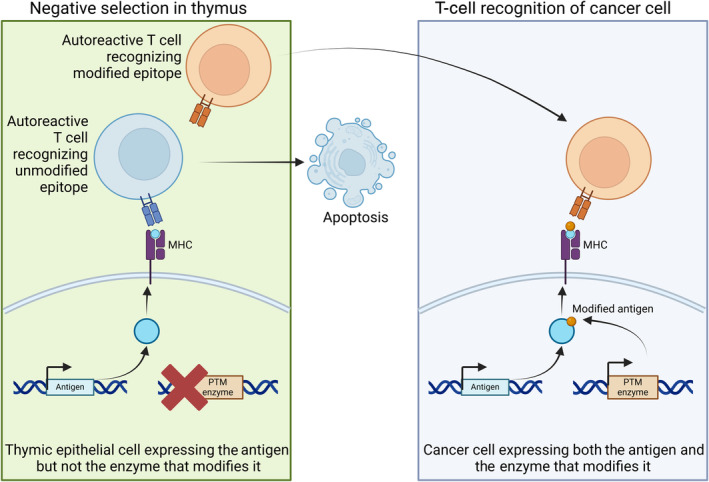
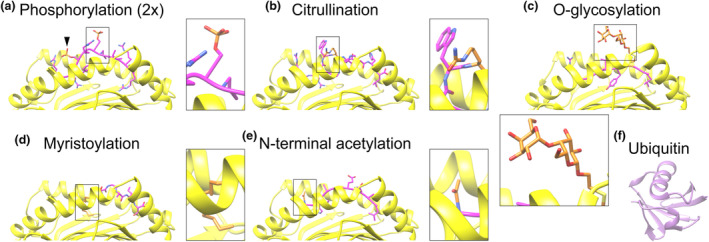
T cells of the adaptive immune system recognize pathogens and malignantly transformed cells through a process called antigen presentation. During this process, peptides are displayed on major histocompatibility complex (MHC) class I and II molecules. Self‐reactive T cells are typically removed or suppressed during T‐cell development and through peripheral tolerance mechanisms, ensuring that only T cells recognizing peptides that are either absent or present in low abundance under normal conditions remain. This selective process allows T cells to respond to peptides derived from foreign proteins while ignoring those from self‐proteins. However, T cells can also respond to peptides derived from proteins that have undergone post‐translational modifications (PTMs). Over 200 different PTMs have been described, and while they are essential for protein function, localization and stability, their dysregulation is often associated with disease conditions. PTMs can affect the proteolytic processing of proteins and prevent MHC binding, thereby changing the repertoire of peptides presented on MHC molecules. However, it is also increasingly evident that many peptides presented on MHC molecules carry PTMs, which can alter their immunogenicity. As a result, the presentation of post‐translationally modified peptides by MHC molecules plays a significant role in various diseases, as well as autoimmune disorders and allergies. This review will provide an overview of the impact of PTMs on antigen presentation and their implications for immune recognition and disease.
Overview
The claims and statistics of this paper haven’t been checked yet.
Run the check — free, no account needed. It reads the open-access text and checks the sources it cites.
Integrity signals
Registry
Cites
Statistics
Figures
Verification
Claims the paper makes
The claims and statistics of this paper haven’t been checked yet.
Run the check — free, no account needed. It reads the open-access text and checks the sources it cites.
Self-check
Percentages, sums and reported differences re-computed from the paper’s own numbers.
The self-check needs the paper’s full text.
Citations
Cites
Haurum, J. S., Arsequell, G., Lellouch, A. C., Wong, S. Y., Dwek, R. A., McMichael, A. J., & Elliott, T. (1994) · The Journal of experimental medicine · doi:10.1084/jem.180.2.739 · Cited by 184
Research works printed but not linked: 156
- 10.1073/pnas.132254199 · DOI
- 10.1002/art.34459 · DOI
- 10.1038/s41467-017-02763-y · DOI
- 10.1016/j.molimm.2015.07.018 · DOI
- 10.1080/08916930601165180 · DOI
- 10.4049/jimmunol.0804287 · DOI
- 10.1038/nature02240 · DOI
- 10.1126/science.1095522 · DOI
- 10.1016/j.it.2017.07.011 · DOI
- Béraud E, 2012, Investigation of a new tumor‐associated glycosylated antigen as target for dendritic cell vaccination in pancreatic cancer, Onco Targets Ther, 1, 56
- 10.1111/imm.12646 · DOI
- 10.1016/j.coi.2005.11.015 · DOI
- 10.1007/s00109-009-0526-4 · DOI
- 10.3390/cancers15010138 · DOI
- 10.1038/s41587-022-01464-2 · DOI
- 10.1038/s42003-021-02364-y · DOI
- 10.1007/s42485-021-00066-x · DOI
- 10.1021/acs.jproteome.6b00496 · DOI
- 10.1038/s41467-023-39270-2 · DOI · Paper page
- 10.1021/pr200153k · DOI
- 10.1016/j.coi.2011.12.003 · DOI
- 10.1073/pnas.0604045103 · DOI
- 10.1074/mcp.M113.034314 · DOI
- 10.1021/pr800937k · DOI
- 10.1084/jem.192.12.1755 · DOI · Paper page
- 10.1074/mcp.M116.063800 · DOI
- 10.1016/j.isci.2021.103107 · DOI
- 10.1073/pnas.0903852106 · DOI
- 10.1007/s00262-014-1533-z · DOI
- 10.4049/jimmunol.148.8.2446 · DOI
- 10.4049/jimmunol.155.3.1074 · DOI
- 10.1002/(SICI)1521-4141(199808)28:08<2580::AID-IMMU2580>3.0.CO;2-X · DOI
- 10.1002/eji.1830260835 · DOI
- 10.1002/eji.200425637 · DOI
- 10.1084/jem.20031865 · DOI
- 10.1084/jem.20020493 · DOI
- 10.1002/eji.200323698 · DOI
- 10.1158/0008-5472.CAN-09-4519 · DOI
- Brentville VA, 2019, T cell repertoire to citrullinated self‐peptides in healthy humans is not confined to the HLA‐DR SE alleles; targeting of citrullinated self‐peptides presented by HLA‐DP4 for tumour therapy, Onco Targets Ther, 8
- 10.4049/jimmunol.0802902 · DOI
- 10.4049/jimmunol.177.8.5440 · DOI
- 10.1074/jbc.M706237200 · DOI
- 10.1016/j.chembiol.2004.11.010 · DOI
- 10.1074/mcp.RA119.001846 · DOI
- 10.1084/jem.183.2.527 · DOI
- 10.1074/jbc.274.51.36274 · DOI
- 10.4049/jimmunol.162.3.1324 · DOI
- 10.1158/2326-6066.CIR-16-0280 · DOI
- 10.1073/pnas.0502255102 · DOI
- 10.4049/jimmunol.171.2.528 · DOI
- 10.4049/jimmunol.163.7.3812 · DOI
- 10.1084/jem.190.1.145 · DOI · Paper page
- 10.3389/fimmu.2021.796584 · DOI
- 10.1189/jlb.0510316 · DOI
- 10.1016/j.jmb.2010.04.037 · DOI
- 10.1074/jbc.M802818200 · DOI
- 10.1038/ni.1660 · DOI · Paper page
- 10.1073/pnas.0812901106 · DOI
- 10.1016/S1074-7613(00)80006-0 · DOI
- 10.1038/ncomms10356 · DOI · Paper page
- 10.1016/j.jbc.2022.102100 · DOI
- 10.4049/jimmunol.1101216 · DOI
- 10.1128/JVI.02142-12 · DOI
- 10.1007/s00018-022-04126-3 · DOI
- 10.1084/jem.20072051 · DOI
- 10.4049/jimmunol.171.2.538 · DOI
- 10.1186/ar3848 · DOI
- 10.1155/2015/712490 · DOI
- 10.1084/jem.189.11.1757 · DOI
- 10.1084/jem.20131241 · DOI · Paper page
- 10.1084/jem.191.4.603 · DOI
- 10.1016/j.immuni.2007.05.015 · DOI
- 10.1073/pnas.0306885101 · DOI
- 10.1007/s00251-017-0985-7 · DOI
- 10.4049/jimmunol.175.1.254 · DOI
- 10.4049/jimmunol.173.3.1757 · DOI
- 10.1038/nm0698-713 · DOI
- 10.1038/324258a0 · DOI
- 10.1016/j.molimm.2004.07.044 · DOI
- 10.1002/eji.1830250235 · DOI
- 10.4049/jimmunol.1400561 · DOI
- 10.1006/clin.1997.4487 · DOI
- 10.1016/j.jaut.2005.02.002 · DOI
- 10.1084/jem.175.3.869 · DOI
- 10.1006/jaut.1997.0160 · DOI
- 10.4049/jimmunol.155.12.5847 · DOI
- 10.4049/jimmunol.176.7.4479 · DOI
- 10.1016/j.jaut.2007.01.001 · DOI
- 10.1046/j.1365-2567.1997.00160.x · DOI
- 10.4049/jimmunol.149.3.1039 · DOI
- 10.1007/BF00171793 · DOI
- 10.1016/j.cellimm.2004.07.002 · DOI
- 10.1016/0165-2478(93)90036-2 · DOI
- 10.1046/j.1365-2567.2003.01607.x · DOI
- 10.1007/BF01246676 · DOI
- 10.4049/jimmunol.169.9.5332 · DOI
- 10.1089/thy.2007.0199 · DOI
- 10.1371/journal.pone.0031483 · DOI
- 10.1016/S1074-7613(00)80330-1 · DOI
- 10.4049/jimmunol.163.12.6360 · DOI
- 10.1093/intimm/4.8.869 · DOI
- 10.4049/jimmunol.158.8.3769 · DOI
- 10.4049/jimmunol.162.2.669 · DOI
- 10.1084/jem.193.11.1239 · DOI
- 10.4049/jimmunol.166.7.4543 · DOI
- 10.1172/jci.insight.151624 · DOI
- 10.1016/j.ccell.2022.07.005 · DOI · Paper page
- 10.1111/imm.12398 · DOI
- 10.1126/scitranslmed.3006061 · DOI
- 10.1136/jitc-2019-000262 · DOI
- 10.1038/mt.2009.299 · DOI
- 10.4049/jimmunol.176.3.1525 · DOI
- 10.1021/acschembio.6b00498 · DOI
- 10.1002/anie.201500301 · DOI
- 10.1016/j.isci.2018.12.015 · DOI
- 10.1016/j.isci.2022.104013 · DOI
- 10.4049/jimmunol.1400199 · DOI
- 10.1038/ncomms9361 · DOI
- 10.1021/jacs.5b06586 · DOI
- 10.1016/S1074-7613(00)80007-2 · DOI
- 10.1002/eji.1830251211 · DOI
- 10.1002/jms.780 · DOI
- 10.1084/jem.182.1.67 · DOI
- 10.1002/eji.1830260307 · DOI · Paper page
- 10.4049/jimmunol.151.5.2419 · DOI
- 10.1084/jem.180.2.745 · DOI
- 10.1158/0008-5472.CAN-14-0043 · DOI
- 10.1016/j.jvacx.2019.100017 · DOI
- 10.1007/s00262-020-02524-9 · DOI
- Ohara K, 2018, Targeting phosphorylated p53 to elicit tumor‐reactive T helper responses against head and neck squamous cell carcinoma, Onco Targets Ther, 7
- 10.1084/jem.20051251 · DOI
- 10.1074/jbc.RA117.001013 · DOI
- 10.1002/art.40768 · DOI
- 10.1002/art.25059 · DOI
- 10.1158/0008-5472.CAN-15-1085 · DOI · Paper page
- 10.1136/jitc-2020-000560 · DOI
- 10.3389/fimmu.2021.764462 · DOI
- Cook K, 2018, Citrullinated α‐enolase is an effective target for anti‐cancer immunity, Onco Targets Ther, 7
- 10.1084/jem.20110640 · DOI
- 10.4049/jimmunol.177.3.1421 · DOI
- 10.1110/ps.9.11.2210 · DOI
- 10.1016/0092-8674(95)90037-3 · DOI
- 10.1084/jem.171.3.897 · DOI
- 10.1093/intimm/6.12.1917 · DOI
- 10.4049/jimmunol.1000075 · DOI
- 10.3389/fimmu.2022.873947 · DOI
- 10.1016/0165-2478(93)90149-V · DOI
- 10.4049/jimmunol.151.2.678 · DOI
- 10.4049/jimmunol.148.5.1445 · DOI
- 10.3389/ftox.2022.827109 · DOI
- 10.1002/eji.1830250118 · DOI
- 10.1084/jem.191.12.2083 · DOI
- 10.1016/S1074-7613(02)00340-0 · DOI
- 10.1074/jbc.M604847200 · DOI
- 10.1074/jbc.M501558200 · DOI
- 10.2337/db12-1214 · DOI
Metadata
- Authors
- de Wit, A. S., Bianchi, F., & van den Bogaart, G.
- Affiliations
- University of Groningen (NL)
- Corresponding author
- van den Bogaart, Geert
- Venue
- Immunology & Cell Biology
- Publisher
- Wiley
- Published
- 2024-11-28
- Volume
- 103
- Issue
- 2
- Pages
- 161-177
- ISSN
- 0004-945X (ISSN-L)
- 0818-9641
- 1440-1711
- PMC
- PMC11792782
- OpenAlex
- W4404869275
- Cited by
- 12
- References
- 1
- Citations by year
- 2026: 8 · 2025: 4
- FWCI
- 0.47
- Type
- journal article
- Language
- en
- Open access
- hybrid
- doi.org
- Licence
- Locations
- Immunology and Cell Biology (publishedVersion, cc-by)
- PubMed Central (publishedVersion, cc-by)
- PubMed (publishedVersion)
- University of Groningen research database (University of Groningen / Centre for Information Technology) (publishedVersion, cc-by)
- Funders
- H2020 European Research Council (862137)
- ZonMw (09120011910001)
- Topics
- Life Sciences › Biochemistry, Genetics and Molecular Biology › Molecular Biology › vaccines and immunoinformatics approaches
- Life Sciences › Immunology and Microbiology › Immunology › Immunotherapy and Immune Responses
- Life Sciences › Immunology and Microbiology › Immunology › T-cell and B-cell Immunology
- Keywords
- post-translational modification, antigen presentation, MHC class I, MHC class II, T cell recognition, self-tolerance, immunogenicity, proteolytic processing, autoimmune disease, allergy
- MeSH terms
- Animals, Humans, Major Histocompatibility Complex, Peptides, Protein Processing, Post-Translational, Histocompatibility Antigens Class I, Antigen Presentation
About these checks
Registry, retraction, Cites and statistics results are computed, not judged, with one exception: a printed reference that no index lists is read once by a model before it counts as a citation error. Claims are extracted by a model and kept only when their quote appears verbatim in the text; each cited source is then checked, with a model’s help, for whether it says what the claim relies on. Those verdicts can be wrong — read the claim’s quote and the cited source before relying on one.
Statistics and arithmetic are recomputed, not judged.
Confidence bands are shown only for fields calibrated on our annotated test set. None is calibrated yet, so no band is shown.
What counts as a claim ›How we measure confidence ›How we check this ›
Are you an author, or do you see a problem with this page? Request a review
