

From Great Depression to Great Credit Crisis: similarities, differences and lessons
The DOI matches its Crossref record; 85 of the 87 references it cites were found in a registry or an index.
Abstract
The Great Depression of the 1930s and the Great Credit Crisis of the 2000s had similar causes but elicited strikingly different policy responses. While it remains too early to assess the effectiveness of current policy, it is possible to analyse monetary and fiscal responses in the 1930s as a natural experiment or counterfactual capable of shedding light on the impact of current policies. We employ vector autoregressions, instrumental variables, and qualitative evidence for 27 countries in the period 1925–39. The results suggest that monetary and fiscal stimulus was effective -- that where it did not make a difference it was not tried. They shed light on the debate over fiscal multipliers in episodes of financial crisis. They are consistent with multipliers at the higher end of those estimated in the recent literature, and with the argument that the impact of fiscal stimulus will be greater when banking systems are dysfunctional and monetary policy is constrained by the zero bound. — Miguel Almunia, Agustín Bénétrix, Barry Eichengreen, Kevin H. O’Rourke and Gisela Rua
Overview
The claims and statistics of this paper haven’t been checked yet.
Free: it reads the open-access text and checks the first 5 claims that cite a source we can check. Create a free account to check every claim.
Integrity signals
Registry
Cites
Statistics
Figures
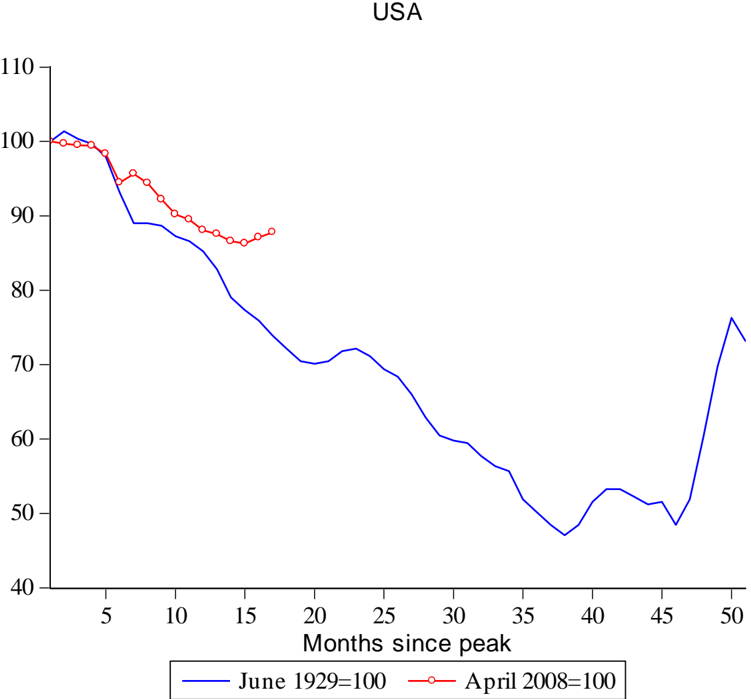
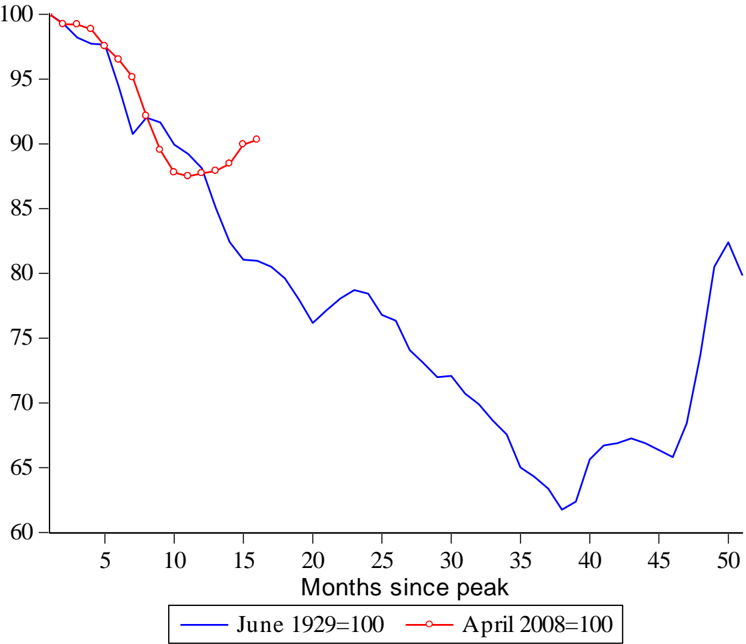
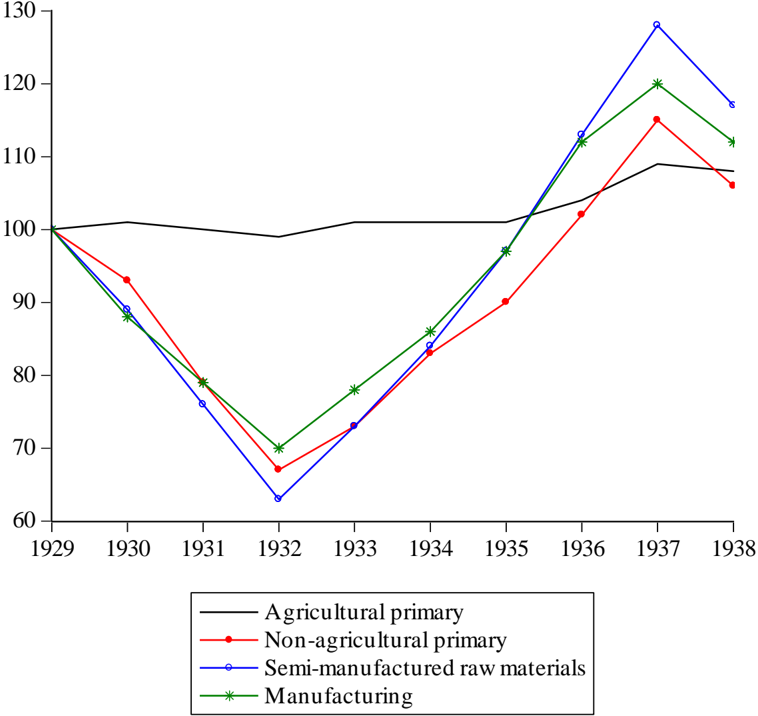
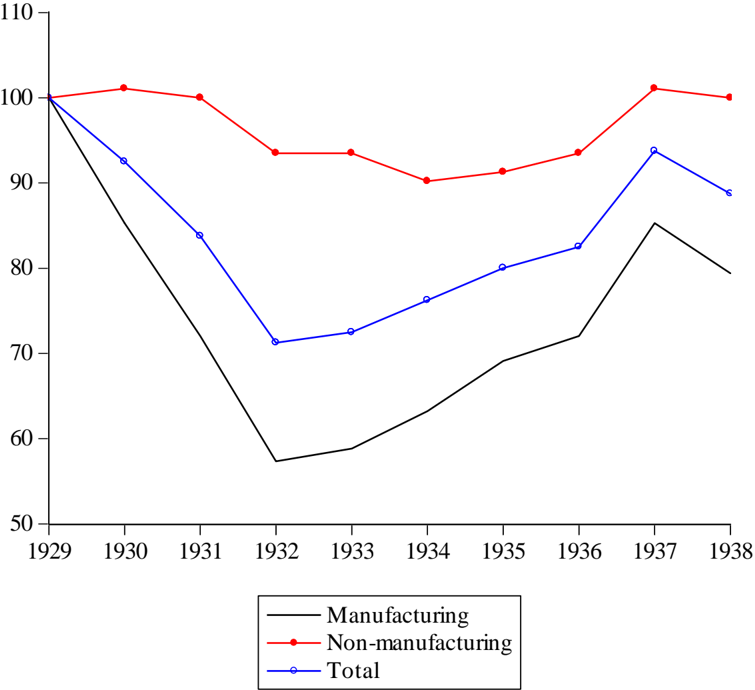
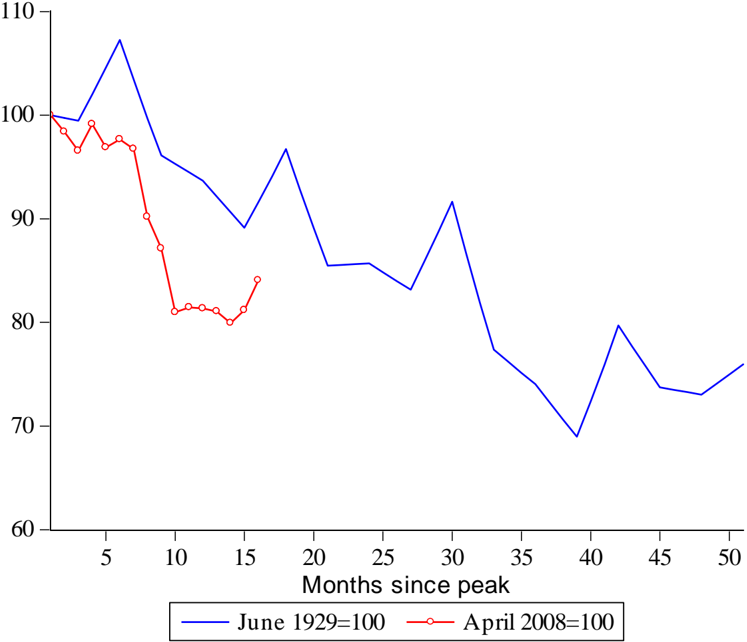
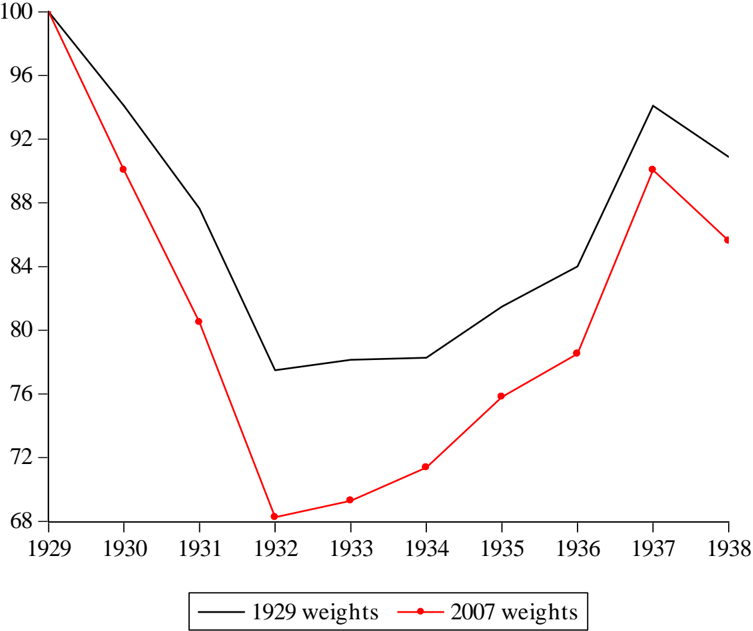
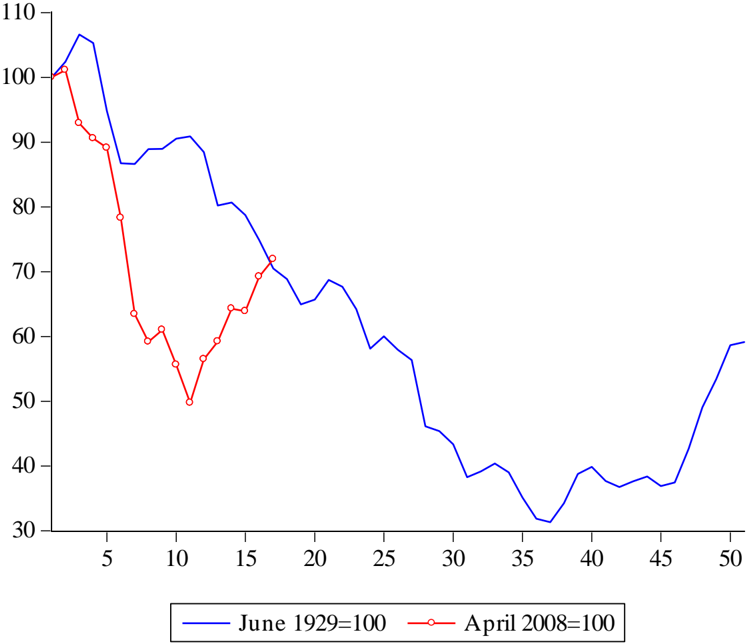
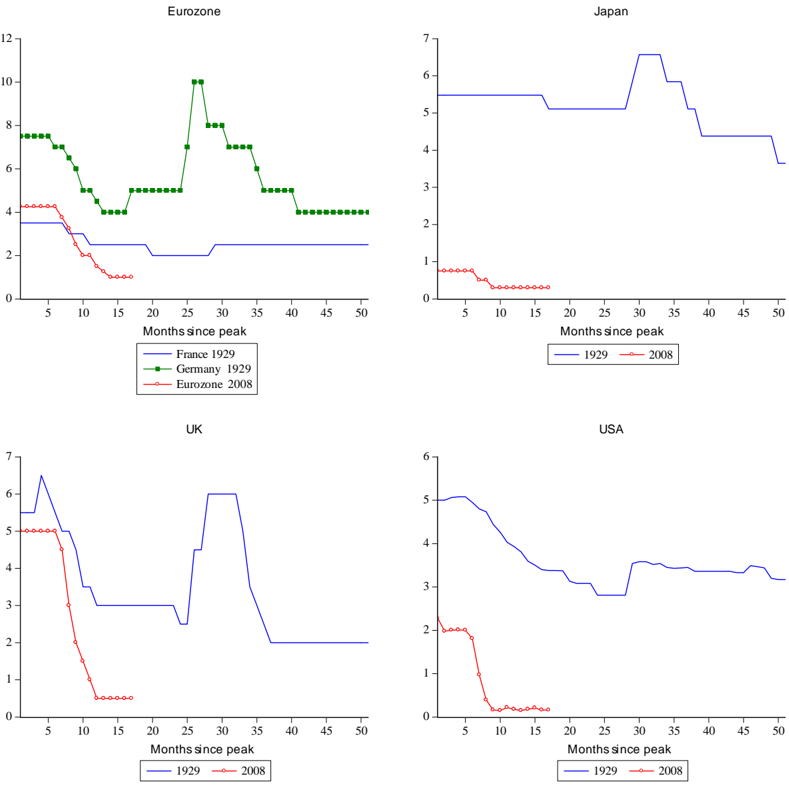
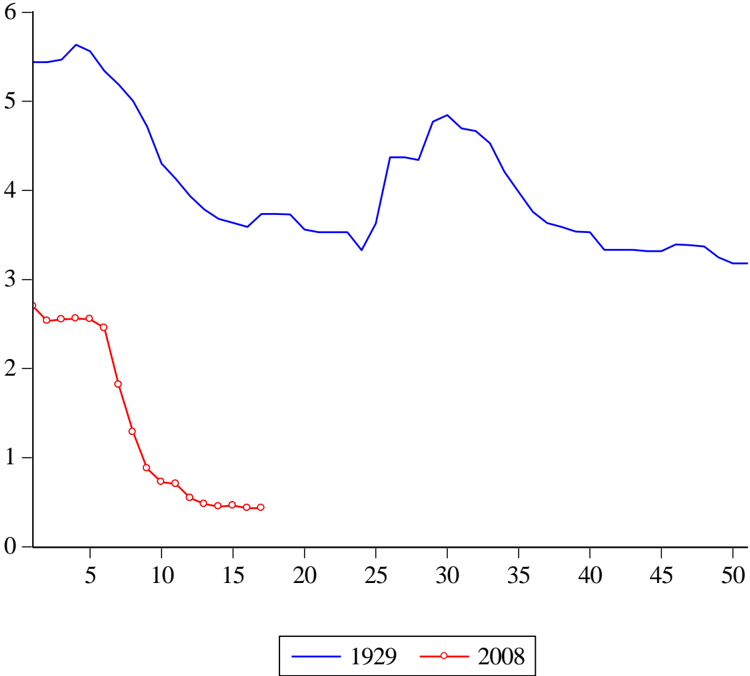
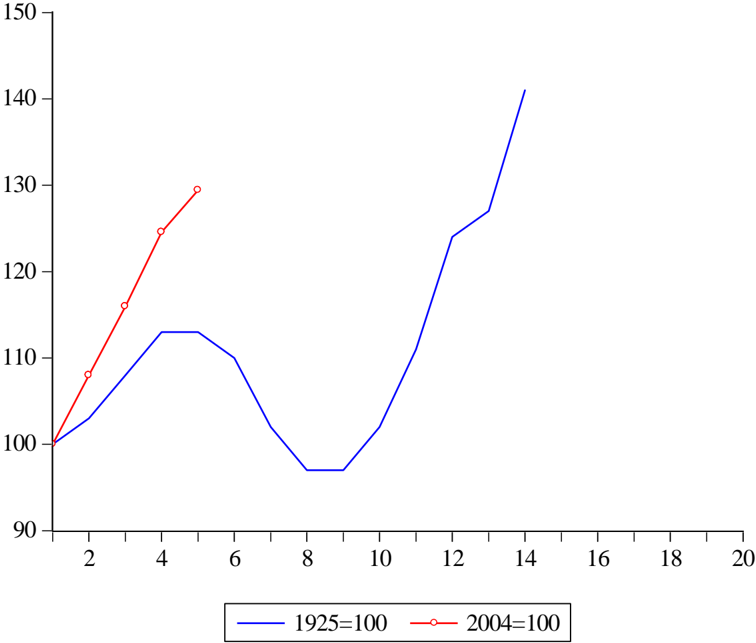
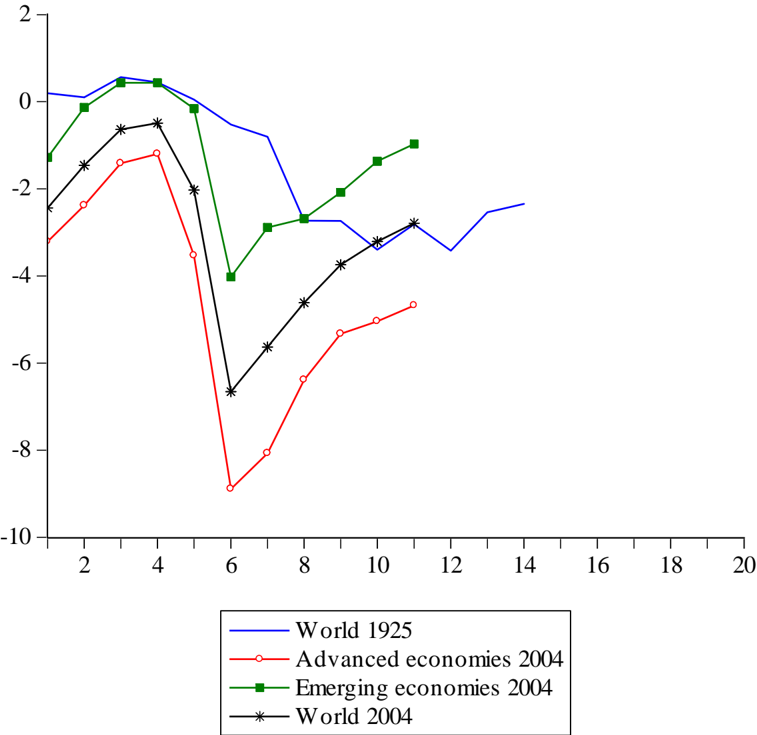
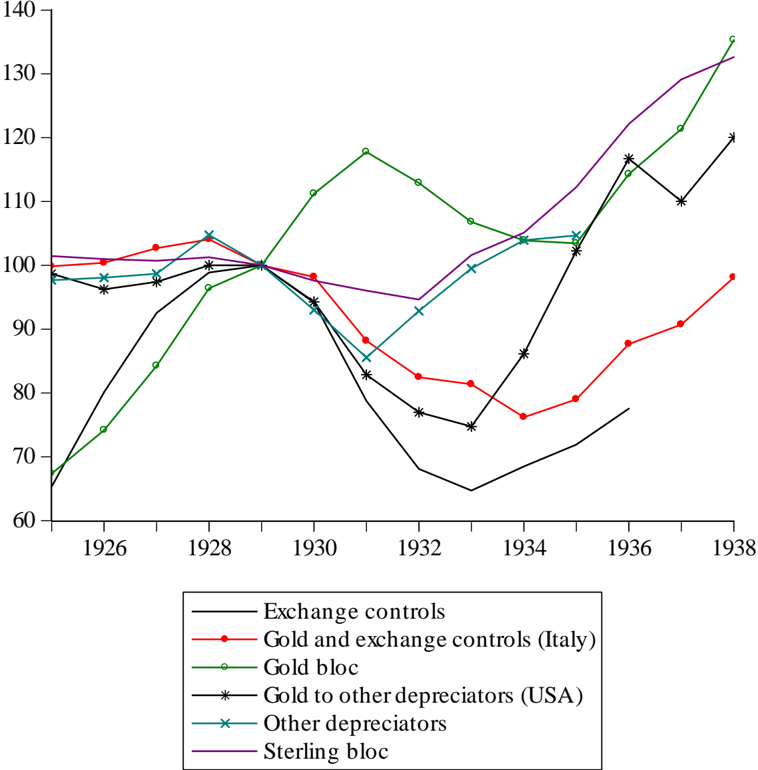
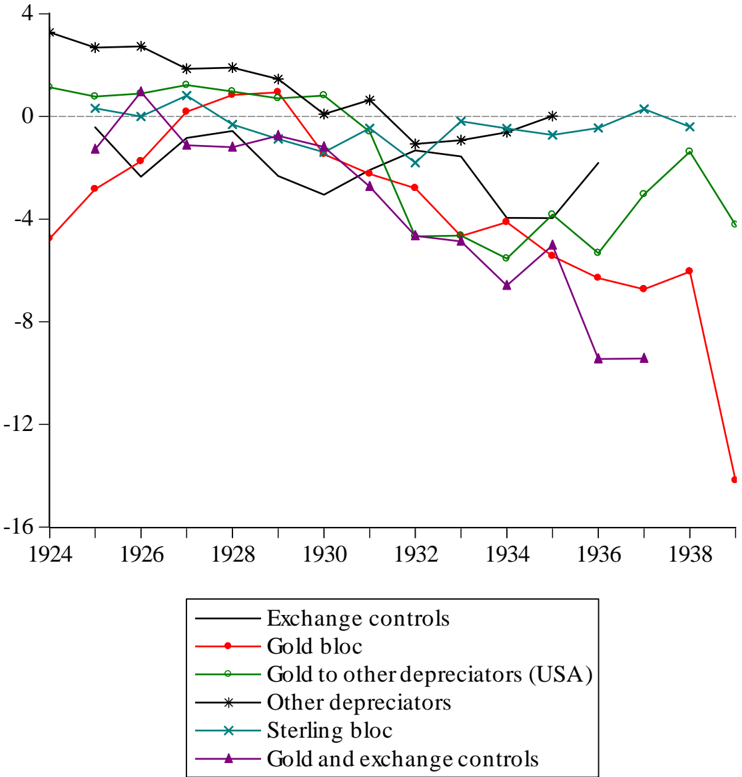
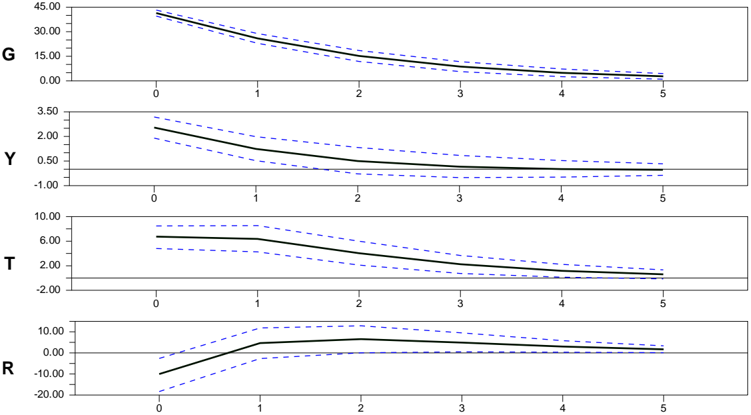
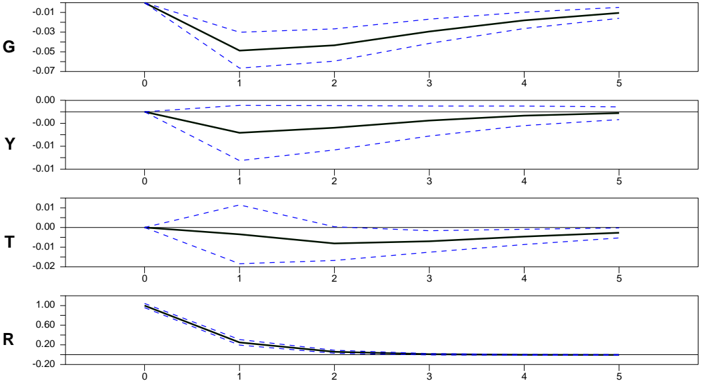
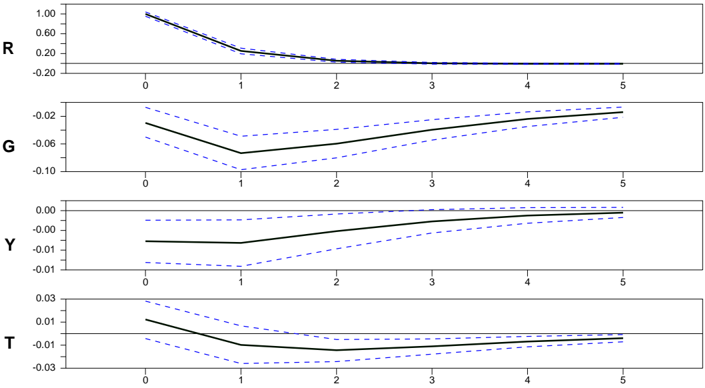
Verification
Claims the paper makes
The claims and statistics of this paper haven’t been checked yet.
Free: it reads the open-access text and checks the first 5 claims that cite a source we can check. Create a free account to check every claim.
Claims other papers make about this one
Each is checked against this paper’s own text: does it say what the citing paper says it does?
In the citing paper
“Almunia, et al (2010) provide suggestive evidence that defense-spending multipliers are positive in a panel of 27 countries for 1925-1939.”
From Macroeconomic Effects from Government Purchases and Taxes (2009) · cites this paper as Almunia, et al (2010)
Self-check
Percentages, sums and reported differences re-computed from the paper’s own numbers.
The self-check needs the paper’s full text.
Citations
Cites
Biases in dynamic models with fixed effects
Nickell, S. (1981) · Econometrica · doi:10.2307/1911408 · Cited by 8,735
Nominal Rigidities and the Dynamic Effects of a Shock to Monetary Policy
Christiano, L. J., Eichenbaum, M., & Evans, C. L. (2005) · Journal of Political Economy · doi:10.1086/426038 · Cited by 6,238
Blanchard, O., & Perotti, R. (2002) · The Quarterly Journal of Economics · doi:10.1162/003355302320935043 · Cited by 2,910
What are the effects of monetary policy on output? Results from an agnostic identification procedure
Uhlig, H. (2005) · Journal of Monetary Economics · doi:10.1016/j.jmoneco.2004.05.007 · Cited by 2,307
The Macroeconomic Effects of Tax Changes: Estimates Based on a New Measure of Fiscal Shocks
Romer, C. D., & Romer, D. H. (2010) · American Economic Review · doi:10.1257/aer.100.3.763 · Cited by 2,139
Arellano, M. (2003) · doi:10.1093/0199245282.001.0001 · Cited by 2,108
Understanding the Effects of Government Spending on Consumption
Galí, J., López-Salido, J. D., & Vallés, J. (2007) · Journal of the European Economic Association · doi:10.1162/jeea.2007.5.1.227 · Cited by 1,922
Blanchard, O., & Perotti, R. (1999) · National Bureau of Economic Research · doi:10.3386/w7269 · Cited by 1,890
What are the effects of fiscal policy shocks?
Mountford, A., & Uhlig, H. (2009) · Journal of Applied Econometrics · doi:10.1002/jae.1079 · Cited by 1,349
Is the crisis problem growing more severe?
Bordo, M., Eichengreen, B., Klingebiel, D., & Martinez-Peria, M. S. (2001) · Economic Policy · doi:10.1111/1468-0327.00070 · Cited by 1,297
Self-citation
Research works printed but not linked: 7
- Bairoch, P. 1982. 'International Industrialization Levels from 1750 to 1980.' Journal of Eurpean Economic History 11: 269-331.
- Fox, 2009, The Curious Capitalist
- League of Nations. 1934. Public Finances . Geneva: League of Nations.
- Maddison, A. 2009. Statistics on World Population, GDP and Per Capita GDP, 1-2006 AD (March 2009 update). http://www.ggdc.net/maddison/
- Romer, 2009, The Job Impact of the American Recovery and Reinvestment Plan
- Short, 2009, DShort: Financial Lifecycle Planning
- Wagenführ, R. 1933. 'Die Industriewirtschaft: Entwicklungstendenzen der deutschen und internationalen Industrieproduktion 1860 bis 1932.' Vierteljahrshefte zur Konjunkturforschung : Sonderheft 31.
Cited by
Credit Booms Gone Bust: Monetary Policy, Leverage Cycles, and Financial Crises, 1870–2008
Schularick, M., & Taylor, A. M. (2012) · American Economic Review · doi:10.1257/aer.102.2.1029 · Cited by 2,647
Growth Forecast Errors and Fiscal Multipliers
Blanchard, O. J., & Leigh, D. (2013) · American Economic Review · doi:10.1257/aer.103.3.117 · Cited by 1,414
Simple Analytics of the Government Expenditure Multiplier
Woodford, M. (2011) · American Economic Journal: Macroeconomics · doi:10.1257/mac.3.1.1 · Cited by 862
Macroeconomic Effects From Government Purchases and Taxes *
Barro, R. J., & Redlick, C. J. (2011) · The Quarterly Journal of Economics · doi:10.1093/qje/qjq002 · Cited by 837
Gambacorta, L., Hofmann, B., & Peersman, G. (2014) · Journal of money credit and banking · doi:10.1111/jmcb.12119 · Cited by 810
Metadata
- Authors
- Almunia, M., Bénétrix, A., Eichengreen, B., O’Rourke, K. H., & Rua, G.
- Venue
- Economic Policy
- Publisher
- Oxford University Press (OUP)
- Published
- 2010-04
- Volume
- 25
- Issue
- 62
- Pages
- 219-265
- ISSN
- 0266-4658 (ISSN-L)
- 1468-0327
- OpenAlex
- W2102661467
- Cited by
- 283
- References
- 87
- FWCI
- 94.74
- Type
- journal article
- Language
- en
- Open access
- closed
About these checks
Registry, retraction, Cites and statistics results are computed, not judged, with one exception: a printed reference that no index lists is read once by a model before it counts as a citation error. Claims are extracted by a model and kept only when their quote appears verbatim in the text; each cited source is then checked, with a model’s help, for whether it says what the claim relies on. Those verdicts can be wrong — read the claim’s quote and the cited source before relying on one.
Statistics and arithmetic are recomputed, not judged.
Confidence bands are shown only for fields calibrated on our annotated test set. None is calibrated yet, so no band is shown.
What counts as a claim ›How we measure confidence ›How we check this ›
Are you an author, or do you see a problem with this page? Request a review
Data sources
Bibliographic data: Semantic Scholar, OpenAlex, Crossref.
Contains information from the Semantic Scholar Academic Graph Datasets, made available under the ODC Attribution License (ODC-BY 1.0).
Semantic Scholar’s data is described in: Kinney, R., et al. (2023). The Semantic Scholar Open Data Platform. arXiv:2301.10140.
