

The effect of plasma donation frequency on total serum protein, immunoglobulin G and donor safety: A non‐inferiority randomized controlled trial
Open accessThe DOI matches its Crossref record; 29 of the 30 references it cites were found in a registry or an index; none of the 10 sources its claims cite is checked for support yet.
Abstract
Background and Objectives: The safety of varying plasma donation frequencies remains unclear. This non‐inferiority randomized controlled trial investigated the effect of plasma donation frequency on total serum protein (TSP), immunoglobulin G (IgG) concentrations, additional biomarkers, adverse events (AEs) and psychological distress. Materials and Methods: In this trial, 120 male donors were randomized into three groups: high‐frequency plasma donors (HFPDs, three times every 2 weeks), regular‐frequency plasma donors (RFPDs, once every 2 weeks) and a control group (whole blood donation every 3 months). Blood samples were collected biweekly from baseline until the last donation in Week 16 and 4 weeks after the last donation. Results: HFPDs completed median (range) 21.5 (1–24), RFPDs 8 (1–8) and controls 2 (1–2) donations. HFPDs had lower concentrations of TSP and IgG compared to controls, with a mean difference (95% confidence interval [CI]) of −5.5 g/L (−7.4, −3.6) and −2.8 g/L (−3.8, −1.8), respectively. Within‐group analysis revealed significant reductions, which increased with the frequency of donations, in TSP, IgG, IgG subclasses, immunoglobulin M (IgM), immunoglobulin A (IgA), ferritin and haemoglobin. Many of the biomarkers required more than 4 weeks to return to baseline levels. Only mild AEs were reported, and plasma donation frequency had no effect on psychological distress. Conclusion: High‐ and regular‐frequency plasmapheresis substantially reduces concentrations of TSP, IgG and other biomarkers, with greater reductions at higher donation frequencies. Further research is needed to assess the long‐term health implications of frequent plasma donation.
Overview
CoChat Summary
TL;DR
In this non-inferiority RCT of 120 male donors, high-frequency plasma donation (three times every 2 weeks for 16 weeks) was inferior to whole blood donation for total serum protein (TSP) and immunoglobulin G (IgG), with significant reductions in multiple biomarkers. Only mild adverse events occurred and psychological distress did not differ, but many biomarkers had not returned to baseline 4 weeks after donation.
Key findings
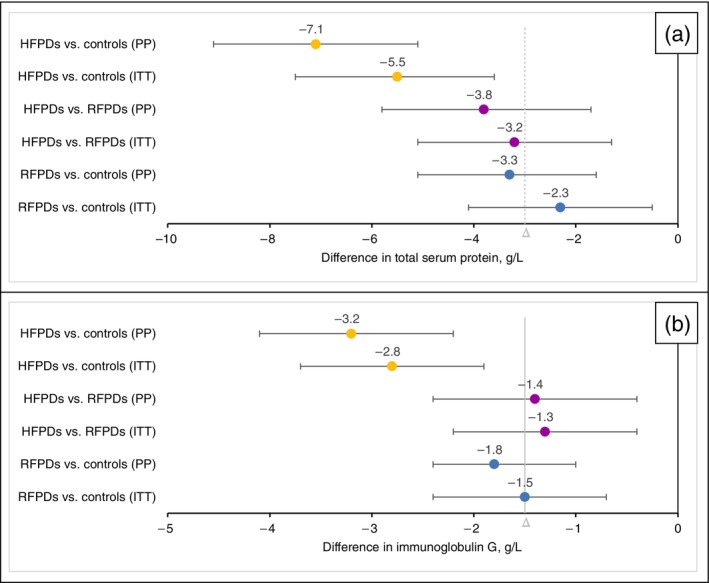
- HFPDs had lower TSP and IgG than controls, with reported mean differences (95% CI) of −5.5 g/L (−7.4, −3.6) and −2.8 g/L (−3.8, −1.8); the per-protocol highlight reports −7.1 g/L (−9.1, −5.0) and −3.2 g/L (−4.2, −2.2), respectively.
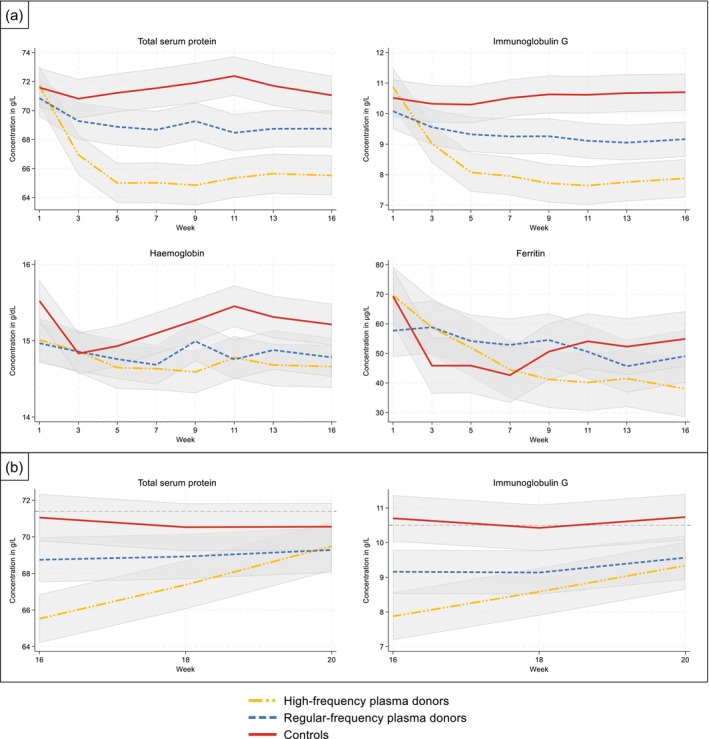
- From W1 to W16, TSP declined by 8.6% in HFPDs and 3.0% in RFPDs; IgG decreased by 27.5% and 8.9%, respectively. At W16, mean TSP was 65.5 g/L in HFPDs, 68.8 g/L in RFPDs, and 71.1 g/L in controls; mean IgG was 7.9, 9.2, and 10.7 g/L, respectively.
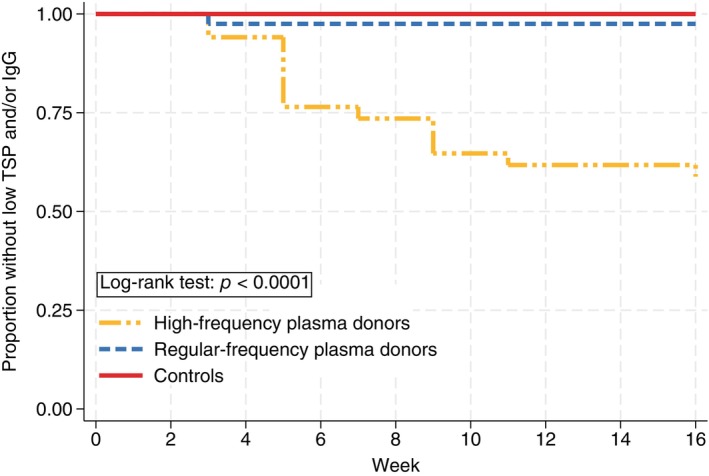
- IgG <6.0 g/L occurred 24 times in nine HFPDs (26%) and 7 times in one RFPD (2.5%); TSP <60 g/L occurred 13 times in six HFPDs (18%) and once in one RFPD (2.5%). Four HFPDs (11.8%) and two HFPDs (5.9%) were deferred for low IgG and TSP, respectively; one RFPD (2.5%) was deferred for 8 weeks for low IgG.
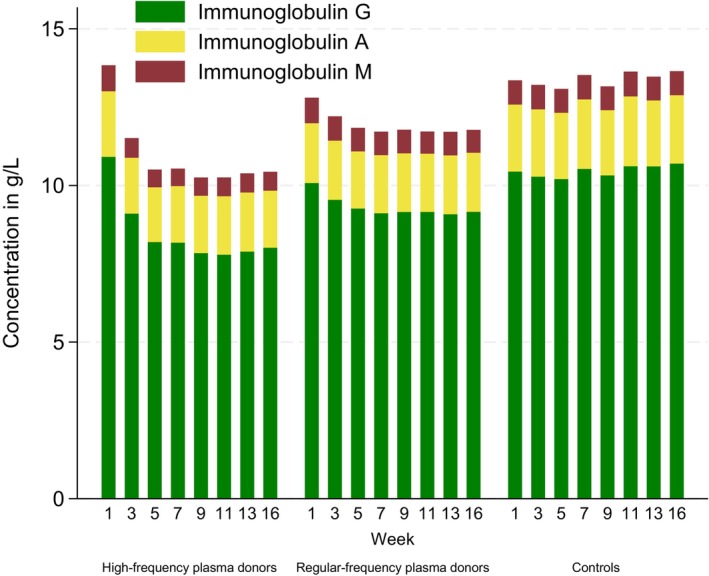
- All adverse events were Grade 1, and HSCL-25 psychological distress scores showed no significant group differences. At 4 weeks post-donation (W20), TSP; IgG; IgG subclasses 1, 2, and 4; IgM; IgA; and ferritin remained significantly reduced in HFPDs or RFPDs compared to baseline.
Methods
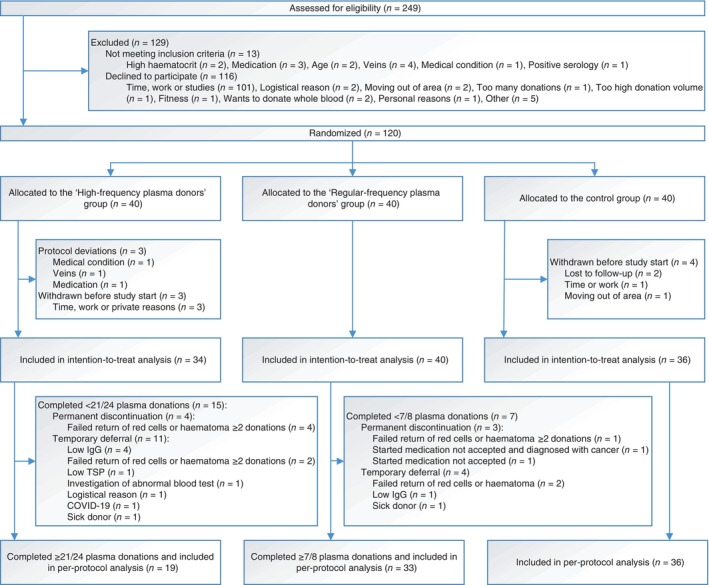
- Non-inferiority RCT at four sites in Norway (January 2022–July 2024); 120 male donors aged 18–64 with at least one prior plasma donation were randomized 1:1:1 to HFPD (plasma three times every 2 weeks, 24 donations), RFPD (plasma once every 2 weeks, eight donations), or control (whole blood every 3 months) for 16 weeks.
- Blood samples were collected biweekly from W1 to W16 and at W18 and W20; biomarkers included TSP, IgG, IgG subclasses 1–4, IgM, IgA, ferritin, haemoglobin, albumin, transferrin, CRP, and haematological indices. Adverse events were monitored and graded; psychological distress was assessed with HSCL-25 before and after the donation period.
- Intention-to-treat and per-protocol analyses used generalized linear mixed-effects models; non-inferiority margins were −3.0 g/L for TSP and −1.5 g/L for IgG, with Bonferroni correction. Sample size was 40 per group to ensure 80% confidence that the lower limit of a one-sided 95% CI would be above the margins.
Limitations
- Stated by the authors: the 16-week duration was insufficient to assess long-term effects; the trial was not powered for clinical endpoints; biomarkers lack established correlation with long-term health outcomes; whole blood donation in controls may have minimized between-group differences; participants may represent a subset of experienced, motivated donors (selection bias/healthy donor effect); fixed donation volumes were not adjusted for individual estimated blood volume; lack of blinding may have influenced subjective outcomes; passive adverse event monitoring may have led to underreporting; haematoma and infiltration differentiation was unclear; HFPD samples between W16 and W20 were collected approximately 1 week later than RFPD samples, possibly overestimating HFPD effects; and restricting the study to men limits generalizability.
- Evident in the text: per-protocol analysis included only 19 HFPDs and 33 RFPDs, and full protocol adherence was achieved by 2 (5.9%) HFPDs and 22 (55%) RFPDs, indicating low adherence in the high-frequency group.
- Evident in the text: non-inferiority for HFPD vs RFPD and RFPD vs controls was inconclusive because the 95% CIs included the non-inferiority margins.
Model-written summary. Check it against the paper before relying on it.
Integrity signals
Registry
Cites
Statistics
Figures
Verification
Claims the paper makes
0 Valid · 0 Not valid · 8 Not checked · 44 Own results and interpretations
A result the paper reports from its own data — it cites no other source for it, so there is none to check. The quote shows it is in the paper.
In the paper
“Many of the biomarkers required more than 4 weeks to return to baseline levels.”
§ The effect of plasma donation frequency on total serum protein, immunoglobulin G and donor safety: A non‐inferiority randomized controlled trial > Abstract > Results
plain- Asserted: passes — The authors put it forward as true.
- Checkable: passes — It can be checked against evidence.
- Load-bearing: unclear — It is unclear whether the paper’s conclusions depend on it.
- Based: passes — The paper gives a reason why it holds.
A result the paper reports from its own data — it cites no other source for it, so there is none to check. The quote shows it is in the paper.
In the paper
“All AEs were Grade 1 (Table S4).”
§ The effect of plasma donation frequency on total serum protein, immunoglobulin G and donor safety: A non‐inferiority randomized controlled trial > RESULTS > Adverse events
plain- Asserted: passes — The authors put it forward as true.
- Checkable: passes — It can be checked against evidence.
- Load-bearing: passes — The paper’s conclusions depend on it.
- Based: passes — The paper gives a reason why it holds.
A result the paper reports from its own data — it cites no other source for it, so there is none to check. The quote shows it is in the paper.
In the paper
“Proportions above the 1.75 cut‐off also did not differ significantly (Table S5).”
§ The effect of plasma donation frequency on total serum protein, immunoglobulin G and donor safety: A non‐inferiority randomized controlled trial > RESULTS > Psychological distress
plain- Asserted: passes — The authors put it forward as true.
- Checkable: passes — It can be checked against evidence.
- Load-bearing: unclear — It is unclear whether the paper’s conclusions depend on it.
- Based: passes — The paper gives a reason why it holds.
A result the paper reports from its own data — it cites no other source for it, so there is none to check. The quote shows it is in the paper.
In the paper
“Within‐group analysis revealed significant reductions, which increased with the frequency of donations, in TSP, IgG, IgG subclasses, immunoglobulin M (IgM), immunoglobulin A (IgA), ferritin and haemoglobin.”
§ The effect of plasma donation frequency on total serum protein, immunoglobulin G and donor safety: A non‐inferiority randomized controlled trial > Abstract > Results
plainstates a cause- Asserted: passes — The authors put it forward as true.
- Checkable: passes — It can be checked against evidence.
- Load-bearing: passes — The paper’s conclusions depend on it.
- Based: passes — The paper gives a reason why it holds.
A result the paper reports from its own data — it cites no other source for it, so there is none to check. The quote shows it is in the paper.
In the paper
“Only mild AEs were reported, and plasma donation frequency had no effect on psychological distress.”
§ The effect of plasma donation frequency on total serum protein, immunoglobulin G and donor safety: A non‐inferiority randomized controlled trial > Abstract > Results
plain- Asserted: passes — The authors put it forward as true.
- Checkable: passes — It can be checked against evidence.
- Load-bearing: passes — The paper’s conclusions depend on it.
- Based: passes — The paper gives a reason why it holds.
11 more claims
Create a free account to see all 52 claims and to verify the 10 references still open.
- It may state two separate claims as one. 23
- Probably not a substantial claim. 20
Claims other papers make about this one
Each is checked against this paper’s own text: does it say what the citing paper says it does?
In the citing paper
“cumulative losses in high-frequency donors—particularly those with dietary insufficiency or increased metabolic demand—may contribute to suboptimal status over time [20,39,40].”
From Potential Health Consequences of Regular Blood Donation: Current Evidence and Remaining Uncertainties (2026) · cites this paper as [40]
In the citing paper
“The interaction between B-vitamin status and haematopoietic regeneration after donation is mechanistically plausible: folate and B12 deficiency impairs DNA synthesis in rapidly dividing erythroid progenitors, potentially limiting the rate of haemoglobin recovery between donations and contributing to macrocytic anaemia superimposed on iron deficiency in nutritionally vulnerable donors [20,39,40,44,”
From Potential Health Consequences of Regular Blood Donation: Current Evidence and Remaining Uncertainties (2026) · cites this paper as [40]
Self-check
Percentages, sums and reported differences re-computed from the paper’s own numbers.
Each contradiction between two passages listed here was confirmed by an independent check.
Rated minor: it would not touch a result — a value no result rests on, a p-value that stays on the same side of the significance level, or a conflict that is clerical, resolved elsewhere in the paper, or outside its own findings.
In the paper
§ The effect of plasma donation frequency on total serum protein, immunoglobulin G and donor safety: A non‐inferiority randomized controlled trial > RESULTS
“Following randomization, six HFPDs (15%) and four RFPDs (10%) dropped out due to protocol deviations or withdrawal.”
§ The effect of plasma donation frequency on total serum protein, immunoglobulin G and donor safety: A non‐inferiority randomized controlled trial > RESULTS
“The ITT analysis included 34 HFPDs, 40 RFPDs and 36 controls.”
Rated minor: it would not touch a result — a value no result rests on, a p-value that stays on the same side of the significance level, or a conflict that is clerical, resolved elsewhere in the paper, or outside its own findings.
In the paper
§ The effect of plasma donation frequency on total serum protein, immunoglobulin G and donor safety: A non‐inferiority randomized controlled trial > MATERIALS AND METHODS > Analysis populations
“The ITT population included all randomized participants.”
§ The effect of plasma donation frequency on total serum protein, immunoglobulin G and donor safety: A non‐inferiority randomized controlled trial > RESULTS
“The ITT analysis included 34 HFPDs, 40 RFPDs and 36 controls.”
Rated minor: it would not touch a result — a value no result rests on, a p-value that stays on the same side of the significance level, or a conflict that is clerical, resolved elsewhere in the paper, or outside its own findings.
In the paper
§ The effect of plasma donation frequency on total serum protein, immunoglobulin G and donor safety: A non‐inferiority randomized controlled trial > MATERIALS AND METHODS > Participants
“Male blood and plasma donors from 18 to 64 years, with at least one prior plasma donation, were screened.”
§ The effect of plasma donation frequency on total serum protein, immunoglobulin G and donor safety: A non‐inferiority randomized controlled trial > RESULTS
“| Plasma | 2 (1–35) | 1 (0–76) | 1 (0–32) | |”
Citations
Cites
Piaggio, G., Elbourne, D. R., Pocock, S. J., Evans, S. J. W., Altman, D. G., & CONSORT Group, F. T. (2012) · JAMA · doi:10.1001/jama.2012.87802 · Cited by 2,428 · cited 1×
“Non-inferiority was assessed according to CONSORT guidelines [30], comparing group differences in TSP and IgG, using margins from mixed-effects models.”
Intention-to-treat concept: A review
Gupta, S. (2011) · Perspectives in Clinical Research · doi:10.4103/2229-3485.83221 · Cited by 1,921 · cited 1×
“Strengths include randomization and ITT analysis, which reduce selection bias from noncompliance and dropouts [ 36].”
Strand, B. H., Dalgard, O. S., Tambs, K., & Rognerud, M. (2003) · Nordic Journal of Psychiatry · doi:10.1080/08039480310000932 · Cited by 1,304 · cited 1×
“The 25 questions are graded on a scale from 1 ( ‘ Not at all ’ ) to 4 ( ‘ Extremely ’ ), and a total mean score cut-off of 1.75 indicates psychological distress [25, 26].”
InfluentialWays to Fit a PK Model with Some Data Below the Quantification Limit
Beal, S. L. (2001) · Journal of Pharmacokinetics and Pharmacodynamics · doi:10.1023/a:1012299115260 · Cited by 1,114 · cited 1×
“For values below quantification limits (IgA, CRP, IgM), imputation was performed using half the lower cut-off value to enable analysis and reduce bias [28].”
Through the looking glass: understanding non-inferiority
Schumi, J., & Wittes, J. T. (2011) · Trials · doi:10.1186/1745-6215-12-106 · Cited by 445 · cited 1×
“The PP population included only participants who adhered strictly to the intervention, that is, completing ≥ 87.5% of planned donations ( ≥ 21 for HFPD and ≥ 7 for RFPDs; see Figure 1), thus reflecting the intervention ’ s worst-case scenario effects [29].”
InfluentialPearson, T. C., Guthrie, D. L., Simpson, J., Chinn, S., Barosi, G., Ferrant, A., Lewis, S. M., & Najean, Y. (1995) · British Journal of Haematology · doi:10.1111/j.1365-2141.1995.tb08411.x · Cited by 321 · cited 1×
“The inclusion criteria were adequate haemoglobin (Hb), TSP and IgG concentrations, as per national and European guidelines [11, 21], and an estimated blood volume (EBV) of >4500 mL, calculated using the International Council for Standardization in Haematology (ICSH) formula [11, 22].”
Healthy donor effect: its magnitude in health research among blood donors
Atsma, F., Veldhuizen, I., Verbeek, A., de Kort, W., & de Vegt, F. (2011) · Transfusion · doi:10.1111/j.1537-2995.2010.03055.x · Cited by 142 · cited 1×
“The inclusion of active donors as controls also helped mitigate the healthy donor effect [35, 37].”
Global immunoglobulin supply: steaming towards the iceberg?
Prevot, J., & Jolles, S. R. A. (2020) · Current Opinion in Allergy and Clinical Immunology · doi:10.1097/aci.0000000000000696 · Cited by 102
Schulzki, T., Seidel, K., Storch, H., Karges, H., Kiessig, S., Schneider, S., Taborski, U., Wolter, K., Steppat, D., Behm, E., et al. (2006) · Vox Sanguinis · doi:10.1111/j.1423-0410.2006.00794.x · Cited by 76 · cited 4×
“Both SIPLA [16] and Laub et al. [17] are observational studies, and therefore, they provide lower evidence than randomized controlled trials (RCTs).”
InfluentialChallenges for Plasma-Derived Medicinal Products
Strengers, P. F. W. (2023) · Transfusion Medicine and Hemotherapy · doi:10.1159/000528959 · Cited by 73 · cited 1×
“Plasma-derived medicinal products (PDMPs) are essential for treating immune deficiencies, bleeding disorders, infections and inflammatory diseases [1].”
Research works printed but not linked: 3
- Council of Europe. Guide to the preparation, use and quality assurance of blood components, 20th Edition. 2020. European Directorate for the Quality of Medicines & HealthCare (EDQM).
- Council of Europe. Guide to the preparation, use and quality assurance of blood components, 21st Edition. 2023. European Directorate for the Quality of Medicines & HealthCare (EDQM).
- Council of Europe. Guide to the preparation, use and quality assurance of blood components, 22nd Edition. 2025. European Directorate for the Quality of Medicines & HealthCare (EDQM).
Cited by
Donation-Induced Protein and Iron Depletion in High-Frequency Plasma Donors
Prinsze, F. J., Vrielink, H., Paalvast, Y., Lieshout-Krikke, R., & van den Hurk, K. (2025) · Transfusion Medicine Reviews · doi:10.1016/j.tmrv.2025.150951 · Cited by 2
The blood feud: compensated versus non-compensated source plasma donations
Jaworski, P. M. (2025) · Annals of Blood · doi:10.21037/aob-25-39 · Cited by 2
Plasma donation rates and infection risk: A multicentre observational study in Denmark
Kaspersen, K. A., Barkos, I., Hindhede, L., Mikkelsen, S., Dinh, K. M., Brøns, N., Træholt, J., Mikkelsen, C., Bay, J. T., Pedersen, O. B., et al. (2026) · Vox Sanguinis · doi:10.1111/vox.70300 · Cited by 1
“Another recent Norwegian RCT (120 male donors) showed that donating three times every 2 weeks for 16 weeks decreased IgG by 28%, while donating once every 2 weeks led to an 8.9% reduction [10].”
InfluentialRelevance of circulating IgG levels as a marker of health in plasma donors
Laforce‐Lavoie, A., Deschênes, J., Cloutier, M., Lewin, A., & Bazin, R. (2026) · Transfusion · doi:10.1111/trf.70373
Berli, S., Kaiser, M. S., Schindler, E., & Tsakiris, D. A. (2026) · Journal of Clinical Medicine · doi:10.3390/jcm15176847
“…impairs DNA synthesis in rapidly dividing erythroid progenitors, potentially limiting the rate of haemoglobin recovery be-tween donations and contributing to macrocytic anaemia superimposed on iron deficiency in nutritionally vulnerable donors [20,39,40,44,45]. https://doi.org/10.3390/jcm15176847”
Influential
Metadata
- Authors
- Haugen, M., Nissen‐Meyer, L. S. H., Strand, T. A., & Magnussen, K.
- Affiliations
- University of Oslo (NO)
- Oslo University Hospital (NO)
- Innlandet Hospital Trust (NO)
- Corresponding author
- Haugen, Morten
- Venue
- Vox Sanguinis
- Publisher
- Wiley
- Published
- 2025-08-28
- Volume
- 120
- Issue
- 12
- Pages
- 1205-1215
- ISSN
- 0042-9007 (ISSN-L)
- 1423-0410
- PMC
- PMC12695444
- OpenAlex
- W4413791427
- Cited by
- 6
- References
- 30
- Citations by year
- 2026: 4 · 2025: 2
- FWCI
- 3.03
- Type
- journal article
- Language
- en
- Open access
- hybrid
- doi.org
- Licence
- Locations
- Vox Sanguinis (publishedVersion, cc-by-nc-nd)
- PubMed Central (publishedVersion, cc-by-nc-nd)
- PubMed (publishedVersion)
- NVA (Nasjonalt vitenarkiv) (submittedVersion, cc-by-nc-nd)
- Funders
- Sykehuset Innlandet HF
- Topics
- Health Sciences › Medicine › Hematology › Blood donation and transfusion practices
- Health Sciences › Medicine › Hematology › Blood transfusion and management
- Health Sciences › Health Professions › Medical Laboratory Technology › Clinical Laboratory Practices and Quality Control
- Keywords
- plasmapheresis, serum total protein, IgG, immunoglobulin subclasses, immunoglobulin M, immunoglobulin A, ferritin, hemoglobin, donor safety, adverse events, psychological distress
- MeSH terms
- Blood Donation, Adult, Blood Donors, Blood Proteins, Humans, Immunoglobulin G, Male, Middle Aged, Plasma, Biomarkers
About these checks
Registry, retraction, Cites and statistics results are computed, not judged, with one exception: a printed reference that no index lists is read once by a model before it counts as a citation error. Claims are extracted by a model and kept only when their quote appears verbatim in the text; each cited source is then checked, with a model’s help, for whether it says what the claim relies on. Those verdicts can be wrong — read the claim’s quote and the cited source before relying on one.
A language model drew the claims from the paper on 2026-11-28, under version 3 of the claim definition (model deepseek-v4.1-flash, prompt extract-v3).
A second model labelled each claim on 2026-11-28 (model jev-1.13-20260917, definition revision gold-guideline-v0.2).
Statistics and arithmetic are recomputed, not judged.
Confidence bands are shown only for fields calibrated on our annotated test set. None is calibrated yet, so no band is shown.
What counts as a claim ›How we measure confidence ›How we check this ›
Are you an author, or do you see a problem with this page? Request a review
How to cite
Cite CoChat for the checks on this page, and the paper for its own findings.
- This page
- CoChat. (2026). Citation check: The effect of plasma donation frequency on total serum protein, immunoglobulin G and donor safety: A non‐inferiority randomized controlled trial. https://app.cochat.ai/papers/10.1111/vox.70105
- The paper
- Haugen, M., Nissen‐Meyer, L. S. H., Strand, T. A., & Magnussen, K. (2025). The effect of plasma donation frequency on total serum protein, immunoglobulin G and donor safety: A non‐inferiority randomized controlled trial. Vox Sanguinis. https://doi.org/10.1111/vox.70105
Data sources
Bibliographic data: Semantic Scholar, OpenAlex, Crossref.
Contains information from the Semantic Scholar Academic Graph Datasets, made available under the ODC Attribution License (ODC-BY 1.0).
Semantic Scholar’s data is described in: Kinney, R., et al. (2023). The Semantic Scholar Open Data Platform. arXiv:2301.10140.
