

Membrane potential stimulates ADP import and ATP export by the mitochondrial ADP/ATP carrier due to its positively charged binding site
Open accessThe DOI matches its Crossref record; 46 of the 46 references it cites were found in a registry or an index.
Abstract
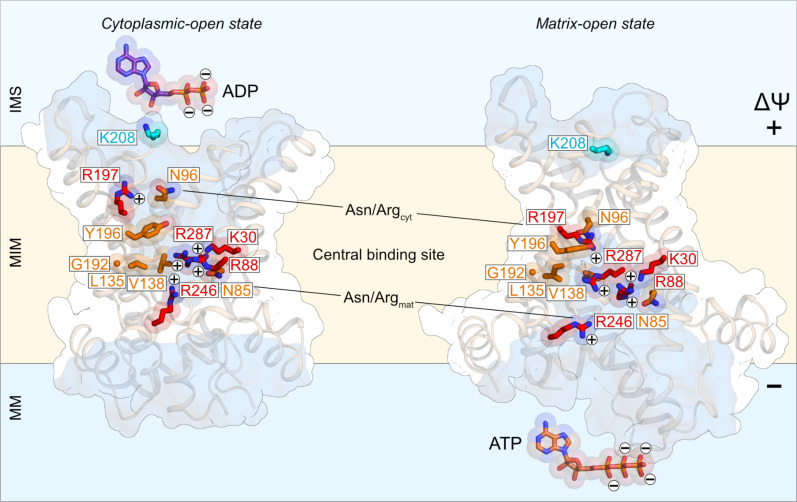
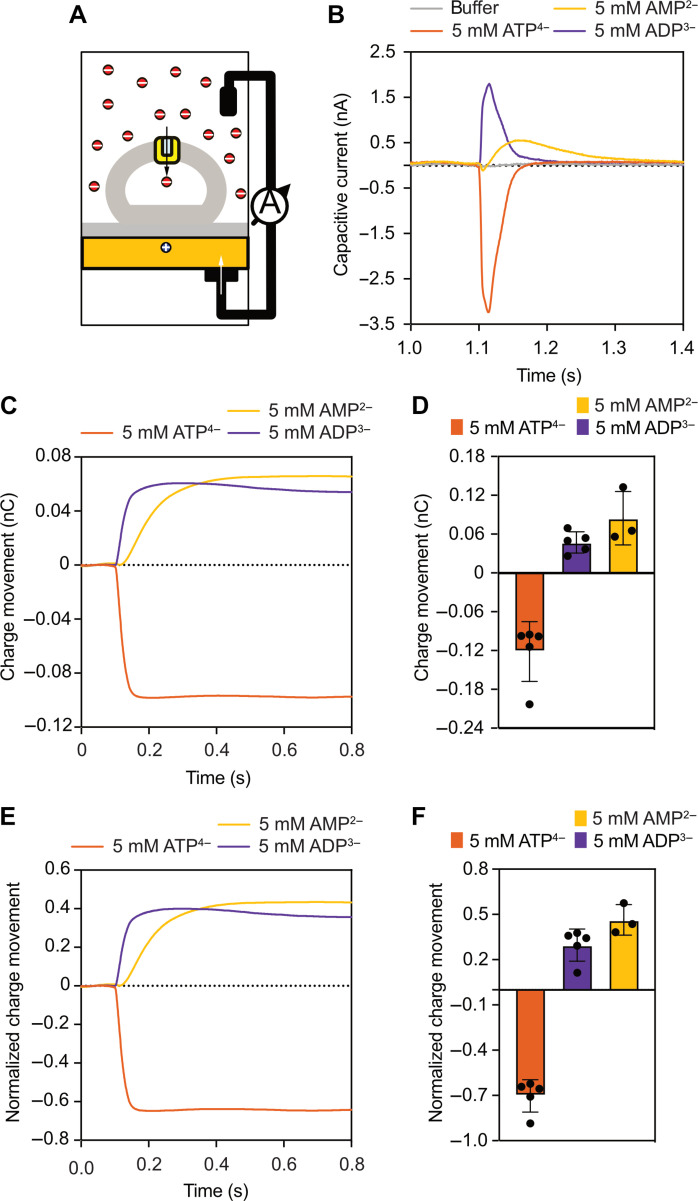
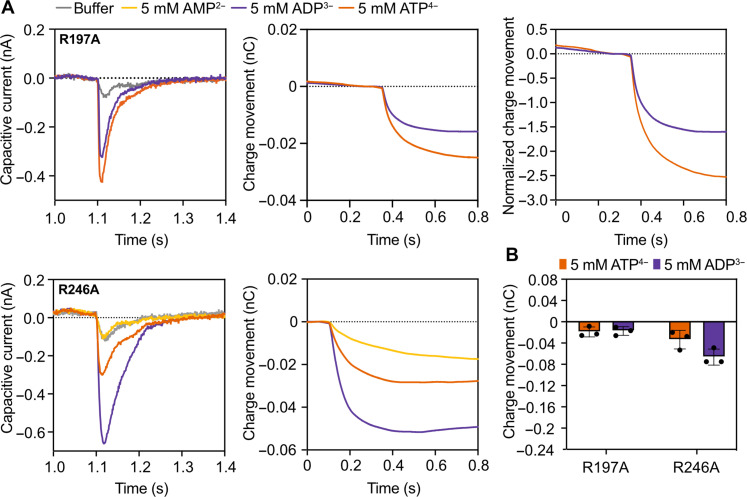
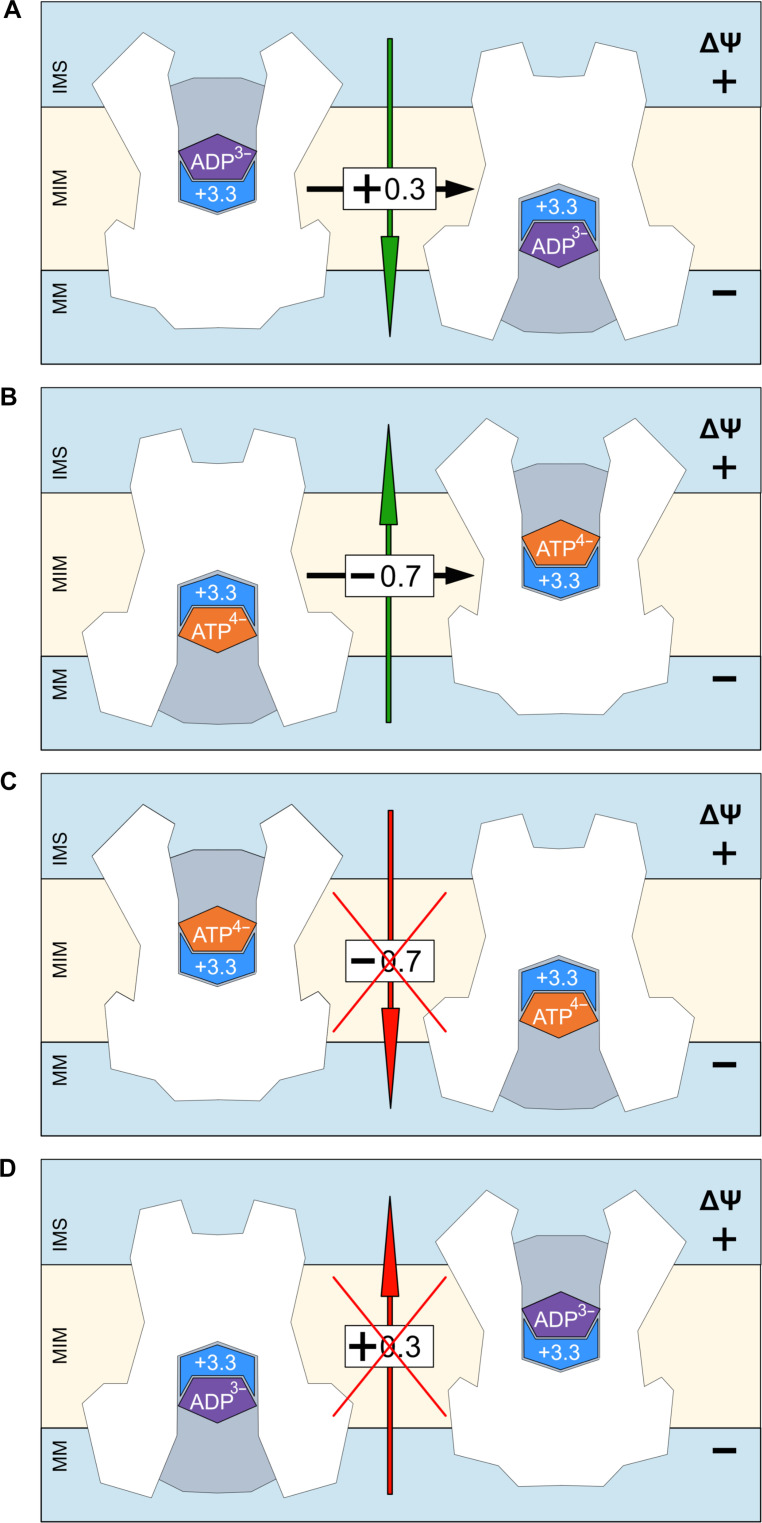
The mitochondrial adenosine 5′-diphosphate (ADP)/adenosine 5′-triphosphate (ATP) carrier imports ADP into the mitochondrion and exports ATP to the cell. Here, we demonstrate that 3.3 positive charges are translocated with the negatively charged substrate in each transport step. They can be assigned to three positively charged residues of the central substrate-binding site and two asparagine/arginine pairs. In this way, the membrane potential stimulates not only the ATP 4− export step, as a net −0.7 charge is transported, but also the ADP 3− import step, as a net +0.3 charge is transported with the electric field. These positive charge movements also inhibit the import of ATP and export of ADP in the presence of a membrane potential, allowing these nucleotides to be maintained at high concentrations in the cytosol and mitochondrial matrix to drive the hydrolysis and synthesis of ATP, respectively. Thus, this is the mechanism by which the membrane potential drives adenine nucleotide exchange with high directional fluxes to fuel the cellular processes.
Overview
The claims and statistics of this paper haven’t been checked yet.
Free: it reads the open-access text and checks the first 5 claims that cite a source we can check. Create a free account to check every claim.
Integrity signals
Registry
Cites
Statistics
Figures
Verification
Claims the paper makes
The claims and statistics of this paper haven’t been checked yet.
Free: it reads the open-access text and checks the first 5 claims that cite a source we can check. Create a free account to check every claim.
Claims other papers make about this one
Each is checked against this paper’s own text: does it say what the citing paper says it does?
The source backs part of the claim, not all of it — or backs it for a different population, condition or comparison.
In the citing paper
“Meanwhile, research has indicated that a decline in membrane potential reduces mitochondrial ATP synthesis (26).”
From Mitochondrial complex III subunit Qcr8 regulates the virulence and adhesion of Candida albicans by modulating mitochondrial function (2026) · cites this paper as [26]
Experimental — accuracy not yet measured
Self-check
Percentages, sums and reported differences re-computed from the paper’s own numbers.
The self-check needs the paper’s full text.
Citations
Cites
High-efficiency yeast transformation using the LiAc/SS carrier DNA/PEG method
Gietz, R. D., & Schiestl, R. H. (2007) · Nature Protocols · doi:10.1038/nprot.2007.13 · Cited by 2,772 · cited 1×
“…WB-12 (MAT α ade2-1 trp1-1 ura3-1 can1-100 aac1::LEU2 aac2::HIS3 ) ( 44 ), in which aac1 and aac2 genes are disrupted, or in strain W303-1B (MAT α leu2-3, 112 trp1-1 can1-100 ura3-1 ade2-1 his3-11,15 ), using the lithium acetate/single stranded carrier DNA/ polyethylene glycol method ( 45 ).”
Structure of mitochondrial ADP/ATP carrier in complex with carboxyatractyloside
Pebay-Peyroula, E., Dahout-Gonzalez, C., Kahn, R., Trézéguet, V., Lauquin, G. J.-M., & Brandolin, G. (2003) · Nature · doi:10.1038/nature02056 · Cited by 998 · cited 2×
“To make the state interconversion possible, three cardiolipin molecules are tightly bound to the carrier, which link the domains together on the matrix side ( 16 , 18 , 19 ).”
BackgroundMicroscale Fluorescent Thermal Stability Assay for Membrane Proteins
Alexandrov, A. I., Mileni, M., Chien, E. Y. T., Hanson, M. A., & Stevens, R. C. (2008) · Structure · doi:10.1016/j.str.2008.02.004 · Cited by 449
Chemiosmotic Hypothesis of Oxidative Phosphorylation
MITCHELL, P., & MOYLE, J. (1967) · Nature · doi:10.1038/213137a0 · Cited by 431 · cited 1×
“One of the key features of energy conversion in mitochondria is the generation of a proton motive force ( 30 ), which results from positive charge accumulating in the intermembrane space and negative charge in the mitochondrial matrix.”
BackgroundAdenine Nucleotide Translocation of Mitochondria: 1. Specificity and Control
Pfaff, E., & Klingenberg, M. (1968) · European Journal of Biochemistry · doi:10.1111/j.1432-1033.1968.tb00420.x · Cited by 424
The SLC25 Mitochondrial Carrier Family: Structure and Mechanism
Ruprecht, J. J., & Kunji, E. R. S. (2020) · Trends in Biochemical Sciences · doi:10.1016/j.tibs.2019.11.001 · Cited by 394 · cited 5×
“The mitochondrial ADP/ATP carrier is a member of the SLC25 mitochondrial carrier family, the largest family of solute transporters in humans, the members of which share similar structural and mechanistic features ( 6 , 7 ).”
BackgroundInfluentialSelf-citationThe Molecular Mechanism of Transport by the Mitochondrial ADP/ATP Carrier
Ruprecht, J. J., King, M. S., Zögg, T., Aleksandrova, A. A., Pardon, E., Crichton, P. G., Steyaert, J., & Kunji, E. R. S. (2019) · Cell · doi:10.1016/j.cell.2018.11.025 · Cited by 319 · cited 10×
“The mitochondrial ADP/ATP carrier cycles between cytoplasmic-open and matrix-open states ( 1 , 2 , 17 ).”
BackgroundMethodInfluentialSelf-citationInternal sequence repeats and the path of polypeptide in mitochondrial ADP/ATP translocase
Saraste, M., & Walker, J. E. (1982) · FEBS Letters · doi:10.1016/0014-5793(82)80648-0 · Cited by 314 · cited 2×
“Its structural fold consists of three domains ( 15 ), each containing two transmembrane helices that are linked by a loop and short matrix helix ( 16 ).”
BackgroundMitochondrial carriers in the cytoplasmic state have a common substrate binding site
Robinson, A. J., & Kunji, E. R. S. (2006) · Proceedings of the National Academy of Sciences · doi:10.1073/pnas.0509994103 · Cited by 253 · cited 6×
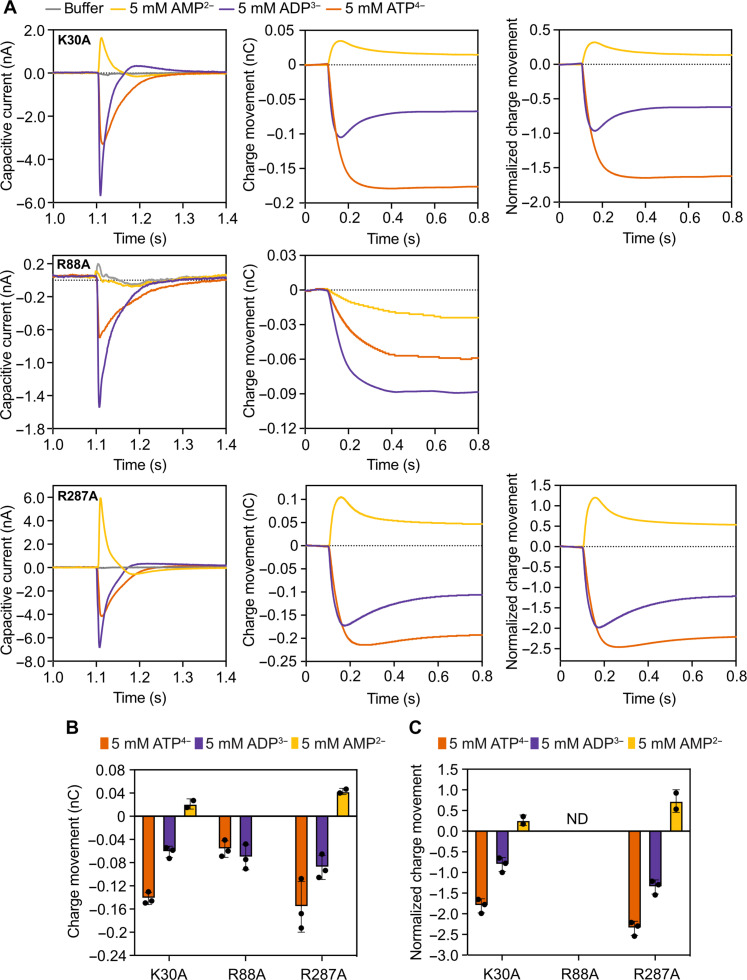
“This result also shows that the transport mechanism of K30A is the least affected of all alanine replacement mutants, in agreement with this residue not being a contact point of the substrate-binding site ( 17 , 22 , 23 ).”
BackgroundInfluentialSelf-citationThe mechanism of transport by mitochondrial carriers based on analysis of symmetry
Robinson, A. J., Overy, C., & Kunji, E. R. S. (2008) · Proceedings of the National Academy of Sciences · doi:10.1073/pnas.0809580105 · Cited by 226 · cited 4×
“The third functional element is a substrate-binding site ( 20 , 22 , 23 ), which allows the translocation of only ADP, ATP, and their deoxy variants ( 24 – 26 ).”
BackgroundInfluentialSelf-citation
Research works printed but not linked: 1
- M. J. Buono, F. W. Kolkhorst, Estimating ATP resynthesis during a marathon run: A method to introduce metabolism. Adv. Physiol. Educ. 25, 70– 71 (2001).
Cited by
Mitochondrial membrane potential and compartmentalized signaling: Calcium, ROS, and beyond
Selim, N. A., & Wojtovich, A. P. (2025) · Redox Biology · doi:10.1016/j.redox.2025.103859 · Cited by 121
“[116].”
Targeted ROS Scavenging for Disease Therapies Using Nanomaterials
Zhang, Y., Zhang, Y., Liang, R., Zou, J., Pei, R., & Chen, X. S. (2025) · Advanced Materials · doi:10.1002/adma.202504435 · Cited by 96
Zhang, Y., Xu, Y., Wu, C., Chen, S., Chen, Z., Qin, F., Hu, X., Zhang, J., & Wang, Y. (2025) · Advanced Materials · doi:10.1002/adma.202510824 · Cited by 25
The peculiar properties of mitochondrial carriers of the SLC25 family
Kunji, E. R. S., Mavridou, V., King, M. S., Cimadamore‐Werthein, C., Baron, S. J., Jones, S. A., King, A. C., Springett, R., Chand, D., Palmer, S. M., et al. (2025) · Biochemical Journal · doi:10.1042/bcj20253171 · Cited by 20
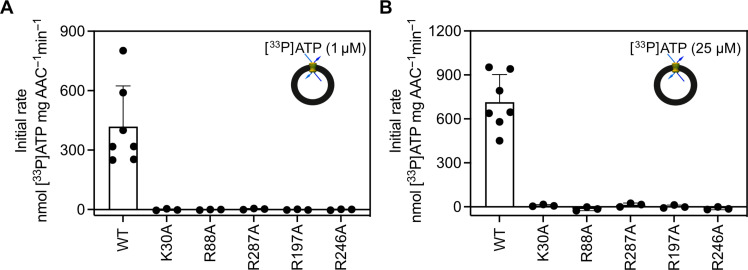
“Single alanine replacement mutants confirmed the involvement of all five positively charged residues, as ADP 3-transport induced a negative charge movement [221].”
InfluentialSelf-citationPohl, E. E., Vazdar, M., & Kreiter, J. (2025) · Protein Science · doi:10.1002/pro.70047 · Cited by 10
“In a more recent study, H + transport coupled to the ATP/ADP exchange by AAC1 was entirely excluded (Mavridou et al. 2024).”
Wang, Y., Yin, T., Qian, M., Ismail, B. B., Zou, Z., Zhang, X., He, Q., & Guo, M. (2025) · Foods · doi:10.3390/foods14213589 · Cited by 7
Mitochondrial NAD + gradient sustained by membrane potential and transport
Goyal, S., Lyons, S. N., & Cambronne, X. A. (2025) · Science Advances · doi:10.1126/sciadv.aea7460 · Cited by 7
“Mavridou et al. ( 37 ) advanced this model by identifying residues in AAC that governed electrogenic transport and determined that residues in the substrate binding site were the primary contributors.”
InfluentialZhang, Y., Guo, L., Wang, S., Zhang, J., Ren, X., Li, R., Li, J., & Chen, C. (2025) · Animals · doi:10.3390/ani15233491 · Cited by 5
“The bacterial membrane potential is a key factor driving ATP synthesis [44], and the membrane potential also has a certain impact on bacterial drug resistance.”
Specific SLC25 carriers regulate mitochondrial protein synthesis
Rudler, D. L., Hughes, L. A., King, M. S., Baker, J., Lee, R. G., Gandadireja, A. P., Sunil, A., Fagan, S. V., Payne, B., Gray, N., et al. (2026) · Science Advances · doi:10.1126/sciadv.aeb0049 · Cited by 5
“The substrate-binding mechanism has been experimentally determined for the mitochondrial ADP/ATP carrier ( 8 ).”
Self-citationSong, J., Zhu, Y., Zhang, Y., Song, B., Liu, L., Song, Y., Shi, Y., Jiao, Y., Dang, J., Yu, Z., et al. (2026) · Chemical Engineering Journal · doi:10.1016/j.cej.2026.179531 · Cited by 1
A Function-Centric Framework for Mitochondrial Quality Control
Ozcan, F., Vujovic, F., & Farahani, R. H. (2026) · Biomolecules · doi:10.3390/biom16081116 · Cited by 1
“Long-chain fatty acids enable ANT1-mediated H + transport that is inhibited by purine nucleotides, while dissipation of ∆ p [238–240] reduces the driving force for ADP 3 − import [241], relieving nucleotide-dependent inhibition of UCPs and amplifying proton leak.”
Zhao, Q., Huang, X., Liu, Q., Cao, Y., Yu, X., Liu, Y., Hu, N., Han, Z., Tan, J., Li, X., et al. (2026) · Microbiology Spectrum · doi:10.1128/spectrum.01672-25
Zhang, X., Zhao, X., Wu, Z., Zou, Y. F., Huang, Z., Zhang, Z., Faisal, S., Zhong, F., Chen, W., Lian, J., et al. (2026) · Cell Reports Physical Science · doi:10.1016/j.xcrp.2026.103158
Feng, R., Du, M., Li, M., Zhang, X., Shi, B., Wang, S., & Chen, Z. (2026) · Acta Biomaterialia · doi:10.1016/j.actbio.2026.04.061
Qin, R., Li, Y., Qiu, T., Wang, R., Li, Y., Shi, S. Q., Liu, Y., Zhou, D., Fan, J., Zeng, X., et al. (2026) · Biomaterials · doi:10.1016/j.biomaterials.2026.124332
ATP Synthase Activity Couples Bioenergetics to Mitochondrial TranslationPreprint
Nývltová, E., Manara, P., Ahn, A., Gannamedi, D. P., Shrestha, P., Rorbach, J., Kurmi, K., Lombard, D. B., Schatz, J. H., Fontanesi, F., et al. (2026) · bioRxiv (Cold Spring Harbor Laboratory) · doi:10.64898/2026.06.04.730174
“The membrane potential strongly favors this direction and, conversely, opposes ATP import and ADP export, a transport mode that occurs physiologically under respiratory impairment to supply the ATP required for essential mitochondrial function 21,22 .”
Yao, S., He, X., Yi, Q., Zhang, Q. H., & Guan, M. (2026) · Journal of Chemical Information and Modeling · doi:10.1021/acs.jcim.6c01006
Qiao, Z., Hou, D., Jiang, J., Zhou, T., Tian, Y., Hu, Y., Wu, C., Wei, D. M., Sun, J. K., Ding, J., et al. (2026) · Advanced Functional Materials · doi:10.1002/adfm.77322
“First, the photogenerated electrical field may directly depolarize the mitochondrial inner membrane, thereby activating F 0 F 1 -ATP synthase via electromechanical coupling [48].”
Bazzone, A., Zerlotti, R., Kellner, M., & Sadanandan, N. P. (2026) · Methods in molecular biology · doi:10.1007/978-1-0716-5186-5_16
Self-citationLiang, X., Su, J., Yang, J., Dong, X., Wei, W., Huo, Y., Li, Z., Zhang, H., Yu, A., & Dai, H. (2026) · Advanced Functional Materials · doi:10.1002/adfm.78299
“The stability of MMP is essential for maintaining the synthesis of ATP, and the synthesis of ATP is the basis for ensuring cellular energy metabolism and normal function [ 35 ].”
Metadata
- Authors
- Mavridou, V., King, M. S., Bazzone, A., Springett, R., & Kunji, E. R. S.
- Affiliations
- University of Cambridge (GB)
- Nanion (Germany) (DE)
- CellSpex, Kettering, Northamptonshire NN14 6GX, UK.
- Corresponding author
- Kunji, Edmund R. S.
- Venue
- Science Advances
- Published
- 2024-11
- Volume
- 10
- Issue
- 44
- Pages
- eadp7725-eadp7725
- ISSN
- 2375-2548 (ISSN-L)
- PMC
- PMC11529707
- OpenAlex
- W4403969415
- Cited by
- 20
- References
- 46
- Citations by year
- 2026: 11 · 2025: 9
- FWCI
- 2.71
- Type
- journal article
- Language
- en
- Open access
- gold
- doi.org
- Licence
- cc-by
- Locations
- Science Advances (publishedVersion, cc-by)
- PubMed Central (publishedVersion, cc-by)
- PubMed (publishedVersion)
- Topics
- Life Sciences › Biochemistry, Genetics and Molecular Biology › Molecular Biology › ATP Synthase and ATPases Research
- Life Sciences › Biochemistry, Genetics and Molecular Biology › Molecular Biology › Mitochondrial Function and Pathology
- Life Sciences › Biochemistry, Genetics and Molecular Biology › Molecular Biology › Ion Transport and Channel Regulation
- Keywords
- mitochondrial ADP/ATP carrier, membrane potential, substrate binding site, charge translocation, mitochondrial matrix, nucleotide transport
- MeSH terms
- Mitochondrial ADP, ATP Translocases, Adenosine Diphosphate, Adenosine Triphosphate, Binding Sites, Biological Transport, Membrane Potentials, Mitochondria, Saccharomyces cerevisiae Proteins, Membrane Potential, Mitochondrial
About these checks
Registry, retraction, Cites and statistics results are computed, not judged, with one exception: a printed reference that no index lists is read once by a model before it counts as a citation error. Claims are extracted by a model and kept only when their quote appears verbatim in the text; each cited source is then checked, with a model’s help, for whether it says what the claim relies on. Those verdicts can be wrong — read the claim’s quote and the cited source before relying on one.
Statistics and arithmetic are recomputed, not judged.
Confidence bands are shown only for fields calibrated on our annotated test set. None is calibrated yet, so no band is shown.
What counts as a claim ›How we measure confidence ›How we check this ›
Are you an author, or do you see a problem with this page? Request a review
Data sources
Bibliographic data: Semantic Scholar, OpenAlex, Crossref.
Contains information from the Semantic Scholar Academic Graph Datasets, made available under the ODC Attribution License (ODC-BY 1.0).
Semantic Scholar’s data is described in: Kinney, R., et al. (2023). The Semantic Scholar Open Data Platform. arXiv:2301.10140.
