

Re-evaluating molecular clock maximum age calibrations revives pre-Ediacaran divergence estimates for animals
Open accessThe DOI matches its Crossref record; 105 of the 105 references it cites were found in a registry or an index; none of the 111 sources its claims cite is checked for support yet.
Abstract
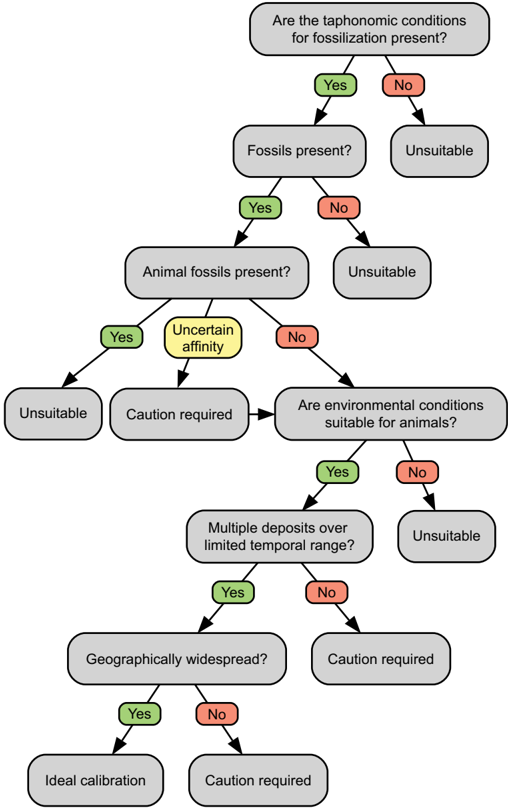
Divergent models persist for the emergence of animals. Lipid biomarkers suggest animals originated before 635 million years ago (Ma), but their body fossil record extends to only 574 Ma. Molecular clocks might differentiate between these records, but we demonstrate how their accuracy and precision hinge on maximum age calibrations. We evaluate the Ediacaran Weng’an Biota (China) as a maximum calibration utilizing microfossils from the Kheseen Biota (Mongolia). These two biotas have similar preservation and microfossil assemblages, containing no definitive animals. The Kheseen Biota, deposited at a time (∼550–526 Ma) when animals were undoubtedly present, questions the validity of the Weng’an calibration. We discuss the uncertainty in maximum calibration strategies and propose multiple pre-Ediacaran deposits with favorable taphonomy, preserving both non-animal body fossils and biomarkers, as currently the most reliable calibrations. Our analyses support a late Tonian to mid-Cryogenian (∼800–700 Ma) origin for Metazoa.
Overview
CoChat Summary
TL;DR
Re-evaluating maximum-age calibrations shows that using the Ediacaran Weng’an Biota as a maximum calibration for animals is undermined by the similar, younger Kheseen Biota, which lacks animals despite being deposited when animals were present. Molecular-clock sensitivity analyses with Tonian calibrations revive pre-Ediacaran animal divergence estimates, supporting a late Tonian to mid-Cryogenian (~800–700 Ma) origin for Metazoa.
Key findings
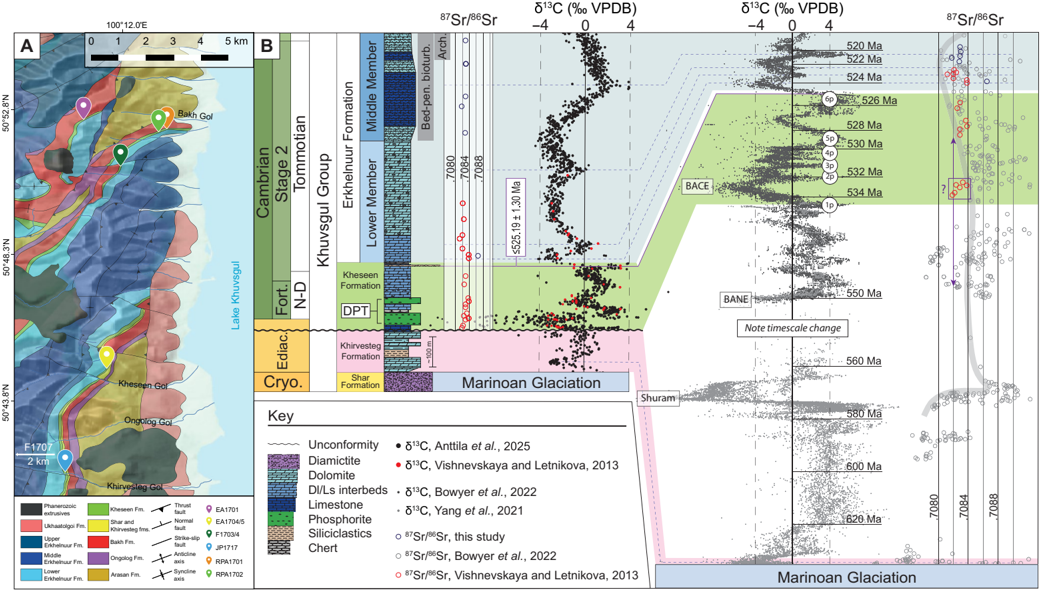
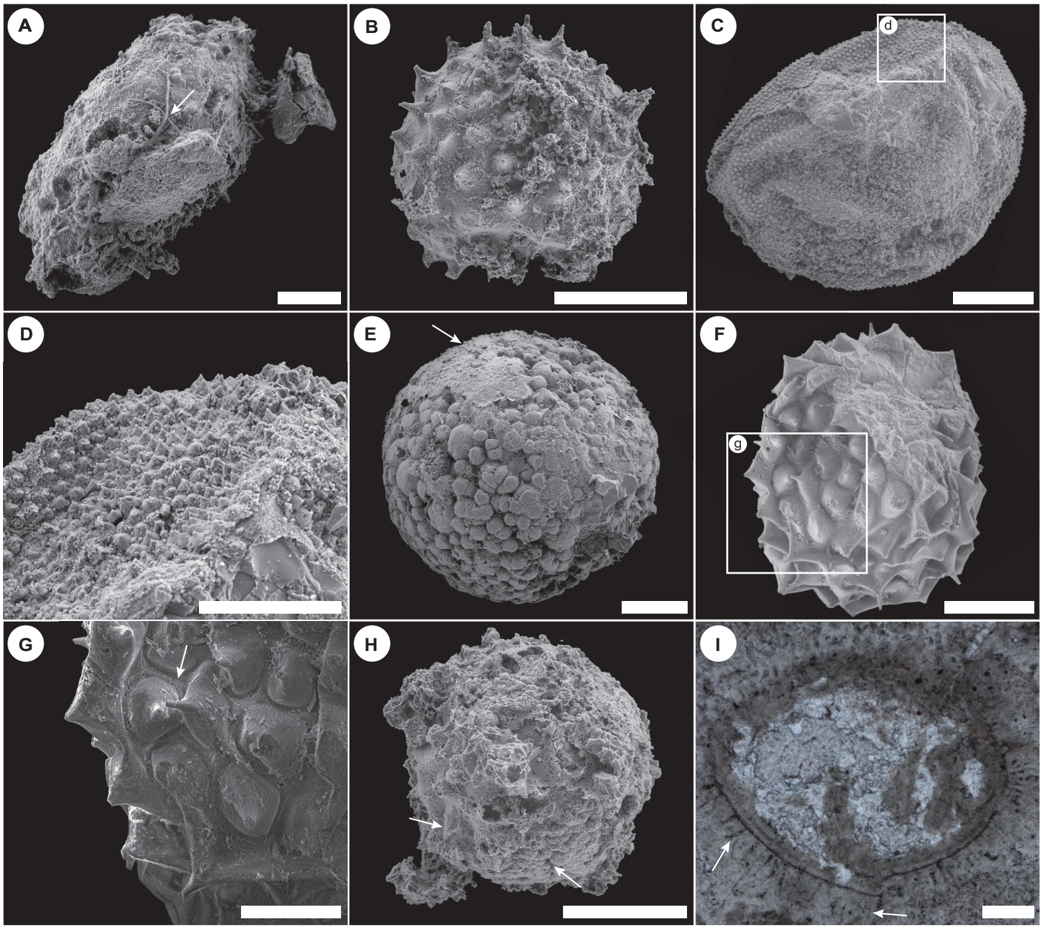
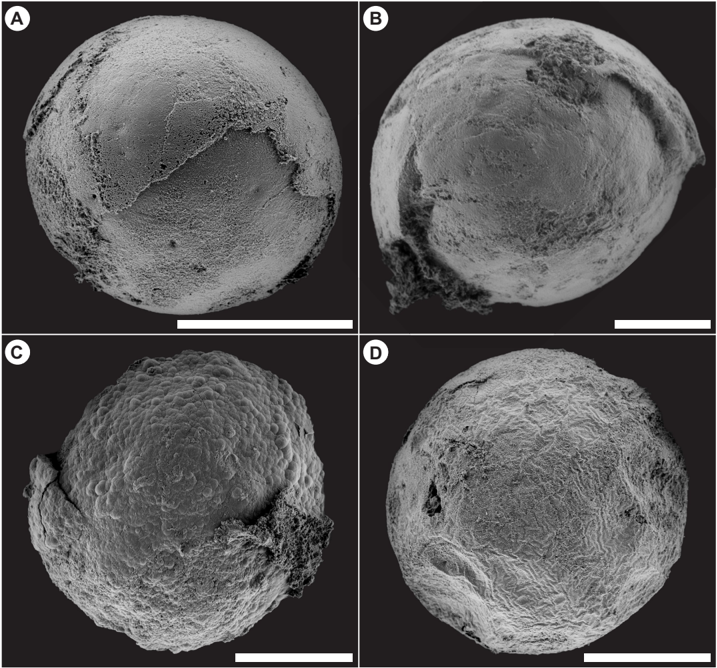
- The Kheseen Biota’s fossiliferous interval was likely deposited between 534 and 526 Ma and must be younger than 550 Ma; it contains 16 acritarch species (8 newly identified here), shares taxa and comparable preservation with Weng’an, and has no taxa confidently allied with Metazoa. Because animals were already present by Kheseen time, its animal absence undermines Weng’an as a maximum calibration for crown Metazoa, Eumetazoa, and Bilateria.
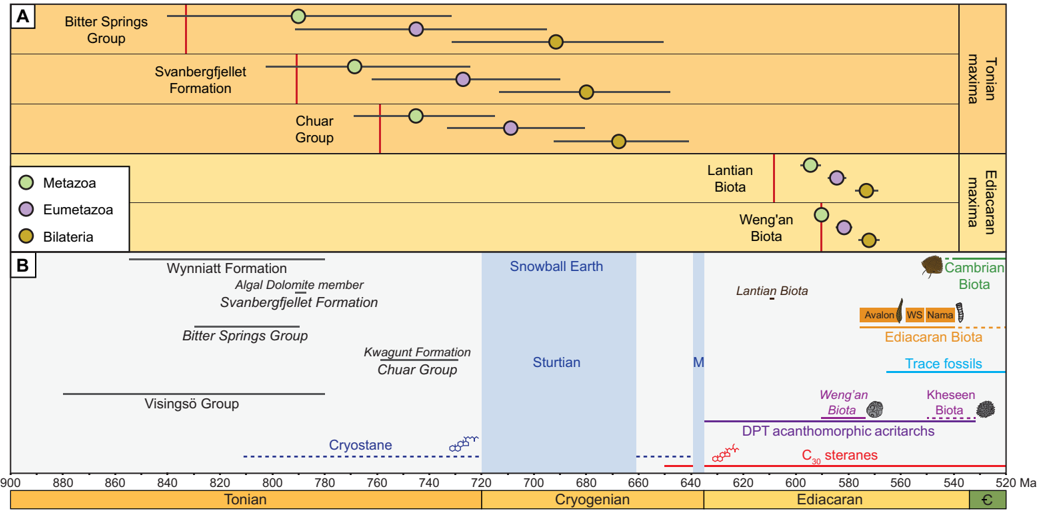
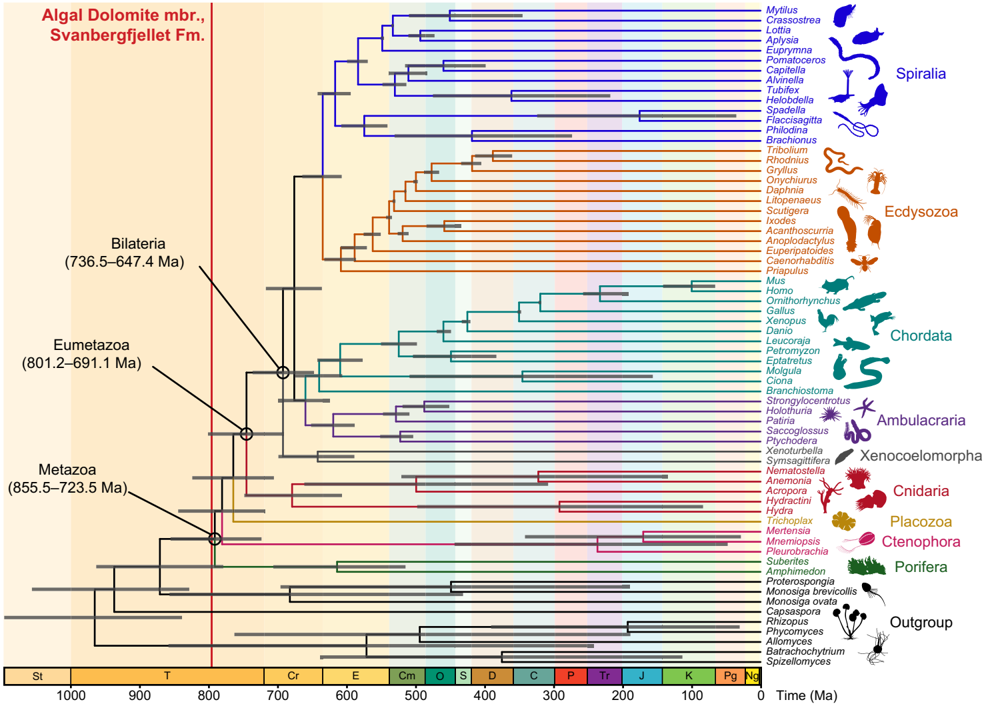
- Using the Weng’an Biota as a maximum calibration for crown Metazoa yielded a last metazoan common ancestor estimate of 590.4 ± 2.6 Ma, at least 60 Myr younger than the ~650 Ma biomarker suggestion. Tonian calibrations gave older estimates: Svanbergfjellet Formation, Metazoa = 771.7 ± 39.6 Ma, Eumetazoa = 729.7 ± 36.5 Ma, Bilateria = 681.8 ± 33.3 Ma; Bitter Springs Group, 790.6 ± 53.7 Ma, 745.0 ± 48.4 Ma, 692.2 ± 41.3 Ma; Kwagunt Formation, 745.8 ± 27.0 Ma, 709.0 ± 26.4 Ma, 667.4 ± 25.8 Ma; Lakhanda Group/GOE, 814 ± 90 Ma, 764 ± 75 Ma, 705 ± 55 Ma.
- Varying the crown Metazoa maximum calibration by 240 Myr (Ediacaran versus Tonian) changed Metazoa, Eumetazoa, and Bilateria estimates by 200, 165, and 120 Myr, respectively. Uncertainty was ±94 Ma for pre-Tonian calibrations, ±54 Ma for ancient Tonian, ±27 Ma for younger Tonian, and ±3 Ma for Ediacaran calibrations; the majority of subsequent diversification was post-Cryogenian in all analyses.
- The paper proposes criteria for reliable evidence-of-absence maximum calibrations: geochemical conditions for animal preservation, absence of body/trace/biomarker evidence, avoiding deposits with plausible but unconfirmed animal fossils, and demonstrating global absence. It states the GOE at ~2400–2300 Ma is perhaps the only high-confidence maximum calibration, while late Tonian deposits are the best current candidates, possibly with a higher probability of violation (e.g., 30%).
Methods
- Kheseen Biota: eight samples from Sections M602 and M603 were analyzed for 87Sr/86Sr chemostratigraphy; micritic carbonate was drilled, Sr isolated, and measured by MC-ICP-MS at WHOI, with δ13C data integrated from a prior composite Khuvsgul Group curve. Microfossils came from six localities and nine stratigraphic sections; 233 thin sections from 143 samples were examined, 117 samples were dissolved in 20% acetic acid, 100 yielded acid-insoluble phosphatic microfossils, and specimens were imaged by SEM at Oxford and Yale.
- Molecular clock sensitivity analysis: a published animal molecular clock was used as the base model, with 13 models varying maximum and minimum calibrations. The base topology had Porifera as sister to all other animals, Xenacoelomorpha as sister to Nephrozoa, and monophyletic Deuterostomia; analyses used an autocorrelated clock, uniform distribution, 0.1% soft minimum and 2.5% soft maximum bounds except where stated, MCMCtree v4.10.9, approximate likelihood, LG+G substitution model, and a G(1,10) prior for rate variance. Runs used 20,000 iterations after 100,000 burn-in with sampling every 1000; Weng’an (590.8 Ma) or Lantian (609.0 Ma) maxima and Metazoa/Eumetazoa/Bilateria minima were updated.
Limitations
- Stated: maximum-calibration strategies carry uncertainty; almost no deposits beyond ~650 Ma fulfill all proposed criteria, and it is ambiguous whether they meet individual criteria; evidence-of-absence at a 97.5% confidence threshold is questionable; the low probability of early animal preservation remains a barrier for Tonian calibrations; and the causes and trajectory of animal evolution remain uncertain until calibrations are better constrained.
- Stated for Kheseen: δ13C correlations are equivocal, sedimentary condensation is possible, and 87Sr/86Sr data could support either a younger or older correlation; a new Appendisphaera species is tentative due to fragmentary preservation, a Sinosphaera specimen may represent a new species, and Kheseen biodiversity is lower than Weng’an’s.
- Evident from the text: the molecular-clock results are a sensitivity analysis of one published base model and existing molecular data, so they depend on that model’s topology, calibrations, and substitution/clock assumptions; maximum calibrations are inherently evidence-of-absence, and the paper notes that animal absence in Kheseen could reflect taphonomy or ecology rather than true absence.
Model-written summary. Check it against the paper before relying on it.
Integrity signals
Registry
Cites
Statistics
Figures
Verification
Claims the paper makes
0 Valid · 0 Not valid · 71 Not checked · 43 Own results and interpretations
A result the paper reports from its own data — it cites no other source for it, so there is none to check. The quote shows it is in the paper.
In the paper
“Although there is notable variation in the age estimates of these basal nodes in the tree, the majority of subsequent diversification is post-Cryogenian in all our analyses.”
§ Re-evaluating molecular clock maximum age calibrations revives pre-Ediacaran divergence estimates for animals > RESULTS > Maximum calibration sensitivity analysis
plain- Asserted: passes — The authors put it forward as true.
- Checkable: passes — It can be checked against evidence.
- Load-bearing: unclear — It is unclear whether the paper’s conclusions depend on it.
- Based: passes — The paper gives a reason why it holds.
- Rests on 2 assumptions not shown here.
In the paper
“However, these correlations are equivocal, particularly because the interval with the most negative values hosts evidence of local remineralization of organic matter (35).”
§ Re-evaluating molecular clock maximum age calibrations revives pre-Ediacaran divergence estimates for animals > RESULTS > Kheseen Biota age model
What the sources say
- Not matchedcites [35] E. S. C. Anttila, F. A. Macdonald, B. Schoene, S. P. Gaynor, Cambrian foreland phosphogenesis in the Khuvsgul Basin of Mongolia. Am. J. Sci. 325, 3 (2025).
More than one paper fits this citation.
plainstates an association- Asserted: passes — The authors put it forward as true.
- Checkable: passes — It can be checked against evidence.
- Load-bearing: passes — The paper’s conclusions depend on it.
- Based: passes — The paper gives a reason why it holds.
- Not matched
In the paper
“Carbonate δ13C isotope values through the Kheseen Formation show several peaks and nadirs that can be correlated with global δ13C compilations [e.g., (33)].”
§ Re-evaluating molecular clock maximum age calibrations revives pre-Ediacaran divergence estimates for animals > RESULTS > Kheseen Biota age model
What the sources say
- Not checked yetcites [33] F. T. Bowyer, A. Y. Zhuravlev, R. Wood, G. A. Shields, Y. Zhou, A. Curtis, S. W. Poulton, D. J. Condon, C. Yang, M. Zhu, Calibrating the temporal and spatial dynamics of the Ediacaran–Cambrian radiation of animals. Earth Sci. Rev. 225, 103913 (2022). source
plainstates an association- Asserted: passes — The authors put it forward as true.
- Checkable: passes — It can be checked against evidence.
- Load-bearing: passes — The paper’s conclusions depend on it.
- Based: passes — The paper gives a reason why it holds.
A result the paper reports from its own data — it cites no other source for it, so there is none to check. The quote shows it is in the paper.
In the paper
“When the crown Metazoa maximum calibration was varied by 240 Myr (Ediacaran versus Tonian), the divergence estimates for Metazoa, Eumetazoa, and Bilateria correspondingly varied by 200, 165, and 120 Myr, respectively.”
§ Re-evaluating molecular clock maximum age calibrations revives pre-Ediacaran divergence estimates for animals > RESULTS > Maximum calibration sensitivity analysis
plainstates a cause- Asserted: passes — The authors put it forward as true.
- Checkable: passes — It can be checked against evidence.
- Load-bearing: passes — The paper’s conclusions depend on it.
- Based: passes — The paper gives a reason why it holds.
- Rests on 2 assumptions not shown here.
A result the paper reports from its own data — it cites no other source for it, so there is none to check. The quote shows it is in the paper.
In the paper
“The divergence estimate for crown Metazoa shows a close coupling with the chosen maximum calibration, i.e., within 50 Myr of the designated maximum age in all models except those utilizing the Lakhanda Group or GOE.”
§ Re-evaluating molecular clock maximum age calibrations revives pre-Ediacaran divergence estimates for animals > RESULTS > Maximum calibration sensitivity analysis
plainstates an association- Asserted: passes — The authors put it forward as true.
- Checkable: passes — It can be checked against evidence.
- Load-bearing: passes — The paper’s conclusions depend on it.
- Based: passes — The paper gives a reason why it holds.
- Rests on 2 assumptions not shown here.
62 more claims
Create a free account to see all 114 claims and to verify the 105 references still open.
- It may state two separate claims as one. 27
- Probably not a substantial claim. 22
Self-check
Percentages, sums and reported differences re-computed from the paper’s own numbers.
Each contradiction between two passages listed here was confirmed by an independent check.
Rated minor: it would not touch a result — a value no result rests on, a p-value that stays on the same side of the significance level, or a conflict that is clerical, resolved elsewhere in the paper, or outside its own findings.
In the paper
§ Re-evaluating molecular clock maximum age calibrations revives pre-Ediacaran divergence estimates for animals > MATERIALS AND METHODS
“δ13C and 87Sr/86Sr data from other Khuvsgul Group localities (103) were integrated into the framework”
§ Re-evaluating molecular clock maximum age calibrations revives pre-Ediacaran divergence estimates for animals > References
“103. E. S. C. Anttila, F. A. Macdonald, D. Szymanowski, B. Schoene, A. Kylander-Clark, C. Danhof, D. S. Jones, Timing and tempo of organic carbon burial in the Monterey Formation of the Santa Barbara Basin and relationships with Miocene climate.”
Rated minor: it would not touch a result — a value no result rests on, a p-value that stays on the same side of the significance level, or a conflict that is clerical, resolved elsewhere in the paper, or outside its own findings.
In the paper
§ Re-evaluating molecular clock maximum age calibrations revives pre-Ediacaran divergence estimates for animals > RESULTS > New fossil taxa from the Kheseen Biota
“Megasphaera minuscula and Megasphaera puncticulosa (32)”
§ Re-evaluating molecular clock maximum age calibrations revives pre-Ediacaran divergence estimates for animals > DISCUSSION > The Kheseen Biota undermines Weng’an as a maximum calibration
“Mengeosphaera puncticulosa, M. reticulata, and Variomargosphaeridium gracile) are shared between the two”
Citations
Cites
PAML 4: Phylogenetic Analysis by Maximum Likelihood
Yang, Z. (2007) · Molecular Biology and Evolution · doi:10.1093/molbev/msm088 · Cited by 13,879
An Improved General Amino Acid Replacement Matrix
Le, S. Q., & Gascuel, O. (2008) · Molecular Biology and Evolution · doi:10.1093/molbev/msn067 · Cited by 3,127
The rise of oxygen in Earth's early ocean and atmosphere
Lyons, T. W., Reinhard, C. T., & Planavsky, N. J. (2014) · Nature · doi:10.1038/nature13068 · Cited by 2,810 · cited 2×
“…maximum calibration for Metazoa that could be employed with the aforementioned level of confidence is the GOE at ∼ 2400 to 2300 Ma. Multiple lines of geological and geochemical evidence document a substantial rise in atmospheric oxygen globally in differing paleoenvironments at this time ( 62 ).”
Erwin, D. H., Laflamme, M., Tweedt, S. M., Sperling, E. A., Pisani, D., & Peterson, K. J. (2011) · Science · doi:10.1126/science.1206375 · Cited by 1,336
Paleontological Evidence to Date the Tree of Life
Benton, M. J., & Donoghue, P. C. J. (2006) · Molecular Biology and Evolution · doi:10.1093/molbev/msl150 · Cited by 916
Three-dimensional preservation of algae and animal embryos in a Neoproterozoic phosphorite
Xiao, S., Zhang, Y., & Knoll, A. H. (1998) · Nature · doi:10.1038/35318 · Cited by 783
Best Practices for Justifying Fossil Calibrations
Parham, J. F., Donoghue, P. C. J., Bell, C. J., Calway, T. D., Head, J. J., Holroyd, P. A., Inoue, J. G., Irmis, R. B., Joyce, W. G., Ksepka, D. T., et al. (2012) · Systematic Biology · doi:10.1093/sysbio/syr107 · Cited by 780
Fossil steroids record the appearance of Demospongiae during the Cryogenian period
Love, G. D., Grosjean, E., Stalvies, C., Fike, D. A., Grotzinger, J. P., Bradley, A. S., Kelly, A. E., Bhatia, M., Meredith, W., Snape, C. E., et al. (2009) · Nature · doi:10.1038/nature07673 · Cited by 731 · cited 2×
“Lipid biomarkers, however, suggest animals were present during the terminal 10 to 20 million years (Myr) of the Cryogenian (717 to 635 Ma) ( 3 ); recent analyses indicate that signatures specific to sponges (Porifera) are preserved in sufficient abundance in Neoproterozoic rocks to support their…”
The evolution of the marine phosphate reservoir
Planavsky, N. J., Rouxel, O. J., Bekker, A., Lalonde, S. V., Konhauser, K. O., Reinhard, C. T., & Lyons, T. W. (2010) · Nature · doi:10.1038/nature09485 · Cited by 488
Uncertainty in the Timing of Origin of Animals and the Limits of Precision in Molecular Timescales
dos Reis, M., Thawornwattana, Y., Angelis, K., Telford, M. J., Donoghue, P. C. J., & Yang, Z. (2015) · Current Biology · doi:10.1016/j.cub.2015.09.066 · Cited by 471
Research works printed but not linked: 4
- S. Xiao, A. H. Knoll, Phosphatized animal embryos from the Neoproterozoic Doushantuo Formation at Weng’an, Guizhou, South China. J. Paleontol. 74, 767– 788 (2000). · doi:10.1666/0022-3360(2000)074<0767:paeftn>2.0.co;2
- T. N. Hermann, Organic World Billion Year Ago, A. V. Sochava, Ed. (Nauka, 1990), pp. 49.
- L. A. Levin, Oxygen minimum zone benthos: Adaptation and community response to hypoxia. Oceanogr. Mar. Biol. 41, 1– 45 (2003).
- Y. E. Demidenko, E. Zhegallo, P. Y. Parkhaev, Y. V. Shuvalova, Age of phosphorites from the Khubsugul Basin (Mongolia). Doklady Earth Sci. 389, 317– 321 (2003).
Cited by
Environmental oxygen in animal evolution and development
Haxen, E. (2026) · Lund University Publications (Lund University)
Metadata
- Authors
- Lole Durbin, O. M., Anttila, E. S. C., Briggs, D. E. G., Macdonald, F. A., & Anderson, R. P.
- Affiliations
- Department of Earth Sciences, University of Oxford, Oxford OX1 3AN, UK.
- ETH Zurich (CH)
- Yale University (US)
- University of California, Berkeley (US)
- University of Oxford (GB)
- Corresponding author
- Anderson, Ross P.
- ORCID
- Venue
- Science Advances
- Published
- 2026-10-02
- Volume
- 12
- Issue
- 40
- Pages
- eaeg6289-eaeg6289
- ISSN
- 2375-2548 (ISSN-L)
- PMC
- PMC13632735
- OpenAlex
- W7215958877
- Cited by
- 1
- References
- 105
- Citations by year
- 2026: 1
- FWCI
- 2.13
- Type
- journal article
- Language
- en
- Open access
- gold
- doi.org
- Licence
- cc-by
- Locations
- Science Advances (publishedVersion, cc-by)
- PubMed Central (publishedVersion, cc-by)
- PubMed (publishedVersion)
- Repository for Publications and Research Data (ETH Zurich) (publishedVersion, cc-by)
- ETH Zürich Research Collection (cc-by)
- Funders
- National Science Foundation (NSF-GRFP-2139319)
- NASA Astrobiology Institute (NNA13AA90A)
- Royal Society (URF\221220, RF\ERE\221057)
- All Souls College, University of Oxford
- ETH Zürich (FEL-23-3-032)
- Yale Peabody Museum
- Department of Earth Sciences, University of Oxford
- Virginia Tech Institute for Critical Technology and Applied Sciences
- Topics
- Physical Sciences › Earth and Planetary Sciences › Paleontology › Evolution and Paleontology Studies
- Physical Sciences › Earth and Planetary Sciences › Paleontology › Paleontology and Stratigraphy of Fossils
- Life Sciences › Agricultural and Biological Sciences › Ecology, Evolution, Behavior and Systematics › Protist diversity and phylogeny
- Keywords
- origin of animals, molecular clock calibration, Ediacaran, Weng'an Biota, lipid biomarkers, microfossils, taphonomy, Tonian, Cryogenian
- MeSH terms
- Animals, Calibration, China, Biological Evolution, Fossils, Evolution, Molecular
About these checks
Registry, retraction, Cites and statistics results are computed, not judged, with one exception: a printed reference that no index lists is read once by a model before it counts as a citation error. Claims are extracted by a model and kept only when their quote appears verbatim in the text; each cited source is then checked, with a model’s help, for whether it says what the claim relies on. Those verdicts can be wrong — read the claim’s quote and the cited source before relying on one.
A language model drew the claims from the paper on 2026-11-23, under version 3 of the claim definition (model deepseek-v4.1-flash, prompt extract-v3).
A second model labelled each claim on 2026-11-23 (model jev-1.13-20260917, definition revision gold-guideline-v0.2).
Statistics and arithmetic are recomputed, not judged.
Confidence bands are shown only for fields calibrated on our annotated test set. None is calibrated yet, so no band is shown.
What counts as a claim ›How we measure confidence ›How we check this ›
Are you an author, or do you see a problem with this page? Request a review
How to cite
Cite CoChat for the checks on this page, and the paper for its own findings.
- This page
- CoChat. (2026). Citation check: Re-evaluating molecular clock maximum age calibrations revives pre-Ediacaran divergence estimates for animals. https://app.cochat.ai/papers/10.1126/sciadv.aeg6289
- The paper
- Lole Durbin, O. M., Anttila, E. S. C., Briggs, D. E. G., Macdonald, F. A., & Anderson, R. P. (2026). Re-evaluating molecular clock maximum age calibrations revives pre-Ediacaran divergence estimates for animals. Science Advances. https://doi.org/10.1126/sciadv.aeg6289
Data sources
Bibliographic data: Semantic Scholar, OpenAlex, Crossref.
Contains information from the Semantic Scholar Academic Graph Datasets, made available under the ODC Attribution License (ODC-BY 1.0).
Semantic Scholar’s data is described in: Kinney, R., et al. (2023). The Semantic Scholar Open Data Platform. arXiv:2301.10140.
