

The DOI matches its Crossref record; 16 of the 16 references it cites were found in a registry or an index.
A mathematical model reveals the influence of population heterogeneity on herd immunity to SARS-CoV-2
Open accessAbstract
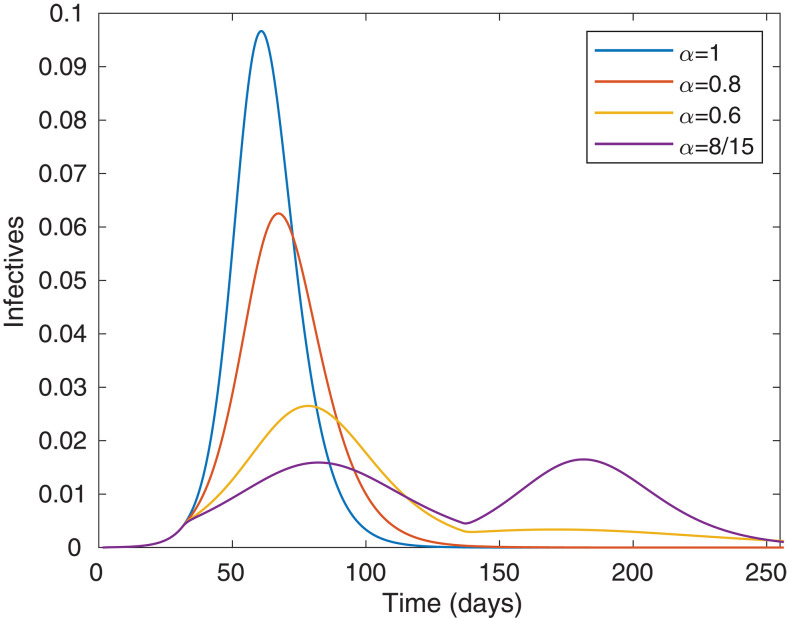
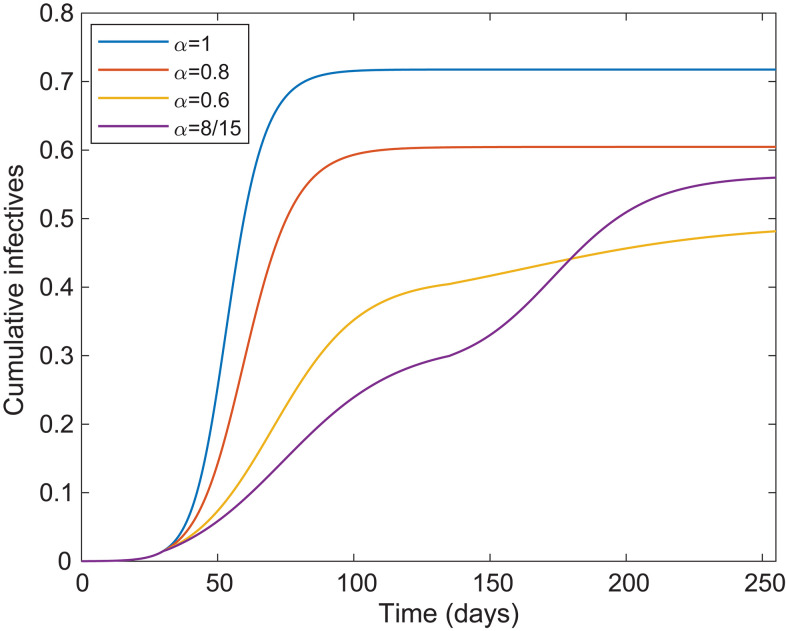
Heterogeneity and herd immunity In response to severe acute respiratory syndrome coronavirus 2 (SARS-CoV-2), some politicians have been keen to exploit the idea of achieving herd immunity. Countering this possibility are estimates derived from work on historical vaccination studies, which suggest that herd immunity may only be achieved at an unacceptable cost of lives. Because human populations are far from homogeneous, Britton et al. show that by introducing age and activity heterogeneities into population models for SARS-CoV-2, herd immunity can be achieved at a population-wide infection rate of ∼40%, considerably lower than previous estimates. This shift is because transmission and immunity are concentrated among the most active members of a population, who are often younger and less vulnerable. If nonpharmaceutical interventions are very strict, no herd immunity is achieved, and infections will then resurge if they are eased too quickly. Science , this issue p. 846
Overview
The claims and statistics of this paper haven’t been checked yet.
Run the check — free, no account needed. It reads the open-access text and checks the sources it cites.
Integrity signals
Registry
Cites
Statistics
Figures
Verification
Claims the paper makes
The claims and statistics of this paper haven’t been checked yet.
Run the check — free, no account needed. It reads the open-access text and checks the sources it cites.
Claims other papers make about this one
Each is checked against this paper’s own text: does it say what the citing paper says it does?
In the citing paper
“The disease and death that would accompany natural infection rates to reach herd immunity, typically estimated as 40–60% of the population infected, would be unacceptably high.”
From Lancet COVID-19 Commission Statement on the occasion of the 75th session of the UN General Assembly (2020) · cites this paper as [30]
In the citing paper
“The latest estimates on COVID-19, pointed out a range of 60–75% immune individuals that would be necessary to halt the forward transmission of the virus and community spread of the virus [87,88,89].”
From COVID-19 Vaccine Hesitancy Worldwide: A Concise Systematic Review of Vaccine Acceptance Rates (2021) · cites this paper as [89]
Self-check
Percentages, sums and reported differences re-computed from the paper’s own numbers.
The self-check needs the paper’s full text.
Citations
Cites
Infectious Diseases of Humans: Dynamics and Control
(1992) · Annals of Internal Medicine · doi:10.7326/0003-4819-117-2-174_4 · Cited by 7,819
Infectious Diseases of Humans: Dynamics and Control
Anderson, R. M., & May, R. M. (1991) · doi:10.1093/oso/9780198545996.001.0001 · Cited by 6,179
Epidemic Spreading in Scale-Free Networks
Pastor‐Satorras, R., & Vespignani, A. (2001) · Physical Review Letters · doi:10.1103/physrevlett.86.3200 · Cited by 5,785
Ferguson, N. M., Laydon, D. J., Nedjati-Gilani, G. L., Imai, N., Ainslie, K. E. C., Baguelin, M., Bhatia, S., Boonyasiri, A., Cucunubá, Z. M., Cuomo-Dannenburg, G., et al. (2020) · Spiral (Imperial College London) · doi:10.25561/77482 · Cited by 3,619
Estimating the effects of non-pharmaceutical interventions on COVID-19 in Europe
Flaxman, S. R., Mishra, S., Gandy, A., Unwin, H. J. T., Mellan, T. A., Coupland, H., Whittaker, C., Zhu, H., Berah, T., Eaton, J. W., et al. (2020) · Nature · doi:10.1038/s41586-020-2405-7 · Cited by 3,398
Estimating the burden of SARS-CoV-2 in France
Salje, H., Tran Kiem, C., Lefrancq, N., Courtejoie, N., Bosetti, P., Paireau, J., Andronico, A., Hozé, N., Richet, J., Dubost, C.-L., et al. (2020) · Science · doi:10.1126/science.abc3517 · Cited by 1,038
Stochastic Epidemic Models and Their Statistical Analysis
Andersson, H., & Britton, T. (2000) · Lecture notes in statistics · doi:10.1007/978-1-4612-1158-7 · Cited by 906
Self-citationWallinga, J., Teunis, P. F. M., & Kretzschmar, M. (2006) · American Journal of Epidemiology · doi:10.1093/aje/kwj317 · Cited by 702
Estimating the effects of non-pharmaceutical interventions on COVID-19 in Europe
Flaxman, S. R., Mishra, S., Gandy, A., Unwin, H. J. T., Mellan, T. A., Coupland, H., Whittaker, C., Zhu, H., Berah, T., Eaton, J. W., et al. (2020) · Spiral (Imperial College London) · doi:10.25561/77731 · Cited by 632
Mathematical Tools for Understanding Infectious Disease Dynamics
Diekmann, O., Heesterbeek, H., & Britton, T. (2012) · Princeton University Press eBooks · doi:10.23943/princeton/9780691155395.001.0001 · Cited by 365
Self-citation
Research works printed but not linked: 2
- F. Ball T. Britton P. Trapman Code for: Population heterogeneity and consequences for herd immunity to SARS-CoV-2 Version 1 Zenodo (2020); https://doi.org/10.1101/10.5281/zenodo.3899252. · DOI
- S. N. Ethier T. G. Kurtz Markov Processes: Characterization and Convergence (Wiley 2009).
Cited by
Sorted by citations
COVID-19 Vaccine Hesitancy Worldwide: A Concise Systematic Review of Vaccine Acceptance Rates
Sallam, M. (2021) · Vaccines · doi:10.3390/vaccines9020160 · Cited by 2,128
Sherman, S. M., Smith, L., Sim, J., Amlôt, R., Cutts, M., Dasch, H. K., Rubin, G. J., & Sevdalis, N. (2020) · Human Vaccines & Immunotherapeutics · doi:10.1080/21645515.2020.1846397 · Cited by 748
Infection fatality rate of COVID-19 inferred from seroprevalence data
Ioannidis, J. P. A. (2021) · Bulletin of the World Health Organization · doi:10.2471/blt.20.265892 · Cited by 684
COVID-19 herd immunity: where are we?
Fontanet, A. L., & Cauchemez, S. (2020) · Nature reviews. Immunology · doi:10.1038/s41577-020-00451-5 · Cited by 552
Metadata
- Authors
- Britton, T., Ball, F., & Trapman, P.
- Affiliations
- Stockholm University (SE)
- University of Nottingham (GB)
- Corresponding author
- Britton, Tom
- Venue
- Science
- Published
- 2020-08-14
- Volume
- 369
- Issue
- 6505
- Pages
- 846-849
- ISSN
- 0036-8075 (ISSN-L)
- 1095-9203
- PMC
- PMC7331793
- OpenAlex
- W3036932834
- Cited by
- 645
- References
- 15
- Citations by year
- 2026: 24 · 2025: 38 · 2024: 48 · 2023: 58 · 2022: 114 · 2021: 255 · 2020: 107
- FWCI
- 21.22
- Type
- journal article
- Language
- en
- Open access
- hybrid
- doi.org
- Licence
- Locations
- Science (publishedVersion, cc-by)
- PubMed Central (publishedVersion, cc-by)
- PubMed (publishedVersion)
- Repository@Nottingham (University of Nottingham) (publishedVersion, cc-by)
- Repository@Nottingham (University of Nottingham) (submittedVersion, cc-by)
- Funders
- Vetenskapsrådet (2016-04566)
- The swedish Research Council (2015-05015)
- Topics
- Physical Sciences › Mathematics › Modeling and Simulation › COVID-19 epidemiological studies
- Physical Sciences › Mathematics › Applied Mathematics › Mathematical and Theoretical Epidemiology and Ecology Models
- Health Sciences › Medicine › Infectious Diseases › SARS-CoV-2 and COVID-19 Research
- Keywords
- herd immunity, SARS-CoV-2, population heterogeneity, age heterogeneity, transmission dynamics, mathematical model, non-pharmaceutical interventions, infection rate, COVID-19 pandemic
- MeSH terms
- Betacoronavirus, COVID-19, SARS-CoV-2, Age Factors, Demography, Humans, Models, Theoretical, Pneumonia, Viral, Social Behavior, Coronavirus Infections, Immunity, Herd, Basic Reproduction Number, Pandemics, Social Participation
About these checks
Registry, retraction, Cites and statistics results are computed, not judged, with one exception: a printed reference that no index lists is read once by a model before it counts as a citation error. Claims are extracted by a model and kept only when their quote appears verbatim in the text; each cited source is then checked, with a model’s help, for whether it says what the claim relies on. Those verdicts can be wrong — read the claim’s quote and the cited source before relying on one.
Statistics and arithmetic are recomputed, not judged.
Confidence bands are shown only for fields calibrated on our annotated test set. None is calibrated yet, so no band is shown.
What counts as a claim ›How we measure confidence ›How we check this ›
Are you an author, or do you see a problem with this page? Request a review
