

Learning skillful medium-range global weather forecasting
Open accessThe DOI matches its Crossref record; 66 of the 66 references it cites were found in a registry or an index; 12 of the 38 sources its claims cite were checked for support.
Abstract
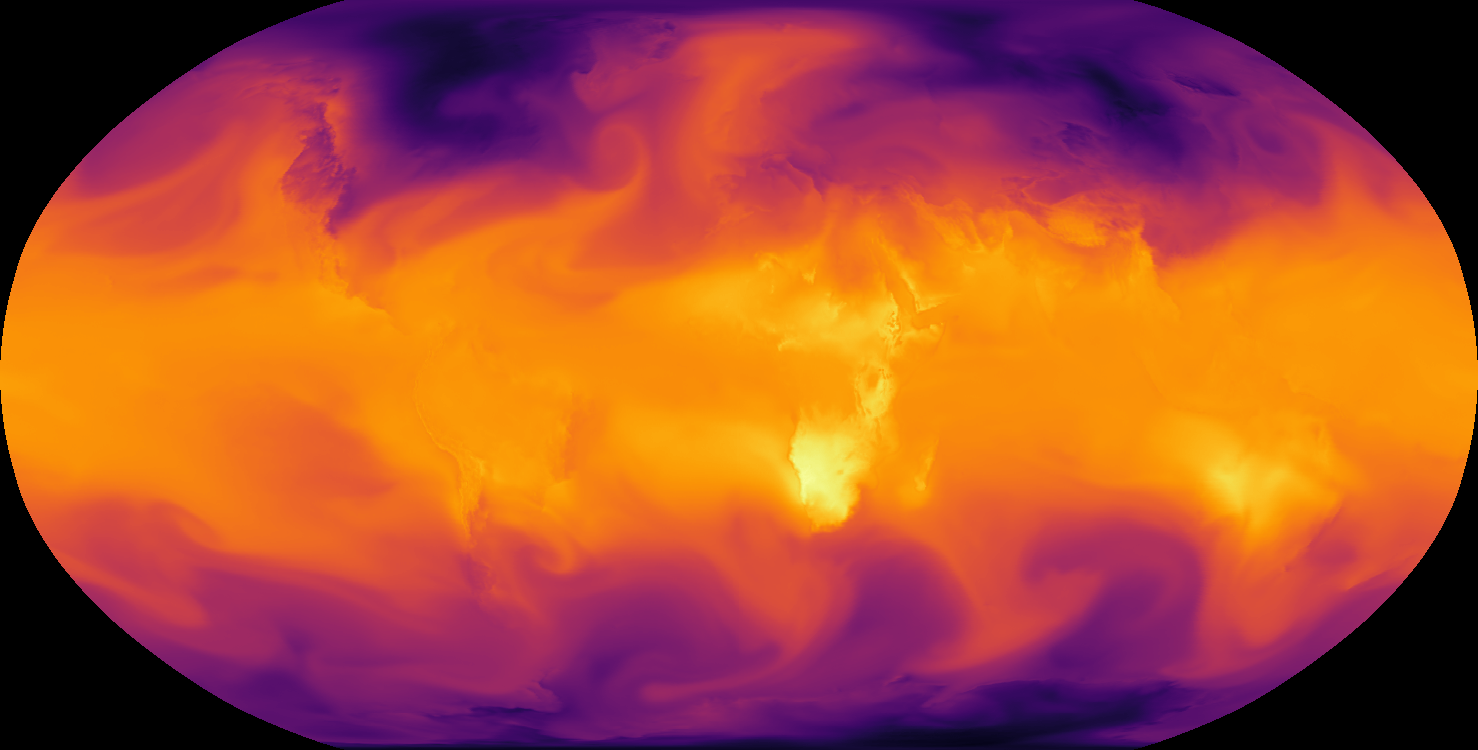
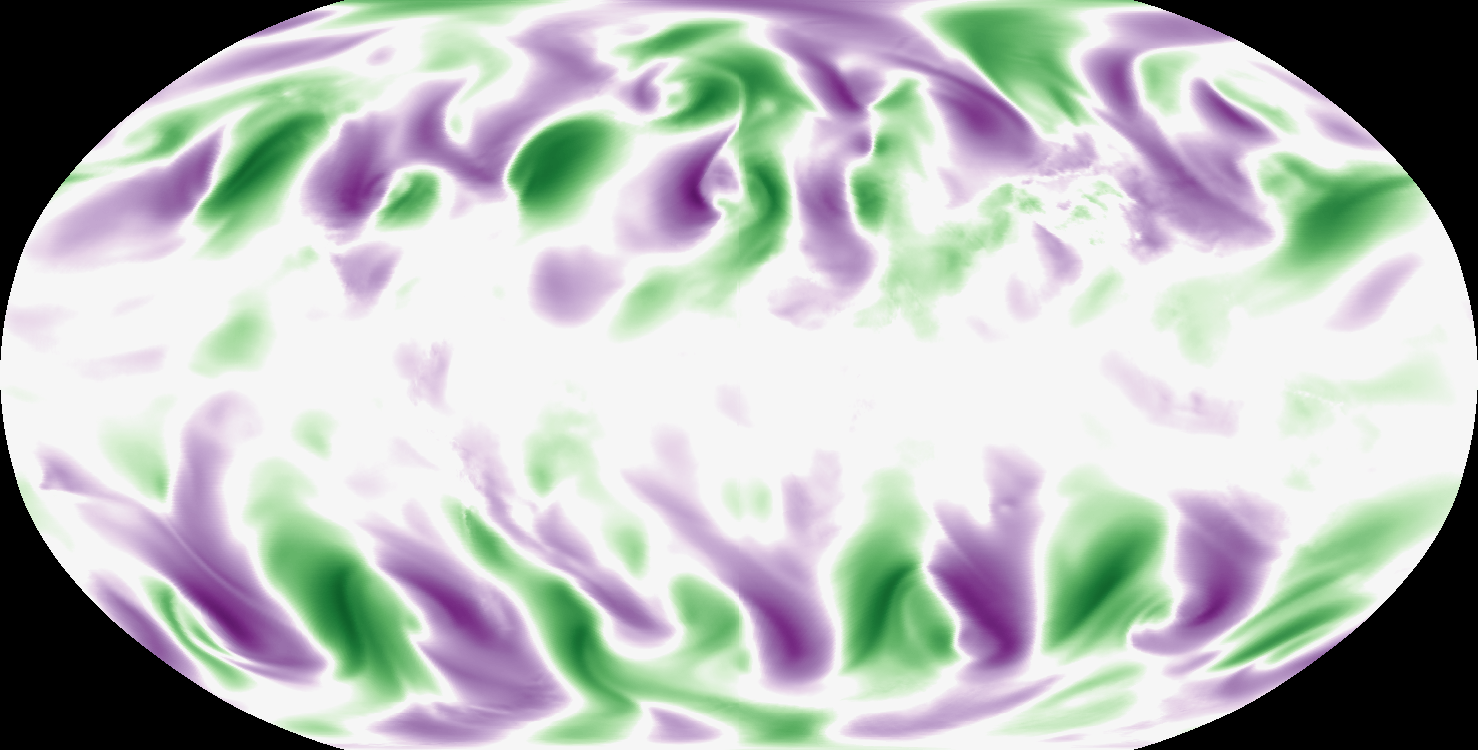
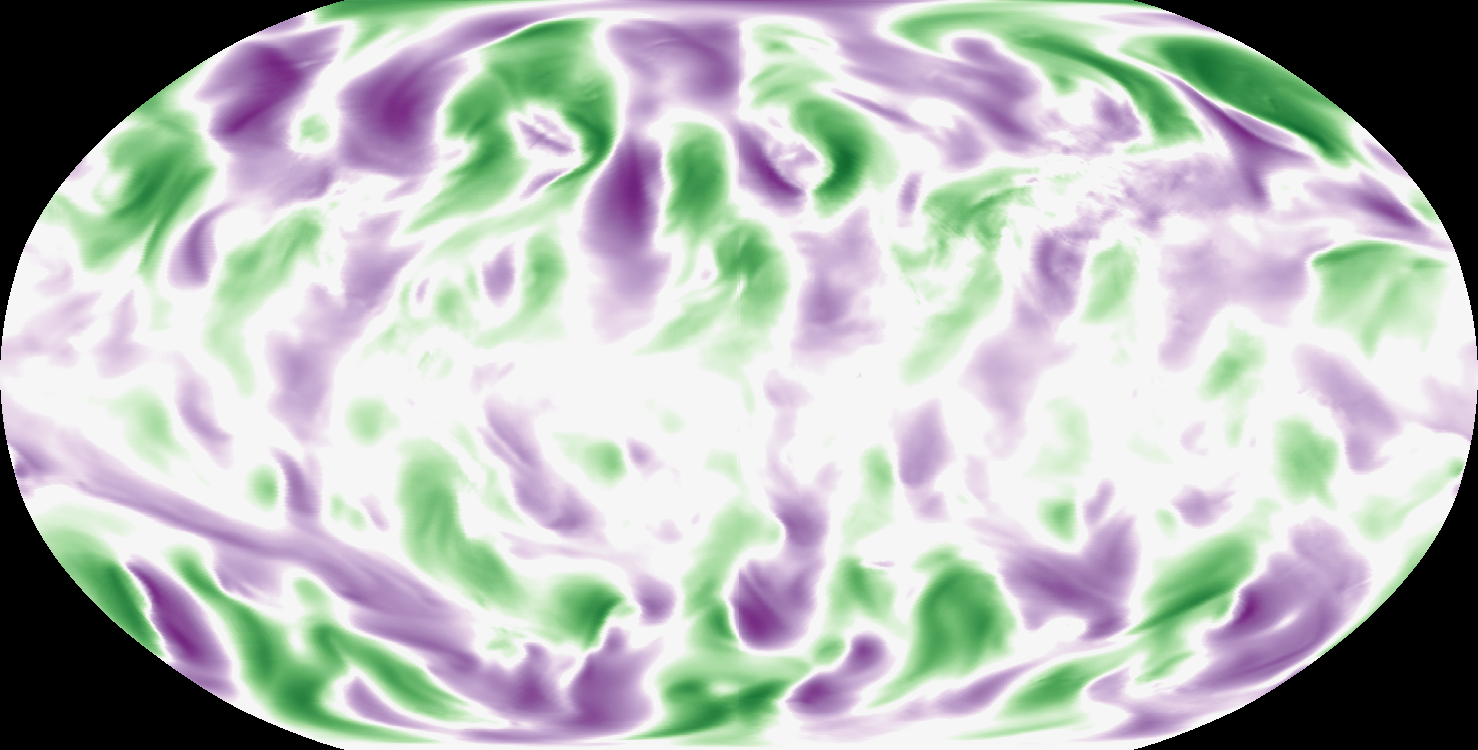
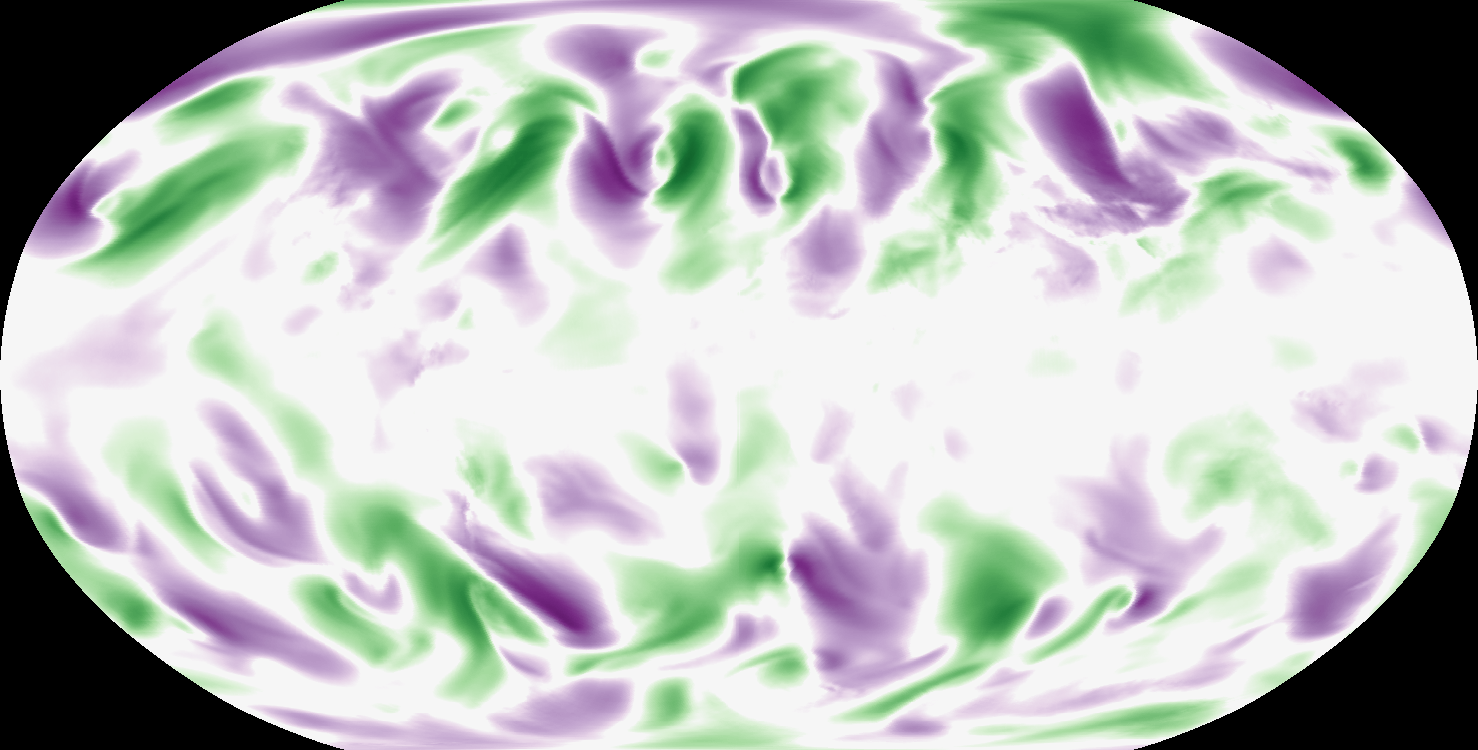
Global medium-range weather forecasting is critical to decision-making across many social and economic domains. Traditional numerical weather prediction uses increased compute resources to improve forecast accuracy but does not directly use historical weather data to improve the underlying model. Here, we introduce GraphCast, a machine learning–based method trained directly from reanalysis data. It predicts hundreds of weather variables for the next 10 days at 0.25° resolution globally in under 1 minute. GraphCast significantly outperforms the most accurate operational deterministic systems on 90% of 1380 verification targets, and its forecasts support better severe event prediction, including tropical cyclone tracking, atmospheric rivers, and extreme temperatures. GraphCast is a key advance in accurate and efficient weather forecasting and helps realize the promise of machine learning for modeling complex dynamical systems.
Overview
CoChat Summary
TL;DR
GraphCast is a graph neural network trained directly on ERA5 reanalysis that produces 10-day global weather forecasts at 0.25° resolution in under one minute. It outperforms the operational HRES deterministic system on most evaluated targets and supports better prediction of tropical cyclones, atmospheric rivers, and extreme temperatures.
Key findings
- GraphCast significantly outperformed HRES on 90.3% of 1380 verification targets, and significantly on 89.9% of targets; excluding 50 hPa it significantly outperformed HRES on 96.9% of 1280 targets, and excluding 50 and 100 hPa on 99.7% of 1180 targets.
- On z500, GraphCast had better skill across all lead times, with skill score improvement around 7%–14%; it also outperformed Pangu-Weather on 99.2% of the 252 targets Pangu-Weather presented.
- For severe events, GraphCast had lower median cyclone track error and was significantly better than HRES for lead times 18 hours to 4.75 days; it improved atmospheric river ivt prediction from 25% at short lead time to 10% at longer horizons; extreme heat precision-recall curves were above HRES at 5- and 10-day lead times, while HRES was better at 12 hours.
- Training on more recent data improved GraphCast’s skill scores, with variants trained up to before 2021 generally outperforming earlier-trained variants on 2021 test data.
Methods
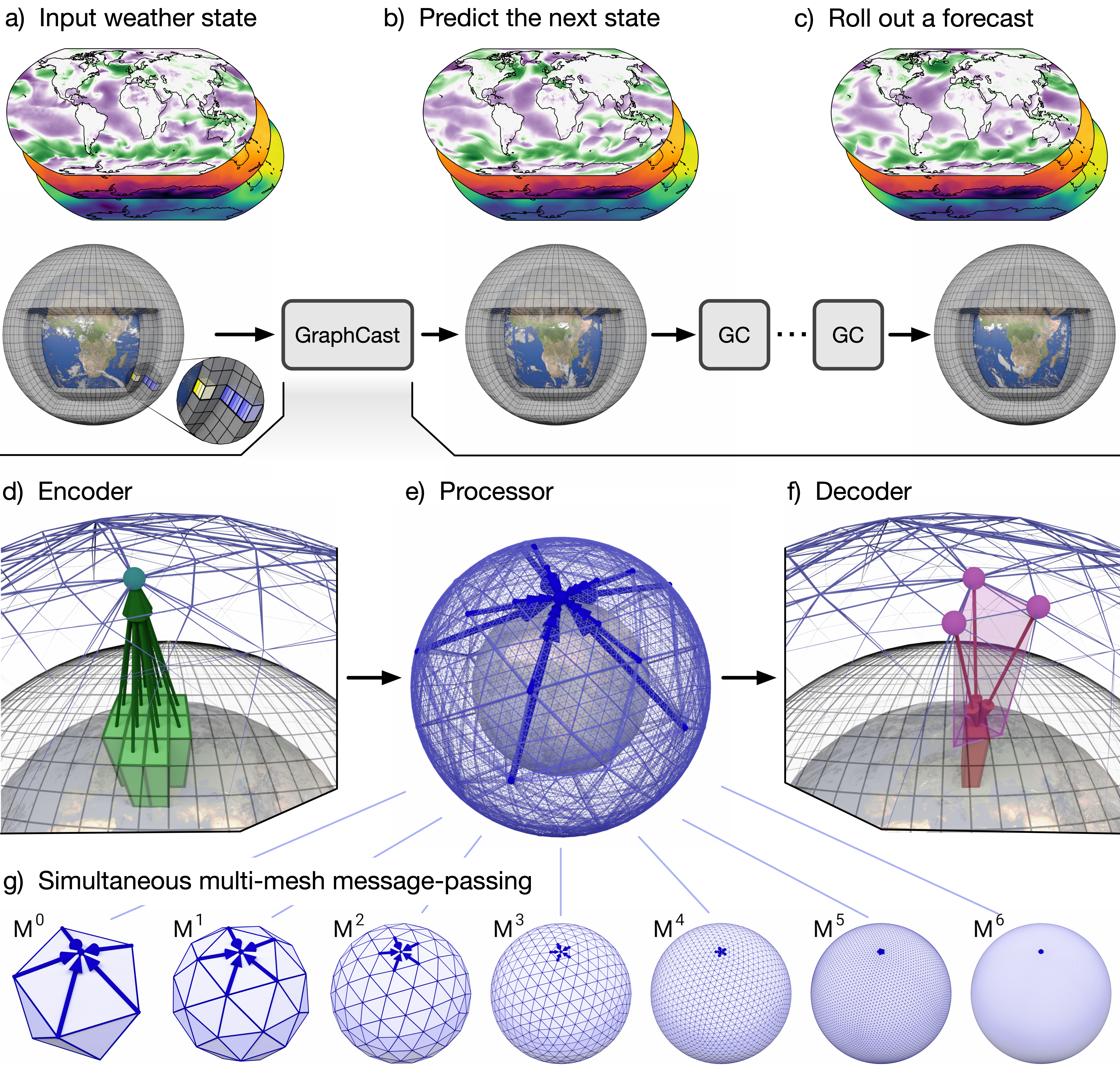
- GraphCast is a 36.7-million-parameter graph neural network in an encode-process-decode configuration, using a multi-mesh icosahedral representation with 40,962 nodes and 327,660 mesh edges; it takes two most recent weather states and predicts the next 6-hour state autoregressively.
- It was trained on 39 years (1979–2017) of ERA5 reanalysis, using a weighted MSE objective over 12 autoregressive steps, with training taking roughly four weeks on 32 Cloud TPU v4 devices; evaluation used held-out 2018 data, with some analyses on 2018–2021 and 2021.
- Forecast skill was evaluated against HRES using RMSE and ACC, with HRES-fc0 as HRES ground truth and ERA5 as GraphCast ground truth; comparisons used 06z/18z initializations and 12-hour target intervals to match data assimilation lookahead.
Limitations
- The paper states that GraphCast is deterministic and does not explicitly model uncertainty like ECMWF’s ensemble system ENS; its MSE training objective encourages spatial blurring, which may limit value for some applications.
- The paper states GraphCast operates at 0.25° resolution, 37 vertical levels, and 6-hour time steps, versus HRES at 0.1°, 137 levels, and up to 1-hour time steps, and that it depends critically on large quantities of high-quality data assimilated via NWP, so it should not be regarded as a replacement for traditional weather forecasting.
- The paper reports reduced skill in the stratosphere, especially at 50 hPa, and at high surface elevations; it also notes possible ERA5 versus HRES-fc0 domain differences and spurious spectral artifacts around 100 km wavelengths.
Model-written summary. Check it against the paper before relying on it.
Integrity signals
Registry
Cites
Statistics
Figures
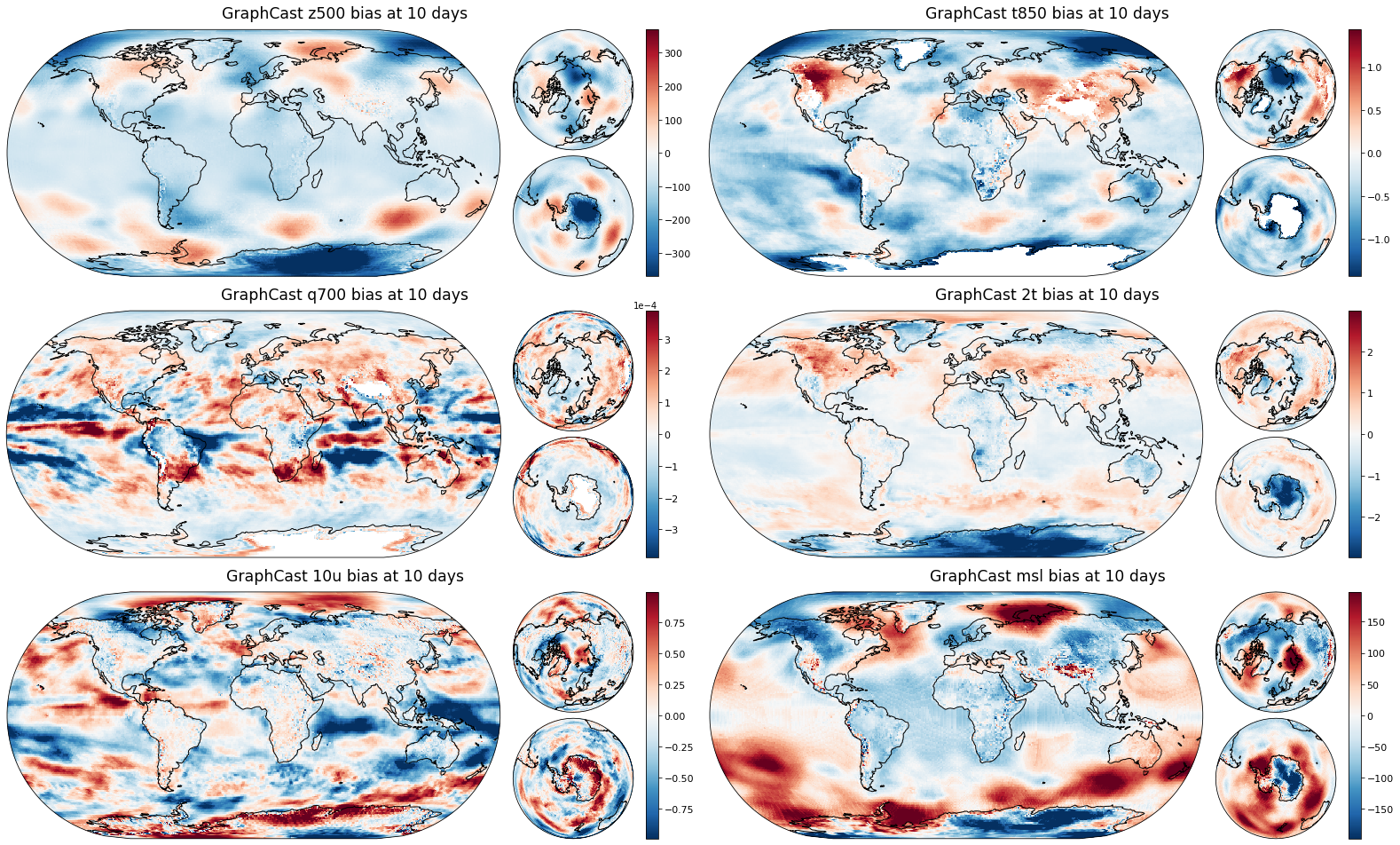
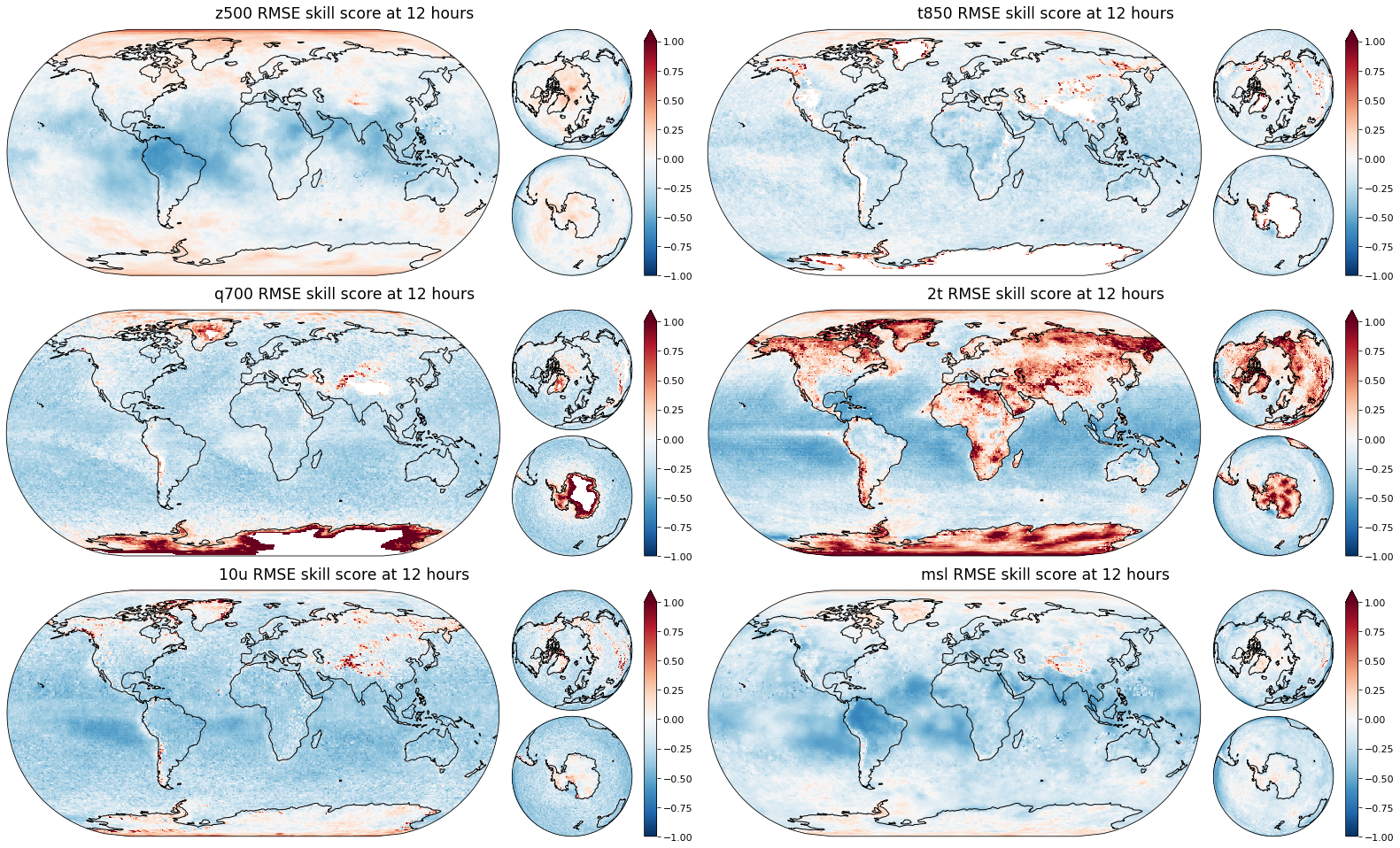
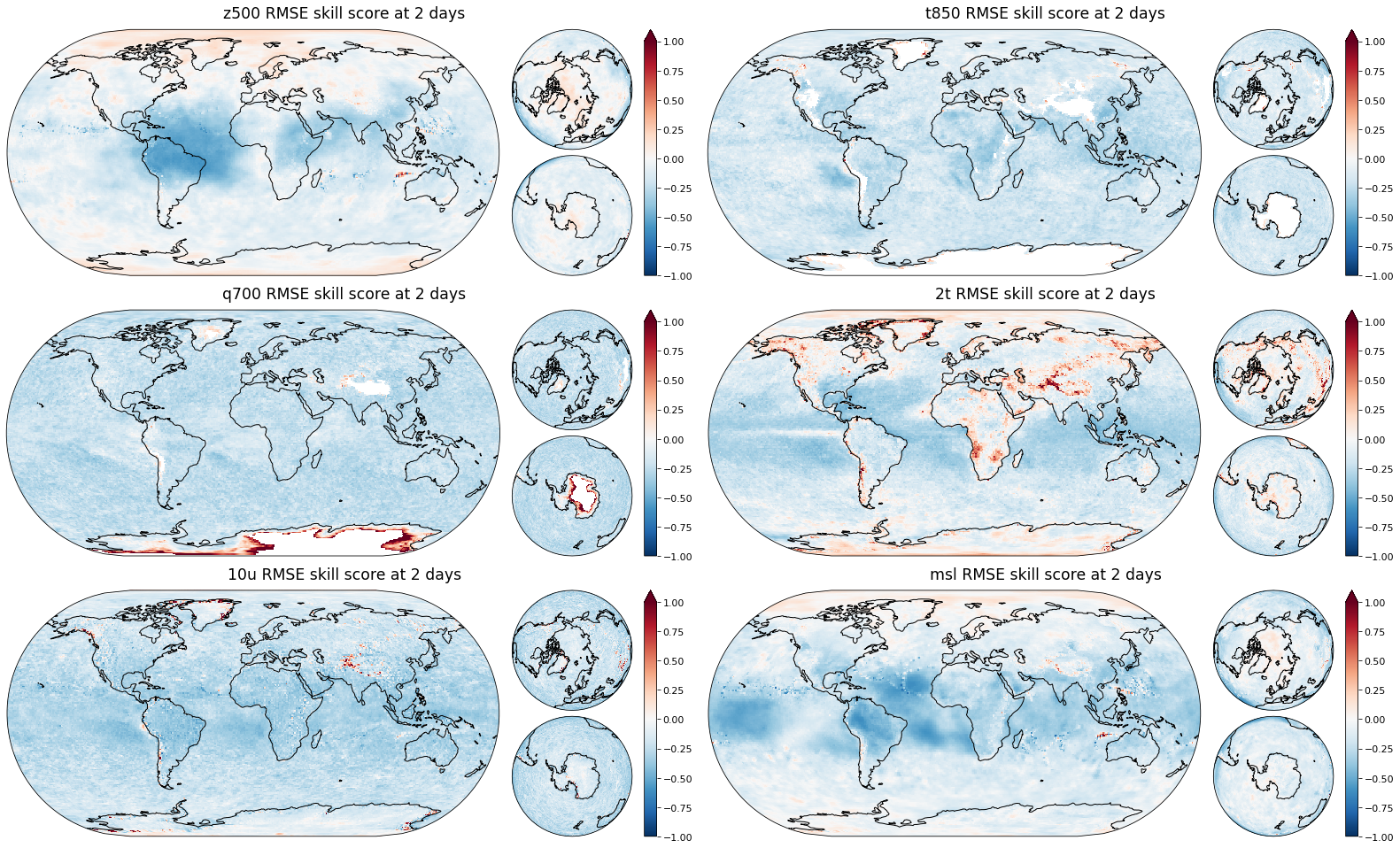
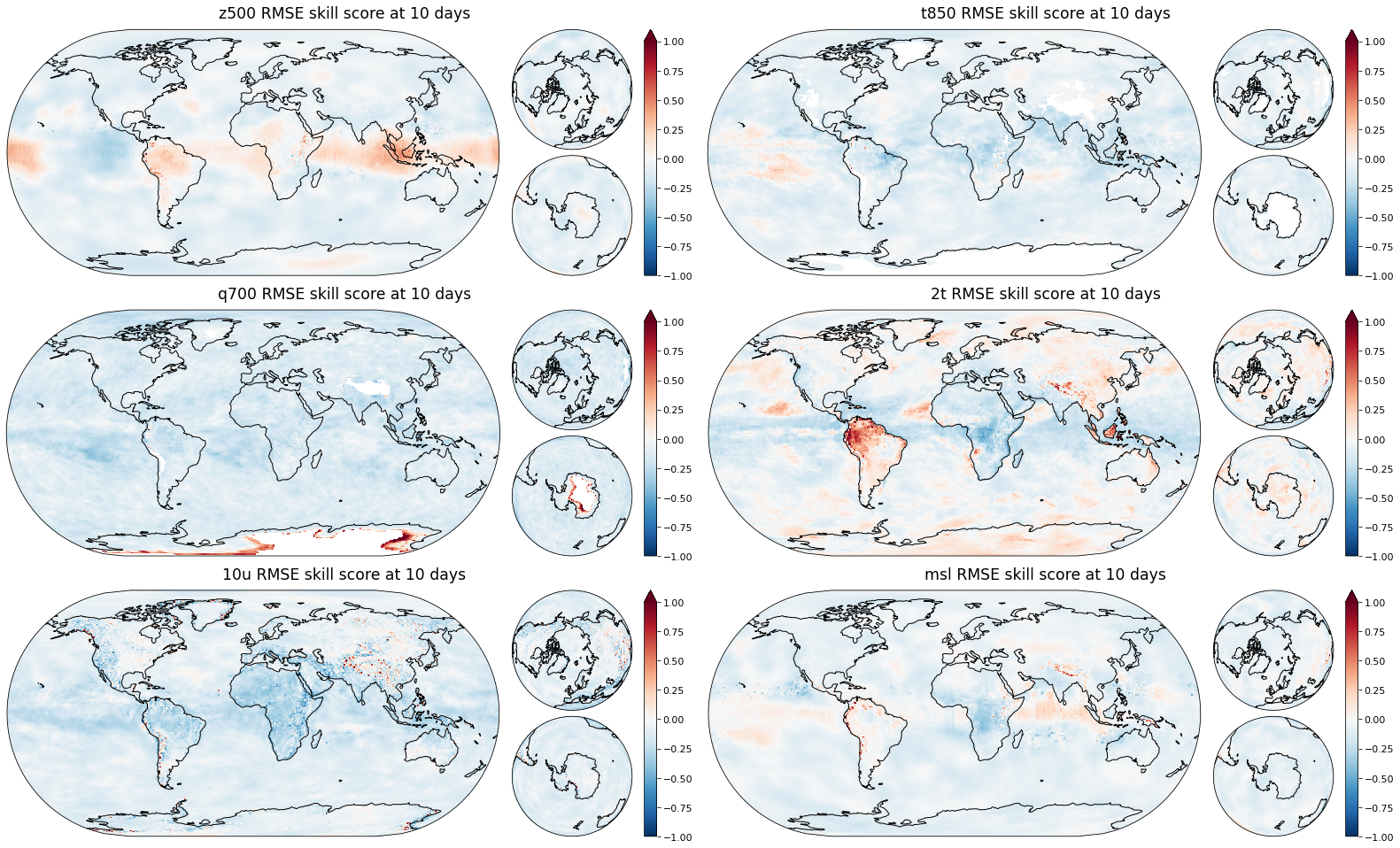
Verification
Claims the paper makes
9 Valid · 0 Not valid · 18 Not checked · 150 Own results and interpretations
The cited sources support only part of this claim — read each source’s verdict below.
In the paper
“Generally, verifying a model against its own analysis gives the best skill estimates [45].”
§ 5. Verification methods > 5.2. Comparing GraphCast to HRES
What the sources say
- Partly supportedcites [45] [45] Richard Swinbank, Masayuki Kyouda, Piers Buchanan, Lizzie Froude, Thomas M Hamill, Tim D Hewson, Julia H Keller, Mio Matsueda, John Methven, Florian Pappenberger, et al. The TIGGE project and its achievements. Bulletin of the American Meteorological Society, 97(1):49–67, 2016. sourceExperimental — accuracy not yet measured
The Verification section reports an example in low-level tropical regions where the model verified against its own analysis appeared most accurate. It does not establish this as a general rule; instead, it warns that skill rankings depend strongly on the analysis used and recommends verifying against more than one analysis. (LLM, conf=0.86)
plainstates a cause- Asserted: passes — The authors put it forward as true.
- Checkable: passes — It can be checked against evidence.
- Load-bearing: passes — The paper’s conclusions depend on it.
- Based: passes — The paper gives a reason why it holds.
- Partly supported
The cited sources support only part of this claim — read each source’s verdict below.
In the paper
“For the HRES baseline, we used the TIGGE archive, which provides cyclone tracks estimated with the operational tracker, from HRES's forecasts at 0.1° resolution [8, 46].”
§ 1. Datasets > 1.3. Tropical cyclone datasets
What the sources say
- Partly supportedcites [8] [8] Philippe Bougeault, Zoltan Toth, Craig Bishop, Barbara Brown, David Burridge, De Hui Chen, Beth Ebert, Manuel Fuentes, Thomas M Hamill, Ken Mylne, et al. The THORPEX interactive grand global ensemble. Bulletin of the American Meteorological Society, 91(8):1059–1072, 2010. sourceExperimental — accuracy not yet measured
The Applications of TIGGE section says TIGGE providers supplied tropical cyclone tracks and that the archive centers would distribute them. It does not establish that those tracks came from HRES forecasts at 0.1° resolution or were estimated with the operational tracker; the examples instead describe ECMWF and UKMO ensemble tracks. (LLM, conf=0.85)
- Partly supportedcites [46] [46] Richard Swinbank, Masayuki Kyouda, Piers Buchanan, Lizzie Froude, Thomas M. Hamill, Tim D. Hewson, Julia H. Keller, Mio Matsueda, John Methven, Florian Pappenberger, Michael Scheuerer, Helen A. Titley, Laurence Wilson, and Munehiko Yamaguchi. The TIGGE project and its achievements. Bulletin of the American Meteorological Society, 97(1):49 – 67, 2016. sourceExperimental — accuracy not yet measured
The TIGGE Project and Its Achievements describes TIGGE as an archive of ensemble forecasts, and its Dynamics and Predictability section reports cyclone tracks derived from TIGGE data using a tracking method employed operationally by ECMWF. It does not establish that the archive provides tracks from HRES forecasts at 0.1° resolution; the tracking passage concerns global ensembles, not HRES. (LLM, conf=0.85)
plain- Asserted: passes — The authors put it forward as true.
- Checkable: passes — It can be checked against evidence.
- Load-bearing: passes — The paper’s conclusions depend on it.
- Based: passes — The paper gives a reason why it holds.
- Partly supported
Every source the paper cites for this claim was checked and supports it.
In the paper
“Because extreme prediction is by definition an imbalanced classification problem, we base our analysis on precision-recall plots which are well-suited for this case [42].”
§ 1 2 3 4 5 6 7 8 9 10 > 8.3. Extreme heat and cold
What the sources say
- Supportedcites [42] [42] Takaya Saito and Marc Rehmsmeier. The precision-recall plot is more informative than the ROC plot when evaluating binary classifiers on imbalanced datasets. PloS one, 10(3):e0118432, 2015. 101 https://confluence.ecmwf.int/display/FCST/202208+-+Heatwave+-+UK https://confluence.ecmwf.int/display/FCST/202208+-+Heatwave+-+UK https://www.ecmwf.int/node/17262 https://www.ecmwf.int/node/17262 GraphCast: Learning skillful medium-range global weather forecasting source
The Summary of the re-evaluation says precision-recall plots show classifiers’ susceptibility to imbalanced datasets with clear visual cues. This supports using them to evaluate an imbalanced classification problem; the citing authors’ characterization of extreme prediction is their own framing. (LLM, conf=0.93)
boostedstates an association- Asserted: passes — The authors put it forward as true.
- Checkable: passes — It can be checked against evidence.
- Load-bearing: passes — The paper’s conclusions depend on it.
- Based: passes — The paper gives a reason why it holds.
- Supported
The cited sources support only part of this claim — read each source’s verdict below.
In the paper
“However, the HRES cyclone tracks in the TIGGE archive [8] are only initialized at 00z and 12z.”
§ 8. Additional severe event forecasting results > 8.1. Tropical cyclone track forecasting
What the sources say
- Partly supportedcites [8] [8] Philippe Bougeault, Zoltan Toth, Craig Bishop, Barbara Brown, David Burridge, De Hui Chen, Beth Ebert, Manuel Fuentes, Thomas M Hamill, Ken Mylne, et al. The THORPEX interactive grand global ensemble. Bulletin of the American Meteorological Society, 91(8):1059–1072, 2010. sourceExperimental — accuracy not yet measured
The Applications of TIGGE section says tropical cyclone tracks were to be distributed by TIGGE archive centers. Table 3 lists two daily forecast cycles for ECMWF’s ensemble, but the paper does not identify HRES cyclone tracks or state that their only initialization times are 00z and 12z. (LLM, conf=0.79)
plain- Asserted: passes — The authors put it forward as true.
- Checkable: passes — It can be checked against evidence.
- Load-bearing: passes — The paper’s conclusions depend on it.
- Based: passes — The paper gives a reason why it holds.
- Partly supported
Every source the paper cites for this claim was checked and supports it.
In the paper
“we can derive this quantity from the predicted atmospheric variables specific humidity, q, and horizontal wind, (u, v), via the relation [38]:”
§ 1 2 3 4 5 > 8.2. Atmospheric rivers
What the sources say
- Supportedcites [38] [38] Paul J Neiman, F Martin Ralph, Gary A Wick, Jessica D Lundquist, and Michael D Dettinger. Meteorological characteristics and overland precipitation impacts of atmospheric rivers affecting the West Coast of North America based on eight years of ssm/i satellite observations. Journal of Hydrometeorology, 9(1):22–47, 2008. source
In section c, “The link between SSM/I IWV plumes and atmospheric rivers” (page not provided), the paper defines IVT as vertically integrated horizontal water-vapor flux calculated from q and the horizontal wind components. It describes summing the flux components through pressure layers, which supports the cited relation; the paper uses reanalysis variables rather than predictions. (LLM, conf=0.92)
plainstates a cause- Asserted: passes — The authors put it forward as true.
- Checkable: passes — It can be checked against evidence.
- Load-bearing: passes — The paper’s conclusions depend on it.
- Based: passes — The paper gives a reason why it holds.
- Supported
65 more claims
Create a free account to see all 177 claims and to verify the 13 references still open.
- Probably not a substantial claim. 54
- It may state two separate claims as one. 70
- The quote only partly states this claim. 2
Claims other papers make about this one
Each is checked against this paper’s own text: does it say what the citing paper says it does?
The source backs part of the claim, not all of it — or backs it for a different population, condition or comparison.
In the citing paper
“Existing machine-learning models have focused on deterministic prediction, and surpass deterministic numerical weather prediction in terms of the aggregate metrics for which they are trained3,4.”
From Neural general circulation models for weather and climate (2024) · cites this paper as [3]
Experimental — accuracy not yet measuredThe source backs part of the claim, not all of it — or backs it for a different population, condition or comparison.
In the citing paper
“Most state-of-the-art machine learning models utilized in medium-range weather forecasting are built upon encoder-decoder84 architectures27–29,85.”
From A machine learning model that outperforms conventional global subseasonal forecast models (2024) · cites this paper as [27]
Experimental — accuracy not yet measuredThe source backs part of the claim, not all of it — or backs it for a different population, condition or comparison.
In the citing paper
“However, these advances have focused primarily on single, deterministic forecasts that fail to represent uncertainty and estimate risk.”
From Probabilistic weather forecasting with machine learning (2025) · cites this paper as [2]
Experimental — accuracy not yet measuredThe source backs part of the claim, not all of it — or backs it for a different population, condition or comparison.
In the citing paper
“They are typically trained to minimize the mean squared error (MSE) of their predictions and as a result tend to produce blurry forecasts, especially at longer lead times, rather than a specific realization of a possible weather state2.”
From Probabilistic weather forecasting with machine learning (2025) · cites this paper as [2]
Experimental — accuracy not yet measuredThe cited source says what the claim attributes to it.
In the citing paper
“Even so, these techniques are still fundamentally reliant on precise meteorological observations [1-3].”
From Advancing Data Quality Assurance with Machine Learning: A Case Study on Wind Vane Stalling Detection (2025) · cites this paper as [3]
10 more claims about this paper
Create a free account to see every claim other papers make about this one.
Self-check
Percentages, sums and reported differences re-computed from the paper’s own numbers.
Each contradiction between two passages listed here was confirmed by an independent check.
Rated minor: it would not touch a result — a value no result rests on, a p-value that stays on the same side of the significance level, or a conflict that is clerical, resolved elsewhere in the paper, or outside its own findings.
In the paper
§ 7. Additional forecast verification results > 7.1. Detailed results for additional variables
“The ACC skill score is the normalized ACC difference between model 𝐴 and baseline 𝐵 as (ACC𝐴 − ACC𝐵)/(1 − RMSE𝐵).”
§ 1 2 3 4 > 5.3. Evaluation metrics
“and the normalized ACC difference as (ACC𝐴 − ACC𝐵)/(1 − ACC𝐵).”
Rated minor: it would not touch a result — a value no result rests on, a p-value that stays on the same side of the significance level, or a conflict that is clerical, resolved elsewhere in the paper, or outside its own findings.
In the paper
§ 1 2 3 4 5 6 7
“The x-axis represents lead time, at 6-hour steps over 10 days.”
§ 6. Comparison with previous machine learning baselines
“Pangu-Weather[7] reports its 7-day forecast accuracy (RMSE and ACC) on: z500, t500, t850,”
Rated minor: it would not touch a result — a value no result rests on, a p-value that stays on the same side of the significance level, or a conflict that is clerical, resolved elsewhere in the paper, or outside its own findings.
In the paper
§ Conclusions
“because of the ERA5 training data's native 0.25° resolution”
§ 102 103 104
“the native resolution of ERA5 is 0.28125◦ corresponding to a shortest wavelength of 62km”
Citations
Cites
Vaswani, A., Shazeer, N., Parmar, N., Uszkoreit, J., Jones, L., Gomez, A. N., Kaiser, L., & Polosukhin, I. (2017) · arXiv · doi:10.48550/arxiv.1706.03762 · Cited by 120,404
Adam: A Method for Stochastic Optimization
Kingma, D. P., & Ba, J. (2014) · arXiv · doi:10.48550/arxiv.1412.6980 · Cited by 98,946
Exploiting Generative AI to Scale up Intelligent Tutoring Systems
Jakubův, J., Chvalovský, K., Goertzel, Z., Kaliszyk, C., Olšák, M., Piotrowski, B., Schulz, S., Suda, M., & Urban, J. (2023) · DROPS (Schloss Dagstuhl – Leibniz Center for Informatics) · doi:10.4230/lipics.itp.2023.19 · Cited by 76,658
Hersbach, H., Bell, B., Berrisford, P., Hirahara, S., Horányi, A., Muñoz‐Sabater, J., Nicolas, J., Peubey, C., Radu, R., Schepers, D., et al. (2020) · Quarterly Journal of the Royal Meteorological Society · doi:10.1002/qj.3803 · Cited by 31,882
Decoupled Weight Decay Regularization
Loshchilov, I., & Hutter, F. (2017) · arXiv · doi:10.48550/arxiv.1711.05101 · Cited by 12,522
Veličković, P., Cucurull, G., Casanova, A., Romero, A., Liò, P., & Bengio, Y. (2017) · arXiv · doi:10.48550/arxiv.1710.10903 · Cited by 12,107
Saito, T., & Rehmsmeier, M. (2015) · PLOS ONE · doi:10.1371/journal.pone.0118432 · Cited by 5,309
SGDR: Stochastic Gradient Descent with Warm Restarts
Loshchilov, I., & Hutter, F. (2016) · arXiv · doi:10.48550/arxiv.1608.03983 · Cited by 5,309
Backpropagation through time: what it does and how to do it
Werbos, P. J. (1990) · Proceedings of the IEEE · doi:10.1109/5.58337 · Cited by 4,879
Knapp, K. R., Kruk, M. C., Levinson, D. H., Diamond, H. J., & Neumann, C. J. (2010) · Bulletin of the American Meteorological Society · doi:10.1175/2009bams2755.1 · Cited by 3,237
Research works printed but not linked: 3
- D. H. Levinson, H. J. Diamond, K. R. Knapp, M. C. Kruk, E. J. Gibney, Toward a homogenous global tropical cyclone best-track dataset. Bull. Am. Meteorol. Soc. 91, 377–380 (2010).
- ECMWF IFS Documentation CY45R1 – Part II: Data assimilation (European Centre for Medium-Range Weather Forecasts 2018); .10.21957/a3ri44ig4 · doi:10.21957/a3ri44ig4
- T. Haiden M. Janousek F. Vitart L. Ferranti F. Prates “Evaluation of ECMWF forecasts including the 2019 upgrade ” ECMWF Technical Memorandum No. 853 (European Centre for Medium-Range Weather Forecasts 2019); .10.21957/mlvapkke · DOI
Cited by
Items 201–300 of 2,424
Tian, Y., Zhao, Y., Li, J., Xu, H., Zhang, C., Deng, L., Wang, Y., & Peng, M. (2024) · Journal of Geophysical Research Atmospheres · doi:10.1029/2023jd040698 · Cited by 29
The crucial representation of deep convection for the cyclogenesis of Medicane Ianos
Pantillon, F., Davolio, S., Avolio, E., Calvo‐Sancho, C., Carrió, D. S., Dafis, S., Flaounas, E., González‐Alemán, J. J., Gray, S. L., Miglietta, M. M., et al. (2024) · Weather and Climate Dynamics · doi:10.5194/wcd-5-1187-2024 · Cited by 30
Multiple Physics Pretraining for Spatiotemporal Surrogate Models
McCabe, M., Blancard, B. R.-S., Parker, L., Ohana, R., Cranmer, M., Bietti, A., Eickenberg, M., Golkar, S., Krawezik, G. P., Lanusse, F., et al. (2024) · neural information processing systems · doi:10.52202/079017-3791 · Cited by 114
DeepWind: a heterogeneous spatio-temporal model for wind forecasting
Wang, B., Shi, J., Tan, B., Ma, M., Hong, F., Yu, Y., & Li, T. (2024) · Knowledge-Based Systems · doi:10.1016/j.knosys.2024.111385 · Cited by 28
Data-driven surrogate modeling of high-resolution sea-ice thickness in the Arctic
Durand, C., Finn, T. S., Farchi, A., Bocquet, M., Boutin, G., & Olason, E. O. (2024) · The Cryosphere · doi:10.5194/tc-18-1791-2024 · Cited by 36
Li, Y., Han, W., Li, H., Duan, W., Chen, L., Zhong, X., Wang, J., Liu, Y., & Sun, X. (2024) · Geophysical Research Letters · doi:10.1029/2024gl111136 · Cited by 34
Predictability Study of Weather and Climate Events Related to Artificial Intelligence Models
Mu, M., Qin, B., & Dai, G. (2024) · Advances in Atmospheric Sciences · doi:10.1007/s00376-024-4372-7 · Cited by 39
Deep learning in time series forecasting with transformer models and RNNs
dos Santos, R. P., Matos-Carvalho, J. P., & Leithardt, V. R. Q. (2025) · PeerJ Computer Science · doi:10.7717/peerj-cs.3001 · Cited by 36
FuXi-ENS: A machine learning model for efficient and accurate ensemble weather prediction
Zhong, X., Chen, L., Li, H., Buizza, R., Liu, J., Feng, J., Zhu, Z., Fan, X., Dai, K., Luo, J., et al. (2025) · Science Advances · doi:10.1126/sciadv.adu2854 · Cited by 49
Neural general circulation models for modeling precipitation
Yuval, J., Langmore, I., Kochkov, D., & Hoyer, S. (2026) · Science Advances · doi:10.1126/sciadv.adv6891 · Cited by 39
Self-citationOpenFOAMGPT 2.0: End-to-end, trustworthy automation for computational fluid dynamics
Feng, J., Xu, R., & Chu, X. (2026) · International Journal of Heat and Fluid Flow · doi:10.1016/j.ijheatfluidflow.2026.110399 · Cited by 44
Mansfield, L., Gupta, A., Burnett, A. C., Green, B., Wilka, C., & Sheshadri, A. (2023) · Journal of Advances in Modeling Earth Systems · doi:10.1029/2023ms003715 · Cited by 29
Real-time Inference and Extrapolation via a Diffusion-inspired Temporal Transformer Operator (DiTTO)Preprint
Ovadia, O., Oommen, V., Kahana, A., Peyvan, A., Turkel, E., & Karniadakis, G. E. (2023) · arXiv (Cornell University) · doi:10.48550/arxiv.2307.09072 · Cited by 36
Factorized Implicit Global Convolution for Automotive Computational Fluid Dynamics PredictionPreprint
Choy, C., Kamenev, A., Kossaifi, J., Rietmann, M., Kautz, J., & Azizzadenesheli, K. (2025) · arXiv (Cornell University) · doi:10.48550/arxiv.2502.04317 · Cited by 33
Sequence Deep Learning for Seismic Ground Response Modeling: 1D-CNN, LSTM, and Transformer Approach
Choi, Y.-J., Nguyen, H.-T., Han, T. H., Choi, Y., & Ahn, J. (2024) · Applied Sciences · doi:10.3390/app14156658 · Cited by 27
Global Prediction of Flash Drought Using Machine Learning
Xu, L., Zhang, X., Wu, T., Yu, H., Du, W., Zhang, C., & Chen, N. (2024) · Geophysical Research Letters · doi:10.1029/2024gl111134 · Cited by 31
Hu, Z., Wang, Y., Qi, H., She, Y., Lin, Z., Hu, Z., Hua, L., Wu, M., & Qin, X. (2024) · Applied Thermal Engineering · doi:10.1016/j.applthermaleng.2024.125033 · Cited by 30
Husain, S. Z., Šeparović, L., Caron, J.-F., Aider, R., Buehner, M., Chamberland, S., Lapalme, E., McTaggart‐Cowan, R., Subich, C. J., Vaillancourt, P., et al. (2025) · Weather and Forecasting · doi:10.1175/waf-d-24-0139.1 · Cited by 40
Improving AI Weather Prediction Models Using Global Mass and Energy Conservation Schemes
Sha, Y., Schreck, J. S., Chapman, W. E., & Gagne, D. J. (2025) · Journal of Advances in Modeling Earth Systems · doi:10.1029/2025ms005138 · Cited by 35
Generative assimilation and prediction for weather and climate
Yang, S., Nai, C., Liu, X., Li, W., Chao, J., Wang, J., Wang, L., Li, X., Li, X., Chen, X., et al. (2026) · npj Climate and Atmospheric Science · doi:10.1038/s41612-026-01585-4 · Cited by 32
AIFS Single 1.1.0: an update to ECMWF's machine-learned weather forecast model AIFS
Moldovan, G. I., Pinnington, E., Nemesio, A. P., Lang, S. T. K., Bouallègue, Z. B., Dramsch, J. S., Alexe, M., Cruz, M. S., Hahner, S., Cook, H., et al. (2026) · Geoscientific model development · doi:10.5194/gmd-19-4703-2026 · Cited by 37
Generative Diffusion for Regional Surrogate Models From Sea‐Ice Simulations
Finn, T. S., Durand, C., Farchi, A., Bocquet, M., Rampal, P., & Carrassi, A. (2024) · Journal of Advances in Modeling Earth Systems · doi:10.1029/2024ms004395 · Cited by 37
Noel, M. M., Bharadwaj, S., Muthiah-Nakarajan, V., Dutta, P., & Amali, G. B. (2024) · Expert Systems with Applications · doi:10.1016/j.eswa.2024.126036 · Cited by 35
DySLIM: Dynamics Stable Learning by Invariant Measure for Chaotic SystemsPreprint
Schiff, Y., Wan, Z. Y., Parker, J. B., Hoyer, S., Kuleshov, V., Sha, F., & Zepeda-Núñez, L. (2024) · arXiv (Cornell University) · doi:10.48550/arxiv.2402.04467 · Cited by 44
Self-citationRobustness of AI-based weather forecasts in a changing climatePreprint
Rackow, T., Koldunov, N., Lessig, C., Sandu, I., Alexe, M., Chantry, M., Clare, M., Dramsch, J. S., Pappenberger, F., Pedruzo‐Bagazgoitia, X., et al. (2024) · arXiv (Cornell University) · doi:10.48550/arxiv.2409.18529 · Cited by 33
On the foundations of Earth foundation models
Zhu, X. X., Xiong, Z., Wang, Y., Stewart, A. J., Heidler, K., Wang, Y., Yuan, Z., Dujardin, T., Xu, Q., & Shi, Y. (2026) · Communications Earth & Environment · doi:10.1038/s43247-025-03127-x · Cited by 26
How the Galaxy–Halo Connection Depends on Large-scale Environment
Wu, J. F., Jespersen, C. K., & Wechsler, R. H. (2024) · The Astrophysical Journal · doi:10.3847/1538-4357/ad7bb3 · Cited by 30
Matray, V., Amlani, F., Feyel, F., & Néron, D. (2024) · Computer Methods in Applied Mechanics and Engineering · doi:10.1016/j.cma.2024.117243 · Cited by 28
Assimilating Observed Surface Pressure Into ML Weather Prediction Models
Slivinski, L., Whitaker, J. S., Frolov, S., Smith, T. A., & Agarwal, N. (2025) · Geophysical Research Letters · doi:10.1029/2024gl114396 · Cited by 29
Pu, J., Mu, M., Feng, J., Zhong, X., & Li, H. (2025) · npj Climate and Atmospheric Science · doi:10.1038/s41612-025-01009-9 · Cited by 35
Physics-informed neural networks for tsunami inundation modeling
Brecht, R., Cardoso‐Bihlo, E. D. S., & Bihlo, A. (2025) · Journal of Computational Physics · doi:10.1016/j.jcp.2025.114066 · Cited by 33
DeMaria, M., Franklin, J. L., Chirokova, G., Radford, J. T., DeMaria, R., Musgrave, K. D., & Ebert‐Uphoff, I. (2025) · Artificial Intelligence for the Earth Systems · doi:10.1175/aies-d-24-0085.1 · Cited by 47
Caron, N., Noura, H., Nakache, L., Guyeux, C., & Aynes, B. (2025) · AI · doi:10.3390/ai6100253 · Cited by 29
Generative latent neural PDE solver using flow matching
Li, Z., Zhou, A., & Farimani, A. B. (2026) · Machine Learning Science and Technology · doi:10.1088/2632-2153/ae64aa · Cited by 27
Xu, G., Bao, F., Lu, S., Wu, C., Liu, Y., & Zheng, W. (2026) · Atmosphere · doi:10.3390/atmos17020163 · Cited by 29
Coupled models of water and carbon cycles from leaf to global: A retrospective and a prospective
Wang, Y., Zhang, L., Liang, X., & Yuan, W. (2024) · Agricultural and Forest Meteorology · doi:10.1016/j.agrformet.2024.110229 · Cited by 28
Geometric Clifford Algebra NetworksPreprint
Ruhe, D., Gupta, J. K., Keninck, S. D., Welling, M., & Brandstetter, J. (2023) · arXiv (Cornell University) · doi:10.48550/arxiv.2302.06594 · Cited by 37
AI-based data assimilation: Learning the functional of analysis estimationPreprint
Keller, J. D., & Potthast, R. (2024) · arXiv (Cornell University) · doi:10.48550/arxiv.2406.00390 · Cited by 28
PhysMaster: Building an Autonomous AI Physicist for Theoretical and Computational Physics ResearchPreprint
Miao, T., Jin, W., Tan, J., Zhang, M., Pang, X., Liu, Z., Du, Y., Jin, T., Guo, T., Zhang, Z., et al. (2025) · arXiv (Cornell University) · doi:10.48550/arxiv.2512.19799 · Cited by 29
A Review of Atmospheric Micro/Nanoplastics: Insights into Source and Fate for Modelling Studies
Jiang, F., Gao, C., Chan, A. W. H., Topping, D. O., Zhang, H., Li, W., Coe, H., Liu, X., Ching, J., & Zheng, Z. (2025) · Current Pollution Reports · doi:10.1007/s40726-025-00375-5 · Cited by 24
Constraining chaos: Enforcing dynamical invariants in the training of reservoir computers
Platt, J. A., Penny, S. G., Smith, T. A., Chen, T., & Abarbanel, H. D. I. (2023) · Chaos An Interdisciplinary Journal of Nonlinear Science · doi:10.1063/5.0156999 · Cited by 45
Liu, Z., Chen, H., Bai, L., Li, W., Ouyang, W., Zou, Z., & Shi, Z. (2024) · IEEE Transactions on Geoscience and Remote Sensing · doi:10.1109/tgrs.2024.3496895 · Cited by 33
ClimateLLM: Efficient Weather Forecasting via Frequency-Aware Large Language ModelsPreprint
Li, S., Yang, W. S., Zhang, P., Xiao, X., Cao, D., Qin, Y., Zhang, X., Zhao, Y., & Bogdan, P. (2025) · arXiv (Cornell University) · doi:10.48550/arxiv.2502.11059 · Cited by 31
Combined dynamical-deep learning ENSO forecasts
Chen, Y., Jin, Y., Liu, Z., Shen, X., Chen, X., Lin, X., Zhang, R., Luo, J., Zhang, W., Duan, W., et al. (2025) · Nature Communications · doi:10.1038/s41467-025-59173-8 · Cited by 36
Mesh-based super-resolution of fluid flows with multiscale graph neural networks
Barwey, S., Pal, P., Patel, S., Balin, R., Lusch, B., Vishwanath, V., Maulik, R., & Balakrishnan, R. (2025) · Computer Methods in Applied Mechanics and Engineering · doi:10.1016/j.cma.2025.118072 · Cited by 42
Niu, Z., Wang, D., Mu, M., Huang, W., Fan, X., Yang, M., & Qin, B. (2025) · Geophysical Research Letters · doi:10.1029/2025gl115926 · Cited by 24
AI‐Driven Weather Forecasts to Accelerate Climate Change Attribution of Heatwaves
Jiménez‐Esteve, B., Barriopedro, D., Johnson, J. E., & García‐Herrera, R. (2025) · Earth s Future · doi:10.1029/2025ef006453 · Cited by 28
Tian, Y., Zhao, Y., Li, J., Shen, C., Zhang, Y., Wen, D., Qi, X., Liu, Y., & Chen, D. (2026) · Atmospheric Research · doi:10.1016/j.atmosres.2026.108809 · Cited by 26
Simulation and forecasting of fishery weather based on statistical machine learning
Fu, X., Zhang, C., Chang, F., Han, L., Zhao, X., Wang, Z., & Ma, Q. (2023) · Information Processing in Agriculture · doi:10.1016/j.inpa.2023.05.001 · Cited by 32
TeleViT: Teleconnection-driven Transformers Improve Subseasonal to Seasonal Wildfire Forecasting
Prapas, I., Bountos, N. I., Kondylatos, S., Michail, D., Camps‐Valls, G., & Papoutsis, I. (2023) · IEEE International Conference on Computer Vision Workshops · doi:10.1109/iccvw60793.2023.00404 · Cited by 37
Artificial intelligence for weather forecasting
Conti, S. (2024) · Nature Reviews Electrical Engineering · doi:10.1038/s44287-023-00009-2 · Cited by 24
Xu, Z., Wei, X., Hao, J., Han, J., Li, H., Liu, C., Li, Z., Tian, D., & Zhang, N. (2024) · GeoInformatica · doi:10.1007/s10707-024-00511-1 · Cited by 30
Advancing blast fragmentation simulation of RC slabs: A graph neural network approach
Li, Q., Wang, Z., Chen, W., Li, L., & Hao, H. (2024) · Engineering Structures · doi:10.1016/j.engstruct.2024.118009 · Cited by 24
Scaling Spherical CNNsPreprint
Esteves, C., Slotine, J.-J. E., & Makadia, A. (2023) · arXiv (Cornell University) · doi:10.48550/arxiv.2306.05420 · Cited by 31
Machine Learning for Urban Air Quality Analytics: A SurveyPreprint
Han, J., Zhang, W., Liu, H., & Xiong, H. (2023) · arXiv (Cornell University) · doi:10.48550/arxiv.2310.09620 · Cited by 32
Surya: Foundation Model for HeliophysicsPreprint
Roy, S., Schmude, J., Lal, R., Gaur, V., Freitag, M., Kuehnert, J., Kessel, T. V., Hegde, D. V., Muñoz-Jaramillo, A., Jakubik, J., et al. (2025) · arXiv (Cornell University) · doi:10.13016/m2esx3-oqfx · Cited by 35
Development of an offline and online hybrid model for the Integrated Forecasting System
Farchi, A., Chrust, M., Bocquet, M., & Bonavita, M. (2025) · Quarterly Journal of the Royal Meteorological Society · doi:10.1002/qj.4934 · Cited by 27
Ozone in the Desert Southwest of the United States: A Synthesis of Past Work and Steps Ahead
Sorooshian, A., Arellano, A. F., Fraser, M. P., Herckès, P., Betito, G., Betterton, E. A., Braun, R. A., Guo, Y., Mirrezaei, M. A., & Roychoudhury, C. (2024) · ACS ES&T Air · doi:10.1021/acsestair.3c00033 · Cited by 26
MARLP: Time-series Forecasting Control for Agricultural Managed Aquifer Recharge
Chen, Y., Yang, K., An, Z., Holder, B., Paloutzian, L., Bali, K. M., & Du, W. (2024) · ACM SIGKDD Conference on Knowledge Discovery and Data Mining (KDD) · doi:10.1145/3637528.3671533 · Cited by 23
WoFSCast: A Machine Learning Model for Predicting Thunderstorms at Watch‐to‐Warning Scales
Flora, M. L., & Potvin, C. K. (2025) · Geophysical Research Letters · doi:10.1029/2024gl112383 · Cited by 26
GPTCast: a weather language model for precipitation nowcasting
Franch, G., Tomasi, E., Wanjari, R., Poli, V., Cardinali, C., Alberoni, P. P., & Cristoforetti, M. (2025) · Geoscientific model development · doi:10.5194/gmd-18-5351-2025 · Cited by 28
Applications of Machine Learning and Artificial Intelligence in Tropospheric Ozone Research
Hickman, S. H. M., Kelp, M., Griffiths, P. T., Doerksen, K., Miyazaki, K., Pennington, E. A., Koren, G., Iglesias‐Suarez, F., Schultz, M. G., Chang, K., et al. (2025) · Geoscientific model development · doi:10.5194/gmd-18-8777-2025 · Cited by 25
Review article: Harnessing data-driven methods for climate multi-hazard and multi-risk assessment
Ferrario, D. M., Sanò, M., Maraschini, M., Critto, A., & Torresan, S. (2026) · Natural hazards and earth system sciences · doi:10.5194/nhess-26-2975-2026 · Cited by 25
LangYa: a large AI model for global ocean forecasting
Yang, N., Wang, C., Zhao, Z., Zhao, M., Zheng, H., Zhang, B., Wang, F., & Li, X. (2026) · 中国科学通报:英文版 · doi:10.1016/j.scib.2026.08.001 · Cited by 27
Prediction and control of two-dimensional decaying turbulence using generative adversarial networks
Kim, J., Kim, J., & Lee, C. (2024) · Journal of Fluid Mechanics · doi:10.1017/jfm.2024.77 · Cited by 26
Machine learning data practices through a data curation lens: An evaluation framework
Bhardwaj, E., Gujral, H., Wu, S., Zogheib, C., Maharaj, T., & Becker, C. (2024) · ACM Conference on Fairness, Accountability, and Transparency (FAccT) · doi:10.1145/3630106.3658955 · Cited by 44
Artificial intelligence as a catalyst for combustion science and engineering
Ihme, M., & Chung, W. T. (2024) · Proceedings of the Combustion Institute · doi:10.1016/j.proci.2024.105730 · Cited by 22
Improving global weather and ocean wave forecast with large artificial intelligence models
Ling, F., Ouyang, L., Boufeniza, R. L., Luo, J., Han, T., Zhong, X., & Bai, L. (2024) · Science China Earth Sciences · doi:10.1007/s11430-024-1452-3 · Cited by 30
ArchesWeather: An efficient AI weather forecasting model at 1.5° resolutionPreprint
Couairon, G., Lessig, C., Charantonis, A., & Monteleoni, C. (2024) · arXiv (Cornell University) · doi:10.48550/arxiv.2405.14527 · Cited by 27
Earth AI: Unlocking Geospatial Insights with Foundation Models and Cross-Modal ReasoningPreprint
Bell, A., Aides, A., Helmy, A., Muslim, A., Barzilai, A., Slobodkin, A., Jaber, B., Schottlander, D., Leifman, G., Paul, J., et al. (2025) · arXiv (Cornell University) · doi:10.48550/arxiv.2510.18318 · Cited by 35
Schreck, J. S., Sha, Y., Chapman, W. E., Kimpara, D., Berner, J., McGinnis, S., Kazadi, A., Sobhani, N., Kirk, B. S., Becker, C., et al. (2025) · npj Climate and Atmospheric Science · doi:10.1038/s41612-025-01125-6 · Cited by 26
Earth Embeddings: Toward artificial intelligence-centric representations of our planet
Klemmer, K., Rolf, E., Rußwurm, M., Camps‐Valls, G., Czerkawski, M., Ermon, S., Francis, A., Jacobs, N., Kerner, H., Mackey, L. W., et al. (2026) · IEEE Geoscience and Remote Sensing Magazine · doi:10.1109/mgrs.2026.3710416 · Cited by 28
Bai, M., Zhou, Z. C., Chen, Y., Liu, J., & Yu, D. (2023) · Earth Science Informatics · doi:10.1007/s12145-023-01066-9 · Cited by 21
Progress and future prospects of decadal prediction and data assimilation: A review
Zhou, W., Li, J., Yan, Z., Shen, Z., Wu, B., Wang, B., Zhang, R., & Li, Z. (2023) · Atmospheric and Oceanic Science Letters · doi:10.1016/j.aosl.2023.100441 · Cited by 24
Margenberg, N., Jendersie, R., Lessig, C., & Richter, T. (2023) · Computer Methods in Applied Mechanics and Engineering · doi:10.1016/j.cma.2023.116692 · Cited by 30
Yin, Y., Li, P., Huang, D., & Sharma, A. S. (2024) · Urban Climate · doi:10.1016/j.uclim.2024.102003 · Cited by 24
McGovern, A., Demuth, J. L., Bostrom, A., Wirz, C. D., Tissot, P. E., Cains, M. G., & Musgrave, K. D. (2024) · npj natural hazards. · doi:10.1038/s44304-024-00014-x · Cited by 21
A Method Based on Deep Learning for Severe Convective Weather Forecast: CNN-BiLSTM-AM (Version 1.0)
Zhang, J., Yin, M., Wang, P. P., & Gao, Z. (2024) · Atmosphere · doi:10.3390/atmos15101229 · Cited by 22
Duthé, G., Santos, F. D. N., Abdallah, I., Weijtjens, W., Devriendt, C., & Chatzi, E. (2024) · Data-Centric Engineering · doi:10.1017/dce.2024.35 · Cited by 25
Applications of the Fourier neural operator in a regional ocean modeling and prediction
Choi, B., Jin, H. S., & Lkhagvasuren, B. (2024) · Frontiers in Marine Science · doi:10.3389/fmars.2024.1383997 · Cited by 30
The novel graph transformer-based surrogate model for learning physical systems
Feng, B., & Zhou, X. (2024) · Computer Methods in Applied Mechanics and Engineering · doi:10.1016/j.cma.2024.117410 · Cited by 20
Selected Topics in Time Series Forecasting: Statistical Models vs. Machine Learning
Tjøstheim, D. (2025) · Entropy · doi:10.3390/e27030279 · Cited by 26
AI Large Models for Power System: A Survey and Outlook
Yao, Q. J., Fang, F., Chen, Y., Liu, J., Mo, H., & Ao, Y. (2025) · IET Smart Energy Systems · doi:10.1049/ses2.70000 · Cited by 27
Towards Scientific Machine Learning for Granular Material Simulations: Challenges and Opportunities
Fransen, M. P., Fürst, A., Tunuguntla, D. R., Wilke, D. N., Alkin, B., Barreto, D., Brandstetter, J., Cabrera, M., Fan, X., Guo, M., et al. (2025) · Archives of Computational Methods in Engineering · doi:10.1007/s11831-025-10322-8 · Cited by 29
ADAF: An Artificial Intelligence Data Assimilation Framework for Weather Forecasting
Xiang, Y., Jin, W., Dong, H., Weyn, J. A., Bai, M., Fang, Z., Zhao, P., Sun, H., Thambiratnam, K., Zhang, Q., et al. (2025) · Journal of Advances in Modeling Earth Systems · doi:10.1029/2024ms004839 · Cited by 30
Sun, L., Lan, Y., Sun, X., Liang, X., Wang, J., Su, Y., He, Y., & Xia, D. (2024) · Journal of Geophysical Research Atmospheres · doi:10.1029/2023jd040134 · Cited by 21
Haji-Aghajany, S., Rohm, W., Kryza, M., & Smolak, K. (2024) · IEEE Transactions on Geoscience and Remote Sensing · doi:10.1109/tgrs.2024.3417487 · Cited by 20
Latent neural PDE solver: A reduced-order modeling framework for partial differential equations
Li, Z., Patil, S., Ogoke, F., Shu, D., Zhen, W., Schneier, M., Buchanan, J. R., & Farimani, A. B. (2025) · Journal of Computational Physics · doi:10.1016/j.jcp.2024.113705 · Cited by 42
Bai, M., Zhou, G., Yao, P., Dong, F., Chen, Y., Zhou, Z. C., Yang, X., Liu, J., & Yu, D. (2025) · Expert Systems with Applications · doi:10.1016/j.eswa.2025.127458 · Cited by 24
Personalized Adapter for Large Meteorology Model on Devices: Towards Weather Foundation Models
Chen, S., Long, G., Jiang, J., & Zhang, C. (2024) · neural information processing systems · doi:10.52202/079017-2696 · Cited by 30
Mbuvha, R., Yaakoubi, Y., Bagiliko, J., Potes, S. H., Nammouchi, A., & Amrouche, S. (2024) · SSRN Electronic Journal · doi:10.2139/ssrn.4815919 · Cited by 20
Demystifying Data-Driven Probabilistic Medium-Range Weather ForecastingPreprint
Kossaifi, J., Kovachki, N., Mardani, M., Leibovici, D. V., Ravuri, S. V., Shokar, I. J. S., Calvello, E., Abbas, M. S., Harrington, P., Subramaniam, A., et al. (2026) · arXiv (Cornell University) · doi:10.48550/arxiv.2601.18111 · Cited by 24
Self-citationAtmoRep: A stochastic model of atmosphere dynamics using large scale representation learning
Lessig, C., Luise, I., Gong, B., Langguth, M., Stadtler, S., & Schultz, M. (2023) · arXiv · doi:10.48550/arxiv.2308.13280 · Cited by 19
Zhang, C., Niu, X., Wu, H., Ding, Z., Chan, K. L., Kim, J., Wagner, T., & Liu, C. (2025) · Atmospheric chemistry and physics · doi:10.5194/acp-25-759-2025 · Cited by 19
Ocean Wave Forecasting With Deep Learning as Alternative to Conventional Models
Zhang, Z. W., Yu, H., Ren, D., Zhang, C., Sun, M., & Qi, X. (2025) · Journal of Advances in Modeling Earth Systems · doi:10.1029/2025ms005285 · Cited by 22
AI-Boosted Rare Event Sampling to Characterize Extreme Weather
Lancelin, A., Wikner, A., Dubus, L., Priol, C. L., Abbot, D. S., Bouchet, F., Hassanzadeh, P., & Weare, J. (2026) · Physical Review Letters · doi:10.1103/b1gc-9c2q · Cited by 24
HRRRCast: A Data-Driven Emulator for Regional Weather Forecasting at Convection-Allowing Scales
Abdi, D., Jankov, I., Madden, P., Vargas, V., Smith, T. A., Frolov, S., Flora, M. L., & Potvin, C. K. (2026) · Artificial Intelligence for the Earth Systems · doi:10.1175/aies-d-25-0061.1 · Cited by 30
Toward a Learnable Climate Model in the Artificial Intelligence Era
Huang, G., Wang, Y., Ham, Y., Mu, B., Tao, W., & Xie, C. (2024) · Advances in Atmospheric Sciences · doi:10.1007/s00376-024-3305-9 · Cited by 24
Chen, J., Zhou, P., Hua, Y., Chong, D., Cao, M., Li, Y., Chen, W., Zhu, B., Liang, J., & Yuan, Z. (2025) · ACM SIGKDD Conference on Knowledge Discovery and Data Mining (KDD) · doi:10.1145/3711896.3737406 · Cited by 28
Duncan, J., Wu, E., Golaz, J., Caldwell, P., Watt‐Meyer, O., Clark, S. K., McGibbon, J., Dresdner, G., Kashinath, K., Bonev, B., et al. (2024) · Journal of Geophysical Research Machine Learning and Computation · doi:10.1029/2024jh000136 · Cited by 25
Metadata
- Authors
- Lam, R., Sanchez-Gonzalez, A., Willson, M., Wirnsberger, P., Fortunato, M., Alet, F., Ravuri, S., Ewalds, T., Eaton-Rosen, Z., Hu, W., Merose, A., Hoyer, S., Holland, G., Vinyals, O., Stott, J., Pritzel, A., Mohamed, S., & Battaglia, P.
- Affiliations
- Google DeepMind, London, UK.
- Google DeepMind (United Kingdom) (GB)
- Google (United States) (US)
- Corresponding author
- Willson, Matthew
- Wirnsberger, Peter
- Fortunato, Meire
- Alet, Ferran
- Ravuri, Suman
- Mohamed, Shakir
- Battaglia, Peter
- ORCID
- Venue
- Science
- Published
- 2023-12-22
- Volume
- 382
- Issue
- 6677
- Pages
- 1416-1421
- ISSN
- 0036-8075 (ISSN-L)
- 1095-9203
- OpenAlex
- W4388654737
- Cited by
- 1,466
- References
- 48
- Citations by year
- 2026: 599 · 2025: 522 · 2024: 319 · 2023: 25
- FWCI
- 161.54
- Type
- journal article
- Language
- en
- Open access
- hybrid
- doi.org
- Licence
- cc-by
- Locations
- Science (publishedVersion, cc-by)
- PubMed (publishedVersion)
- Topics
- Physical Sciences › Earth and Planetary Sciences › Atmospheric Science › Meteorological Phenomena and Simulations
- Physical Sciences › Environmental Science › Environmental Engineering › Hydrological Forecasting Using AI
- Social Sciences › Transportation › Traffic Prediction and Management Techniques
- Keywords
- medium-range weather forecasting, GraphCast, reanalysis data, machine learning weather prediction, deterministic forecasting, tropical cyclone tracking, atmospheric rivers, severe weather forecasting
About these checks
Registry, retraction, Cites and statistics results are computed, not judged, with one exception: a printed reference that no index lists is read once by a model before it counts as a citation error. Claims are extracted by a model and kept only when their quote appears verbatim in the text; each cited source is then checked, with a model’s help, for whether it says what the claim relies on. Those verdicts can be wrong — read the claim’s quote and the cited source before relying on one.
The claim verdicts this report counts are experimental: their accuracy is not yet measured.
A language model drew the claims from the paper on 2026-11-08, under version 3 of the claim definition (model deepseek-v4.1-flash, prompt extract-v3).
A second model labelled each claim on 2026-11-08 (model jev-1.13-20260917, definition revision gold-guideline-v0.2).
Cited sources are checked with a language model’s help (gpt-6-sol).
Statistics and arithmetic are recomputed, not judged.
Confidence bands are shown only for fields calibrated on our annotated test set. None is calibrated yet, so no band is shown.
What counts as a claim ›How we measure confidence ›How we check this ›
Are you an author, or do you see a problem with this page? Request a review
Data sources
Bibliographic data: Semantic Scholar, OpenAlex, Crossref.
Contains information from the Semantic Scholar Academic Graph Datasets, made available under the ODC Attribution License (ODC-BY 1.0).
Semantic Scholar’s data is described in: Kinney, R., et al. (2023). The Semantic Scholar Open Data Platform. arXiv:2301.10140.
