

The DOI matches its Crossref record; 63 of the 63 references it cites were found in a registry or an index.
The Helicobacter pylori TlpD cytoplasmic chemoreceptor requires an intact C-terminus for polar localization and function
Open accessPublished version of a preprint
Abstract
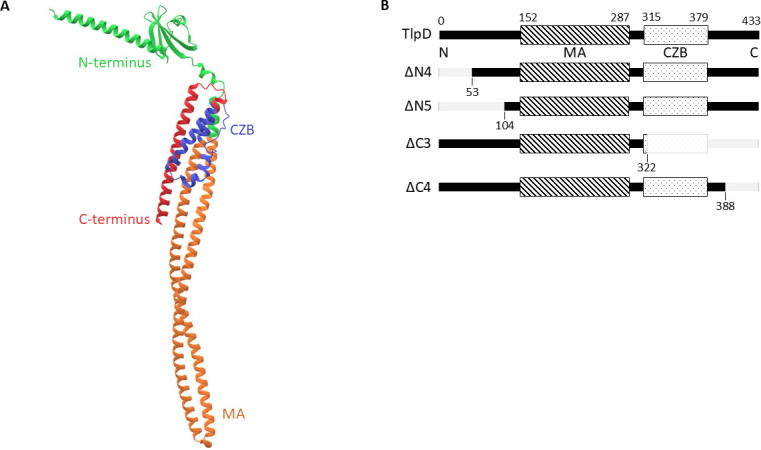
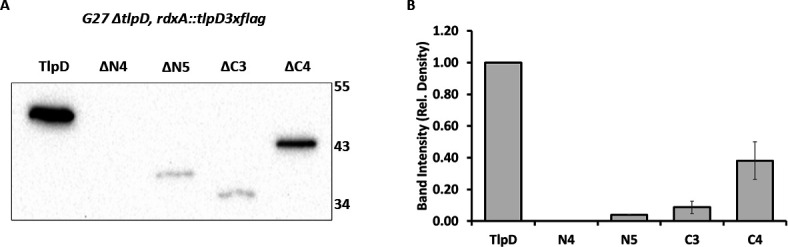
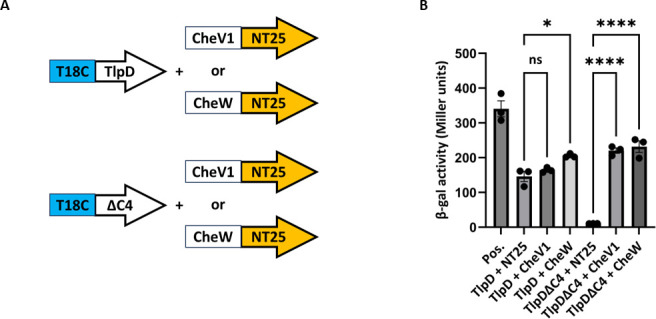
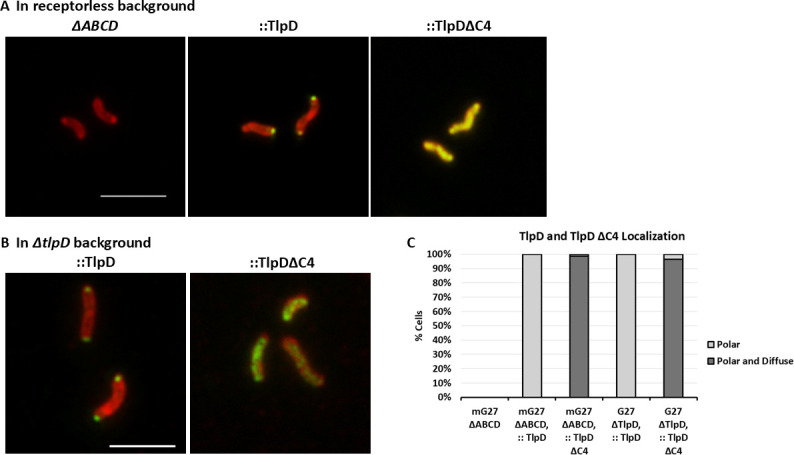
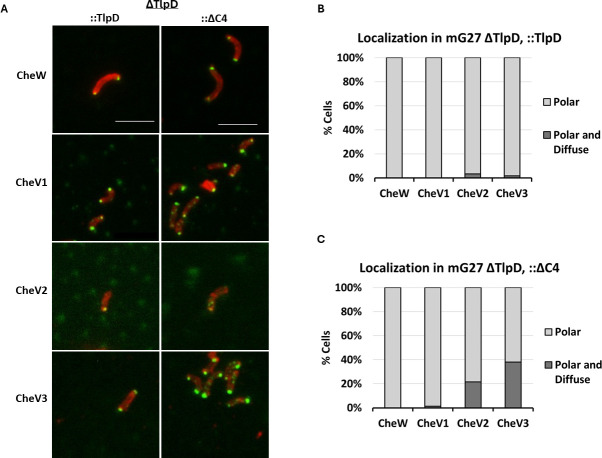
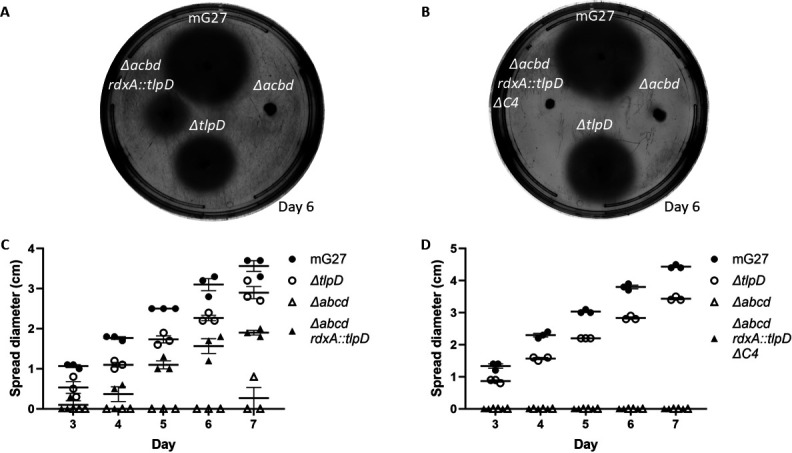
Bacteria localize proteins to distinct subcellular locations, including chemoreceptors, which frequently localize to the bacterial pole. Although some polarity-promoting mechanisms have been described, many chemoreceptors lack clear routes to becoming polar. TlpD of the bacterial pathogen Helicobacter pylori is one such protein. This cytoplasmic chemoreceptor localizes to the pole in a manner that is independent of the other chemoreceptors. In this work, we evaluated the role of TlpD domains in its function. Truncated proteins were created that lacked different amounts of the N- or C-termini and expressed in H. pylori in place of native tlpD or as the sole chemoreceptor. These TlpD variants were examined for their presence and abundance, protein localization, association with chemotaxis signaling proteins, and effect on motility. TlpD that lacked any portion of the N-terminal 104 amino acids produced low to no amounts of detectable protein. In contrast, TlpD was detectable with loss of the C-terminal 45 amino acids. TlpD lacking the last 45 amino acids (TlpD∆C4) preserved the ability to interact with CheW and CheV proteins based on bacterial two-hybrid analysis, but was unable to localize to the pole either on their own or in the presence of other chemoreceptors. TlpD∆C4 was found to be diffuse in the cytoplasm and interacted with CheV1, CheV2, and CheV3 at this location but not with CheW. TlpD∆C4 did not confer chemotactic abilities in soft agar chemotaxis assays. These findings suggest the C-terminal end of TlpD plays a previously unappreciated role in promoting TlpD polar localization and function. IMPORTANCE: Bacteria place their proteins in specific locations that are required for the proteins to function, including the bacterial pole. How the bacterial cell identifies which proteins go to the pole is not fully understood. In this work, we dissect parts of a protein called TlpD that naturally goes to the pole. We find that mutants lacking one end of TlpD lose their polar placement, but retain other abilities. TlpD allows directed motility known as chemotaxis. This ability is critical for infection in Helicobacter pylori and numerous other pathogens. When TlpD loses its polar placement, the protein no longer functions for chemotaxis, laying the foundation for future studies that can dissect how this segment promotes function and eventually translate into therapies for H. pylori infection.
Overview
The claims and statistics of this paper haven’t been checked yet.
Run the check — free, no account needed. It reads the open-access text and checks the sources it cites.
Integrity signals
Registry
Cites
Statistics
Figures
Verification
Claims the paper makes
The claims and statistics of this paper haven’t been checked yet.
Run the check — free, no account needed. It reads the open-access text and checks the sources it cites.
Self-check
Percentages, sums and reported differences re-computed from the paper’s own numbers.
The self-check needs the paper’s full text.
Citations
Cites
Highly accurate protein structure prediction with AlphaFold
Jumper, J., Evans, R., Pritzel, A., Green, T., Figurnov, M., Ronneberger, O., Tunyasuvunakool, K., Bates, R., Žídek, A., Potapenko, A., et al. (2021) · Nature · doi:10.1038/s41586-021-03819-2 · Cited by 43,764
SMART, a simple modular architecture research tool: Identification of signaling domains
Schultz, J., Milpetz, F., Bork, P., & Ponting, C. P. (1998) · Proceedings of the National Academy of Sciences · doi:10.1073/pnas.95.11.5857 · Cited by 3,630
CDD/SPARCLE: functional classification of proteins via subfamily domain architectures
Marchler-Bauer, A., Bo, Y., Han, L., He, J., Lanczycki, C. J., Lu, S., Chitsaz, F., Derbyshire, M. K., Geer, R. C., Gonzales, N. R., et al. (2017) · Nucleic Acids Research · doi:10.1093/nar/gkw1129 · Cited by 2,713
Censini, S., Lange, C., Xiang, Z., Crabtree, J. E., Ghiara, P., Borodovsky, M., Rappuoli, R., & Covacci, A. (1996) · Proceedings of the National Academy of Sciences · doi:10.1073/pnas.93.25.14648 · Cited by 1,872
A bacterial two-hybrid system based on a reconstituted signal transduction pathway
Karimova, G., Pidoux, J., Ullmann, A., & Ladant, D. (1998) · Proceedings of the National Academy of Sciences · doi:10.1073/pnas.95.10.5752 · Cited by 1,707
The KEGG databases at GenomeNet
Kanehisa, M. (2002) · Nucleic Acids Research · doi:10.1093/nar/30.1.42 · Cited by 1,504
Making sense of it all: bacterial chemotaxis
Wadhams, G. H., & Armitage, J. P. (2004) · Nature Reviews Molecular Cell Biology · doi:10.1038/nrm1524 · Cited by 1,489
InterPro: the protein sequence classification resource in 2025
Blum, M., Andreeva, A. E., Florentino, L. C., Chuguransky, S., Grego, T., Hobbs, E., Pinto, B. L., Orr, A., Paysan‐Lafosse, T., Ponamareva, I., et al. (2024) · Nucleic Acids Research · doi:10.1093/nar/gkae1082 · Cited by 1,359
Malfertheiner, P., Camargo, M. C., El-Omar, E., Liou, J.-M., Peek, R., Schulz, C., Smith, S. I., & Suerbaum, S. (2023) · Nature Reviews Disease Primers · doi:10.1038/s41572-023-00431-8 · Cited by 1,191
The protein–protein interaction map of Helicobacter pylori
Rain, J.-C., Selig, L., De Reuse, H., Battaglia, V., Reverdy, C., Simon, S., Lenzen, G., Petel, F., Wojcik, J., Schächter, V., et al. (2001) · Nature · doi:10.1038/35051615 · Cited by 1,146
GlobPlot: exploring protein sequences for globularity and disorder
Linding, R., Russell, R. B., Neduva, V., & Gibson, T. J. (2003) · Nucleic Acids Research · doi:10.1093/nar/gkg519 · Cited by 1,009
PlotsOfData—A web app for visualizing data together with their summaries
Postma, M., & Goedhart, J. (2019) · PLOS Biology · doi:10.1371/journal.pbio.3000202 · Cited by 553
Signal processing in complex chemotaxis pathways
Porter, S. L., Wadhams, G. H., & Armitage, J. P. (2011) · Nature Reviews Microbiology · doi:10.1038/nrmicro2505 · Cited by 465
Signaling and sensory adaptation in Escherichia coli chemoreceptors: 2015 update
Parkinson, J. S., Hazelbauer, G. L., & Falke, J. J. (2015) · Trends in Microbiology · doi:10.1016/j.tim.2015.03.003 · Cited by 428
Helicobacter pylori Uses Motility for Initial Colonization and To Attain Robust Infection
Ottemann, K. M., & Lowenthal, A. C. (2002) · Infection and Immunity · doi:10.1128/iai.70.4.1984-1990.2002 · Cited by 326
Self-citationGarcía, V., Feldman, M. W., & Regoes, R. R. (2016) · PLoS Computational Biology · doi:10.1371/journal.pcbi.1004721 · Cited by 244
Helicobacter pylori: a ROS-inducing bacterial species in the stomach
Handa, O., Naito, Y., & Yoshikawa, T. (2010) · Inflammation Research · doi:10.1007/s00011-010-0245-x · Cited by 219
Wu, J., Li, J., Li, G., Long, D. G., & Weis, R. M. (1996) · Biochemistry · doi:10.1021/bi9530189 · Cited by 177
Identification of New Flagellar Genes ofSalmonella entericaSerovar Typhimurium
Frye, J. G., Karlinsey, J. E., Felise, H. R., Marzolf, B., Dowidar, N., McClelland, M., & Hughes, K. T. (2006) · Journal of Bacteriology · doi:10.1128/jb.188.6.2233-2243.2006 · Cited by 165
Foynes, S., Dorrell, N., Ward, S., Stabler, R. A., McColm, A. A., Rycroft, A. N., & Wren, B. W. (2000) · Infection and Immunity · doi:10.1128/iai.68.4.2016-2023.2000 · Cited by 162
Chemotaxis Plays Multiple Roles during Helicobacter pylori Animal Infection
Terry, K., Williams, S. M., Connolly, L. E., & Ottemann, K. M. (2005) · Infection and Immunity · doi:10.1128/iai.73.2.803-811.2005 · Cited by 157
Self-citationRader, B. A., Wreden, C. C., Hicks, K. B., Sweeney, E. G., Ottemann, K. M., & Guillemin, K. J. (2011) · Microbiology · doi:10.1099/mic.0.049353-0 · Cited by 129
Self-citationColonization, localization, and inflammation: the roles of H. pylori chemotaxis in vivo
Johnson, K. S., & Ottemann, K. M. (2017) · Current Opinion in Microbiology · doi:10.1016/j.mib.2017.11.019 · Cited by 129
Self-citationWilliams, S. M., Chen, Y., Andermann, T. M., Carter, J. E., McGee, D. J., & Ottemann, K. M. (2007) · Infection and Immunity · doi:10.1128/iai.00082-07 · Cited by 113
Self-citationStructure and Signaling Mechanism of a Zinc-Sensory Diguanylate Cyclase
Zähringer, F., Lacanna, E., Jenal, U., Schirmer, T., & Boehm, A. (2013) · Structure · doi:10.1016/j.str.2013.04.026 · Cited by 109
Emergent properties of bacterial chemotaxis pathway
Colin, R., & Sourjik, V. (2017) · Current Opinion in Microbiology · doi:10.1016/j.mib.2017.07.004 · Cited by 106
Pittman, M. S., Goodwin, M. G., & Kelly, D. J. (2001) · Microbiology · doi:10.1099/00221287-147-9-2493 · Cited by 102
Grasberger, H., Zaatari, M. E., Dang, D. T., & Merchant, J. L. (2013) · Gastroenterology · doi:10.1053/j.gastro.2013.07.011 · Cited by 101
McGee, D. J., Langford, M. L., Watson, E. L., Carter, J. E., Chen, Y., & Ottemann, K. M. (2005) · Infection and Immunity · doi:10.1128/iai.73.3.1820-1827.2005 · Cited by 98
Self-citationCheV: CheW-like coupling proteins at the core of the chemotaxis signaling network
Alexander, R. P., Lowenthal, A. C., Harshey, R. M., & Ottemann, K. M. (2010) · Trends in Microbiology · doi:10.1016/j.tim.2010.07.004 · Cited by 88
Self-citationFunctional Analysis of theHelicobacter pyloriFlagellar Switch Proteins
Lowenthal, A. C., Hill, M., Sycuro, L. K., Mehmood, K., Salama, N. R., & Ottemann, K. M. (2009) · Journal of Bacteriology · doi:10.1128/jb.00749-09 · Cited by 78
Self-citationPAS domain containing chemoreceptor couples dynamic changes in metabolism with chemotaxis
Xie, Z., Ulrich, L. E., Zhulin, I. B., & Alexandre, G. M. (2010) · Proceedings of the National Academy of Sciences · doi:10.1073/pnas.0910055107 · Cited by 78
Schweinitzer, T., Mizote, T., Ishikawa, N., Dudnik, A., Inatsu, S., Schreiber, S., Suerbaum, S., Aizawa, S.-I., & Josenhans, C. (2008) · Journal of Bacteriology · doi:10.1128/jb.01940-07 · Cited by 77
Positioning of bacterial chemoreceptors
Jones, C. W., & Armitage, J. P. (2015) · Trends in Microbiology · doi:10.1016/j.tim.2015.03.004 · Cited by 73
Helicobacter pylori Requires TlpD-Driven Chemotaxis To Proliferate in the Antrum
Rolig, A. S., Shanks, J. A., Carter, J. E., & Ottemann, K. M. (2012) · Infection and Immunity · doi:10.1128/iai.00407-12 · Cited by 69
Self-citationPhosphate flow in the chemotactic response system of Helicobacter pylori
Jiménez-Pearson, M.-A., Delany, I., Scarlato, V., & Beier, D. (2005) · Microbiology · doi:10.1099/mic.0.28217-0 · Cited by 65
Helicobacter pylori senses bleach (HOCl) as a chemoattractant using a cytosolic chemoreceptor
Perkins, A., Tudorica, D. A., Amieva, M. R., Remington, S. J., & Guillemin, K. J. (2019) · PLoS Biology · doi:10.1371/journal.pbio.3000395 · Cited by 62
A Second-generation Protein–Protein Interaction Network of Helicobacter pylori
Häuser, R., Ceol, A. G. M., Rajagopala, S. V., Mosca, R., Siszler, G., Wermke, N., Sikorski, P. M., Schwarz, F., Schick, M., Wuchty, S., et al. (2014) · Molecular & Cellular Proteomics · doi:10.1074/mcp.o113.033571 · Cited by 58
Centronuclear Myopathy Caused by Defective Membrane Remodelling of Dynamin 2 and BIN1 Variants
Fujise, K., Noguchi, S., & Takeda, T. (2022) · International Journal of Molecular Sciences · doi:10.3390/ijms23116274 · Cited by 55
Collins, K. D., Andermann, T. M., Draper, J. L., Sanders, L., Williams, S. M., Araghi, C., & Ottemann, K. M. (2016) · Journal of Bacteriology · doi:10.1128/jb.00071-16 · Cited by 54
Self-citationInternal Sense of Direction: Sensing and Signaling from Cytoplasmic Chemoreceptors
Collins, K. D., Lacal, J., & Ottemann, K. M. (2014) · Microbiology and Molecular Biology Reviews · doi:10.1128/mmbr.00033-14 · Cited by 51
Self-citationFlint, A., Stintzi, A., & Saraiva, L. M. (2016) · FEMS Microbiology Reviews · doi:10.1093/femsre/fuw025 · Cited by 50
Mooij, W. T. M., Mitsiki, E., & Anastassis Perrakis, A. (2009) · Nucleic Acids Research · doi:10.1093/nar/gkp256 · Cited by 48
Ortega, D. R., & Zhulin, I. B. (2016) · PLoS Computational Biology · doi:10.1371/journal.pcbi.1004723 · Cited by 46
Wang, Q., Mariconda, S., Suzuki, A., McClelland, M., & Harshey, R. M. (2006) · Journal of Bacteriology · doi:10.1128/jb.00852-06 · Cited by 45
Cellular Stoichiometry of the Chemotaxis Proteins in Bacillus subtilis
Cannistraro, V. J., Glekas, G. D., Rao, C. V., & Ordal, G. (2011) · Journal of Bacteriology · doi:10.1128/jb.01255-10 · Cited by 44
Lowenthal, A. C., Simon, C., Fair, A. S., Mehmood, K., Terry, K., Anastasia, S. D., & Ottemann, K. M. (2009) · Microbiology · doi:10.1099/mic.0.021857-0 · Cited by 44
Self-citationCheR- and CheB-Dependent Chemosensory Adaptation System of Rhodobacter sphaeroides
Martin, A., Wadhams, G. H., Shah, D. S. H., Porter, S. L., Mantotta, J. C., Craig, T. J., Verdult, P. H., Jones, H., & Armitage, J. P. (2001) · Journal of Bacteriology · doi:10.1128/jb.183.24.7135-7144.2001 · Cited by 40
Meier, V. M., & Scharf, B. E. (2009) · Journal of Bacteriology · doi:10.1128/jb.01286-08 · Cited by 39
Identification of a Chemoreceptor Zinc-Binding Domain Common to Cytoplasmic Bacterial Chemoreceptors
Draper, J. L., Karplus, K. J., & Ottemann, K. M. (2011) · Journal of Bacteriology · doi:10.1128/jb.05140-11 · Cited by 39
Self-citationPolar Localization of a Soluble Methyl-Accepting Protein ofPseudomonas aeruginosa
Bardy, S. L., & Maddock, J. R. (2005) · Journal of Bacteriology · doi:10.1128/jb.187.22.7840-7844.2005 · Cited by 38
Identification of a new sialic acid-binding protein inHelicobacter pylori
Bennett, H. J., & Roberts, I. S. (2004) · FEMS Immunology & Medical Microbiology · doi:10.1016/j.femsim.2004.11.008 · Cited by 36
Campylobacter jejunitransducer like proteins: Chemotaxis and beyond
Chandrashekhar, K., Kassem, I. I., & Rajashekara, G. (2017) · Gut Microbes · doi:10.1080/19490976.2017.1279380 · Cited by 35
Behrens, W., Schweinitzer, T., Bal, J., Dorsch, M. M., Bleich, A., Kops, F., Brenneke, B., Didelot, X., Suerbaum, S., & Josenhans, C. (2013) · Infection and Immunity · doi:10.1128/iai.00750-13 · Cited by 34
Collins, K. D., Hu, S., Grasberger, H., Kao, J. Y., & Ottemann, K. M. (2018) · Infection and Immunity · doi:10.1128/iai.00878-17 · Cited by 34
Self-citationLertsethtakarn, P., Howitt, M. R., Castellon, J., Amieva, M. R., & Ottemann, K. M. (2015) · Molecular Microbiology · doi:10.1111/mmi.13086 · Cited by 30
Self-citationCooperation of two distinct coupling proteins creates chemosensory network connections
Abedrabbo, S., Castellon, J., Collins, K. D., Johnson, K. S., & Ottemann, K. M. (2017) · Proceedings of the National Academy of Sciences · doi:10.1073/pnas.1618227114 · Cited by 30
Self-citationBrucella Egresses from Host Cells Exploiting Multivesicular Bodies
Spera, J. M., Guaimas, F. F., Czibener, C., & Ugalde, J. E. (2023) · mBio · doi:10.1128/mbio.03338-22 · Cited by 30
Behrens, W., Schweinitzer, T., McMurry, J. L., Loewen, P. C., Buettner, F. F. R., Menz, S., & Josenhans, C. (2016) · Scientific Reports · doi:10.1038/srep23582 · Cited by 26
Castillo, A., Arevalo, S., Woodruff, A. J., & Ottemann, K. M. (2007) · Molecular Microbiology · doi:10.1111/j.1365-2958.2007.06033.x · Cited by 20
Self-citationLazova, M. D., Butler, M. T., Shimizu, T. S., & Harshey, R. M. (2012) · Molecular Microbiology · doi:10.1111/j.1365-2958.2012.08051.x · Cited by 19
Ortega, Á., & Krell, T. (2020) · Computational and Structural Biotechnology Journal · doi:10.1016/j.csbj.2020.07.006 · Cited by 13
Altering under-represented DNA sequences elevates bacterial transformation efficiency
Hu, S., Giacopazzi, S., Modlin, R., Karplus, K. J., Bernick, D. L., & Ottemann, K. M. (2023) · mBio · doi:10.1128/mbio.02105-23 · Cited by 7
Self-citation
Research works printed but not linked: 1
- Castellón J. 2013. CheV1 leads the organization of chemotaxis signal transduction proteins in Helicobacter pylori Masters Thesis University of California Santa Cruz
Metadata
- Authors
- Lopez-Magaña, R., & Ottemann, K. M.
- Affiliations
- University of California, Santa Cruz (US)
- Corresponding author
- Ottemann, Karen M.
- Venue
- Journal of Bacteriology
- Publisher
- American Society for Microbiology
- Published
- 2026-03-19
- Volume
- 208
- Issue
- 3
- Pages
- e0039425-e0039425
- ISSN
- 0021-9193 (ISSN-L)
- 1098-5530
- PMC
- PMC13001251
- OpenAlex
- W7128395484
- Cited by
- 1
- References
- 63
- Citations by year
- 2026: 1
- FWCI
- 3.96
- Type
- journal article
- Language
- en
- Open access
- diamond
- doi.org
- Licence
- cc-by
- creativecommons.org/licenses/by/4.0/ (vor)
- journals.asm.org/non-commercial-tdm-license (tdm)
- Locations
- Journal of Bacteriology (publishedVersion, cc-by)
- bioRxiv (Cold Spring Harbor Laboratory) (acceptedVersion, cc-by)
- PubMed Central (publishedVersion, cc-by)
- PubMed (publishedVersion)
- DOAJ (DOAJ: Directory of Open Access Journals) (submittedVersion, cc-by-sa)
- PubMed Central (submittedVersion)
- Funders
- National Institutes of Health (RO1AI116946)
- Topics
- Life Sciences › Biochemistry, Genetics and Molecular Biology › Genetics › Bacterial Genetics and Biotechnology
- Health Sciences › Medicine › Gastroenterology › Helicobacter pylori-related gastroenterology studies
- Health Sciences › Medicine › Oncology › Chemokine receptors and signaling
- Keywords
- Helicobacter pylori, polar localization, C-terminal domain, chemotaxis, bacterial motility, CheW, chemoreceptor signaling, infection pathogenesis
About these checks
Registry, retraction, Cites and statistics results are computed, not judged, with one exception: a printed reference that no index lists is read once by a model before it counts as a citation error. Claims are extracted by a model and kept only when their quote appears verbatim in the text; each cited source is then checked, with a model’s help, for whether it says what the claim relies on. Those verdicts can be wrong — read the claim’s quote and the cited source before relying on one.
Statistics and arithmetic are recomputed, not judged.
Confidence bands are shown only for fields calibrated on our annotated test set. None is calibrated yet, so no band is shown.
What counts as a claim ›How we measure confidence ›How we check this ›
Are you an author, or do you see a problem with this page? Request a review
Data sources
Bibliographic data: Semantic Scholar, OpenAlex, Crossref.
Contains information from the Semantic Scholar Academic Graph Datasets, made available under the ODC Attribution License (ODC-BY 1.0).
Semantic Scholar’s data is described in: Kinney, R., et al. (2023). The Semantic Scholar Open Data Platform. arXiv:2301.10140.
