

The DOI matches its Crossref record; 65 of the 66 references it cites were found in a registry or an index.
Extracellular Enzymes Facilitate Electron Uptake in Biocorrosion and Bioelectrosynthesis
Open accessAbstract
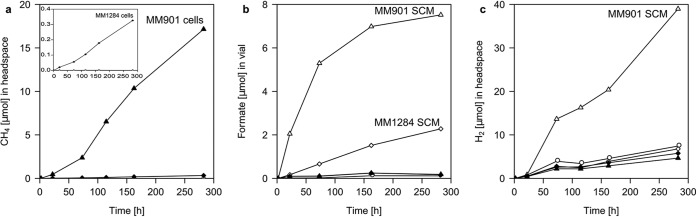
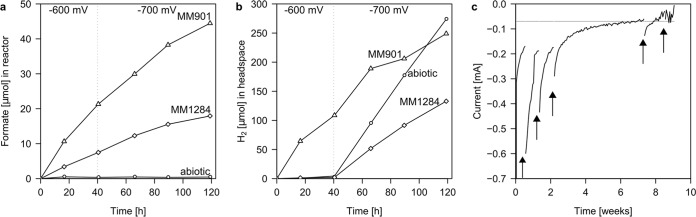
UNLABELLED: Direct, mediator-free transfer of electrons between a microbial cell and a solid phase in its surrounding environment has been suggested to be a widespread and ecologically significant process. The high rates of microbial electron uptake observed during microbially influenced corrosion of iron [Fe(0)] and during microbial electrosynthesis have been considered support for a direct electron uptake in these microbial processes. However, the underlying molecular mechanisms of direct electron uptake are unknown. We investigated the electron uptake characteristics of the Fe(0)-corroding and electromethanogenic archaeon Methanococcus maripaludis and discovered that free, surface-associated redox enzymes, such as hydrogenases and presumably formate dehydrogenases, are sufficient to mediate an apparent direct electron uptake. In genetic and biochemical experiments, we showed that these enzymes, which are released from cells during routine culturing, catalyze the formation of H2 or formate when sorbed to an appropriate redox-active surface. These low-molecular-weight products are rapidly consumed by M. maripaludis cells when present, thereby preventing their accumulation to any appreciable or even detectable level. Rates of H2 and formate formation by cell-free spent culture medium were sufficient to explain the observed rates of methane formation from Fe(0) and cathode-derived electrons by wild-type M. maripaludis as well as by a mutant strain carrying deletions in all catabolic hydrogenases. Our data collectively show that cell-derived free enzymes can mimic direct extracellular electron transfer during Fe(0) corrosion and microbial electrosynthesis and may represent an ecologically important but so far overlooked mechanism in biological electron transfer. IMPORTANCE: The intriguing trait of some microbial organisms to engage in direct electron transfer is thought to be widespread in nature. Consequently, direct uptake of electrons into microbial cells from solid surfaces is assumed to have a significant impact not only on fundamental microbial and biogeochemical processes but also on applied bioelectrochemical systems, such as microbial electrosynthesis and biocorrosion. This study provides a simple mechanistic explanation for frequently observed fast electron uptake kinetics in microbiological systems without a direct transfer: free, cell-derived enzymes can interact with cathodic surfaces and catalyze the formation of intermediates that are rapidly consumed by microbial cells. This electron transfer mechanism likely plays a significant role in various microbial electron transfer reactions in the environment.
Overview
The claims and statistics of this paper haven’t been checked yet.
Run the check — free, no account needed. It reads the open-access text and checks the sources it cites.
Integrity signals
Registry
Cites
Statistics
Figures
Verification
Claims the paper makes
The claims and statistics of this paper haven’t been checked yet.
Run the check — free, no account needed. It reads the open-access text and checks the sources it cites.
Claims other papers make about this one
Each is checked against this paper’s own text: does it say what the citing paper says it does?
The cited source says what the claim attributes to it.
In the citing paper
“Studies of microbes that grow on native iron and on electrodes suggest that side activities of extracellular enzymes might be able to substitute for hydrogenases (Deutzmann et al., 2015).”
From Serpentinization as the source of energy, electrons, organics, catalysts, nutrients and pH gradients for the origin of LUCA and life (2023) · cites this paper as Deutzmann et al., 2015
Self-check
Percentages, sums and reported differences re-computed from the paper’s own numbers.
The self-check needs the paper’s full text.
Citations
Cites
Extracellular electron transfer via microbial nanowires
Reguera, G., McCarthy, K. D., Mehta, T., Nicoll, J. S., Tuominen, M. T., & Lovley, D. R. (2005) · Nature · doi:10.1038/nature03661 · Cited by 2,645
Electricity Production by Geobacter sulfurreducens Attached to Electrodes
Bond, D. R., & Lovley, D. R. (2003) · Applied and Environmental Microbiology · doi:10.1128/aem.69.3.1548-1555.2003 · Cited by 2,261
Gorby, Y. A., Yanina, S., McLean, J. S., Rosso, K. M., Moyles, D., Dohnalkova, A., Beveridge, T. J., Chang, I. S., Kim, B. H., Kim, K. S., et al. (2006) · Proceedings of the National Academy of Sciences · doi:10.1073/pnas.0604517103 · Cited by 1,749
Microbial electrosynthesis — revisiting the electrical route for microbial production
Rabaey, K., & Rozendal, R. A. (2010) · Nature Reviews Microbiology · doi:10.1038/nrmicro2422 · Cited by 1,676
Rotaru, A., Shrestha, P. M., Liu, F., Shrestha, M., Shrestha, D., Embree, M., Zengler, K., Wardman, C., Nevin, K. P., & Lovley, D. R. (2013) · Energy & Environmental Science · doi:10.1039/c3ee42189a · Cited by 1,411
Direct Biological Conversion of Electrical Current into Methane by Electromethanogenesis
Cheng, S., Xing, D., Call, D. F., & Logan, B. E. (2009) · Environmental Science & Technology · doi:10.1021/es803531g · Cited by 1,193
Nevin, K. P., Woodard, T. L., Franks, A. E., Summers, Z. M., & Lovley, D. R. (2010) · mBio · doi:10.1128/mbio.00103-10 · Cited by 1,068
Summers, Z. M., Fogarty, H. E., Leang, C., Franks, A. E., Malvankar, N. S., & Lovley, D. R. (2010) · Science · doi:10.1126/science.1196526 · Cited by 1,019
Direct Interspecies Electron Transfer between Geobacter metallireducens and Methanosarcina barkeri
Rotaru, A., Shrestha, P. M., Liu, F., Markovaite, B., Chen, S., Nevin, K. P., & Lovley, D. R. (2014) · Applied and Environmental Microbiology · doi:10.1128/aem.00895-14 · Cited by 943
Corrosion of Iron by Sulfate-Reducing Bacteria: New Views of an Old Problem
Enning, D., & Garrelfs, J. (2013) · Applied and Environmental Microbiology · doi:10.1128/aem.02848-13 · Cited by 921
Promoting direct interspecies electron transfer with activated carbon
Liu, F., Rotaru, A.-E., Shrestha, P. M., Malvankar, N. S., Nevin, K. P., & Lovley, D. R. (2012) · Energy & Environmental Science · doi:10.1039/c2ee22459c · Cited by 879
Graphite electrodes as electron donors for anaerobic respiration
Gregory, K. B., Bond, D. R., & Lovley, D. R. (2004) · Environmental Microbiology · doi:10.1111/j.1462-2920.2004.00593.x · Cited by 789
Iron corrosion by novel anaerobic microorganisms
Dinh, H. T., Kuever, J., Mußmann, M., Hassel, A. W., Stratmann, M., & Widdel, F. (2004) · Nature · doi:10.1038/nature02321 · Cited by 776
Investigating and Exploiting the Electrocatalytic Properties of Hydrogenases
Vincent, K. A., Parkin, A., & Armstrong, F. A. (2007) · Chemical Reviews · doi:10.1021/cr050191u · Cited by 753
Nevin, K. P., Hensley, S. A., Franks, A. E., Summers, Z. M., Ou, J., Woodard, T. L., Snoeyenbos-West, O., & Lovley, D. R. (2011) · Applied and Environmental Microbiology · doi:10.1128/aem.02642-10 · Cited by 722
Filamentous bacteria transport electrons over centimetre distances
Pfeffer, C., Larsen, S., Song, J., Dong, M., Besenbacher, F., Meyer, R. L., Kjeldsen, K. U., Schreiber, L., Gorby, Y. A., El‐Naggar, M. Y., et al. (2012) · Nature · doi:10.1038/nature11586 · Cited by 664
Pirbadian, S., Barchinger, S. E., Leung, K. M., Byun, H. S., Jangir, Y., Bouhenni, R., Reed, S. B., Romine, M. F., Saffarini, D. A., Shi, L., et al. (2014) · Proceedings of the National Academy of Sciences · doi:10.1073/pnas.1410551111 · Cited by 657
Microbial interspecies electron transfer via electric currents through conductive minerals
Kato, S., Hashimoto, K., & Watanabe, K. (2012) · Proceedings of the National Academy of Sciences · doi:10.1073/pnas.1117592109 · Cited by 647
Methanogenesis facilitated by electric syntrophy via (semi)conductive iron‐oxide minerals
Kato, S., Hashimoto, K., & Watanabe, K. (2011) · Environmental Microbiology · doi:10.1111/j.1462-2920.2011.02611.x · Cited by 624
Electric currents couple spatially separated biogeochemical processes in marine sediment
Nielsen, L. P., Risgaard‐Petersen, N., Fossing, H., Christensen, P. B., & Sayama, M. (2010) · Nature · doi:10.1038/nature08790 · Cited by 582
Villano, M., Aulenta, F., Ciucci, C., Ferri, T., Giuliano, A., & Majone, M. (2010) · Bioresource Technology · doi:10.1016/j.biortech.2009.12.077 · Cited by 581
Potential for Direct Interspecies Electron Transfer in Methanogenic Wastewater Digester Aggregates
Morita, M., Malvankar, N. S., Franks, A. E., Summers, Z. M., Giloteaux, L., Rotaru, A., Rotaru, C., & Lovley, D. R. (2011) · mBio · doi:10.1128/mbio.00159-11 · Cited by 575
Rosenbaum, M. A., Aulenta, F., Villano, M., & Angenent, L. T. (2010) · Bioresource Technology · doi:10.1016/j.biortech.2010.07.008 · Cited by 570
Reversible interconversion of carbon dioxide and formate by an electroactive enzyme
Reda, T., Plugge, C. M., Abram, N. J., & Hirst, J. (2008) · Proceedings of the National Academy of Sciences · doi:10.1073/pnas.0801290105 · Cited by 561
Enzyme Activities and Microbiological and Biochemical Processes in Soil
Nannipieri, P., Kandeler, E., & Ruggiero, P. (2002) · doi:10.1201/9780203904039-1 · Cited by 529
Venzlaff, H., Enning, D., Srinivasan, J., Mayrhofer, K. J. J., Hassel, A. W., Widdel, F., & Stratmann, M. (2012) · Corrosion Science · doi:10.1016/j.corsci.2012.09.006 · Cited by 499
Self-destructive cooperation mediated by phenotypic noise
Ackermann, M., Stecher, B., Freed, N. E., Songhet, P., Hardt, W., & Doebeli, M. (2008) · Nature · doi:10.1038/nature07067 · Cited by 432
Bacterial Programmed Cell Death and Multicellular Behavior in Bacteria
Engelberg–Kulka, H., Amitai, S., Kolodkin‐Gal, I., & Hazan, R. (2006) · PLoS Genetics · doi:10.1371/journal.pgen.0020135 · Cited by 426
Electrosynthesis of Commodity Chemicals by an Autotrophic Microbial Community
Marshall, C. W., Ross, D. E., Fichot, E. B., Norman, R. S., & May, H. D. (2012) · Applied and Environmental Microbiology · doi:10.1128/aem.02401-12 · Cited by 423
Enning, D., Venzlaff, H., Garrelfs, J., Dinh, H. T., Meyer, V., Mayrhofer, K. J. J., Hassel, A. W., Stratmann, M., & Widdel, F. (2012) · Environmental Microbiology · doi:10.1111/j.1462-2920.2012.02778.x · Cited by 414
Powering microbes with electricity: direct electron transfer from electrodes to microbes
Lovley, D. R. (2010) · Environmental Microbiology Reports · doi:10.1111/j.1758-2229.2010.00211.x · Cited by 401
The biological role of death and lysis in biofilm development
Bayles, K. W. (2007) · Nature Reviews Microbiology · doi:10.1038/nrmicro1743 · Cited by 391
Reversibility and efficiency in electrocatalytic energy conversion and lessons from enzymes
Armstrong, F. A., & Hirst, J. (2011) · Proceedings of the National Academy of Sciences · doi:10.1073/pnas.1103697108 · Cited by 378
Ross, D. E., Flynn, J. M., Baron, D. B., Gralnick, J. A., & Bond, D. R. (2011) · PLoS ONE · doi:10.1371/journal.pone.0016649 · Cited by 362
Lovley, D. R., & Nevin, K. P. (2013) · Current Opinion in Biotechnology · doi:10.1016/j.copbio.2013.02.012 · Cited by 353
Bacterial programmed cell death: making sense of a paradox
Bayles, K. W. (2014) · Nature Reviews Microbiology · doi:10.1038/nrmicro3136 · Cited by 315
Electroactive bacteria—molecular mechanisms and genetic tools
Sydow, A., Krieg, T. M., Mayer, F., Schrader, J., & Holtmann, D. (2014) · Applied Microbiology and Biotechnology · doi:10.1007/s00253-014-6005-z · Cited by 249
A shift in the current: New applications and concepts for microbe-electrode electron exchange
Lovley, D. R., & Nevin, K. P. (2011) · Current Opinion in Biotechnology · doi:10.1016/j.copbio.2011.01.009 · Cited by 236
Vargas, M., Malvankar, N. S., Tremblay, P., Leang, C., Smith, J. A., Patel, P., Snoeyenbos-West, O., Nevin, K. P., & Lovley, D. R. (2013) · mBio · doi:10.1128/mbio.00105-13 · Cited by 234
Hydrogenase-independent uptake and metabolism of electrons by the archaeon Methanococcus maripaludis
Lohner, S. T., Deutzmann, J. S., Logan, B. E., Leigh, J. A., & Spormann, A. M. (2014) · The ISME Journal · doi:10.1038/ismej.2014.82 · Cited by 233
Self-citationIron-Corroding Methanogen Isolated from a Crude-Oil Storage Tank
Uchiyama, T., Ito, K., Mori, K., Tsurumaru, H., & Harayama, S. (2010) · Applied and Environmental Microbiology · doi:10.1128/aem.00668-09 · Cited by 215
Parkin, A., Seravalli, J., Vincent, K. A., Ragsdale, S. W., & Armstrong, F. A. (2007) · Journal of the American Chemical Society · doi:10.1021/ja073643o · Cited by 213
Costa, K. C., Wong, P. M., Wang, T., Lie, T. J., Dodsworth, J. A., Swanson, I., Burn, J. A., Hackett, M., & Leigh, J. A. (2010) · Proceedings of the National Academy of Sciences · doi:10.1073/pnas.1003653107 · Cited by 203
Beese-Vasbender, P. F., Grote, J., Garrelfs, J., Stratmann, M., & Mayrhofer, K. J. J. (2014) · Bioelectrochemistry · doi:10.1016/j.bioelechem.2014.11.004 · Cited by 178
GRAPHITIZATION OF CAST IRON AS AN ELECTROBIOCHEMICAL PROCESS IN ANAEROBIC SOILS
Kühr, C. A. H. V. W., & van der Vlugt, L. S. (1964) · Defense Technical Information Center (DTIC) · Cited by 174
Kato, S., Yumoto, I., & Kamagata, Y. (2014) · Applied and Environmental Microbiology · doi:10.1128/aem.02767-14 · Cited by 158
Moore, B. C., & Leigh, J. A. (2005) · Journal of Bacteriology · doi:10.1128/jb.187.3.972-979.2005 · Cited by 158
Okamoto, A., Nakamura, R., & Hashimoto, K. (2011) · Electrochimica Acta · doi:10.1016/j.electacta.2011.03.076 · Cited by 152
Iron corrosion activity of anaerobic hydrogen-consuming microorganisms isolated from oil facilities
Mori, K., Tsurumaru, H., & Harayama, S. (2010) · Journal of Bioscience and Bioengineering · doi:10.1016/j.jbiosc.2010.04.012 · Cited by 151
Tremblay, P., Summers, Z. M., Glaven, S. M., Nevin, K. P., Zengler, K., Barrett, C. L., Qiu, Y. L., Palsson, B. Ø., & Lovley, D. R. (2010) · Environmental Microbiology · doi:10.1111/j.1462-2920.2010.02302.x · Cited by 99
Mechanism of H2-electrooxidation with immobilized hydrogenase
Yaropolov, A. I., Karyakin, A. A., Varfolomeev, S. D., & Berezin, I. V. (1984) · Bioelectrochemistry and Bioenergetics · doi:10.1016/0302-4598(84)87009-9 · Cited by 72
Sulphate-reducing bacteria and their role in corrosion of ferrous materials
Beech, I. B., & Sunner, J. A. (2007) · Cambridge University Press eBooks · doi:10.1017/cbo9780511541490.017 · Cited by 67
Enzymes in soil: research and developments in measuring activities.
Tabatabai, M. A., Dick, W. A., Burns, R. G., & Dick, R. P. (2002) · Cited by 65
Hydrogen fuel electrode based on bioelectrocatalysis by the enzyme hydrogenase
Karyakin, A. A., Morozov, S. V., Karyakina, E. E., Varfolomeyev, S. D., Zorin, N. A., & Cosnier, S. (2002) · Electrochemistry Communications · doi:10.1016/s1388-2481(02)00335-1 · Cited by 64
Silva, S. D., Basseguy, R., & Bergel, A. (2003) · Journal of Electroanalytical Chemistry · doi:10.1016/j.jelechem.2003.07.005 · Cited by 63
Kloeke, F. V. O., Bryant, R. D., & Laishley, E. J. (1995) · Anaerobe · doi:10.1006/anae.1995.1038 · Cited by 59
Hydrogen evolution catalyzed by viable and non-viable cells on biocathodes
Yates, M. D., Siegert, M., & Logan, B. E. (2014) · International Journal of Hydrogen Energy · doi:10.1016/j.ijhydene.2014.08.015 · Cited by 54
Influence of Sulphate-reducing Bacteria on the Corrosion Potential of Iron
Wanklyn, J. N., & Spruit, C. J. P. (1952) · Nature · doi:10.1038/169928b0 · Cited by 52
H 2 -Independent Growth of the Hydrogenotrophic Methanogen Methanococcus maripaludis
Costa, K. C., Lie, T. J., Jacobs, M. A., & Leigh, J. A. (2013) · mBio · doi:10.1128/mbio.00062-13 · Cited by 49
An exploratory study on the use of enzyme activities as sediment tracers: biochemical fingerprints?
Nosrati, K., Govers, G., Ahmadi, H., Sharifi, F., Amoozegar, M. A., Merckx, R., & Vanmaercke, M. (2011) · International Journal of Sediment Research · doi:10.1016/s1001-6279(11)60082-6 · Cited by 43
Chatelus, C. Y., Carrier, P., Saignes, P., Libert, M., Berlier, Y. M., Lespinat, P. A., Fauque, G. D., & LeGall, J. (1987) · Applied and Environmental Microbiology · doi:10.1128/aem.53.7.1708-1710.1987 · Cited by 33
Sulphate-reducing Bacteria and Internal Corrosion of Ferrous Pipes conveying Water
Butlin, K. R., Adams, M. E., & THOMAS, M. (1949) · Nature · doi:10.1038/163026a0 · Cited by 27
Sané, S., Jolivalt, C., Mittler, G., Nielsen, P. J., Rubenwolf, S., Zengerle, R., & Kerzenmacher, S. (2013) · ChemSusChem · doi:10.1002/cssc.201300205 · Cited by 26
Iron/Sulphide Ratios in Corrosion by Sulphate-reducing Bacteria
Spruit, C. J. P., & Wanklyn, J. N. (1951) · Nature · doi:10.1038/168951a0 · Cited by 23
Electron Flow in Ferrous Biocorrosion
Laishley, E. J., & Bryant, R. D. (2006) · Springer eBooks · doi:10.1007/0-387-22731-8_18 · Cited by 5
Research works printed but not linked: 1
- Tate R, III. 2002. Microbiology and enzymology of carbon and nitrogen cycling, p 227–248. In Burns RG, Dick RP (ed), Enzymes in the environment. Marcel Dekker, New York, NY.
Cited by
Sorted by citations
Electroactive microorganisms in bioelectrochemical systems
Logan, B. E., Rossi, R., Ragab, A., & Saikaly, P. E. (2019) · Nature Reviews Microbiology · doi:10.1038/s41579-019-0173-x · Cited by 1,605
Self-photosensitization of nonphotosynthetic bacteria for solar-to-chemical production
Sakimoto, K. K., Wong, A. B., & Yang, P. (2015) · Science · doi:10.1126/science.aad3317 · Cited by 1,170
Kracke, F., Vassilev, I., & Krömer, J. O. (2015) · Frontiers in Microbiology · doi:10.3389/fmicb.2015.00575 · Cited by 748
Wastewater treatment for carbon capture and utilization
Lü, L., Guest, J. S., Peters, C. A., Zhu, X., Rau, G. H., & Ren, Z. J. (2018) · Nature Sustainability · doi:10.1038/s41893-018-0187-9 · Cited by 667
Bacteria photosensitized by intracellular gold nanoclusters for solar fuel production
Zhang, H., Liu, H., Tian, Z., Lu, D., Yu, Y., Cestellos-Blanco, S., Sakimoto, K. K., & Yang, P. (2018) · Nature Nanotechnology · doi:10.1038/s41565-018-0267-z · Cited by 568
Metadata
- Authors
- Deutzmann, J. S., Sahin, M., & Spormann, A. M.
- Affiliations
- Stanford University (US)
- Department of Civil and Environmental Engineering, Stanford University, Stanford, California, USA
- Corresponding author
- Spormann, Alfred M.
- Venue
- mBio
- Publisher
- American Society for Microbiology
- Published
- 2015-05
- Volume
- 6
- Issue
- 2
- ISSN
- 2150-7511 (ISSN-L)
- 2161-2129
- PMC
- PMC4453541
- OpenAlex
- W2141860790
- Cited by
- 379
- References
- 66
- Citations by year
- 2026: 18 · 2025: 21 · 2024: 29 · 2023: 31 · 2022: 39 · 2021: 29 · 2020: 47 · 2019: 43 · 2018: 41 · 2017: 40 · 2016: 31 · 2015: 10
- FWCI
- 29.27
- Type
- journal article
- Language
- en
- Open access
- gold
- doi.org
- Licence
- Locations
- mBio (publishedVersion, cc-by-nc-sa)
- Europe PMC (PubMed Central) (publishedVersion, cc-by-nc-sa)
- PubMed Central (publishedVersion, cc-by-nc-sa)
- PubMed (publishedVersion)
- DOAJ (DOAJ: Directory of Open Access Journals) (submittedVersion, cc-by-sa)
- Topics
- Physical Sciences › Environmental Science › Environmental Engineering › Microbial Fuel Cells and Bioremediation
- Physical Sciences › Materials Science › Materials Chemistry › Corrosion Behavior and Inhibition
- Life Sciences › Biochemistry, Genetics and Molecular Biology › Molecular Biology › Microbial metabolism and enzyme function
- Keywords
- extracellular enzymes, direct electron transfer, microbiologically influenced corrosion, microbial electrosynthesis, Methanococcus maripaludis, iron corrosion, hydrogenase, formate dehydrogenase, hydrogen production, methane production, bioelectrochemical systems
- MeSH terms
- Corrosion, Electron Transport, Formates, Hydrogen, Iron, Methane, Oxidoreductases, Methanococcus
About these checks
Registry, retraction, Cites and statistics results are computed, not judged, with one exception: a printed reference that no index lists is read once by a model before it counts as a citation error. Claims are extracted by a model and kept only when their quote appears verbatim in the text; each cited source is then checked, with a model’s help, for whether it says what the claim relies on. Those verdicts can be wrong — read the claim’s quote and the cited source before relying on one.
Statistics and arithmetic are recomputed, not judged.
Confidence bands are shown only for fields calibrated on our annotated test set. None is calibrated yet, so no band is shown.
What counts as a claim ›How we measure confidence ›How we check this ›
Are you an author, or do you see a problem with this page? Request a review
