

The DOI matches its Crossref record; 65 of the 66 references it cites were found in a registry or an index.
Extracellular Enzymes Facilitate Electron Uptake in Biocorrosion and Bioelectrosynthesis
Open accessAbstract
UNLABELLED: Direct, mediator-free transfer of electrons between a microbial cell and a solid phase in its surrounding environment has been suggested to be a widespread and ecologically significant process. The high rates of microbial electron uptake observed during microbially influenced corrosion of iron [Fe(0)] and during microbial electrosynthesis have been considered support for a direct electron uptake in these microbial processes. However, the underlying molecular mechanisms of direct electron uptake are unknown. We investigated the electron uptake characteristics of the Fe(0)-corroding and electromethanogenic archaeon Methanococcus maripaludis and discovered that free, surface-associated redox enzymes, such as hydrogenases and presumably formate dehydrogenases, are sufficient to mediate an apparent direct electron uptake. In genetic and biochemical experiments, we showed that these enzymes, which are released from cells during routine culturing, catalyze the formation of H2 or formate when sorbed to an appropriate redox-active surface. These low-molecular-weight products are rapidly consumed by M. maripaludis cells when present, thereby preventing their accumulation to any appreciable or even detectable level. Rates of H2 and formate formation by cell-free spent culture medium were sufficient to explain the observed rates of methane formation from Fe(0) and cathode-derived electrons by wild-type M. maripaludis as well as by a mutant strain carrying deletions in all catabolic hydrogenases. Our data collectively show that cell-derived free enzymes can mimic direct extracellular electron transfer during Fe(0) corrosion and microbial electrosynthesis and may represent an ecologically important but so far overlooked mechanism in biological electron transfer. IMPORTANCE: The intriguing trait of some microbial organisms to engage in direct electron transfer is thought to be widespread in nature. Consequently, direct uptake of electrons into microbial cells from solid surfaces is assumed to have a significant impact not only on fundamental microbial and biogeochemical processes but also on applied bioelectrochemical systems, such as microbial electrosynthesis and biocorrosion. This study provides a simple mechanistic explanation for frequently observed fast electron uptake kinetics in microbiological systems without a direct transfer: free, cell-derived enzymes can interact with cathodic surfaces and catalyze the formation of intermediates that are rapidly consumed by microbial cells. This electron transfer mechanism likely plays a significant role in various microbial electron transfer reactions in the environment.
Overview
The claims and statistics of this paper haven’t been checked yet.
Run the check — free, no account needed. It reads the open-access text and checks the sources it cites.
Integrity signals
Registry
Cites
Statistics
Figures
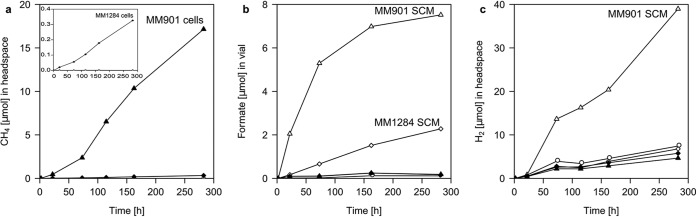
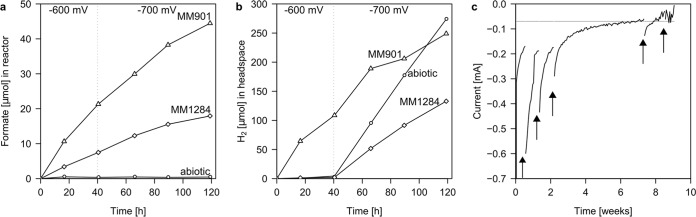
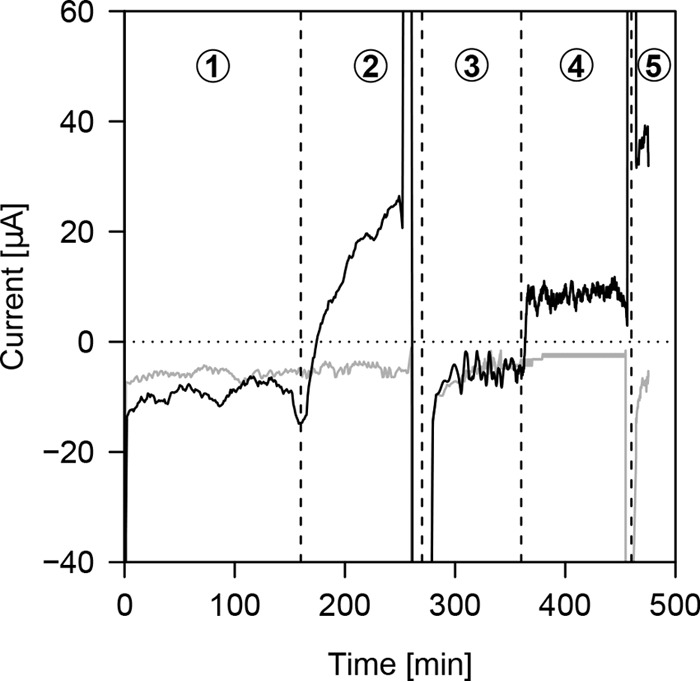
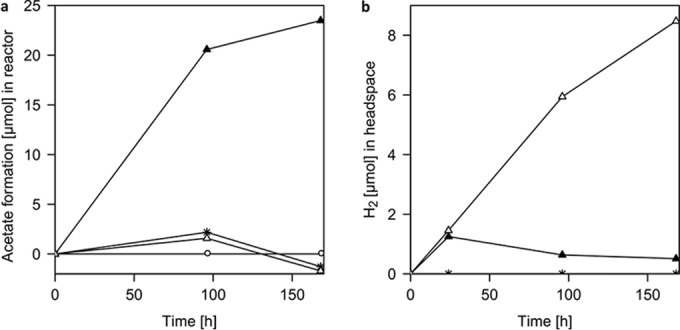
Verification
Claims the paper makes
The claims and statistics of this paper haven’t been checked yet.
Run the check — free, no account needed. It reads the open-access text and checks the sources it cites.
Claims other papers make about this one
Each is checked against this paper’s own text: does it say what the citing paper says it does?
The cited source says what the claim attributes to it.
In the citing paper
“Studies of microbes that grow on native iron and on electrodes suggest that side activities of extracellular enzymes might be able to substitute for hydrogenases (Deutzmann et al., 2015).”
From Serpentinization as the source of energy, electrons, organics, catalysts, nutrients and pH gradients for the origin of LUCA and life (2023) · cites this paper as Deutzmann et al., 2015
Self-check
Percentages, sums and reported differences re-computed from the paper’s own numbers.
The self-check needs the paper’s full text.
Citations
Cites
Extracellular electron transfer via microbial nanowires
Reguera, G., McCarthy, K. D., Mehta, T., Nicoll, J. S., Tuominen, M. T., & Lovley, D. R. (2005) · Nature · doi:10.1038/nature03661 · Cited by 2,645
Electricity Production by Geobacter sulfurreducens Attached to Electrodes
Bond, D. R., & Lovley, D. R. (2003) · Applied and Environmental Microbiology · doi:10.1128/aem.69.3.1548-1555.2003 · Cited by 2,261
Gorby, Y. A., Yanina, S., McLean, J. S., Rosso, K. M., Moyles, D., Dohnalkova, A., Beveridge, T. J., Chang, I. S., Kim, B. H., Kim, K. S., et al. (2006) · Proceedings of the National Academy of Sciences · doi:10.1073/pnas.0604517103 · Cited by 1,749
Microbial electrosynthesis — revisiting the electrical route for microbial production
Rabaey, K., & Rozendal, R. A. (2010) · Nature Reviews Microbiology · doi:10.1038/nrmicro2422 · Cited by 1,676
Rotaru, A., Shrestha, P. M., Liu, F., Shrestha, M., Shrestha, D., Embree, M., Zengler, K., Wardman, C., Nevin, K. P., & Lovley, D. R. (2013) · Energy & Environmental Science · doi:10.1039/c3ee42189a · Cited by 1,411
Direct Biological Conversion of Electrical Current into Methane by Electromethanogenesis
Cheng, S., Xing, D., Call, D. F., & Logan, B. E. (2009) · Environmental Science & Technology · doi:10.1021/es803531g · Cited by 1,193
Nevin, K. P., Woodard, T. L., Franks, A. E., Summers, Z. M., & Lovley, D. R. (2010) · mBio · doi:10.1128/mbio.00103-10 · Cited by 1,068
Summers, Z. M., Fogarty, H. E., Leang, C., Franks, A. E., Malvankar, N. S., & Lovley, D. R. (2010) · Science · doi:10.1126/science.1196526 · Cited by 1,019
Direct Interspecies Electron Transfer between Geobacter metallireducens and Methanosarcina barkeri
Rotaru, A., Shrestha, P. M., Liu, F., Markovaite, B., Chen, S., Nevin, K. P., & Lovley, D. R. (2014) · Applied and Environmental Microbiology · doi:10.1128/aem.00895-14 · Cited by 943
Corrosion of Iron by Sulfate-Reducing Bacteria: New Views of an Old Problem
Enning, D., & Garrelfs, J. (2013) · Applied and Environmental Microbiology · doi:10.1128/aem.02848-13 · Cited by 921
Research works printed but not linked: 1
- Tate R, III. 2002. Microbiology and enzymology of carbon and nitrogen cycling, p 227–248. In Burns RG, Dick RP (ed), Enzymes in the environment. Marcel Dekker, New York, NY.
Cited by
Sorted by citations
Electroactive microorganisms in bioelectrochemical systems
Logan, B. E., Rossi, R., Ragab, A., & Saikaly, P. E. (2019) · Nature Reviews Microbiology · doi:10.1038/s41579-019-0173-x · Cited by 1,605
Self-photosensitization of nonphotosynthetic bacteria for solar-to-chemical production
Sakimoto, K. K., Wong, A. B., & Yang, P. (2015) · Science · doi:10.1126/science.aad3317 · Cited by 1,170
Kracke, F., Vassilev, I., & Krömer, J. O. (2015) · Frontiers in Microbiology · doi:10.3389/fmicb.2015.00575 · Cited by 748
Wastewater treatment for carbon capture and utilization
Lü, L., Guest, J. S., Peters, C. A., Zhu, X., Rau, G. H., & Ren, Z. J. (2018) · Nature Sustainability · doi:10.1038/s41893-018-0187-9 · Cited by 667
Bacteria photosensitized by intracellular gold nanoclusters for solar fuel production
Zhang, H., Liu, H., Tian, Z., Lu, D., Yu, Y., Cestellos-Blanco, S., Sakimoto, K. K., & Yang, P. (2018) · Nature Nanotechnology · doi:10.1038/s41565-018-0267-z · Cited by 568
The ins and outs of microorganism–electrode electron transfer reactions
Kumar, A., Hsu, L. H.-H., Kavanagh, P., Barrière, F., Lens, P. N. L., Lapinsonnière, L., Lienhard, J. H., Schröder, U., Jiang, X., & Leech, D. (2017) · Nature Reviews Chemistry · doi:10.1038/s41570-017-0024 · Cited by 561
Assessment of Microbial Fuel Cell Configurations and Power Densities
Logan, B. E., Wallack, M. J., Kim, K., He, W., Feng, Y., & Saikaly, P. E. (2015) · Environmental Science & Technology Letters · doi:10.1021/acs.estlett.5b00180 · Cited by 525
Microbially mediated metal corrosion
Xu, D., Gu, T., & Lovley, D. R. (2023) · Nature Reviews Microbiology · doi:10.1038/s41579-023-00920-3 · Cited by 470
Photosynthetic semiconductor biohybrids for solar-driven biocatalysis
Cestellos-Blanco, S., Zhang, H., Kim, J. M., Shen, Y., & Yang, P. (2020) · Nature Catalysis · doi:10.1038/s41929-020-0428-y · Cited by 463
Microbial extracellular polymeric substances in the environment, technology and medicine
Flemming, H., van Hullebusch, E. D., Little, B. J., Neu, T. R., Nielsen, P. H., Seviour, T. W., Stoodley, P., Wingender, J., & Wuertz, S. (2024) · Nature Reviews Microbiology · doi:10.1038/s41579-024-01098-y · Cited by 472
Methanogens: biochemical background and biotechnological applications
Enzmann, F., Mayer, F., Rother, M., & Holtmann, D. (2018) · AMB Express · doi:10.1186/s13568-017-0531-x · Cited by 465
Zhao, J., Li, F., Cao, Y., Zhang, X., Chen, T., Song, H., & Wang, Z. (2020) · Biotechnology Advances · doi:10.1016/j.biotechadv.2020.107682 · Cited by 379
Is there a Specific Ecological Niche for Electroactive Microorganisms?
Koch, C., & Harnisch, F. (2016) · ChemElectroChem · doi:10.1002/celc.201600079 · Cited by 352
Extracellular electron transfer from cathode to microbes: application for biofuel production
Choi, O., & Sang, B. (2016) · Biotechnology for Biofuels · doi:10.1186/s13068-016-0426-0 · Cited by 304
Patil, S. A., Arends, J., Vanwonterghem, I., van Meerbergen, J., Guo, K., Tyson, G. W., & Rabaey, K. (2015) · Environmental Science & Technology · doi:10.1021/es506149d · Cited by 288
Carbon dioxide and organic waste valorization by microbial electrosynthesis and electro-fermentation
Jiang, Y. G., May, H. D., Lü, L., Liang, P., Huang, X., & Ren, Z. J. (2018) · Water Research · doi:10.1016/j.watres.2018.10.092 · Cited by 264
Nanomaterials Facilitating Microbial Extracellular Electron Transfer at Interfaces
Wang, R., Li, H., Sun, J., Zhang, L., Jiao, J., Wang, Q., & Liu, S. (2020) · Advanced Materials · doi:10.1002/adma.202004051 · Cited by 252
An overview of cathode materials for microbial electrosynthesis of chemicals from carbon dioxide
Aryal, N., Ammam, F., Patil, S. A., & Pant, D. (2017) · Green Chemistry · doi:10.1039/c7gc01801k · Cited by 235
Importance of the hydrogen route in up-scaling electrosynthesis for microbial CO 2 reduction
Blanchet, E., Duquenne, F., Rafrafi, Y., Etcheverry, L., Erable, B., & Bergel, A. (2015) · Energy & Environmental Science · doi:10.1039/c5ee03088a · Cited by 226
On the Edge of Research and Technological Application: A Critical Review of Electromethanogenesis
Blasco-Gómez, R., Batlle‐Vilanova, P., Villano, M., Balaguer, M. D., Colprim, J., & Puig, S. (2017) · International Journal of Molecular Sciences · doi:10.3390/ijms18040874 · Cited by 229
Stainless steel corrosion via direct iron-to-microbe electron transfer by Geobacter species
Tang, H., Yang, C., Ueki, T., Pittman, C. C., Xu, D., Woodard, T. L., Holmes, D. E., Gu, T., Wang, F., & Lovley, D. R. (2021) · The ISME Journal · doi:10.1038/s41396-021-00990-2 · Cited by 209
Bioelectrochemical Power-to-Gas: State of the Art and Future Perspectives
Geppert, F., Liu, D., Eerten-Jansen, M. C. A. A. V., Weidner, E., Buisman, C. J. N., & ter Heijne, A. (2016) · Trends in biotechnology · doi:10.1016/j.tibtech.2016.08.010 · Cited by 208
Kornienko, N., Sakimoto, K. K., Herlihy, D. M., Nguyen, S. C., Alivisatos, A. P., Harris, C. B., Schwartzberg, A. M., & Yang, P. (2016) · Proceedings of the National Academy of Sciences · doi:10.1073/pnas.1610554113 · Cited by 206
Methanothrix enhances biogas upgrading in microbial electrolysis cell via direct electron transfer
Liu, C., Sun, D., Zhao, Z., Dang, Y., & Holmes, D. E. (2019) · Bioresource Technology · doi:10.1016/j.biortech.2019.121877 · Cited by 208
Extracellular Electron Uptake: Among Autotrophs and Mediated by Surfaces
Tremblay, P., Angenent, L. T., & Zhang, T. (2016) · Trends in biotechnology · doi:10.1016/j.tibtech.2016.10.004 · Cited by 199
Microbial extracellular electron transfer and its relevance to iron corrosion
Kato, S. (2016) · Microbial Biotechnology · doi:10.1111/1751-7915.12340 · Cited by 190
Zhen, G., Lü, X., Kumar, G., Bakonyi, P., Xu, K., & Zhao, Y. (2017) · Progress in Energy and Combustion Science · doi:10.1016/j.pecs.2017.07.003 · Cited by 191
Guzman, M. S., Rengasamy, K., Binkley, M. M., Jones, C. M., Ranaivoarisoa, T. O., Singh, R. R., Fike, D. A., Meacham, J. M., & Bose, A. (2019) · Nature Communications · doi:10.1038/s41467-019-09377-6 · Cited by 192
Zheng, T., Li, J. H., Ji, Y., Zhang, W., Fang, Y., Xin, F., Dong, W., Wei, P., Ma, J., & Jiang, M. (2020) · Frontiers in Bioengineering and Biotechnology · doi:10.3389/fbioe.2020.00010 · Cited by 187
Bajracharya, S., Yuliasni, R., Vanbroekhoven, K., Buisman, C. J. N., Strik, D. P. B. T. B., & Pant, D. (2016) · Bioelectrochemistry · doi:10.1016/j.bioelechem.2016.09.001 · Cited by 186
Physical Biology of the Materials–Microorganism Interface
Sakimoto, K. K., Kornienko, N., Cestellos-Blanco, S., Lim, J., Liu, C., & Yang, P. (2018) · Journal of the American Chemical Society · doi:10.1021/jacs.7b11135 · Cited by 172
Metabolic Engineering of Cupriavidus necator H16 for Sustainable Biofuels from CO2
Panich, J., Fong, B. L., & Singer, S. W. (2021) · Trends in biotechnology · doi:10.1016/j.tibtech.2021.01.001 · Cited by 169
Noori, M. T., Vu, M. T., Ali, R. B., & Min, B. (2019) · Chemical Engineering Journal · doi:10.1016/j.cej.2019.123689 · Cited by 164
Energy Efficiency and Productivity Enhancement of Microbial Electrosynthesis of Acetate
LaBelle, E. V., & May, H. D. (2017) · Frontiers in Microbiology · doi:10.3389/fmicb.2017.00756 · Cited by 157
Siegert, M., Yates, M. D., Spormann, A. M., & Logan, B. E. (2015) · ACS Sustainable Chemistry & Engineering · doi:10.1021/acssuschemeng.5b00367 · Cited by 156
Self-citationAryal, N., Tremblay, P., Lizak, D. M., & Zhang, T. (2017) · Bioresource Technology · doi:10.1016/j.biortech.2017.02.128 · Cited by 156
Jourdin, L., Lü, Y., Flexer, V., Keller, J., & Freguia, S. (2015) · ChemElectroChem · doi:10.1002/celc.201500530 · Cited by 158
Pfeifer, K., Ergal, İ., Koller, M., Basen, M., Schuster, B., & Rittmann, S. K. ‐. R. (2020) · Biotechnology Advances · doi:10.1016/j.biotechadv.2020.107668 · Cited by 154
Li, L., Xu, Y., Dai, X., & Dai, L. (2021) · Renewable and Sustainable Energy Reviews · doi:10.1016/j.rser.2021.111367 · Cited by 149
Chiranjeevi, P., & Patil, S. A. (2019) · Biotechnology Advances · doi:10.1016/j.biotechadv.2019.107468 · Cited by 145
Interfacing anaerobic digestion with (bio)electrochemical systems: Potentials and challenges
Vrieze, J. D., Arends, J., Verbeeck, K., Gildemyn, S., & Rabaey, K. (2018) · Water Research · doi:10.1016/j.watres.2018.08.045 · Cited by 138
Metabolic Reconstruction and Modeling Microbial Electrosynthesis
Marshall, C. W., Ross, D. E., Handley, K. M., Weisenhorn, P. B., Edirisinghe, J. N., Henry, C. S., Gilbert, J. A., May, H. D., & Norman, R. S. (2017) · Scientific Reports · doi:10.1038/s41598-017-08877-z · Cited by 139
Biologically Produced Methane as a Renewable Energy Source
Holmes, D. E., & Smith, J. A. (2016) · Advances in applied microbiology · doi:10.1016/bs.aambs.2016.09.001 · Cited by 137
Uusitalo, V., Väisänen, S., Inkeri, E., & Soukka, R. (2016) · Energy Conversion and Management · doi:10.1016/j.enconman.2016.12.031 · Cited by 142
Bidirectional extracellular electron transfers of electrode-biofilm: Mechanism and application
Jiang, Y. G., & Zeng, R. J. (2018) · Bioresource Technology · doi:10.1016/j.biortech.2018.09.133 · Cited by 135
Robust and biocompatible catalysts for efficient hydrogen-driven microbial electrosynthesis
Kracke, F., Wong, A. B., Maegaard, K., Deutzmann, J. S., Hubert, M. A., Hahn, C., Jaramillo, T. F., & Spormann, A. M. (2019) · Communications Chemistry · doi:10.1038/s42004-019-0145-0 · Cited by 135
Self-citationEnhanced microbial electrosynthesis by using defined co-cultures
Deutzmann, J. S., & Spormann, A. M. (2016) · The ISME Journal · doi:10.1038/ismej.2016.149 · Cited by 129
Self-citationHe, S., Barco, R. A., Emerson, D., & Roden, E. (2017) · Frontiers in Microbiology · doi:10.3389/fmicb.2017.01584 · Cited by 126
Rotaru, A., Stryhanyuk, H., Calabrese, F., Musat, F., Shrestha, P. M., Weber, H. S., Snoeyenbos-West, O., Hall, P., Richnow, H. H., Musat, N., et al. (2018) · mBio · doi:10.1128/mbio.00226-18 · Cited by 131
Katuri, K. P., Kalathil, S., Ragab, A., Bian, B., Alqahtani, M., Pant, D., & Saikaly, P. E. (2018) · Advanced Materials · doi:10.1002/adma.201707072 · Cited by 126
Extracellular Electron Uptake by Two Methanosarcina Species
Yee, M. O., Snoeyenbos-West, O., Thamdrup, B., Ottosen, L. D. M., & Rotaru, A. (2019) · Frontiers in Energy Research · doi:10.3389/fenrg.2019.00029 · Cited by 122
Electromicrobiology: realities, grand challenges, goals and predictions
Nealson, K. H., & Rowe, A. R. (2016) · Microbial Biotechnology · doi:10.1111/1751-7915.12400 · Cited by 121
Microbial corrosion of metals: The corrosion microbiome
Lekbach, Y., Liu, T., Li, Y., Moradi, M., Dou, W., Xu, D., Smith, J. A., & Lovley, D. R. (2021) · Advances in microbial physiology/Advances in Microbial Physiology · doi:10.1016/bs.ampbs.2021.01.002 · Cited by 122
Ishii, T., Kawaichi, S., Nakagawa, H. F., Hashimoto, K., & Nakamura, R. (2015) · Frontiers in Microbiology · doi:10.3389/fmicb.2015.00994 · Cited by 118
The bioelectrosynthesis of acetate
May, H. D., Evans, P. J., & LaBelle, E. V. (2016) · Current Opinion in Biotechnology · doi:10.1016/j.copbio.2016.09.004 · Cited by 121
A Global Review of the Hydrogen Energy Eco-System
Noyan, Ö. F., Hasan, M. M., & Pala, N. (2023) · Energies · doi:10.3390/en16031484 · Cited by 117
Wang, Q., Jones, A. D., Gralnick, J. A., Lin, L., & Buie, C. (2019) · Science Advances · doi:10.1126/sciadv.aat5664 · Cited by 115
Philips, J. (2020) · Frontiers in Microbiology · doi:10.3389/fmicb.2019.02997 · Cited by 115
Flexer, V., & Jourdin, L. (2020) · Accounts of Chemical Research · doi:10.1021/acs.accounts.9b00523 · Cited by 106
Costa, N. L., Clarke, T. A., Philipp, L.-A., Gescher, J., Louro, R. O., & Paquete, C. M. (2018) · Bioresource Technology · doi:10.1016/j.biortech.2018.01.133 · Cited by 109
Mayer, F., Enzmann, F., Lopez, A. M., & Holtmann, D. (2019) · Bioresource Technology · doi:10.1016/j.biortech.2019.121706 · Cited by 104
Gong, Z., Yu, H., Zhang, J., Li, F., & Song, H. (2020) · Synthetic and Systems Biotechnology · doi:10.1016/j.synbio.2020.08.004 · Cited by 107
Bajracharya, S., Vanbroekhoven, K., Buisman, C. J. N., Strik, D. P. B. T. B., & Pant, D. (2017) · Faraday Discussions · doi:10.1039/c7fd00050b · Cited by 102
Electro-fermentation: Sustainable bioproductions steered by electricity
Virdis, B., Hoelzle, R. D., Marchetti, A., Boto, S. T., Rosenbaum, M. A., Blasco-Gómez, R., Puig, S., Freguia, S., & Villano, M. (2022) · Biotechnology Advances · doi:10.1016/j.biotechadv.2022.107950 · Cited by 103
An Electrochemist Perspective of Microbiologically Influenced Corrosion
Blackwood, D. J. (2018) · Corrosion and Materials Degradation · doi:10.3390/cmd1010005 · Cited by 99
Cathodic biofilms – A prerequisite for microbial electrosynthesis
Vassilev, I., Dessì, P., Puig, S., & Kokko, M. E. (2022) · Bioresource Technology · doi:10.1016/j.biortech.2022.126788 · Cited by 99
Let’s chat: Communication between electroactive microorganisms
Paquete, C. M., Rosenbaum, M. A., Bañeras, L., Rotaru, A., & Puig, S. (2022) · Bioresource Technology · doi:10.1016/j.biortech.2022.126705 · Cited by 103
Wang, Y., Zhang, R., Duan, J., Shi, X., Zhang, Y., Guan, F., Sand, W., & Hou, B. (2022) · International Journal of Molecular Sciences · doi:10.3390/ijms23105566 · Cited by 99
Yu, L., Yuan, Y., Tang, J., & Zhou, S. (2017) · Bioelectrochemistry · doi:10.1016/j.bioelechem.2017.05.001 · Cited by 95
The role of iron-oxidizing bacteria in biocorrosion: a review
Emerson, D. (2018) · Biofouling · doi:10.1080/08927014.2018.1526281 · Cited by 102
Methanogenic Biocathode Microbial Community Development and the Role of Bacteria
Dykstra, C. M., & Pavlostathis, S. G. (2017) · Environmental Science & Technology · doi:10.1021/acs.est.6b04112 · Cited by 100
Izadi, P., Fontmorin, J., Godain, A., Yu, E. H., & Head, I. M. (2020) · npj Biofilms and Microbiomes · doi:10.1038/s41522-020-00151-x · Cited by 96
Methane-Linked Mechanisms of Electron Uptake from Cathodes by Methanosarcina barkeri
Rowe, A. R., Xu, S., Gardel, E. J., Bose, A., Girguis, P. R., Amend, J. P., & El‐Naggar, M. Y. (2019) · mBio · doi:10.1128/mbio.02448-18 · Cited by 92
Jourdin, L., Winkelhorst, M., Rawls, B., Buisman, C. J. N., & Strik, D. P. B. T. B. (2019) · Bioresource Technology Reports · doi:10.1016/j.biteb.2019.100284 · Cited by 92
Lahme, S., Mand, J., Longwell, J., Smith, R., & Enning, D. (2020) · Applied and Environmental Microbiology · doi:10.1128/aem.01819-20 · Cited by 92
Tsurumaru, H., Ito, N., Mori, K., Wakai, S., Uchiyama, T., Iino, T., Hosoyama, A., Ataku, H., Nishijima, K., Mise, M., et al. (2018) · Scientific Reports · doi:10.1038/s41598-018-33541-5 · Cited by 91
Microbial electrochemical platform for the production of renewable fuels and chemicals
Chu, N., Liang, Q., Jiang, Y. G., & Zeng, R. J. (2019) · Biosensors and Bioelectronics · doi:10.1016/j.bios.2019.111922 · Cited by 88
Electron shuttles enhance anaerobic oxidation of methane coupled to iron(III) reduction
He, Q., Yu, L., Li, J., He, D., Cai, X., & Zhou, S. (2019) · The Science of The Total Environment · doi:10.1016/j.scitotenv.2019.06.299 · Cited by 89
Reversing an Extracellular Electron Transfer Pathway for Electrode-Driven Acetoin Reduction
Tefft, N. M., & TerAvest, M. A. (2019) · ACS Synthetic Biology · doi:10.1021/acssynbio.8b00498 · Cited by 87
Aryal, N., Wan, L., Overgaard, M. H., Stoot, A. C., Chen, Y., Tremblay, P., & Zhang, T. (2019) · Bioelectrochemistry · doi:10.1016/j.bioelechem.2019.03.011 · Cited by 87
Lovley, D. R. (2021) · Bioresource Technology · doi:10.1016/j.biortech.2021.126553 · Cited by 92
Yates, M. D., Eddie, B. J., Kotloski, N. J., Lebedev, N. N., Malanoski, A. P., Lin, B., Glaven, S. M., & Tender, L. M. (2016) · Energy & Environmental Science · doi:10.1039/c6ee02106a · Cited by 87
Chong, G. W., Karbelkar, A. A., & El‐Naggar, M. Y. (2018) · Current Opinion in Chemical Biology · doi:10.1016/j.cbpa.2018.06.007 · Cited by 86
Damage to offshore production facilities by corrosive microbial biofilms
Vigneron, A., Head, I. M., & Tsesmetzis, N. (2018) · Applied Microbiology and Biotechnology · doi:10.1007/s00253-018-8808-9 · Cited by 85
Isolation and Characterization of Electrochemically Active Subsurface Delftia and Azonexus Species
Jangir, Y., French, S., Momper, L., Moser, D. P., Amend, J. P., & El‐Naggar, M. Y. (2016) · Frontiers in Microbiology · doi:10.3389/fmicb.2016.00756 · Cited by 86
Jiang, Y. G., & Zeng, R. J. (2018) · Bioresource Technology · doi:10.1016/j.biortech.2018.08.101 · Cited by 82
Microbiome for the Electrosynthesis of Chemicals from Carbon Dioxide
LaBelle, E. V., Marshall, C. W., & May, H. D. (2019) · Accounts of Chemical Research · doi:10.1021/acs.accounts.9b00522 · Cited by 80
Cultivating electroactive microbes—from field to bench
Yee, M. O., Deutzmann, J. S., Spormann, A. M., & Rotaru, A. (2020) · Nanotechnology · doi:10.1088/1361-6528/ab6ab5 · Cited by 81
Self-citationElectroactive biofilms: how microbial electron transfer enables bioelectrochemical applications
Conners, E. M., Rengasamy, K., & Bose, A. (2022) · Journal of Industrial Microbiology & Biotechnology · doi:10.1093/jimb/kuac012 · Cited by 84
Microbial electrosynthesis: opportunities for microbial pure cultures
Harnisch, F., Deutzmann, J. S., Boto, S. T., & Rosenbaum, M. A. (2024) · Trends in biotechnology · doi:10.1016/j.tibtech.2024.02.004 · Cited by 81
Self-citationPhilips, J., Van den Driessche, N., De Paepe, K., Prévoteau, A., Gralnick, J. A., Arends, J. B. A., & Rabaey, K. (2018) · Applied and Environmental Microbiology · doi:10.1128/aem.01154-18 · Cited by 75
Microbes trading electricity in consortia of environmental and biotechnological significance
Rotaru, A., Yee, M. O., & Musat, F. (2021) · Current Opinion in Biotechnology · doi:10.1016/j.copbio.2021.01.014 · Cited by 79
Boto, S. T., Bardl, B., Harnisch, F., & Rosenbaum, M. A. (2023) · Green Chemistry · doi:10.1039/d3gc00471f · Cited by 74
Lienemann, M., Deutzmann, J. S., Milton, R. D., Şahin, M., & Spormann, A. M. (2018) · Bioresource Technology · doi:10.1016/j.biortech.2018.01.036 · Cited by 73
Self-citationWang, W., Zhang, B., & He, Z. (2019) · Electrochimica Acta · doi:10.1016/j.electacta.2019.06.038 · Cited by 73
Polarity inversion of bioanode for biocathodic reduction of aromatic pollutants
Yun, H., Liang, B., Kong, D., Cheng, H.-Y., Li, Z., Gu, Y., Yin, H., & Wang, A. (2017) · Journal of Hazardous Materials · doi:10.1016/j.jhazmat.2017.02.054 · Cited by 72
Jiang, Y. G., Lü, L., Wang, H., Shen, R., Ge, Z., Hou, D., Chen, X., Liang, P., Huang, X., & Ren, Z. J. (2018) · ACS Sustainable Chemistry & Engineering · doi:10.1021/acssuschemeng.8b00948 · Cited by 71
Wang, Y., Ren, S., Wang, P., Wang, B., Hu, K., Li, J., Wang, Y., Li, Z., Li, S., Li, W., et al. (2022) · The Science of The Total Environment · doi:10.1016/j.scitotenv.2022.159721 · Cited by 69
Lamin, A., Kaksonen, A. H., Cole, I. S., & Chen, X. (2022) · Bioelectrochemistry · doi:10.1016/j.bioelechem.2022.108050 · Cited by 70
Lahme, S., Enning, D., Callbeck, C. M., Menéndez-Vega, D., Curtis, T. P., Head, I. M., & Hubert, C. R. J. (2018) · Applied and Environmental Microbiology · doi:10.1128/aem.01891-18 · Cited by 68
Metadata
- Authors
- Deutzmann, J. S., Sahin, M., & Spormann, A. M.
- Affiliations
- Stanford University (US)
- Department of Civil and Environmental Engineering, Stanford University, Stanford, California, USA
- Corresponding author
- Spormann, Alfred M.
- Venue
- mBio
- Publisher
- American Society for Microbiology
- Published
- 2015-05
- Volume
- 6
- Issue
- 2
- ISSN
- 2150-7511 (ISSN-L)
- 2161-2129
- PMC
- PMC4453541
- OpenAlex
- W2141860790
- Cited by
- 379
- References
- 66
- Citations by year
- 2026: 18 · 2025: 21 · 2024: 29 · 2023: 31 · 2022: 39 · 2021: 29 · 2020: 47 · 2019: 43 · 2018: 41 · 2017: 40 · 2016: 31 · 2015: 10
- FWCI
- 29.27
- Type
- journal article
- Language
- en
- Open access
- gold
- doi.org
- Licence
- Locations
- mBio (publishedVersion, cc-by-nc-sa)
- Europe PMC (PubMed Central) (publishedVersion, cc-by-nc-sa)
- PubMed Central (publishedVersion, cc-by-nc-sa)
- PubMed (publishedVersion)
- DOAJ (DOAJ: Directory of Open Access Journals) (submittedVersion, cc-by-sa)
- Topics
- Physical Sciences › Environmental Science › Environmental Engineering › Microbial Fuel Cells and Bioremediation
- Physical Sciences › Materials Science › Materials Chemistry › Corrosion Behavior and Inhibition
- Life Sciences › Biochemistry, Genetics and Molecular Biology › Molecular Biology › Microbial metabolism and enzyme function
- Keywords
- extracellular enzymes, direct electron transfer, microbiologically influenced corrosion, microbial electrosynthesis, Methanococcus maripaludis, iron corrosion, hydrogenase, formate dehydrogenase, hydrogen production, methane production, bioelectrochemical systems
- MeSH terms
- Corrosion, Electron Transport, Formates, Hydrogen, Iron, Methane, Oxidoreductases, Methanococcus
About these checks
Registry, retraction, Cites and statistics results are computed, not judged, with one exception: a printed reference that no index lists is read once by a model before it counts as a citation error. Claims are extracted by a model and kept only when their quote appears verbatim in the text; each cited source is then checked, with a model’s help, for whether it says what the claim relies on. Those verdicts can be wrong — read the claim’s quote and the cited source before relying on one.
Statistics and arithmetic are recomputed, not judged.
Confidence bands are shown only for fields calibrated on our annotated test set. None is calibrated yet, so no band is shown.
What counts as a claim ›How we measure confidence ›How we check this ›
Are you an author, or do you see a problem with this page? Request a review
