

The Aspergillus fumigatus CrzA Transcription Factor Activates Chitin Synthase Gene Expression during the Caspofungin Paradoxical Effect
Open accessThe DOI matches its Crossref record; 48 of the 48 references it cites were found in a registry or an index.
Abstract
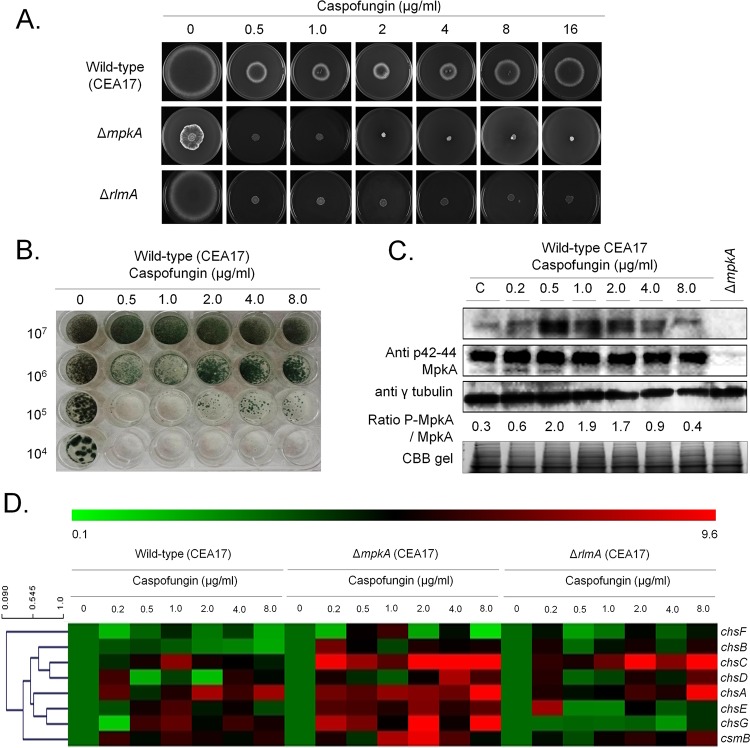
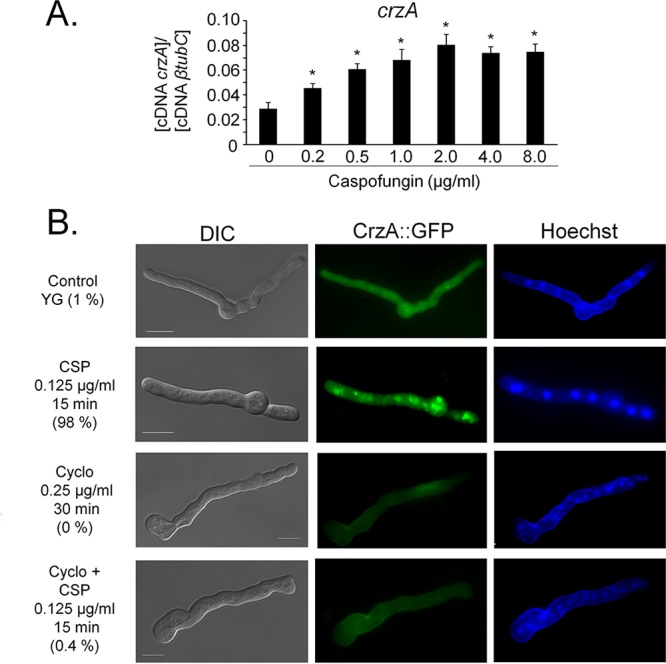
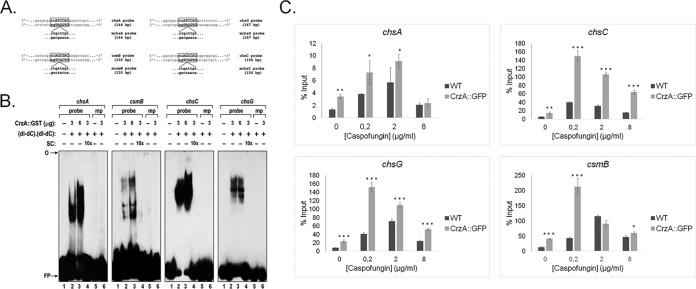
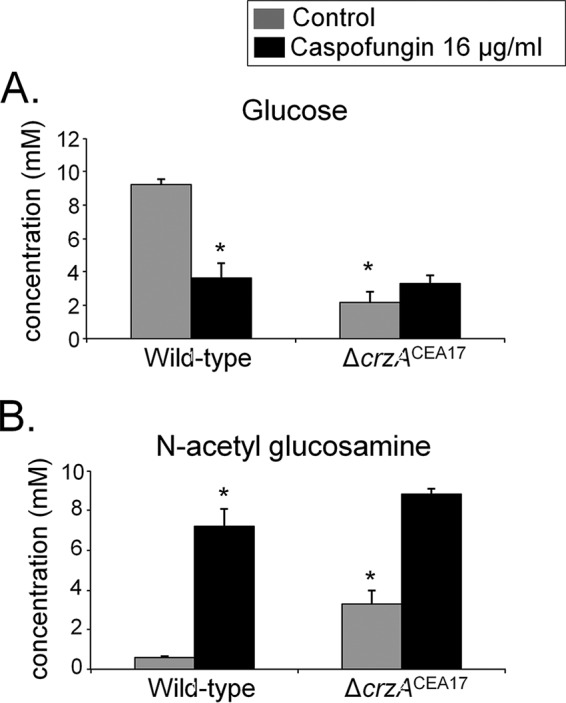
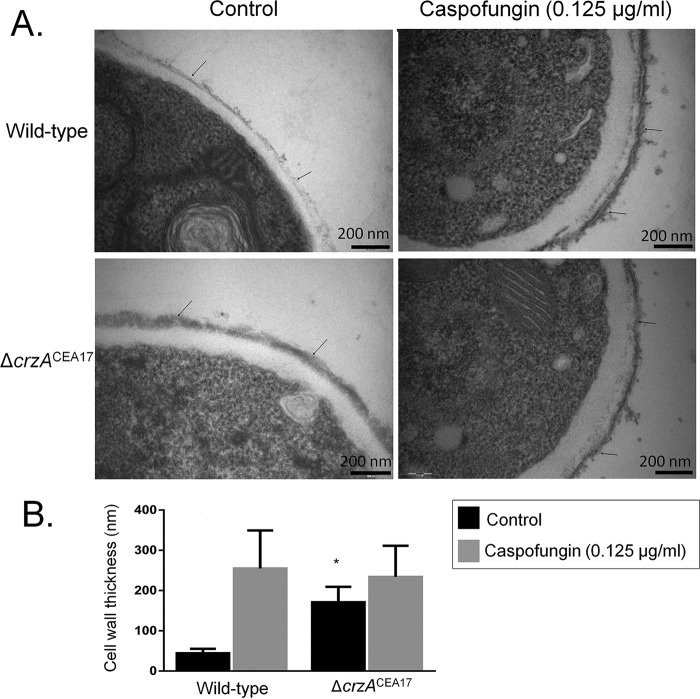
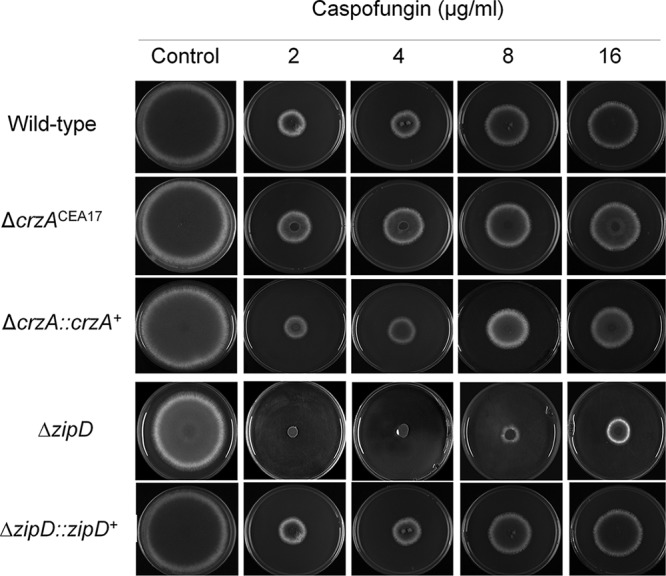
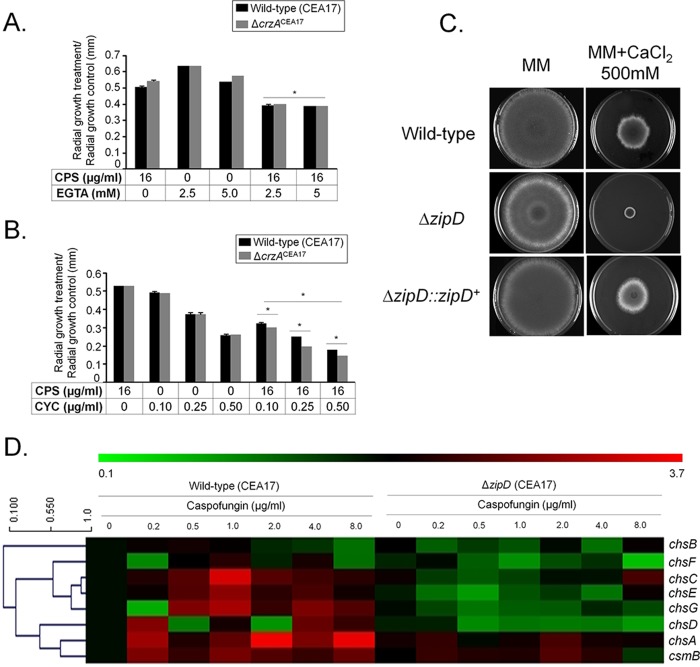
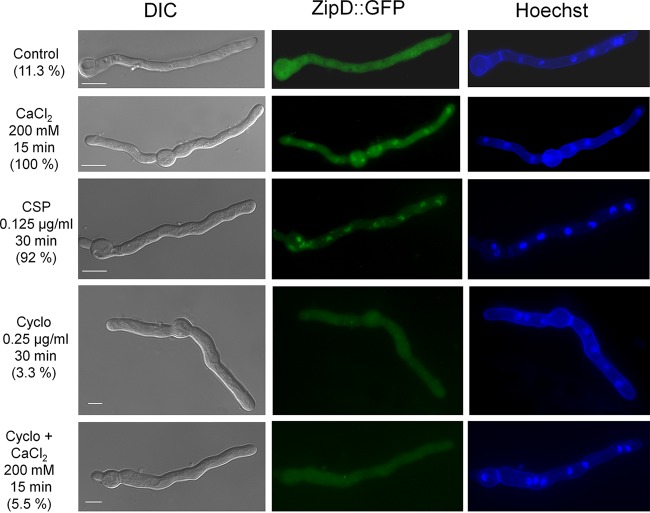
Aspergillus fumigatus is an opportunistic fungal pathogen that causes invasive aspergillosis (IA), a life-threatening disease in immunocompromised humans. The echinocandin caspofungin, adopted as a second-line therapy in combating IA, is a β-1,3-glucan synthase inhibitor, which, when used in high concentrations, reverts the anticipated A. fumigatus growth inhibition, a phenomenon called the “caspofungin paradoxical effect” (CPE). The CPE has been widely associated with increased chitin content in the cell wall due to a compensatory upregulation of chitin synthase-encoding genes. Here, we demonstrate that the CPE is dependent on the cell wall integrity (CWI) mitogen-activated protein kinase MpkA MPK1 and its associated transcription factor (TF) RlmA RLM1 , which regulate chitin synthase gene expression in response to different concentrations of caspofungin. Furthermore, the calcium- and calcineurin-dependent TF CrzA binds to and regulates the expression of specific chitin synthase genes during the CPE. These results suggest that the regulation of cell wall biosynthetic genes occurs by several cellular signaling pathways. In addition, CrzA is also involved in cell wall organization in the absence of caspofungin. Differences in the CPE were also observed between two A. fumigatus clinical isolates, which led to the identification of a novel basic leucine zipper TF, termed ZipD. This TF functions in the calcium-calcineurin pathway and is involved in the regulation of cell wall biosynthesis genes. This study therefore unraveled additional mechanisms and novel factors governing the CPE response, which ultimately could aid in developing more effective antifungal therapies. IMPORTANCE Systemic Aspergillus fumigatus infections are often accompanied by high mortality rates. The fungal cell wall is important for infection as it has immunomodulatory and immunoevasive properties. Paradoxical growth of A. fumigatus in the presence of high concentrations of the cell wall-disturbing agent caspofungin has been observed for more than a decade, although the mechanistic nature of this phenomenon remains largely uncharacterized. Here, we show that the CWI pathway components MpkA and RlmA as well as the calcium/calcineurin-responsive transcription factor CrzA regulate the expression of cell wall biosynthetic genes during the caspofungin paradoxical effect (CPE). Furthermore, an additional, novel calcium/calcineurin-responsive transcription factor was identified to play a role in cell wall biosynthesis gene expression during the CPE. This work paints a crucial role for calcium metabolism in the CPE and provides further insight into the complex regulation of cell wall biosynthesis, which could ultimately lead to the development of more efficient antifungal therapies.
Overview
The claims and statistics of this paper haven’t been checked yet.
Free: it reads the open-access text and checks the first 5 claims that cite a source we can check. Create a free account to check every claim.
Integrity signals
Registry
Cites
Statistics
Figures
Verification
Claims the paper makes
The claims and statistics of this paper haven’t been checked yet.
Free: it reads the open-access text and checks the first 5 claims that cite a source we can check. Create a free account to check every claim.
Claims other papers make about this one
Each is checked against this paper’s own text: does it say what the citing paper says it does?
In the citing paper
“The MpkA-RlmA-CWI pathway has been shown to be involved in the control of paradoxical growth (627).”
From Aspergillus fumigatus and Aspergillosis in 2019 (2019) · cites this paper as [627]
Self-check
Percentages, sums and reported differences re-computed from the paper’s own numbers.
The self-check needs the paper’s full text.
Citations
Cites
Analysis of Relative Gene Expression Data Using Real-Time Quantitative PCR and the 2−ΔΔCT Method
Livak, K. J., & Schmittgen, T. D. (2001) · Methods · doi:10.1006/meth.2001.1262 · Cited by 180,860 · cited 1×
“Three independent biological replicates were used, and the mRNA quantity relative fold change was calculated using the threshold cycle (2 ΔΔCT) method (42).”
NIH Image to ImageJ: 25 years of image analysis
Schneider, C. A., Rasband, W. S., & Eliceiri, K. W. (2012) · Nature Methods · doi:10.1038/nmeth.2089 · Cited by 64,638 · cited 2×
“Images were generated by exposing the PVDF membranes to the ChemiDoc XRS gel imaging system (Bio-Rad) and subjected to densitometric analysis in ImageJ software (40) to calculate the phosphorylated MAPK/total MAPK ratio.”
Hartree, E. F. (1972) · Analytical Biochemistry · doi:10.1016/0003-2697(72)90094-2 · Cited by 5,516 · cited 2×
“Proteins were extracted as described previously (19) and quantified according to the Lowry method modified by Hartree (39).”
Hidden Killers: Human Fungal Infections
Brown, G. D., Denning, D. W., Gow, N. A. R., Levitz, S. M., Netea, M. G., & White, T. C. (2012) · Science Translational Medicine · doi:10.1126/scitranslmed.3004404 · Cited by 4,284
Mutation of the mouse klotho gene leads to a syndrome resembling ageing
Kuro-o, M., Matsumura, Y., Aizawa, H., Kawaguchi, H., Suga, T., Utsugi, T., Ohyama, Y., Kurabayashi, M., Kaname, T., Kume, E., et al. (1997) · Nature · doi:10.1038/36285 · Cited by 3,837
Walsh, T. J., Anaissie, E. J., Denning, D. W., Herbrecht, R., Kontoyiannis, D. P., Marr, K. A., Morrison, V. A., Segal, B. H., Steinbach, W. J., Stevens, D. A., et al. (2008) · Clinical Infectious Diseases · doi:10.1086/525258 · Cited by 2,706
MEME: discovering and analyzing DNA and protein sequence motifs
Bailey, T. L., Williams, N., Misleh, C., & Li, W. W. (2006) · Nucleic Acids Research · doi:10.1093/nar/gkl198 · Cited by 2,670 · cited 1×
“were screened for potential TF binding sites using the MEME predictor (23) and the”
Quantifying similarity between motifs
Gupta, S., Stamatoyannopoulos, J. A., Bailey, T. L., & Noble, W. S. (2007) · Genome Biology · doi:10.1186/gb-2007-8-2-r24 · Cited by 2,058 · cited 1×
“To further investigate the processes governing the upregulation of the chitin synthase-encoding genes, the promoter regions of the eight chitin synthase-encoding genes were screened for potential TF binding sites using the MEME predictor (23) and the motif comparison tool TOM-TOM (24).”
Meiotic and Mitotic Recombination in Aspergillus and Its Chromosomal Aberrations
Käfer, E. (1977) · Advances in Genetics · doi:10.1016/s0065-2660(08)60245-x · Cited by 736 · cited 1×
“Trace elements, vitamins, and nitrate salt compositions were as described previously (38).”
Tackling Human Fungal Infections
Brown, G. D., Denning, D. W., & Levitz, S. M. (2012) · Science · doi:10.1126/science.1222236 · Cited by 619
Cited by
Aspergillus fumigatus and Aspergillosis in 2019
Latgé, J.-P., & Chamilos, G. (2019) · Clinical Microbiology Reviews · doi:10.1128/cmr.00140-18 · Cited by 1,400
The negative cofactor 2 complex is a key regulator of drug resistance in Aspergillus fumigatus
Furukawa, T., van Rhijn, N., Fraczek, M., Gsaller, F., Davies, E., Carr, P., Gago, S., Fortune-Grant, R., Rahman, S., Gilsenan, J. M., et al. (2020) · Nature Communications · doi:10.1038/s41467-019-14191-1 · Cited by 139
“Gat1p and Gln3p in S. cerevisiae ), however, they have not been associated with changes in azole resistance while orthologues of three (NctA, NctB and RscE) are essential for viability, and two (ZipD and AtrR) are absent in yeasts.”
BackgroundInfluentialEchinocandins for the treatment of invasive aspergillosis: from laboratory to bedside
Aruanno, M., Glampedakis, E., & Lamoth, F. (2019) · Antimicrobial Agents and Chemotherapy · doi:10.1128/aac.00399-19 · Cited by 136
“On the contrary, mpkA had a repressive effect on these genes but was also shown to positively impact the expression of other cell wall components, such as -1,3-glucan or -1,3-glucans (22, 32).”
BackgroundInfluentialChitin and chitosan remodeling defines vegetative development and Trichoderma biocontrol
Kappel, L., Münsterkötter, M., Sipos, G., Rodríguez, C. E., & Gruber, S. G. (2020) · PLoS Pathogens · doi:10.1371/journal.ppat.1008320 · Cited by 100
“fumigatus [76] Tachs are not transcriptionally activated upon treatment with the echinocandin Caspofungin, but interestingly cda transcription was affected (Fig 3A), indicating that the cell wall rigidity is changed due to deacetylation which might counteract the loss or decrease of β-1,3-glucan [72].”
BackgroundMitochondrial dysfunctions trigger the calcium signaling-dependent fungal multidrug resistance
Li, Y., Zhang, Y., Zhang, C., Wang, H., Wei, X., Chen, P., & Lu, L. (2020) · Proceedings of the National Academy of Sciences · doi:10.1073/pnas.1911560116 · Cited by 86
“In previous studies, it has been identified that the transcription factor CrzA was able to directly bind the promoters of chitin synthase genes and regulate the expression of these genes (48), but until now, there have not been any reports that the activation of calcium signaling could affect a series of multidrug tra…”
Background
Metadata
- Authors
- Ries, L. N. A., Rocha, M. C., de Castro, P. A., Silva-Rocha, R., Silva, R. N., Freitas, F. Z., de Assis, L. J., Bertolini, M. C., Malavazi, I., & Goldman, G. H.
- Affiliations
- Universidade de São Paulo (BR)
- Universidade Federal de São Carlos (BR)
- Faculdade de Ciências Farmacêuticas de Ribeirão Preto, Universidade de São Paulo, Ribeirão Preto, São Paulo, Brazil
- Faculdade de Medicina de Ribeirão Preto, Universidade de São Paulo, Ribeirão Preto, São Paulo, Brazil
- Universidade Estadual Paulista (Unesp) (BR)
- Corresponding author
- Malavazi, Iran
- Goldman, Gustavo H.
- ORCID
- Venue
- mBio
- Publisher
- American Society for Microbiology
- Published
- 2017-07-05
- Volume
- 8
- Issue
- 3
- ISSN
- 2150-7511 (ISSN-L)
- 2161-2129
- PMC
- PMC5472186
- OpenAlex
- W2625378674
- Cited by
- 76
- References
- 48
- Citations by year
- 2026: 13 · 2025: 3 · 2024: 12 · 2023: 6 · 2022: 6 · 2021: 6 · 2020: 14 · 2019: 11 · 2018: 3 · 2017: 2
- FWCI
- 3.35
- Type
- journal article
- Language
- en
- Open access
- gold
- doi.org
- Licence
- cc-by
- creativecommons.org/licenses/by/4.0/ (vor)
- journals.asm.org/non-commercial-tdm-license (tdm)
- Locations
- mBio (publishedVersion, cc-by)
- Europe PMC (PubMed Central) (publishedVersion, cc-by)
- PubMed Central (publishedVersion, cc-by)
- PubMed (publishedVersion)
- Americanae (AECID Library) (submittedVersion, other-oa)
- DOAJ (DOAJ: Directory of Open Access Journals) (submittedVersion)
- DOAJ (DOAJ: Directory of Open Access Journals) (submittedVersion, cc-by-sa)
- Figshare (submittedVersion, cc-by)
- Open Research Exeter (University of Exeter) (submittedVersion, cc-by)
- PEARL (University of Plymouth) (submittedVersion)
- LA Referencia (Red Federada de Repositorios Institucionales de Publicaciones Científicas) (submittedVersion, other-oa)
- UNESP Institutional Repository (São Paulo State University) (submittedVersion)
- Funders
- MCTI | Conselho Nacional de Desenvolvimento Científico e Tecnológico (302372/2014-8)
- Fundação de Amparo à Pesquisa do Estado de São Paulo (2012/23942-9, 2016/12948-7, 2013/22375-6, 2015/17541-0)
- Topics
- Life Sciences › Biochemistry, Genetics and Molecular Biology › Molecular Biology › Fungal and yeast genetics research
- Health Sciences › Medicine › Infectious Diseases › Antifungal resistance and susceptibility
- Health Sciences › Medicine › Infectious Diseases › Fungal Infections and Studies
- Keywords
- Aspergillus fumigatus, cell wall integrity pathway, bZIP transcription factors, cell wall biosynthesis, invasive aspergillosis, echinocandins
- MeSH terms
- Caspofungin, Aspergillosis, Aspergillus fumigatus, Cell Wall, Chitin, Chitin Synthase, Fungal Proteins, Transcription Factors, Signal Transduction, Gene Expression Regulation, Fungal, Mitogen-Activated Protein Kinase 1, Echinocandins, Lipopeptides
About these checks
Registry, retraction, Cites and statistics results are computed, not judged, with one exception: a printed reference that no index lists is read once by a model before it counts as a citation error. Claims are extracted by a model and kept only when their quote appears verbatim in the text; each cited source is then checked, with a model’s help, for whether it says what the claim relies on. Those verdicts can be wrong — read the claim’s quote and the cited source before relying on one.
Statistics and arithmetic are recomputed, not judged.
Confidence bands are shown only for fields calibrated on our annotated test set. None is calibrated yet, so no band is shown.
What counts as a claim ›How we measure confidence ›How we check this ›
Are you an author, or do you see a problem with this page? Request a review
How to cite
Cite CoChat for the checks on this page, and the paper for its own findings.
- This page
- CoChat. (2026). Citation check: The Aspergillus fumigatus CrzA Transcription Factor Activates Chitin Synthase Gene Expression during the Caspofungin Paradoxical Effect. https://app.cochat.ai/papers/10.1128/mbio.00705-17
- The paper
- Ries, L. N. A., Rocha, M. C., de Castro, P. A., Silva-Rocha, R., Silva, R. N., Freitas, F. Z., de Assis, L. J., Bertolini, M. C., Malavazi, I., & Goldman, G. H. (2017). The Aspergillus fumigatus CrzA Transcription Factor Activates Chitin Synthase Gene Expression during the Caspofungin Paradoxical Effect. mBio. https://doi.org/10.1128/mbio.00705-17
Data sources
Bibliographic data: Semantic Scholar, OpenAlex, Crossref.
Contains information from the Semantic Scholar Academic Graph Datasets, made available under the ODC Attribution License (ODC-BY 1.0).
Semantic Scholar’s data is described in: Kinney, R., et al. (2023). The Semantic Scholar Open Data Platform. arXiv:2301.10140.
