

Growth and Stress Tolerance Comprise Independent Metabolic Strategies Critical for Staphylococcus aureus Infection
Open accessThe DOI matches its Crossref record; 56 of the 56 references it cites were found in a registry or an index.
Abstract
Staphylococcus aureus is an important bacterial pathogen that causes significant morbidity and mortality, infecting numerous bodily sites, including the respiratory tract. To identify the bacterial requirements for lung infection, we conducted a genome-wide screen in a mouse model of acute pneumonia. We discovered that metabolic genes were overrepresented in those required for lung infection. In contrast to the conventional view of pathogenesis focusing on immunomodulation, we demonstrate through phenotyping of deletion mutants in several functional assays that replicative ability and tolerance against host defenses form two key metabolic dimensions of bacterial infection. These dimensions are independent for most pathways but are coupled in central carbon metabolism and highlight the critical role of bacterial metabolism in survival against host defenses during infection.
Overview
The claims and statistics of this paper haven’t been checked yet.
Free: it reads the open-access text and checks the first 5 claims that cite a source we can check. Create a free account to check every claim.
Integrity signals
Registry
Cites
Statistics
Figures
Verification
Claims the paper makes
The claims and statistics of this paper haven’t been checked yet.
Free: it reads the open-access text and checks the first 5 claims that cite a source we can check. Create a free account to check every claim.
Claims other papers make about this one
Each is checked against this paper’s own text: does it say what the citing paper says it does?
The cited source says what the claim attributes to it.
In the citing paper
“Additionally, central metabolism and TCA cycle function impact virulence factor production and infection (28,29).”
From The Staphylococcus aureus non-coding RNA IsrR regulates TCA cycle activity and virulence (2025) · cites this paper as [29]
Self-check
Percentages, sums and reported differences re-computed from the paper’s own numbers.
The self-check needs the paper’s full text.
Citations
Cites
Fast gapped-read alignment with Bowtie 2
Langmead, B., & Salzberg, S. L. (2012) · Nature Methods · doi:10.1038/nmeth.1923 · Cited by 56,400 · cited 1×
“aureus USA300 reference genome using Bowtie 2 (52).”
MethodCutadapt removes adapter sequences from high-throughput sequencing reads
Martin, M. (2011) · EMBnet.journal · doi:10.14806/ej.17.1.200 · Cited by 33,889 · cited 1×
“Cutadapt (51) was used to remove 39 nonspecific nucleotide reads, and sequences were filtered to remove any aberrant short (,20-nt) or long (.”
MethodAn Analysis of Transformations
Box, G. E. P., & Cox, D. R. (1964) · Journal of the Royal Statistical Society Series B: Statistical Methodology · doi:10.1111/j.2517-6161.1964.tb00553.x · Cited by 15,052 · cited 1×
“A Box-Cox transformation was then performed to transform these data into normal distributions for each assay (55).”
MethodThe COG database: an updated version includes eukaryotes
Tatusov, R. L., Fedorova, N. D., Jackson, J. D., Jacobs, A. R., Kiryutin, B., Koonin, E. V., Krylov, D. M., Mazumder, R., Mekhedov, S. L., Nikolskaya, A. N., et al. (2003) · BMC Bioinformatics · doi:10.1186/1471-2105-4-41 · Cited by 4,430 · cited 1×
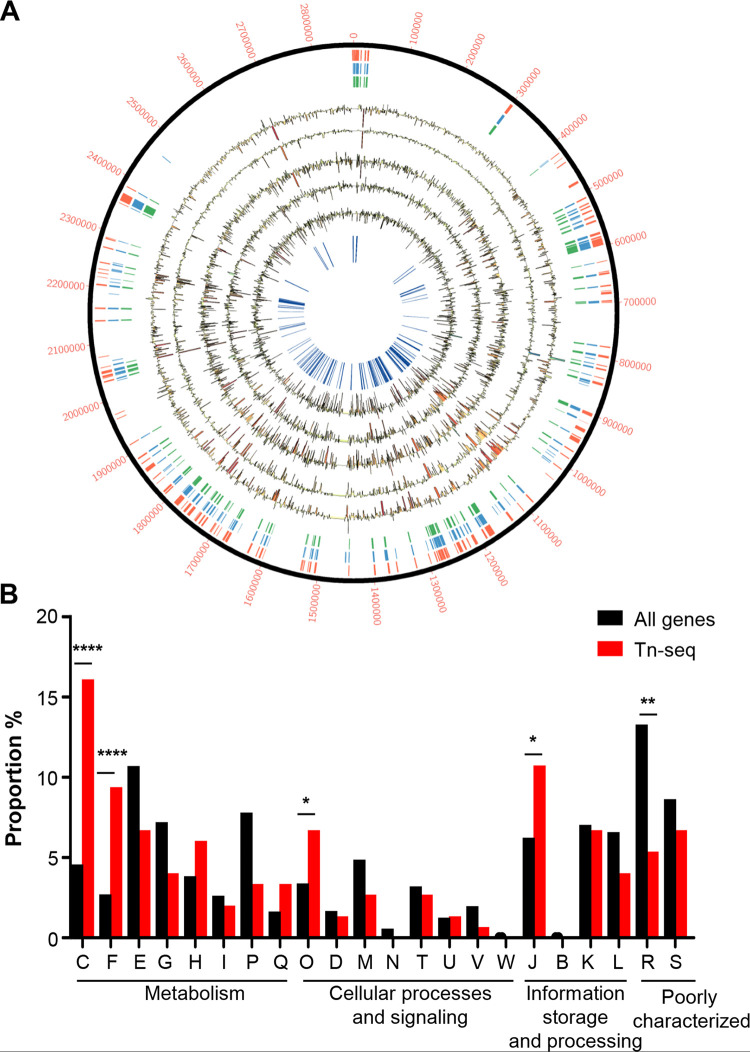
“Clusters of orthologous groups (COG) analysis (15) of these genes revealed significant enrichment in processes associated with energy production (16.”
BackgroundKlevens, R. M. (2007) · JAMA · doi:10.1001/jama.298.15.1763 · Cited by 3,726
Metsalu, T., & Vilo, J. (2015) · Nucleic Acids Research · doi:10.1093/nar/gkv468 · Cited by 3,709 · cited 1×
“Heatmaps were generated using ClustVis (56).”
The toxic shock syndrome exotoxin structural gene is not detectably transmitted by a prophage
Kreiswirth, B. N., Löfdahl, S., Betley, M. J., O'Reilly, M., Schlievert, P. M., Bergdoll, M. S., & Novick, R. P. (1983) · Nature · doi:10.1038/305709a0 · Cited by 1,326 · cited 1×
“The pLL39 episomes, including an empty vector, were individually transduced from RN4220 into the appropriate strain using bacteriophage 80a (49, 50).”
MethodImmune-responsive gene 1 protein links metabolism to immunity by catalyzing itaconic acid production
Michelucci, A., Cordes, T., Ghelfi, J., Pailot, A., Reiling, N., Goldmann, O., Binz, T., Wegner, A., Tallam, A., Rausell, A., et al. (2013) · Proceedings of the National Academy of Sciences · doi:10.1073/pnas.1218599110 · Cited by 1,191 · cited 1×
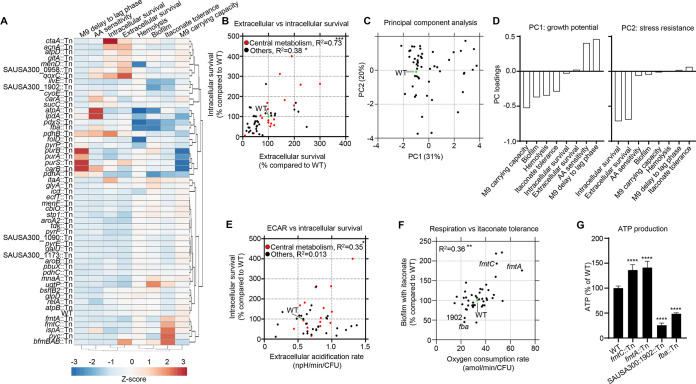
“We observed that at physiologically relevant concentrations (26), itaconate perturbed biofilm formation (Table 2 and Fig.”
BackgroundKEGG Mapper for inferring cellular functions from protein sequences
Kanehisa, M., & Sato, Y. (2020) · Protein Science · doi:10.1002/pro.3711 · Cited by 1,180 · cited 1×
“Consistent with the enrichment in energy and metabolism, a high proportion of our Tn-seq hits (41%) were already curated in Kyoto Encyclopedia of Genes and Genomes (KEGG) metabolic pathways (16); a high proportion of the conditionally essential genes were part of the tricarboxylic acid (TCA) cycle.”
BackgroundFey, P. D., Endres, J. L., Yajjala, V. K., Widhelm, T. J., Boissy, R. J., Bose, J. L., & Bayles, K. W. (2013) · mBio · doi:10.1128/mbio.00537-12 · Cited by 973 · cited 5×
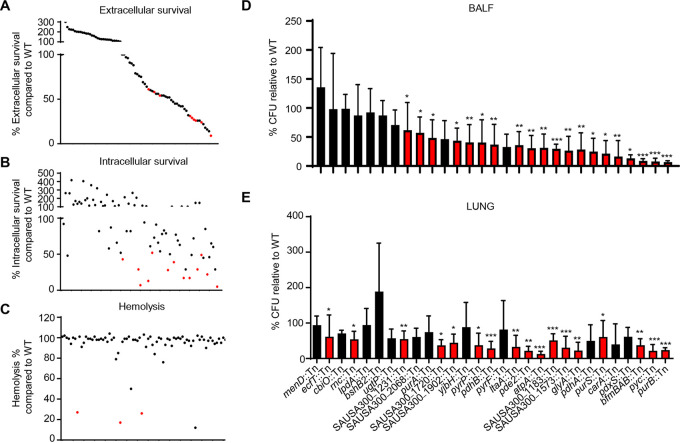
“aureus USA300 Nebraska transposon mutant library (NTML) (7, 8); we utilized these 80 mutants for our subsequent validation experiments.”
MethodInfluential
Cited by
Nucleotide biosynthesis: the base of bacterial pathogenesis
Goncheva, M. I., Chin, D., & Heinrichs, D. E. (2022) · Trends in Microbiology · doi:10.1016/j.tim.2021.12.007 · Cited by 153
DNA Repair in Staphylococcus aureus
Ha, K. P., & Edwards, A. M. (2021) · Microbiology and Molecular Biology Reviews · doi:10.1128/mmbr.00091-21 · Cited by 74
Impact of the pentose phosphate pathway on metabolism and pathogenesis of Staphylococcus aureus
Kim, J., Kim, G. L., Norambuena, J., Boyd, J. M., & Parker, D. (2023) · PLoS Pathogens · doi:10.1371/journal.ppat.1011531 · Cited by 44
Self-citationStaphylococcus aureus SOS response: Activation, impact, and drug targets
Cheng, K., Sun, Y., Yu, H., Hu, Y., He, Y., & Shen, Y. (2024) · mLife · doi:10.1002/mlf2.12137 · Cited by 29
“These experiments revealed that mutants lacking various DNA repair proteins, such as RexA, RexB, RecF, RecN, RecO, or RecF, were unable to survive in murine skin, soft tissue, or murine lung infection models 37,38 .”
BackgroundThe Staphylococcus aureus non-coding RNA IsrR regulates TCA cycle activity and virulence
Rios-Delgado, G., McReynolds, A. K. G., Pagella, E. A., Norambuena, J., Briaud, P., Zheng, V., Munneke, M. J., Kim, J., Racine, H., Carroll, R. K., et al. (2025) · Nucleic Acids Research · doi:10.1093/nar/gkae1243 · Cited by 27
“Additionally, central metabolism and TCA cycle function impact virulence factor production and infection ( 28 ,29 ).”
Self-citationO’Connor, M. J., Bartler, A. V., Ho, K. C., Zhang, K. L., Fuentes, R. J. C., Melnick, B. A., Huffman, K., Hong, S. J., & Galiano, R. D. (2024) · Wound Repair and Regeneration · doi:10.1111/wrr.13192 · Cited by 18
“44 A mutant version of this gene was utilised to evaluate its role in critical pathogenic activities such as biofilm formation.”
Zou, H., Shen, Y., Li, C., & Li, Q. (2022) · Infection and Drug Resistance · doi:10.2147/idr.s343292 · Cited by 18
“a connection between growth and resistance to host cell killing.(27) Nuxoll had found that CcpA regulates arginine biosynthesis in Staphylococcus aureus through repression of proline catabolism and a mutation in argH (arginine”
BackgroundLi, G., Shen, W., Gong, Y., Li, M., Rao, X., Liu, Q., Yu, Y., Zhou, J., Zhu, K., Yuan, M., et al. (2022) · mSystems · doi:10.1128/msystems.00338-22 · Cited by 21
Shields, K. E., Ranava, D., Tan, Y., Zhang, D., & Yap, M.-N. F. (2024) · PLoS Pathogens · doi:10.1371/journal.ppat.1011968 · Cited by 17
“…on the protein yield from transcripts that were identified from Ribo-seq, we performed Western blotting on selected virulence factors, SdrE [71], Nuc2 [72], Asp23 [73], SpA [74], YwlG [75] and SasG [76], to measure steady-state protein levels in both ErmB-proficient and ErmB-deficient S . aureus .”
Chen, F., Zhao, Q., Yang, Z., Chen, R., Pan, H., Wang, Y., Liu, H., Cao, Q., Gan, J., Liu, X., et al. (2024) · PLoS Pathogens · doi:10.1371/journal.ppat.1012425 · Cited by 17
Paudel, S., Guedry, S., Obernuefemann, C. L. P., Hultgren, S. J., Walker, J. N., & Kulkarni, R. (2023) · Microbiology Spectrum · doi:10.1128/spectrum.05365-22 · Cited by 17
“cal membrane fluidity (18), and the production of staphylococcal protein A (19), while”
BackgroundZhu, Q., Lin, Q., Jiang, Y., Chen, S., Tian, J., Yang, S., Li, Y., Li, M., Wang, Y., Shen, C., et al. (2023) · Applied and Environmental Microbiology · doi:10.1128/aem.00956-23 · Cited by 13
Nogales, J., & Garmendia, J. (2021) · Microbial Biotechnology · doi:10.1111/1751-7915.13942 · Cited by 12
“and pyrimidine metabolism) as important for bacterial survival during infection (Kim et al., 2021).”
BackgroundMonocyte-regulated interleukin 12 production drives clearance of Staphylococcus aureus
Peignier, A., Kim, J., Lemenze, A. D., & Parker, D. (2024) · PLoS Pathogens · doi:10.1371/journal.ppat.1012648 · Cited by 11
“Female and male C57BL/6J WT or CCR2-DTR mice [32], 6 to 8 weeks old, were intranasally infected with 3 x 10 7 colony-forming units (CFUs) of S . aureus as previously described [72].”
MethodSelf-citationSun, H., Li, X., Yang, X., Qin, J., Liu, Y., Zheng, Y., Wang, Q., Liu, R., Sun, H., Chen, X., et al. (2025) · Nature Communications · doi:10.1038/s41467-025-57850-2 · Cited by 13
Ranava, D., Scheidler, C. M., Pfanzelt, M., Fiedler, M. K., Sieber, S. A., Schneider, S., & Yap, M.-N. F. (2022) · Proceedings of the National Academy of Sciences · doi:10.1073/pnas.2207257119 · Cited by 10
Mai, Z., Li, J., Zhan, Z., Tian, X., Hou, W., He, M., & Shi, C. (2025) · Foods · doi:10.3390/foods14152566 · Cited by 9
“Moreover, the pycA mutant displayed increased susceptibility to macrophage-mediated clearance [12].”
Camus, L., Franz, J., Gerlach, D., Lange, A., Power, J. J., Navarro-Díaz, M., Rapp, J., Otto, M., Klages, L. J., Starostin, V., et al. (2025) · bioRxiv (Cold Spring Harbor Laboratory) · doi:10.1101/2025.05.06.651429 · Cited by 7
“Additionally, tyrA transposon mutants did not show reduced potential for causing infections 34–37 or proliferating in the blood or cystic-fibrosis lung sputum 38,39 .”
Cai, J., Zhou, M., Zhang, Y., Ma, Y., Zhang, Y., & Wang, Q. (2023) · Applied Microbiology and Biotechnology · doi:10.1007/s00253-023-12376-9 · Cited by 6
Fouts, D. E., Clarke, T. H., Brown, A. N., Ottosen, E. N., Holmes, C. L., Moricz, B. S., Mason, S., Sinha, R., Severin, G. B., Anderson, M. T., et al. (2025) · mBio · doi:10.1128/mbio.01988-25 · Cited by 6
Schneider, N. O., Gilreath, K. M., Henriksen, N. M., Donaldson, W. A., Chaudhury, S., & Maurice, M. S. (2024) · ACS Medicinal Chemistry Letters · doi:10.1021/acsmedchemlett.4c00183 · Cited by 5
“10,11 .”
Jiang, M., Li, Y., Sun, B., Xu, S., Pan, T. S., & Li, Y. (2022) · Genes & Genomics · doi:10.1007/s13258-022-01352-8 · Cited by 5
“The standard virulence evolution theory assumes that virulence factors are maintained because of increasing bacterial growth within hosts and that growth influences key traits important for in vivo infection (Brown et al. 2012; Kim et al. 2021).”
BackgroundSamarasinghe, A. E., Randell, S. H., Kulkarni, H. S., Weiser, J. N., Quinton, L. J., Dickson, R. P., Mizgerd, J. P., Orihuela, C. J., Parker, D., Robinson, K. M., et al. (2025) · American Journal of Respiratory Cell and Molecular Biology · doi:10.1165/rcmb.2025-0322st · Cited by 4
“Gene products important in S. aureus pathogenesis can be screened (131) using available transposon libraries (132).”
Self-citationMetabolic responses to Staphylococcus aureus airway infection
Bünsow, D., & Winstel, V. (2025) · American Journal of Physiology-Cell Physiology · doi:10.1152/ajpcell.00612.2025 · Cited by 2
Gene dependence during mammalian Acinetobacter baumannii pneumonia and septicaemia infections
Morris, F. C., Short, F. L., Kostoulias, X., Nethercott, C., Fu, Y., Jiang, Y., Smallman, T. R., Yu, Y., Paulsen, I. T., Boyce, J. D., et al. (2025) · Microbial Genomics · doi:10.1099/mgen.0.001556 · Cited by 2
Yousief, S. W., Abdelmalek, N., Bojer, M. S., Ma, Y., Guerra, P. R., Nisar, S., Olsen, J. E., & Paglietti, B. (2025) · iScience · doi:10.1016/j.isci.2025.114261 · Cited by 2
“24 By requiring concordant significance in both contrasts (IO ∩ CO) and enforcing logCPM/coverage and replicate-stability filters, we remove CO-only and IO-only artifacts and mitigate bias from the standardized, replicate outgrowth control.”
Scaffidi, S. J., Zhang, R., Jia, Y., & Yu, W. (2026) · Journal of Bacteriology · doi:10.1128/jb.00523-25 · Cited by 2
“In our study, we observed that the expression of spa is severely downregulated in JE2 yjbH::Tn , which is consistent with an earlier report (108).”
Alreshidi, M. M., Dunstan, H., Roberts, T. K., Alreshidi, F. S., Hossain, A., Bardakçi, F., Snoussi, M., Badraoui, R., Adnan, M., Alouffi, S., et al. (2023) · Biomolecules and Biomedicine · doi:10.17305/bb.2023.9246 · Cited by 2
“It has been demonstrated that variations of the core genome within S. aureus strains can have major effects on the virulence, replications and adaptations, as well as metabolism of these strains [27–29].”
BackgroundMoulding, P. B., Flannagan, R. S., Wong, J., Martín-Cámara, O., Soliman, A. M., Martín‐Santamaría, S., Elhenawy, W., Heinrichs, D. E., & El-Halfawy, O. M. (2024) · bioRxiv (Cold Spring Harbor Laboratory) · doi:10.1101/2024.10.18.618978 · Cited by 2
Recent advances in small molecular inhibitors of pyruvate carboxylase for human diseases
Guo, W., Liu, D., Chen, Y., Ma, B., Yuan, F., Li, H., Dai, F., Hu, Y., & Chen, Y. (2025) · Bioorganic Chemistry · doi:10.1016/j.bioorg.2025.108658 · Cited by 1
Grzelak, J., Yoon, J.-Y., Bueso-Inchausti, I., Cloeren, A., & Ginebra, M. (2026) · Nano Today · doi:10.1016/j.nantod.2026.103047 · Cited by 1
Pyruvate carboxylase is critical for biofilm formation in Mycobacterium tuberculosis
Singh, S., Sharma, S., & Kumar, A. (2026) · npj Biofilms and Microbiomes · doi:10.1038/s41522-026-01044-1 · Cited by 1
“It has also been shown to be involved in pathogenesis and required for intracellular survival 42 .”
Arsheewa, W., Samosornsuk, S., Khattiyawech, C., Jai-nhuknan, J., Khumdee, P., & Samosornsuk, W. (2023) · Journal of Associated Medical Sciences · doi:10.12982/jams.2023.055
Gluconeogenesis plays a critical role in mycobacterial biofilm formationPreprint
Singh, S., Bajeli, S., & Kumar, A. (2025) · bioRxiv (Cold Spring Harbor Laboratory) · doi:10.1101/2025.03.01.640511
O'Connor, L. D., Bhagat, S., Roghati, N., Mbalaviele, G., Cassat, J. E., & Novack, D. V. (2026) · bioRxiv (Cold Spring Harbor Laboratory) · doi:10.64898/2026.03.18.712565
“Previous studies have shown pyk, pdhA, and acnA are important for growth even in liquid culture conditions (63, 69, 70).”
Abdelmalek, N., Yousief, S. W., Bojer, M. S., Olsen, J., Rubino, S., & Paglietti, B. (2026) · Microbiology Spectrum · doi:10.1128/spectrum.03585-25
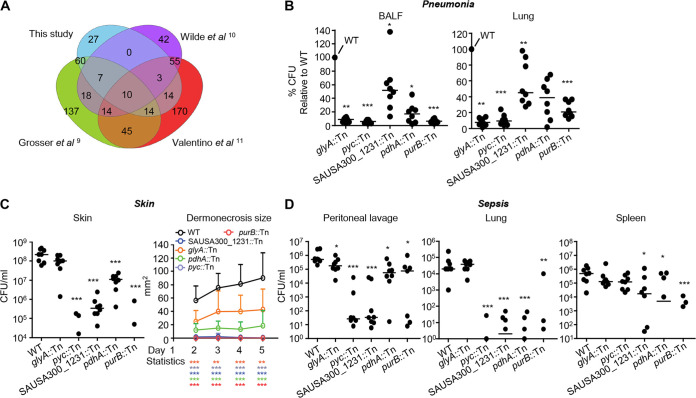
“…in our screen, including pyc , SAUSA300_1231 , lgt , lspA , msrR , srtA , gpmA , mntABC , cntE , stp1, cymR, and isaA , have previously been validated in animal models of systemic infection or proposed as immunotherapeutic targets, highlighting the biological relevance of our findings (15, 29–36).”
O'Connor, L. D. (2026) · Digital Commons@Becker (Washington University School of Medicine) · doi:10.48765/4048-rk76
Genome-Wide Fitness Signatures of MRSA Across Skin, Systemic, and Blood Infections
Yousief, S. W. (n.d.) · UnissResearch (Università degli Studi di Sassari)
Jabin, A. (2026) · e-Publications@Marquette (Marquette University)
Tian, J., Wu, Q., Yang, C., Zhang, X., Liu, X., & Wang, W. (2026) · Acta Biomaterialia · doi:10.1016/j.actbio.2026.10.038
Multi-Omics Approach to Understand Bacterial Metabolism
Pahil, S., Kaur, S. D., Kundu, J., Joshi, H., & Singhal, K. (2026) · Springer eBooks · doi:10.1007/978-3-032-30306-6_12
Metadata
- Authors
- Kim, G.-L., Hooven, T. A., Norambuena, J., Li, B., Boyd, J. M., Yang, J. H., & Parker, D.
- Affiliations
- Rutgers New Jersey Medical School (US)
- University of Pittsburgh (US)
- Rutgers, The State University of New Jersey (US)
- Corresponding author
- Parker, Dane
- ORCID
- Venue
- mBio
- Publisher
- American Society for Microbiology
- Published
- 2021-06-29
- Volume
- 12
- Issue
- 3
- Pages
- e0081421-e0081421
- ISSN
- 2150-7511 (ISSN-L)
- PMC
- PMC8262855
- OpenAlex
- W3167702267
- Cited by
- 38
- References
- 56
- Citations by year
- 2026: 5 · 2025: 11 · 2024: 8 · 2023: 6 · 2022: 6 · 2021: 2
- FWCI
- 1.74
- Type
- journal article
- Language
- en
- Open access
- gold
- doi.org
- Licence
- cc-by
- creativecommons.org/licenses/by/4.0/ (vor)
- journals.asm.org/non-commercial-tdm-license (tdm)
- Locations
- mBio (publishedVersion, cc-by)
- PubMed Central (publishedVersion, cc-by)
- PubMed (publishedVersion)
- DOAJ (DOAJ: Directory of Open Access Journals) (submittedVersion, cc-by-sa)
- Funders
- HHS | National Institutes of Health (R01HL134870, R00GM118907, R01AI146194)
- New Jersey Health Foundation (PC 62-19)
- HHS | NIH | NIH Office of the Director (R01AI139100)
- NIH (K08AI132555 and R21AI147511)
- Topics
- Health Sciences › Medicine › Infectious Diseases › Antimicrobial Resistance in Staphylococcus
- Life Sciences › Biochemistry, Genetics and Molecular Biology › Genetics › Bacterial Genetics and Biotechnology
- Life Sciences › Biochemistry, Genetics and Molecular Biology › Molecular Biology › Bacterial biofilms and quorum sensing
- Keywords
- Staphylococcus aureus, bacterial metabolism, pulmonary infection, acute pneumonia, stress tolerance, bacterial growth, host defense, central carbon metabolism, genome-wide deletion screen, respiratory infections, bacterial pathogenesis
- MeSH terms
- Acute Disease, Animals, Disease Models, Animal, DNA Transposable Elements, Mice, Inbred C57BL, Staphylococcal Infections, Staphylococcus aureus, Stress, Physiological, Virulence, Gene Expression Regulation, Bacterial, Sequence Analysis, DNA, Pneumonia, Bacterial, Biofilms, Virulence Factors, Mice, Host-Pathogen Interactions
About these checks
Registry, retraction, Cites and statistics results are computed, not judged, with one exception: a printed reference that no index lists is read once by a model before it counts as a citation error. Claims are extracted by a model and kept only when their quote appears verbatim in the text; each cited source is then checked, with a model’s help, for whether it says what the claim relies on. Those verdicts can be wrong — read the claim’s quote and the cited source before relying on one.
Statistics and arithmetic are recomputed, not judged.
Confidence bands are shown only for fields calibrated on our annotated test set. None is calibrated yet, so no band is shown.
What counts as a claim ›How we measure confidence ›How we check this ›
Are you an author, or do you see a problem with this page? Request a review
Data sources
Bibliographic data: Semantic Scholar, OpenAlex, Crossref.
Contains information from the Semantic Scholar Academic Graph Datasets, made available under the ODC Attribution License (ODC-BY 1.0).
Semantic Scholar’s data is described in: Kinney, R., et al. (2023). The Semantic Scholar Open Data Platform. arXiv:2301.10140.
