

Invasion of the Central Nervous System by Cryptococcus neoformans Requires a Secreted Fungal Metalloprotease
Open accessThe DOI matches its Crossref record; 60 of the 60 references it cites were found in a registry or an index.
Abstract
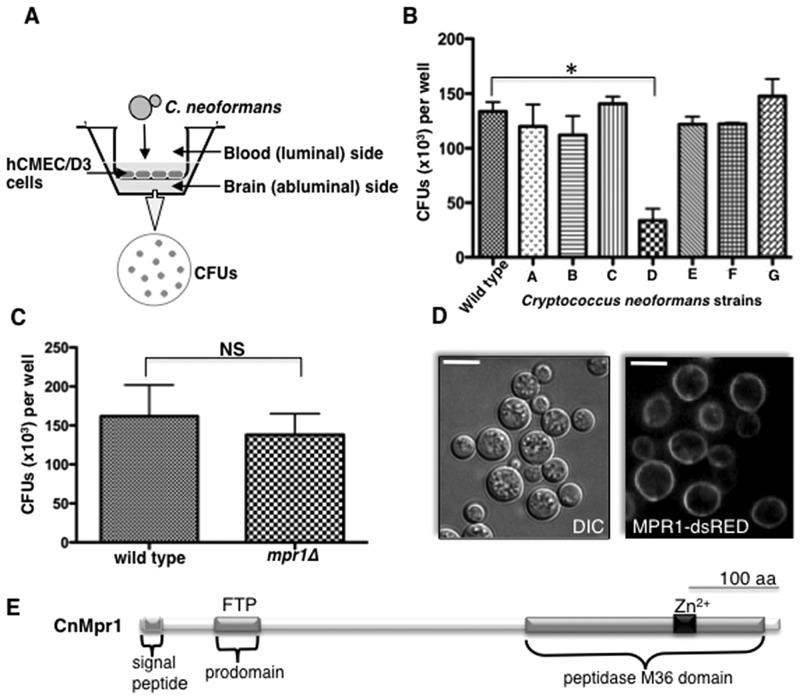
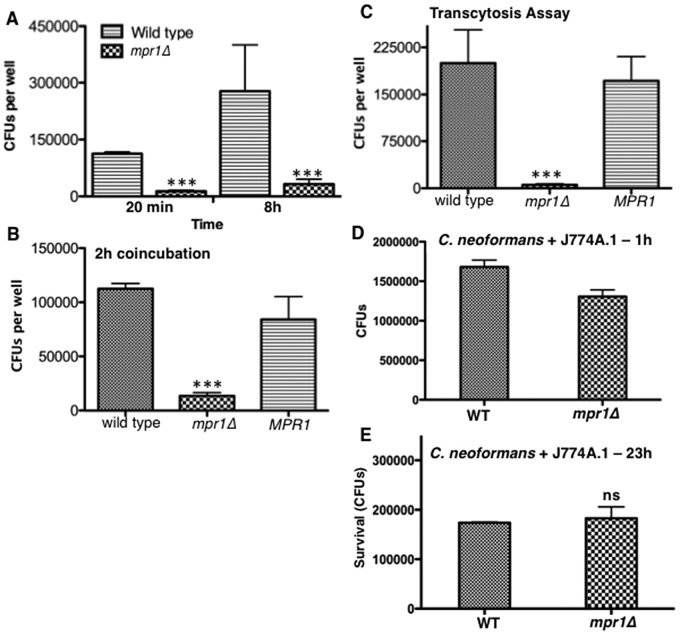
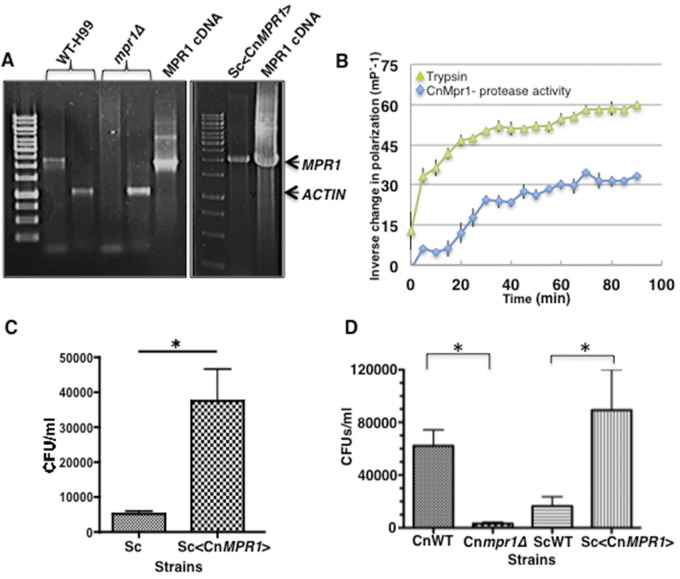
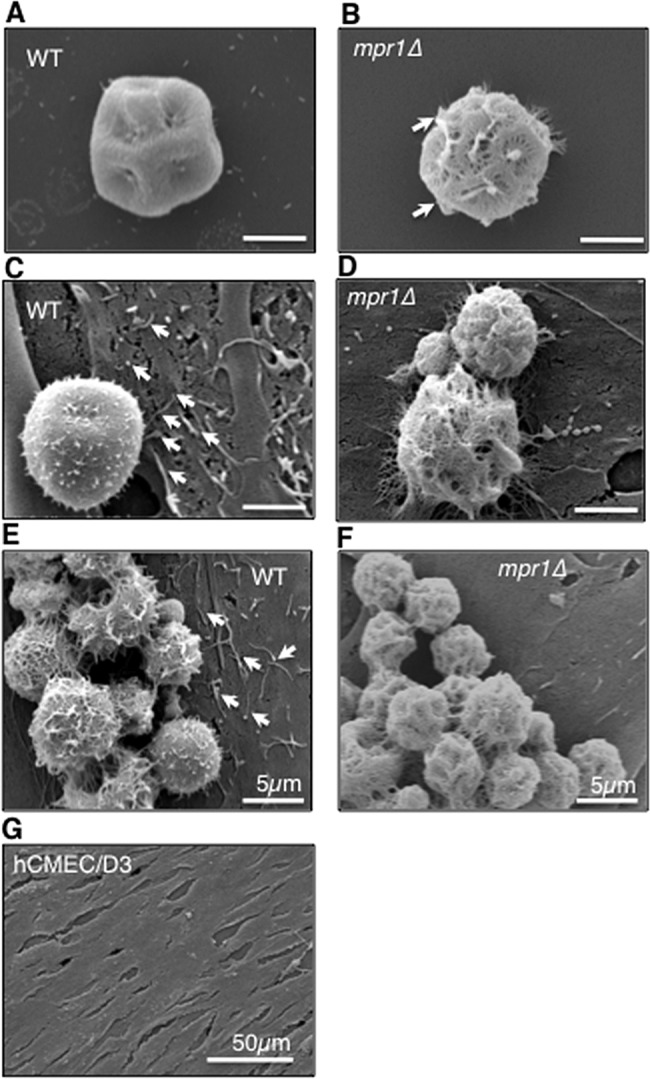
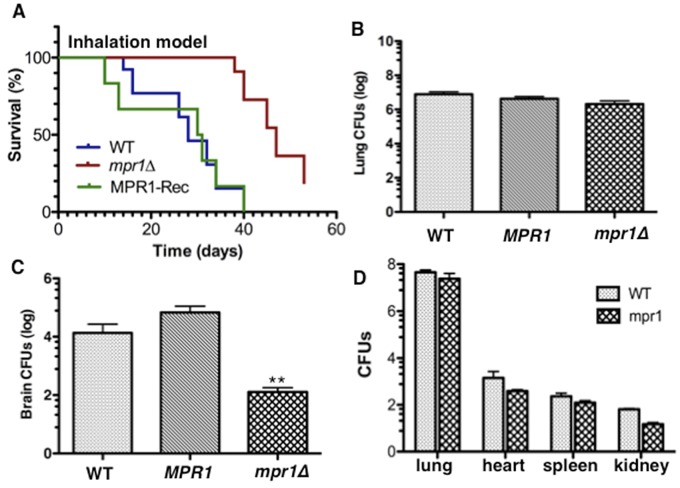
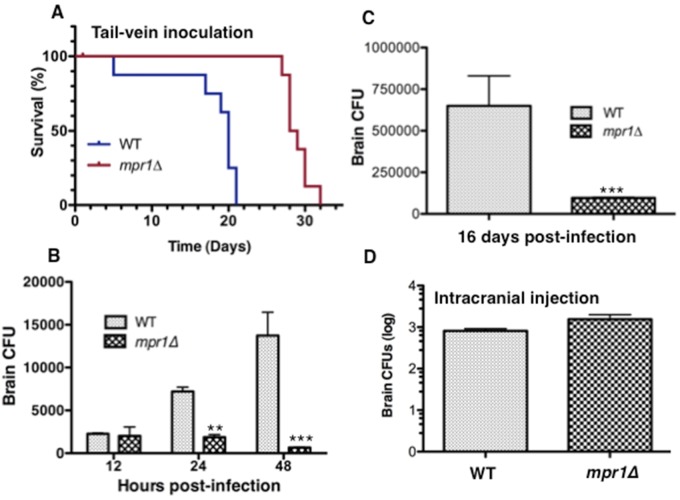
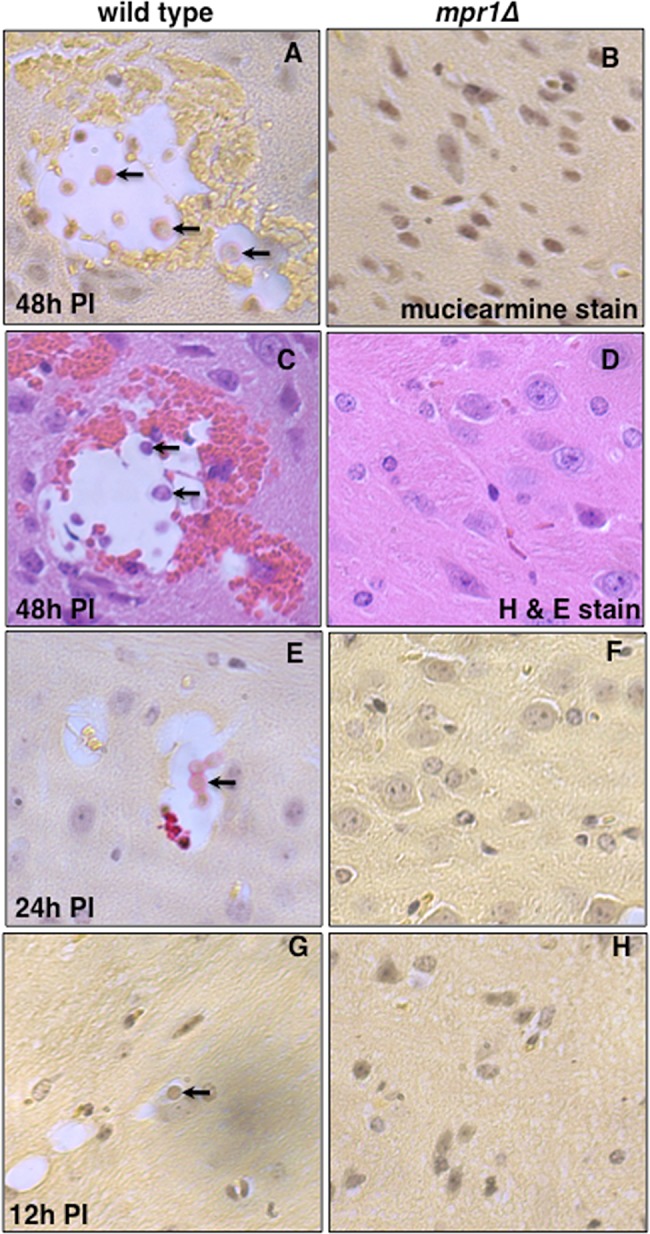
Cryptococcus spp. cause life-threatening fungal infection of the central nervous system (CNS), predominantly in patients with a compromised immune system. Why Cryptococcus neoformans has this remarkable tropism for the CNS is not clear. Recent research on cerebral pathogenesis of C. neoformans revealed a predominantly transcellular migration of cryptococci across the brain endothelium; however, the identities of key fungal virulence factors that function specifically to invade the CNS remain unresolved. Here we found that a novel, secreted metalloprotease (Mpr1) that we identified in the extracellular proteome of C. neoformans (CnMpr1) is required for establishing fungal disease in the CNS. Mpr1 belongs to a poorly characterized M36 class of fungalysins that are expressed in only some fungal species. A strain of C. neoformans lacking the gene encoding Mpr1 ( mpr1Δ ) failed to breach the endothelium in an in vitro model of the human blood-brain barrier (BBB). A mammalian host infected with the mpr1Δ null strain demonstrated significant improvement in survival due to a reduced brain fungal burden and lacked the brain pathology commonly associated with cryptococcal disease. The in vivo studies further indicate that Mpr1 is not required for fungal dissemination and Mpr1 likely targets the brain endothelium specifically. Remarkably, the sole expression of Cn MPR1 in Saccharomyces cerevisiae resulted in a robust migration of yeast cells across the brain endothelium, demonstrating Mpr1’s specific activity in breaching the BBB and suggesting that Mpr1 may function independently of the hyaluronic acid-CD44 pathway. This distinct role for Mpr1 may develop into innovative treatment options and facilitate a brain-specific drug delivery platform. IMPORTANCE Cryptococcus neoformans is a medically relevant fungal pathogen causing significant morbidity and mortality, particularly in immunocompromised individuals. An intriguing feature is its strong neurotropism, and consequently the hallmark of cryptococcal disease is a brain infection, cryptococcal meningoencephalitis. For C. neoformans to penetrate the central nervous system (CNS), it first breaches the blood-brain barrier via a transcellular pathway; however, the identities of fungal factors required for this transmigration remain largely unknown. In an effort to identify extracellular fungal proteins that could mediate interactions with the brain endothelium, we undertook a proteomic analysis of the extracellular proteome and identified a secreted metalloprotease (Mpr1) belonging to the M36 class of fungalysins. Here we found that Mpr1 promotes migration of C. neoformans across the brain endothelium and into the CNS by facilitating attachment of cryptococci to the endothelium surface, thus underscoring the critical role of M36 proteases in fungal pathogenesis.
Overview
The claims and statistics of this paper haven’t been checked yet.
Free: it reads the open-access text and checks the first 5 claims that cite a source we can check. Create a free account to check every claim.
Integrity signals
Registry
Cites
Statistics
Figures
Verification
Claims the paper makes
The claims and statistics of this paper haven’t been checked yet.
Free: it reads the open-access text and checks the first 5 claims that cite a source we can check. Create a free account to check every claim.
Claims other papers make about this one
Each is checked against this paper’s own text: does it say what the citing paper says it does?
The cited source says what the claim attributes to it.
In the citing paper
“C. neoformans further promotes its adherence to endothelial cells through expression of the metalloprotease Mpr1 [151, 152].”
From Mechanisms of fungal dissemination (2021) · cites this paper as [151]
The cited source says what the claim attributes to it.
In the citing paper
“To complement histology and intravital microscopy, colony forming unit (CFU) determination has been used to study fungal dissemination in vivo [139, 141, 145, 151].”
From Mechanisms of fungal dissemination (2021) · cites this paper as [151]
Self-check
Percentages, sums and reported differences re-computed from the paper’s own numbers.
The self-check needs the paper’s full text.
Citations
Cites
Park, B. J., Wannemuehler, K. A., Marston, B. J., Govender, N., Pappas, P. G., & Chiller, T. M. (2009) · AIDS · doi:10.1097/qad.0b013e328322ffac · Cited by 2,014
Blood‐brain barrier‐specific properties of a human adult brain endothelial cell line
Weksler, B. B., Subileau, E. A., Perrière, N., Charneau, P., Holloway, K., Leveque, M., Tricoire‐Leignel, H., Nicotra, A., Bourdoulous, S., Turowski, P., et al. (2005) · The FASEB Journal · doi:10.1096/fj.04-3458fje · Cited by 1,330
The Blood-Brain Barrier in Brain Homeostasis and Neurological Diseases
Weiss, N., Miller, F., Cazaubon, S., & Couraud, P.-O. (2009) · Biochimica et Biophysica Acta (BBA) - Biomembranes · doi:10.1016/j.bbamem.2008.10.022 · Cited by 731
Fluorescein isothiocyanate-labeled casein assay for proteolytic enzymes
Twining, S. S. (1984) · Analytical Biochemistry · doi:10.1016/0003-2697(84)90553-0 · Cited by 572
Mechanisms of microbial traversal of the blood–brain barrier
Kim, K. S. (2008) · Nature Reviews Microbiology · doi:10.1038/nrmicro1952 · Cited by 466
Evidence of a Role for Monocytes in Dissemination and Brain Invasion by Cryptococcus neoformans
Charlier, C., Nielsen, K., Daou, S., Brigitte, M., Chretien, F., & Dromer, F. (2009) · Infection and Immunity · doi:10.1128/iai.01065-08 · Cited by 362 · cited 1×
“In our murine studies, at the time of death, some cryptococcal cells could be detected in brains from mpr1 straininfected mice, indicating that other virulence factors (and other mechanisms, such as “Trojan horse”: phagocyte-associated invasion) may be involved in promoting CNS fungal disease (11, 20).”
BackgroundExtracellular phospholipase activity is a virulence factor for Cryptococcus neoformans
Cox, G. M., McDade, H. C., Chen, S. C. A., Tucker, S. C., Gottfredsson, M., Wright, L. C., Sorrell, T. C., Leidich, S. D., Casadevall, A., Ghannoum, M. A., et al. (2001) · Molecular Microbiology · doi:10.1046/j.1365-2958.2001.02236.x · Cited by 362
Spores as Infectious Propagules of Cryptococcus neoformans
Velagapudi, R., Hsueh, Y.-P., Geunes-Boyer, S., Wright, J. R., & Heitman, J. (2009) · Infection and Immunity · doi:10.1128/iai.00542-09 · Cited by 327
Olszewski, M. A., Noverr, M. C., Chen, G.-H., Toews, G. B., Cox, G. M., Perfect, J. R., & Huffnagle, G. B. (2004) · The American Journal of Pathology · doi:10.1016/s0002-9440(10)63734-0 · Cited by 289
Chang, Y. C., Stins, M. F., McCaffery, M. J., Miller, G. F., Pare, D. R., Dam, T., Paul-Satyasee, M., Kim, K. S., & Kwon-Chung, K. J. (2004) · Infection and Immunity · doi:10.1128/iai.72.9.4985-4995.2004 · Cited by 278
Cited by
Cryptococcus: from environmental saprophyte to global pathogen
May, R. C., Stone, N. R. H., Wiesner, D. L., Bicanic, T., & Nielsen, K. (2016) · Nature Reviews Microbiology · doi:10.1038/nrmicro.2015.6 · Cited by 541
The pathobiology of human fungal infections
Brown, G. D., Ballou, E. R., Bates, S., Bignell, E., Borman, A. M., Brand, A., Brown, A. J. P., Coelho, C., Cook, P. C., Farrer, R. A., et al. (2024) · Nature Reviews Microbiology · doi:10.1038/s41579-024-01062-w · Cited by 210
Proteases and protease inhibitors in infectious diseases
Agbowuro, A. A., Huston, W. M., Gamble, A. B., & Tyndall, J. D. A. (2018) · Medicinal Research Reviews · doi:10.1002/med.21475 · Cited by 186
Kim, J., Lee, K.-T., Lee, J. S., Shin, J., Cui, B., Yang, K., Choi, Y. S., Choi, N., Lee, S. H., Lee, J.-H., et al. (2021) · Nature Biomedical Engineering · doi:10.1038/s41551-021-00743-8 · Cited by 172
Combatting the evolution of antifungal resistance in Cryptococcus neoformans
Bermas, A., & Geddes‐McAlister, J. (2020) · Molecular Microbiology · doi:10.1111/mmi.14565 · Cited by 155
Metadata
- Authors
- Vu, K., Tham, R., Uhrig, J. P., Thompson, G. R., Na Pombejra, S., Jamklang, M., Bautos, J. M., & Gelli, A.
- Affiliations
- University of California, Davis (US)
- San Diego State University (US)
- Department of Pharmacology, School of Medicine, University of California, Genome and Biomedical Sciences Facility, Davis, California, USA
- Corresponding author
- Gelli, Angie
- Venue
- mBio
- Publisher
- American Society for Microbiology
- Published
- 2014-07
- Volume
- 5
- Issue
- 3
- Pages
- e01101-14
- ISSN
- 2150-7511 (ISSN-L)
- 2161-2129
- PMC
- PMC4049100
- OpenAlex
- W2112005645
- Cited by
- 159
- References
- 60
- Citations by year
- 2026: 6 · 2025: 17 · 2024: 15 · 2023: 12 · 2022: 17 · 2021: 16 · 2020: 17 · 2019: 9 · 2018: 13 · 2017: 13 · 2016: 12 · 2015: 9 · 2014: 3
- FWCI
- 9.31
- Type
- journal article
- Language
- en
- Open access
- gold
- doi.org
- Licence
- cc-by-nc-sa
- creativecommons.org/licenses/by-nc-sa/3.0/ (vor)
- journals.asm.org/non-commercial-tdm-license (tdm)
- Locations
- mBio (publishedVersion, cc-by-nc-sa)
- Europe PMC (PubMed Central) (publishedVersion, cc-by-nc-sa)
- PubMed Central (publishedVersion, cc-by-nc-sa)
- PubMed (publishedVersion)
- DOAJ (DOAJ: Directory of Open Access Journals) (submittedVersion, cc-by-sa)
- eScholarship (California Digital Library) (submittedVersion)
- eScholarship (California Digital Library) (submittedVersion, cc-by-nc-sa)
- Topics
- Health Sciences › Medicine › Infectious Diseases › Fungal Infections and Studies
- Health Sciences › Medicine › Infectious Diseases › Antifungal resistance and susceptibility
- Life Sciences › Biochemistry, Genetics and Molecular Biology › Molecular Biology › Fungal and yeast genetics research
- Keywords
- Cryptococcus neoformans, blood-brain barrier, transcellular migration, brain endothelium, cryptococcal meningoencephalitis, fungal virulence factors, extracellular proteome, immunocompromised patients
- MeSH terms
- Animals, Blood-Brain Barrier, Brain, Cryptococcosis, Cryptococcus neoformans, Disease Models, Animal, Endothelium, Extracellular Space, Fungal Proteins, Meningoencephalitis, Gene Expression, Virulence Factors, Metalloproteases, Mice
About these checks
Registry, retraction, Cites and statistics results are computed, not judged, with one exception: a printed reference that no index lists is read once by a model before it counts as a citation error. Claims are extracted by a model and kept only when their quote appears verbatim in the text; each cited source is then checked, with a model’s help, for whether it says what the claim relies on. Those verdicts can be wrong — read the claim’s quote and the cited source before relying on one.
Statistics and arithmetic are recomputed, not judged.
Confidence bands are shown only for fields calibrated on our annotated test set. None is calibrated yet, so no band is shown.
What counts as a claim ›How we measure confidence ›How we check this ›
Are you an author, or do you see a problem with this page? Request a review
How to cite
Cite CoChat for the checks on this page, and the paper for its own findings.
- This page
- CoChat. (2026). Citation check: Invasion of the Central Nervous System by Cryptococcus neoformans Requires a Secreted Fungal Metalloprotease. https://app.cochat.ai/papers/10.1128/mbio.01101-14
- The paper
- Vu, K., Tham, R., Uhrig, J. P., Thompson, G. R., Na Pombejra, S., Jamklang, M., Bautos, J. M., & Gelli, A. (2014). Invasion of the Central Nervous System by Cryptococcus neoformans Requires a Secreted Fungal Metalloprotease. mBio. https://doi.org/10.1128/mbio.01101-14
Data sources
Bibliographic data: Semantic Scholar, OpenAlex, Crossref.
Contains information from the Semantic Scholar Academic Graph Datasets, made available under the ODC Attribution License (ODC-BY 1.0).
Semantic Scholar’s data is described in: Kinney, R., et al. (2023). The Semantic Scholar Open Data Platform. arXiv:2301.10140.
