

Invasion of the Central Nervous System by Cryptococcus neoformans Requires a Secreted Fungal Metalloprotease
Open accessThe DOI matches its Crossref record; 60 of the 60 references it cites were found in a registry or an index.
Abstract
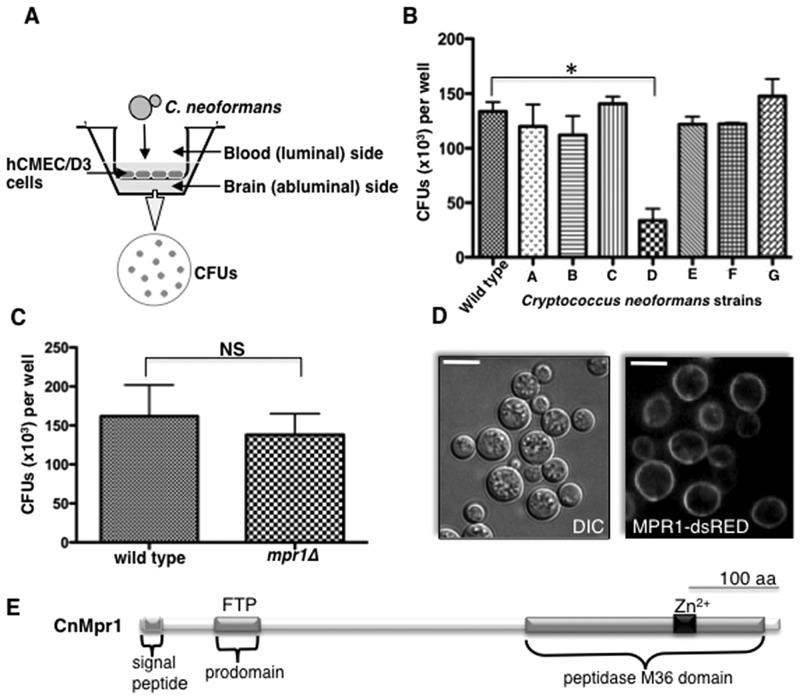
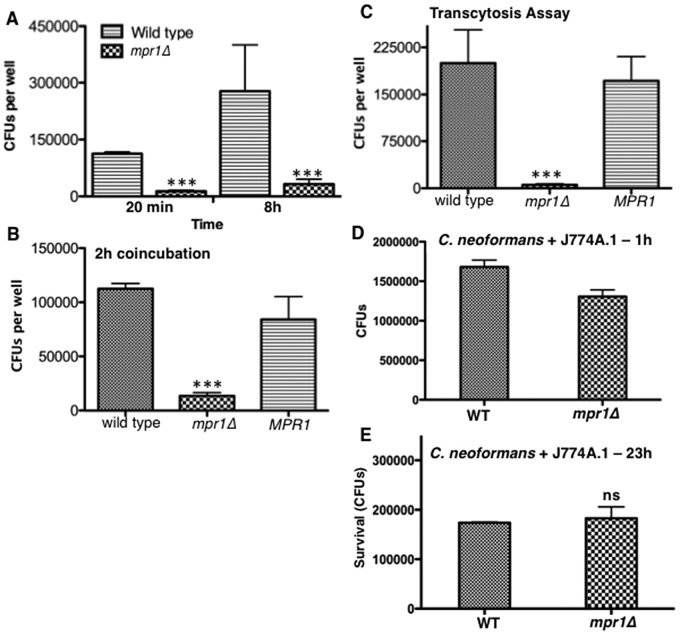
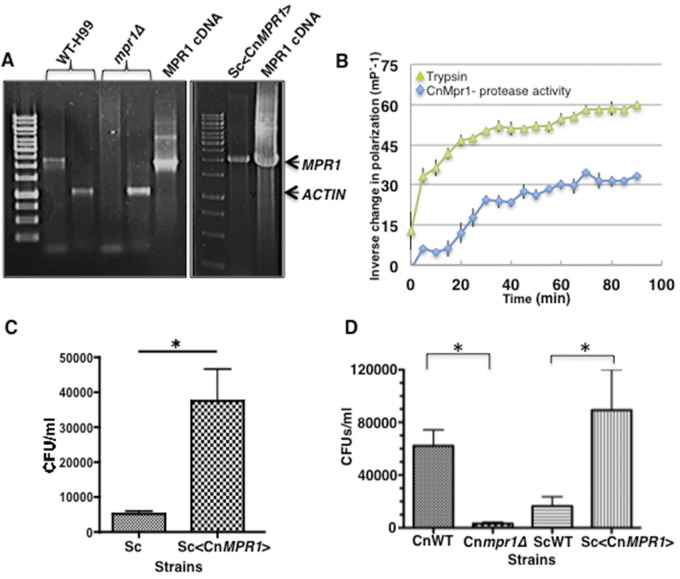
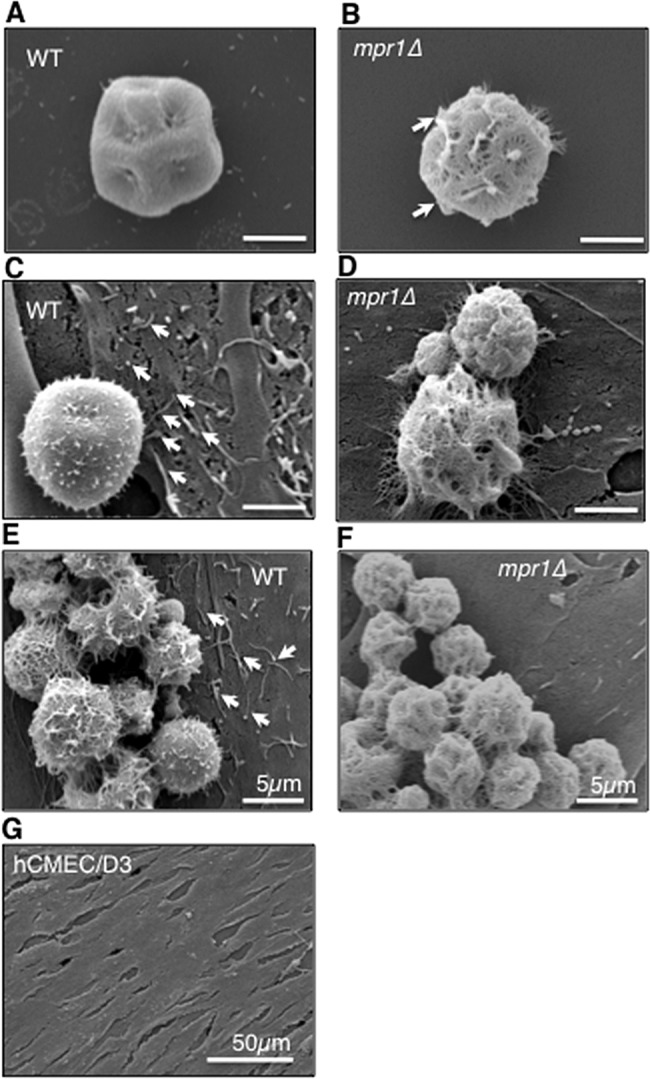
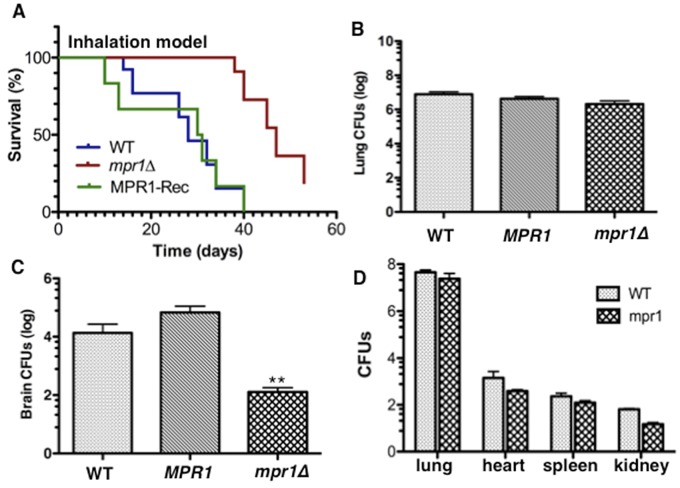
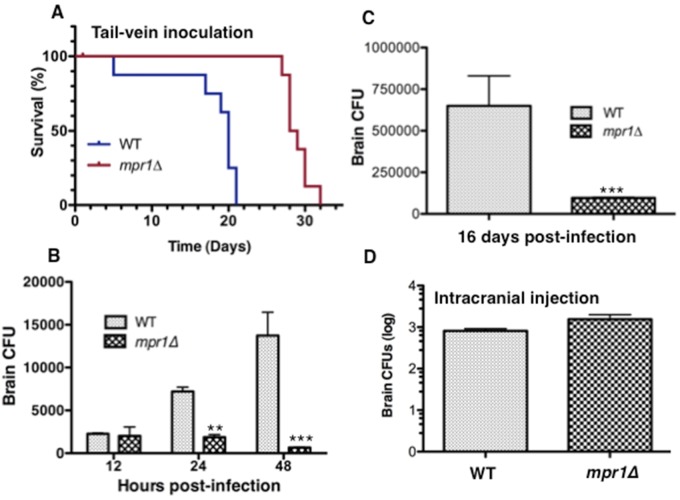
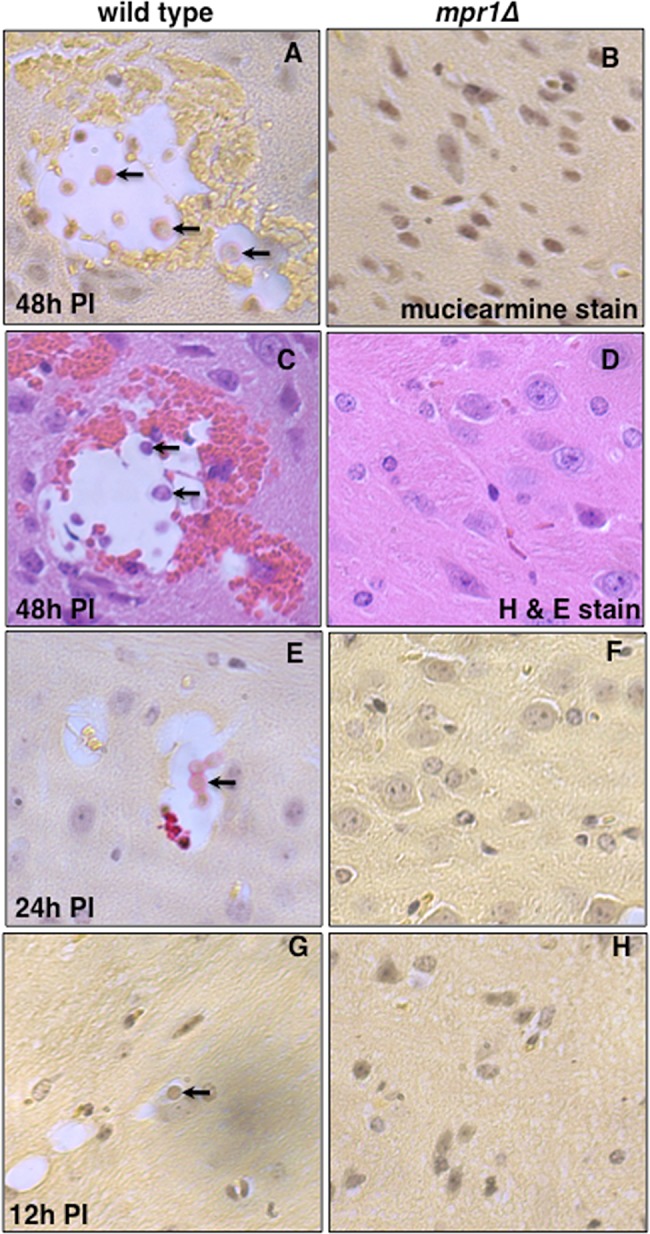
Cryptococcus spp. cause life-threatening fungal infection of the central nervous system (CNS), predominantly in patients with a compromised immune system. Why Cryptococcus neoformans has this remarkable tropism for the CNS is not clear. Recent research on cerebral pathogenesis of C. neoformans revealed a predominantly transcellular migration of cryptococci across the brain endothelium; however, the identities of key fungal virulence factors that function specifically to invade the CNS remain unresolved. Here we found that a novel, secreted metalloprotease (Mpr1) that we identified in the extracellular proteome of C. neoformans (CnMpr1) is required for establishing fungal disease in the CNS. Mpr1 belongs to a poorly characterized M36 class of fungalysins that are expressed in only some fungal species. A strain of C. neoformans lacking the gene encoding Mpr1 ( mpr1Δ ) failed to breach the endothelium in an in vitro model of the human blood-brain barrier (BBB). A mammalian host infected with the mpr1Δ null strain demonstrated significant improvement in survival due to a reduced brain fungal burden and lacked the brain pathology commonly associated with cryptococcal disease. The in vivo studies further indicate that Mpr1 is not required for fungal dissemination and Mpr1 likely targets the brain endothelium specifically. Remarkably, the sole expression of Cn MPR1 in Saccharomyces cerevisiae resulted in a robust migration of yeast cells across the brain endothelium, demonstrating Mpr1’s specific activity in breaching the BBB and suggesting that Mpr1 may function independently of the hyaluronic acid-CD44 pathway. This distinct role for Mpr1 may develop into innovative treatment options and facilitate a brain-specific drug delivery platform. IMPORTANCE Cryptococcus neoformans is a medically relevant fungal pathogen causing significant morbidity and mortality, particularly in immunocompromised individuals. An intriguing feature is its strong neurotropism, and consequently the hallmark of cryptococcal disease is a brain infection, cryptococcal meningoencephalitis. For C. neoformans to penetrate the central nervous system (CNS), it first breaches the blood-brain barrier via a transcellular pathway; however, the identities of fungal factors required for this transmigration remain largely unknown. In an effort to identify extracellular fungal proteins that could mediate interactions with the brain endothelium, we undertook a proteomic analysis of the extracellular proteome and identified a secreted metalloprotease (Mpr1) belonging to the M36 class of fungalysins. Here we found that Mpr1 promotes migration of C. neoformans across the brain endothelium and into the CNS by facilitating attachment of cryptococci to the endothelium surface, thus underscoring the critical role of M36 proteases in fungal pathogenesis.
Overview
The claims and statistics of this paper haven’t been checked yet.
Free: it reads the open-access text and checks the first 5 claims that cite a source we can check. Create a free account to check every claim.
Integrity signals
Registry
Cites
Statistics
Figures
Verification
Claims the paper makes
The claims and statistics of this paper haven’t been checked yet.
Free: it reads the open-access text and checks the first 5 claims that cite a source we can check. Create a free account to check every claim.
Claims other papers make about this one
Each is checked against this paper’s own text: does it say what the citing paper says it does?
The cited source says what the claim attributes to it.
In the citing paper
“C. neoformans further promotes its adherence to endothelial cells through expression of the metalloprotease Mpr1 [151, 152].”
From Mechanisms of fungal dissemination (2021) · cites this paper as [151]
The cited source says what the claim attributes to it.
In the citing paper
“To complement histology and intravital microscopy, colony forming unit (CFU) determination has been used to study fungal dissemination in vivo [139, 141, 145, 151].”
From Mechanisms of fungal dissemination (2021) · cites this paper as [151]
Self-check
Percentages, sums and reported differences re-computed from the paper’s own numbers.
The self-check needs the paper’s full text.
Citations
Cites
Park, B. J., Wannemuehler, K. A., Marston, B. J., Govender, N., Pappas, P. G., & Chiller, T. M. (2009) · AIDS · doi:10.1097/qad.0b013e328322ffac · Cited by 2,014
Blood‐brain barrier‐specific properties of a human adult brain endothelial cell line
Weksler, B. B., Subileau, E. A., Perrière, N., Charneau, P., Holloway, K., Leveque, M., Tricoire‐Leignel, H., Nicotra, A., Bourdoulous, S., Turowski, P., et al. (2005) · The FASEB Journal · doi:10.1096/fj.04-3458fje · Cited by 1,330
The Blood-Brain Barrier in Brain Homeostasis and Neurological Diseases
Weiss, N., Miller, F., Cazaubon, S., & Couraud, P.-O. (2009) · Biochimica et Biophysica Acta (BBA) - Biomembranes · doi:10.1016/j.bbamem.2008.10.022 · Cited by 731
Fluorescein isothiocyanate-labeled casein assay for proteolytic enzymes
Twining, S. S. (1984) · Analytical Biochemistry · doi:10.1016/0003-2697(84)90553-0 · Cited by 572
Mechanisms of microbial traversal of the blood–brain barrier
Kim, K. S. (2008) · Nature Reviews Microbiology · doi:10.1038/nrmicro1952 · Cited by 466
Evidence of a Role for Monocytes in Dissemination and Brain Invasion by Cryptococcus neoformans
Charlier, C., Nielsen, K., Daou, S., Brigitte, M., Chretien, F., & Dromer, F. (2009) · Infection and Immunity · doi:10.1128/iai.01065-08 · Cited by 362 · cited 1×
“In our murine studies, at the time of death, some cryptococcal cells could be detected in brains from mpr1 straininfected mice, indicating that other virulence factors (and other mechanisms, such as “Trojan horse”: phagocyte-associated invasion) may be involved in promoting CNS fungal disease (11, 20).”
BackgroundExtracellular phospholipase activity is a virulence factor for Cryptococcus neoformans
Cox, G. M., McDade, H. C., Chen, S. C. A., Tucker, S. C., Gottfredsson, M., Wright, L. C., Sorrell, T. C., Leidich, S. D., Casadevall, A., Ghannoum, M. A., et al. (2001) · Molecular Microbiology · doi:10.1046/j.1365-2958.2001.02236.x · Cited by 362
Spores as Infectious Propagules of Cryptococcus neoformans
Velagapudi, R., Hsueh, Y.-P., Geunes-Boyer, S., Wright, J. R., & Heitman, J. (2009) · Infection and Immunity · doi:10.1128/iai.00542-09 · Cited by 327
Olszewski, M. A., Noverr, M. C., Chen, G.-H., Toews, G. B., Cox, G. M., Perfect, J. R., & Huffnagle, G. B. (2004) · The American Journal of Pathology · doi:10.1016/s0002-9440(10)63734-0 · Cited by 289
Chang, Y. C., Stins, M. F., McCaffery, M. J., Miller, G. F., Pare, D. R., Dam, T., Paul-Satyasee, M., Kim, K. S., & Kwon-Chung, K. J. (2004) · Infection and Immunity · doi:10.1128/iai.72.9.4985-4995.2004 · Cited by 278
Cited by
Items 101–189 of 189
Yu, Q.-K., Han, L.-T., Wu, Y., & Liu, T. (2020) · Microorganisms · doi:10.3390/microorganisms8111730 · Cited by 8
New technology and resources for cryptococcal research
Zhang, N., Park, Y., & Williamson, P. R. (2014) · Fungal Genetics and Biology · doi:10.1016/j.fgb.2014.11.001 · Cited by 8
Macropinocytosis as a potential mechanism driving neurotropism of Cryptococcus neoformans
Lanser, D. M., Bennett, A. B., Vu, K., & Gelli, A. (2023) · Frontiers in Cellular and Infection Microbiology · doi:10.3389/fcimb.2023.1331429 · Cited by 8
Self-citationZhang, L., Zhang, K., Fang, W., Li, H., Li, Y., Jiang, W., Hu, D., Coelho, C., Liu, X., Cai, L., et al. (2020) · Frontiers in Microbiology · doi:10.3389/fmicb.2020.596440 · Cited by 8
Cryptococcal Protease(s) and the Activation of SARS-CoV-2 Spike (S) Protein
Mjokane, N., Maliehe, M., Folorunso, O. S., Ogundeji, A. O., Gcilitshana, O. M. N., Albertyn, J., Pohl, C. H., & Sebolai, O. M. (2022) · Cells · doi:10.3390/cells11030437 · Cited by 7
Li, Y., Li, H., Sun, T., & Ding, C. (2021) · Frontiers in Cellular and Infection Microbiology · doi:10.3389/fcimb.2021.774340 · Cited by 6
Bankaitis, V. A., Tripathi, A., Chen, X., & Igumenova, T. I. (2022) · Advances in Biological Regulation · doi:10.1016/j.jbior.2022.100891 · Cited by 6
The ER Protein Translocation Channel Subunit Sbh1 Controls Virulence of Cryptococcus neoformans
Santiago-Tirado, F. H., Hurtaux, T., Geddes‐McAlister, J., Nguyen, D. Q., Helms, V., Doering, T. L., & Römisch, K. (2023) · mBio · doi:10.1128/mbio.03384-22 · Cited by 6
Scott, J., & Amich, J. (2021) · Elsevier eBooks · doi:10.1016/b978-0-12-818731-9.00059-8 · Cited by 5
Uncovering the antifungal potential of Cannabidiol and Cannabidivarin
Dinh, H., Fernandes, K. E., Erpf, P. E., Clay, E. J. M., Tay, A. P., Nagy, S. S., Schaefer, S., Maharjan, R. P., Lenardon, M. D., Multari, D. H., et al. (2025) · PLoS neglected tropical diseases · doi:10.1371/journal.pntd.0013081 · Cited by 5
Fungal Infections of the Central Nervous System
de Oliveira, H. C., Castelli, R. F., Kuczera, D., de Souza, T. N., Marcos, C. M., Scorzoni, L., Nimrichter, L., & Rodrigues, M. L. (2020) · Elsevier eBooks · doi:10.1016/b978-0-12-809633-8.21019-4 · Cited by 5
Combining natural language processing and metabarcoding to reveal pathogen-environment associations
Molik, D. C., Tomlinson, D., Davitt, S., Morgan, E. L., Sisk, M. L., Roche, B., Meyers, N., & Pfrender, M. E. (2021) · PLoS neglected tropical diseases · doi:10.1371/journal.pntd.0008755 · Cited by 5
Wappler-Guzzetta, E. A., Gray, A. L., Dagostino, J., & Kerstetter, J. C. (2022) · Life · doi:10.3390/life12101667 · Cited by 5
Reconsidering the blood-brain barrier: histopathology and microanatomy of cryptococcal CNS infection
Sorrell, T. C., & Davis, J. M. (2025) · Microbiology and Molecular Biology Reviews · doi:10.1128/mmbr.00078-25 · Cited by 4
Julian, J., Adawıyah, R., & Wahdini, S. (2023) · African Journal of Infectious Diseases · doi:10.21010/ajidv18i1.3 · Cited by 5
Mahadevan, A., & Krishna, S. S. (2019) · Springer eBooks · doi:10.1007/978-3-030-06088-6_12 · Cited by 4
Cryptococcus neoformans -Host Interactions Determine Disease Outcomes
Xu, J., Wiliamson, P. R., & Olszewski, M. A. (2019) · IntechOpen eBooks · doi:10.5772/intechopen.83750 · Cited by 3
Cryptococcus neoformans mutant screening: a genome-scale's worth of function discovery
Motaung, T. E. (2018) · Fungal Biology Reviews · doi:10.1016/j.fbr.2018.01.001 · Cited by 3
Assessing the Putative Anticryptococcal Properties of Crude and Clarified Extracts from Mollusks
Gutierrez‐Gongora, D., Raouf-Alkadhimi, F., Prosser, R. S., & Geddes‐McAlister, J. (2022) · Journal of Visualized Experiments · doi:10.3791/64540 · Cited by 3
Sun, P., Li, X., Yang, M., Zhao, X., Zhang, Z., & Wei, D. (2020) · Microbiological Research · doi:10.1016/j.micres.2020.126570 · Cited by 3
Cryptococcus neoformans: life cycle, morphogenesis, and virulence
He, G., Zhang, L., Ma, S., Ding, H., Xu, X., Yang, Y., Liao, G., Chen, M., Zhao, Y., Liu, T., et al. (2024) · Elsevier eBooks · doi:10.1016/b978-0-12-818619-0.00003-4 · Cited by 3
Assessing the Anti-Cryptococcus Antifungal Potential of Artemisinin
Maliehe, M., Albertyn, J., & Sebolai, O. M. (2025) · International Journal of Molecular Sciences · doi:10.3390/ijms26209953 · Cited by 3
Considerations When Developing Blood–Brain Barrier Crossing Drug Delivery Technology
Bell, R. D. (2021) · Handbook of experimental pharmacology · doi:10.1007/164_2021_453 · Cited by 2
Folorunso, O. S., & Sebolai, O. M. (2023) · Preprints.org · doi:10.20944/preprints202301.0420.v1 · Cited by 2
Samaddar, A., Mendonsa, J. M., Siddaiah, N., Rudramurthy, S. M., Pamidimukkala, U., & Kindo, A. J. (2025) · Medical Mycology · doi:10.1093/mmy/myaf108 · Cited by 2
Wang, G., Feng, C., Ma, Z., Zhao, L., Yosri, M., Wang, Y., Gao, X., Zhu, W., Li, H., Song, H., et al. (2025) · Cell Reports · doi:10.1016/j.celrep.2025.116658 · Cited by 2
Wirth, F., Staudt, K. J., de Araújo, B. V., & Ishida, K. (2022) · Future Microbiology · doi:10.2217/fmb-2021-0291 · Cited by 2
Ifiora, G. C., Sule, I., Ekarika, E., Opara, C. D., & Adebayo, H. (2025) · Cureus · doi:10.7759/cureus.81698 · Cited by 2
Zhao, J., Fang, W. Y., Gao, Y., Fa, Z., Wang, G., & Gu, J. (2025) · Microbes and Infection · doi:10.1016/j.micinf.2025.105540 · Cited by 2
Leitão, A. L., Costa, M. C., & Enguita, F. J. (2016) · Springer eBooks · doi:10.1007/978-3-319-39496-1_14 · Cited by 2
Disseminated Cryptococcus over pancreas, lung, and brain: a case report
Cheng, H.-E., Yeh, H., Yang, C., Yang, S., & Liao, S. (2024) · Journal of Medical Case Reports · doi:10.1186/s13256-024-04836-1 · Cited by 2
Zhang, Y., Yan, R., Wang, H., Wang, K., Man, J., & Yang, L. (2025) · Transplantation Reviews · doi:10.1016/j.trre.2025.100979 · Cited by 2
Peacock, H. M., & O’Connor, J. A. (2023) · Clinical Microbiology Newsletter · doi:10.1016/j.clinmicnews.2023.05.002 · Cited by 1
Folorunso, O. S., & Sebolai, O. M. (2023) · Preprints.org · doi:10.20944/preprints202306.1372.v1 · Cited by 1
Neuroglial responses to bacterial, viral, and fungal neuroinfections
Awogbindin, I. O., Šimončičová, E., Vidal, V., Ash, C., & Tremblay, M. (2025) · Handbook of clinical neurology · doi:10.1016/b978-0-443-19102-2.00027-2 · Cited by 1
Bennett, A. B., Lanser, D. M., Vu, K., Sahoo, A. R., Buck, M., & Gelli, A. (2026) · Communications Biology · doi:10.1038/s42003-026-10597-y · Cited by 1
Self-citationA review of the current anti-Cryptococcus antifungals and emerging treatment strategies
Maliehe, M., Rapeso, P. M., Mdana, K., McQuire, C. K., Moukangwe, L., Ntshangase, N. F., Mjokane, N., Skosana, Z. T., Ogundeji, A. O., Folorunso, O. S., et al. (2026) · New Microbes and New Infections · doi:10.1016/j.nmni.2026.101735 · Cited by 1
Zamora, E., & Zamora, C. A. (2024) · Neurographics · doi:10.3174/ng.2200039 · Cited by 1
Virulence factors of Cryptococcus neoformans and Cryptococcus gattii : two sides of the same coin
de Jesus, D. F. F., Brujas, L. D., Barreto, T. L., da Costa, L. S., Spadari, C. D. C., & Ishida, K. (2026) · Future Microbiology · doi:10.1080/17460913.2026.2722813 · Cited by 1
Lanser, D. M., Turner, A., Pacifici, N. J., Vu, K., Lewis, J. S., & Gelli, A. (2026) · PLoS ONE · doi:10.1371/journal.pone.0340202 · Cited by 1
Self-citationHammadi, A. A., & Ostrosky-Zeichner, L. L. (2018) · Springer eBooks · doi:10.1007/978-3-319-92678-0_5 · Cited by 1
A comprehensive review of neurotropic fungal infections: clinical manifestations and vaccines
Khodadad, N., Fani, M., Barati, M., Keikha, N., Nasiri-Jahrodi, A., & Firouzeh, N. (2025) · Neurological Sciences · doi:10.1007/s10072-025-08696-5 · Cited by 1
Liu, W. Y., Chen, J., Wang, T., Gong, Y., Chen, Y., Li, Y., Yan, X., Duan, H., Wang, X., & Zhang, M. (2025) · Infection and Immunity · doi:10.1128/iai.00145-25 · Cited by 1
Hybrid genome sequence of Cryptococcus neoformans of Indian origin and comparative genome analysis
Sathiyamoorthy, J., & Ramakrishnan, J. (2025) · Scientific Reports · doi:10.1038/s41598-025-25672-3 · Cited by 1
Invasive pulmonary fungal diseases: Towards formulation-optimized targeted therapeutic strategies
Pan, L., Zhang, X., Yang, B., He, Z., Sun, M., Sun, J., & Wang, W. (2025) · Nano Research · doi:10.26599/nr.2025.94908114 · Cited by 1
Bürgel, P. H. (2018) · RIUnB Institutional Repository (University of Brasília) · doi:10.26512/2018.12.t.34845 · Cited by 1
Marsilio, J. C. (2018) · Americanae (AECID Library) · Cited by 1
Disseminated Skeletal Cryptococcosis: A Case Report
Joseph, D., Paul, P., Padmanabhan, V., Rajesh, A., Vignesh, R., & Baby, R. (2025) · Journal of Orthopaedic Case Reports · doi:10.13107/jocr.2025.v15.i08.5912 · Cited by 1
Anti-Cryptococcal Signaling in NK Cells
Xiang, R. F. (2017) · Libraries and Cultural Resources (University of Calgary) · doi:10.11575/prism/24934
Cellular Coordination of Transcription Factors and Regulatory Genes for Cryptococcal Virulence
Folorunso, O. S., & Sebolai, O. M. (2026) · Cellular Microbiology · doi:10.1155/cmi/4775883
Fungal Colonization of the Brain: Anatomopathological Aspects of Neurological Cryptococcosis
Rodrigues, M. L., & Colombo, A. C. (2024) · Journal of Science Humanities and Arts - JOSHA · doi:10.17160/josha.11.2.983
Goldman, D. L., & Perfect, J. R. (2025) · Elsevier eBooks · doi:10.1016/b978-0-323-82763-8.00220-x
Impact of Listeria monocytogenes on microglia and cerebral homeostasis
Levallois, S. (2023) · theses.fr (ABES) · doi:10.70675/cf058269z5911z4582z94fezcb6761f74ddd
Calegari-Alves, Y. P., Cardozo, L. C., Beys‐da‐Silva, W. O., & Santi, L. (2026) · ACS Omega · doi:10.1021/acsomega.6c04202
BindingDB Entry 50014999: Re-emerging Aspartic Protease Targets: Examining
BindingDB (2023) · UC San Diego · doi:10.7270/q208695m
Sousa, I. S., Granato, M. Q., Palmeira, V. F., dos Santos, A. L. S., & Kneipp, L. F. (2026) · Memórias do Instituto Oswaldo Cruz · doi:10.1590/0074-02760250305
Molecular mechanism of host-yeast interactions and prevention by nanoformulation approaches
Oshika, & Bari, V. K. (2025) · Microbial Pathogenesis · doi:10.1016/j.micpath.2025.107663
Molecular basis of the fungal infection and pathogenesis
Patra, S., & Gajbhiye, V. (2025) · Elsevier eBooks · doi:10.1016/b978-0-443-29273-6.00016-3
The Pain Is in the Brain With the Sugar-Coated Killer
Messina, J. A., & Perfect, J. R. (2025) · The Journal of Infectious Diseases · doi:10.1093/infdis/jiaf496
Developmental regulators and secreted effector molecules of the fungal pathogen Verticillium spp.
Leonard, M. (2020) · eDiss (Georg-August-Universität Göttingen) · doi:10.53846/goediss-8222
Cowen, L. E., & Polvi, E. J. (2020) · Faculty Opinions – Post-Publication Peer Review of the Biomedical Literature · doi:10.3410/f.737633112.793573927
Gerbig, G. R., Casadevall, A., Raja, S., Sonnenberg, J. L., & Wear, M. P. (2026) · bioRxiv (Cold Spring Harbor Laboratory) · doi:10.64898/2026.06.30.735596
Brain infections, encephalitis, and meningitis: Cryptococcus sp.
Ostrosky-Zeichner, L. L., & Zapata, D. A. (2024) · Elsevier eBooks · doi:10.1016/b978-0-443-19130-5.00030-7
Avaliação do fenômeno de tolerância ao itraconazol em Cryptococcus neoformans
dos Santos, J. R. E. (2022) · LA Referencia (Red Federada de Repositorios Institucionales de Publicaciones Científicas)
Análise ex vivo do potencial antifúngico da molécula plumieridina em Cryptococcus neoformans
Barcellos, V. D. A. (2018) · Lume (Universidade Federal do Rio Grande do Sul)
Onyishi, C. U. (2023) · University of Birmingham Institutional Research Archive (University of Birmingham)
Qu, X. (2026) · cIRcle (University of British Columbia)
Caracterização de proteínas mediadoras da sinalização de cálcio no patógeno Cryptococcus neoformans
Squizani, E. D. (2020) · Lume (Universidade Federal do Rio Grande do Sul)
Temfack, E. (2017) · theses.fr (ABES) · doi:10.70675/1361e481z7186z4f96zbac5z4de3c57e50bd
Research Progress in Malignant Glioma Tar-geting Delivery System Mediated with Re-ceptors
汪, 红. (2018) · Pharmacy Information · doi:10.12677/pi.2018.72006
Host Mediated Mechanisms of Fungal Cell Spread in a Transparent Zebrafish Infection Model
Scherer, A. K. (2018) · DigitalCommons (California Polytechnic State University)
Reposicionamento do fármaco amiodarona como alternativa terapêutica para a criptococose
Oliveira, N. K. (2019) · Lume (Universidade Federal do Rio Grande do Sul)
Stimulation of innate immune resistance leads to clearance of C. neoformans infection in zebrafish
Kamuyango, A. A. (2017) · White Rose eTheses Online (University of Leeds, The University of Sheffield, University of York)
Abdullah, Kaul, A., Marak, R. S. K., Behera, M., Prasad, N., Patel, M. R., BHADAURIA, D. S., Kushwaha, R. S., Yachha, M., & Mishra, A. (2026) · Transplant Infectious Disease · doi:10.1111/tid.70218
Tedyanto, C. P., Wihanto, L., Tedyanto, E. H., Indradewi, A. A. A. S., & Susilawathi, N. M. (2024) · Romanian Journal of Neurology · doi:10.37897/rjn.2024.1.14
Geddes, J. M. H. (2015) · cIRcle (University of British Columbia) · doi:10.14288/1.0166201
de Castro, R. J. A. (2019) · LA Referencia (Red Federada de Repositorios Institucionales de Publicaciones Científicas)
Gomes, F. Í. R. (2025) · LA Referencia (Red Federada de Repositorios Institucionales de Publicaciones Científicas)
Papel da homeostase de cálcio na patogênese e sinalização celular de Cryptococcus neoformans
Squizani, E. D. (2016) · Lume (Universidade Federal do Rio Grande do Sul)
Homeostase de zinco na virulência de cryptococcus gattii e na interação com hospedeiro
Schneider, R. (2016) · Lume (Universidade Federal do Rio Grande do Sul)
Mendonça, A. F. (2015) · Americanae (AECID Library)
Cryptococcosis in Southern-Brazil: Molecular, antifungal and in vitro cytokine induction studies
Herkert, P. F. (2019) · Radboud Repository (Radboud University)
Clarke, S. (2015) · eScholarship (California Digital Library)
Dissecting how natural killer cells change in tumours to rationalise immunotherapies
Dean, I. (2023) · University of Birmingham Institutional Research Archive (University of Birmingham)
The role of tissue resident macrophages during cryptococcal infection
Mohamed, S. H. (2023) · University of Birmingham Institutional Research Archive (University of Birmingham)
Horianopoulos, L. C., Lee, C. W. J., Hu, G., Caza, M., & Kronstad, J. W. (2021) · doi:10.3389/fmicb.2021.727039.s001
Mohammed, R. J., Ali, S., & Ahmed, A. A. (2025) · International Journal of Medical Science and Dental Health · doi:10.55640/ijmsdh-11-09-12
Andriani, G. M. (2018) · LA Referencia (Red Federada de Repositorios Institucionales de Publicaciones Científicas)
The Regulation and Consequences of Type-2 Helper T Cells During Pulmonary Cryptococcal Infection
Wiesner, D. L. (2015) · University of Minnesota Digital Conservancy (University of Minnesota)
Metadata
- Authors
- Vu, K., Tham, R., Uhrig, J. P., Thompson, G. R., Na Pombejra, S., Jamklang, M., Bautos, J. M., & Gelli, A.
- Affiliations
- University of California, Davis (US)
- San Diego State University (US)
- Department of Pharmacology, School of Medicine, University of California, Genome and Biomedical Sciences Facility, Davis, California, USA
- Corresponding author
- Gelli, Angie
- Venue
- mBio
- Publisher
- American Society for Microbiology
- Published
- 2014-07
- Volume
- 5
- Issue
- 3
- Pages
- e01101-14
- ISSN
- 2150-7511 (ISSN-L)
- 2161-2129
- PMC
- PMC4049100
- OpenAlex
- W2112005645
- Cited by
- 159
- References
- 60
- Citations by year
- 2026: 6 · 2025: 17 · 2024: 15 · 2023: 12 · 2022: 17 · 2021: 16 · 2020: 17 · 2019: 9 · 2018: 13 · 2017: 13 · 2016: 12 · 2015: 9 · 2014: 3
- FWCI
- 9.31
- Type
- journal article
- Language
- en
- Open access
- gold
- doi.org
- Licence
- cc-by-nc-sa
- creativecommons.org/licenses/by-nc-sa/3.0/ (vor)
- journals.asm.org/non-commercial-tdm-license (tdm)
- Locations
- mBio (publishedVersion, cc-by-nc-sa)
- Europe PMC (PubMed Central) (publishedVersion, cc-by-nc-sa)
- PubMed Central (publishedVersion, cc-by-nc-sa)
- PubMed (publishedVersion)
- DOAJ (DOAJ: Directory of Open Access Journals) (submittedVersion, cc-by-sa)
- eScholarship (California Digital Library) (submittedVersion)
- eScholarship (California Digital Library) (submittedVersion, cc-by-nc-sa)
- Topics
- Health Sciences › Medicine › Infectious Diseases › Fungal Infections and Studies
- Health Sciences › Medicine › Infectious Diseases › Antifungal resistance and susceptibility
- Life Sciences › Biochemistry, Genetics and Molecular Biology › Molecular Biology › Fungal and yeast genetics research
- Keywords
- Cryptococcus neoformans, blood-brain barrier, transcellular migration, brain endothelium, cryptococcal meningoencephalitis, fungal virulence factors, extracellular proteome, immunocompromised patients
- MeSH terms
- Animals, Blood-Brain Barrier, Brain, Cryptococcosis, Cryptococcus neoformans, Disease Models, Animal, Endothelium, Extracellular Space, Fungal Proteins, Meningoencephalitis, Gene Expression, Virulence Factors, Metalloproteases, Mice
About these checks
Registry, retraction, Cites and statistics results are computed, not judged, with one exception: a printed reference that no index lists is read once by a model before it counts as a citation error. Claims are extracted by a model and kept only when their quote appears verbatim in the text; each cited source is then checked, with a model’s help, for whether it says what the claim relies on. Those verdicts can be wrong — read the claim’s quote and the cited source before relying on one.
Statistics and arithmetic are recomputed, not judged.
Confidence bands are shown only for fields calibrated on our annotated test set. None is calibrated yet, so no band is shown.
What counts as a claim ›How we measure confidence ›How we check this ›
Are you an author, or do you see a problem with this page? Request a review
Data sources
Bibliographic data: Semantic Scholar, OpenAlex, Crossref.
Contains information from the Semantic Scholar Academic Graph Datasets, made available under the ODC Attribution License (ODC-BY 1.0).
Semantic Scholar’s data is described in: Kinney, R., et al. (2023). The Semantic Scholar Open Data Platform. arXiv:2301.10140.
